Bald Faced Hornet: Sting Pain, Nest Size, and When to Remove One
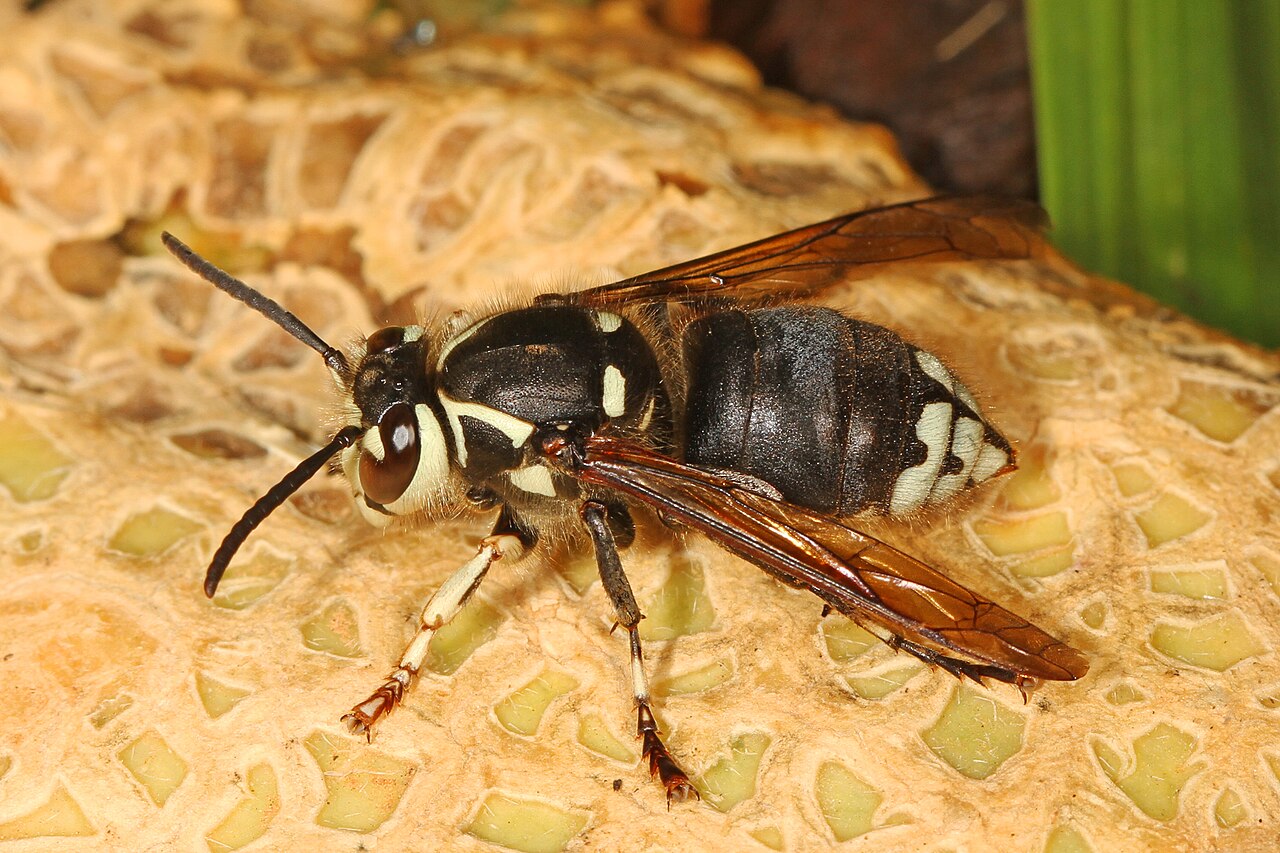
The bald faced hornet (Dolichovespula maculata) is a large black and white social wasp that defends its paper nest hard and can sting repeatedly without dying. It is not a true hornet at all. Entomologists classify it as an aerial yellowjacket, which explains both the temper and the football shaped nest hanging from a branch or eave.
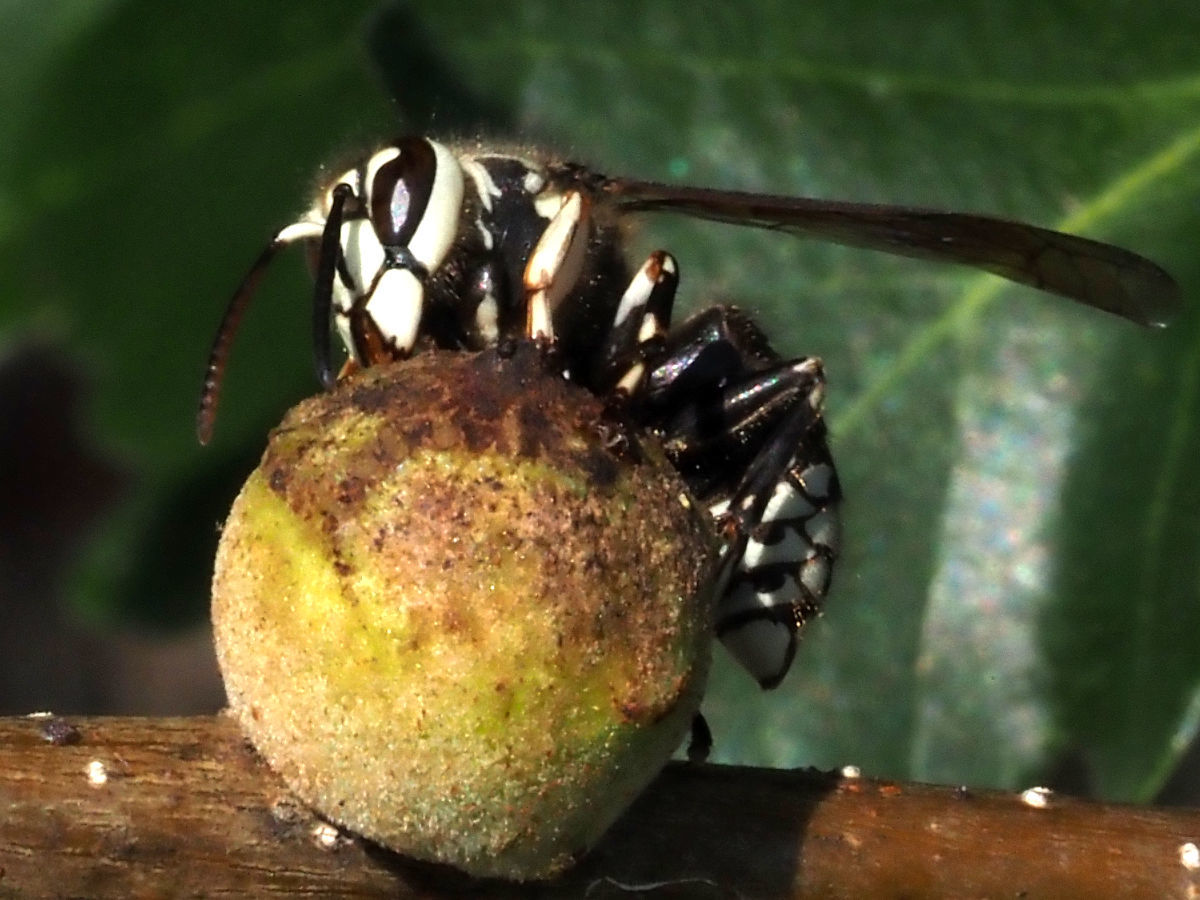
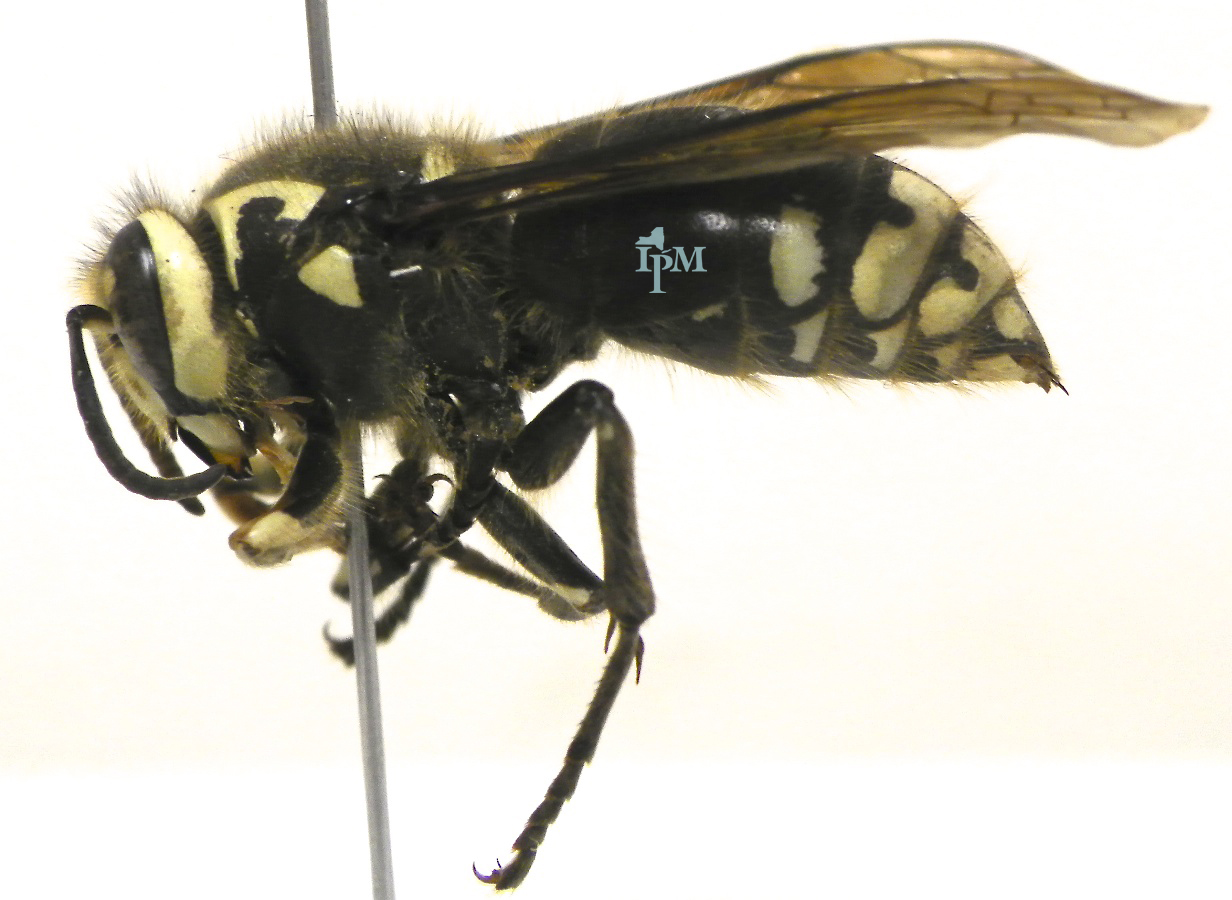
Workers run 12 to 15 mm long (about half an inch), the queen closer to 20 mm, and the ivory white face is the giveaway. Every other yellowjacket in the United States wears yellow. This one wears white on the face, thorax, and last abdominal segments.
Bald faced hornets are highly defensive within about 10 ft (3 m) of their nest and will sting repeatedly, but they ignore people away from it. A colony holds 400 to 700 workers by late summer, dies off at first hard frost, and never reuses the same nest the following year.
| Trait | Bald faced hornet |
|---|---|
| Scientific name | Dolichovespula maculata |
| Worker size | 12 to 15 mm (about 0.5 in) |
| Colony size | 400 to 700 workers by August |
| Nest | Gray paper, up to 14 in (36 cm) tall, aerial |
| Range | Most of the US and southern Canada |
| Sting | Repeatable, no barb left behind |
| Season ends | First hard frost, colony dies |
Are Bald-Faced Hornets Very Aggressive?
They are aggressive near the nest and indifferent everywhere else. A worker foraging on a flower or scavenging at a picnic table has no reason to sting and usually will not. Cross into the defended zone, roughly 10 ft (3 m), and the response is immediate and collective.
The trigger sets them apart. Vibration alone will do it: mowing under a nest, leaning a ladder against the same wall, or running a string trimmer nearby brings out dozens at once. That reputation is why people compare them to the Asian giant hornet, though the two are not closely related.
How Bad Is a Bald-Faced Hornet Sting?
The sting rates around a 2 on the Schmidt pain index, comparable to a yellowjacket and sharper than a honey bee. Pain peaks within a minute or two, then fades to a hot ache. Swelling of 1 to 2 in (2.5 to 5 cm) is normal and usually resolves in a day.
The danger is volume, not potency. The stinger is smooth rather than barbed, so one worker can sting ten or more times, and a disturbed colony sends many. Wash the site, ice it for 20 minutes, and seek emergency care for throat tightness, dizziness, or spreading hives.
Bald-Faced Hornet vs Yellow Jacket
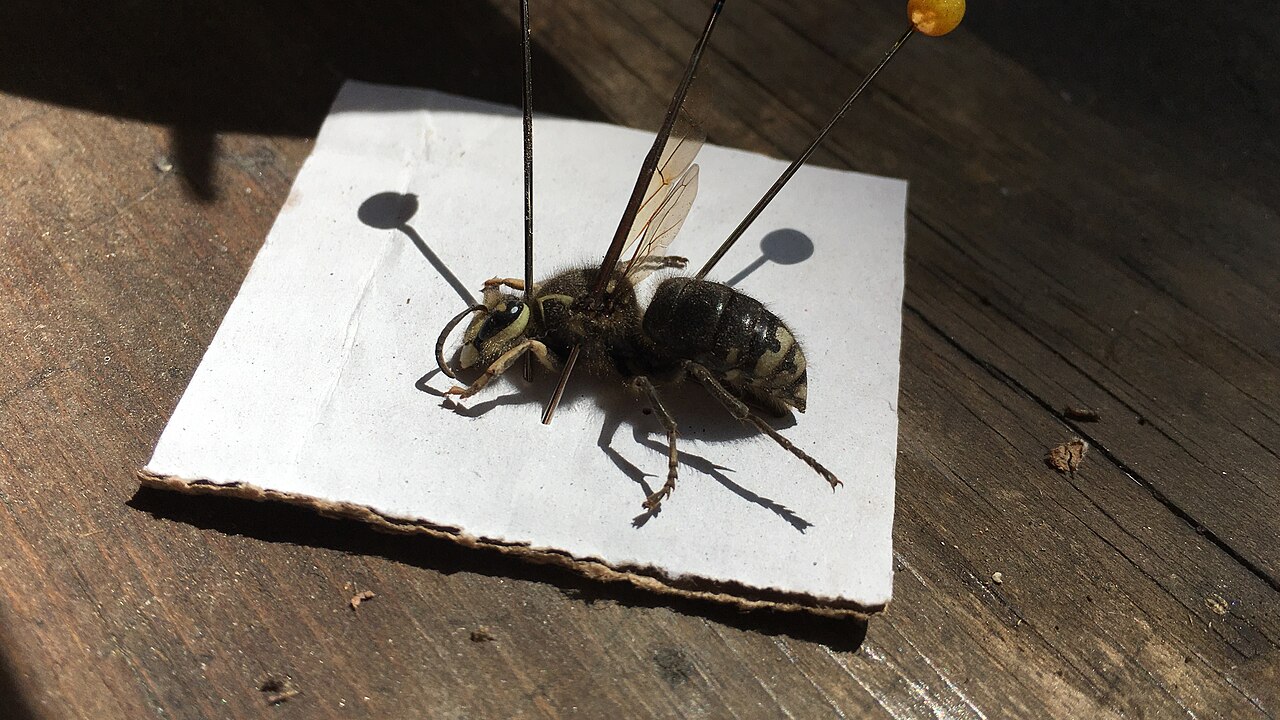
Both are yellowjackets, and the split is color and nest site. Common yellowjackets (Vespula species) are yellow and black and usually nest in the ground or a wall void. Bald faced hornets are black and white and hang an exposed aerial nest.
Behavior differs too. Vespula yellowjackets scavenge aggressively at food and trash in late summer, which is why they crash picnics. Bald faced hornets hunt live prey instead and rarely bother a table. The wider hornet and wasp distinction comes down to genus, not temper.
How to Identify a Bald-Faced Hornet Nest
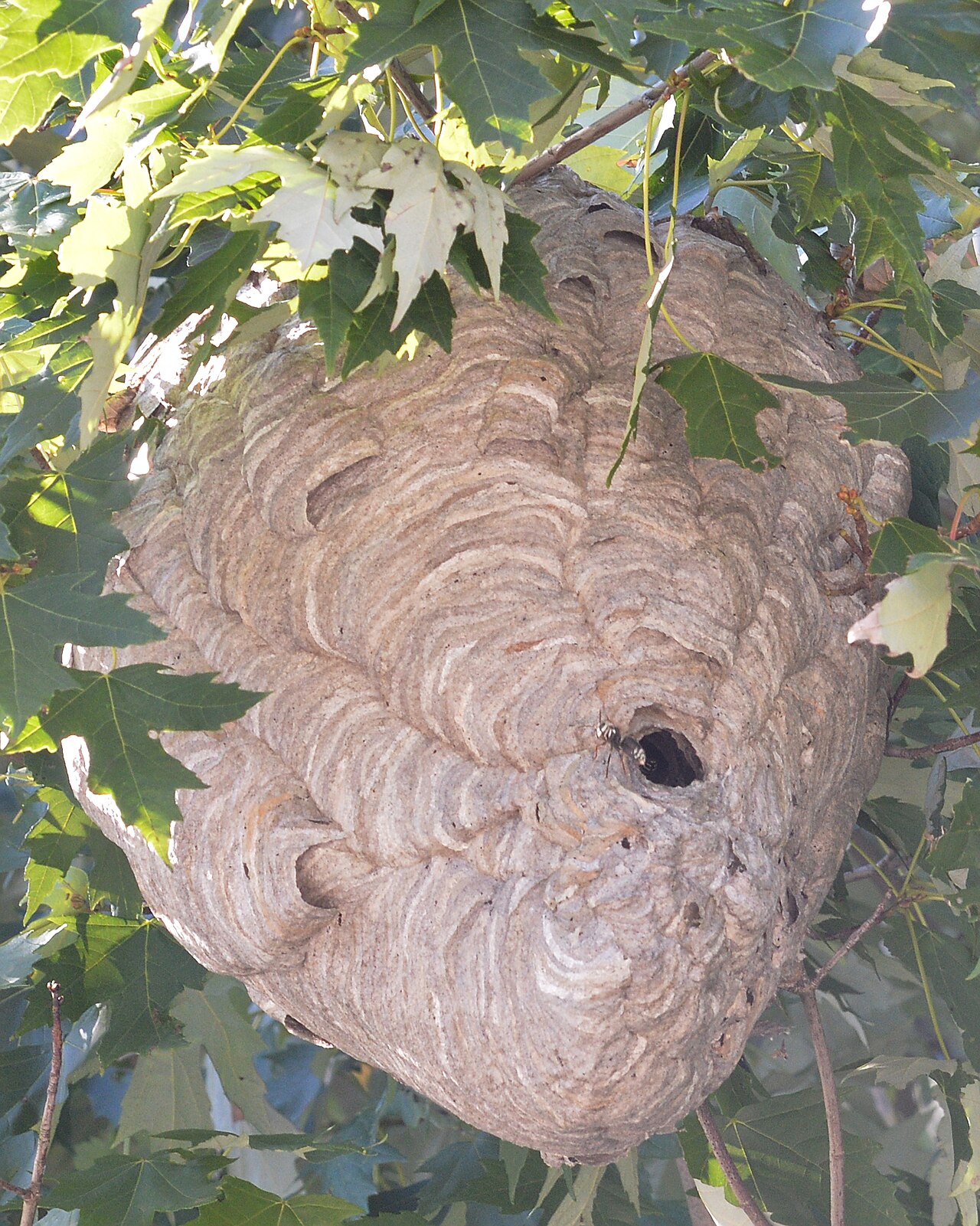
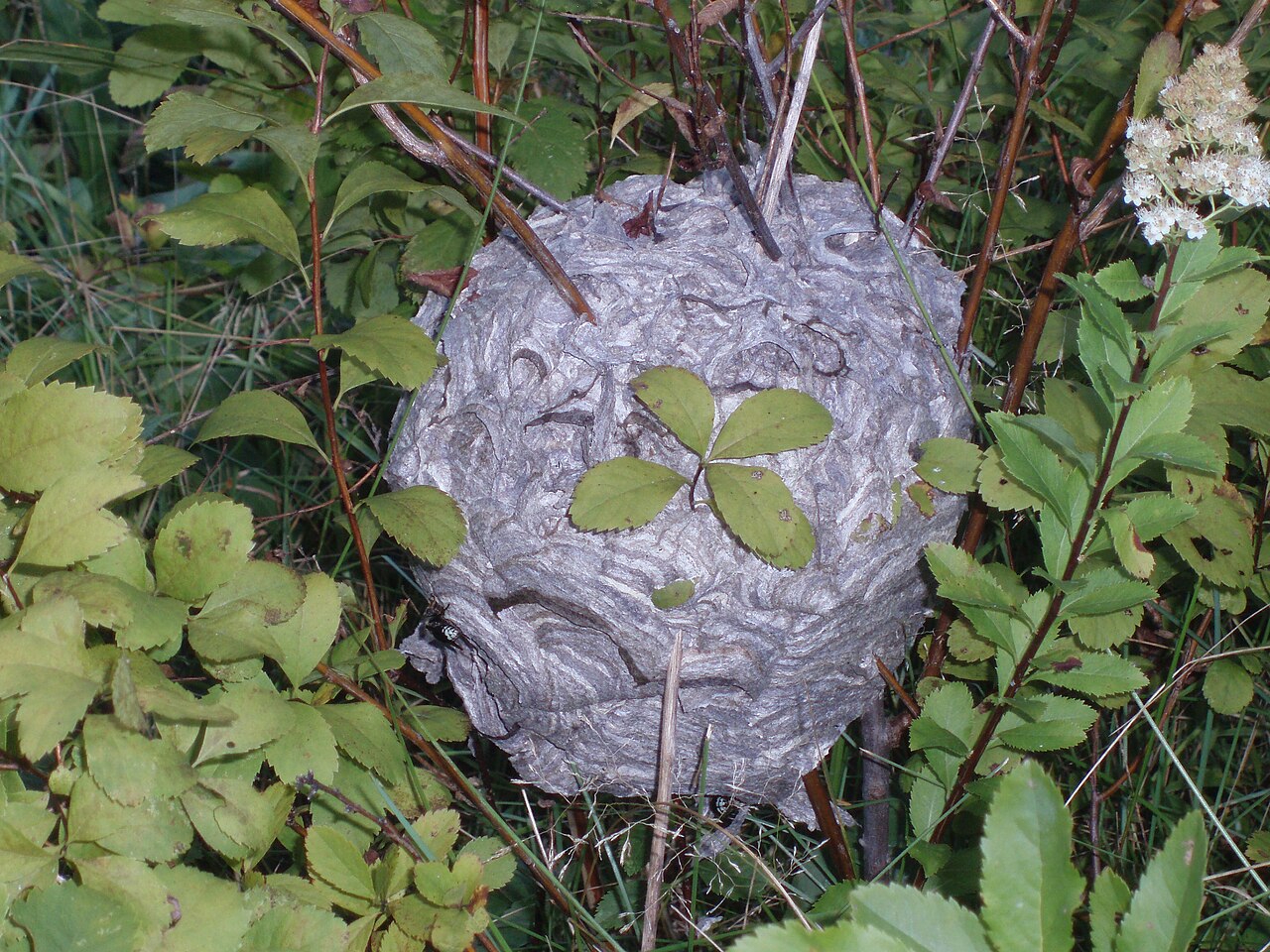
The nest is a gray, football shaped paper envelope with a single opening near the bottom, hanging from a branch, eave, or shrub, typically 3 to 60 ft (1 to 18 m) up. By late summer it reaches 14 in (36 cm) tall and 10 in (25 cm) wide.
Inside sit three to four horizontal combs wrapped in layered paper the wasps make by chewing weathered wood. Open ground nests and small exposed combs under a deck belong to other species. The difference between a hornet nest and a wasp nest is the envelope and the entrance.
Should I Destroy Bald-Faced Hornets?
Leave the nest alone if it sits more than 20 ft (6 m) from doors, walkways, and play areas. These wasps are effective predators of flies, caterpillars, and other yellowjackets, and the colony is dead by December regardless. The empty nest is never reused.
Remove it when the nest sits near an entrance, a window that opens, or anywhere children pass daily, and remove it every time if anyone in the household is allergic. Professional hornet nest removal runs $150 to $400. State extension services such as Penn State Extension publish regional guidance.
What Kills Bald-Faced Hornets Instantly?
A pressurized wasp and hornet aerosol rated for 20 ft (6 m) jet range, aimed into the bottom entrance, kills contact wasps in seconds and saturates the nest. Pyrethrin and prallethrin work fastest. Soapy water kills on contact but does not carry inside.
Timing beats product. Treat after full dark or before dawn with a red filtered light, since white light draws defenders straight to you. Do not plug the entrance, burn the nest, or spray from a ladder. Broad spraying also hits harmless yard insects like the click beetle.
Frequently Asked Questions
Can bald-faced hornets remember you?
Some social wasps recognize individual faces of their own species, and paper wasps have learned human facial patterns in lab settings. No study confirms it for this species. What is certain is that they learn locations and patrol a disturbed spot for days afterward.
What smell do bald-faced hornets hate?
Peppermint, clove, lemongrass, and geraniol repel yellowjackets at close range in university trials, and commercial repellents often combine them. The effect is local and lasts hours rather than days. Repellents deter foraging workers near a patio but will not move an established colony.
What preys on bald-faced hornets?
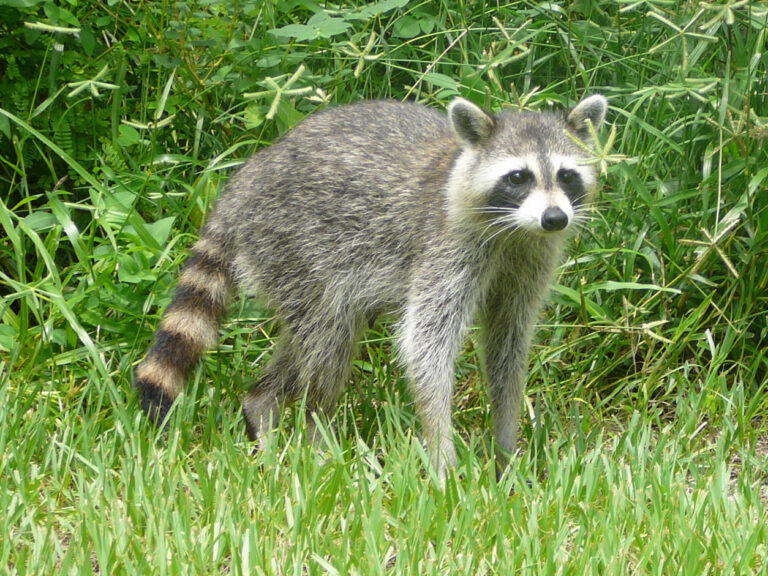
Skunks, raccoons, and black bears tear open low nests for the larvae. Birds including flycatchers, orioles, and chickadees take individual workers. A shredded paper nest on the ground in late summer usually means a raccoon got there first, not that the colony failed.
What does WD-40 do to wasps?
It kills on direct contact by coating the spiracles and suffocating the insect, and the petroleum smell deters nest building on a treated surface for a while. It is not a registered insecticide, it is flammable, and it does not penetrate a nest. Use a labeled product instead.
Do dryer sheets really keep wasps away?
Barely. Dryer sheets contain linalool and other fragrance compounds that mildly deter some insects, and a few small studies found limited effect on fungus gnats. Nothing shows they move yellowjackets off a nest or protect an outdoor table. Treat them as folk remedy.
Do bald-faced hornets reuse the same nest?
No. The colony dies at first hard frost, and only mated queens survive the winter under bark or leaf litter. Each queen builds a new nest the following spring, often on the same property but rarely in the same spot. An old hornet nest is safe to remove in winter.