Umbrella Cockatoo: 70 Year Lifespan, 100 Decibel Voice, Real Costs
The umbrella cockatoo is the most affectionate parrot most people will ever meet, and that is exactly why so many of them end up in rescues. A hand raised umbrella cockatoo bonds to one person with an intensity that looks charming in a pet store and becomes a daily obligation at home: screaming when you leave the room, plucking its chest bare when the bond breaks, and living long enough to outlast the person who bought it.
None of that makes it a bad bird. It makes it a demanding one. This guide covers what an umbrella cockatoo (Cacatua alba) is, how big and how loud it gets, where it comes from, what it costs to keep, and the honest test of whether your household can hold up to 60 years of one.
The umbrella cockatoo is a large white parrot from Indonesia’s North Maluku islands, named for the broad crest it fans like an umbrella. Adults reach 18 in (46 cm), weigh 400 to 800 g, live 40 to 70 years in captivity, and are listed as Endangered in the wild.
What Is an Umbrella Cockatoo?
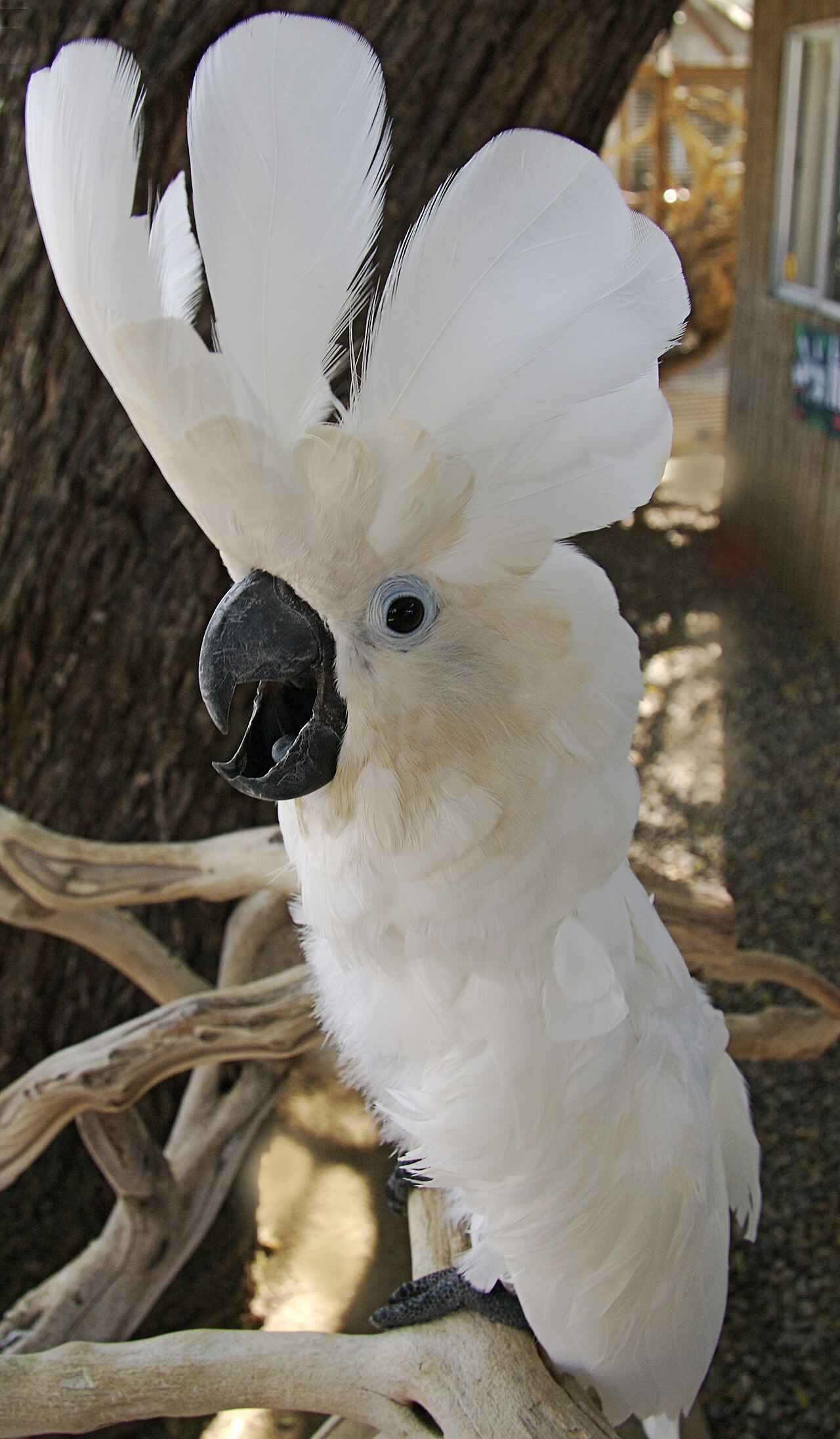
The umbrella cockatoo, also sold as the white cockatoo, is a large all white parrot in the family Cacatuidae. Its plumage is white with a soft yellow wash visible under the wings and tail, and it carries the powder down that all cockatoos produce, a fine white dust that coats everything in the room.
Adults are visually similar between the sexes, with one reliable tell. Mature females have a reddish brown iris; mature males have a very dark brown to black iris. The difference is only readable in good light on birds over 3 to 4 years old, so most young birds are sexed by DNA test instead.
The species is not related to the sulphur crested cockatoo beyond the genus. Both are Cacatua, but the umbrella is stockier, quieter in voice pitch, and far more contact seeking with its keeper.
| Trait | Umbrella Cockatoo |
|---|---|
| Scientific name | Cacatua alba |
| Length | 18 in (46 cm) |
| Weight | 400 to 800 g (0.9 to 1.8 lbs) |
| Lifespan | 40 to 70 years in captivity |
| Native range | North Maluku islands, Indonesia |
| IUCN status | Endangered |
| Noise level | Screams over 100 decibels |
Why Is It Called an Umbrella Cockatoo?
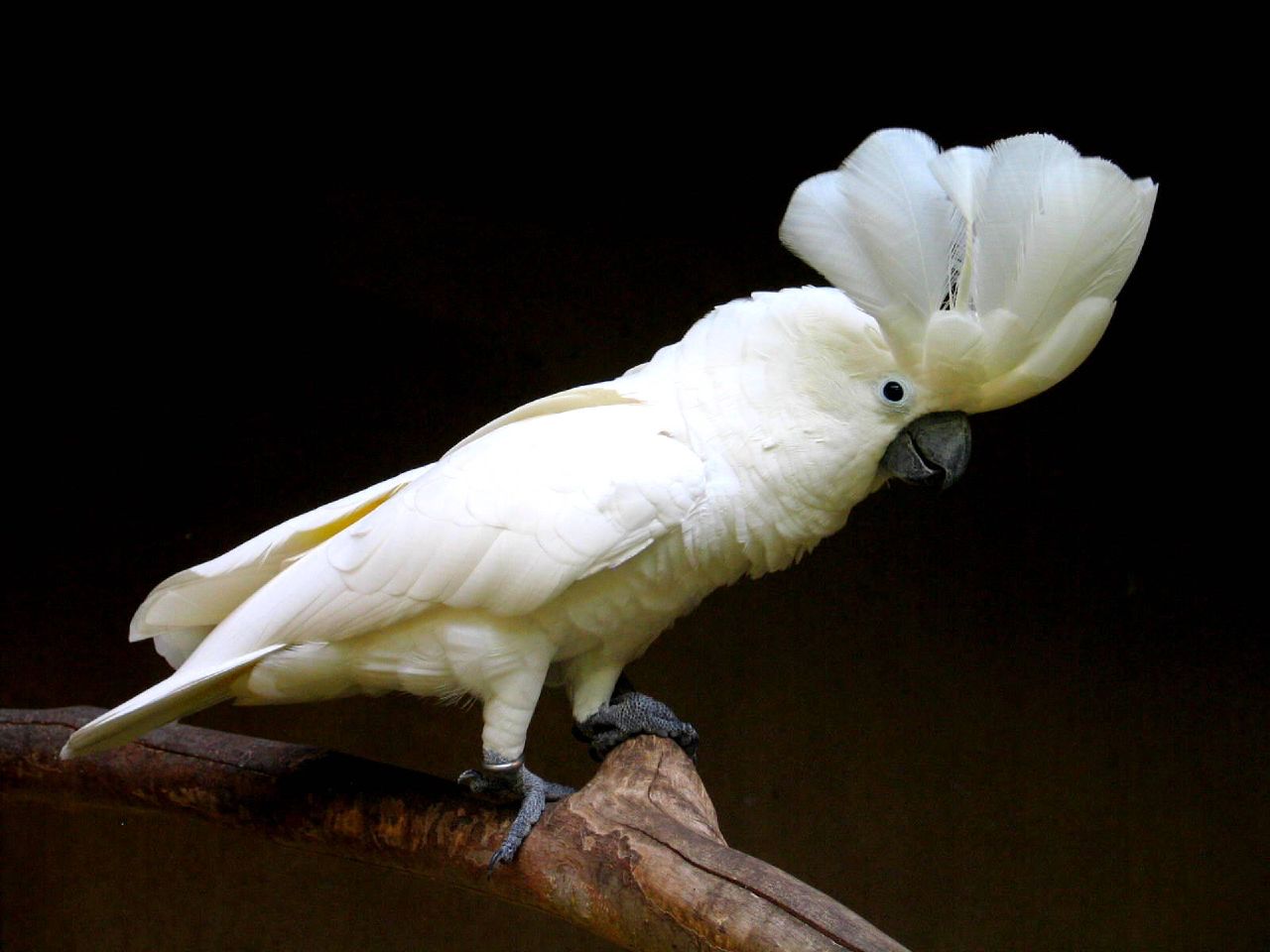
The name comes from the crest. At rest the crest lies flat and backward along the head and is easy to miss. When the bird is excited, alarmed, or greeting someone, it raises a fan of broad white feathers that arcs forward over the skull in a shape close to a half open umbrella.
That crest is a communication tool, not decoration. A fully raised crest signals arousal, which can mean delight or threat depending on body posture. A tight, rapidly flicked crest paired with a hunched stance and pinning eyes is a warning, and an experienced keeper reads it before a bite happens.
Other cockatoos have crests too, but they are shaped differently: the sulphur crested raises a narrow yellow spike, and Major Mitchell’s opens a banded pink and white fan. The umbrella’s is the broadest and the plainest, which is what gave the species its common name.
How Big Do Umbrella Cockatoos Get?
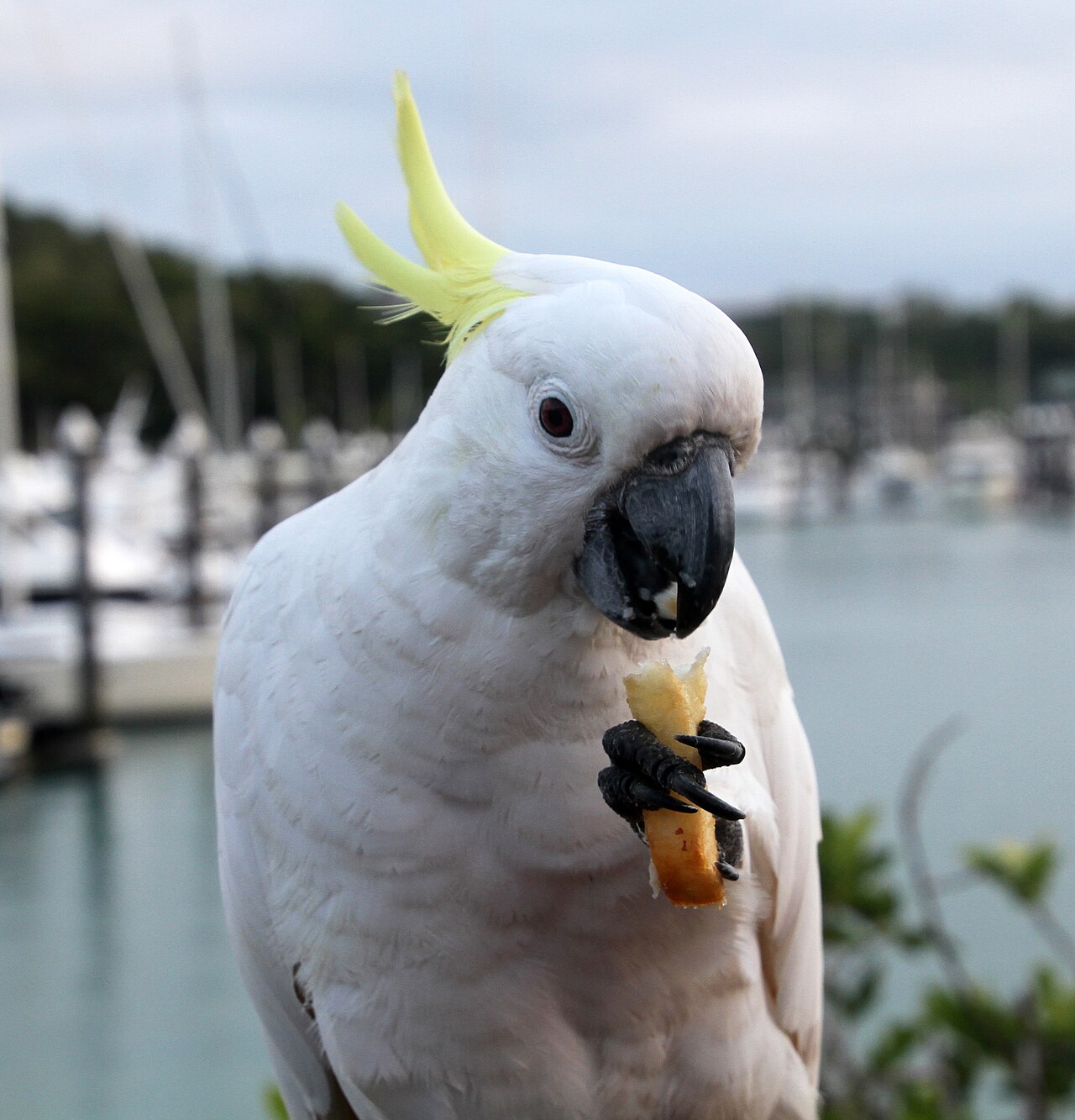
An adult umbrella cockatoo measures about 18 in (46 cm) from head to tail tip and weighs 400 to 800 g (0.9 to 1.8 lbs). Males generally sit at the heavier end of that range with a noticeably broader beak. Wingspan runs close to 30 in (76 cm).
That places the umbrella among the larger parrots kept as pets, similar in mass to a blue and gold macaw but shorter because of a stubbier tail. The bite force behind that beak is substantial: an umbrella can crack a hardwood perch and can break a human finger.
Chicks fledge at about 12 weeks and reach full adult size within the first year, though sexual maturity comes much later, at 3 to 6 years. A hand raised cockatoo chick is deceptively small next to the adult it will become within twelve months.
Where Do Umbrella Cockatoos Live in the Wild?
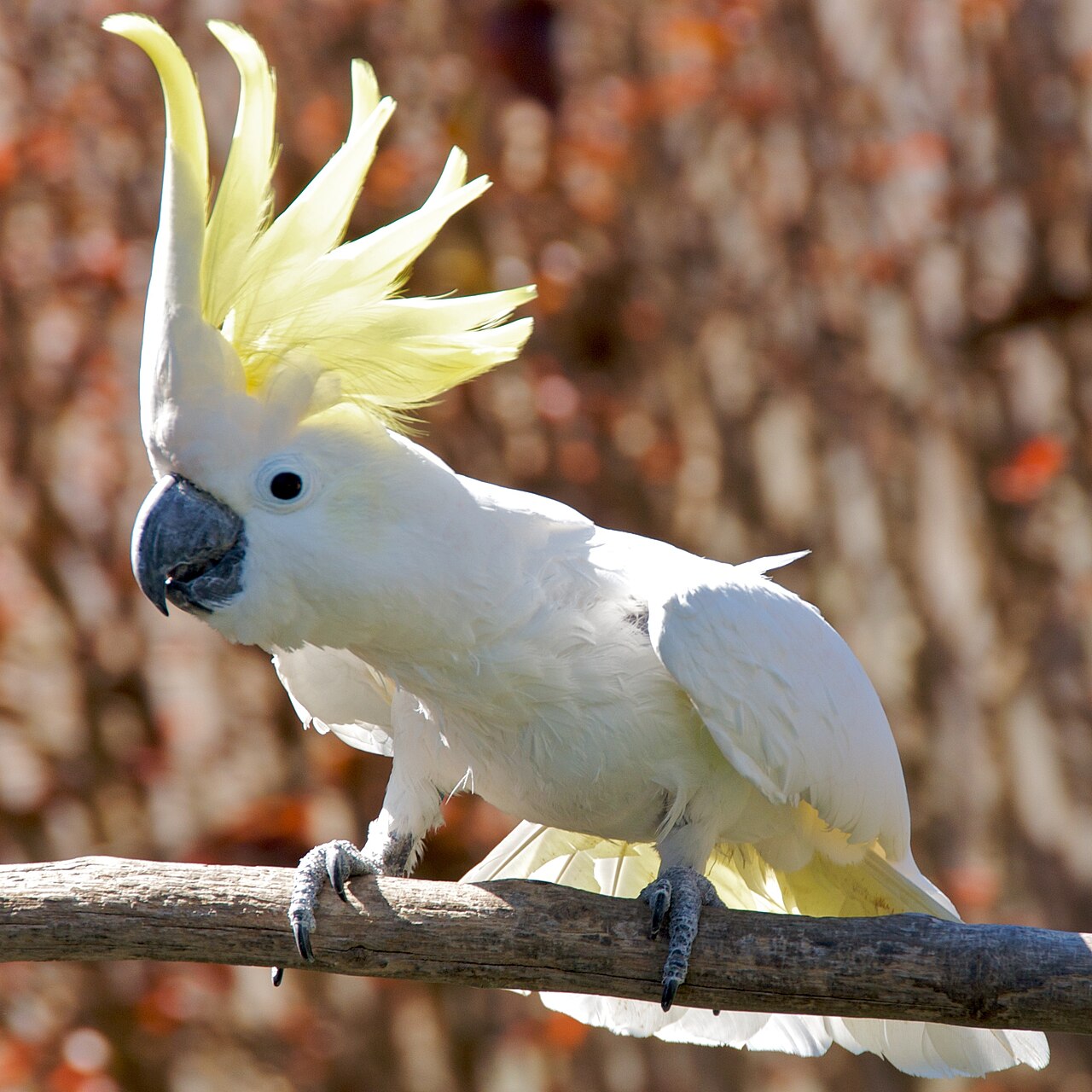
The species is endemic to the North Maluku islands of Indonesia, principally Halmahera, Bacan, Ternate, Tidore, and Kasiruta. It has never occurred naturally anywhere else. Wild birds use lowland primary and secondary rainforest up to about 3,000 ft (900 m), plus mangroves and agricultural edge.
They move in pairs or small flocks and feed high in the canopy on seeds, nuts, fruit, and insect larvae pulled from rotting wood. Nesting takes place in tree cavities, usually in large old trees, and that dependence on mature timber is part of why logging hits the species so hard.
The IUCN lists the umbrella cockatoo as Endangered. Trapping for the pet trade and habitat loss have driven steep declines, and the birds are conspicuous, loud, and easy to locate, which makes them simple targets. Like the resplendent quetzal of Central America, this is a species whose future depends almost entirely on whether its forest stays standing.
How Long Do Umbrella Cockatoos Live?
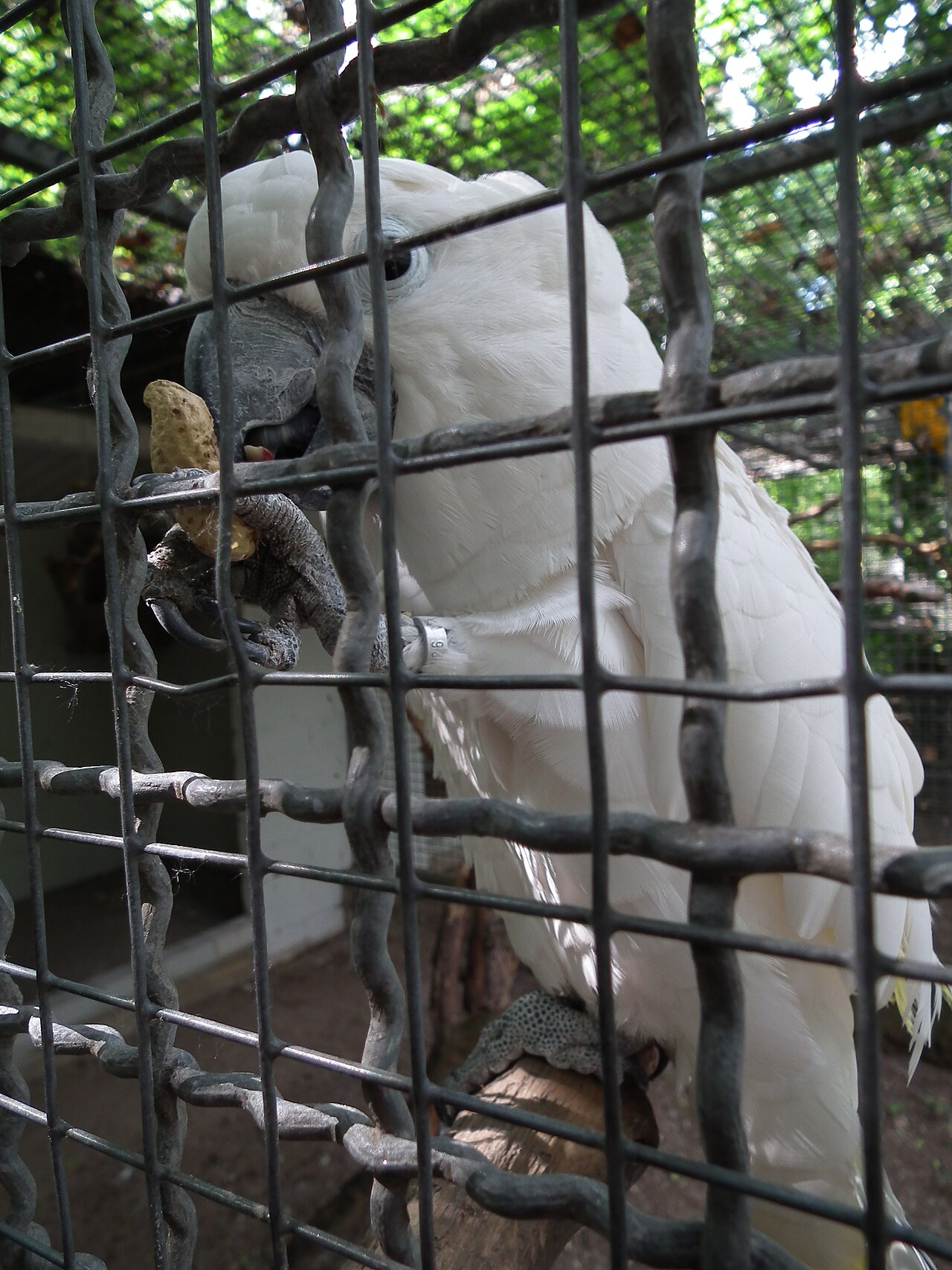
Captive umbrella cockatoos live 40 to 70 years, with well documented individuals passing 80. Wild birds average considerably less. This is not a pet with a foreseeable end date; it is a bird that will likely outlive the household it joins.
That lifespan changes the arithmetic of ownership. A 30 year old buyer should assume the bird needs a plan for its second and possibly third home. Avian rescues in the United States are full of cockatoos surrendered at 15 or 20 years old, still healthy, still bonded to someone who could no longer keep them.
Longevity also means chronic problems compound. A diet that is slightly too fatty causes little visible harm at year five and produces fatty liver disease by year twenty. Decades of a small daily error add up in ways they never would in a shorter lived exotic pet.
Umbrella Cockatoo Temperament
Umbrellas are the most physically affectionate of the commonly kept parrots. They want to be touched, pressed against a neck, tucked under an arm, and they seek that contact for hours. Keepers call them velcro birds, and the description is literal.
The trouble is that the wild behavior behind it is pair bonding, not friendship. A cockatoo that selects one person treats that person as a mate, which brings screaming when separated, aggression toward other household members, and hormonal behavior that petting along the back and under the wings makes worse.
Well adjusted umbrellas exist, and they are the ones taught early to play alone, forage for their own food, and accept handling from several people. The behavior problems that fill rescue listings, screaming and plucking, are almost always separation and boredom disorders rather than temperament faults.
How Loud Are Umbrella Cockatoos?
Loud enough to be heard from a quarter mile away. Contact calls from an umbrella cockatoo measure over 100 decibels at close range, comparable to a chainsaw, and the bird will use them at dawn and dusk as a matter of instinct rather than complaint.
This is the single most common reason umbrellas are rehomed. No amount of training eliminates the natural flock calls, and the screaming that develops on top of them, the kind triggered by a keeper leaving the room, can be reduced but requires consistent work at not rewarding it with attention.
Apartments and attached housing are almost never workable. Before buying, sit in a room with an adult umbrella for an hour at dusk. Anyone who wants a quiet companion animal is better served by a small pet like a guinea pig or a medium rabbit breed, both of which ask far less of the people around them.
Cage and Enrichment Requirements
Minimum cage size for a single umbrella is 36 x 48 in (91 x 122 cm) with a height of 60 in (152 cm) and bar spacing of 1 in (2.5 cm). Bigger is better, and a dedicated bird room or outdoor aviary is better still. The cage is where the bird sleeps, not where it lives.
Plan on 4 or more hours out of the cage every day with supervision. Umbrellas are strong chewers and intelligent escape artists, and standard cage latches are not enough. Many keepers end up padlocking doors after the first time a bird lets itself out.
Enrichment has to be destructible and replaced constantly: untreated softwood blocks, palm leaf shredders, cardboard, leather strips, and foraging puzzles. A cockatoo that runs out of things to take apart starts on its own feathers, and plucking is far easier to prevent than to reverse.
What Do Umbrella Cockatoos Eat?
A formulated pellet should make up 60 to 70 percent of the diet, with the rest fresh vegetables, leafy greens, and limited fruit. Dark leafy greens, bell pepper, squash, sweet potato, and broccoli all work well. Seed only diets cause obesity and liver disease and remain the most common husbandry failure in large parrots.
Nuts are useful as training rewards but are calorie dense, so cap them at a few per day. Almonds and walnuts in the shell double as foraging work. Sprouted seeds and cooked legumes are good additions for birds that refuse pellets at first.
Avocado, chocolate, caffeine, alcohol, onion, and anything salted are toxic or dangerous. So are the fumes from overheated nonstick cookware, which kill birds in minutes. The Smithsonian National Zoo publishes husbandry material on cockatoo species that is a reasonable cross check on feeding advice from breeders.
Health Problems to Watch For
Feather destructive behavior is the condition most associated with the species. Birds pluck chest, leg, and shoulder feathers bare while leaving the head untouched, since they cannot reach it. Causes range from boredom and hormonal frustration to skin disease and liver problems, so the first step is always a veterinary workup, not a behavior label.
Psittacine beak and feather disease is a circovirus that affects cockatoos particularly hard, producing abnormal feather growth and beak deformity. It is contagious, there is no cure, and any new bird should be tested and quarantined for 30 to 45 days before meeting others.
Fatty liver disease, obesity, and cloacal prolapse round out the common list, all tied to diet and chronic hormonal stimulation. Find an avian veterinarian before you buy the bird. General practice clinics often cannot treat parrots, and the nearest avian specialist may be hours away.
How Much Does an Umbrella Cockatoo Cost?
Purchase prices run 1,000 to 3,000 USD from a breeder, and rescue adoption fees are typically 200 to 600 USD. Rescues are full of umbrellas, and an adult with known history is often a better match than a chick whose adult behavior nobody can predict.
The cage is the real up front expense at 800 to 2,500 USD for something large and strong enough to hold the species. Add a vet exam, a scale, and a first round of toys, and the starting total is commonly 2,500 to 5,000 USD.
Running costs sit around 100 to 200 USD per month for food and the steady stream of destroyed toys, before veterinary care. Umbrellas are white birds, and their powder down means air filtration and cleaning become part of the household routine, much as owners of other pale plumaged birds such as the albino peacock find that white feathers show every bit of dirt.
Frequently Asked Questions
Are umbrella cockatoos good pets?
They are good pets for a small number of households and a poor fit for most. They demand 4 or more hours of daily interaction, scream above 100 decibels, live 40 to 70 years, and develop serious behavior problems when under stimulated. For an experienced keeper with time and space, few birds are more rewarding.
How much does an umbrella cockatoo cost?
Expect 1,000 to 3,000 USD from a breeder or 200 to 600 USD as a rescue adoption fee. A suitable cage adds 800 to 2,500 USD, and ongoing food, toys, and veterinary care run 100 to 200 USD per month. First year totals commonly land between 3,000 and 6,000 USD.
Do umbrella cockatoos talk?
Yes, but modestly. Most learn a vocabulary of roughly 10 to 30 words and phrases, with clearer mimicry of household sounds like microwaves and phones than of speech. They are far better known for volume and for mimicking whistles than for the vocabulary size of an African grey.
Why do umbrella cockatoos pluck their feathers?
Plucking is usually boredom, separation distress, or hormonal frustration, though skin disease, liver disease, and parasites cause it too. Because the medical and behavioral causes look identical from the outside, any plucking bird needs an avian veterinary exam before the behavior is treated as psychological.
Are umbrella cockatoos endangered?
Yes. The IUCN lists Cacatua alba as Endangered. Wild numbers on the North Maluku islands have fallen sharply from trapping for the pet trade and from logging that removes the large old trees the species needs for nesting cavities.
How long do umbrella cockatoos live in captivity?
Forty to 70 years is the normal range with good care, and individuals have passed 80. That means a bird bought today will very likely need a second home during its life, which is why including the cockatoo in an estate plan is standard advice among experienced keepers.