Nuthatch Sound: 6 Calls You Hear and What Each One Means
The classic nuthatch sound is a nasal, tinny yank-yank-yank that carries through bare winter woods long before you spot the bird itself. It is one of the easiest backyard calls to learn because nothing else in a North American forest sounds quite so much like a tiny toy horn being squeezed twice.
Four nuthatch species breed in the United States, and each one has its own voice. Once you know which pitch belongs to which bird, a walk through an oak or pine stand turns into a running commentary on who is nearby, who is claiming territory, and who has just spotted a hawk.
A nuthatch sound is a short, nasal, repeated honk, usually written as yank-yank or wha-wha. White-breasted Nuthatches give the lowest and most drawn out version, Red-breasted Nuthatches sound like a miniature tin horn, and Brown-headed Nuthatches squeak like a rubber duck. All four species repeat the note in series rather than singing a melody.
| Species | Typical sound | Pitch | Where you hear it |
|---|---|---|---|
| White-breasted Nuthatch | Low nasal whi-whi-whi or yank-yank | Lowest of the four | Deciduous woods, suburbs, feeders |
| Red-breasted Nuthatch | Tinny ank-ank-ank, like a toy horn | Highest and most nasal | Conifers, north and mountain West |
| Brown-headed Nuthatch | Squeaky double note, rubber duck quality | High and squeaky | Southeastern pine forests |
| Pygmy Nuthatch | Fast peep peep chatter from flocks | High, constant | Ponderosa pine, interior West |
| Nestlings | Thin rasping begging buzz | Very high, weak | Inside a cavity, May to July |
What Does a Nuthatch Sound Like?
A nuthatch sounds nasal, blunt and mechanical. The bird produces a single note and then repeats it four to twelve times at an even tempo, without rising or falling the way a warbler or a thrush does. Birders describe it as honking, tooting or bleating, and every one of those words fits better than the word singing.
The reason the sound carries so well is that nuthatches call from tree trunks, often high up and facing downward. The trunk acts as a sounding board, and the nasal quality cuts through wind and through the softer chatter of chickadees and titmice feeding in the same flock.
Compared with the fluting whistles of a Northern Cardinal or the harsh screams you hear in Blue Jay calls, the nuthatch note is short, flat and almost comically small for a bird that behaves so boldly.
White-Breasted Nuthatch Sounds
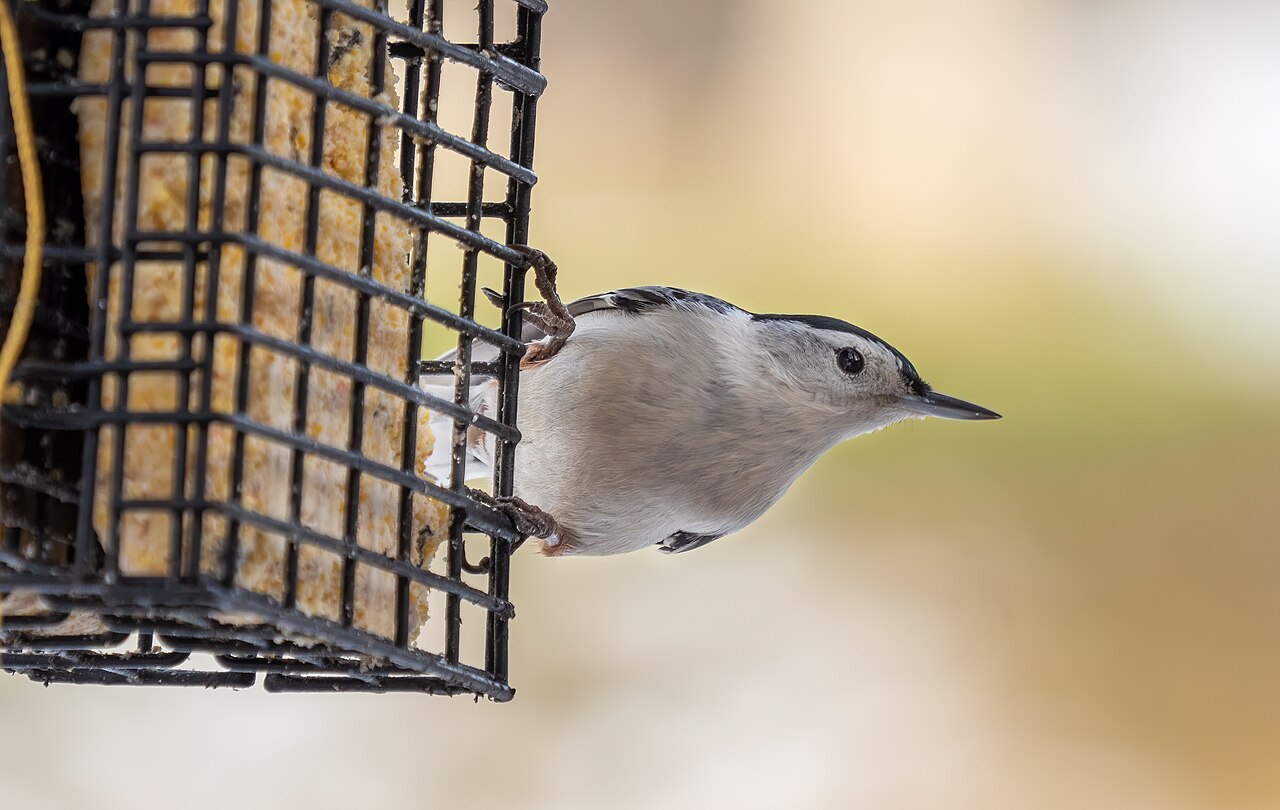
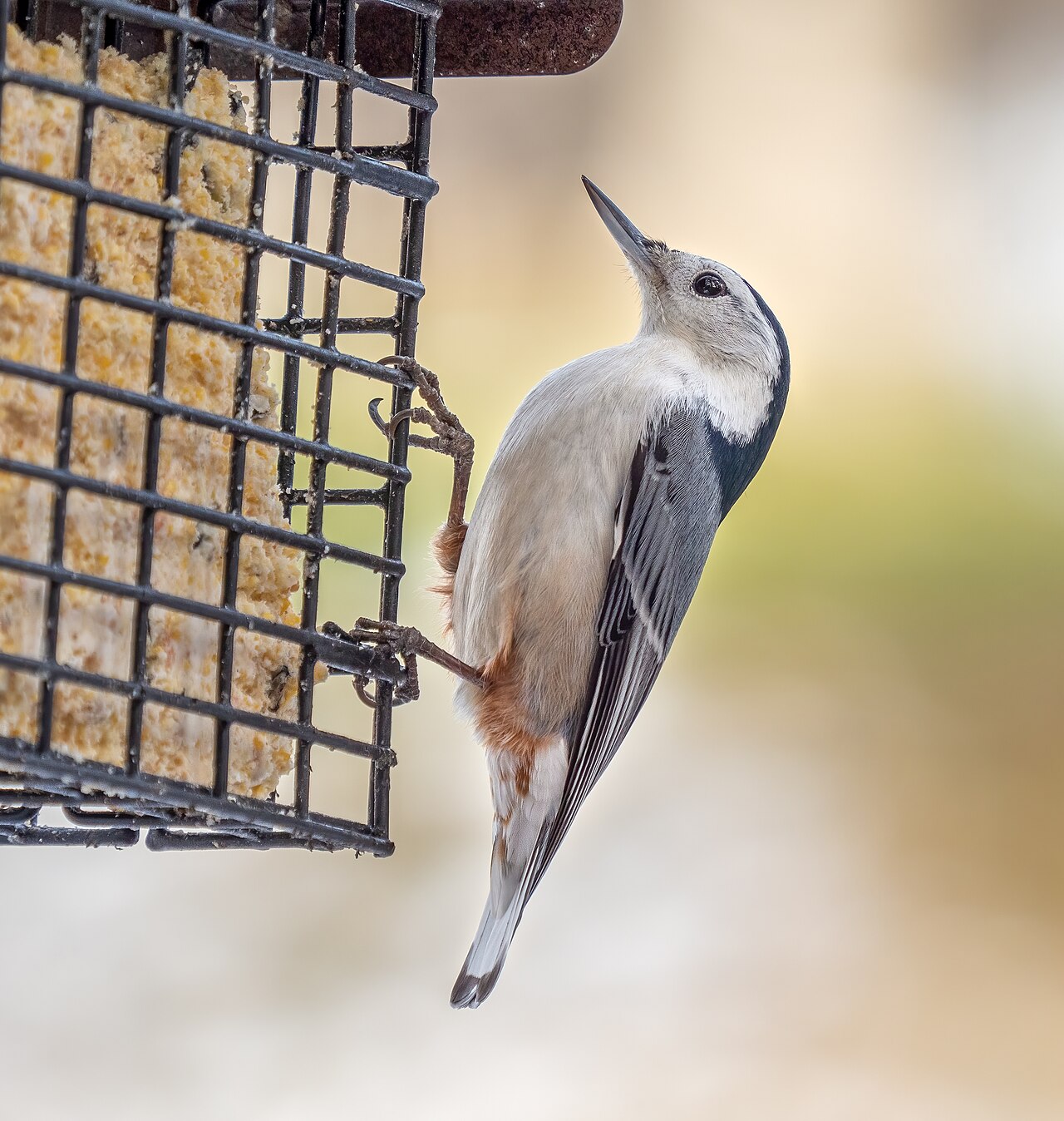
White-breasted Nuthatch (Sitta carolinensis) sounds are the ones most Americans hear, because this is the nuthatch of backyards, parks and oak woodlands across almost the entire lower 48. Its call is a low, slightly hoarse whi-whi-whi-whi, often given in a run of five to ten notes.
In late winter the male adds a true song: a faster, more even series of about a dozen notes on one pitch, delivered from a high perch. It is the sound of a bird advertising a territory, and it starts weeks before the first warblers arrive.
Pairs also keep up a quiet conversational version all year. If you hear single soft honks spaced several seconds apart, two birds are probably tracking each other through the canopy.
Red-Breasted Nuthatch Call
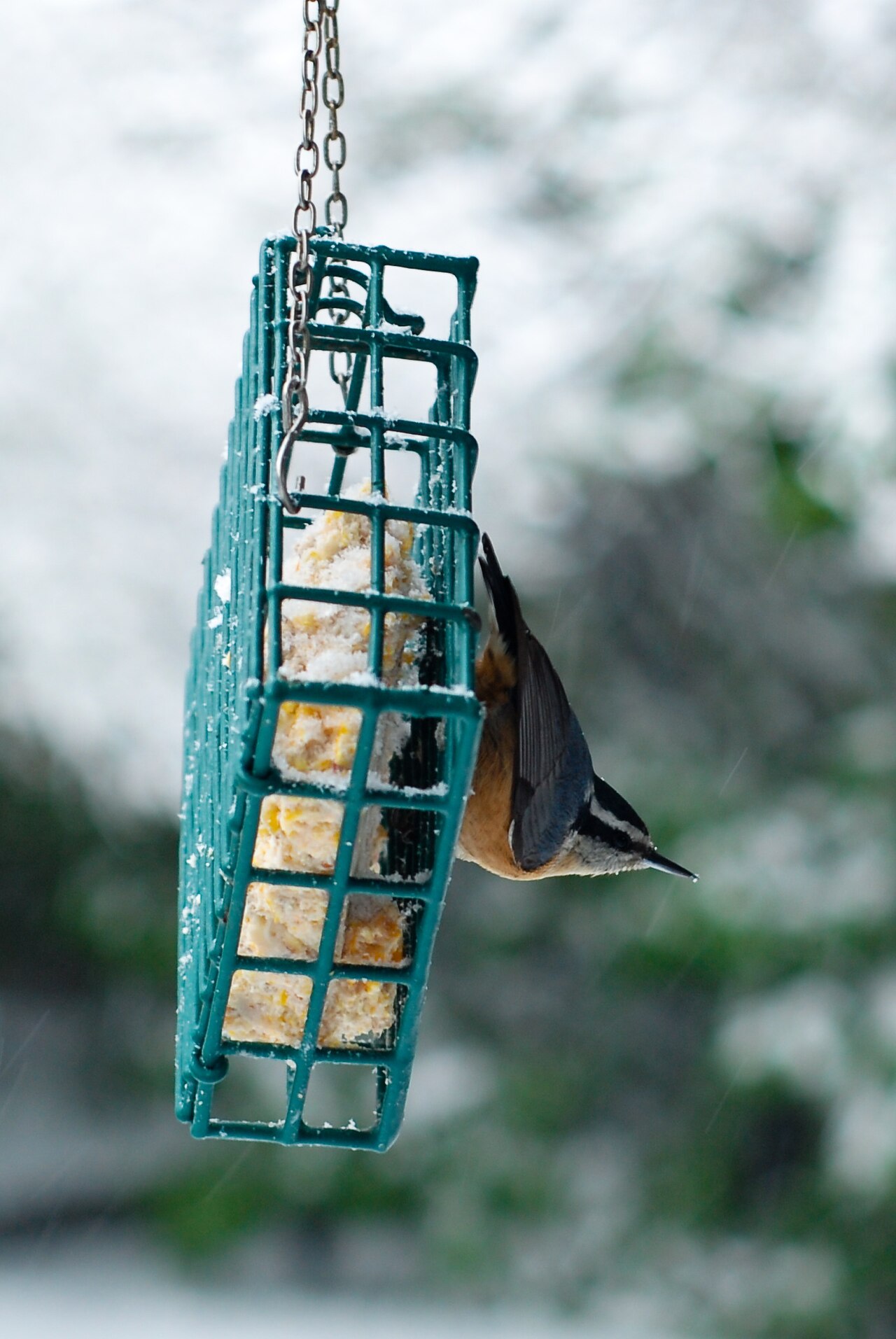
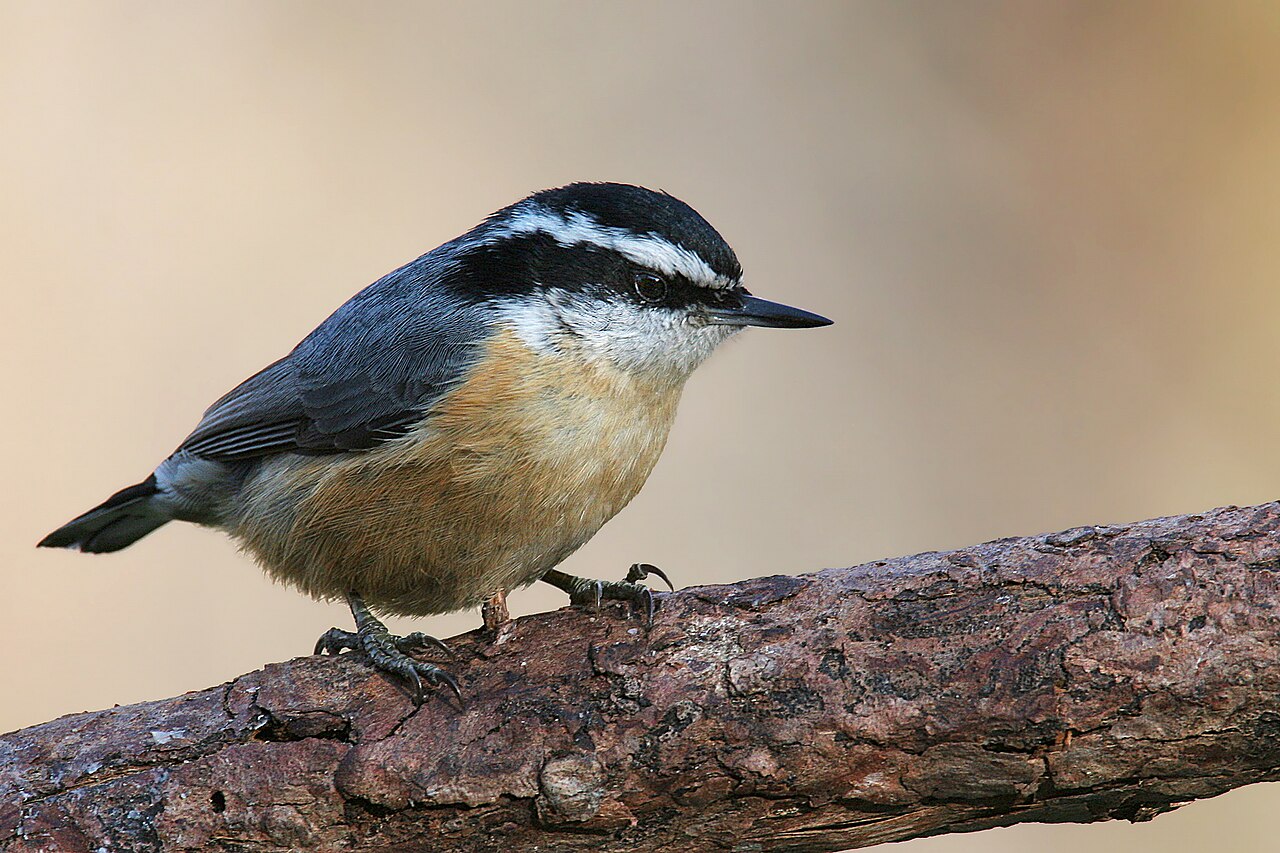
The Red-breasted Nuthatch call (Sitta canadensis) is higher, faster and far more nasal than its white-breasted cousin, and the usual comparison is to a tiny tin horn or a child’s party blower. Written out it becomes ank-ank-ank or yna-yna.
This species lives in spruce, fir and pine, but it irrupts south in large numbers during years when conifer seed crops fail. In those winters people who have never seen one suddenly hear that toy horn in a suburban hemlock.
Red-breasted birds also call more often than White-breasted ones. A single bird working a pine can honk every few seconds for minutes at a time, which makes it an easy first sound to learn by ear.
Brown-Headed and Pygmy Nuthatch Sounds
The brown nuthatch sound most people mean is the Brown-headed Nuthatch (Sitta pusilla) of southeastern pine forests, and it is genuinely squeaky. The double note pit-pit or kee-dee is regularly compared to a rubber duck being stepped on, and flocks produce a constant squeaking chorus.
Pygmy Nuthatches (Sitta pygmaea) fill the same role in western ponderosa pine. They travel in noisy family groups of six to fifteen birds and keep up a high peep peep peep chatter that sounds more like a flock of insects than a flock of birds.
Both species are far more social than the two common nuthatches, so volume alone is a clue. If you hear many small squeaky voices at once in pine woods, you are listening to one of these two.
Female Nuthatch Sound: Does She Sing?
Female nuthatches call, and in White-breasted and Red-breasted Nuthatches the female call is nearly identical to the male’s, which is why the female nuthatch sound is so hard to separate in the field. Females do give the yank series freely, especially when contacting a mate.
True song is a different matter. In most nuthatch populations the long, even territorial series is given mainly by males, and females answer with shorter call notes rather than matching the full song.
There is one reliable behavioral clue. A female on or near the nest cavity often gives a soft, rapid trill that males rarely use, and she may fan her wings while doing it.
Baby Nuthatch Sounds in the Nest
Baby nuthatch sounds are thin, raspy and repetitive, nothing like the adult honk. Nestlings buzz almost continuously when a parent approaches the cavity, and from 10 to 20 ft (3 to 6 m) away it can sound like a faint insect hum coming out of the tree.
Fledglings keep begging for two to three weeks after they leave the nest. Their call is a higher, whinier version of the adult yank, usually given while chasing a parent along a branch with wings quivering.
If you hear that begging buzz from a cavity between May and July, leave the tree alone. Repeated disturbance at a nest hole is one of the few things that will make a nuthatch pair abandon a site.
Nuthatch Sound Meaning: What Each Call Signals
The nuthatch sound meaning depends almost entirely on speed and repetition rather than on the note itself. A slow, spaced series is a contact call that keeps a pair or a winter flock loosely together while everyone forages on separate trunks.
A fast, urgent burst is an alarm. Research on Red-breasted Nuthatches shows they listen to chickadee alarm calls and repeat the threat information, adding more notes when the predator is a small agile hawk rather than a large one. Other species eavesdrop on those calls in turn.
A long, even, unhurried series from a high exposed perch in late winter is territorial advertisement. The same bird that honks twice near your feeder in November will run a dozen notes together in February.
When Nuthatches Are Loudest Through the Year
Nuthatch vocal activity peaks twice. The first peak is late winter into early spring, roughly February to April, when males sing to claim cavities and pairs re-establish bonds before other songbirds have returned.
The second peak is late summer, when fledged young beg noisily and family groups move through the canopy together. Between those two windows, in deep midsummer, nuthatches go relatively quiet while they are feeding nestlings.
Winter is the best listening season for beginners. Leaves are gone, flocks are mixed, and a nuthatch working a trunk with Carolina Wrens and chickadees is easy to isolate by ear and then find with binoculars.
What’s the Difference Between a Nuthatch and a Titmouse?
The difference is pitch and shape of the sound: a nuthatch honks on one flat nasal pitch, while a Tufted Titmouse whistles a clear, ringing peter-peter-peter that rises and falls. The titmouse sound is musical and the nuthatch sound is not.
Visually the two are easy to separate as well. Titmice are gray with a pointed crest and perch upright, while nuthatches are short-tailed, crestless and famous for walking head first down a trunk, which no titmouse does.
The confusion is understandable because both join the same winter feeding flocks and both raid the same sunflower feeders. Listen for musical versus nasal and the identification resolves itself immediately, the same way a mewing note separates a Gray Catbird from every other gray songbird.
How to Befriend a Nuthatch and Hear It Up Close
The fastest way to befriend a nuthatch is to offer black oil sunflower seed and suet in a spot with mature trees nearby, then stay still. Nuthatches habituate quickly and will often work a feeder while a person stands 10 ft (3 m) away.
Unshelled peanuts and a bark-style suet feeder work even better because nuthatches cache food. A bird that carries seeds away every 30 seconds is wedging them into bark crevices, and it will keep returning as long as the supply lasts.
Leave standing dead wood if you safely can. Nuthatches nest in natural cavities and old woodpecker holes, and a yard with one snag is far more likely to hold a calling pair year round than a yard with none.
Where to Listen to Nuthatch Song Audio
The best free nuthatch song audio library is the Cornell Lab’s All About Birds, which posts separate recordings for songs, calls and regional variants of each species. Comparing White-breasted and Red-breasted tracks back to back is the single most useful five minutes you can spend.
Play recordings at home rather than in the field. Broadcasting calls in the woods pulls territorial birds off nests and away from feeding, and most public land in the United States discourages or prohibits it during breeding season.
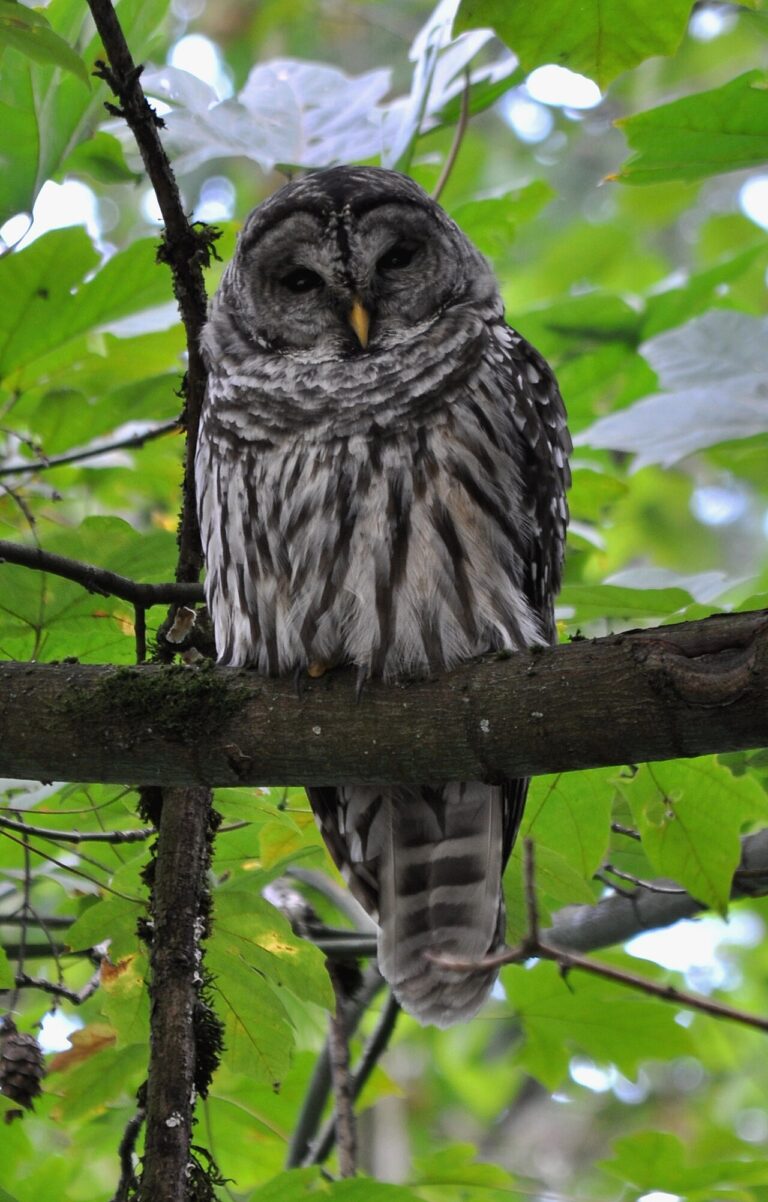
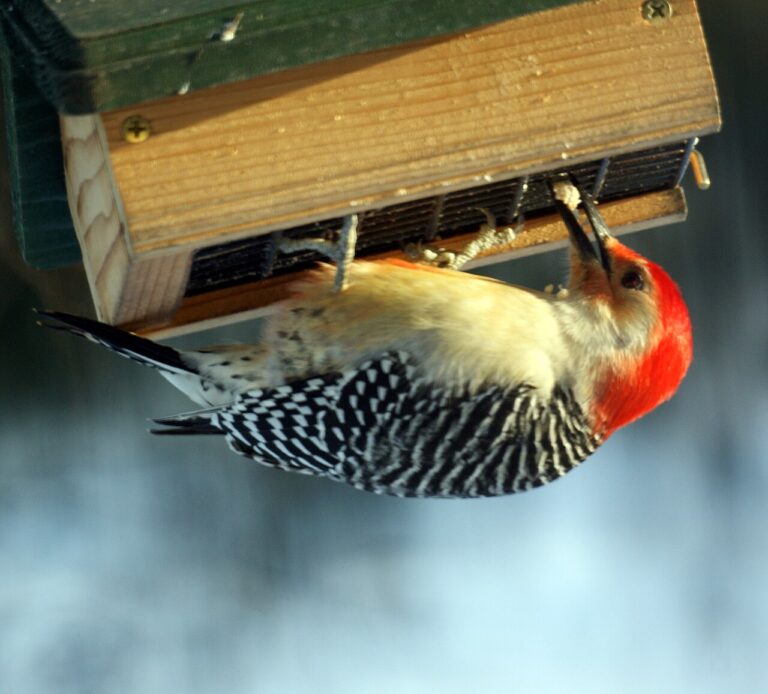
Once the two common voices are locked in, the rest of the woodland chorus opens up. The same trunk that holds a nuthatch often holds a woodpecker, and learning Barred Owl calls and Bald Eagle sounds rounds out the cast of birds you will hear on any winter walk.
Frequently Asked Questions
What is special about Nuthatch?
Nuthatches are the only North American birds that regularly climb down tree trunks head first. That upside down angle lets them spot insects and spider eggs hidden in bark crevices that woodpeckers and creepers, which always climb upward, consistently miss on the same tree.
How rare are nuthatches?
Nuthatches are not rare. The White-breasted Nuthatch is common across most of the United States year round, and the Red-breasted Nuthatch is common in northern and mountain conifers. Brown-headed and Pygmy Nuthatches are locally common but tied strictly to southeastern and western pine forests.
Are nuthatches friendly to humans?
Nuthatches are bold rather than friendly. They tolerate people at close range, visit feeders while you refill them, and in some parks will take peanuts from an outstretched hand. That behavior is confidence around a food source, not attachment, and it fades where feeding stops.
What are the nuthatch song lyrics birders use?
Birders write the White-breasted call as yank-yank or whi-whi-whi, the Red-breasted as ank-ank or yna-yna, and the Brown-headed as a squeaky pit-pit. These mnemonics are rough, but they capture the nasal tone better than any musical notation.
Do nuthatches call at night?
Rarely. Nuthatches are strictly daytime birds and roost in cavities overnight, sometimes in groups of a dozen or more in cold weather. A nasal honking sound after dark is far more likely to be a flying squirrel, a screech owl or a startled roosting bird.
Why is a nuthatch calling repeatedly outside my window?
Repeated calling near a house usually means the bird is defending a feeder, a cavity or a cache site nearby. In late winter the same pattern signals territorial advertisement. Persistent fast bursts instead of an even series mean the bird has spotted a cat or a hawk.