Suet for Birds: Complete Guide
Suet for birds is rendered beef or vegetable fat, often mixed with seed, nuts, or dried fruit, that delivers a dense source of energy to woodpeckers, chickadees, nuthatches, and other clinging, insect-eating birds. Unlike seed, which is mostly carbohydrate and protein, suet is almost pure fat, making it especially valuable in cold months when birds burn far more calories staying warm and insects, their normal protein and fat source, are scarce or dormant.
| Fact | Detail |
|---|---|
| What it is | Rendered beef fat (tallow) or vegetable-fat substitute |
| Best season | Fall through winter; use no-melt formulas in summer |
| Top visitors | Woodpeckers, chickadees, nuthatches, wrens |
| Feeder type | Wire cage or mesh suet feeder |
| Squirrel risk | High without a cage or baffle |
| Shelf life | Weeks unrefrigerated in cool weather, spoils faster in heat |
What Suet Actually Is
Suet in its traditional form is the hard, raw fat found around the kidneys and loins of beef or mutton, rendered down by melting and straining out impurities so it sets into a firm, stable block. For birds, that rendered fat is typically poured into cake molds, often mixed with cracked corn, peanuts, sunflower chips, or dried fruit, and sold as ready-made suet cakes sized to fit standard wire suet feeders. Commercial ‘vegetable suet’ swaps the animal fat for plant-based fats like palm oil, offering a similar energy density for anyone who prefers not to use animal products. Both versions serve the same purpose: a compact, high-calorie food that clinging birds can peck at directly from a hung cage.
Why Suet Matters More in Winter
Cold weather dramatically raises a bird’s energy needs, since maintaining body heat through a freezing night burns far more calories than an equivalent night in summer, and suet’s fat content, roughly nine calories per gram versus about four for carbohydrate or protein, makes it one of the most efficient feeder foods available for meeting that demand. Insects, the natural fat and protein source for woodpeckers, chickadees, and nuthatches, become scarce or dormant in winter, leaving suet as a practical stand-in. Birders in colder climates often see suet consumption spike noticeably during the first hard freeze of the season and again during extended cold snaps, as more species turn to it once other food sources thin out. For a full seasonal setup beyond suet alone, see our winter bird feeding guide.
Which Birds Eat Suet
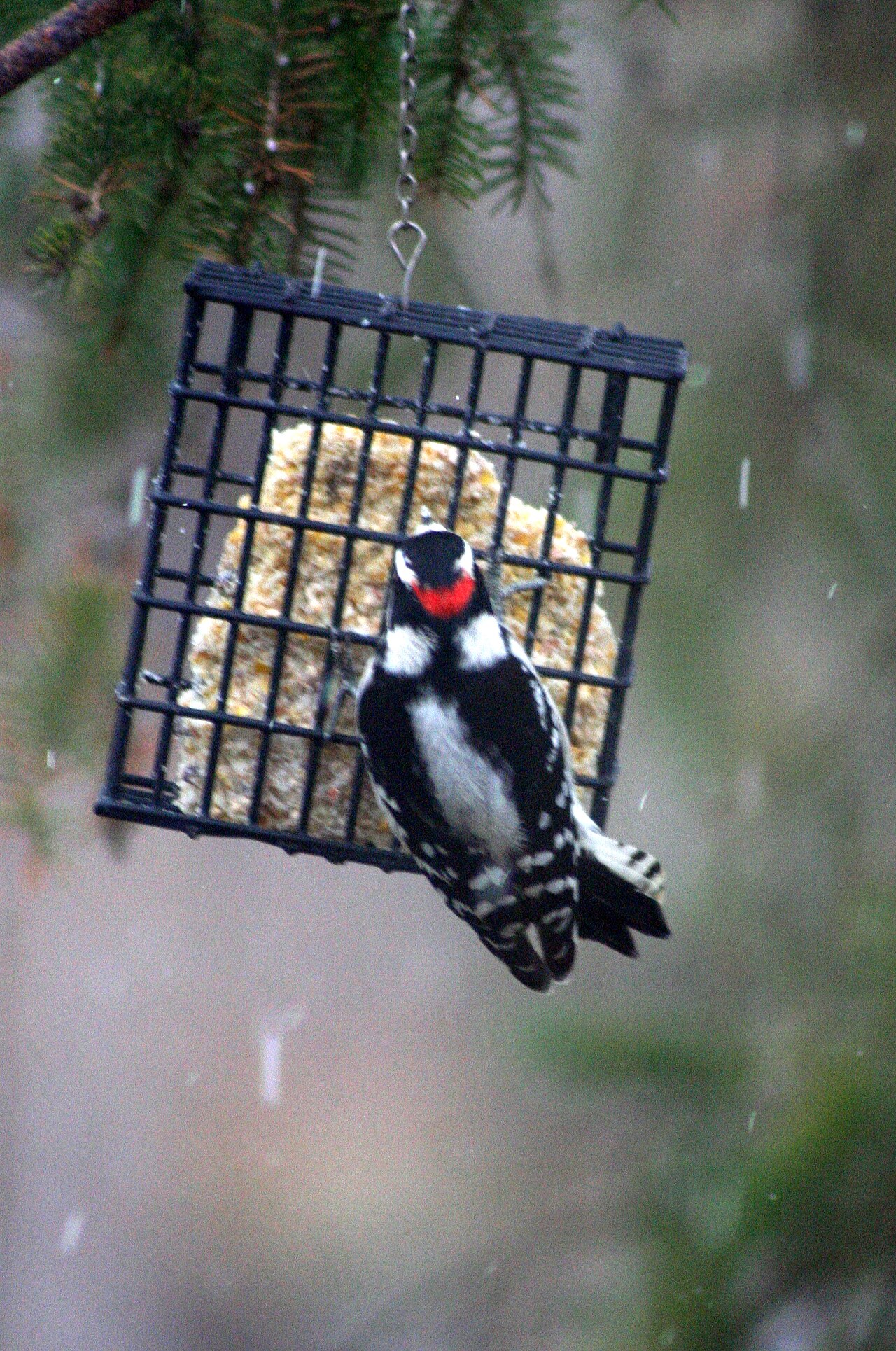
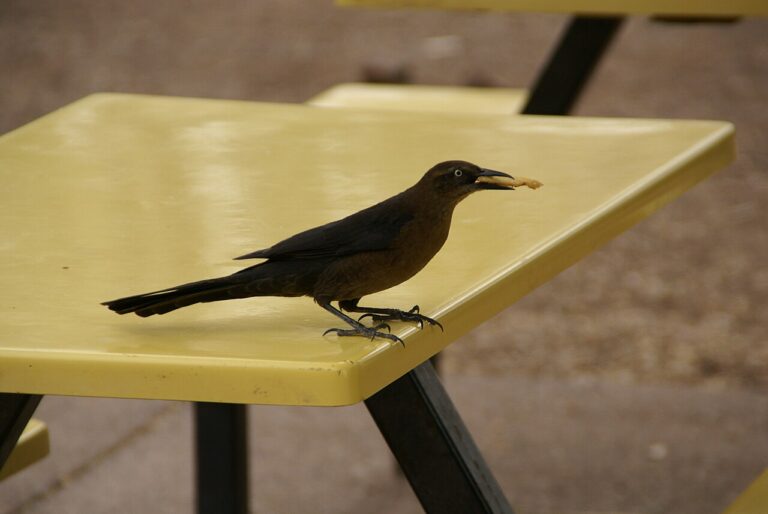
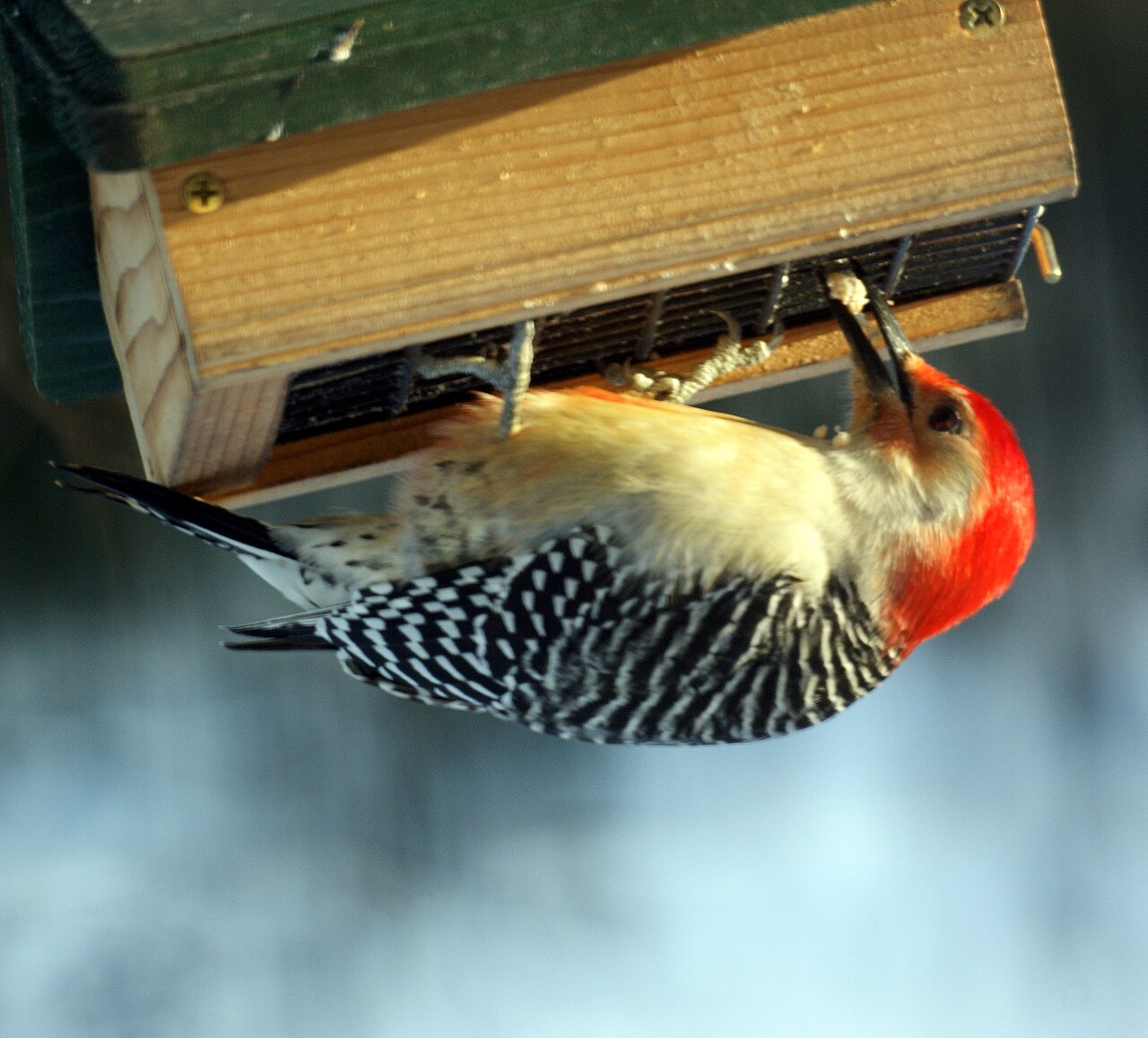
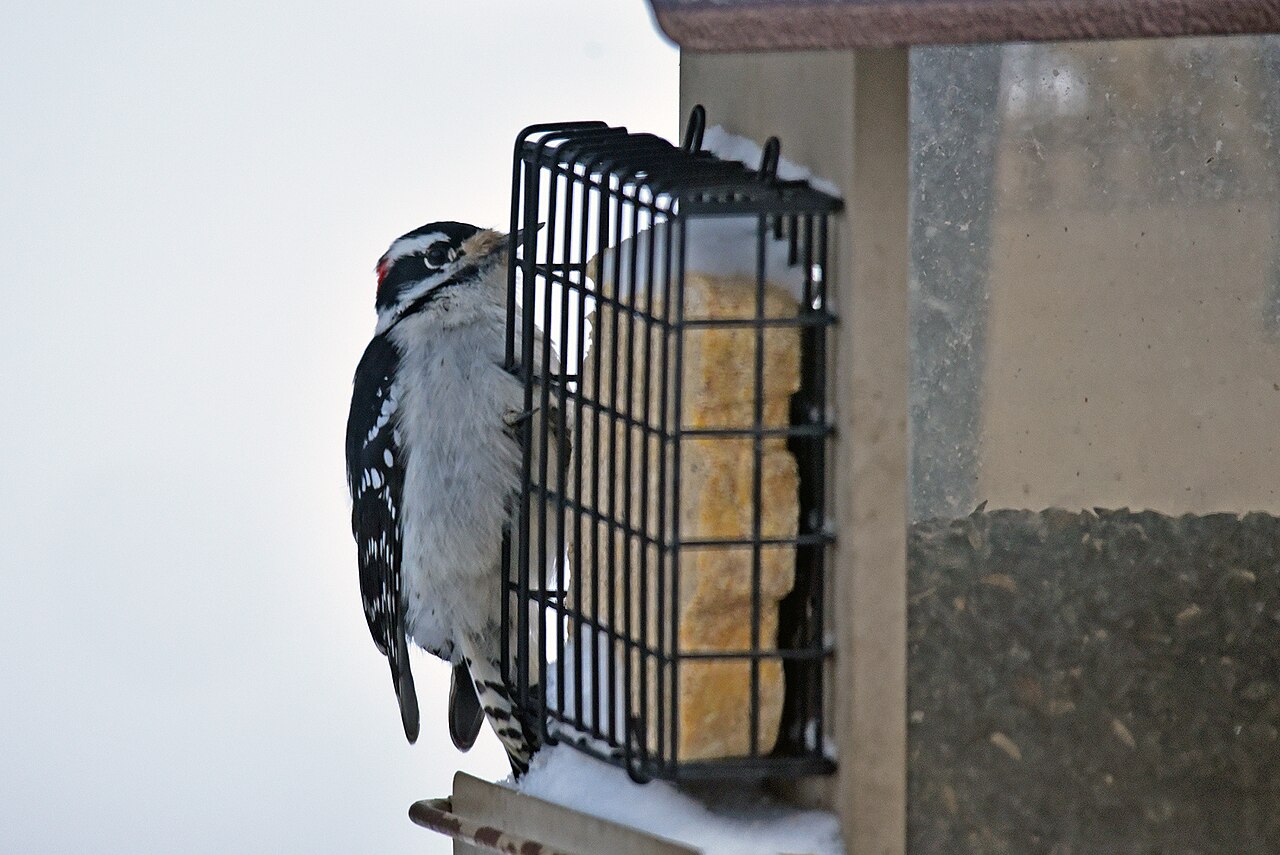
Woodpeckers are the most consistent suet visitors, including downy, hairy, red-bellied, and pileated woodpeckers, since suet mimics the fat and insect larvae they naturally chisel out of tree bark. Chickadees and nuthatches follow close behind, both being small, agile clingers well suited to pecking at a hanging cage. Carolina wrens, tufted titmice, and even bluebirds will take suet, particularly in winter, though bluebirds often prefer suet crumbles or nuggets over a solid cake since they are less adapted to clinging. Starlings and grackles will also raid suet in large, less welcome numbers, which is one reason many feeders use a cage with openings too small for larger birds, favoring the smaller clinging species instead. Our guides to downy vs. hairy woodpeckers and what chickadees eat cover two of the most frequent visitors in more depth.
How to Serve Suet Safely
A wire cage or mesh suet feeder is essential, both to hold the cake in place and to let birds cling and peck through the openings while discouraging squirrels and larger birds from hauling the whole block away; our best suet feeders roundup compares the most reliable cage styles. Hanging the feeder on a squirrel baffle or pole system, rather than a low branch, cuts down significantly on raids; see our guide to squirrel baffles for setup options. Feeders with a cage opening small enough to admit chickadees and nuthatches but not squirrels, sometimes marketed as tail-guard or upside-down suet feeders, add a second layer of protection for yards with persistent squirrel pressure. Suet should be checked regularly in warm weather since it can turn rancid, grow mold, or soften enough to smear on feathers, all of which make no-melt formulas worth the small extra cost from spring through early fall. In freezing weather, standard suet holds its shape well and needs replacing only once birds have picked it clean, typically every one to two weeks depending on how many visitors your yard attracts.
DIY Suet: Making Your Own
Homemade suet is straightforward: render beef fat by melting it slowly and straining out solids, then mix the liquid fat with ingredients like peanut butter, cornmeal, oats, and dried fruit or sunflower chips before pouring it into molds, such as a muffin tin or the plastic tray a store-bought cake came in, and letting it firm up in the refrigerator or freezer. A common ratio is roughly equal parts rendered fat and peanut butter, with dry ingredients like oats and cornmeal added until the mixture holds together without being greasy. Homemade suet lets you skip fillers found in some cheaper commercial cakes and control exactly what goes into it, though it should still be treated with the same summer-heat caution as store-bought suet.
Suet Nutrition and Feeding Frequency
Suet is calorie-dense rather than nutritionally complete, which is why birds that rely on it also seek out seed, insects, and water rather than treating it as a sole food source. The Cornell Lab of Ornithology notes that suet is best treated as a supplemental, high-energy food that complements natural foraging and other feeder offerings, particularly valuable during cold snaps and the demanding weeks of raising nestlings when adult birds need extra fuel to keep up with constant feeding trips. A single standard suet cake, roughly nine ounces, typically lasts one to two weeks in a yard with steady woodpecker and chickadee traffic during winter, though a very active feeding station in a cold climate can go through a cake in under a week. Checking the cage every few days, both to restock and to confirm the suet has not softened, molded, or attracted unwanted insects, keeps the food source both effective and safe.
Suet Cakes vs. Plugs vs. Crumbles
Suet is sold in a few distinct forms, and matching the form to the feeder and the visiting species improves how much actually gets eaten rather than wasted. Standard rectangular cakes fit the wire cage feeders most common in backyards and suit clinging birds like woodpeckers and chickadees that can grip the cage and peck through the mesh. Suet plugs are cylindrical and fit into feeders drilled with holes to match, often mounted directly on a post or tree, which tends to appeal strongly to woodpeckers in particular since the format mirrors a natural tree cavity. Crumbles and nuggets, loose rather than molded into a solid block, work well in tray or platform feeders and are the most practical option for bluebirds, wrens, and other species that are not natural clingers and struggle to feed from a hanging cage. Offering one solid cake in a cage feeder alongside a tray of crumbles nearby is a simple way to serve both clinging and non-clinging suet eaters without needing two entirely different feeding setups.
Related reading: Best Bird Seed for Cardinals.
Frequently Asked Questions
What is suet for birds made of?
Suet is rendered beef or mutton fat, or a plant-based fat substitute, often mixed with seed, nuts, cornmeal, or dried fruit and formed into cakes sized for standard wire suet feeders.
What birds eat suet?
Woodpeckers, chickadees, nuthatches, wrens, and titmice are the most frequent suet visitors, along with occasional starlings and grackles if the feeder openings are large enough to admit them.
Is suet good for birds year-round?
Suet is most valuable in fall and winter when birds need concentrated energy and insects are scarce. In hot weather, switch to a no-melt formula or pause suet, since standard suet can turn rancid or smear on feathers.
Do squirrels eat suet?
Yes, squirrels readily eat suet and can strip a cake quickly if it is not protected. A cage feeder combined with a squirrel baffle on the pole is the most reliable deterrent.
Can I make my own suet at home?
Yes. Rendered beef fat mixed with peanut butter, oats, cornmeal, and dried fruit, then set in a mold and chilled, makes an effective and less expensive homemade alternative to store-bought suet cakes.
What is the difference between suet and tallow?
Tallow is the rendered, purified form of suet fat after melting and straining out impurities; in everyday feeder use the two terms are often used interchangeably for the same rendered beef fat product.
How long does suet last in a feeder?
In cold weather, a suet cake typically lasts one to two weeks depending on visitor traffic. In warm weather it should be checked far more often and replaced at the first sign of rancidity or mold.