Wolf Howl: What It Means and How Far It Carries
A wolf howl is a long, low, rising and falling call that a gray wolf (Canis lupus) uses to find its pack, warn rival packs off a territory and hold the group together over distance. It is not a threat aimed at you, and it has nothing to do with the moon. A single howl lasts 3 to 11 seconds and carries 6 miles (10 km) through forest.
Most people meet the sound through a video clip or a campground at night, and the first question is always the same: what is the animal actually saying, and is something wrong. The short version is that howling is a phone call, not an alarm. The longer version depends on who is howling, how many join in and what time of year it is.
Wolves howl mainly to regroup after a hunt, to advertise a territory and to strengthen bonds inside the pack. Research at wolf sanctuaries found that howling rises most when a preferred pack member leaves, not when stress hormones rise, which makes howling a social tool rather than a distress signal.
| Feature | Wolf howl | Coyote howl |
|---|---|---|
| Pitch | Low, 150 to 780 Hz | High, often above 1,000 Hz |
| Length | 3 to 11 seconds, unbroken | 1 to 4 seconds, broken up |
| Texture | Smooth, few pitch changes | Yipping, barking, warbling |
| Group sound | Deep chorus, rolling | Chaotic, sounds like many more animals |
| Carry | Up to 10 miles (16 km) in open country | About 1,000 yards (900 m) |
| Season peak | Midwinter breeding, late summer rendezvous | Year round, peaks in fall |
What Does It Mean If a Wolf Howls?
It usually means a wolf is trying to locate its pack or telling a neighboring pack where the border is. Biologists group howling into three functions: reassembly after the group splits up on a hunt, spacing between packs so that fights are avoided, and social bonding within the group.
Context decides which one you are hearing. A lone howl repeated at intervals from the same spot is almost always a search call. A chorus answered by a second chorus in the distance is territorial. A burst of howling that fades into whining and yipping around a den is bonding behavior among pack members that are already together.
One thing howling is not is a hunting signal. Wolves go quiet when they close on prey, because sound gives away position. The howling that campers hear after dark is far more often a family sorting out where everyone is.
What Does a Wolf Howl Sound Like?
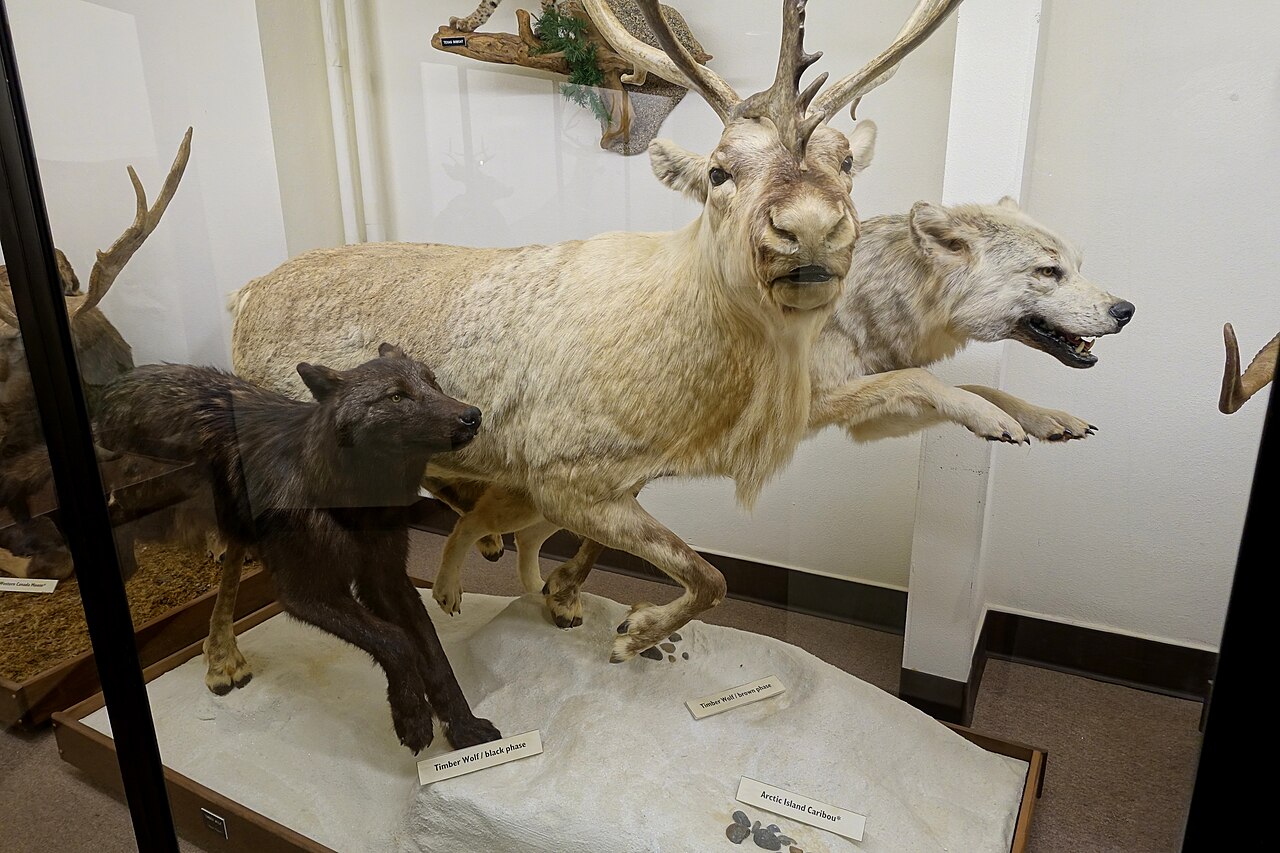
A wolf howl is a smooth tone that starts low, slides upward, holds, then drops away. There is almost no vibrato in a gray wolf howl, which is the single best way to separate it from the warbling of a coyote. The fundamental frequency sits between 150 and 780 Hz, low enough that it feels like it arrives in your chest rather than your ears.
Individual wolves sound different from one another, and consistently so. Spectrogram studies have identified individual animals from howls with accuracy above 95 percent, which is now used to count wolves in the field without trapping them.
Red wolves (Canis rufus) and Mexican wolves howl at slightly higher pitches than northern gray wolves, and a large male will sound deeper than a yearling. Our broader guide to the full range of wolf vocalizations covers the growls, whimpers and barks that do not carry as far.
How Far Does a Wolf Howl Carry?
A howl carries about 6 miles (10 km) in forest and up to 10 miles (16 km) across open tundra or frozen lake. Low frequencies bend around trees and lose less energy over distance than the higher pitched calls of smaller canids, which is why a wolf pack can hold a territory of 50 to 1,000 square miles with sound alone.
Cold, still air after sunset carries the call furthest, which is why howling peaks in the hours around dusk and dawn. Wind, rain and summer foliage cut the range substantially, sometimes by half.
The distance matters for people too. A howl that sounds like it is at the edge of the campsite is often a mile or more away. Distance is almost impossible to judge by loudness alone, and most reports of wolves close to camp are wolves well out of sight.
Why a Pack Sounds Bigger Than It Is
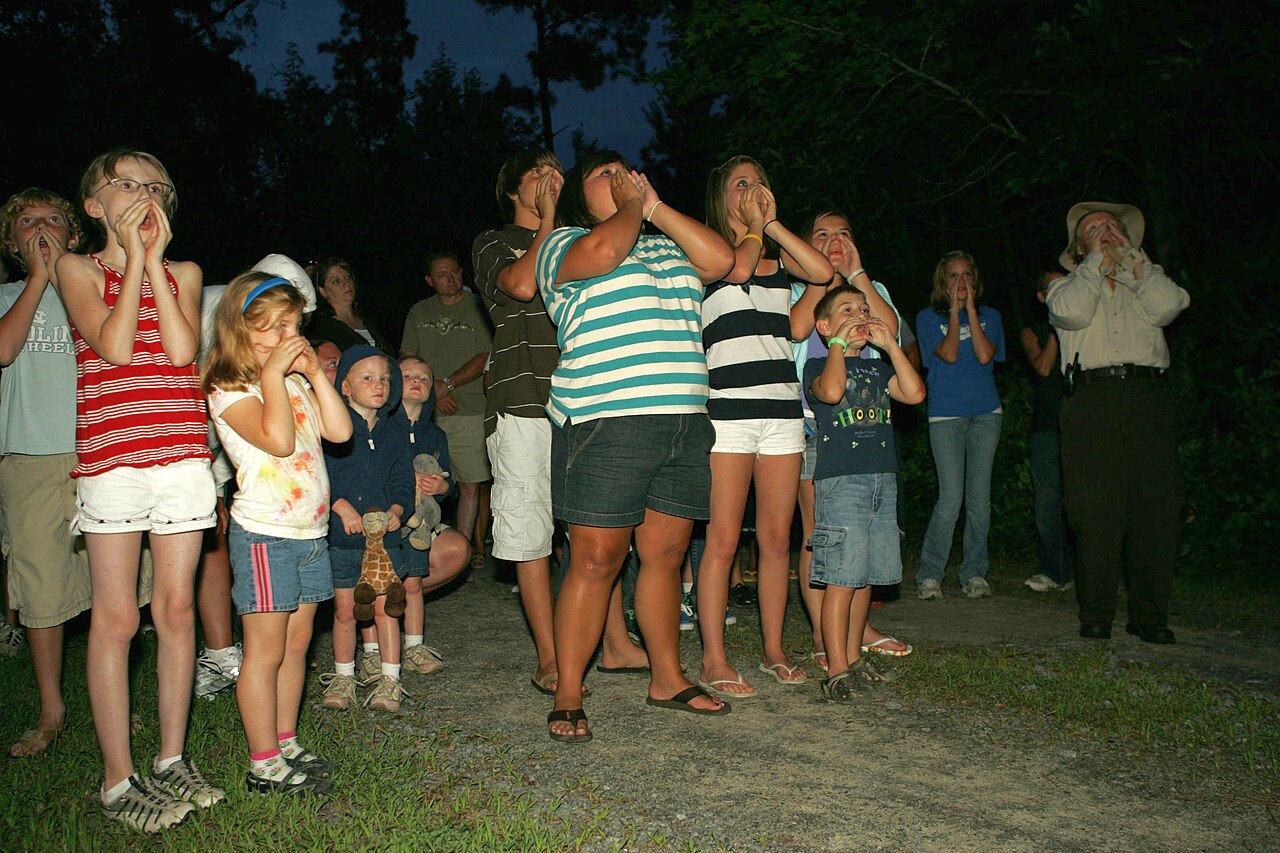
When wolves howl together, each animal shifts its pitch away from the others rather than matching them. The result is a wall of overlapping frequencies that makes three wolves sound like eight, an effect known in the literature as the Beau Geste effect.
The advantage is obvious. A neighboring pack judging whether to test a border hears a larger group than actually exists and backs off. Packs that howl in chorus also hold larger territories than their numbers should support.
This is the main reason visitor reports of huge packs rarely match what biologists count. A typical North American pack is 5 to 8 animals, and choruses of more than 10 are uncommon outside Alaska and northern Canada.
What Is the Difference Between a Coyote Howl and a Wolf Howl?
The wolf howl is lower, longer and smoother; the coyote howl is higher, shorter and broken up with yips and barks. If the sound includes rapid staccato yipping, you are listening to coyotes, not wolves, because gray wolves do not yip in that pattern.
Group behavior separates them further. Coyotes tend to erupt all at once in a chaotic scramble that lasts under a minute, while a wolf chorus builds, holds and fades over one to three minutes. Anyone tracking the two species will also want our comparison of coyote and wolf size, tracks and range.
Range helps most of all. Outside the Northern Rockies, the western Great Lakes, Alaska, Arizona, New Mexico and eastern North Carolina, a howl in the United States is a coyote or a dog with near certainty.
Do Wolves Bark or Howl?
Wolves do both, but they bark rarely and quietly. A wolf bark is a short, muffled woof used as an alarm at a den or rendezvous site, nothing like the repeated carrying bark of a domestic dog. Selection for barking happened during domestication, not in the wild.
The full repertoire runs to at least five sounds: howl, bark, growl, whimper and a social squeak used between pack members and pups. Most of these work only at close range, under 100 ft (30 m).
Whining and squeaking dominate around pups. Adults returning to a den greet the litter with high pitched whimpers that sound almost nothing like the animal people picture. More on that stage in our guide to wolf pups in their first year.
What Is a Wolf’s Cry Called?
The call itself is a howl, and there is no separate technical term for it. Biologists use howl for the long distance call, chorus howl when several animals join, and group howl in older literature. A wolf that is hurt or frightened whines or yelps; those are not called cries either.
The verb is to howl, and a group of howling wolves is described as howling in chorus rather than singing, though sanctuaries often use the word song informally. Nothing about the sound is mournful to the animal producing it, despite the reputation.
Where the sound does carry weight is in human symbolism, which is a separate subject covered in our piece on what the wolf stands for in tattoo symbolism.
Do Wolves Howl at the Moon?
No. There is no evidence that moon phase changes howling rates. Wolves are most active at dusk, dawn and through the night, so howling and moonlight simply overlap in time, and the head goes up because raising the muzzle projects sound further, not because the animal is aiming at anything.
The image comes from centuries of European folklore and from artists who needed a light source in a night scene. It was fixed permanently by cartoon and film shorthand in the twentieth century.
What does change howling rates is season. Rates climb in midwinter around the February breeding period and again in late summer, when pups are moved to rendezvous sites and adults call them together.
How Does a Wolf Howl Sound in Words?
The standard written forms are awoo, howl, aooo and owooo, with repeated vowels standing in for the sustained note. English has no settled spelling for it, which is why comic books, novels and song lyrics all differ.
Other languages write it differently. German uses auuu, Japanese uses wan or oon for canid sounds, and Spanish writes aullido for the noun. None of them try to capture the pitch slide, which is the part that actually identifies the animal.
If you are writing wolf noises for a story, three forms cover nearly everything: awoooo for the howl, a low rrrr for the growl, and a soft whuff for the muffled bark at a den.
When Do Wolf Pups Start Howling?
Pups produce their first recognizable howls at about 3 to 4 weeks old, well before they leave the den area. The early attempts are short, high and unsteady, and they break into squeaks partway through.
By 8 weeks the howl has structure, and by the time the litter is moved to a rendezvous site in July or August, pups answer adult howls reliably. That answer is what biologists exploit in howl surveys, since a responding litter confirms successful breeding without anyone approaching the site.
Adult pitch settles during the first year as the larynx and chest grow. A yearling still sounds thinner than an adult male, which is one more cue used in acoustic pack counts.
What Dog Is a Wolf Afraid Of?
No dog breed makes a wolf afraid. Wolves kill livestock guardian dogs regularly in Europe and North America, including large breeds such as the Kangal, Great Pyrenees and Caucasian Shepherd. What those breeds accomplish is deterrence in numbers, not individual dominance.
Guardian dogs work when three or more patrol a flock together and when a human is nearby. Single dogs left out at night are treated by wolves as either an intruder to be killed or, less often, a potential mate during the breeding season.
For a hiker, the practical rule is to keep dogs leashed in wolf country. A loose dog that runs at a wolf and then returns to you brings the wolf with it, which is the pattern behind most close encounters reported in Yellowstone and Minnesota.
Where to Hear Wild Wolves Howl in the United States
The reliable places are Yellowstone National Park in winter, the Boundary Waters and Superior National Forest in Minnesota, Denali and much of interior Alaska, and Isle Royale in Michigan. Minnesota holds the largest population in the lower 48 states, with roughly 2,700 wolves.
Public howl surveys run in several of these areas each summer, led by state agencies and by the National Park Service, and they are the best way to hear the sound without disturbing the animals. Listening from a road pullout at dusk in January works too.
Signs on the ground tell you whether wolves are present before you ever hear one. Tracks over 4 in (10 cm) long and the twisted, hair filled droppings described in our guide to identifying wolf scat are both stronger evidence than a distant call. In the same landscape you will also find the smaller canids covered in our overview of the different types of foxes.
Frequently Asked Questions
What does it mean if a wolf howls near my camp?
It means a wolf is calling its pack or marking territory, not targeting you. Wolves avoid human camps. Secure food, keep dogs leashed and stay put. If the howling repeats from the same direction for an hour, the animal is stationary at a rendezvous site rather than moving toward you.
What is the sound word of a wolf?
Awoo is the most common written form in English, along with aooo and owooo. The sound itself is called a howl. Other wolf sounds have their own words: growl, whimper, yelp and the muffled woof that serves as a bark at a den site.
How long does a wolf howl last?
A single howl runs 3 to 11 seconds, and a full chorus with several animals lasts one to three minutes before it fades. Wolves typically rest for a minute or two, then repeat, which is why howling sessions can continue for half an hour.
Can a human howl get a wolf to answer?
Yes, imitated howls draw answers often enough that biologists use the method for surveys. It is discouraged for recreation because repeated howling pulls packs off rest or moves them away from pups. In several parks, howling at wildlife is prohibited for that reason.
Do lone wolves howl more than pack wolves?
Dispersing lone wolves howl less, not more, because a howl announces position to resident packs that will kill an intruder. Lone animals that do howl usually do so at the far edge of an occupied territory while searching for a mate.
Do wolves howl in the daytime?
They can, and summer rendezvous sites produce midday howling when adults return to pups. Rates are still highest around dusk and dawn, mostly because cool, still air carries the sound further and because wolves are most active then.