Albino Leopard Gecko: 3 Strains, Prices, and Real Care Needs
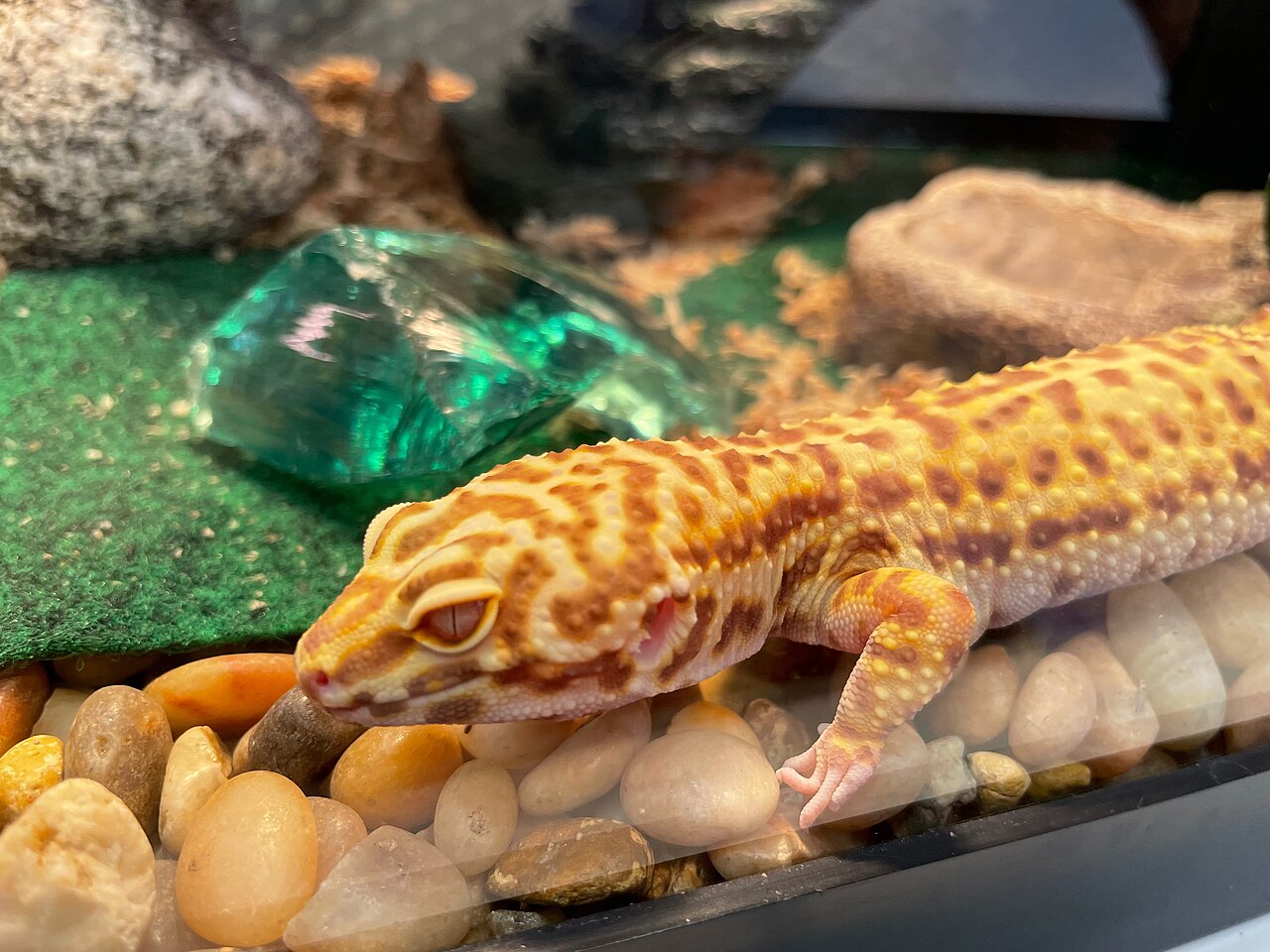
An albino leopard gecko is a Eublepharis macularius that carries one of three separate recessive mutations blocking black pigment, leaving a yellow, tan, pink, or lavender animal with pale eyes. They are not rare and they are not delicate: a healthy albino costs 50 to 150 USD from a breeder and lives just as long as a normal gecko, with one genuine care difference around bright light.
The complication is that the hobby uses one word for three unrelated mutations. Tremper, Bell, and Rainwater albinos look similar to a beginner, cost different amounts, and produce ordinary-looking babies when crossed with each other. Knowing which strain sits in your enclosure changes what you should pay, what you can breed, and how you set up the lighting.
Albino leopard geckos are common, not rare, and sell for 50 to 150 USD. Three strains exist: Tremper (brown markings, gray eyes), Bell (pink to lavender, ruby eyes), and Rainwater (palest, smallest). They live 15 to 20 years, need no UVB, and are more light sensitive than normal geckos, so keep lamps dim and indirect.
| Strain or combo | Eye color | Body tones | Typical US price |
|---|---|---|---|
| Tremper albino | Light gray with visible veining | Yellow ground, brown or tan markings | 50 to 90 USD |
| Bell albino | Ruby red, darkening with age | Pink to lavender ground, brown spots | 70 to 150 USD |
| Rainwater albino | Pale gray, smallest eyes of the three | Palest yellow, faint markings | 80 to 160 USD |
| Blazing Blizzard (albino plus Blizzard) | Pale to pink | Solid white or pale yellow, no pattern | 150 to 300 USD |
| Radar (Bell albino, Mack Snow, Eclipse) | Solid black | Pale lavender to white | 200 to 400 USD |
| Diablo Blanco (Blazing Blizzard plus Eclipse) | Solid black | Pure white | 250 to 600 USD |
Is an Albino Leopard Gecko Rare?
No, an albino leopard gecko is not rare. The Tremper strain has been bred since 1996 and is now one of the most widely available morphs in the United States, stocked by chain pet stores and present at every reptile expo. Tens of thousands hatch each season, which is exactly why the price sits close to that of a normal high-yellow.
What is uncommon is a specific combination on top of the albino base. Diablo Blanco, Radar, and well-marked Blazing Blizzards take multiple recessive genes lining up, so they cost three to six times as much. If a seller calls a plain Tremper rare, that is a sales line. Our overview of leopard gecko morphs shows where albinos sit relative to the genuinely scarce lines.
The Three Albino Strains: Tremper, Bell, and Rainwater
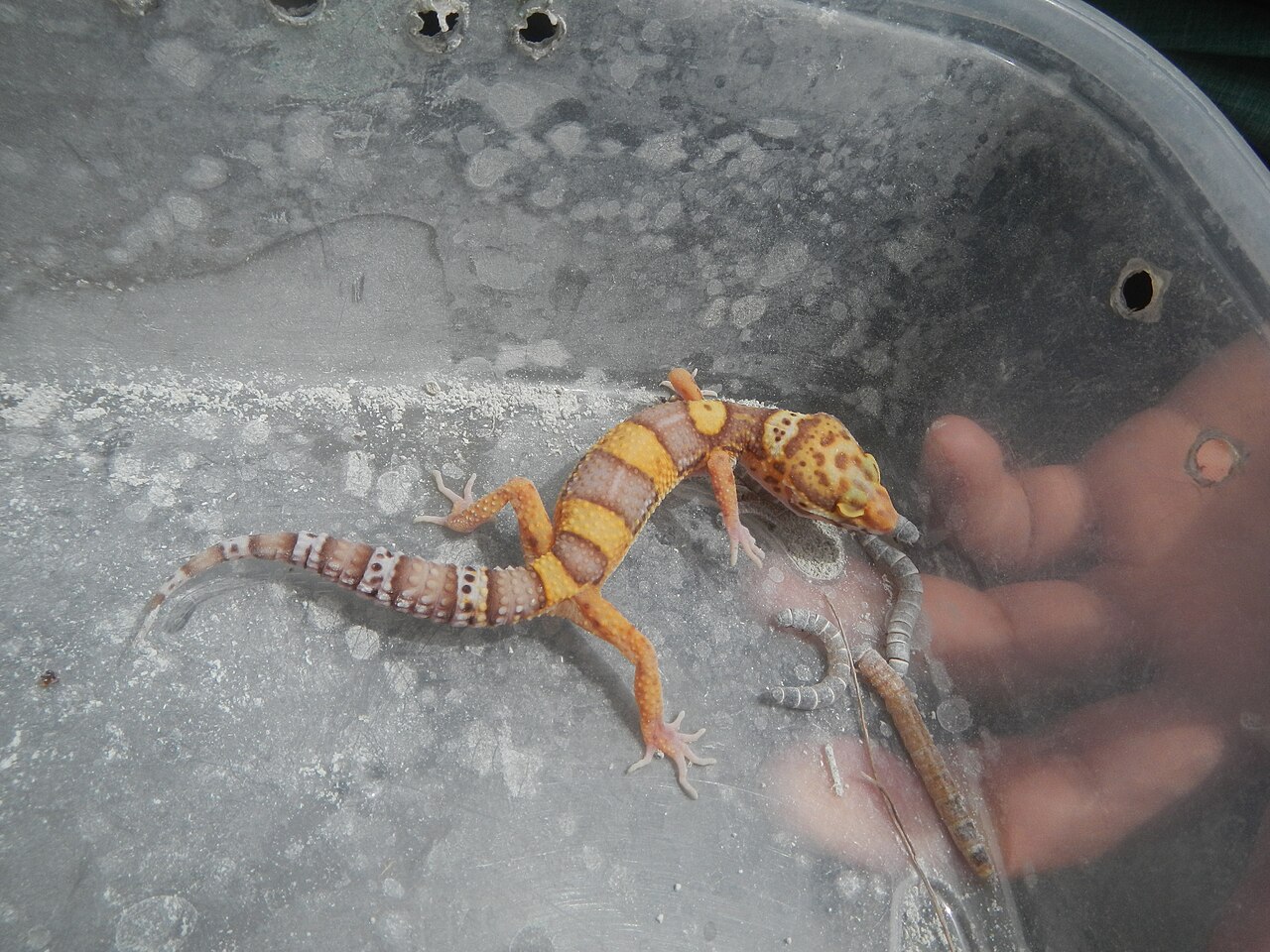
Tremper albinos, isolated by Ron Tremper in 1996, are the most common and the most variable. Ground color runs from cream to strong yellow, markings stay brown or tan rather than black, and the eyes are light gray with obvious veining. The strain forms the base of Sunglow, Super Hypo Tangerine albino, and most designer projects sold in the United States.
Bell albinos, from Mark Bell in 1999, are the pink strain. Hatchlings have bright ruby eyes that darken toward maroon with age, and adults hold lavender and pink tones better than Tremper animals. Rainwater albinos, also called Las Vegas albinos after Tim Rainwater’s line, are the palest and stay noticeably smaller as adults, roughly 10 to 15 percent lighter in weight.
How to Tell Which Albino Strain You Have
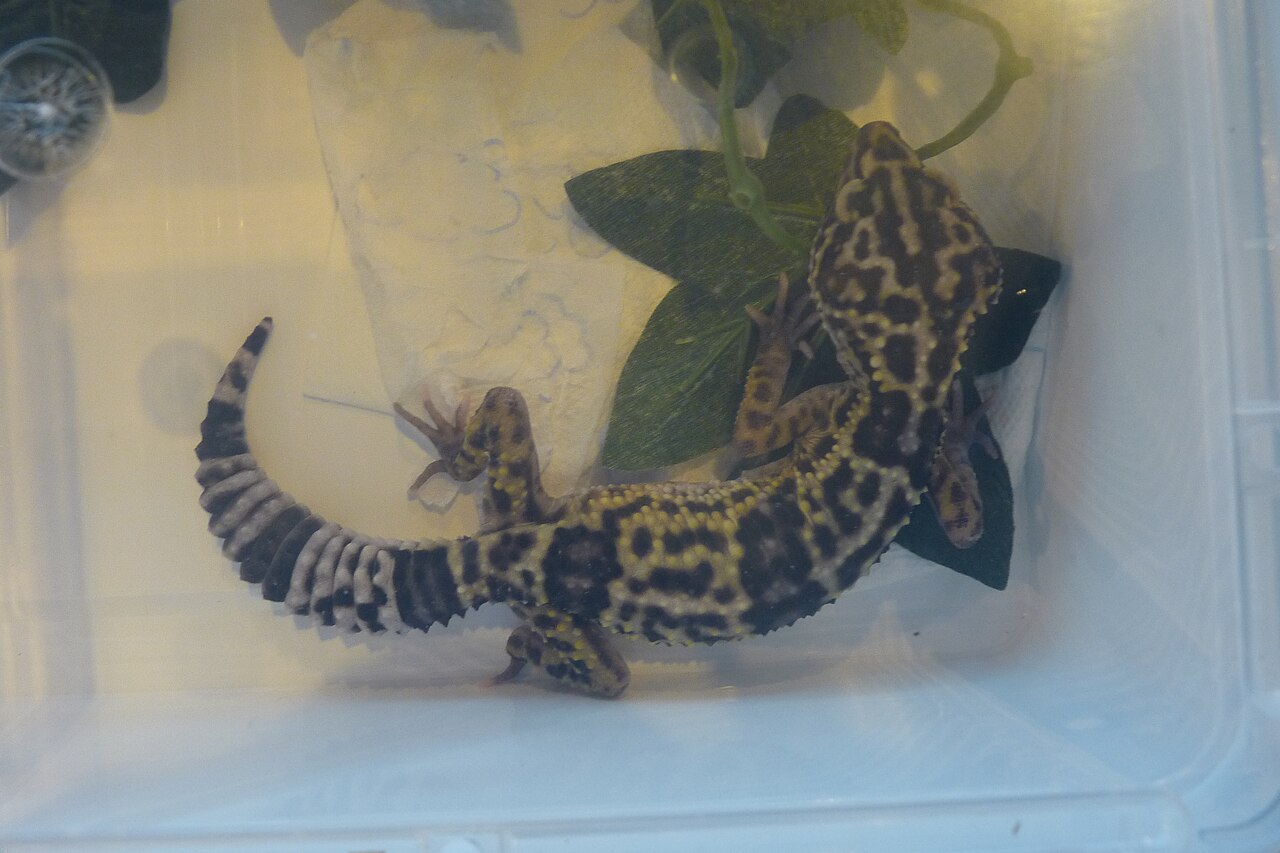
Start with the eyes of a hatchling if you have one. Ruby red points firmly to Bell. Light gray with heavy veining points to Tremper. Rainwater eyes look gray but smaller and less veined. Adults are harder, because Bell eyes darken and Tremper eyes lighten, which is why breeders photograph their animals in the first weeks.
Next look at overall tone under neutral daylight, not under a warm bulb. Tremper reads yellow and brown, Bell reads pink and lavender, Rainwater reads washed out. If the gecko came from a store without paperwork, accept that you may not get a definitive answer: the only reliable test is a breeding trial, since crossing two different strains gives normal-looking hatchlings. Describe the animal as an albino and stop there.
How Much Money Is an Albino Leopard Gecko?
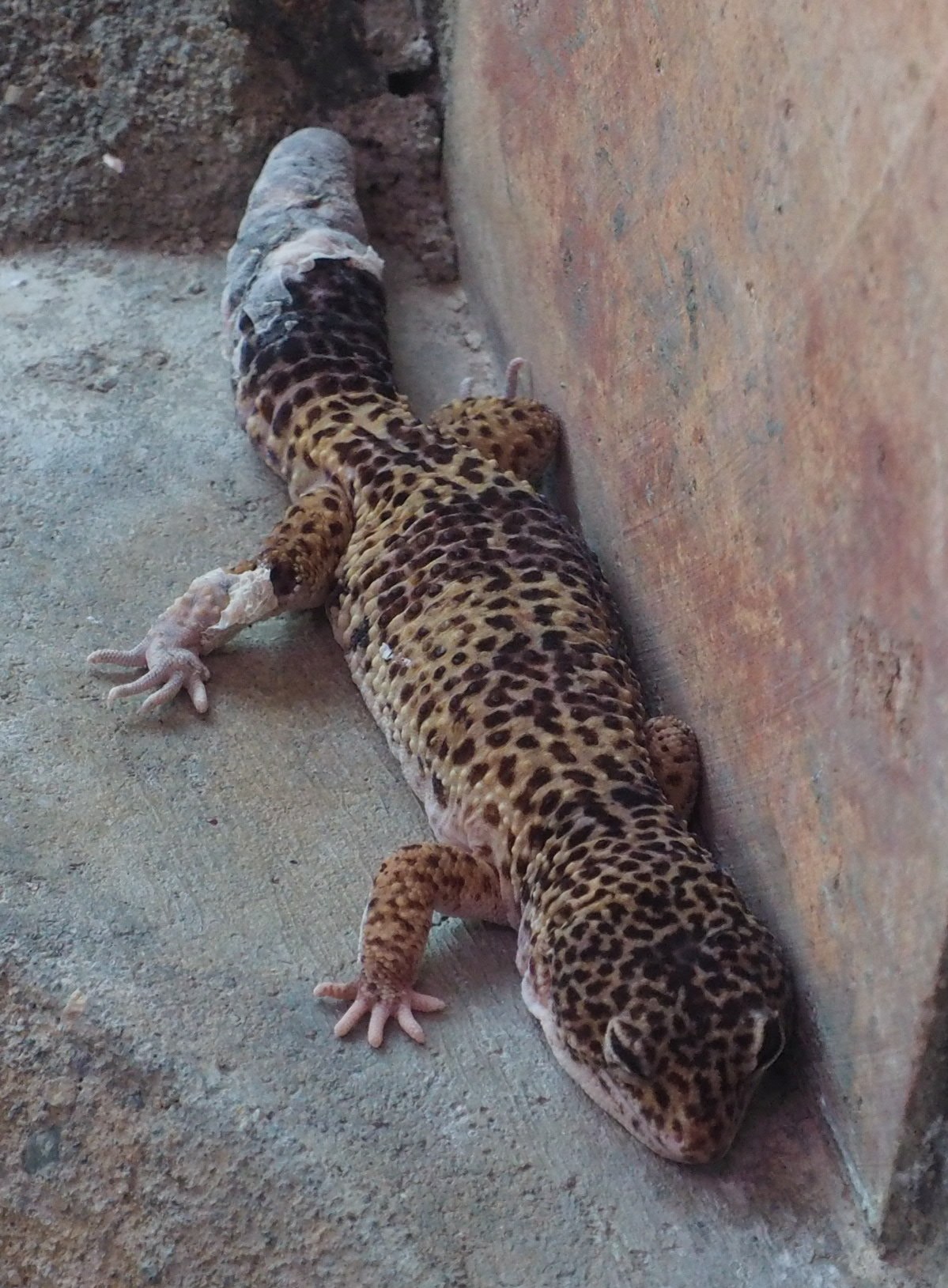
An albino leopard gecko costs 50 to 90 USD for a standard Tremper, 70 to 150 USD for a Bell, and 80 to 160 USD for a Rainwater. Chain stores price them at 80 to 130 USD, expos at 40 to 80 USD for the same quality animal, and specialist breeders charge more for documented lines with bright color or proven genetics.
The enclosure costs more than the gecko. A 20-gallon long tank, heat mat, thermostat, two hides, a moist hide, thermometer, and substrate come to 150 to 250 USD, and a first vet check adds 60 to 120 USD. Budget 300 USD total rather than 100 USD, and skip the temptation to save money on the thermostat, which is the one component whose failure kills animals.
Albino Leopard Gecko Genetics: Why Strains Do Not Mix
Each albino strain is a separate recessive mutation at a different point in the melanin pathway, so a gecko needs two copies of the same strain to be albino. Breeding a Tremper to a Bell gives hatchlings that carry one copy of each, and because the copies do not match, every baby looks like a normal gecko. Those animals are double het and worth less than either parent.
That outcome catches out more first-time breeders than any other genetic rule in the hobby. The practical guidance is simple: pair Tremper to Tremper, Bell to Bell, Rainwater to Rainwater, and never buy a breeding animal without a stated strain. The same recessive logic governs albinism in other reptiles, which is why the albino ball python market also splits into non-compatible lines.
Light Sensitivity: The One Real Care Difference
Albino leopard geckos lack pigment in the iris and retina, which makes them measurably more light sensitive than normal animals. In practice they squint under bright bulbs, hunt less confidently in a brightly lit enclosure, and prefer to emerge later in the evening. This is not blindness and it is not a defect requiring treatment; it is a reason to dim the room rather than the gecko.
Keep any overhead light low in output and offset from the main hide, use red or no night lighting, and provide deep cover so the animal chooses its own light level. Feeding in dimmer conditions noticeably improves strike accuracy in albinos. If you use a low-output UVB bulb, mount it over one end only, so the gecko can leave the lit zone.
What Is the Average Lifespan of an Albino Leopard Gecko?
The average lifespan of an albino leopard gecko is 15 to 20 years, the same as any other leopard gecko, and well-kept males have reached 27 years in captivity. Albinism itself carries no life expectancy penalty in this species, unlike the Enigma and Lemon Frost morphs, which are linked to neurological disease and skin tumors respectively.
What shortens life is husbandry. Impaction from loose particulate substrate, metabolic bone disease from missing calcium and D3, and chronic overheating from an unregulated heat mat account for most early deaths. Females bred hard without a rest season also decline faster. A single well-housed pet gecko fed a varied insect diet is one of the longest-lived starter reptiles available.
Albino Leopard Gecko Care: Enclosure, Heat, and Humidity
House one adult in a 20-gallon long tank as the minimum, 40 gallons preferred, with a front-opening terrarium being easier on a shy animal than a top-opening tank. Provide a warm hide, a cool hide, and a third humid hide with damp sphagnum moss for shedding. Never keep two adults together: males fight, and females bully each other off the warm spot.
Heat comes from an under-tank mat or a radiant heat panel on a thermostat, giving a surface temperature of 90 to 95 F (32 to 35 C) at the warm hide and 75 to 80 F (24 to 27 C) at the cool end. Ambient humidity of 30 to 40 percent is right, with the humid hide as the local exception. Choosing the correct substrate matters more for albinos than aesthetics, since a pale animal shows every stain.
Popular Albino Combos: Blazing Blizzard, Radar, Diablo Blanco
Blazing Blizzard is an albino combined with the recessive Blizzard trait, producing a patternless white to pale yellow gecko with pink-toned eyes. Because both parent traits are recessive, producing them takes two generations from unrelated stock, which explains the 150 to 300 USD price. They are among the most striking pet geckos and among the most light sensitive.
Radar is a Bell albino carrying Mack Snow and Eclipse, giving a pale lavender body with solid black eyes. Diablo Blanco adds Eclipse to a Blazing Blizzard for a pure white animal with black eyes, priced from 250 to 600 USD. All three need the same husbandry as a plain Tremper. The only practical consequence of stacking genes is cost and, for the pale combos, even more caution with lighting.
How Cold at Night for a Leopard Gecko?
A leopard gecko tolerates a night-time drop to 68 to 72 F (20 to 22 C) without any problem, and brief dips to 65 F (18 C) do no harm. Below about 60 F (16 C) digestion slows enough to cause problems, and sustained cold leads to regurgitated food and respiratory infection. Most heated homes in the United States need no night heating at all.
If your room drops further in winter, use a thermostat-controlled ceramic heat emitter or a radiant panel rather than a colored bulb, since visible light at night disrupts the cycle. Keep the warm hide available around the clock: leopard geckos digest at the warm end, and a gecko that ate at 8 pm still needs somewhere warm at 2 am.
What Stresses Geckos Out?
The main stressors are too little cover, cohabitation, frequent handling, vibration, and unstable temperatures. A gecko in a bare enclosure stays in one corner and eats poorly no matter how correct the heat gradient is. Housing two animals together is the single biggest avoidable stressor, and the damage often shows as a dropped tail or a missing toe rather than open fighting.
Read the signs early: refusing food for more than 10 days, hiding constantly during active hours, rapid breathing when approached, and a tail that has visibly thinned. Albinos add one stressor, harsh light. Check droppings while you monitor, because changes in gecko droppings often reveal a problem days before behavior does.
What Are the Downsides of Owning a Leopard Gecko?
The honest downsides are live food, lifespan, and limited interaction. You will keep crickets, dubia roaches, or mealworms in your home for 15 to 20 years, dusted with calcium and a multivitamin on a schedule. That is a commitment longer than most dogs, and rehoming an adult reptile is difficult. They also tolerate rather than enjoy handling, so they suit observers better than cuddlers.
Reptiles commonly carry Salmonella, and the Centers for Disease Control and Prevention recommends handwashing after any contact and no reptiles in homes with children under five. Against that, leopard geckos are quiet, odorless, need no walks, and cost little to feed. For the right household they remain the best first lizard, and a Mediterranean house gecko is the closest low-cost alternative.
Frequently Asked Questions
Do leopard geckos like to be held?
Most tolerate handling rather than enjoy it. A settled adult will sit on an open hand for 5 to 10 minutes if supported from below and never lifted by the tail. Stop when you see tail waving, rapid breathing, or attempts to bolt. Give a new gecko two to three weeks in its enclosure before any handling.
Do leopard geckos like to be talked to?
They do not respond to speech the way a dog does, but they do detect airborne vibration and learn to associate a keeper’s presence with feeding. Talking calmly while working in the enclosure does no harm and may help the animal habituate to your movement. There is no evidence of recognition of words or tone.
What is the rarest color of a leopard gecko?
Near-solid black, produced by the Black Night and Black Pearl lines, is the rarest color and costs 1,000 to 3,000 USD. Deep uniform lavender is second. Albino is at the opposite end of the scale: widely produced, inexpensive, and available in three separate strains from almost any breeder in the United States.
Are albino leopard geckos blind?
No. Albino leopard geckos see normally in dim conditions and only struggle under bright light, where they squint and misjudge prey. Lack of pigment in the iris and retina causes glare sensitivity, not blindness. Dim, indirect lighting and evening feeding resolve the practical problem completely without any veterinary intervention.
Do albino leopard geckos need UVB?
UVB is optional and increasingly recommended, but for albinos it must be low output and offered over one end only. A 2 percent linear tube across a third of the enclosure gives a usable gradient. Calcium with D3 remains necessary regardless, because most keepers cannot guarantee enough UVB exposure from a crepuscular animal.
How big does an albino leopard gecko get?
An adult albino reaches 7 to 9 in (18 to 23 cm) and 45 to 80 g, with Rainwater animals at the smaller end and Giant-line albinos passing 100 g. Growth takes 12 to 18 months. A baby leopard gecko hatches at roughly 3 in (8 cm) and 3 g, so expect a threefold length increase.