Snake Lifespan: How Long Snakes Live, by Species
Most snakes live 10 to 25 years, and the same species often lives two to three times longer in captivity than in the wild. A wild garter snake rarely sees five birthdays, while a well kept ball python can pass 30 and the record holder reached 62. Snake lifespan is less a fixed species trait than a measure of how much danger and hunger an individual escapes.
That gap is the single most useful fact for anyone buying a snake or reading a longevity claim online. Wild figures come from mark and recapture studies with brutal first year mortality; captive figures come from collections with steady food, no predators and a veterinarian. Below are the numbers by species, what actually shortens them, and which viral longevity claims are false.
Snakes typically live 10 to 25 years, with wild individuals at the low end and captives at the high end. Corn snakes average 15 to 20 years, ball pythons 20 to 30, boa constrictors 20 to 30, and garter snakes only 4 to 5 in the wild. The oldest documented snake was a ball python that lived past 62 years.
| Species | Wild lifespan | Captive lifespan |
|---|---|---|
| Ball python | 10 to 15 years | 20 to 30 years, record 62 |
| Corn snake | 6 to 8 years | 15 to 20 years, record 32 |
| Boa constrictor | 15 to 20 years | 20 to 30 years, record 40 plus |
| Garter snake | 4 to 5 years | 6 to 10 years |
| Black rat snake | 10 to 15 years | 20 to 25 years |
| Western diamondback rattlesnake | 10 to 15 years | 20 to 25 years |
| King cobra | 17 to 20 years | 20 to 25 years |
How Long Do Snakes Live on Average?
Across commonly kept and commonly studied species, the working average is 10 to 25 years, with a median near 15. Small colubrids such as garter snakes and brown snakes sit at the bottom, mid sized constrictors in the middle, and large boas and pythons at the top. Very few snake species have a documented average above 30 years.
Averages hide the shape of the data, though. Snake mortality is front loaded: in many wild populations 50 to 80 percent of hatchlings die in their first year to birds, mammals, other snakes, cars and cold. An individual that survives to breeding size has already beaten the average, and its remaining life expectancy jumps. That is why a wild adult can look old relative to a published species average.
Snake Lifespan by Species

Among pet species, ball pythons and boa constrictors are the long lived standard at 20 to 30 years, with well documented individuals past 40. Corn snakes run 15 to 20 years, kingsnakes and milk snakes 15 to 25, and western hognose snakes 15 to 20, as covered in our hognose snake lifespan guide. Burmese and reticulated pythons average 20 to 25 despite their size.
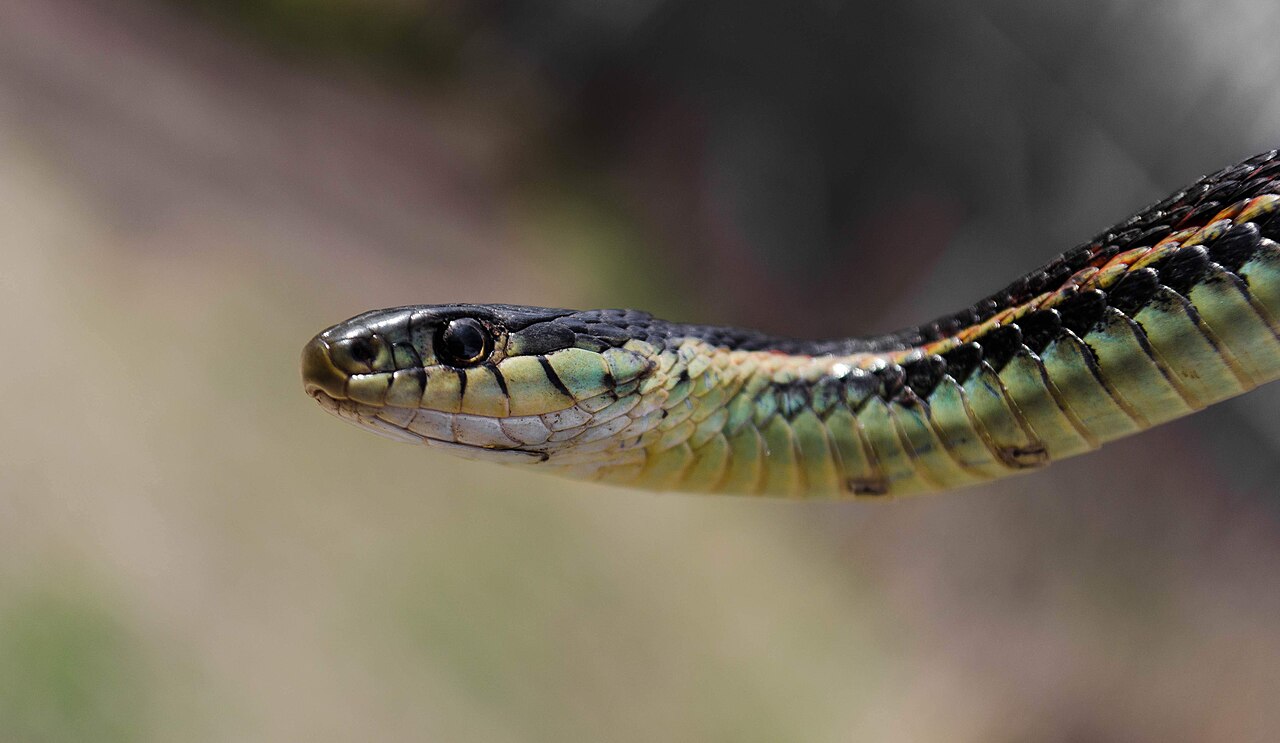
Native North American species are shorter lived on the whole. Garter snakes manage 4 to 5 years in the wild, water snakes 6 to 10, bull snakes 12 to 18, and rat snakes 10 to 15, though captives of all four do noticeably better. Venomous species are not short lived: rattlesnakes commonly reach 15 to 20 years and some captives exceed 25. The pattern holds across body plans, as our diamondback water snake profile shows.
Why Captive Snakes Live Two to Three Times Longer
Captivity removes almost every cause of death that matters in the wild. No hawks, no raccoons, no kingsnakes eating other snakes, no roads, no winter that arrives before the animal finds a hibernaculum, and no season without prey. Add a stable warm gradient and a veterinarian for respiratory infections and mites, and the survival curve flattens dramatically.
The multiplier is largest for small species. A garter snake with a 4 year wild expectancy can reach 10 in a tank, more than doubling; a boa constrictor at 15 to 20 wild reaches 25 to 30, a smaller relative gain. This mirrors what happens across small vertebrates generally, a pattern we walk through in our bird lifespan comparison.
What Kills Snakes in the Wild
Predation leads by a wide margin. Hawks, owls, herons, roadrunners, foxes, coyotes, raccoons, feral cats, bullfrogs and other snakes all take snakes, and hatchlings are vulnerable to nearly everything. A snake’s defense is concealment, so any condition that forces it to move in the open raises its risk sharply.
After predators come vehicles, mowers and deliberate killing by people, then starvation and cold. Snakes emerging to bask on warm asphalt die by the thousand on rural roads every spring and fall. Failed hibernation is the quiet killer: a snake that does not reach a frost free refuge, or that wakes during a false thaw, may not survive to spring.
How Long Do Pet Snakes Live?
A pet snake bought as a hatchling is a 15 to 30 year animal, which is longer than most dogs and comparable to a parrot. Ball pythons, boas, corn snakes and kingsnakes all routinely outlive the enthusiasm of the person who bought them, which is why rescues are full of adult snakes in the 8 to 15 year range.
The African house snake, sold as a beginner species, lives about 10 to 15 years in captivity and is one of the shorter commitments in the trade. Smaller does not always mean shorter, though, and no common pet snake is a five year pet. Plan for at least two decades, or pick a reptile with a documented shorter run such as the species in our crested gecko lifespan guide.
What Is the Oldest Snake Alive?
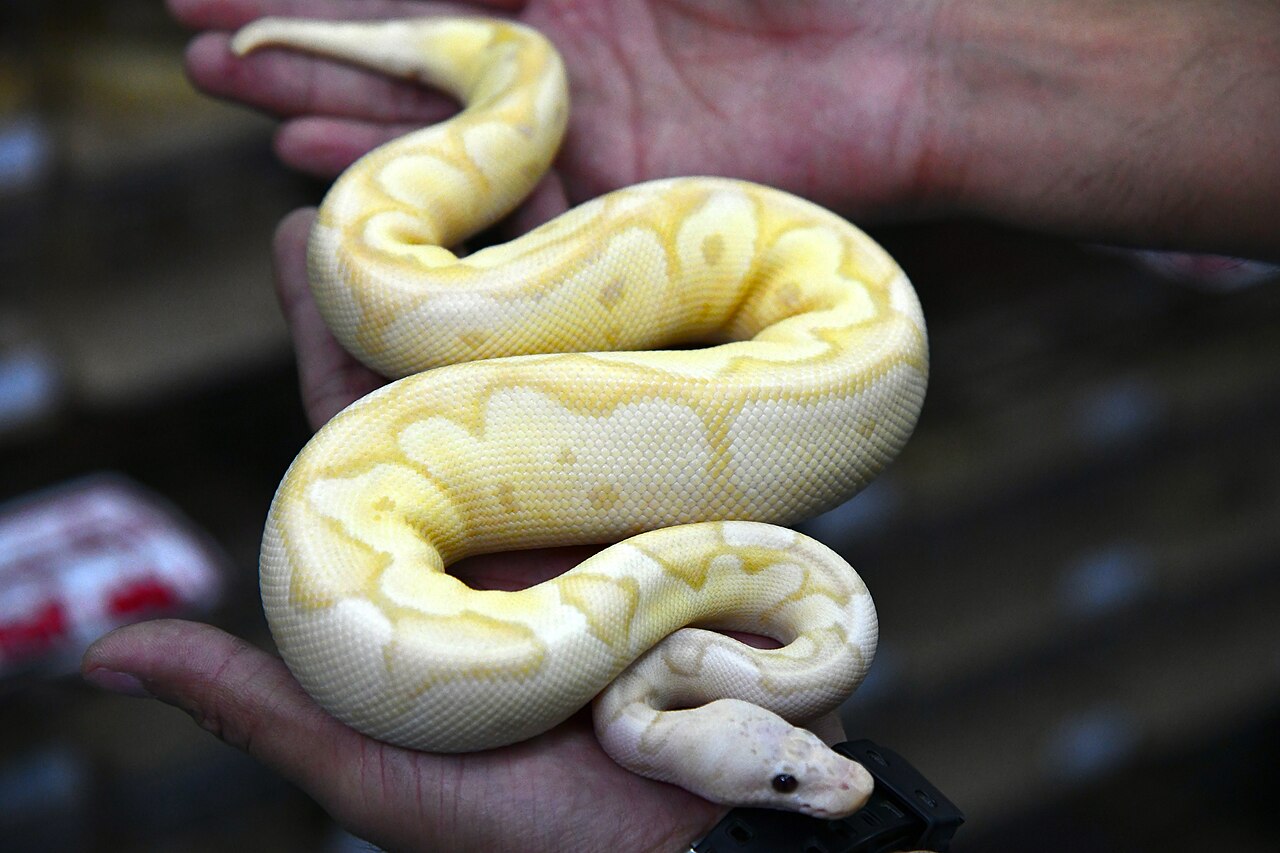
The oldest documented snake was a female ball python at the Saint Louis Zoo, hatched around 1962, who was still alive past age 62 and famously laid a clutch of eggs at 62 without contact with a male. That single animal sets the ceiling for verified snake longevity and is roughly double the species average.
Other records cluster far lower. A boa constrictor named Popeye reached about 40 years at the Philadelphia Zoo, and captive anacondas have reached the high 20s. Wild records are effectively unknowable because nobody watches an individual snake for decades. Zoo studbooks, not folklore, are where these numbers come from; longevity data for many reptiles is published by institutions such as the Smithsonian’s National Zoo.
Can Snakes Live Up to 100 Years?
No snake species is known to reach 100 years, and no verified individual has come close. The 62 year ball python is the outer limit of documented snake longevity, and second place sits around 40. Claims of 80 or 100 year old snakes trace back to unverified reports, misread zoo signage or confusion with tortoises, which genuinely do pass 100.
Biology supports the ceiling. Snakes keep growing slowly through life and show weak signs of aging, which fuels the myth, but they still accumulate kidney damage, tumors, arthritic spine changes and reproductive decline. Long lived reptiles exist, they are just mostly chelonians rather than snakes, as the numbers in our coral snake and king snake comparison of native species make clear.
Can a Python Live for 1,000 Years?
No. Pythons live 20 to 30 years, occasionally past 40, and the 1,000 year claim is internet folklore with no basis in any record, study or zoo archive. It circulates alongside stories of village pythons and sacred snakes, and it is off by a factor of about 30.
If the question is which animal can live for 1,000 years, the honest answers are not snakes at all. Greenland sharks reach an estimated 250 to 400 years, ocean quahog clams over 500, certain deep sea glass sponges possibly thousands, and some coral colonies older still. Among land vertebrates, no species is verified past about 190 years, a figure held by giant tortoises.
How Long Can a Snake Live Without Food?
A healthy adult snake can go months without eating, and some individuals last a year or more. Ball pythons routinely refuse food for 3 to 6 months during winter or breeding season, and fasting laboratory snakes have cut their resting metabolic rate by around 70 percent while still growing in length.
That does not make fasting harmless. A snake burning reserves loses muscle as well as fat, and a refusal that continues past a few months in a young or thin animal points to husbandry problems, mouth rot, mites or parasites. Weigh a fasting snake weekly: losing more than about 10 percent of body weight is a veterinary matter, not a phase to wait out.
Do Big Snakes Live Longer Than Small Ones?
Broadly yes, and the correlation is loose enough to be unreliable. Large constrictors average 20 to 30 years and small colubrids 5 to 15, which fits the general vertebrate pattern of larger bodies living longer. Body size also buys safety, since an adult boa has almost no predators.
The exceptions are instructive. The record holding ball python is a mid sized snake of about 4 to 5 ft, and it outlived every documented giant python by two decades. Reticulated pythons, the longest snakes on earth, average no better than a kingsnake in relative terms. Within a species, females often outlive males, partly because males spend energy on long breeding season searches.
How Husbandry Sets the Number
Four things decide whether a captive snake reaches the top of its range: temperature gradient, humidity, feeding schedule and enclosure hygiene. A snake kept too cool digests poorly and develops respiratory infections; kept too dry it suffers bad sheds and eye caps; kept on a heat mat without a thermostat it can be burned badly enough to shorten its life.
Feeding is where most keepers go wrong in the opposite direction. Weekly feeding of adult constrictors produces obesity, fatty liver disease and early death, and it is common enough that many veterinarians see it as the leading husbandry cause of premature loss. Quarantine new animals for 60 to 90 days, treat mites promptly, and use an accurate digital thermometer rather than a stick on dial.
How to Tell a Snake’s Age
There is no reliable way to age a snake after the fact. Shed counts do not work, because a young snake sheds 6 to 12 times a year and an adult only 2 to 4 times, and the rate varies with feeding. Growth rings on scales do not exist the way they do on a fish otolith or a tortoise scute.
What you can read are rough signals: size relative to adult range, the condition and thickness of the skin, scarring, worn labial scales, cloudy or sunken eyes, and reduced muscle tone along the spine. In practice, a snake’s age is known only when someone wrote down the hatch date, which is one good reason to buy from a breeder who keeps records.
Frequently Asked Questions
How long do house snakes live?
African house snakes (Boaedon fuliginosus) live about 10 to 15 years in captivity and less in the wild. They are among the shorter lived pet snakes, which is part of their appeal for keepers who do not want a 30 year commitment. Good temperatures and a fortnightly feeding schedule are what push one to the top of that range.
What is the lifespan of a cobra?
King cobras live roughly 17 to 20 years in the wild and 20 to 25 in captivity, and Indian cobras land in a similar band. Venomous species are not short lived; if anything, size and a lack of predators help them. Captive records past 28 years exist but are unusual.
Which snake has the longest lifespan?
By verified record, the ball python, thanks to the Saint Louis Zoo female who passed 62. By average, boa constrictors and ball pythons share the top of the pet species range at 20 to 30 years. No snake species has an established average lifespan above about 30 years.
Do snakes die of old age?
Yes, though it rarely looks like sudden failure. Aging snakes develop kidney disease, tumors, spinal arthritis, poor sheds and declining appetite, and they stop reproducing successfully. Wild snakes almost never reach that stage because predators, cars or a hard winter arrive first, so senescence is mostly seen in captivity.
What is a baby snake’s lifespan?
A hatchling’s expectancy is grim in the wild, where 50 to 80 percent die within a year. Survive that and the picture changes completely: the same animal may live 15 more years. In captivity, hatchling mortality is low, and a baby snake bought at 8 weeks old should be treated as a two decade animal from day one.
How long do black snakes live?
Black rat snakes live about 10 to 15 years in the wild and 20 to 25 in captivity, with occasional individuals past 30. Black racers are similar but slightly shorter lived on average. Both are fast moving, wide ranging species, and road mortality is the main reason wild figures stay low.