Baby Blue Jay: Identification, Care, and Survival
A baby blue jay is a gray, fuzzy chick that slowly grows the blue feathers of an adult over its first few weeks. Newly hatched jays are blind, nearly bare, and helpless, but within about three weeks they are feathered, active, and ready to leave the nest. If you have found a young blue jay on the ground, the most important thing to know is that a feathered fledgling hopping nearby is usually fine and does not need rescuing. This guide covers what baby blue jays look like at each stage, how to age them, what to feed them only in a true emergency, and what to do if you find one.
| Stage | Age | Appearance |
|---|---|---|
| Hatchling | 0 to 4 days | Blind, almost bare, pink skin, helpless |
| Nestling | 5 to 12 days | Eyes open, gray down, pin feathers emerging |
| Feathered nestling | 13 to 17 days | Blue feathers coming in, still in nest |
| Fledgling | 17 to 21 days | Fully feathered, short tail, hopping and flapping |
| Juvenile | 3 to 8 weeks | Looks like a small adult, still fed by parents |
A baby blue jay is a gray, nearly bare chick that grows blue feathers over about three weeks. Nestlings are blind and helpless for the first week. By day 17 to 21 they leave the nest as fledglings that hop on the ground while both parents keep feeding them.
What Does a Baby Blue Jay Look Like?
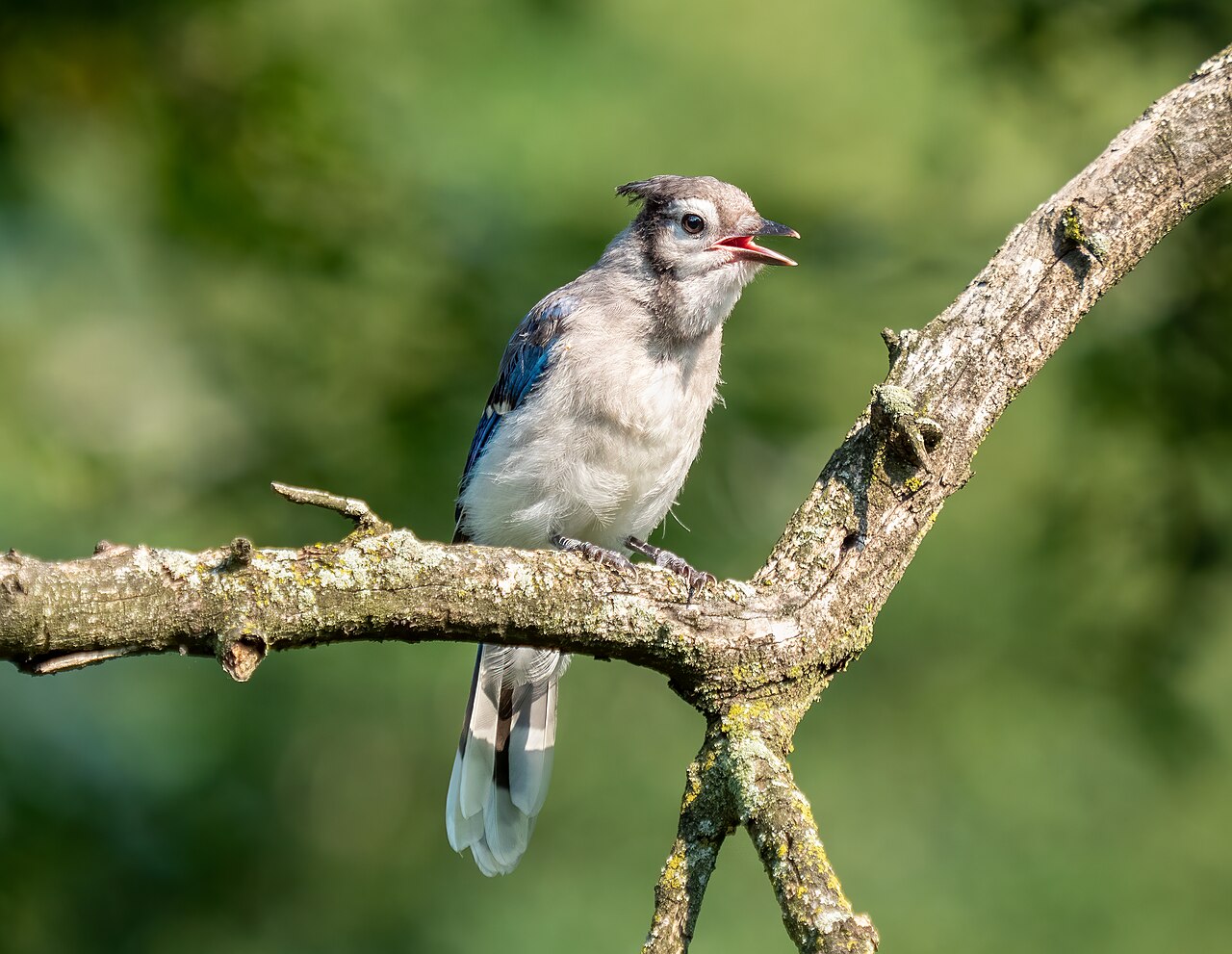
A newly hatched blue jay looks nothing like the crisp blue adult. At first it is blind, pink-skinned, and covered in only sparse wisps of gray down, completely dependent on its parents for warmth and food. Over the first week its eyes open and darker gray down fills in. By the second week, pin feathers push through, and the first hints of blue appear on the wings and tail. By the time it leaves the nest, a young blue jay is clearly recognizable as a jay, with blue wings and tail, a grayish body, and a stubby short tail that makes it look a little top-heavy. The crest is present but often looks ragged. A fledgling blue jay can be mistaken for a different species because its proportions are off, but the blue in the wings is the giveaway. If you are not sure whether the young bird in your yard is even a jay, our guide to baby bird identification walks through how to tell common backyard nestlings apart.
Baby Blue Jay Growth Stages
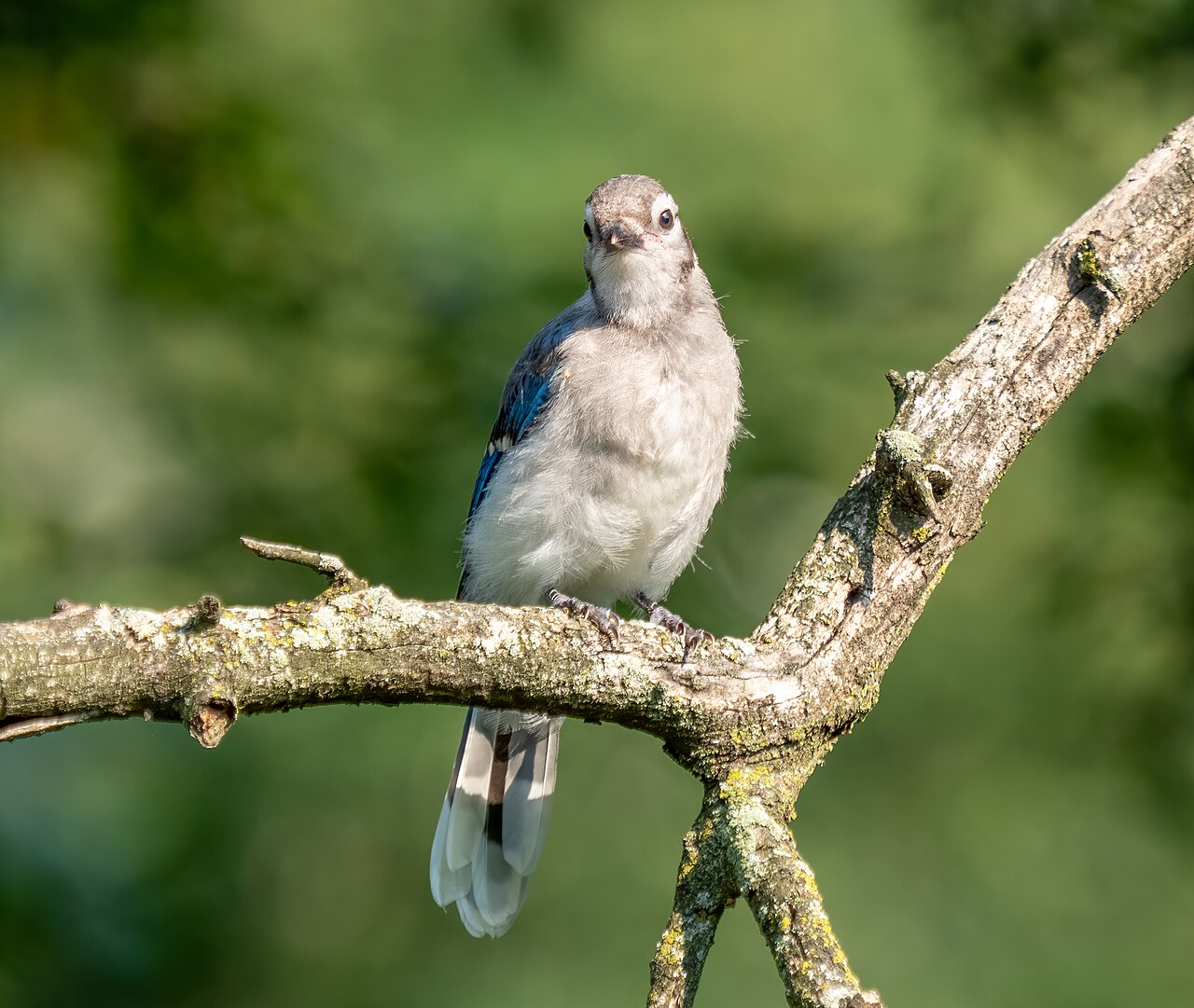
Blue jays develop quickly. Eggs hatch after about 17 to 18 days of incubation, and the chicks then grow through clear stages. As hatchlings they are helpless and brooded almost constantly. As nestlings they gain down, open their eyes, and begin sprouting feathers. Around 17 to 21 days after hatching, they leave the nest as fledglings, even though they cannot yet fly well. For the next several weeks as juveniles, they follow their parents, begging loudly and learning to find food. Blue jay families often stay together well past fledging, and the young may remain near their parents for a month or more. This extended family time is similar to what many backyard species do, and our Blue Jay species guide covers the jay’s strong family bonds in more detail. For the full breeding timeline from egg to nest departure, see our guide to the blue jay nest.
What to Do If You Find a Baby Blue Jay
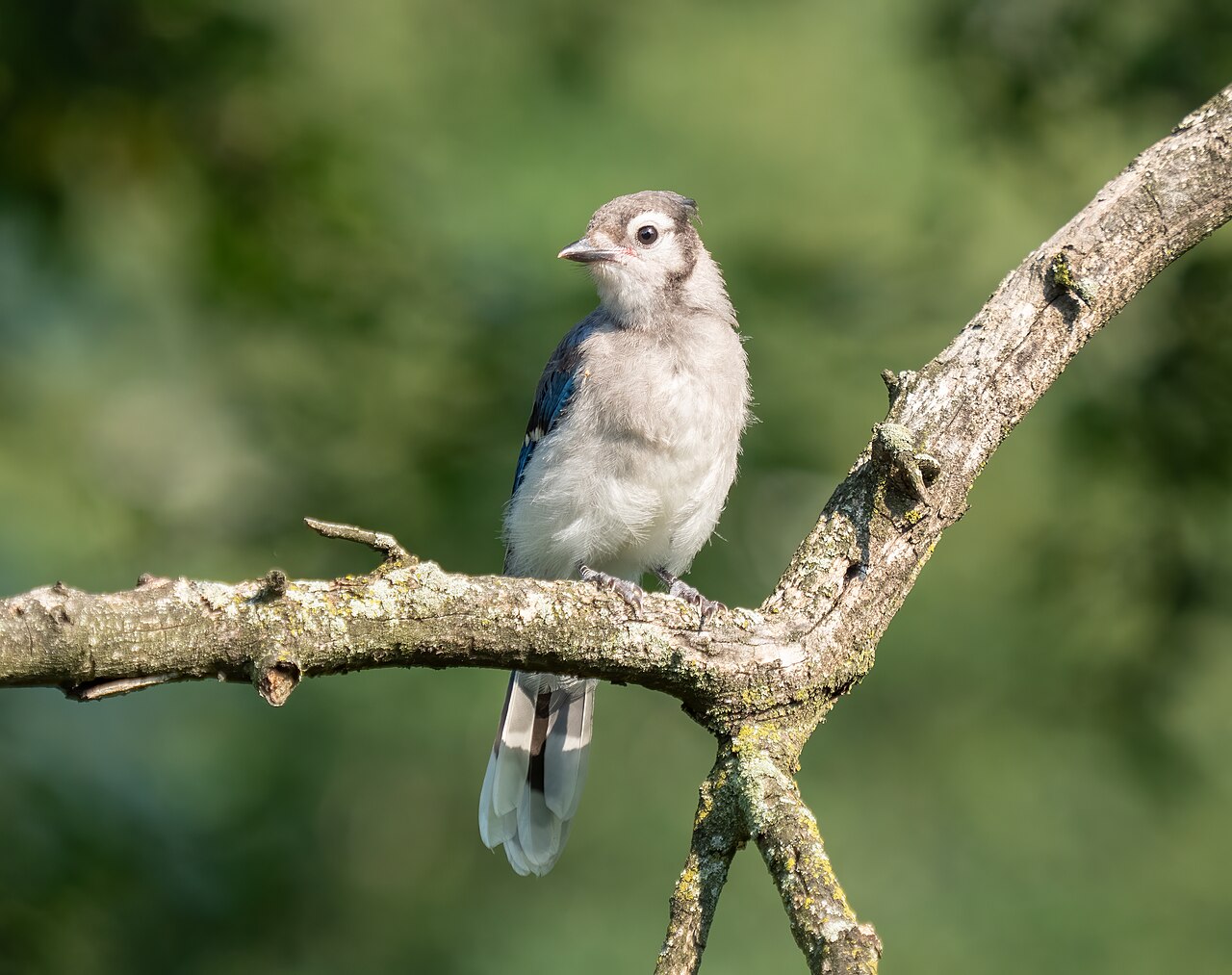
The right response depends on the bird’s stage. If you find a fully feathered fledgling hopping on the ground, leave it be. This is a normal and necessary stage, and the parents are usually watching and feeding it even if you cannot see them. Keeping pets indoors and giving the bird space is the best help. If you find a naked or lightly downed hatchling or nestling out of the nest, and you can see the nest, gently place it back. The old myth that parents reject touched birds is false, since birds have a poor sense of smell and will not abandon a returned chick. If the nest is destroyed or unreachable, or the bird is injured, cold, or clearly orphaned, the correct step is to contact a licensed wildlife rehabilitator rather than trying to raise it yourself. The Cornell Lab of Ornithology and wildlife agencies stress that raising a wild jay requires permits and specialized care.
What to Feed a Baby Blue Jay
In almost all cases, you should not feed a baby blue jay at all, and instead get it to a rehabilitator. Feeding the wrong food or feeding incorrectly can kill a chick quickly. Never give a baby bird bread, milk, or water directly, since birds do not drink like mammals and can inhale liquid and drown. If you are genuinely unable to reach help for several hours and the chick is begging, tiny amounts of moistened, high-quality dog or cat food or an insect-based food can keep it alive temporarily, offered on the tip of a small implement. This is only ever an emergency stopgap, not a substitute for professional care. Adult blue jays feed their young a protein-rich diet of insects and caterpillars, which is very hard to replicate at home, another reason a rehabilitator is essential. For what the adults eat once grown, see our full blue jay diet guide.
How to Tell How Old a Baby Blue Jay Is
You can estimate a baby blue jay’s age from its feathering. If it is nearly bare with closed eyes, it is only a few days old. Open eyes with gray down and no real feathers points to roughly one week. Emerging blue feathers with the bird still in the nest suggests around two weeks. A fully feathered bird with a noticeably short tail that is hopping outside the nest is a fledgling of about 17 to 21 days. Once it looks like a slightly scruffy small adult but still begs from its parents, it is a juvenile several weeks old. The length of the tail is one of the easiest clues, since fledglings always have short, stubby tails that take weeks to grow to full length.
When Do Baby Blue Jays Leave the Nest?
Baby blue jays leave the nest about 17 to 21 days after hatching. At that point they are fully feathered but still weak fliers, so they spend several days on or near the ground, climbing and flapping, while the parents continue to feed them. This is the fledgling stage, and it is the reason so many people find apparently stranded baby jays in early summer. The young stay dependent on their parents for food for a few more weeks and often remain with the family group into late summer. If you see a short-tailed jay being fed by adults in June or July, you are watching a perfectly normal, healthy fledgling.
How to Help a Baby Blue Jay Without Harming It
The best help you can give a healthy fledgling is space and safety. Keep cats and dogs indoors or leashed, since outdoor cats are one of the leading causes of death for young birds. Watch from inside or from a distance so the parents feel safe returning to feed the youngster, and resist the urge to hand-feed or offer water. If you must move a fledgling that is in immediate danger, such as in the middle of a driveway, simply place it on a low branch or in a shrub nearby, where its parents will still find it. For a nestling that has truly fallen and cannot be returned to its nest, a substitute nest such as a small ventilated container lined with dry grass, fixed securely in the same tree, sometimes lets the parents resume care. If none of that is possible, a licensed wildlife rehabilitator is the right call. Comparing notes with our guide to the baby cardinal can also help, since the same rescue-versus-leave-alone principles apply to most backyard songbirds.
Related reading: Female Blue Jay.
Related reading: Blue Jay Symbolism.
Related reading: Baby Otter.
Juvenile Blue Jay: What It Looks Like After Fledging
A juvenile Blue Jay looks like a slightly scruffy, muted version of the adult rather than a different bird. The blue is present but duller and greyer, the black necklace across the chest is faint or broken instead of crisp, and the crest is short and often held flat, which changes the head shape enough to confuse people who expect the sharp adult profile.
Two details settle the age quickly. The gape, the fleshy corner of the bill, stays pale and slightly swollen for weeks after fledging and is the single most reliable juvenile marker. The tail is also noticeably short, since tail feathers finish growing last, giving the bird a stubby, front-heavy look in flight.
Behavior gives it away too. A juvenile will follow an adult with quivering wings and a repeated begging call for several weeks after leaving the nest, which is normal and not a sign that the bird is abandoned. Audubon’s Blue Jay account covers the fledging window and the extended post-fledging dependency period.
Frequently Asked Questions
What does a baby blue jay look like?
A newly hatched blue jay is blind, pink, and nearly bare with only sparse gray down. It grows gray down, then blue feathers on the wings and tail, and by the time it leaves the nest it looks like a jay with a short, stubby tail.
I found a baby blue jay on the ground. What should I do?
If it is fully feathered and hopping, leave it alone, since it is a fledgling and its parents are nearby. If it is bare or downy and out of the nest, return it to the nest if you can. If it is injured or the nest is gone, call a licensed wildlife rehabilitator.
What can I feed a baby blue jay?
Ideally nothing, and you should get it to a rehabilitator instead. Never give bread, milk, or water directly. In a true emergency with no help available, tiny amounts of moistened dog or cat food can keep it alive briefly.
Will the parents reject a baby bird I touched?
No. This is a myth. Birds have a poor sense of smell and will not abandon a chick because a human touched it. Returning a fallen nestling to its nest is safe and often the best help.
How old is my baby blue jay?
Judge by feathering. Bare with closed eyes is a few days old, gray down is about a week, emerging blue feathers is about two weeks, and a fully feathered bird with a short tail hopping outside the nest is a fledgling around 17 to 21 days old.
When do baby blue jays leave the nest?
About 17 to 21 days after hatching. They leave before they can fly well and spend several days on the ground while their parents keep feeding them.
How long do baby blue jays stay with their parents?
They depend on their parents for food for a few weeks after fledging and often stay with the family group into late summer, sometimes a month or two after leaving the nest.