Seagull Spiritual Meaning: 7 Sightings and What They Signal
Seeing a seagull is most often read as a sign of adaptability: a message that you can make a living wherever you are set down, with whatever is at hand. Across folk belief and modern spiritual writing, seagull symbolism keeps returning to resourcefulness, freedom and the crossing between land and sea, which sailors read as the boundary between the living and the dead.
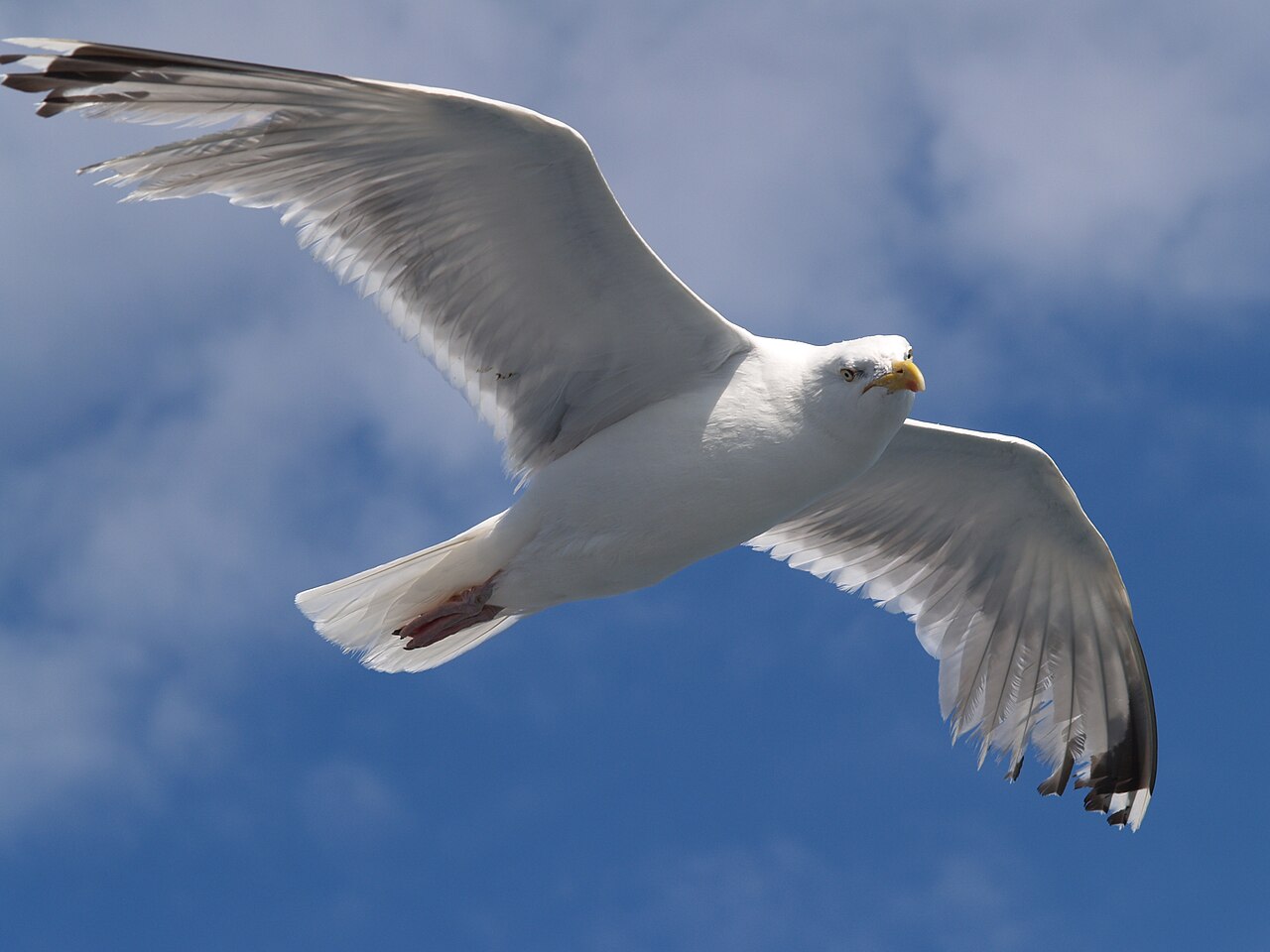
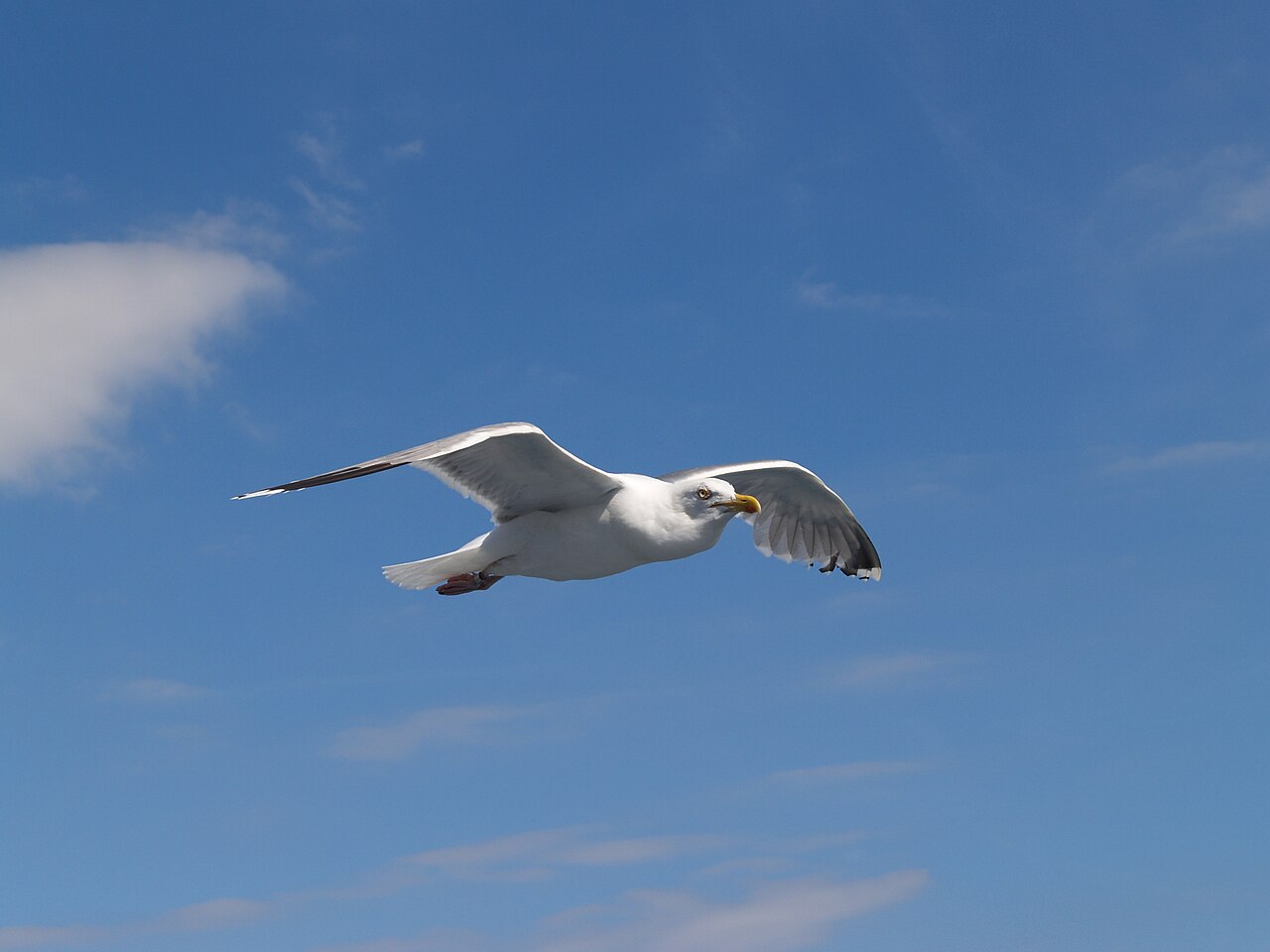
The readings split sharply depending on what the bird was doing. A gull circling overhead, one at your window, a flock pushed inland before a storm and a single bird crossing your path all carry different traditional meanings. The herring gull (Larus argentatus) and its relatives are also among the most intelligent birds people encounter daily, which is why the symbolism leans on cleverness rather than purity.
A seagull symbolizes adaptability, resourcefulness and freedom. Because gulls live between land and sea, sailors read them as messengers carrying the souls of drowned mariners. Seeing one is usually taken as a prompt to use what is available rather than wait for better conditions, and as a sign that change is close.
| Sighting | Traditional reading |
|---|---|
| Seagull crossing your path | A change of direction you did not choose but can use |
| Seagulls circling overhead | Something below is worth your attention, often opportunity |
| Seagull at your window | News arriving from far away, often about someone at sea or abroad |
| Seagull flying alone | Independence, or a season of doing without the group |
| Flock gathering inland | Weather turning, read as a warning to prepare |
| Seagull landing close to you | Boldness rewarded, and a reminder to guard what is yours |
| Dead seagull found | A passage closing, in sailor lore a soul released |
What Does a Seagull Symbolize?
A seagull symbolizes the ability to thrive on the margins. Gulls are not specialists: they scavenge, hunt, steal, follow boats and feed in plowed fields, and that opportunism is the whole of their symbolic character. Where the eagle stands for mastery and the dove for peace, the gull stands for making do and doing well at it.
Freedom is the second thread. Because gulls fly over water with no visible destination, they became an emblem of unbound movement in Romantic and maritime poetry, and modern spiritual writing has kept that reading nearly unchanged. The gull is the bird of leaving without a map.
The third thread is communication across distance. A gull is often the first living thing a sailor sees approaching land, so the bird carries the meaning of news, of contact restored and of the shore being nearer than it looks. That is the oldest layer of the symbolism and the most consistent. For the wider frame, our overview of what birds symbolize across cultures places it alongside other messenger birds.
Seagull Symbolism in Sailor and Coastal Lore
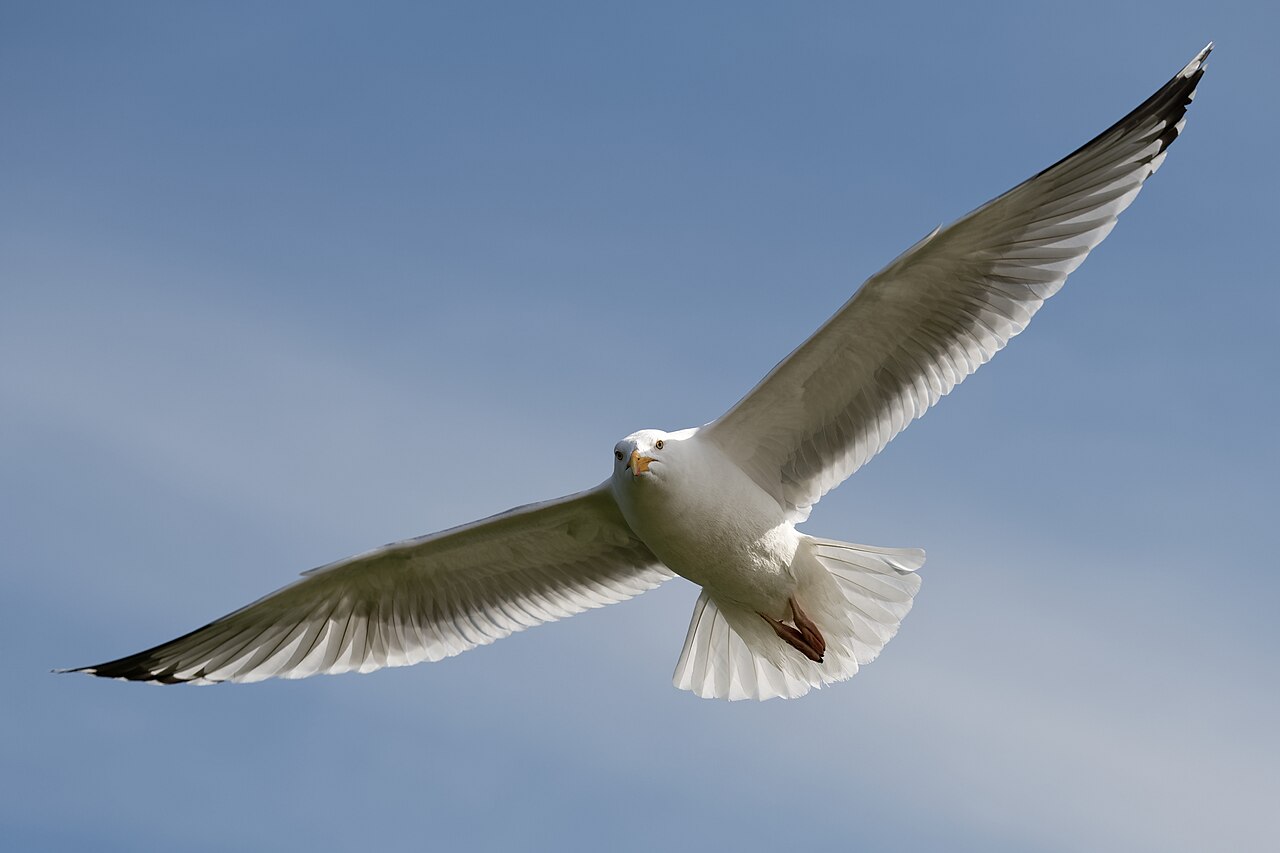
The strongest seagull tradition is not Native American or Celtic but maritime, and it is specific: gulls carry the souls of drowned sailors. Killing one was treated as a serious offense on British and American fishing boats well into the twentieth century, because the bird might be a dead shipmate. Three gulls flying together overhead was read as a death omen in parts of the English and Welsh coast.
Other coastal readings are practical dressed as prophecy. Gulls settling on land or flying far inland meant heavy weather coming, which is simply true: gulls leave exposed water ahead of storms. A gull following a boat home was read as approval of the catch, and a gull landing on the rigging as a safe passage.
Those traditions also explain the darker readings. Because gulls gathered where bodies and wreckage washed up, they acquired an association with death that other seabirds escaped, and the Ignatian image of the gull as a restless, grasping spirit draws on the same unease. Compare the much warmer treatment of the bald eagle as a spiritual symbol.
Seagulls in the Bible and Christian Thought

What did God say about seagulls? Scripture mentions the gull only once and not favorably. Leviticus 11 and Deuteronomy 14 list the gull among the birds that are unclean and not to be eaten, grouped with the raven, the owl and the vulture, almost certainly because they are scavengers rather than grain and seed eaters.
Christian writers later drew a moral from the same habit. Because the gull takes whatever is easiest, it has been used in devotional writing as an image of the appetite that is never satisfied and of the spirit that circles without settling. That reading is interpretation, not doctrine, and it sits awkwardly beside the bird’s maritime role as a soul carrier.
A gentler Christian folk reading survives in fishing communities, where gulls appear in blessing-of-the-fleet imagery as witnesses rather than scavengers. Where a cardinal is read as a visit from someone who has died, a gull in that tradition is read as the departed still working, still at sea.
Celtic, Norse and East Asian Views
Celtic tradition folds the gull into a broader class of seabirds that cross between worlds, since in Irish and Scottish belief the sea was itself the road to the otherworld. Gulls in that frame are travelers rather than omens, and specific gull lore is thin compared with the raven and the swan. Claims of a detailed ancient Celtic gull meaning should be treated with suspicion.
Norse and Baltic coastal lore keeps the drowned-sailor theme and adds a shapeshifting element, with gulls appearing in stories as women who come ashore and return to the water. The pattern echoes selkie tales rather than standing apart from them.
East Asian symbolism gives the gull little weight, since crane, heron and cormorant occupy the water-bird roles in Chinese and Japanese iconography. Where gulls appear in Japanese coastal poetry they signal loneliness and distance from home, which is close to the Western reading without being borrowed from it. The crane and its symbolism carry what the gull does not in those traditions.
Seagull as a Spirit Animal, Totem and Omen

As a spirit animal the seagull asks you to stop waiting for ideal conditions. People who identify with the gull totem are usually described as adaptable, socially fearless and quick to spot an opening, with the matching weakness of taking the easy route and losing patience with slow work.
The three words get used interchangeably, and separating them helps. The spirit animal arrives for a situation, the totem is carried for life, and the omen is the single sighting read as a message. Gull sightings work best as omens about timing, since the bird itself is an opportunist and its appearance is read as a window opening.
The warning attached to the gull totem is worth stating. Because the bird steals from others rather than hunting for itself, writers on animal symbolism treat a run of gull sightings as a question about whether your gains are your own work. That is harsher than the reading given to the blue jay, which carries boldness without the charge of theft.
A Seagull Crossing Your Path or Flying Alone
A seagull crossing your path is read as a redirection. The traditional meaning is a change in course that arrives from outside your plans, and because the gull is a bird of adaptability the reading is positive: the new direction is workable. A gull crossing low and close intensifies the message rather than changing it.
A seagull flying alone is read differently. Gulls are intensely social, so a solitary bird stands out, and folk readings treat it as independence, self-reliance or a period of working without support. In sailor lore a single gull far from shore was the soul of one man rather than a crew.
White gulls get singled out in modern spiritual writing as signs of peace or of a message from someone who has died. Ornithologically most gulls look white at a distance regardless of species, and genuinely pale species like the Iceland gull are rare south of the Arctic, so a white gull sighting is usually just a gull in good light.
A Seagull in Your Yard or Garden
A gull in the garden is read as opportunity arriving at the house, usually with a note of caution attached. Because the yard is domestic space and the gull is an opportunist, the traditional meaning concerns the household budget: money coming in from an unexpected direction, and the need to secure what you already have.
Inland sightings carry an extra layer. Away from the coast a single gull on a lawn was read as a traveler bringing word, and a group as weather on the way, which is the older and more practical of the two readings. In farming districts gulls following a plow were welcomed as a sign of a working season rather than an omen at all.
Behavior explains most garden visits. Gulls take earthworms from wet turf, raid compost and will learn a feeding schedule within days, so a bird that keeps returning has found food rather than a message to deliver. Once a gull is fed by hand it will bring others, which is how one visitor becomes a dozen.
Seagulls Circling or Flying Around Your House
What does circling seagulls mean? Circling is a feeding behavior before it is an omen. Gulls circle over concentrated food, whether that is a fish shoal driven up by predators, a newly mowed field or an open dumpster, and other gulls read the circling from miles away and join. The traditional reading follows the behavior: something near you is worth noticing.
Gulls flying around your house specifically are read as news approaching, in the same family as a bird at the window. The folk meaning concerns distant family and travel, and in coastal communities it meant word from a boat. The modern version is softer: attention from people you have not heard from.
The practical cause is usually food or a nest. Herring gulls nest on flat roofs across coastal towns, defend them loudly from May through July, and will dive at people near fledglings. If gulls are circling your roof in June, you have tenants rather than an omen.
A Seagull at Your Window, on Your Car or Landing Near You
A gull at the window is the most intimate of the sightings and the one most consistently read as a message. In bird folklore the window is the threshold of the household, so the reading concerns the home: news arriving, a return, or an invitation from somewhere far off. Unlike most window-bird omens, the gull version is rarely read as a death sign.
A gull landing close by, or on your car, is read as boldness rewarded, with a caution attached. Because the bird is a known thief, the traditional meaning doubles as a reminder to watch what you are holding, literally and otherwise. Anyone who has lost food on a seafront knows the practical version.
Gull droppings on a person or vehicle have their own folk reading, treated almost universally as luck rather than insult, the same convention that applies to other birds. The logic is compensation: an unpleasant small event offsetting a larger one.
Finding a Dead Seagull or Dreaming of Gulls
Finding a dead seagull is read in maritime lore as a soul released rather than a warning aimed at you. The gull carried a sailor; when the bird dies, the passage completes. Modern readings are closer to a closing chapter, usually one involving travel, a move or the end of a period of improvisation.
Dreams of gulls follow the waking symbolism. A gull flying free is read as a wish for independence, a gull stealing food as a fear of losing what you have, and a flock screaming overhead as social pressure. Dreaming of a gull coming to your hand is read as an opportunity you can take if you move calmly.
Treat it as vocabulary rather than prediction. The reliable part of gull symbolism is what the behavior tells you about weather, food and nesting season, and the Cornell Lab documents all three at All About Birds. For a bird whose omens read almost entirely positive, see turkey symbolism and what a sighting means.
Frequently Asked Questions
Do seagulls symbolize good luck?
Mostly yes. Gulls are read as signs of adaptability, freedom and news arriving, and a gull following a boat or landing on rigging was considered lucky by sailors. The exceptions are three gulls flying together, read as a death omen on parts of the British coast, and the biblical listing of the gull as unclean.
What does it mean when seagulls fly around your house?
Traditionally it means news is coming from far away, often about family or travel. Practically it usually means food nearby or a rooftop nest, since herring gulls nest on flat roofs and defend them loudly from May through July. Check the roof before reading the omen.
What time do seagulls go to bed at night?
Gulls settle at dusk, usually on open water, islands, rooftops or large parking lots where they can see predators coming. They are not strictly nocturnal but will feed under artificial light at harbors and landfills, and some species forage at night during the breeding season.
What is a seagull’s favourite food?
In the wild, fish, crabs, marine worms and the eggs and chicks of other birds. Given the choice, gulls take whatever is highest in calories for the least effort, which is why chips, bread and discarded meat dominate urban diets. Feeding them is discouraged in most coastal towns.
Why don’t we see baby seagulls?
Because young gulls stay at the nest site on cliffs, islands and flat roofs until they are nearly adult size, and they are mottled brown rather than white. Most of the brown gulls on a beach are juveniles, and large gulls take two to four years to reach full adult plumage.
What is the lifespan of a seagull?
Large gulls commonly live 10 to 20 years in the wild, and herring gulls ringed in Europe have exceeded 30 years. That longevity, combined with strong site fidelity, is why the same birds appear at the same harbor or rooftop year after year.