Female Bluebird: Identification Guide
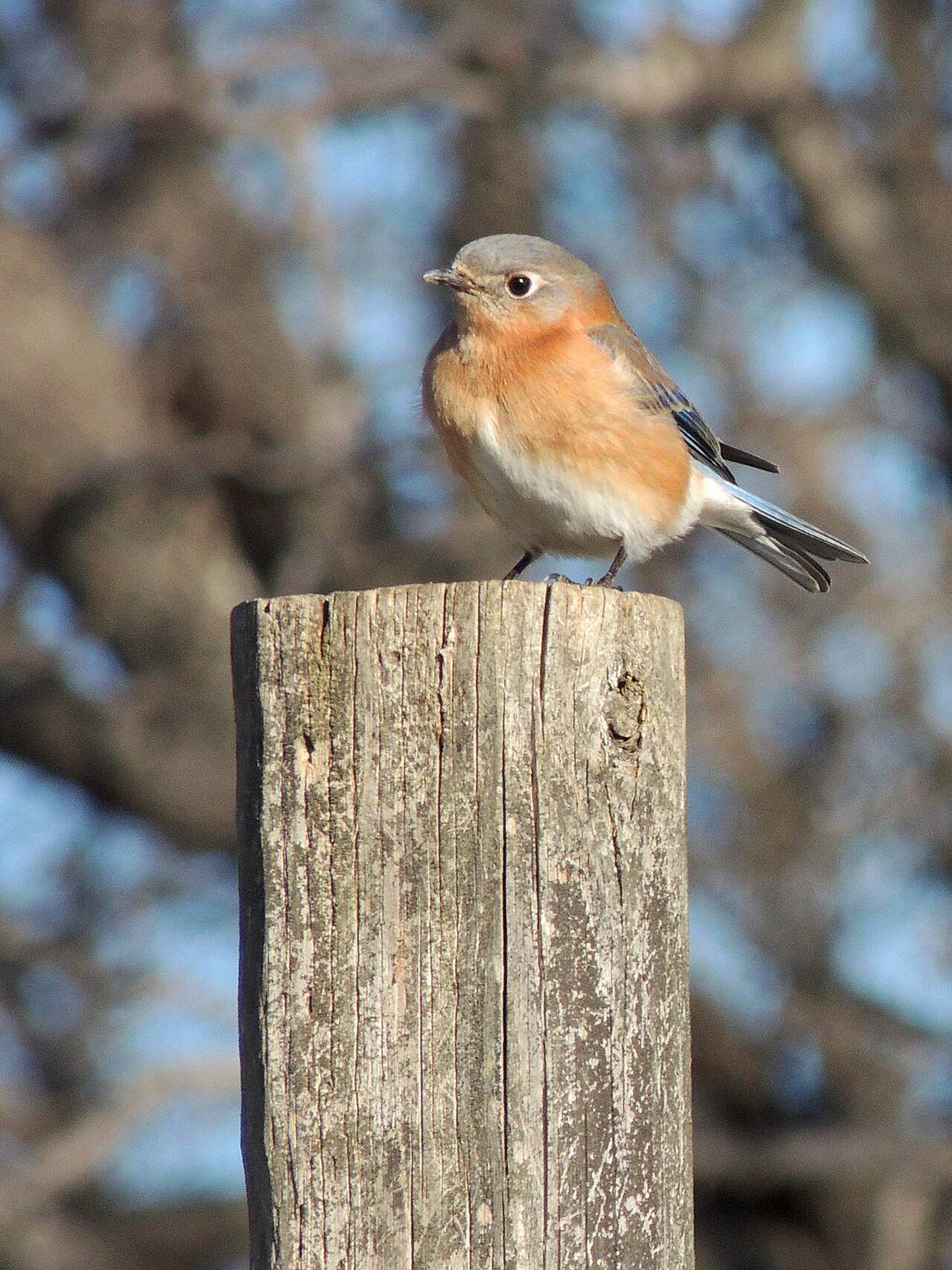
The female bluebird is a soft, grayish version of the brilliant blue male, with subtle blue tints in her wings and tail and a paler orange breast. While the male eastern bluebird is unmistakably vivid, the female’s understated colors can make her trickier to identify. This guide covers what a female bluebird looks like, how she differs from the male, how to identify her, her behavior and nesting, and where and when to see her.
| Feature | Female Bluebird |
|---|---|
| Upperparts | Grayish with blue tints |
| Wings and tail | Washed with blue |
| Breast | Pale orange-brown |
| Head | Grayish |
| Overall look | Soft and subtle |
What Does a Female Bluebird Look Like?
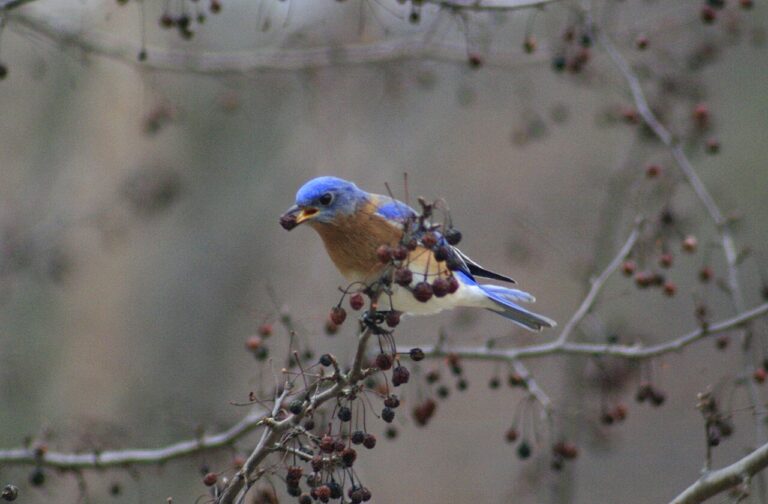
A female bluebird, most often the eastern bluebird, is a gentle, muted version of the striking blue male. Instead of brilliant blue upperparts, she is mostly grayish, with soft blue tints showing in her wings and tail, especially noticeable in good light or in flight. Her breast is a pale, subdued orange-brown rather than the male’s rich rusty-orange, and her head and back are grayish overall, giving her a delicate, understated appearance. She still shows the characteristic bluebird shape and a hint of the family’s signature color, but in far softer tones. This subtle beauty can make her easy to overlook or misidentify, but the combination of grayish body, blue-washed wings, and pale orange breast is distinctive once you know what to look for, as covered in our guide to the eastern bluebird.
Female vs Male Bluebird
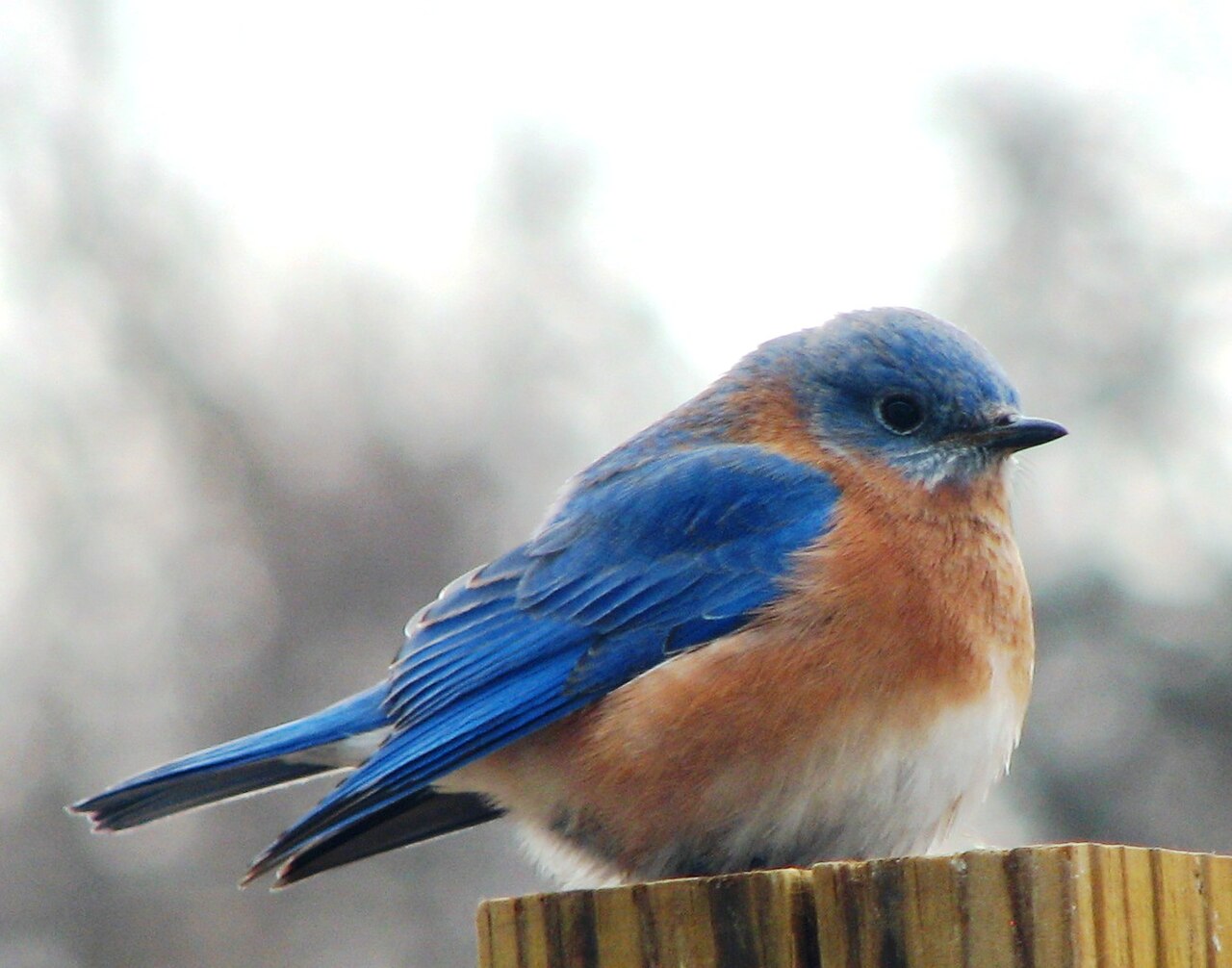
The differences between female and male bluebirds are all about intensity of color. The male eastern bluebird is dazzling, with deep, vivid blue upperparts and a bright rusty-orange throat and breast that make him one of the most beautiful backyard birds. The female is far more subdued, with grayish upperparts that carry only a wash of blue in the wings and tail, and a paler, softer orange breast. As a result, the male looks brilliantly colorful while the female appears gentle and muted. The contrast is clearest when a pair is seen together, since the male’s saturated blue and orange stand out sharply against the female’s soft grays and subtle tints. Recognizing that the female carries the same pattern in a quieter palette is the key to telling the sexes apart.
How to Identify a Female Bluebird
Identifying a female bluebird comes down to spotting the subtle blue and orange in her otherwise grayish plumage and ruling out similar birds. Look first for the wash of blue in her wings and tail, which sets her apart from plain gray birds, then note the pale orange-brown on her breast. Her overall soft, grayish appearance with these hints of color is the hallmark of a female bluebird. Be aware of a few possible mix-ups: female bluebirds of other species, such as the western or mountain bluebird, can look similar where their ranges apply, and a female indigo bunting is brownish but lacks any orange on the breast. Habitat and behavior help too, since bluebirds favor open country and readily use nest boxes. Paying attention to that telltale blue in the wings and the orange breast makes identification reliable, a rewarding skill for anyone attracting cavity-nesters as described in our guide to attracting birds.
Female Bluebird Behavior and Nesting
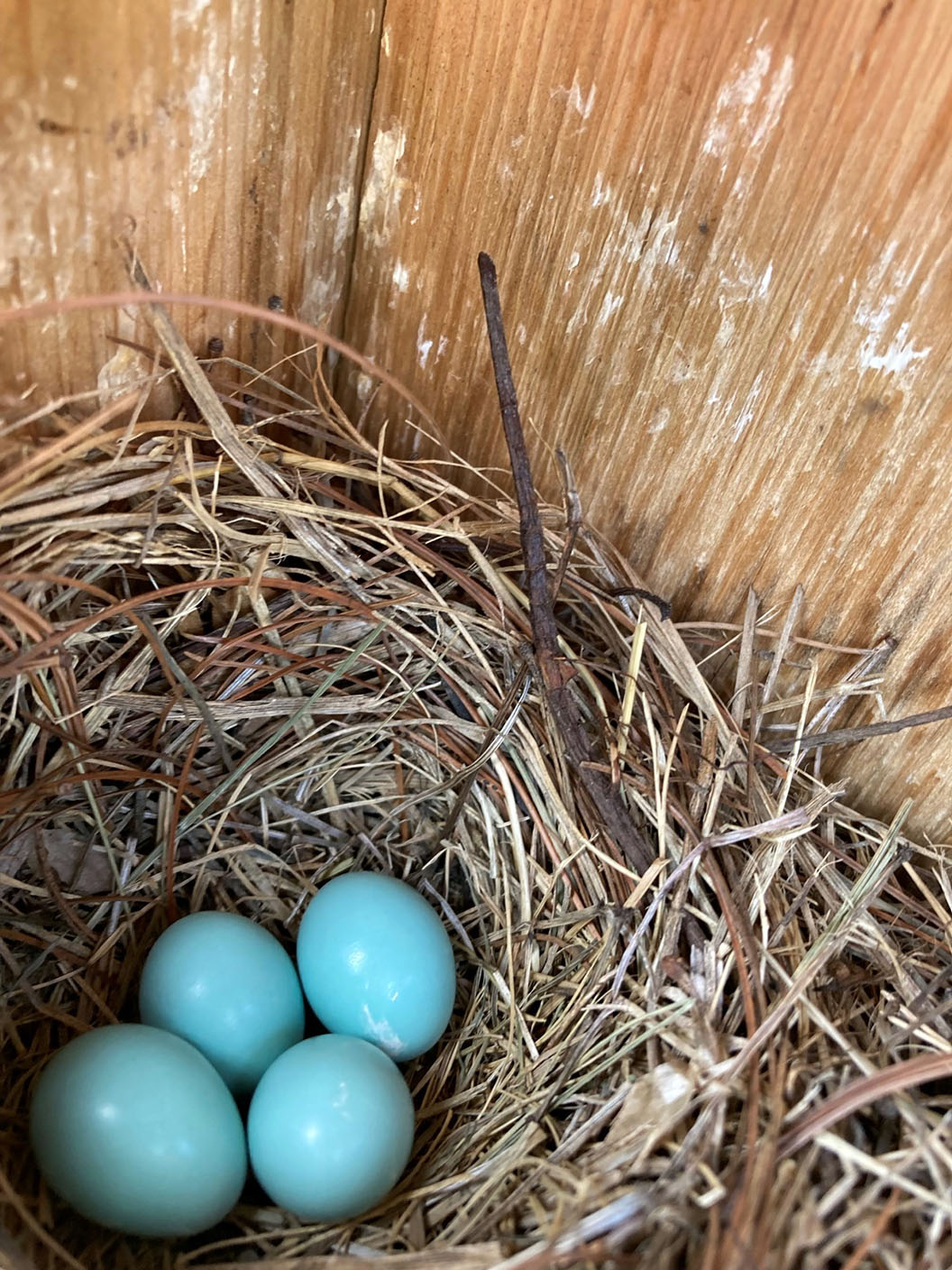
The female bluebird takes the lead in nesting, which offers good opportunities to observe her. Bluebirds are cavity nesters, using natural tree hollows, old woodpecker holes, and, very commonly, nest boxes provided by people. The female builds the nest inside the cavity, weaving together grasses and pine needles into a tidy cup, then lays her pale blue eggs and does the incubation. Once the eggs hatch, both parents feed the nestlings a diet heavy in insects, along with berries and fruit at other times of year. Because bluebirds so readily accept nest boxes, a female bluebird building her nest or slipping in and out of a box is a familiar and delightful sight for those who put up boxes in open habitat. Her strong role in nest-building and incubation makes her central to raising each brood, as explored in our guide to bluebird symbolism.
Where and When to See Female Bluebirds
Female bluebirds are found alongside males in the open habitats these birds favor. Look for them in meadows, farmland, orchards, parks, golf courses, and along field edges, especially where there are scattered trees, fence posts, or nest boxes to perch on and nest in. Eastern bluebirds range across much of eastern and central North America and are present year round in much of that range, though many move south for winter or gather in small flocks around fruiting trees and shrubs. The nesting season, from spring into summer, is one of the best times to observe a female bluebird, particularly if you have put up a nest box, since she may be seen carrying nesting material or food. Their fondness for open country and nest boxes makes bluebirds, including the softer-hued females, a beloved and accessible sight for backyard birders.
Female Bluebird Plumage Explained
The soft, subtle coloring of a female bluebird is well documented by ornithologists. According to the Cornell Lab of Ornithology, female eastern bluebirds are grayish overall with blue tinges in the wings and tail, more subdued than the vivid males, and bluebirds readily nest in boxes provided by people. This muted plumage helps keep the female less conspicuous while she is nesting, offering better camouflage than the male’s brilliant blue would. The male’s dazzling blue upperparts and rich orange breast, meanwhile, serve for display and attracting a mate. Because the female carries only hints of blue, mainly in her wings and tail, focusing on those areas along with her pale orange breast is the surest way to identify her. Understanding this difference reveals the biology behind the bluebird’s appearance and makes the softer female easier to recognize, much like the pattern seen in our guide to the female robin.
Female Bluebirds and Other Bluebird Species
When identifying a female bluebird, it helps to be aware that North America has more than one bluebird species. In addition to the eastern bluebird, there are the western bluebird and the mountain bluebird, and where their ranges overlap or in the western United States, their females can look similar and cause confusion. Female western bluebirds are grayish with blue tinges much like female easterns, while female mountain bluebirds are notably grayer with even subtler, paler blue and little orange. Knowing which bluebird species occur in your region narrows the possibilities considerably. In the eastern United States, a grayish bird with blue-washed wings and a pale orange breast is almost certainly a female eastern bluebird, a satisfying identification that connects to the bird’s gentle symbolism in our guide to bird symbolism.
Attracting Female Bluebirds with Nest Boxes
One of the best ways to see a female bluebird up close is to put up a nest box, since bluebirds famously take to them. A properly designed and well-placed box in open habitat, mounted on a pole with a predator guard and facing an open area, can attract a pair of bluebirds looking for a nesting cavity. The female will inspect potential sites and, if she approves, build her nest inside, giving you wonderful opportunities to watch her carry grasses and slip in and out of the entrance. Providing nest boxes has genuinely helped bluebird populations in many areas, making it both a rewarding and a beneficial practice. Watching a female bluebird raise a brood in a box you provided is one of the great pleasures of backyard birding and a great way to study her subtle plumage.
Related reading: what do bluebirds eat.
Frequently Asked Questions
What does a female bluebird look like?
A female bluebird is mostly grayish with soft blue tints in her wings and tail and a pale orange-brown breast, a muted version of the brilliant blue male.
How can you tell a female bluebird from a male?
The male has vivid deep blue upperparts and a bright rusty breast, while the female is grayish with only a wash of blue in her wings and tail and a paler orange breast.
Do female bluebirds have blue on them?
Yes, but only subtly. A female bluebird’s blue appears mainly in her wings and tail, while her body and head are largely grayish, unlike the vivid all-over blue of the male.
Do female bluebirds build the nest?
Yes, the female bluebird builds the nest inside a cavity or nest box using grass and pine needles, lays the pale blue eggs, and incubates them, while both parents feed the young.
What is the difference between a female bluebird and an indigo bunting?
A female bluebird shows blue in the wings and a pale orange breast, while a female indigo bunting is plain brownish with no orange, helping tell the two apart.
Do female bluebirds use nest boxes?
Yes, bluebirds readily use nest boxes, and the female builds her nest and raises young inside them, which makes nest boxes a great way to attract and observe bluebirds.
Where do female bluebirds live?
Female bluebirds live in open habitats like meadows, farmland, and orchards across eastern and central North America, often near scattered trees, fence posts, or nest boxes.