Tiger Dream Meaning: Good or Bad? White, Black, Baby Tigers
A tiger in a dream is a sign of raw power and strong emotion, and whether that is good or bad depends on what the tiger did and how you felt. Most tiger dreams are good or neutral signs; only a tiger that hunts, bites or corners you is a warning.
Dream symbolism is interpretation, not prediction, and no reading here is a verdict on your week. Color, age, behavior and the tradition you grew up in each shift the meaning.
A tiger in a dream signals raw power and strong emotion, either your own strength asking to be used or a threat you sense, and its color, age and behavior decide which. A calm or friendly tiger means backing and courage. A hunting, biting or cornering tiger means a conflict you can no longer avoid.
| Tiger variant | Core signal | Question to ask yourself |
|---|---|---|
| White tiger | Rare insight or guidance | What truth have I been handed and not yet used? |
| Black tiger | Hidden fear or an unknown force | What am I afraid of that I cannot name? |
| Orange tiger | Everyday drive, confidence and energy | Where is my energy going right now? |
| Baby tiger or cub | New potential, still small | Which talent or project needs feeding? |
| Siberian or Sumatran tiger | Endurance, or underrated strength | Where am I stronger than people assume? |
| Chasing or attacking tiger | A problem gaining on you, or a conflict already hurting | Who or what am I running from? |
| Friendly or ridden tiger | Peace with your own strength, control of a risky ride | What power have I learned to steer? |
| Caged or dead tiger | Strength held back, or drive that has faded | What is holding my fire in check? |
What Does It Mean to Dream About a Tiger?
Dreaming about a tiger means that instinct and emotion have grown too large to ignore. When something in waking life carries that much charge, anger, ambition, desire or dread, the dream gives it stripes and teeth.

Your feeling in the dream decides the direction. Fear means the power belongs to something outside you. Calm or awe means the power is yours.
Tigers (Panthera tigris) hunt alone, and that single fact shapes the symbol. A tiger dream is about self-reliance, not what a team will carry for you. A tiger filling the frame is an urgent issue. A tiger far off on a ridge is a force you still have time to prepare for.
Is a Tiger Dream Good or Bad Luck?
Most readings treat a tiger dream as neutral to good luck rather than bad. The animal brings courage, protection and a challenge you are built to win. Most tiger dreams leave the dreamer shaken but not harmed.
The clearest warning comes when the tiger hunts, bites or corners you. Those three behaviors turn power you hold into power used against you. Even then the dream names a conflict you can still answer, not a loss that is already settled.
A calm or protective tiger means luck and backing, strength on your side. Compare it with the elephant. An elephant dream leans toward steady, patient luck and the support of elders. A tiger dream leans toward bold action and luck that arrives because you moved first.
Why Do Tigers Appear in Dreams? The Psychological Meaning
Tigers appear in dreams because suppressed anger or ambition is pushing toward the surface. You said nothing in the meeting. You swallowed the argument at dinner. Each builds pressure, and at night the pressure takes the shape of a predator because that is how it feels from inside.
A deadline or a conflict follows the same route. A project that is due or a dispute that has not been settled becomes a tiger pacing at the edge of the dream, and when the deadline passes, the tiger goes with it. Jungian readings treat the tiger as shadow material, the disowned self. Carl Jung called the shadow the side of the personality a person refuses to acknowledge. Jungians most often see it as a hostile figure of the dreamer’s own sex, but a threatening animal can carry the same disowned material.
The simplest cause comes first, though. Tiger footage, a zoo visit or a bedtime story can place a tiger in your dream, often within a night or two and sometimes about a week later. The mind borrowed a fresh image for an older concern.
Dreaming of a Tiger Chasing or Attacking You
A tiger chasing or attacking you in a dream means a conflict has moved from the background into the open.
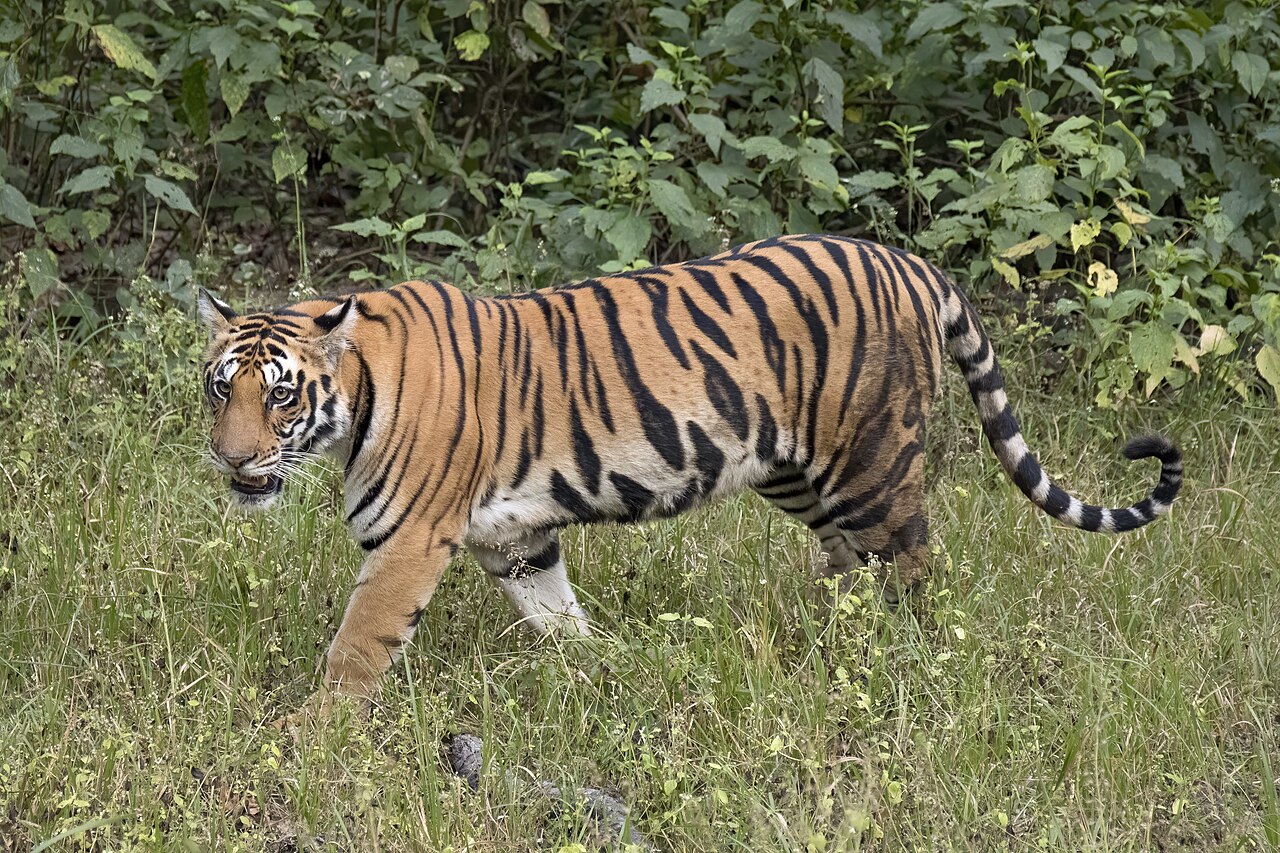
Chased by a tiger. Being chased means you are avoiding a problem that grows the longer you run. Tigers sprint at up to about 40 mph over short distances, so in the dream the gap only ever closes. Where a wolf dream chase points to group pressure, a tiger chase points to one opponent or one issue.
Attacked or bitten. An attack means the conflict is already hurting you, and the other party is close to you. Note where the bite lands. A wounded hand is damaged ability to act. A bitten throat is a voice being silenced.
Hiding from a tiger. Hiding means you sense danger but feel unprepared to face it. The hiding place is your current strategy. If the tiger finds you, the strategy has run out.
Fighting, Killing or Finding a Dead Tiger
Fighting a tiger in a dream means you are ready to face the conflict head on. The fear is still there, but you turned around. The mind rehearsed confrontation and found you willing. A tiger fight stands for personal ambition, the will to take what you have decided is yours.
Killing the tiger means you have overcome a fear or broken a stubborn obstacle. The win carries weight, because killing something that beautiful costs something. Finding a tiger already dead is a different scene. The drive has faded on its own, or a threat has ended without your help, and the dream asks what you will do with the space it left.
An injured tiger limping through the dream is your own strength running low. The most powerful animal in the scene cannot stand, which is how exhaustion looks from inside. Recover before the next push. An injured bear in a dream carries a similar exhaustion reading.
Friendly, Tame or Caged Tiger Dreams (and Riding One)
A friendly tiger in a dream means you have made peace with your own strength. You stroke it, it leans into your hand, and nobody is afraid. These dreams follow a hard decision made well, a boundary held or a long fear outgrown.
Riding a tiger means you are steering a risky situation you cannot safely leave midway. The dream is not telling you to jump off. It is telling you to hold on and steer with care.
A caged tiger is anger or talent held back by rules or duty. The cage is a job, a family role or a promise. A tiger behaving like a house cat carries a gentler version of the same message, big potential shrunk by small routines, close to what a cat dream says about comfort and independence.
Where the Tiger Appears: House, Bedroom, Workplace or Wild
Where the tiger appears tells you which part of your life the power belongs to.
In the house. A tiger in the house means tension inside the family or the shared home. Something large and unspoken is pacing the hallway.
In the bedroom. A tiger in the bedroom means passion or a power struggle in a relationship. Whether the dream felt thrilling or threatening tells you which of the two it is.
At work. A tiger at the workplace is a rival or a demanding boss, the predator placed where competition already lives.
In the wild. A tiger in the wild means instinct in its right place. The animal belongs there, and the dream carries freedom rather than threat.
White, Black, Golden and Other Tiger Types: What the Variant Means
The color of the tiger in your dream changes the message, and the rarer the coat, the more unusual the message. White and black are exceptions in the wild, and the dream treats them as exceptions too.

White tiger. A white tiger in a dream means rare insight or guidance. The white coat stands for clarity, a light cast on something you could not see before, and the dream arrives at a turning point. Biologically, the white tiger is a color variant of the Bengal tiger (Panthera tigris tigris), not a separate species. The pale coat comes from a recessive gene, and white tigers today live in captivity rather than in the wild. That rarity is what the dream borrows.
Black tiger. A black tiger in a dream means hidden fear or an unknown force. The dark coat hides the animal’s outline, so the dream is about something large in your life that you cannot fully see. In nature there is no truly black tiger. The animals called black tigers are pseudomelanistic, with stripes so broad and dense that they merge and the orange almost disappears. A dream black tiger works the same way. The stripes are still there, but the fear has thickened until it covers everything.
Orange tiger. An orange tiger in a dream means everyday drive, confidence and energy. It is the tiger as the world knows it, power and instinct without the extra charge of a rare coat. A calm orange tiger is energy well directed. A restless or snarling one is energy with no outlet.
Golden tiger. A golden tiger, the pale gold coat with cinnamon stripes known as golden tabby, means success that feels warm rather than fierce. Like the white tiger, it is a captive color variant, not a species.
Siberian, Bengal or Sumatran tiger. A Siberian (Amur) tiger in snow means endurance under hard conditions; it is the largest subspecies, built for cold. A Bengal tiger, the most numerous subspecies in the wild, is the classic power reading. A Sumatran tiger, the smallest living subspecies, means strength others underestimate.
Baby Tiger and Tiger Cub Dreams
A baby tiger in a dream means new potential, a project or a talent that is still small. The cub has every trait of the adult, the stripes, the paws, the instinct, but none of the size. That is how a new skill looks early on. The dream asks you to recognize what it will become and to feed it.
Playing with cubs means joy, plus power you are still learning to handle. Cubs bite and scratch in play, and the claws are real even when the mood is light. A mother tiger with her cubs reverses the view. You are the adult, and the dream is about fierce protection of your family or your plan. Tigresses raise their cubs alone, and the dream carries that single-minded guarding.
An abandoned cub is a neglected talent or a vulnerable side of yourself that needs care. Ask what you have let go hungry.
Spiritual Meaning of a Tiger in Your Dream
The spiritual meaning of a tiger dream is a message to act with courage now instead of waiting. The tiger does not deliberate. It watches, chooses its moment and commits. A dream tiger brings that instruction to a decision you have been circling.
Dreamers who experience the tiger as a visiting spirit animal get a second message: trust instinct over outside approval. The tiger needs no pack to confirm its choices.
A tiger in a dream asks for inner change, a shift in how you hold your own strength. A tiger seen awake, at a zoo or in art, points outward to protection and status, the reading covered under tiger symbolism and spirit animal meaning.
Tiger Dreams in Hinduism: Durga and Lord Shiva
Yes, in Hinduism a tiger in a dream is mostly a good sign, divine protection rather than danger. The tiger belongs to the goddess Durga, who is depicted riding a tiger or a lion into battle against the buffalo demon Mahishasura. The tiger is her mount and her weapon, the form that divine protection takes when it has to fight. A calm, ready tiger in a Hindu dreamer’s night is that protection, strength lent for a battle that is coming.
Lord Shiva is shown seated on a tiger skin, and in some depictions wearing one. The skin, not the living animal, is the key image. The tiger stands for desire, ego and the raw drives of the body, and Shiva sitting on its skin stands for mastery over all of them. Read through this image, a dream that shows a tiger pelt, or a tiger that lies down at your feet, can stand for inner control, the passions subdued but not destroyed.
Shiva’s mount is Nandi the bull, not the tiger, so a dream tiger points to the skin and its meaning of mastery rather than to Shiva’s vehicle. The tiger is divine force when it carries the goddess and conquered instinct when it lies beneath the god.
Tiger Dreams in Chinese and Islamic Traditions
In Chinese tradition the tiger is one of the twelve animals of the zodiac, linked to courage, boldness and authority. A dream tiger carries that charge, a sign of bravery either arriving or being asked for.
Chinese cosmology also places the White Tiger among the Four Symbols, where it guards the West beside the Azure Dragon, the Vermilion Bird and the Black Tortoise. A white tiger dream in this tradition is protection standing at one side of your life.
In the Islamic tradition, dream manuals attributed to Ibn Sirin, a Basra scholar who died in 728 and whose name heads the best-known Arabic dream interpretation tradition, although historians doubt he wrote the books himself, read predators as a powerful enemy. A tiger stands for a tyrant or an adversary of strength, and defeating or taming the animal stands for prevailing over that adversary.
Frequently Asked Questions
Is the tiger related to Lord Shiva?
Yes, through the tiger skin he sits on, not as his mount. Shiva is shown seated on a tiger skin, and one of his names, Krittivasa, means clad in skin. His mount is the bull Nandi. A tiger in a Shiva-themed dream therefore points to mastery over desire and ego, not to a vehicle or a weapon.
Does a recurring tiger dream mean something is wrong?
No, it means one issue is still unresolved, and the mind keeps staging the same scene until something in waking life moves. Treat the repetition as a measure of how long the issue has been waiting. Recurring dreams often stop once you rehearse a new ending while awake, a method called imagery rehearsal.
What does it mean when a tiger talks to you in a dream?
A talking tiger voices your own intuition, so the words matter more than the animal. Speaking animals in dreams carry a message the dreamer already half knows, and the predator’s mouth gives it authority. Write the words down before anything else. The tiger is the messenger, and the message is the part worth keeping.
Is a swimming tiger in a dream a good sign?
Yes, a swimming tiger means handling deep emotions with ease. Tigers are strong swimmers, unlike most cats, and they cross rivers and cool off in pools without hesitation. The dream borrows that comfort in water. Whatever feeling runs deep in your life right now, the tiger is showing you moving through it with power intact.
What does dreaming of tiger stripes or tiger print mean?
Tiger stripes or tiger print in a dream point to identity and what sets you apart. Every tiger’s stripe pattern is unique to that animal, like a fingerprint. Stripes on clothing, walls or your own skin ask what marks you as yourself and whether you are showing it or covering it. Print worn with pride means confidence claimed.
Is a tiger that watches you without attacking a bad sign?
No, not yet. A tiger that watches without attacking signals a pending threat, not an active one. Tigers stalk before they strike, holding still and studying their prey. The dream has frozen that moment. The conflict or the rival has you in view but has not moved yet, which means there is still time to prepare or to leave.
Sources
- Smithsonian’s National Zoo and Conservation Biology Institute, Tiger
- Encyclopaedia Britannica, Tiger, Panthera tigris
- Encyclopaedia Britannica, Durga, Hindu goddess
- Encyclopaedia Britannica, Shiva, Hindu deity