Spiritual Meaning of Flies in Your House: Good or Bad?
The spiritual meaning of flies in your house comes down to one idea. Something stale in your life wants clearing out. A fly feeds on what is left over, so when one circles your kitchen or taps against the glass, the sign points at neglected corners, old habits and unfinished business. These readings come from folk belief and modern spiritual practice.
Most indoor flies have a plain cause, so the reading starts once the fruit bowl and the trash are ruled out. After that, the meaning depends on whether you see one fly, a swarm or dead ones on the sill.
Flies in your house are usually a neutral to good sign, a messenger pointing at something stale that needs clearing, such as a neglected task. Only a sudden swarm reads as a warning, and a fly is not a death omen. Rule out ripe fruit, open trash or a dead mouse first.
What Do Flies Signify Spiritually?
Flies signify decay that feeds renewal, persistence, and the small matter you keep ignoring. The common housefly (Musca domestica) lays its eggs in rotting food and waste, and its larvae turn that waste back into soil. That life cycle is the root of the symbolism. A fly arrives where something has ended, and its presence says the ending is already feeding whatever comes next.
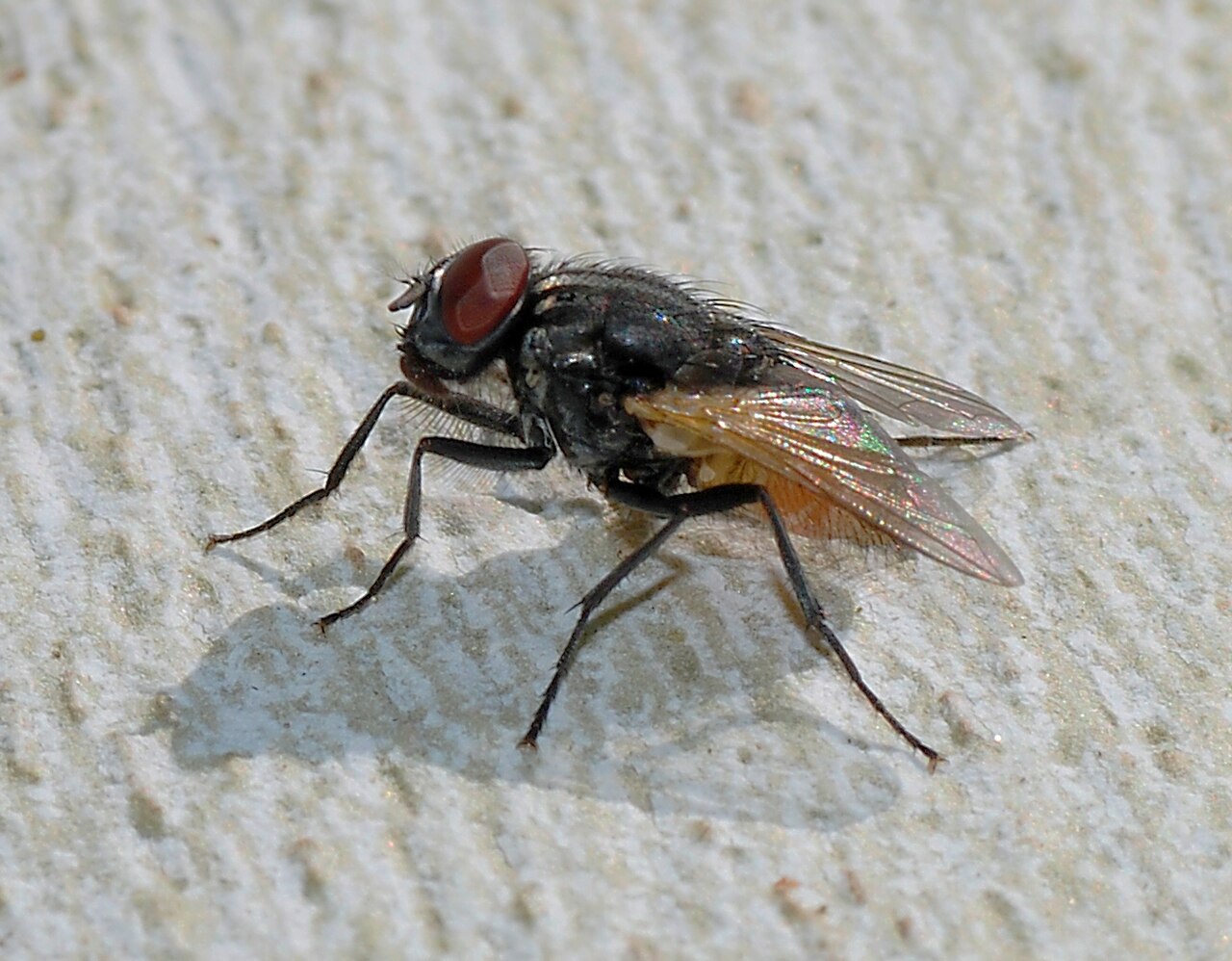
Persistence is the second meaning, and anyone who has chased one fly around a bedroom knows why. One school of thought tells you to copy that trait and keep returning to a goal that keeps shaking you off. The other tells you to confront it, because the fly stands for a person or a thought that will not take no for an answer.
The third meaning is the small neglected matter. A fly is tiny, yet one in a quiet room is impossible to ignore. An apology you owe grows louder the longer you leave it. Taken together, the fly is a mixed symbol, neither the luck of a ladybug nor the dread of a raven. It is a reminder, and a reminder is only bad when you keep refusing it.
Why Flies Keep Appearing in Your House
Flies that keep appearing over several days mean a message you have received and not acted on. The first fly is a tap on the shoulder. The symbolism assumes you already know what needs doing, and the repeat visits mark how long you have put it off. The flies cluster around one room, and that room holds the clue, whether it is the desk or the kitchen.
Repeat visits get noticed during transitions. A move or a breakup and a house full of flies arrive together, partly because change disrupts routines and food sits out longer. The fly comes when your life is in flux and asks what from the old chapter you are still carrying.
The clearest confirmation comes when the visits stop after you act. You make the call or throw out the thing you were keeping for no reason, and the house goes quiet again. To find your own pattern, note the date, the room and your mood each time a fly shows up for two weeks. When ants march in during the same weeks, the ant in the house meaning supplies the other half, since ants point to work you share and flies to the task you avoid alone.
Good Omen or Bad Omen? A Verdict for Each Situation
Flies are a mixed omen, and the verdict depends on how they arrive. One generic meaning does not help you when a swarm fills the porch or a single fly follows you from room to room. Four of the five situations below lean neutral or good. Only the sudden swarm carries real weight as a warning.
Single fly that won’t leave. A lone fly that stays for a day or two is a messenger, and the verdict is neutral to good. It wants one thing noticed and nothing more. Ask what you have been avoiding this week and the answer comes quickly. Once you name it, open a window and send the fly on.
Sudden swarm. A swarm indoors is an urgent call to clear something, and the verdict is mixed. The sheer number says the matter has grown past the point of a gentle reminder. The warning is not doom. A swarm marks the moment before a cleanup, and the omen turns good once you act on it.
Fly lands on you. A fly that lands on your skin turns the attention to your own body and wellbeing. The sign asks whether you have been skipping sleep. Hands point to work, feet to direction, face to how you present yourself. The verdict is neutral, a check-in rather than a warning.
Dead flies on the windowsill. Dead flies on a sill mean a chapter has closed, and the verdict is good. The fly came in with its message, and the message has run its course. Sweep them up, wipe the sill and treat the act as the end of something you no longer need to carry.
Flies in winter. A fly in winter stands for endurance through a hard season, and the verdict is good. Few insects are on the wing in January, and the fly you see is usually a cluster fly or bluebottle that has been wintering inside the walls. A fly that survives in your warm house becomes a small symbol of holding on until spring, and the sign says you are doing the same.
Why Flies Follow You From Room to Room
A fly that follows you from room to room stands for unprocessed stress that wants attention. You carry something unresolved, and the fly tracks it the way it tracks a scent. The fly becomes the worry made visible, buzzing at the edge of attention until you sit with it.
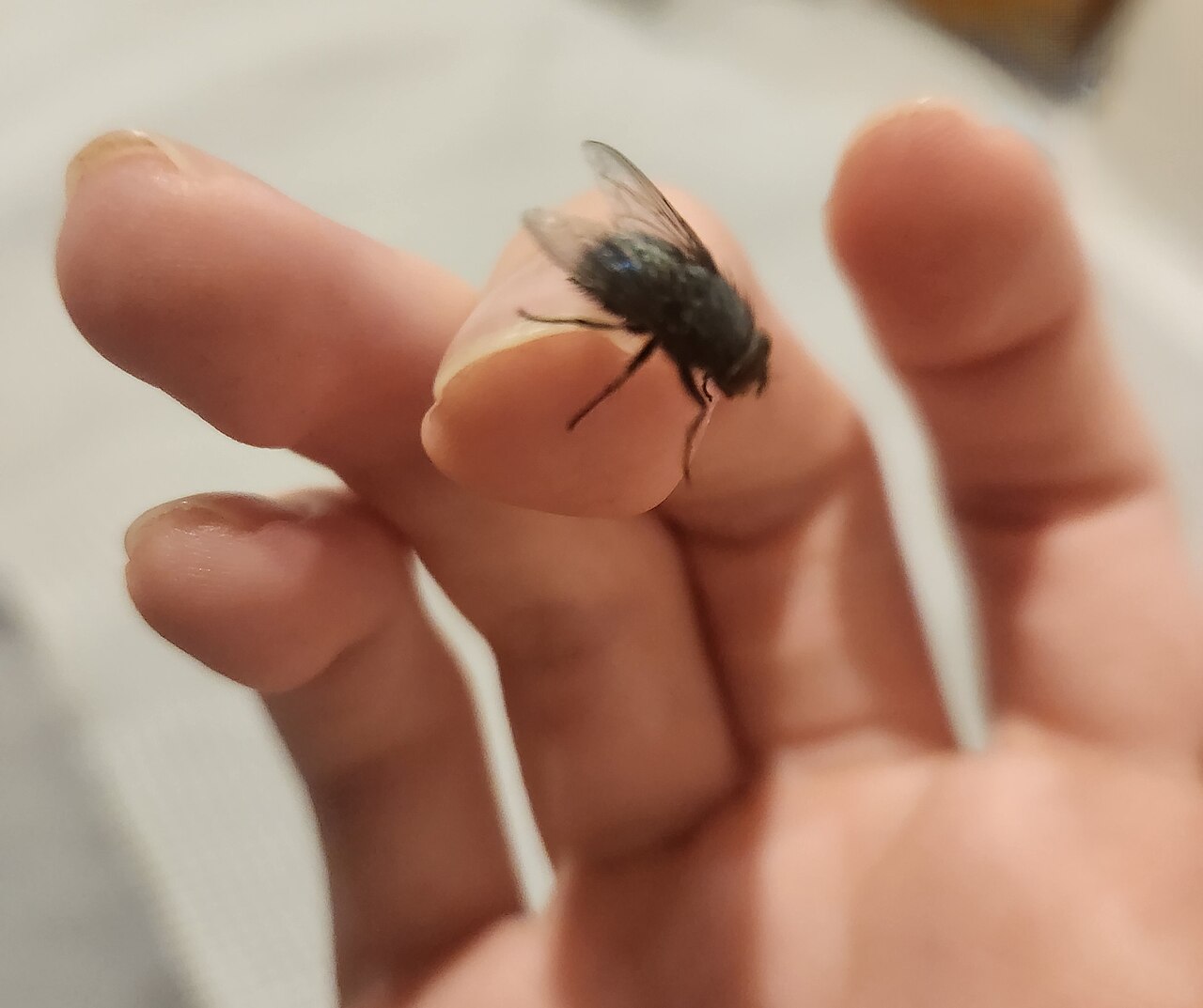
The practical cause is simpler. Flies are drawn to body warmth, sweat and the scent of skin, and a person moving through a warm house is the most interesting thing in the room. Outdoors, tiny biting flies that trail you in clouds on a spring walk are a different insect altogether. Those are black flies, which breed in fast running streams and home in on the carbon dioxide you breathe out.
Can Flies Be Monitoring Spirits?
Can flies be monitoring spirits? Not according to the Bible. The monitoring spirit idea comes from modern deliverance teaching within charismatic Christian circles. In that teaching, a persistent fly or other small creature is a spirit sent to watch a person and report back. If you hold that view, the prayer below fits the purpose. If you do not, the stress meaning covers the same ground without the fear.
Is a Fly in the House a Sign of Death?
No, a fly in the house is not a literal death omen. The fear has a real origin. Blowflies arrive wherever something has died and started to decay, and a cluster of large, loud flies in a closed room has signaled a dead animal in a wall or attic for as long as people have lived in houses. The link between flies and death grew out of that.
The symbolism frames death differently. The ending a fly announces is the end of a phase, a role or a relationship, not a person. The shiny blue bottle fly carries the strongest version of this meaning because blow flies like it are among the first insects to find something that has died.
There is one exception. When a fly appears soon after a real loss, treat it as a grief signal rather than a warning. The fly marks where the grief sits and asks you to tend it. The fly is not predicting a death. It is pointing at something that has already ended.
Rule Out a Physical Source Before Reading a Sign
Check the physical cause first, and treat the visit as a sign only if the flies stay after the cleanup. A sign with an obvious source is not a sign, it is a chore.
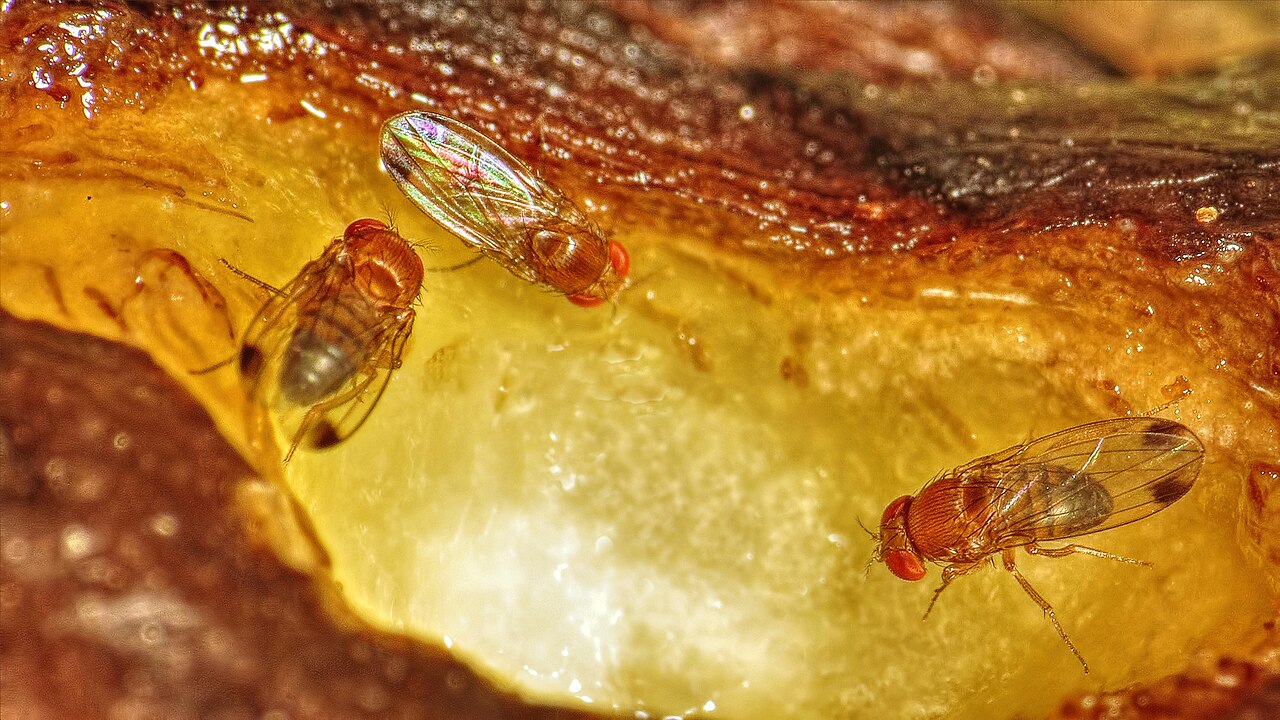
Ripe fruit on the counter, an open trash can, a kitchen compost pail and pet waste in a litter box or yard all draw flies within hours in warm weather. A single banana past its best draws fruit flies quickly, and a new generation can fill the kitchen within one to two weeks. Those are fruit flies, and they have nothing to tell you beyond “eat the banana.” Bag the fruit, empty the trash and rinse the pail.
Two other patterns have plain explanations. A sudden cluster of large flies in one room, buzzing at a window, points to a dead rodent in a wall, under a floor or in an attic nearby. These flies typically emerge 1 to 2 weeks after the animal died, so the smell usually comes before them, not after. Sluggish, slow flies gathering on windows in fall and on warm winter days are cluster flies. They spend summer outdoors, move into wall voids and attics from late August to overwinter, and crawl out toward the light when the walls warm up.
What Does God Say About Flies? The Plague of Exodus
The Bible uses flies as instruments of judgment and images of corruption, not as personal omens. The clearest passage is Exodus 8:21 to 24, the fourth plague on Egypt. God tells Pharaoh through Moses that swarms of flies will fill his palace, his officials’ houses and the ground itself, and the text says the land was ruined by them.
The same passage adds a detail that matters for the home. God spares the land of Goshen, where the Israelites live, so that no swarm of flies appears there. The flies mark a separation between the people under judgment and the people under protection. Within the story, a house without flies is the house God has set apart.
More Bible Verses About Flies in Ecclesiastes, Psalms and Isaiah
Ecclesiastes 10:1 gives the second image. Dead flies give perfume a bad smell, and in the same way a little folly outweighs wisdom and honor. One small corruption spoils something large and valuable.
The plague returns in Psalm 78:45 and Psalm 105:31, and Isaiah 7:18 pictures God whistling for flies from the Nile as an image of an invading army. Scripture treats the fly as a symbol of judgment and of small rot that spreads, and it never tells the believer to interpret a fly in the room as a sign about their own life.
Beelzebub, the Lord of the Flies and the Spirit Linked to Flies
The spirit linked to flies is Beelzebub, whose name is rendered as “lord of the flies.” The oldest reference is 2 Kings 1:2. King Ahaziah of Israel falls through a lattice in his upper room, is injured, and sends messengers to consult Baal-Zebub, the god of the Philistine city of Ekron, about whether he will recover. The prophet Elijah condemns him for seeking a foreign god rather than the God of Israel.
The name Baal-Zebub joins the Canaanite title Baal, meaning lord, with a Hebrew word for flies. Scholars debate whether the Ekron god was truly a fly deity or whether the Hebrew writers twisted a grander title into an insult.
How Beelzebub Became the Fly-Shaped Demon
By the first century the name had become a label for the chief of demons. In Matthew 12:24 the Pharisees accuse Jesus of driving out demons by the power of Beelzebul, “the prince of demons,” and Jesus answers that a kingdom divided against itself cannot stand.
Later Christian demonology took the name literally. Medieval and early modern writers ranked Beelzebub among the highest fallen angels, and the 1863 edition of Collin de Plancy’s Dictionnaire Infernal pictured him as a giant fly with a skull pattern on its wings. Britannica describes Beelzebub both as the god of Ekron in 2 Kings and as the “prince of the devils” of the New Testament. That picture, not the Bible, is why a buzzing fly feels sinister.
A Prayer Against Flies and Unwanted Energy at Home
A good prayer against flies and unwanted energy anchors on Psalm 91:10, which promises that no harm will overtake you and no disaster will come near your tent. The tent is your home. The verse does not mention flies, but it covers everything that enters a dwelling uninvited, and that is the point of praying it over a house.
Keep the structure simple. Begin with thanks for the shelter you have. Ask for protection over every room, naming the ones that trouble you. Then release what weighs on you, the stress or the grudge the fly has been pointing at, by saying it out loud and letting it go. A prayer in that order takes under a minute.
A short prayer for the home goes like this. Lord, thank you for this house and the shelter it gives. Cover every room, the kitchen, the bedrooms and the doorways, and let no harm come near this tent. I release the worry I have carried this week and leave it with you. Keep this home clean and at peace. Amen.
Pair the words with action. Open the curtains, air each room for ten minutes and let the light in while you pray. If church language is not yours, smoke cleansing with dried rosemary or sage serves the same purpose. Move pet birds and pets with breathing problems to another room first, keep a window open while the smoke drifts and never leave the bundle burning unattended.
The Fly as a Spirit Animal and Totem
The fly as a spirit animal stands for quick perception. A fly’s compound eyes register movement far faster than ours, so it is gone before your hand arrives. People who claim the fly as a totem describe noticing shifts in a room, a mood or a deal before anyone else does.
Agility follows from perception. The fly does not wait for a wide-open door. It takes the gap in the screen or the moment the lid lifts. As a totem it tells you to act on small openings instead of holding out for a perfect one. The shadow side is real, though. Fly energy turns into restlessness and thoughts that buzz all night without settling on anything.
Flies vs. Other House Visitors and How the Meanings Compare
Flies differ from other house visitors in one key way. They ask you to remove something rather than receive it. In the ladybug in the house meaning, the beetle on the windowsill is luck arriving, a small gift that landed on its own. The fly is the opposite motion. It marks clutter leaving, or clutter that should be leaving.
A bird that gets indoors means news or change arriving from outside, because birds belong to the open sky and crossing the threshold is dramatic. The fly belongs to the house already, so its news is domestic and close to home.
What Each Type of Fly in Your House Means
Each type of fly carries its own shade of meaning, so identifying the species sharpens the message. The housefly is the plain default, everyday persistence and the small task you have not done. The table below sorts the common indoor species by look, location and meaning.
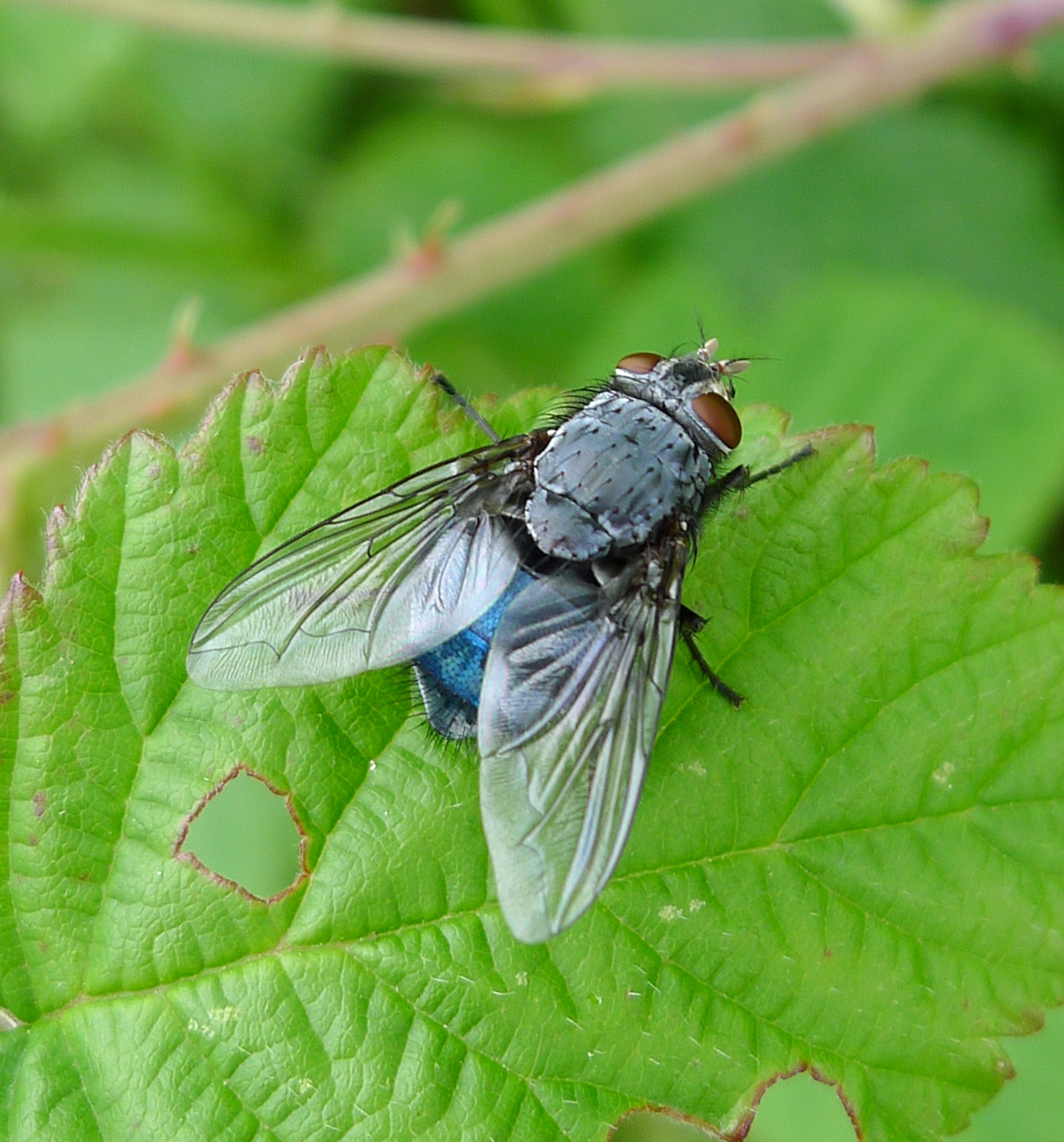
Fruit flies that keep coming back after the fruit is gone point to overindulgence, too much sweetness in your habits, your spending or your schedule. The bluebottle (Calliphora vomitoria) carries the ending meaning most strongly, since it breeds in carrion. Its loud flight adds urgency, because the ending is one you can no longer overlook. Drain flies stand for hidden emotional backlog. They breed in the film inside pipes, under a surface that looks clean, and surface only at the sink.
The crane fly looks like a giant mosquito, it blunders against lamps and ceilings, and it is completely harmless. Its meaning is a fear bigger than the threat. Black flies stay outdoors, so a black fly in the house carries no settled meaning beyond an open door in May.
| Fly | How to recognize it | Where it shows up indoors | Spiritual meaning |
|---|---|---|---|
| Housefly | Gray, four dark stripes on the back, red eyes | Kitchens, trash, anywhere food sits out | Persistence, a task left undone |
| Fruit fly | Tiny, tan body, red eyes, slow hovering flight | Over ripe fruit, wine glasses, recycling bins | Overindulgence, too much sweetness |
| Bluebottle | Large, metallic blue abdomen, loud buzz | Windows, rooms near a dead animal or spoiled meat | An ending you can no longer overlook |
| Drain fly | Small, fuzzy, moth-like, holds its wings roof-like over the body at rest | Sink and shower drains, bathroom walls | Hidden emotional backlog |
| Crane fly | Long legs, slender body, looks like a giant mosquito | Ceilings and lamps after dark in spring and fall | A fear bigger than the threat |
| Black fly | Small, dark, humpbacked, bites outdoors | Rarely indoors, comes in on clothing near streams | No settled meaning indoors |
Frequently Asked Questions
What does it mean when a fly buzzes around your head?
A fly buzzing around your head means racing thoughts. The head stands for overthinking, and the fly mirrors a mind that circles the same worry without landing. The practical response is to write the worry down, which gives the thought somewhere to settle so the circling stops.
What does a fly in your room at night mean?
A fly in your room at night points to unrest you push aside during the day. Night is when distractions fall away, and the fly becomes the thing you have been too busy to face. Houseflies rest after dark, so a fly buzzing in a dark room has been woken by a lamp or a screen. Switch off the light, and the fly settles within minutes.
Is it bad to kill a fly spiritually?
No, most popular symbolism attaches no bad luck to killing a fly, though Jain and many Buddhist teachings ask followers not to kill insects at all, and old American folklore warns that ten flies come to the funeral of one you kill. Releasing it outside stands for letting go, and plenty of people prefer that because the act matches the meaning.
Are flies considered demonic?
No, neither Jewish nor mainstream Christian teaching treats flies as demons. Jewish tradition even used their absence as a mark of holiness. Pirkei Avot 5:5 counts it among the Temple miracles that no fly was seen where sacrifices were slaughtered, and the Talmud (Berakhot 10b) says the Shunammite woman knew Elisha was holy because no fly crossed his table.
What does a green fly in the house mean?
A metallic greenbottle fly (Lucilia) links to growth and money in Western color symbolism, where green stands for both. Check the trash first, since greenbottles breed in meat scraps, then enjoy the meaning.
What does a fly in your food or drink mean?
A fly in your food or drink warns about something you take in, whether news, people or habits. The fly spoils what you were about to swallow, and the sign asks what you have been consuming without question.
Sources
- Bible Gateway, Exodus 8 (NIV), the plague of flies
- Bible Gateway, Ecclesiastes 10 (NIV), dead flies in the perfume
- Bible Gateway, 2 Kings 1 (NIV), Baal-Zebub of Ekron
- Bible Gateway, Psalm 91 (NIV)
- Britannica, Beelzebub
- Colorado State University Extension, Cluster Flies and Other Winter Flies
Explore more: Insect Spiritual Meanings: 15 Bugs and What They Signal