Barred Owl: Identification, Call, and Facts
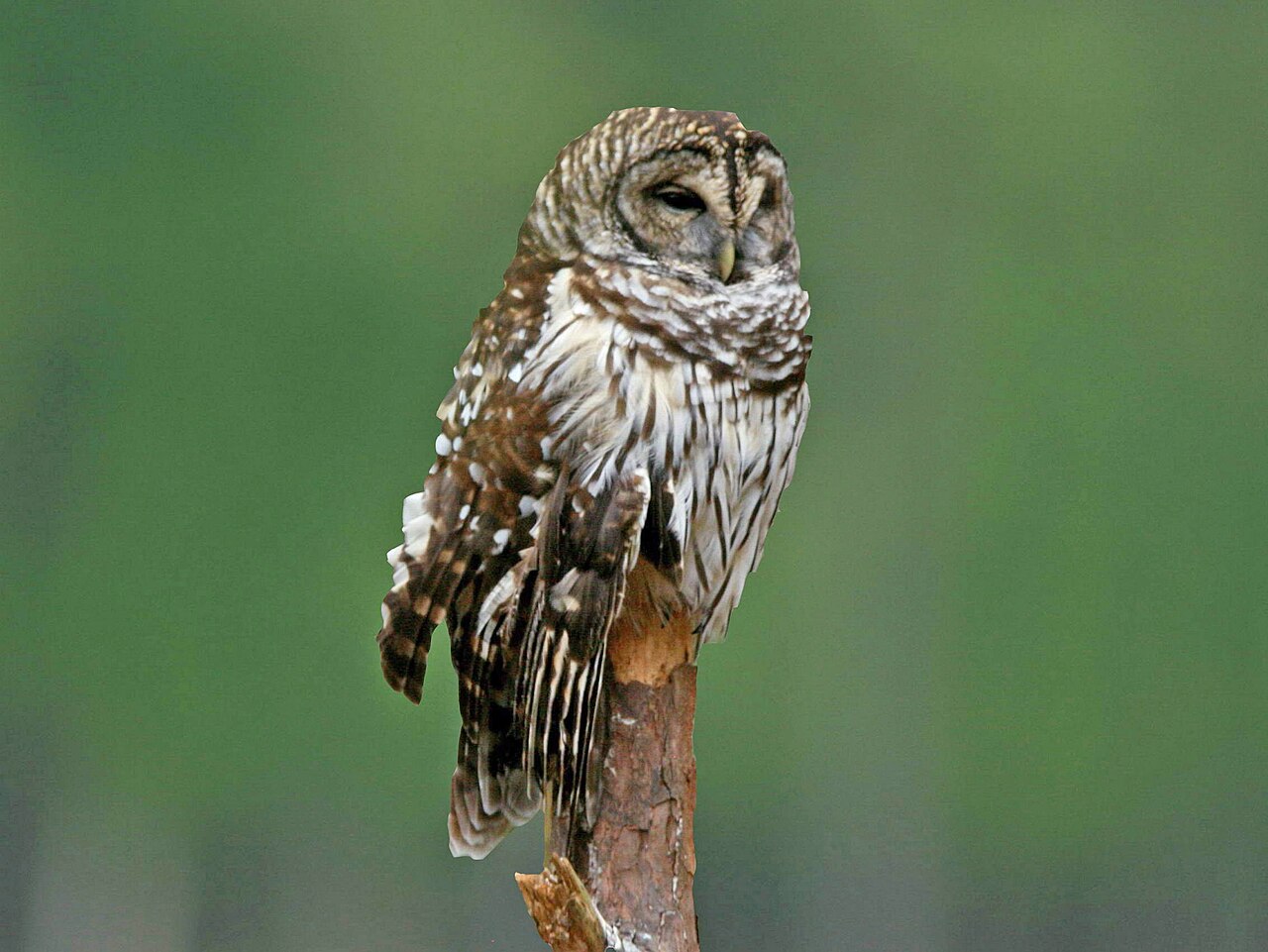
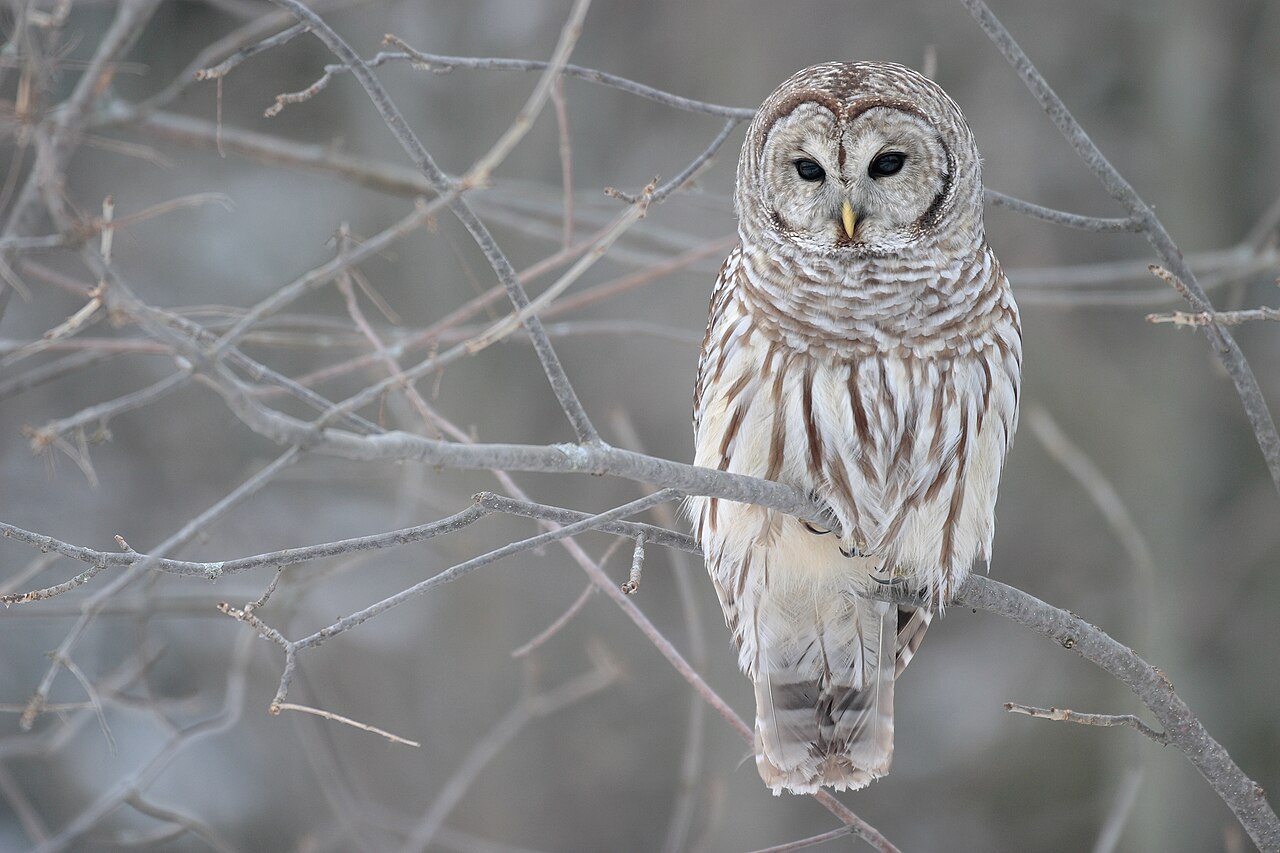
The Barred Owl is a large, round-headed owl of North American forests, best known for its unmistakable call that sounds like the phrase “Who cooks for you? Who cooks for you-all?” Unlike most owls, it has deep brown eyes rather than yellow, and its plumage is patterned with horizontal bars across the chest and vertical streaks down the belly, the markings that give it its name. Once a bird of eastern and southern woodlands, the Barred Owl has expanded dramatically westward in recent decades, a spread that has made it one of the most talked-about owls in conservation. This guide covers how to identify a Barred Owl, its range and habitat, diet, distinctive calls, nesting, and its complicated relationship with the endangered Spotted Owl.
| Feature | Detail |
|---|---|
| Scientific name | Strix varia |
| Length | 16 to 25 in (40 to 63 cm) |
| Wingspan | 38 to 49 in (96 to 125 cm) |
| Weight | 1.1 to 2.3 lb (0.5 to 1.05 kg) |
| Eyes | Dark brown (unusual for owls) |
| Diet | Small mammals, birds, amphibians, crayfish |
| Conservation | Least Concern (expanding) |
How to identify a Barred Owl
The Barred Owl is a large, stocky owl with a smooth, rounded head and no ear tufts, giving it a gentle, wide-faced look. Its most unusual feature is its eyes: deep brown or nearly black, where most owls have yellow eyes. The plumage is brown and grayish-white, marked with horizontal barring across the upper chest and bold vertical streaks down the belly. This bar-over-streak pattern is the key field mark and the source of the owl’s name.
At 16 to 25 inches long, the Barred Owl is smaller and slimmer than a Great Horned Owl and lacks that species’ ear tufts and yellow eyes, an easy way to tell the two apart. It is often seen perched upright on a branch in mature woods, sometimes active in daylight, especially on cloudy days. Its rounded head, dark eyes, and barred chest make it one of the more recognizable large owls once you know what to look for. Compare it with relatives in our owl types guide.
Range and habitat
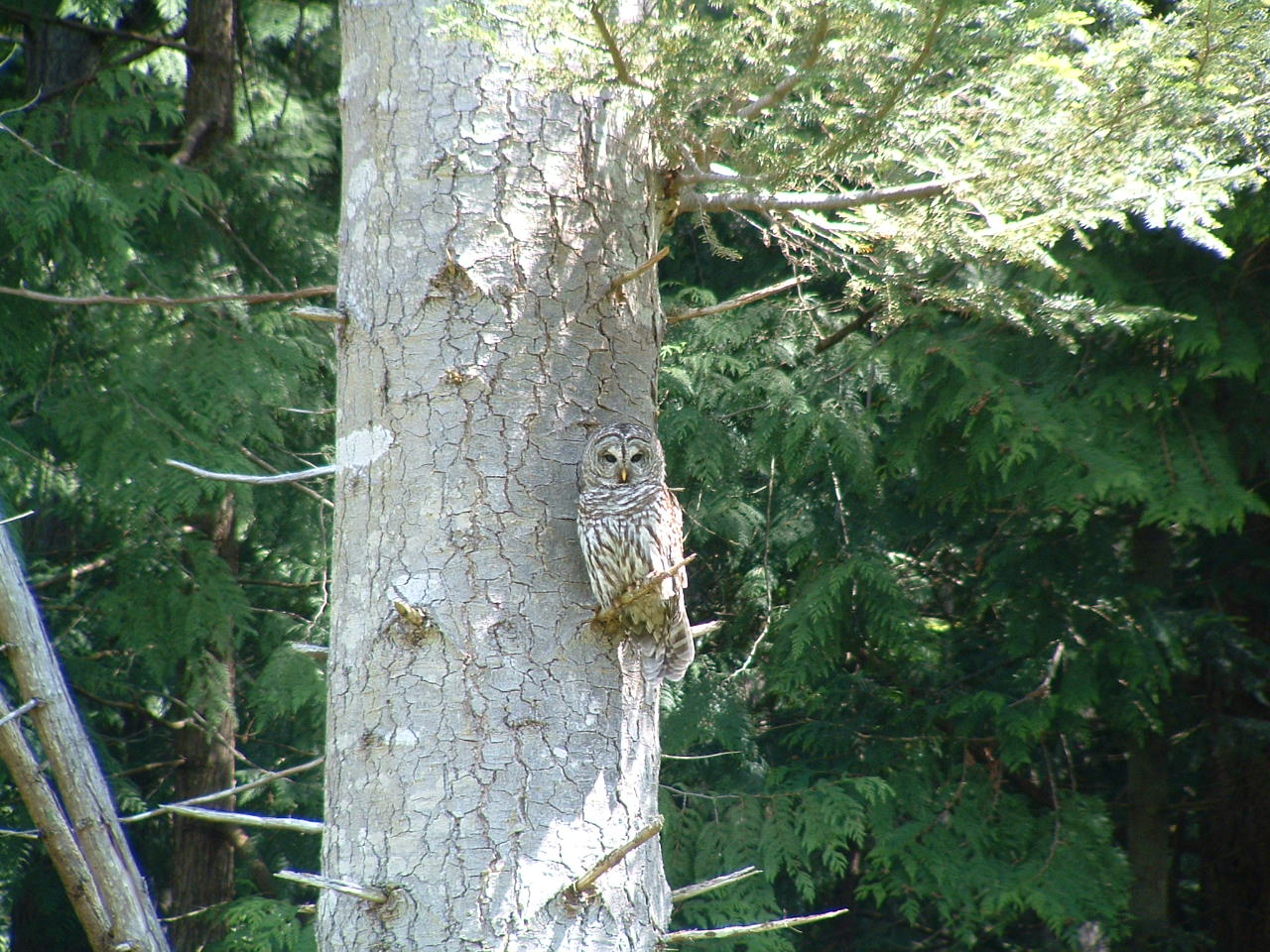
The Barred Owl is traditionally a bird of eastern North America, ranging across the eastern United States and much of Canada, and it has become a familiar owl of the South. It favors large tracts of mature forest, especially wet woods, swamps, riverine forest, and wooded areas near water, where big old trees provide the cavities it needs for nesting. It tends to avoid the driest, most open country.
Over the past century the Barred Owl has expanded steadily westward across Canada and down into the Pacific Northwest and California, colonizing forests where it never historically occurred. This range expansion is central to its conservation story, covered below. Within its range the Barred Owl is largely non-migratory, holding a territory year-round, so a calling pair often stays in the same patch of woods for years.
What Barred Owls eat
The Barred Owl is an opportunistic hunter that eats a wide variety of small animals. Its staple foods are small mammals, mice, voles, shrews, rabbits, and squirrels, but it also takes birds, amphibians, reptiles, and even crayfish, fish, and large insects. Its willingness to hunt near water and wade for crayfish sets it apart from many other owls and reflects its swampy forest home.
Barred Owls hunt mostly at night and around dawn and dusk, watching from a perch and dropping onto prey below, though they will also hunt in daylight. Like other owls they swallow small prey whole and later cough up pellets of indigestible fur and bone. Their broad diet, like that of many owls covered in our guide to what owls eat, helps them thrive across varied forest habitats.
Barred Owl calls and sounds
The Barred Owl has one of the most recognizable voices of any North American bird: a rhythmic series of hoots that classically sounds like “Who cooks for you? Who cooks for you-all?” with the final note trailing downward. It is loud, carrying, and often given well before dark, which is one reason people hear this owl so often. Both members of a pair call, and they are highly vocal throughout the year, not just in the breeding season.
Barred Owls also produce a startling range of other sounds, including cackles, hoots, and wild, monkey-like caterwauling duets when pairs interact, an unearthly racket that surprises first-time listeners. This vocal boldness makes the Barred Owl one of the easiest owls to detect by ear. If you hear the “who cooks for you” cadence from wet woodland, you have found a Barred Owl.
Nesting and life cycle
Barred Owls nest in large tree cavities, the top of a broken snag, or the abandoned stick nests of hawks, crows, or squirrels, and they will readily use nest boxes placed in suitable forest. The female lays two to three white eggs, usually in late winter or early spring, and incubates them for about a month while the male provides food. Pairs are monogamous and often stay together for life on a long-held territory.
The owlets hatch downy and helpless, then grow rapidly, climbing out onto branches before they can fly. They depend on their parents for months as they learn to hunt. Because Barred Owls need mature forest with big trees for nesting, their breeding success is closely tied to the health of old woodland, which links directly to conservation concerns.
Conservation and the Spotted Owl
The Barred Owl itself is listed as Least Concern and is thriving, but its success has created one of the thorniest problems in North American conservation. As Barred Owls expanded into the Pacific Northwest, they moved into the old-growth forests that are the last stronghold of the threatened Northern Spotted Owl. Larger, more aggressive, and more adaptable, Barred Owls outcompete Spotted Owls for territory and food, and the two species occasionally hybridize, accelerating the Spotted Owl’s decline.
This has forced wildlife managers into painful decisions about how to protect the Spotted Owl, a debate that continues today. Both the Cornell Lab of Ornithology and Audubon follow this ongoing conflict closely. For birdwatchers, telling the two apart matters: the Barred Owl shows horizontal bars on the chest and vertical streaks below, while the Spotted Owl is covered in white spots. The Barred Owl’s story is a reminder that a common, successful species can still reshape an ecosystem. Owls of every kind feature in owl symbolism and the meaning behind an owl visit.
Barred Owl versus similar owls
The Barred Owl is most often confused with the Great Horned Owl, but the two are easy to separate once you check the head. The Barred Owl has a smooth, round head with no ear tufts and dark brown eyes, while the Great Horned Owl has bold ear tufts and yellow eyes and is noticeably bulkier. Against the Barn Owl, the difference is obvious: the Barn Owl has a white heart-shaped face and screeches, while the Barred Owl has a round brown-eyed face and hoots the famous “who cooks for you.”
The trickiest comparison is with the threatened Spotted Owl in the West. The Barred Owl shows horizontal barring across the chest and vertical streaks below, whereas the Spotted Owl is covered in rounded white spots. Since the two now overlap where Barred Owls have expanded, this spots-versus-bars distinction has become an important identification skill for conservation surveys.
When and where to find a Barred Owl
Barred Owls are one of the easiest large owls to encounter, partly because they are so vocal and partly because they are often active in low light. Look and listen for them in mature, moist woodland, wooded swamps, and forest along rivers and lakes, the damp, big-tree habitat they favor. Dawn and dusk are prime, but they also call and move on overcast days and can be heard year-round rather than only in the breeding season.
A good technique is simply to visit wet woods at dusk and listen; Barred Owls frequently answer a passable imitation of their call, though it is best to keep any imitation brief so you do not stress the bird. Their strong site fidelity means a territory that holds a Barred Owl one year usually holds one the next, so a reliable calling spot is worth remembering. Compare them with relatives in our owl types guide.
Related reading: Burrowing Owl.
Frequently Asked Questions
What does a Barred Owl sound like?
Its classic call sounds like the phrase ‘Who cooks for you? Who cooks for you-all?’ with the last note trailing down. Barred Owls are very vocal and often call before dark, and pairs also give wild caterwauling duets.
How big is a Barred Owl?
Barred Owls are 16 to 25 inches long with a wingspan of 38 to 49 inches, weighing 1.1 to 2.3 pounds. They are large but smaller and slimmer than a Great Horned Owl.
Why does the Barred Owl have dark eyes?
The Barred Owl is one of the few North American owls with dark brown eyes rather than yellow. It is simply a species trait, and it is a helpful way to identify the bird.
What do Barred Owls eat?
They eat small mammals like mice, voles, and squirrels, plus birds, amphibians, reptiles, and even crayfish and fish. Their willingness to hunt near water sets them apart from many owls.
How do you tell a Barred Owl from a Spotted Owl?
A Barred Owl has horizontal bars across the chest and vertical streaks on the belly, while a Spotted Owl is covered in white spots. Barred Owls are also larger and more aggressive.
Are Barred Owls expanding their range?
Yes. Historically an eastern species, the Barred Owl has spread west across Canada into the Pacific Northwest and California, where it now threatens the endangered Northern Spotted Owl through competition.
Do Barred Owls come out during the day?
More than many owls. Barred Owls are often active at dawn, dusk, and on overcast days, and they call frequently before dark, which makes them one of the easier owls to encounter.
Where do Barred Owls nest?
In large tree cavities, broken snags, or old stick nests of hawks and squirrels, and they readily use nest boxes. They need mature forest with big trees for successful breeding.