Finch vs Sparrow: Key Differences Explained
The fastest way to tell a finch from a sparrow is the beak and the streaking. Finches have a short, deeply curved, almost bulbous conical beak built for cracking seeds, and many show bold wing bars or patches of red or yellow. Sparrows have a straighter, slimmer conical beak, plainer brown or gray tones, and in most species a clear stripe over the eye. At a backyard feeder, the single best clue is the female House Finch versus the female House Sparrow: the finch is blurry and streaked all over, while the sparrow has a clean, unstreaked breast and a pale eyebrow stripe.
| Feature | Finch | Sparrow |
| Beak shape | Short, thick, strongly curved culmen | Straighter, more slender cone |
| Family | Fringillidae (true finches) | Passeridae (House Sparrow) or Passerellidae (American sparrows) |
| Male color | Often red, orange, or yellow patches | Gray, brown, chestnut, rarely bright |
| Female pattern | Blurry streaking over the whole body | Crisp streaking on back only, often a pale eyebrow |
| Flight style | Undulating, bouncy “roller coaster” path | Direct, level flight on short bursts |
| Common backyard species | House Finch, Purple Finch, American Goldfinch | House Sparrow, Song Sparrow, Chipping Sparrow |
Beak Shape: The Fastest Way to Tell Finch From Sparrow
Both groups have the short, cone-shaped beak of a seed-eater, but the proportions differ once you compare them side by side. A finch beak looks almost swollen at the base, with a strongly curved upper edge (the culmen) that gives it a slightly parrot-like profile built for crushing sunflower and thistle seed. A sparrow beak is straighter along the top edge and looks more like a simple triangle stuck onto the face. On a House Finch the curve is obvious even at a distance; on a House Sparrow or a Song Sparrow the bill looks trimmer and comes to a finer point.
Bill color can help too. Many American sparrows, including the Chipping Sparrow and White-throated Sparrow, show a pink, gray, or bicolored bill for at least part of the year. House Finches keep a gray-brown bill year round, and the bill of an American Goldfinch turns bright orange in breeding season, a color no backyard sparrow shares.
House Finch vs House Sparrow: The Most Common Mix-Up
House Finch and House Sparrow overlap in nearly every backyard in the continental United States, and the two are the pairing people confuse most at the feeder. Adult male House Finches are unmistakable once you see the raspberry-red forehead, throat, and rump against a brown, heavily streaked body. Male House Sparrows look entirely different: a gray crown, black bib that expands in breeding season, chestnut nape, and a single white wingbar, with no red anywhere on the bird.
The confusion almost always involves females and first-year birds, which lack the male finch’s red and can look like a generic “brown bird” at a glance. That is where the next section matters most.
Female House Finch vs Sparrow: The Search People Actually Run Into
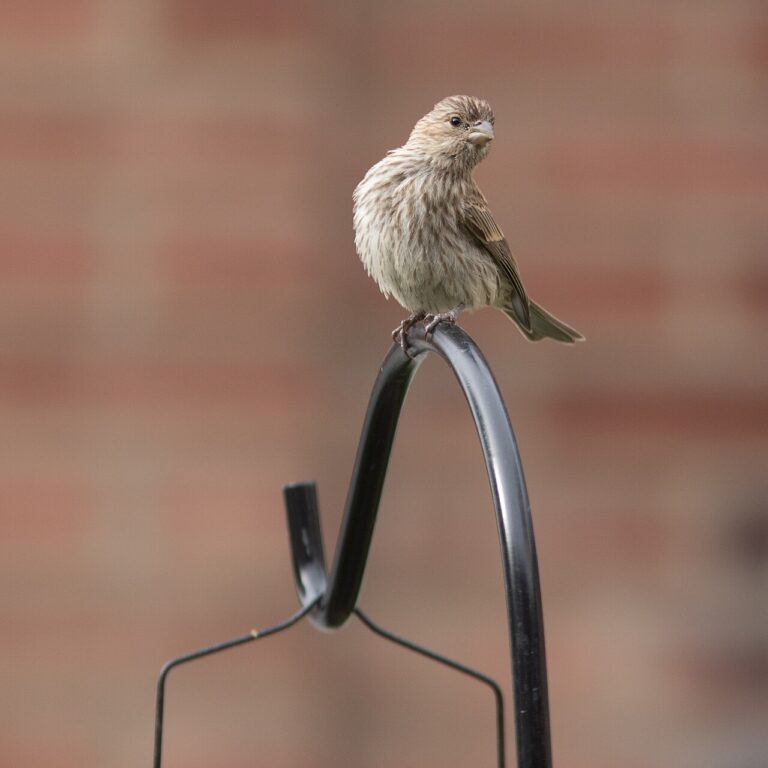
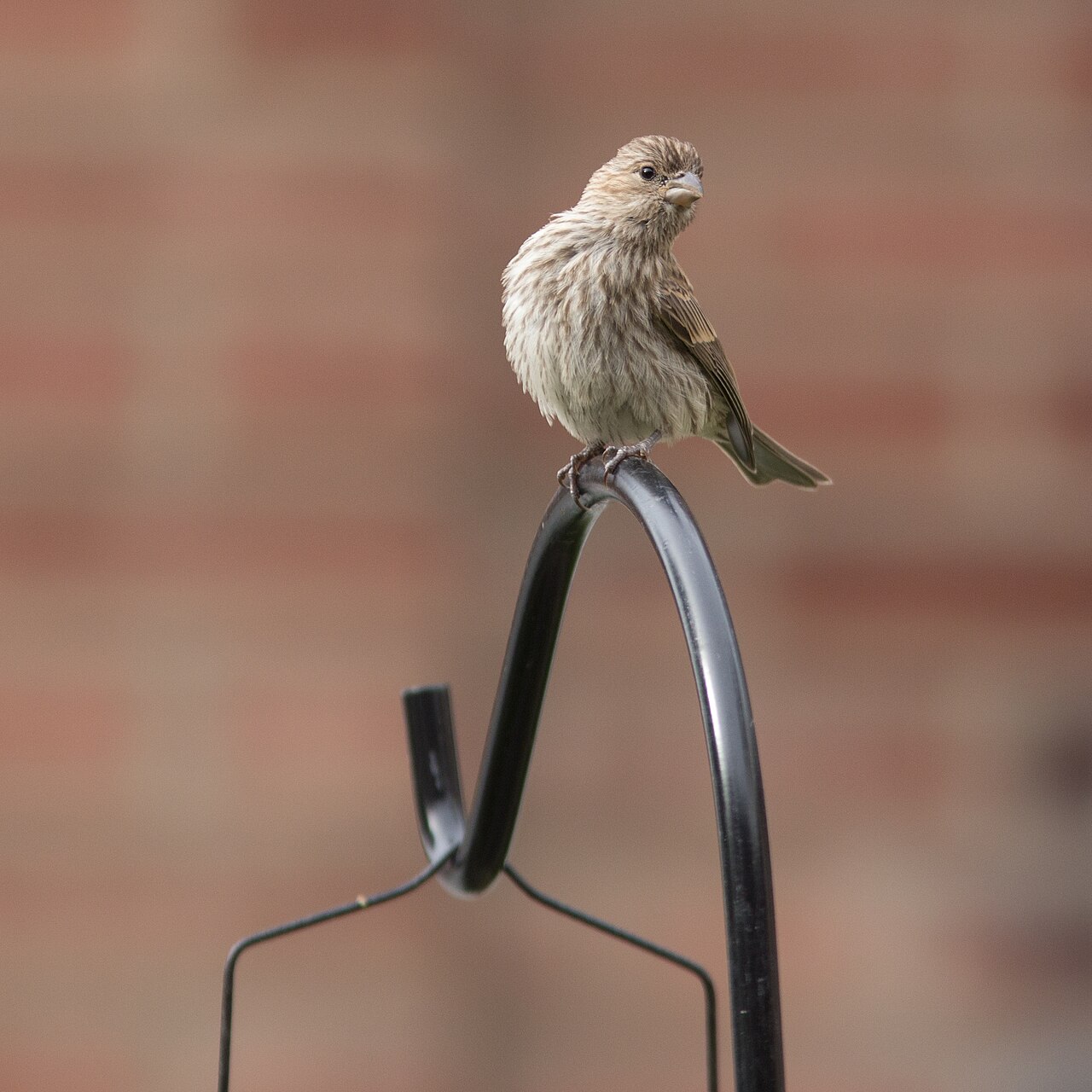
This is the single most searched version of the finch-versus-sparrow question, and it has a reliable answer. A female House Finch is streaked from throat to belly with soft, blurry, diffuse brown streaking and has a fairly plain face with no strong pattern around the eye. A female House Sparrow has a clean, unstreaked buffy-brown breast, crisp (not blurry) streaking confined to the back and wings, and a noticeably pale eyebrow stripe running back from the eye that the female finch does not show.
Put another way: streaked belly with a plain face points to a female House Finch, while a plain belly with a striped face points to a female House Sparrow. Body shape backs this up, since the House Sparrow is chunkier and shorter-tailed, while the House Finch has a slightly longer tail with a shallow notch.
Color and Plumage Patterns Beyond the Common Species
The comparison changes slightly once you move past House Finch and House Sparrow. Purple Finch males are washed in a deeper wine-red across the head and back rather than the localized red patches of a House Finch, and female Purple Finches show a much bolder white eyebrow and a strongly contrasting dark cheek patch, more like a sparrow’s head pattern than a House Finch’s plain face. American sparrows such as the Song Sparrow, White-throated Sparrow, and Chipping Sparrow are true native sparrows in the family Passerellidae, unrelated to the introduced House Sparrow, and most show crisp head stripes, a central breast spot (Song Sparrow), or a black-and-white crown (White-throated Sparrow) that no finch reproduces.
American Goldfinches are the easiest finch to rule out of the comparison entirely: breeding males are bright lemon yellow with a black cap and black wings, a combination no sparrow shows in any season.
Song and Calls
Finches tend toward long, warbling, run-on songs and a distinctive flight call. The House Finch sings a cheerful, jumbled warble that often ends in a slurred, upward “wheer,” and gives a sharp “cheep” in flight. Sparrows generally sing shorter, more mechanical or buzzy phrases. The House Sparrow’s “song” is really just a repeated, unmusical chirping, while native sparrows like the Song Sparrow deliver a clear series of notes followed by a buzzy trill, and the White-throated Sparrow’s whistled “oh-sweet-canada-canada” is one of the most recognizable songs in eastern woodlands.
Behavior at the Feeder and in the Yard
Finches are almost entirely seed and bud eaters and cling easily to tube feeders and thistle socks, often feeding in loose, chattering flocks that stay put at one feeder for extended visits. House Sparrows are more opportunistic, foraging on the ground as much as at a feeder, nesting in cavities on buildings, and often out-competing native cavity nesters for space. Native American sparrows spend more time on the ground or in brush piles scratching for seed and rarely visit a hanging tube feeder, preferring platform feeders or seed scattered below.
Range and Habitat
House Finches were originally a western species, introduced to the East Coast in the 1940s, and are now common coast to coast in suburbs, farms, and urban areas. The Cornell Lab of Ornithology traces that eastern population back to caged birds sold illegally as “Hollywood Finches” and released on Long Island, after which the species spread across the entire eastern half of the country within a few decades. House Sparrows, native to Europe and Asia, were introduced to North America in the 1850s and have since spread across nearly the entire continent, thriving anywhere humans build structures. Native sparrows vary far more by species and region: Song Sparrows tolerate almost any brushy habitat continent-wide, while species like the Chipping Sparrow favor open woodland edges and lawns during breeding season. For a closer look at how house finches compare with a similarly colored relative, see the House Finch vs Purple Finch guide.
Related reading: Raven vs Crow.
Frequently Asked Questions
What is the easiest way to tell a finch from a sparrow at a glance?
Check the beak and the belly. A finch has a thicker, more strongly curved beak and, on females, blurry streaking down the belly. A sparrow has a straighter beak and, in most species, a clean or lightly marked belly with a pale stripe over the eye.
How do I tell a female House Finch from a female House Sparrow?
The female House Finch is streaked all over with soft, blurry brown marks and has a plain face. The female House Sparrow has an unstreaked, plain breast, crisp streaking limited to the back, and a distinct pale eyebrow stripe that the finch lacks.
Are House Sparrows actually sparrows?
Not in the way American birders usually mean it. House Sparrows belong to the Old World sparrow family Passeridae, while familiar native species like the Song Sparrow and Chipping Sparrow belong to the American sparrow family Passerellidae. The two groups are not close relatives despite the shared common name.
Do finches and sparrows eat the same food?
Both eat seed, but finches are more strictly seed and bud specialists suited to tube feeders and nyjer socks, while many sparrows forage more on the ground for a broader mix of seed and insects, especially during the breeding season when they feed insects to nestlings.
Why does the male House Finch have red coloring while the female does not?
The male’s red comes from carotenoid pigments absorbed from food during molt, and the intensity of the red can signal health and diet quality to potential mates. Females lack the bright pigment and stay a camouflaged brown, which helps conceal them while incubating eggs.
Can House Finches and House Sparrows compete for the same nest sites?
Yes. Both readily use nest boxes, building crevices, and hanging planters, and House Sparrows in particular are known to aggressively take over cavities from other species, including House Finches and native bluebirds.
Is a Dark-eyed Junco a sparrow or a finch?
A Dark-eyed Junco is classified as a sparrow, in the family Passerellidae, despite its slate-gray plumage looking quite different from a streaky Song Sparrow. Its plain conical bill and ground-foraging habits fit the sparrow pattern rather than the finch pattern.
Which is more common at backyard feeders, finches or sparrows?
Both are extremely common across most of North America, but which one dominates a given feeder depends on region and feeder type. Tube feeders with nyjer or sunflower chips tend to draw more finches, while platform feeders and ground scatter draw more sparrows, especially House Sparrows in urban and suburban areas.