American Kestrel: Smallest NA Falcon
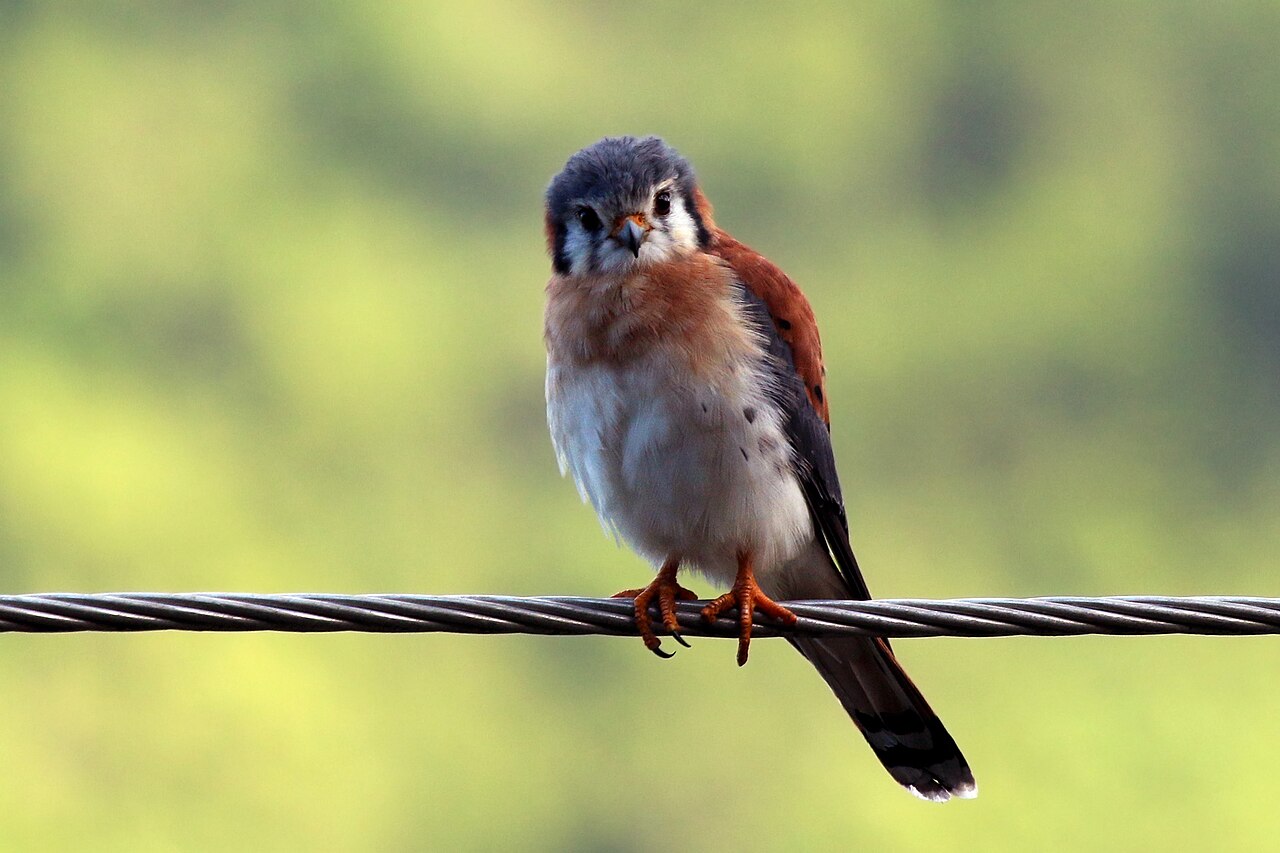
The American kestrel is North America’s smallest falcon, a robin-sized raptor with strikingly colorful plumage and a habit of hovering in place over open fields while scanning the ground below for prey. Unlike most birds of prey, male and female American kestrels look distinctly different, with rusty-orange backs, blue-gray or rufous colored wings depending on sex, and a bold black facial pattern that makes this one of the easiest small falcons to identify anywhere in its range.
| Fact | Detail |
|---|---|
| Size | About robin-sized, smallest falcon in North America |
| Wingspan | 20 to 24 in |
| Diet | Insects, small rodents, occasionally small birds |
| Hunting style | Hovers in place, then dives; also hunts from perches |
| Habitat | Open fields, farmland, roadsides, and grasslands |
| Population trend | Declining in parts of its range; nest boxes help |
Size and Appearance
The American kestrel is about the size of a mourning dove or American robin, making it dramatically smaller than a peregrine falcon or red-tailed hawk despite belonging to the same broad group of raptors, a size difference that surprises many people seeing one up close for the first time after expecting something closer to a hawk. Both sexes show a rusty-orange back and tail and a distinctive facial pattern of two black vertical stripes on a white face, but males have blue-gray wings while females have rufous, barred wings, one of the few North American raptors with such a clear, consistent visual difference between the sexes visible year round. The tail also differs: males show a single black band near the tip of an otherwise rust-colored tail, while females have a rust-colored tail barred with multiple thin black bands throughout, a difference visible even at a moderate distance with binoculars once you know to check for it. This combination of small size and bold, contrasting color makes the American kestrel one of the most striking and easiest to identify small raptors in the country, and one of the few where a confident sex identification is possible from a brief glimpse rather than careful, prolonged observation.
Male vs. Female American Kestrels
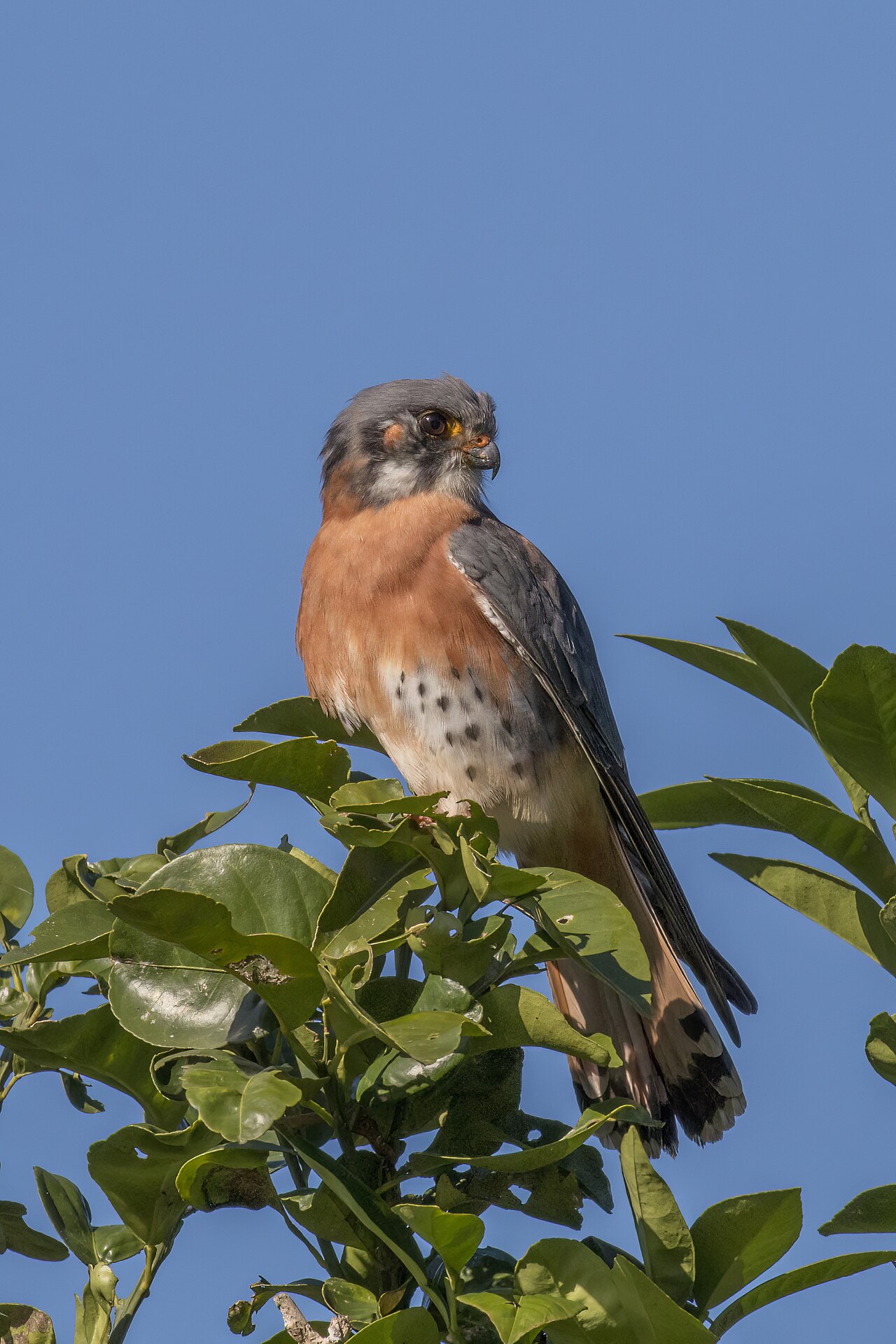
Distinguishing male and female American kestrels is straightforward once you know what to look for, and it is one of the more reliable sexual identification cases among North American birds of prey. Males have solid blue-gray wing feathers that contrast sharply with the rusty back, while females have rufous wings barred with black, giving them a more uniformly warm-toned appearance overall. The tail is the second clear marker: a male’s tail is mostly solid rust colored with one black band near the tip, while a female’s tail carries several thin black bars across its full length. Size offers a smaller, less reliable clue, since females run slightly larger on average, a pattern typical across most raptor species, including much larger falcon species, and linked to the demands of incubation and nest defense.
Diet and Hunting Style
American kestrels eat a broad mix of large insects, such as grasshoppers and dragonflies, along with small rodents, lizards, and occasionally small birds, adjusting their diet seasonally as prey availability shifts throughout the year and across the different habitats they occupy. Their signature hunting technique is hovering, called kiting, in which the bird holds a fixed position in the air by flying directly into the wind while scanning the ground below, then drops in a short dive once prey is spotted. Kestrels also hunt from an exposed perch, such as a utility wire or fence post along open roadsides, watching for movement in the grass below before swooping down, a hunting style that makes them one of the more commonly spotted raptors from a moving car, perched at regular intervals along rural highways. Their exceptional eyesight includes sensitivity to ultraviolet light, which helps them track the urine trails small rodents leave in grass, a trail invisible to the human eye but easily followed by a hunting kestrel scanning from a wire or hovering position overhead. According to the Cornell Lab of Ornithology, this UV sensitivity gives kestrels a significant edge when hunting over open grassland where rodent trails would otherwise be difficult to spot from the air, an advantage shared by several hawk species that hunt similar open terrain.
Range, Habitat, and Population Decline
American kestrels are found throughout most of North and South America, favoring open habitat such as farmland, grassland, roadsides, and desert scrub where they can hunt from a perch or hover in open air over the ground below. Unlike many raptors, kestrels are cavity nesters, relying on natural tree hollows or old woodpecker holes, which has made them a strong beneficiary of nest box programs in areas where suitable natural cavities have become scarce. Despite being one of the most widespread and familiar raptors in North America, American kestrel populations have declined significantly in parts of their range over recent decades, a trend linked to loss of nesting cavities, pesticide use reducing insect prey, and increased competition or predation from larger birds such as Cooper’s hawks, a combination of pressures that researchers continue to study closely across different regions. For a look at other falcons that share similar range, see our guides to the peregrine falcon and the merlin, and for the wider raptor picture, our guide to birds of prey.
Nesting and Life Cycle
American kestrels are obligate cavity nesters, meaning they cannot excavate their own nest hole and depend entirely on existing cavities, whether a natural tree hollow, an old woodpecker cavity, or a properly sized nest box mounted on a post or building. A typical clutch runs four to five eggs, and both parents share incubation duties over about a month, with the male continuing to supply most of the food to the female and later the chicks throughout the nesting period. Young kestrels fledge at roughly four weeks old but stay near the nest site for several additional weeks, practicing short flights and hunting attempts on easy targets like grasshoppers before dispersing to establish their own territory. Well-placed nest boxes have proven one of the most effective tools for supporting local kestrel populations, since a shortage of suitable natural cavities is one of the clearer, more fixable pressures behind the species’ broader decline.
Kestrels and Falconry
American kestrels are among the most commonly used birds in beginner falconry in the United States, prized for their small size, manageable temperament, and willingness to hunt insects and small prey in open terrain close to a handler. Their availability and relatively straightforward care requirements compared to larger falcons make them a frequent starting point for apprentice falconers working through licensing requirements before advancing to bigger, more demanding species like a red-tailed hawk or peregrine falcon. In the wild, this same adaptability to varied prey and open habitat is likely part of why kestrels remain widespread across such a broad range of North and South America despite their population declines in certain regions. Because kestrels are still a native wild species and protected under federal law, keeping one legally requires the same falconry permitting process required for any other bird of prey, not casual private ownership, and prospective falconers typically spend a supervised apprenticeship period working under a licensed sponsor first.
Frequently Asked Questions
How can you tell a male from a female American kestrel?
Males have solid blue-gray wings and a mostly rust-colored tail with one black band near the tip, while females have rufous, barred wings and a tail with several thin black bars running its full length.
What do American kestrels eat?
American kestrels eat large insects like grasshoppers, small rodents, lizards, and occasionally small birds, hunting by hovering in place or watching from an exposed perch.
How big is an American kestrel?
An American kestrel is about the size of a mourning dove or American robin, with a wingspan of 20 to 24 inches, making it the smallest falcon in North America.
Why are American kestrel populations declining?
Kestrel numbers have declined in parts of their range due to loss of natural nesting cavities, pesticide use reducing insect prey, and increased competition or predation from larger raptors such as Cooper’s hawks.
Where do American kestrels nest?
American kestrels are cavity nesters, using natural tree hollows or old woodpecker holes, and they readily use nest boxes in areas where natural cavities are scarce.
Is an American kestrel a real falcon?
Yes, the American kestrel is a true falcon and the smallest species in North America, closely related to the peregrine falcon and merlin despite its much smaller size.
What sound does an American kestrel make?
American kestrels make a sharp, repeated “klee klee klee” call, often given in a rapid series when the bird is excited, hunting, or defending territory from an intruder.