Hawk vs Eagle: Identification Differences Explained
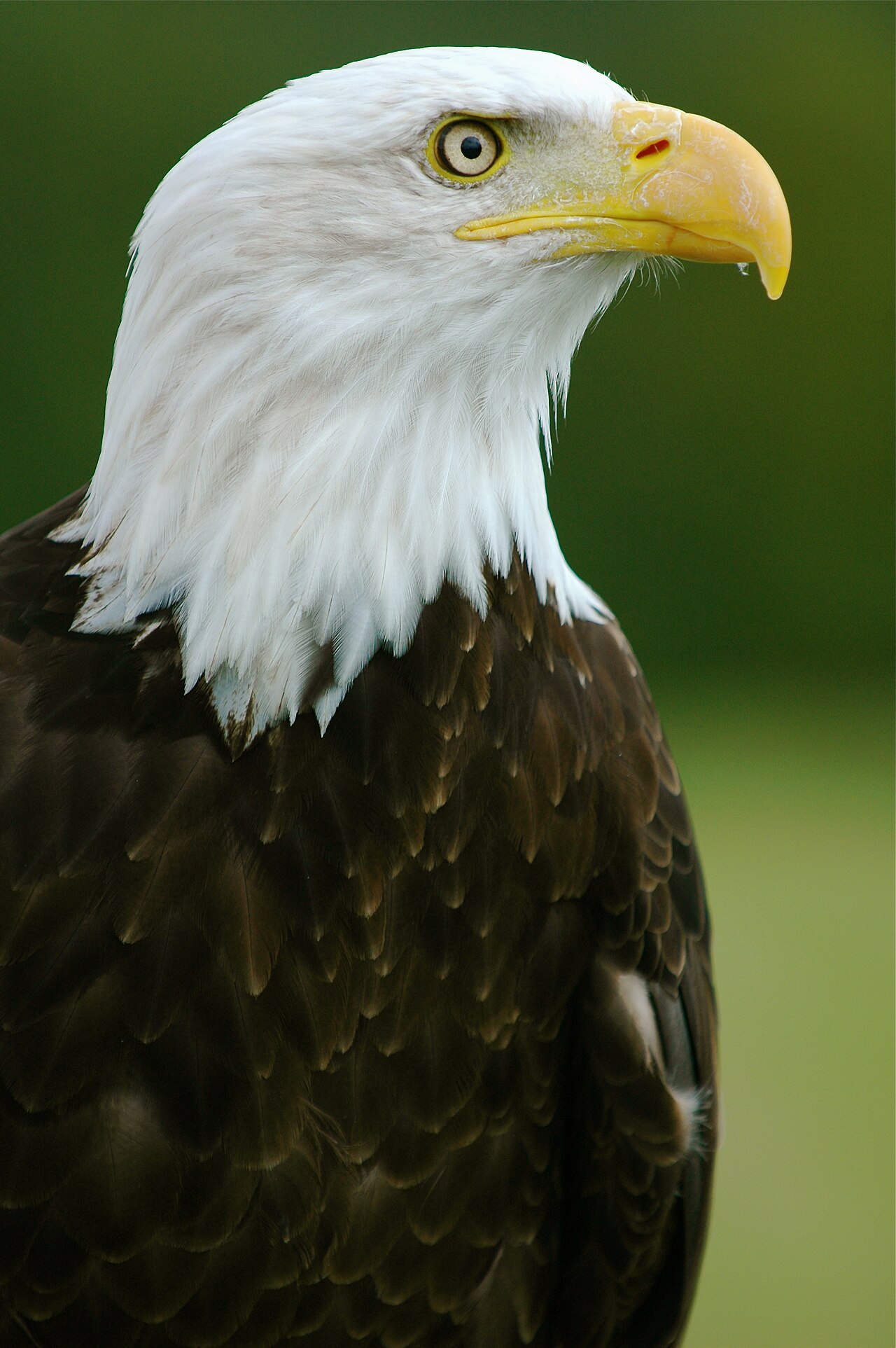
At a distance, a large soaring hawk and a distant eagle can look surprisingly similar, both riding thermals on broad wings with barely a wingbeat. Up close, though, the difference in scale is dramatic. A bald eagle or golden eagle dwarfs even the largest North American hawk, with a bill, feet, and overall build scaled up to handle much larger prey than a red-tailed hawk would ever attempt. Size, proportions, and prey preference are the most reliable ways to separate the two groups, especially since both hawks and eagles share the same broad-winged soaring silhouette from a distance.
| Trait | Hawk | Eagle |
|---|---|---|
| Typical wingspan | 3 to 4.5 ft | 6 to 7.5 ft |
| Typical weight | 1.5 to 4 lb | 6 to 14 lb |
| Beak size | Moderate | Very large, heavy |
| Typical prey | Rodents, small birds | Fish, waterfowl, large mammals |
| Head size | Proportionally smaller | Large, prominent |
Size and Wingspan
The most obvious difference between a hawk and an eagle is overall size. A red-tailed hawk, one of the largest common buteos, weighs roughly 2 to 4 pounds with a wingspan around 4 feet, while a bald eagle typically weighs 6 to 14 pounds with a wingspan reaching 6 to 7.5 feet, roughly double the wingspan and several times the body mass of the hawk.
Golden eagles are similarly massive, with a wingspan often exceeding 7 feet and a body built for taking prey as large as young deer or full grown jackrabbits. When a hawk and an eagle are seen soaring together, or even at similar distances, the size difference usually becomes apparent within a few seconds of comparison.
Female raptors of both groups run larger than males, a pattern called reverse sexual size dimorphism common throughout the raptor world, which means a large female hawk can occasionally approach the wingspan of a small male eagle in some populations, though the overall weight and bulk difference between the two groups remains substantial even in that edge case.
Beak and Feet
Eagles have proportionally massive, deep beaks built for tearing into large prey and powerful carcasses, along with correspondingly large, heavily scaled feet and talons capable of exerting far more crushing force than any hawk. A bald eagle’s grip strength is estimated to be roughly ten times that of a human hand, allowing it to carry fish weighing several pounds in flight.
Hawks have proportionally smaller, though still sharply hooked, beaks suited to the smaller mammals, birds, and reptiles that make up most of their diet. While a red-tailed hawk’s grip is still powerful enough to kill a rabbit, it is not built for the sustained crushing force an eagle applies to struggling, larger prey.
Foot scaling also differs in a way visible even in photographs: an eagle’s legs and feet are typically bare of feathers below the ankle joint in the bald eagle, or feathered all the way to the toes in the golden eagle, while most hawks show a simpler, uniformly scaled leg without the golden eagle’s distinctive feathered “boot.”
Head and Body Proportions
Eagles show a notably large, prominent head relative to body size, often appearing to project forward of the wings during flight, an effect exaggerated by the heavy beak. Hawks show a proportionally smaller head that sits more compactly between the shoulders in flight, contributing to a more streamlined overall silhouette compared to an eagle’s blockier profile.
This head-to-body proportion is often one of the fastest ways experienced birders separate a distant soaring eagle from a large hawk, even when exact size is difficult to judge without a size reference nearby.
Diet and Prey Size
Hawks typically prey on rodents, rabbits, small to medium birds, and reptiles, prey sized to match their more moderate strength and beak size. A red-tailed hawk hunting from a highway perch is a familiar sight across most of the United States, watching for rodents in roadside grass.
Eagles target considerably larger prey, with bald eagles specializing heavily in fish along with waterfowl and carrion, and golden eagles taking prey as large as jackrabbits, marmots, and occasionally young deer or pronghorn fawns. This difference in prey size is a direct consequence of the substantial difference in beak and foot strength between the two groups.
Flight Style and Soaring
Both hawks and eagles are accomplished soarers that use rising thermals to cover long distances with minimal wingbeats, which is part of why the two groups are sometimes confused at a distance. Eagles, however, show a flatter wing profile while soaring, holding the wings out nearly straight rather than in the shallow V shape, called a dihedral, that many hawks display.
Wingbeats, when they do occur, are slower and more powerful in an eagle, reflecting the much greater mass being moved through the air, compared to the quicker, lighter wingbeats typical of most hawks.
Organized hawk watch sites across North America, where volunteers count migrating raptors each fall, rely heavily on these flight style differences to identify distant birds streaming past a ridge or coastline, since eagles and large hawks often pass at similar times of year and altitude but show distinctly different silhouettes to a trained counter.
Common Examples Compared
In North America, the most frequent hawk versus eagle comparison involves the red-tailed hawk against the bald eagle or golden eagle, since all three species are widespread and often seen soaring over similar open country. Other hawks commonly compared to eagles include the ferruginous hawk, the largest North American buteo, which still falls well short of eagle size despite being unusually large and pale for a hawk, sometimes causing brief confusion among less experienced observers viewing the bird from a distance.
The osprey is sometimes mistaken for an eagle due to its size and fish-eating habits, but it belongs to its own distinct family, Pandionidae, and shows a slimmer body, narrower wings held in a strong M shape in flight, and a white head crossed by a dark eye stripe, unlike either a hawk or a true eagle.
Vultures are another source of size-based confusion at a distance, since a soaring turkey vulture can appear eagle sized against a bright sky, though the vulture’s small, bare red head and shallow V-shaped wing posture quickly separate it from both hawks and eagles once seen clearly.
Why the Confusion Happens
Distance and lighting are usually the real culprits behind hawk versus eagle confusion, since a soaring raptor silhouetted against a bright sky can be difficult to judge for scale without a size reference such as a nearby bird, tree, or building. According to the Cornell Lab of Ornithology, even experienced birders occasionally misjudge distant raptors until the bird approaches closer or a size comparison becomes available.
Learning the proportional cues covered above, head size, beak weight, and overall bulk, helps resolve the identification even when exact measurements are impossible to estimate in the field.
Symbolism and Cultural Significance
Eagles carry outsized cultural weight compared to most hawks, with the bald eagle serving as the national bird and national animal of the United States since 1782, chosen for its size, strength, and long lifespan. Golden eagles hold similar prestige across many cultures, historically used in falconry to take down prey as large as foxes and even young deer in parts of Central Asia.
Hawks, including the widespread red-tailed hawk, carry their own rich symbolism in many Indigenous traditions and modern spiritual practice, often associated with vision, focus, and messages, but rarely reach the same level of formal national symbolism that eagles hold across multiple countries and cultures worldwide.
Related reading: Hawk vs Falcon.
Frequently Asked Questions
What is the main difference between a hawk and an eagle?
Size is the biggest difference. Eagles are considerably larger and heavier, with a proportionally bigger beak and feet built for larger prey than any hawk targets.
Is a red-tailed hawk bigger than a bald eagle?
No, a bald eagle is roughly double the wingspan and several times the weight of a red-tailed hawk, one of the largest common North American hawks.
Can hawks and eagles interbreed?
No, hawks and eagles are different genera within the same broad raptor family and do not interbreed in the wild.
Do eagles eat hawks?
It is uncommon but not impossible, since eagles are opportunistic and considerably larger and stronger than most hawks they might encounter.
How can you tell a golden eagle from a red-tailed hawk at a distance?
Look at overall size, head proportion, and wing profile. A golden eagle is much larger with a heavier head and flatter wing profile while soaring.
Are ospreys eagles or hawks?
Neither. Ospreys belong to their own distinct family, separate from both true hawks and true eagles, despite sharing a fish-eating lifestyle with bald eagles.
What is the largest hawk in North America?
The ferruginous hawk is the largest North American buteo, though it still remains considerably smaller than a bald or golden eagle.