Saanen Goat: Milk Yield, Size, and Keeping Them
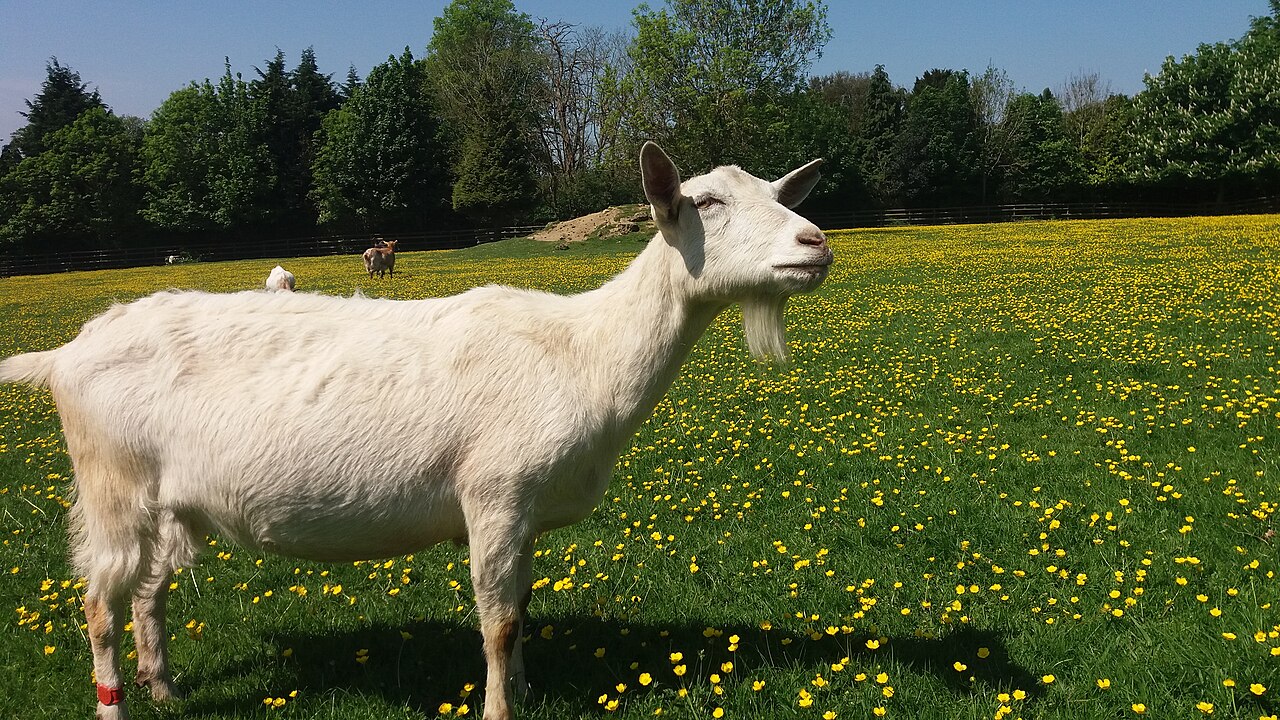
The Saanen is the largest and most productive dairy goat breed in the world, an all-white Swiss goat that commonly gives 2 to 3 gallons of milk per day at peak lactation. It is calm, easy to handle, and consistent, which is why it is often called the Holstein of the goat world.
Two things about the breed catch new keepers out. That white coat comes with unpigmented skin that sunburns badly, so shade is a requirement rather than a comfort. And breeding two naturally hornless Saanens together produces a well-documented genetic problem that renders a proportion of offspring infertile. This guide covers production, size, temperament, the sun and polled issues, the colored Sable variant, and what keeping them involves.
| Quick Facts | Saanen Goat |
|---|---|
| Origin | Saanen valley, Switzerland |
| Weight | Does 135 lb or more, bucks over 200 lb |
| Milk yield | Commonly 2 to 3 gallons per day at peak |
| Butterfat | Around 3 to 3.5 percent, lower than most breeds |
| Color | White to cream, unpigmented skin |
| Temperament | Calm, docile, easy to handle |
Where Saanens Come From
The breed developed in the Saanen valley of the Bern canton in western Switzerland, in a region of alpine pasture where dairy goats had been kept for centuries. Systematic selection produced a large, heavy-milking, uniformly white animal, and exports began in earnest in the late nineteenth century.
They spread quickly because the production figures were compelling. Saanens reached Britain, Germany, Australia, and the United States around the turn of the twentieth century, and today they are found in dairy goat operations worldwide, often used to upgrade local stock.
Switzerland restricted exports at various points to protect the breed’s quality, which is a recurring theme with high-value Swiss livestock. The modern population outside Switzerland traces to those early exports, refined by local breeding programs, and the American Dairy Goat Association recognizes both the Saanen and its colored variant.
Milk Production
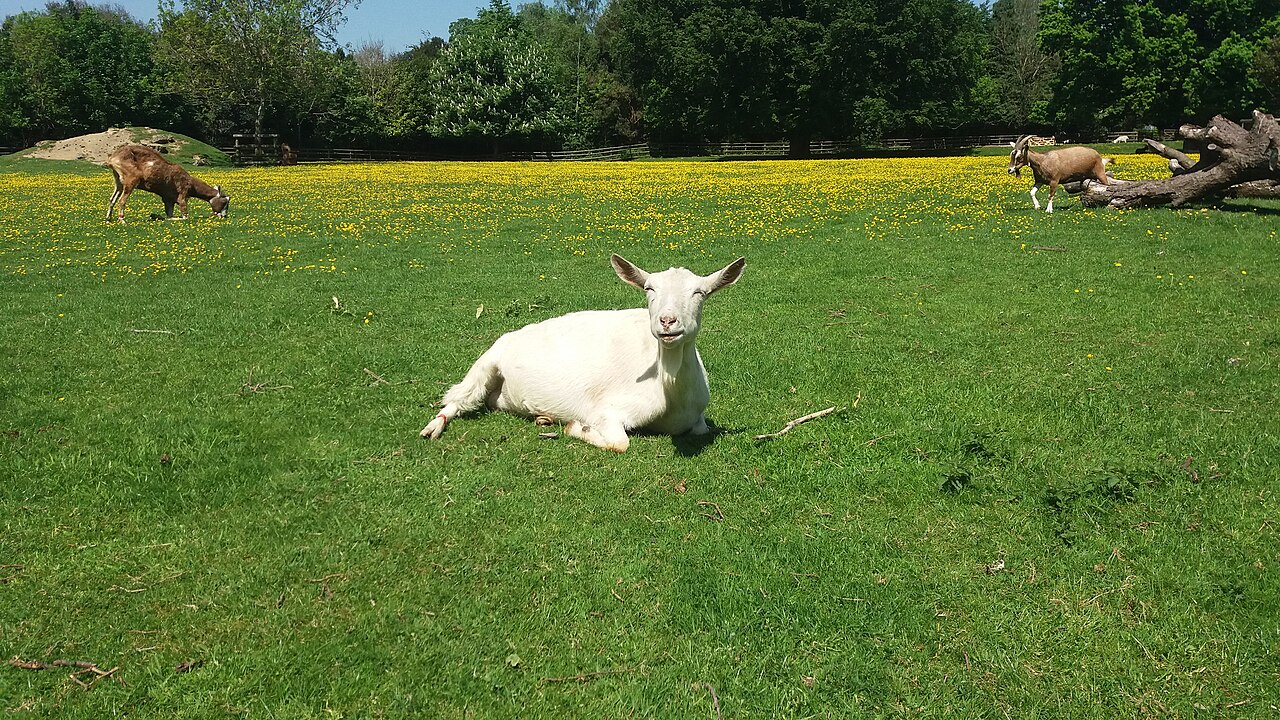
This is the reason the breed exists. Saanen does commonly produce 2 to 3 gallons daily at peak lactation, with exceptional animals recorded considerably higher, and a lactation typically runs around 300 days.
The trade-off is butterfat. Saanen milk runs roughly 3 to 3.5 percent butterfat, noticeably lower than Nubians at around 4.5 percent or Nigerian Dwarfs higher still, so a Saanen produces more milk with less cream per gallon. For fluid milk that hardly matters, while for butter and rich cheese it does, which is why some cheesemakers prefer other breeds despite the lower volume.
Consistency is the other selling point. Saanens are known for long steady lactations rather than a sharp peak followed by a rapid drop, and many does milk well through a second year without rebreeding, which suits a household wanting reliable year-round supply rather than maximum seasonal output.
Size and Appearance
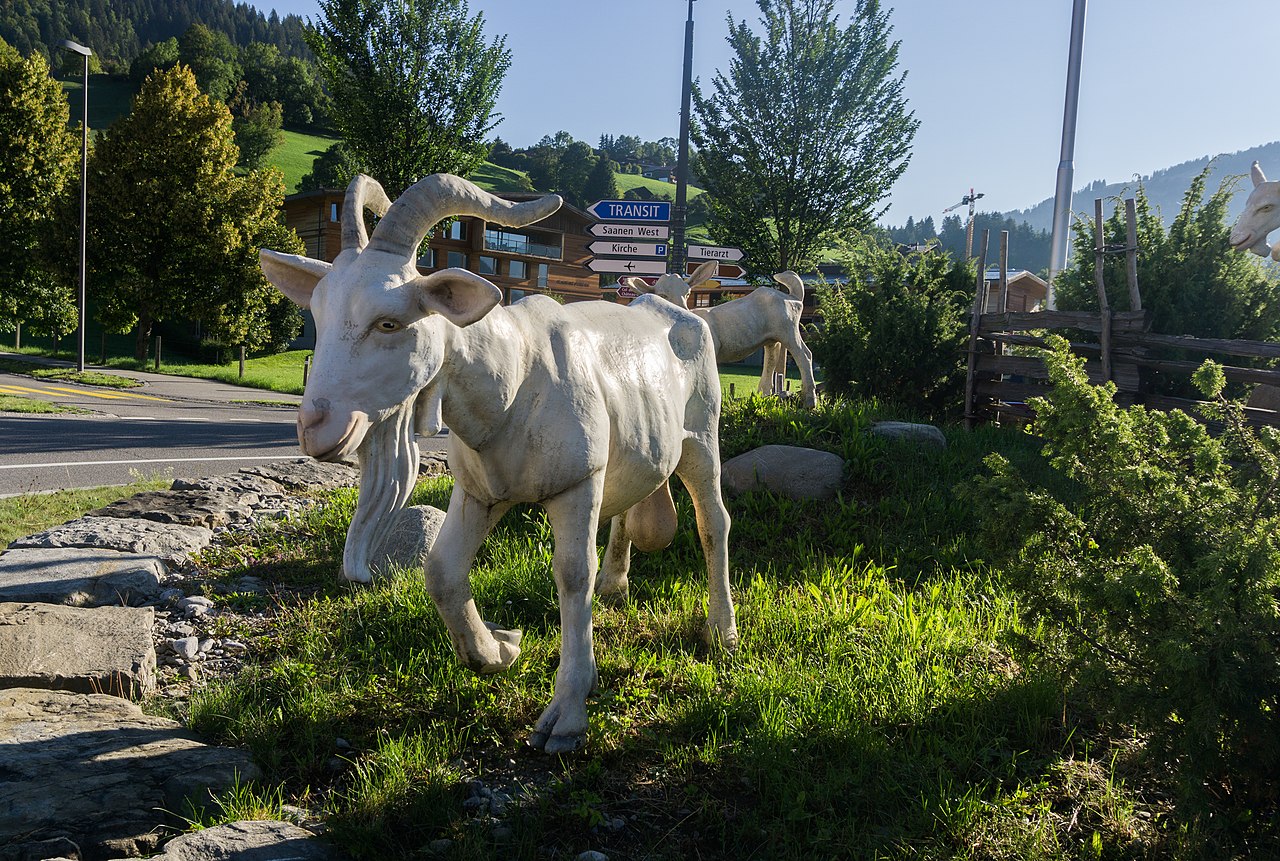
Saanens are large. Does stand at least 30 in at the withers and weigh 135 lb or more, while bucks reach 32 in or more and commonly exceed 200 lb, making them one of the heaviest dairy breeds.
The coat is white to pale cream, short and fine, occasionally with some longer hair along the spine and thighs. The face is straight or slightly dished, never Roman-nosed, the ears are erect and point forward, and the overall impression is of a substantial, square, functional animal.
Skin pigmentation is where the practical issue lies. Some Saanens carry small dark spots on the skin of the nose, ears, and udder, and breeders generally regard these as desirable because unpigmented skin burns. A completely unpigmented animal is at greater risk in strong sun.
Sun Sensitivity
White coats and pink skin mean Saanens sunburn readily, particularly on the ears, nose, and udder, and in high-altitude or low-latitude settings the exposure is severe. This is a genuine management requirement rather than a minor consideration.
Shade is the answer and it needs to be available all day. Trees, a three-sided shelter, or shade cloth over part of the pasture all work, and animals will use it if it is there. Some keepers apply zinc-based sunscreen to ears and noses in extreme conditions, though shade is the more practical route.
Photosensitization is a related and more serious problem. Certain plants, including St John’s wort and buckwheat, and some medications cause compounds in the bloodstream to react with sunlight, producing severe skin damage that affects unpigmented areas worst. A Saanen with sudden severe skin inflammation on white areas needs both shade and a check of what it has been eating.
The Polled Gene Problem
This deserves detailed attention because it catches out new breeders regularly. Naturally hornless goats, called polled, are attractive because they need no disbudding, and the trait is dominant, so it is easy to select for.
Breeding two polled goats together causes the problem. The polled gene in goats is linked to a condition known as polled intersex syndrome, in which a proportion of genetically female offspring from polled to polled matings develop as infertile intersex animals. The effect has been documented since the mid-twentieth century and is well established in the literature.
The standard practice that avoids it is simple: always pair a polled animal with a horned one. That produces polled offspring without the intersex risk, and it is why experienced dairy goat breeders keep horned genetics in their herds deliberately rather than eliminating them. Disbudding kids from horned matings is the trade-off, and it should be done by someone experienced within the first two weeks.
Sable Saanens
Sables are Saanens in every respect except color. The white coat is produced by a recessive gene, so two white Saanens carrying color genetics can produce colored kids, and those kids were historically culled from Saanen breeding programs as off-type.
They are now recognized separately. The American Dairy Goat Association accepts the Sable as its own breed, and they come in every color and pattern except pure white, from cream and tan through brown, grey, and black, often with white markings.
Production and temperament are identical, since the genetics are otherwise the same. Sables also have one practical advantage worth noting: pigmented skin means far less sunburn risk, which makes them a sensible choice in hot sunny climates where white Saanens need constant shade management.
Temperament and Handling
Saanens are calm, steady, and among the easiest dairy goats to handle, which matters enormously in an animal that needs milking twice daily. They tolerate routine well, stand quietly on a milking stand once trained, and are generally undramatic.
They are also social and intelligent, and both traits have implications. Goats kept alone become vocal and stressed, so a minimum of two is not optional, and their problem-solving ability makes fencing a genuine challenge, since a bored Saanen will test every weakness in a boundary.
Bucks are a different proposition, as in every goat breed. A 200 lb Saanen buck in rut is strong, determined, and produces a powerful odor from scent glands and urine marking, and he needs separate secure housing and careful handling. Most small keepers do better using artificial insemination or a neighbor’s buck than keeping one.
Health Management
Three conditions matter more than the rest in a dairy herd. Caprine arthritis encephalitis, usually shortened to CAE, is a viral disease transmitted mainly through milk from doe to kid, causing progressive arthritis, hard udders, and reduced production, and it has no cure. Testing and buying from tested herds is the standard prevention, along with pasteurizing colostrum where the virus is present.
Mastitis is the other production disease, and Saanens are exposed by the sheer volume they produce. Consistent milking hygiene, clean bedding, and prompt attention to any change in milk consistency or udder heat catch most cases early, and university extension dairy programs publish detailed protocols for small herds.
Internal parasites round out the list and are the leading health problem in goats generally. The barber pole worm causes anemia and can kill quickly, and routine calendar deworming has driven widespread resistance, so current guidance favors monitoring through fecal egg counts and the FAMACHA eyelid scoring system and treating individual animals rather than the whole herd.
Housing, Fencing, and Feeding
Fencing defeats more goat keepers than anything else. Woven wire at 4 to 5 ft, cattle panels, or well-maintained electric fencing all work, while barbed wire does not, and any gap a goat can get its head through will eventually become a gap it gets its whole body through.
Shelter needs are modest but specific. Goats tolerate cold well and wet poorly, so a dry draft-free three-sided shelter with good ventilation suffices in most climates, with roughly 15 to 20 sq ft per animal inside and considerably more outside. Add shade separately for this breed.
Feeding centers on forage. Good hay or browse should form the base, with a dairy goat grain ration fed on the milking stand scaled to production, free-choice loose minerals formulated for goats rather than sheep, since sheep minerals lack copper that goats require, and constant fresh water. Health management means regular hoof trimming every six to eight weeks, parasite monitoring through fecal testing rather than routine deworming, and attention to udder health. Anyone building a mixed smallholding will find related considerations in our guides to the baby alpaca, the Brahma chicken, coturnix quail, the Polish chicken, and whether guinea pigs can eat apples.
Related reading: LaMancha Goat.
Frequently Asked Questions
How much milk does a Saanen goat produce?
Commonly 2 to 3 gallons per day at peak lactation, with exceptional does producing more, over a lactation of around 300 days. Butterfat runs 3 to 3.5 percent, lower than Nubians, so Saanens give more volume with less cream per gallon.
How big do Saanen goats get?
Does stand at least 30 in at the withers and weigh 135 lb or more, while bucks reach 32 in or more and commonly exceed 200 lb. They are among the largest dairy goat breeds.
Why do Saanens need shade?
Their white coats and unpigmented pink skin sunburn readily, especially on ears, nose, and udder. Shade must be available all day, and udder burns are both painful and a route to mastitis. Some plants also cause photosensitization that damages unpigmented skin severely.
What is the problem with breeding two polled goats?
The polled gene is linked to polled intersex syndrome, in which a proportion of genetically female offspring from polled to polled matings develop as infertile intersex animals. Always pair a polled goat with a horned one, which produces polled kids without the risk.
What is a Sable Saanen?
A Saanen in everything but color. White is recessive, so two white Saanens carrying color genetics can produce colored kids, now recognized separately by the American Dairy Goat Association. Production and temperament are identical, and pigmented skin means far less sunburn risk.
Are Saanen goats good for beginners?
Yes, given adequate fencing and shade. They are calm, easy to handle, and consistent milkers, which suits someone new to milking. The caveats are their size, the daily milking commitment, the need for at least two animals, and their skill at testing fences.
What do Saanen goats eat?
Good hay or browse as the base, with a dairy goat grain ration scaled to milk production fed on the stand, free-choice loose goat minerals, and constant fresh water. Use goat minerals rather than sheep minerals, since sheep formulations lack the copper goats require.