What Is a Group of Pigs Called? Drift, Drove, and Sounder
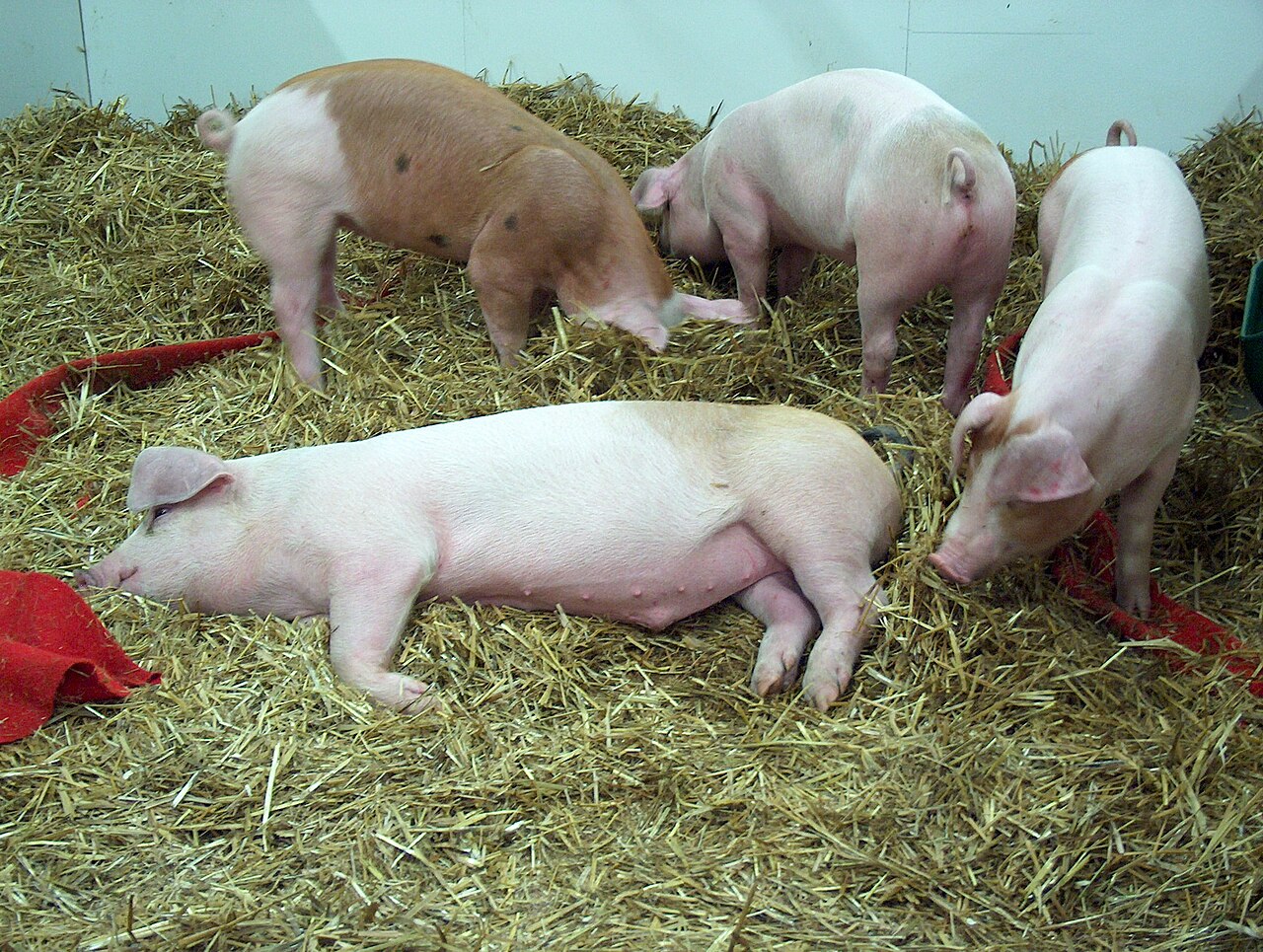
A group of pigs is called a drift, a drove, or a herd, and a group of young pigs is called a litter or a drift. Wild pigs and feral hogs get their own term, a sounder, which is genuine wildlife vocabulary rather than a trivia entry. A group of piglets from one mother is a litter, and a group of pigs being moved along a road is a drove. What is a group of pigs called therefore depends on whether the animals are domestic, wild, or young.
Sounder is the term worth knowing, because it is used constantly by wildlife biologists and hunters dealing with the feral hog problem across the southern United States. A sounder is a matriarchal family group of sows and their young, typically six to twenty animals, and understanding that structure is central to how feral pig populations are managed. This guide covers all the terms, the vocabulary for males, females, and young, and how pig social groups actually work.
A group of pigs is called a drift, a drove, or a herd. Wild and feral pigs form a sounder, a matriarchal family group of sows and their young, usually 6 to 20 animals. A group of piglets from one mother is a litter. A female pig is a sow, or a gilt before her first litter, and a male is a boar or a barrow if castrated.
| Term | Meaning |
|---|---|
| Drift, drove, herd | A group of domestic pigs |
| Sounder | A group of wild or feral pigs |
| Litter | Piglets from one sow, usually 8 to 12 |
| Sow / gilt | Adult female / female before first litter |
| Boar / barrow | Intact male / castrated male |
| Piglet / shoat / weaner | Newborn / young pig / just weaned |
| Typical sounder size | 6 to 20, occasionally 50 or more |
What Is a Sounder of Pigs?
A sounder is a group of wild or feral pigs, and unlike most collective nouns it is real working vocabulary used by wildlife agencies, researchers, and hunters. The term dates back to Middle English hunting language and derives from an Old French word for a herd of swine. It survived where other terms of venery faded because wild boar remained important game across Europe and because feral hogs became a major management problem in North America.
A sounder has a specific structure: it is matriarchal, built around one or several related adult sows and their offspring of various ages. Adult males leave the sounder at around 16 to 18 months and live alone or in small bachelor groups, joining sows only during breeding. This means a sounder you encounter is almost always females and young, and the large solitary animal seen separately is a mature boar.
Typical sounder size in North America is six to twenty animals, though groups of 50 or more occur where food is abundant and populations are dense. Sounders share a home range, bed down together in dense cover, and forage as a unit, and the matriarch leads movements. This cohesion is why whole-sounder removal, trapping the entire group at once rather than shooting individuals, has become the recommended management approach: shooting a few animals educates the survivors and makes them far harder to catch.
What Is a Drift or Drove of Pigs?
A drift of pigs and a drove of pigs are the traditional terms for groups of domestic swine, and both come from the practical business of moving animals. Drove is the older and more transparent: to drove means to drive livestock along a road, and a drover was the person who did it. Before railways, droves of pigs, cattle, and geese were walked to market over long distances, and drove roads remain named on maps across Britain.
Drift carries a similar sense of animals being moved as a mass. Both terms belong to the era when pigs were commonly walked between farm, forest, and market, and neither is used in modern agriculture, where the working word is herd. A pig farm has a herd, herd health is a professional specialty, and herd size is the standard production metric.
A related historical term is pannage, the practice of turning pigs loose in woodland in autumn to feed on fallen acorns and beech mast. Pannage rights were recorded in the Domesday Book and are still exercised in the New Forest in England, where pigs are released each autumn to eat acorns that are toxic to ponies and cattle. A group of pigs turned out for pannage was described as a drift, which is probably where the term is most at home.
What Are Male and Female Pigs Called?
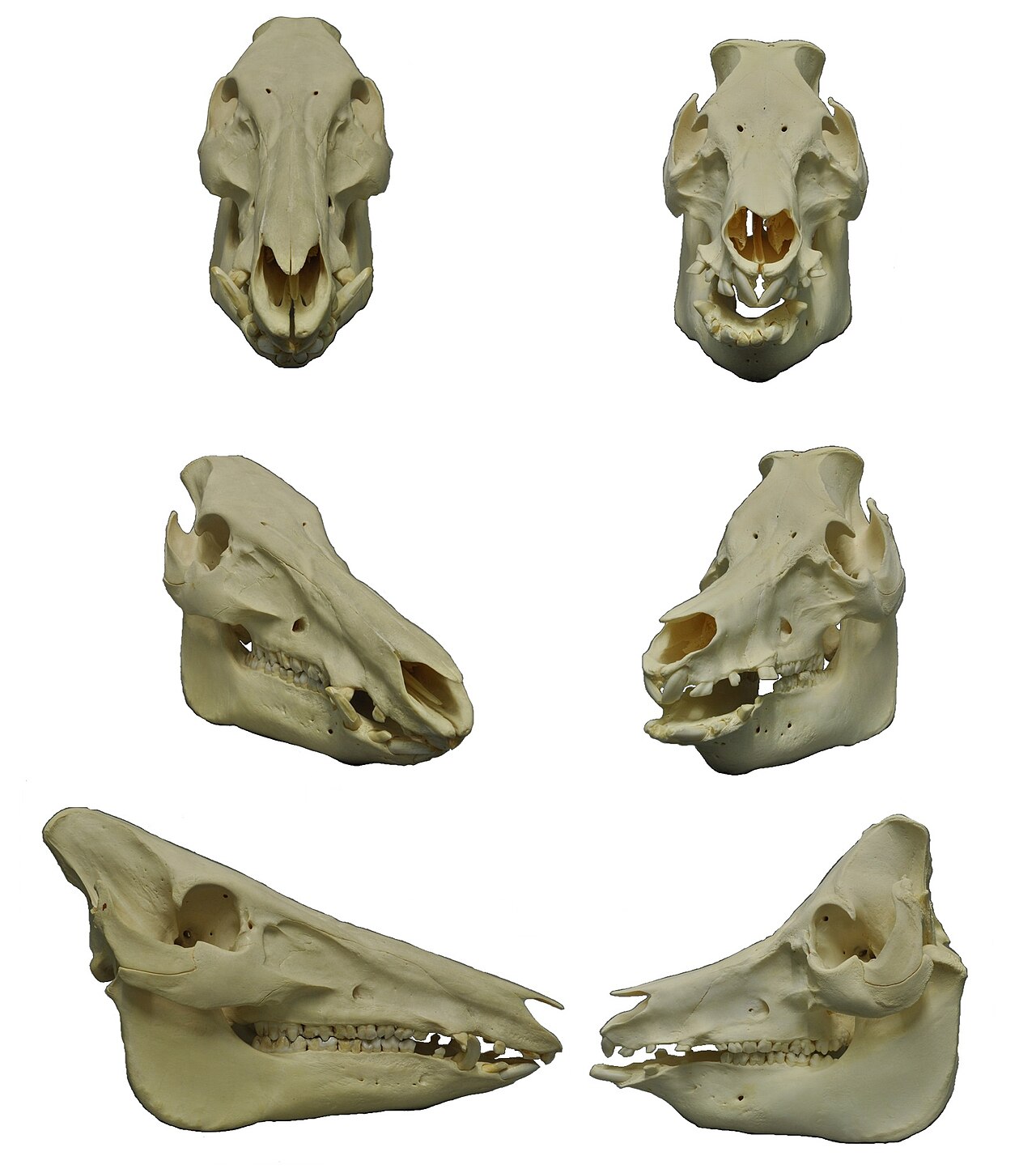
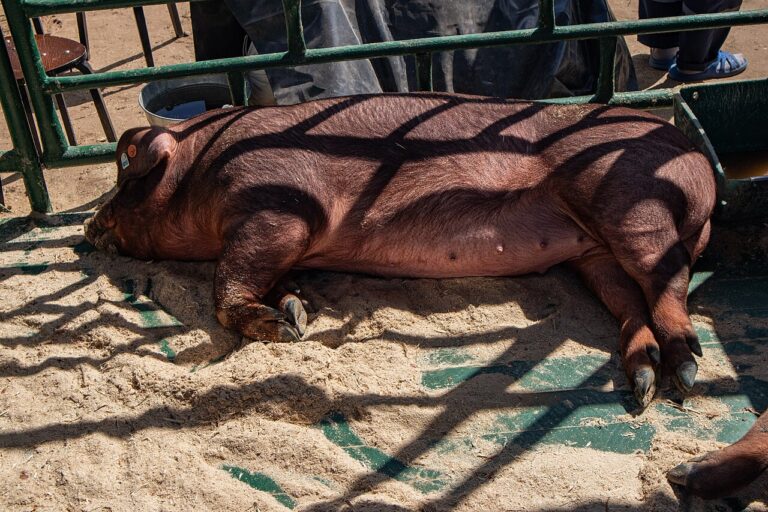
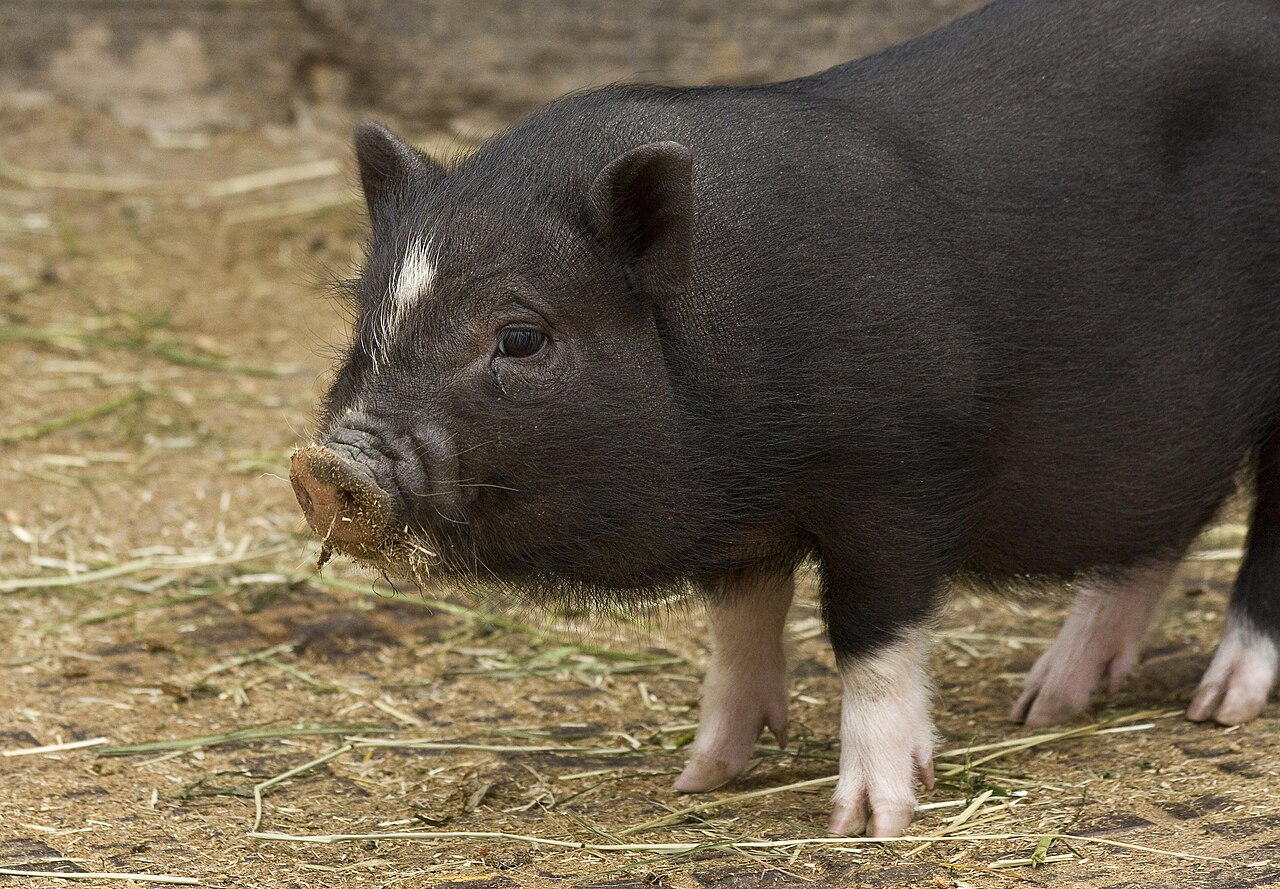
A female pig is called a sow once she has had a litter and a gilt before that. A male pig is a boar if intact and a barrow if castrated, and castrated males raised for meat are the norm in commercial production because intact boars can develop an off flavor in the meat called boar taint. A young pig of either sex is a piglet, then a shoat or weaner after weaning, and a stag is a male castrated after reaching maturity.
Boar has a second meaning that causes confusion. It refers both to any intact male domestic pig and to the wild boar, Sus scrofa, the species from which all domestic pigs descend. Feral hogs in the United States are a mixture of escaped domestic pigs and introduced Eurasian wild boar, and they leave rooting sign and droppings that are often confused with those covered in the bear poop guide, and the two interbreed freely, producing populations with characteristics of both. The word boar is also used for male bears, badgers, and several other mammals.
Breeding vocabulary is precise in the pig industry. A sow in heat is said to be in standing heat, and she cycles every 21 days. Gestation is famously easy to remember as three months, three weeks, and three days, or about 114 days. Farrowing is the term for giving birth, and a farrowing crate or pen is the housing used during it, one of the more contested welfare issues in modern pig production.
What Is a Group of Baby Pigs Called?
A group of baby pigs from one mother is called a litter, and a group of piglets more generally can be called a drift, matching the adult term. Domestic sows typically produce 8 to 12 piglets per litter, and modern commercial breeding lines have pushed averages higher, sometimes exceeding the number of functional teats the sow has, which creates its own welfare problem. Wild boar sows produce smaller litters of four to six.
Piglets are precocial and remarkably capable. They are born with eyes open, fully mobile within minutes, and they establish a teat order within hours: each piglet claims a specific teat and returns to it at every nursing, with the strongest taking the forward teats that produce the most milk. This order remains fixed for the whole nursing period and is one of the clearest examples of early hierarchy formation in a mammal.
Weaning happens at three to four weeks in commercial production and considerably later in natural conditions, where wild boar piglets nurse for two to three months. Wild piglets are striped brown and cream for their first few months, a camouflage stage comparable to the spotted coat of a newborn fawn, a camouflage pattern that fades by about four months, and those stripes are a reliable way to identify young feral hogs at a distance.
How Are Pig Social Groups Organized?
Pigs are genuinely social animals with structured groups, which sets them apart from most of the animals given collective nouns. A sounder operates on a dominance hierarchy established through pushing, biting, and displacement at feeding sites, and once settled it is stable. Pigs recognize individual group members, remember them after separation, and behave differently toward familiar and unfamiliar animals.
Sows also cooperate. In wild boar sounders, related females synchronize their farrowing and sometimes nurse each other’s piglets, and they share vigilance and defense. A sounder threatened by a predator will form a defensive cluster with adults facing outward and young in the center. Sows with piglets are the most dangerous pigs to encounter, and feral hog attacks on people, though rare, most often involve a sow defending young or a wounded boar.
Pigs are also cognitively capable well beyond their reputation. They have been shown to use mirrors to locate hidden food, to learn to operate joystick-controlled video tasks, to distinguish individual humans, and to display behavior consistent with emotional contagion, in which one animal’s distress affects others. Their intelligence is often compared favorably with dogs, and it is one reason confinement systems are so heavily debated.
Why Are Feral Hog Sounders a Problem?
Feral hog sounders are among the most damaging invasive vertebrates in North America, with populations estimated at six million or more across at least 35 states and agricultural damage estimated in the billions of dollars annually. The animals root up pasture, crops, and wetlands, destroy stream banks, compete with native wildlife, prey on ground-nesting birds and reptiles, and carry diseases transmissible to livestock including pseudorabies and brucellosis.
What makes them so difficult is reproductive capacity. Feral sows reach breeding age at six to eight months, produce two litters a year of four to eight piglets, and can breed year-round in mild climates. Models suggest that removing roughly 70 percent of a population annually is required simply to hold numbers steady, which is far beyond what recreational hunting achieves in most areas. The U.S. Department of Agriculture (aphis.usda.gov) runs a national feral swine damage management program on this basis.
The sounder structure is central to control strategy. Because sounders move and feed as units, corral traps designed to capture the entire group at once are far more effective than shooting, which scatters survivors and teaches them to avoid people, bait, and traps. Wildlife agencies now emphasize whole-sounder removal for exactly this reason, and hunting alone is widely considered counterproductive where population reduction is the goal.
Do Wild Boars Live in Groups?
Yes, wild boars live in sounders following the same matriarchal pattern as feral hogs, since they are the same species. In Europe, wild boar sounders typically hold a few sows and their offspring, and populations have expanded dramatically over recent decades, moving into suburbs and cities across Germany, Spain, Italy, and Poland. Berlin has a well-documented urban wild boar population that forages in parks and gardens.
Adult males live apart. A mature boar is solitary from about 18 months, ranging widely and joining sounders only during the autumn and winter rut, when males fight for access to sows using their tusks, which in a wild boar are continuously growing lower canines sharpened against the uppers. A large European wild boar may weigh 200 to 400 pounds, and record animals exceed 600.
Wild boar are ecologically significant where they belong. Their rooting turns soil, buries seed, and creates microhabitats, and in native European forests this is a normal disturbance regime that other species have evolved alongside. The same behavior in North America, where no native pig has existed for millions of years, is purely destructive, which is the essential difference between a wild boar in Bavaria and a feral hog in Texas.
Collective Nouns for Pigs and Other Livestock
Livestock collective nouns are almost entirely practical, because farmers needed working words rather than clever ones. Cattle form a herd or a drove, sheep a flock or a mob, goats a herd or a tribe, and horses a herd or a string when working together. Chickens form a flock. None of these is fanciful, and all are still in daily use in agriculture.
Pigs are the partial exception because sounder came from hunting rather than farming, arriving with the wild boar side of the family. That gives pigs a rare distinction: a genuine hunting term for the wild form and practical farm terms for the domestic form, both still in use and both meaningful. A sounder of feral hogs and a herd of Yorkshires are different things and the vocabulary reflects it.
The pattern across all these terms is that words survive when they do work. Sounder survived because feral pigs matter. Drove survived in place names and history because droving mattered for centuries. Drift lingers mainly in trivia because the practice it described has gone. For the other livestock and poultry terms, the group of chickens guide covers the flock and its pecking order, the female horse guide covers the equine vocabulary, and the Saanen goat guide covers dairy goat terms in practice.
Related reading: what is a group of cows called.
Frequently Asked Questions
What is a group of pigs called?
A group of pigs is called a drift, a drove, or a herd. Wild and feral pigs form a sounder, and a group of piglets from one mother is a litter. Herd is the standard term in modern agriculture.
Do you say herd of pigs?
Yes, herd is correct and is what pig farmers and veterinarians use. Drift and drove are traditional alternatives from the era when pigs were walked to market, and neither is common today.
What is a pack of wild pigs called?
A sounder, not a pack. A sounder is a matriarchal family group of sows and their young, typically 6 to 20 animals. Adult males leave at 16 to 18 months and live alone or in small bachelor groups.
What is a group of baby pigs called?
A litter. Domestic sows produce 8 to 12 piglets per litter after about 114 days of gestation, remembered as three months, three weeks, and three days. Wild boar litters are smaller, usually four to six.
What is a female pig called?
A sow once she has had a litter, and a gilt before that. Males are boars when intact and barrows when castrated, and most commercial males are castrated to avoid an off flavor in the meat called boar taint.
How many pigs are in a sounder?
Usually 6 to 20, though sounders of 50 or more occur where food is abundant. The group shares a home range, beds down together, and is led by the matriarch, which is why whole-sounder trapping is the recommended control method.
Are pigs social animals?
Yes. Pigs form structured groups with stable dominance hierarchies, recognize individual group members, and cooperate in defense. Sows in wild sounders synchronize farrowing and sometimes nurse each other’s piglets.