Birds That Eat Ants and the Strange Habit of Anting
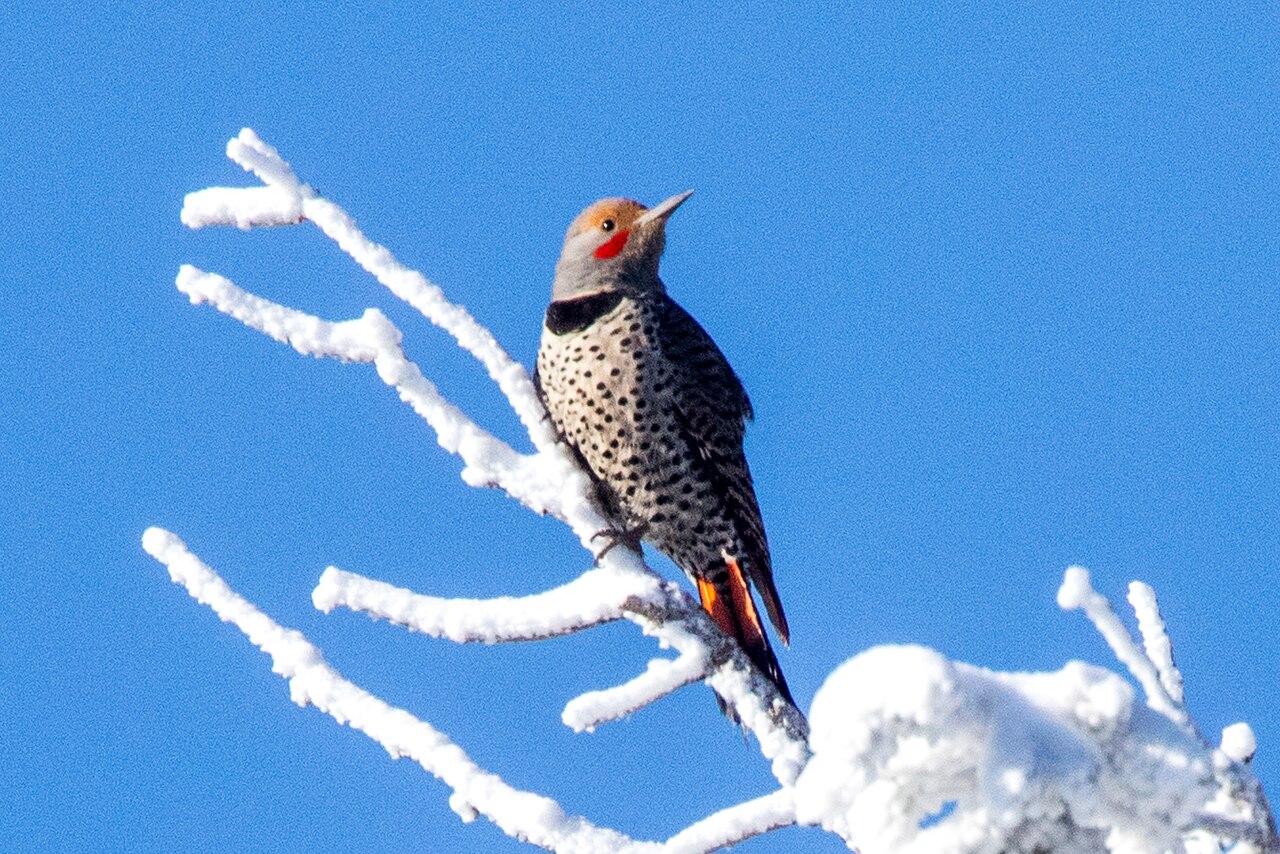
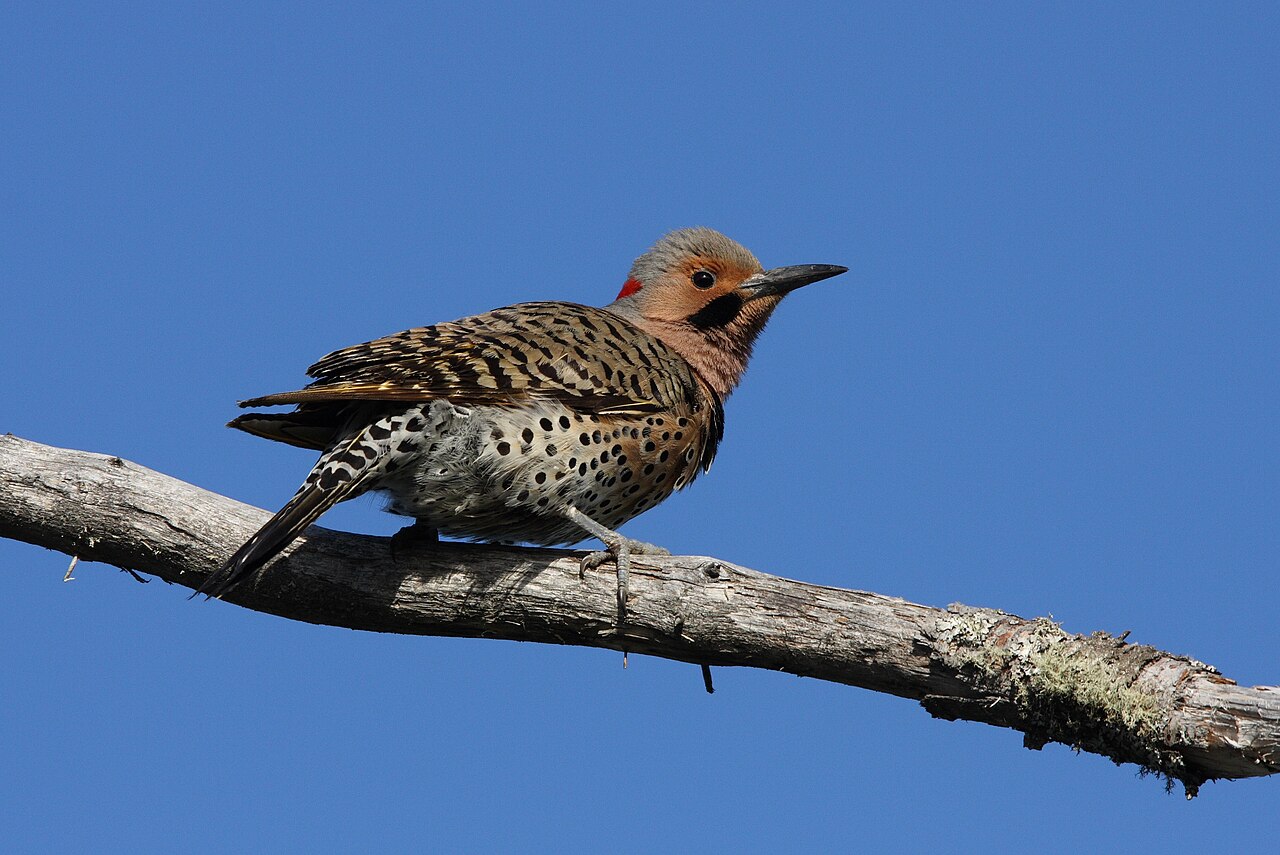
The northern flicker eats more ants than any other North American bird, and ants can make up around half of its annual diet. It is a woodpecker that feeds mainly on the ground, hammering into anthills and using a barbed tongue that extends up to 5 cm past the bill tip to draw ants out of their tunnels. Other regular ant eaters include pileated woodpeckers, wrens, sparrows, starlings, robins, and grouse.
Ants also feature in one of the strangest behaviours in ornithology. Over 200 bird species practise anting, deliberately picking up live ants and rubbing them through their feathers, or sitting on an anthill with wings spread and letting ants swarm over them. The birds are not eating them, and after a century of study there is still no settled explanation for why they do it.
| Bird | Relationship With Ants |
|---|---|
| Northern flicker | Ant specialist, up to half its diet |
| Pileated woodpecker | Carpenter ants, excavates into wood |
| Wrens and sparrows | Regular opportunistic feeding |
| Robins and starlings | Ants taken while ground foraging |
| Wild turkey and grouse | Ants heavily fed to young chicks |
| Jays, crows, grackles | Best-known anting practitioners |
| Main ant predator overall | Not birds, but other ants |
The Northern Flicker: North America’s Ant Specialist
Flickers are the odd woodpecker. Instead of working tree trunks they spend most of their foraging time on lawns, trails, and open ground, hammering into ant nests and probing the tunnels. Anyone who has watched a large brown woodpecker on a lawn and wondered what it was doing has watched a flicker eating ants.
The anatomy is specialised for it. The tongue extends up to 5 cm beyond the bill tip, wrapping around the back of the skull when retracted, and it is flattened, barbed at the tip, and coated in sticky saliva. That combination pulls ants and their larvae out of galleries that no bill could reach.
Diet studies have found individual flickers with several thousand ants in the stomach from a single feeding session, and ants make up roughly half the annual diet across the species. They also take beetles, seeds, and fruit, but nothing approaches the ant share. Our guide to the female northern flicker covers identification.
Woodpeckers and Carpenter Ants
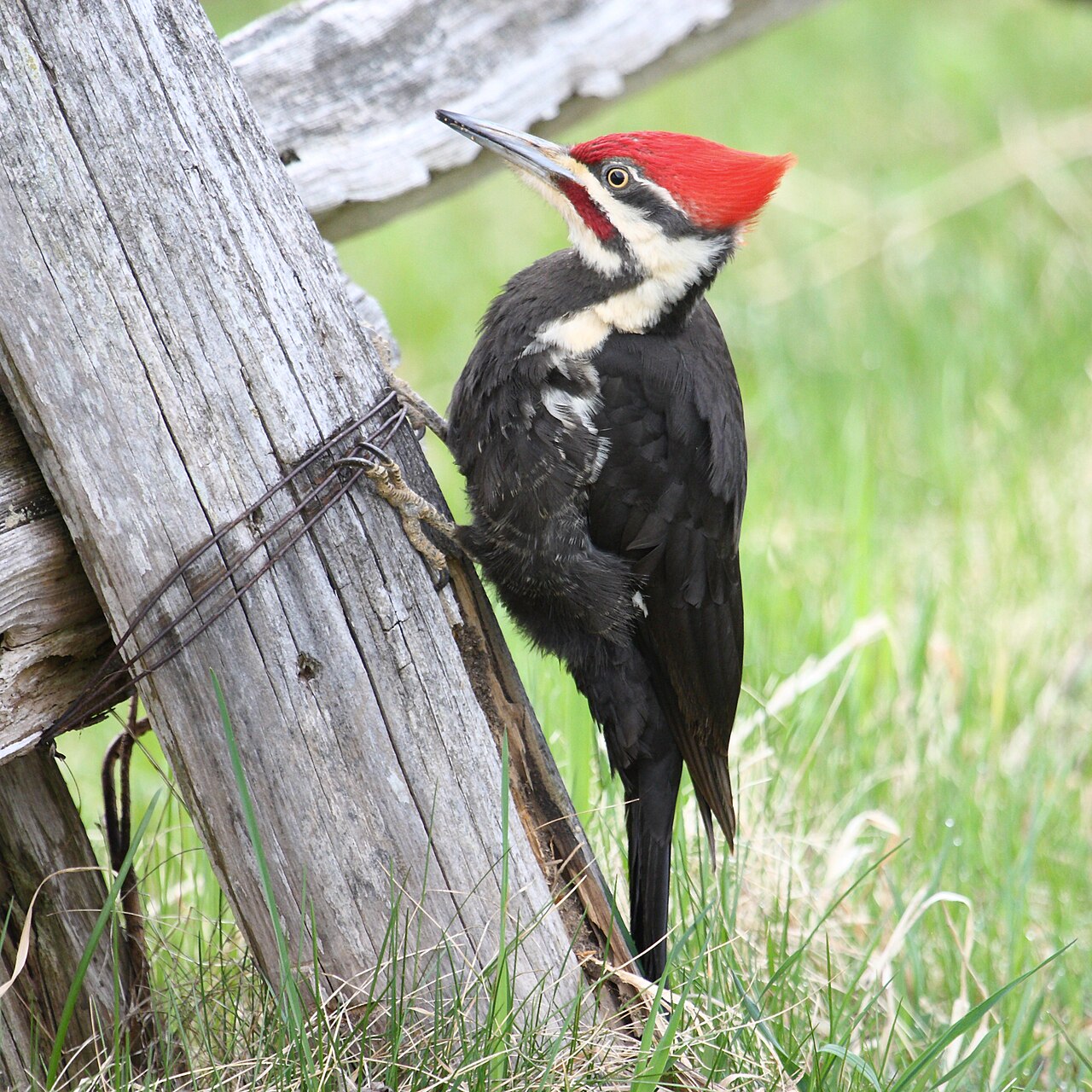
Pileated woodpeckers are the other major ant specialist, and they target carpenter ants specifically. Rather than working the ground they excavate into dead and dying wood where carpenter ant colonies live, producing the large rectangular holes that are the species’ signature and that no other North American bird makes.
Those excavations are substantial. A pileated woodpecker working a colony can remove enough wood to leave a cavity a foot deep, and the chips accumulate at the base of the tree in piles that are often the first sign of activity. The bird is essentially performing free carpenter ant control on standing timber.
Downy, hairy, and red-bellied woodpeckers all take ants opportunistically without specialising. Across the family the sticky barbed tongue is the shared adaptation, and it works as well on ants as on wood-boring beetle larvae. Our guide to types of woodpeckers covers the North American species.
Backyard Birds That Eat Ants
Ants are a routine part of ground foraging for a wide range of common birds. American robins take them alongside earthworms, and the answer to whether robins eat ants is straightforwardly yes, though ants are a minor part of the diet rather than a target.
Wrens, sparrows, juncos, towhees, starlings, and grackles all take ants regularly while working leaf litter and lawns. Chickadees and titmice take them from bark. None of these is an ant specialist, but collectively they consume a large number of ants simply because ants are everywhere.
Ground-nesting game birds matter more than they appear to. Wild turkey, grouse, and quail chicks feed almost entirely on insects for their first weeks, and ants form a substantial part of that. Insect availability in those first three weeks is the strongest predictor of chick survival, which links ant abundance directly to game bird populations.
Anting: The Behaviour Nobody Can Explain
Anting comes in two forms. In active anting a bird picks up individual ants in the bill and deliberately rubs them along the underside of the wings and through the tail feathers, sometimes working through dozens in a session. In passive anting the bird settles onto an anthill with wings spread and feathers fluffed and lets ants swarm across its body.
Over 200 species have been recorded doing it, with jays, crows, grackles, starlings, robins, and thrushes among the most frequent. Blue jays are the classic example and will ant so intensively that they appear to be in distress, which is why the behaviour is so often reported by alarmed observers.
The birds almost never eat the ants they use. Species chosen are usually formic acid producers rather than stinging ants, and birds that cannot find ants will substitute millipedes, beetles, citrus peel, mothballs, and cigarette butts, all of which share pungent chemical properties. Whatever anting is for, the chemistry rather than the insect is the point.
The behaviour also appears to be at least partly innate. Hand-raised birds with no opportunity to observe others have been recorded anting spontaneously the first time they encountered ants, which argues against it being purely learned. Young birds nonetheless perform it clumsily at first and improve with practice.
Why Birds Ant
The leading hypothesis is parasite control. Formic acid is toxic to feather lice and mites, and applying it directly to the plumage would plausibly reduce parasite loads. The substitution of other pungent substances fits this, and it remains the most widely cited explanation.
The evidence is weaker than the popularity of the idea suggests. Controlled studies have produced mixed results, with some finding reduced parasite loads after anting and others finding none, and the concentration of formic acid a bird can apply this way may simply be too low to matter.
Competing explanations include feather maintenance, since formic acid may condition feathers or supplement preen oil, and food preparation, since rubbing removes formic acid and makes ants more palatable, though birds mostly discard the ants afterwards. Some researchers have suggested it is simply pleasurable, a possibility that is difficult to test and easy to dismiss unfairly.
What Actually Eats the Most Ants
Not birds. The largest predators of ants by volume are other ants, since inter-colony warfare and raiding by species such as army ants and slave-making ants kill enormous numbers. Any assessment of ant mortality that leaves out other ants misses the largest component.
Among vertebrates the specialists outclass every bird. Giant anteaters consume up to 30,000 ants and termites a day, and pangolins, aardvarks, echidnas, numbats, and various armadillos are all myrmecophages with tongues, claws, and digestive adaptations built for the job. No bird approaches those numbers.
Invertebrate predators complete the picture. Antlion larvae, assassin bugs, spiders, and parasitoid wasps and flies all take a heavy toll, and phorid flies that parasitise fire ants have been used as a biological control agent. Our guide to what ants eat covers the other side of the relationship.
Do Birds Control Ants in a Yard?
Not meaningfully. A flicker working a lawn will damage individual anthills and remove thousands of workers, but ant colonies replace workers quickly and the queen is safely underground beyond any bird’s reach. The colony persists and rebuilds within days, and a lawn that looks heavily worked over by a flicker in the morning will show ants moving normally by the afternoon.
Where birds do make a difference is with carpenter ants in standing dead wood, since a pileated woodpecker excavating a colony can reach and destroy a substantial portion of it including brood. Even then the effect is on individual colonies rather than on local ant populations.
For anyone with an actual ant problem, birds are a pleasant side effect rather than a solution. What encouraging them does provide is broad insect control across many groups and a lawn that hosts flickers, which most people would count as a benefit in itself. Our guide on keeping ants out of hummingbird feeders covers the one place ants genuinely interfere with birds.
How to Attract Ant-Eating Birds
Lawn management does most of the work. Flickers need open short grass with accessible soil and anthills, so a lawn treated with broad-spectrum insecticide will never hold them. Reducing or eliminating pesticide use is the single most effective step, and it takes a season or two to show.
Dead wood matters for the woodpeckers. Leaving standing dead trees and large dead limbs where they are safe to leave gives pileated woodpeckers somewhere to find carpenter ants and somewhere to nest, and snags support a long list of other species at the same time.
Bare soil and leaf litter round it out. A patch of undisturbed leaf litter under shrubs gives ground-foraging birds somewhere to work, and an unmown corner supports the insect populations they depend on. Our guides to birds that eat wasps and birds that eat ticks cover species that respond to the same habitat.
Frequently Asked Questions
What birds eat the most ants?
The northern flicker, by a wide margin among North American birds, with ants making up roughly half its annual diet. Pileated woodpeckers specialise in carpenter ants excavated from dead wood. Wrens, sparrows, robins, starlings, and grouse chicks all take ants regularly without specialising.
Do any birds eat ants?
Many do. Beyond the flicker and pileated woodpecker, ants are a routine part of ground foraging for robins, wrens, sparrows, juncos, towhees, starlings, and grackles. Wild turkey, grouse, and quail chicks feed heavily on ants during their first weeks, when insect protein drives survival.
What is the main predator of ants?
Other ants. Inter-colony warfare and raiding kill more ants than anything else. Among vertebrates the specialists are anteaters, pangolins, aardvarks, echidnas, and armadillos, with a giant anteater consuming up to 30,000 ants and termites a day. No bird comes close to those numbers.
Will robins eat ants?
Yes, though ants are a minor part of the diet rather than a target. Robins take them alongside earthworms and other invertebrates while foraging on lawns. Robins are also frequent practitioners of anting, rubbing live ants through their feathers without eating them.
Why do birds rub ants on themselves?
The behaviour is called anting and over 200 species do it, but there is no settled explanation. Parasite control through formic acid is the leading hypothesis, though the evidence is mixed. Feather conditioning and food preparation are alternatives, and birds substitute citrus peel and mothballs when ants are unavailable.
Do crows let ants crawl on them?
Yes, that is passive anting. The bird settles on an anthill with wings spread and feathers raised and lets ants swarm across its body. Crows, jays, grackles, and starlings all do it, and it looks alarming enough that observers regularly report the bird as injured or dying.
Will birds get rid of ants in my yard?
No. A flicker can destroy individual anthills and remove thousands of workers, but colonies replace them quickly and the queen stays underground beyond reach. Pileated woodpeckers do real damage to carpenter ant colonies in dead wood, but even that affects individual colonies rather than local populations.