What Is a Male Duck Called? Drake, Hen, and Duckling
A male duck is called a drake. A female is a hen, or simply a duck, and a baby of either sex is a duckling. There is no age-based split in duck terminology of the kind that separates a colt from a stallion in horses; a male duck is a drake from the point he is recognizable as male, and a young one is just a young drake. The word drake is old, appearing in English by the thirteenth century and probably descending from a Germanic root related to the Old High German antrahho, meaning duck-drake.
The confusion people run into is that duck means both the species in general and the female specifically, so asking what a male duck is called sometimes produces the unhelpful answer that a female duck is called a duck. This guide gives the full vocabulary, explains how to tell a drake from a hen in the field including during the summer eclipse molt when the males lose their color, covers the mallard question, and clears up whether ducks mate for life.
A male duck is called a drake and a female is called a hen, or simply a duck. Baby ducks of either sex are ducklings. Drakes of most species are brightly colored in the breeding season but molt into dull female-like eclipse plumage in summer, when bill color and voice are the reliable ways to tell the sexes apart.
| Term | Meaning |
|---|---|
| Drake | Male duck of any age |
| Hen (or duck) | Female duck |
| Duckling | Baby duck of either sex |
| Brood | A hen with her ducklings |
| Eclipse plumage | Dull summer coat of a drake |
| Drake mallard bill | Yellow, vs orange with dark blotches in hens |
| Voice | Hens quack loudly; drakes are raspy and quiet |
Why Is a Male Duck Called a Drake?
A male duck is called a drake from a word that has been in English since at least the thirteenth century, derived from a Germanic root. The Old High German antrahho and Middle Low German andrake both combined a word for duck with a second element meaning male or ruler, and English kept only the second half. The result is that drake stands alone in modern English with no obvious connection to the word duck.
Duck itself comes from Old English duce, related to the verb to duck, meaning to dive or plunge, describing what the bird does on water. This gives English the awkward situation where the general term for the species and the specific term for the female are the same word, which is why hen is often preferred when clarity matters. Poultry keepers and waterfowl biologists both use hen and drake in preference to duck for a female.
The word drake has a second, unrelated meaning: a dragon, from the Latin draco. That is the sense preserved in place names, in the name Drake, and in Old English literature. The coincidence has no bearing on ducks, but it explains why the word sometimes appears in surprising contexts. In fishing, a drake is also a type of mayfly imitation, from the appearance of the fly’s wings.
Is a Male Duck a Drake or a Mallard?
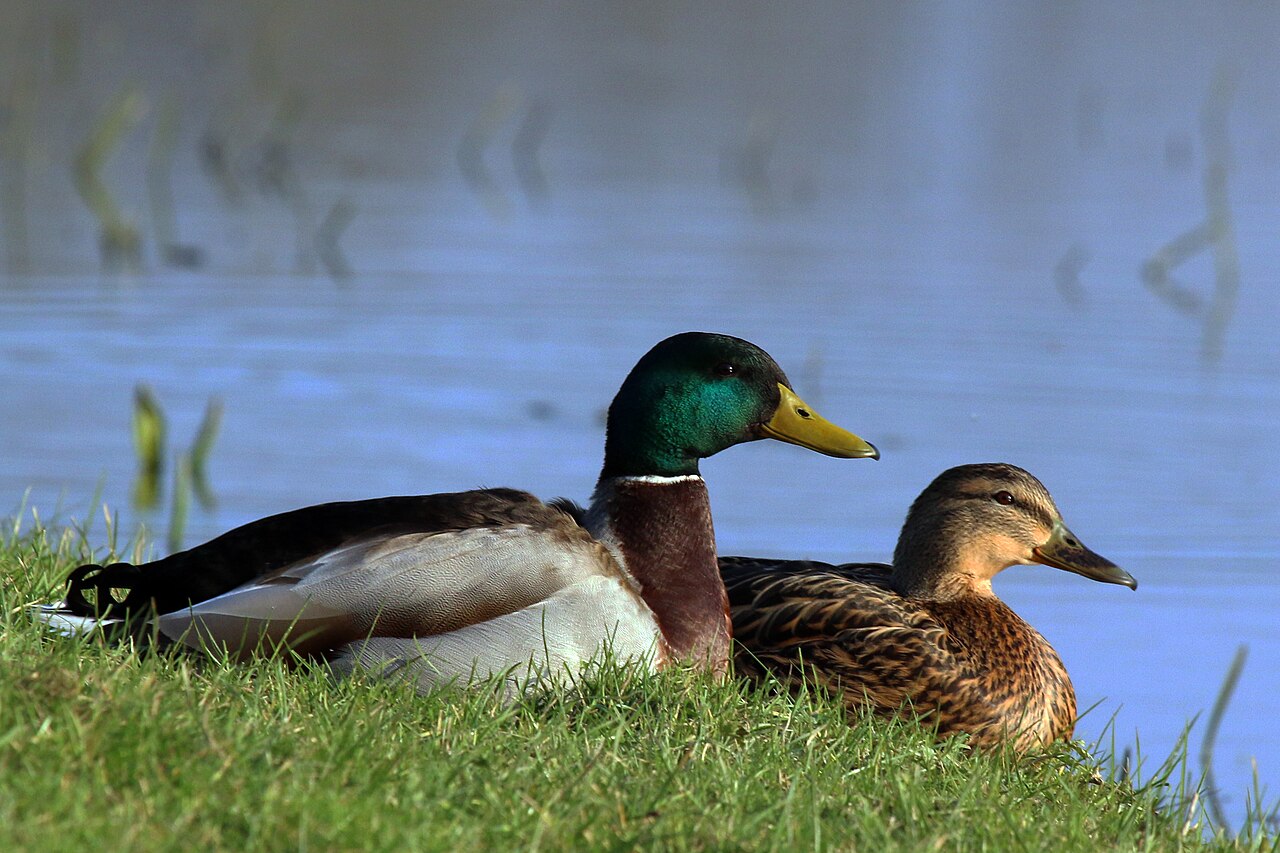
Drake is the term for a male duck of any species; mallard is a species name. A male mallard is a drake mallard. Both words are correct but they answer different questions, and the confusion arises because the mallard is by far the most familiar duck across North America and Europe, so the green-headed male is what most people picture when they think of a duck.
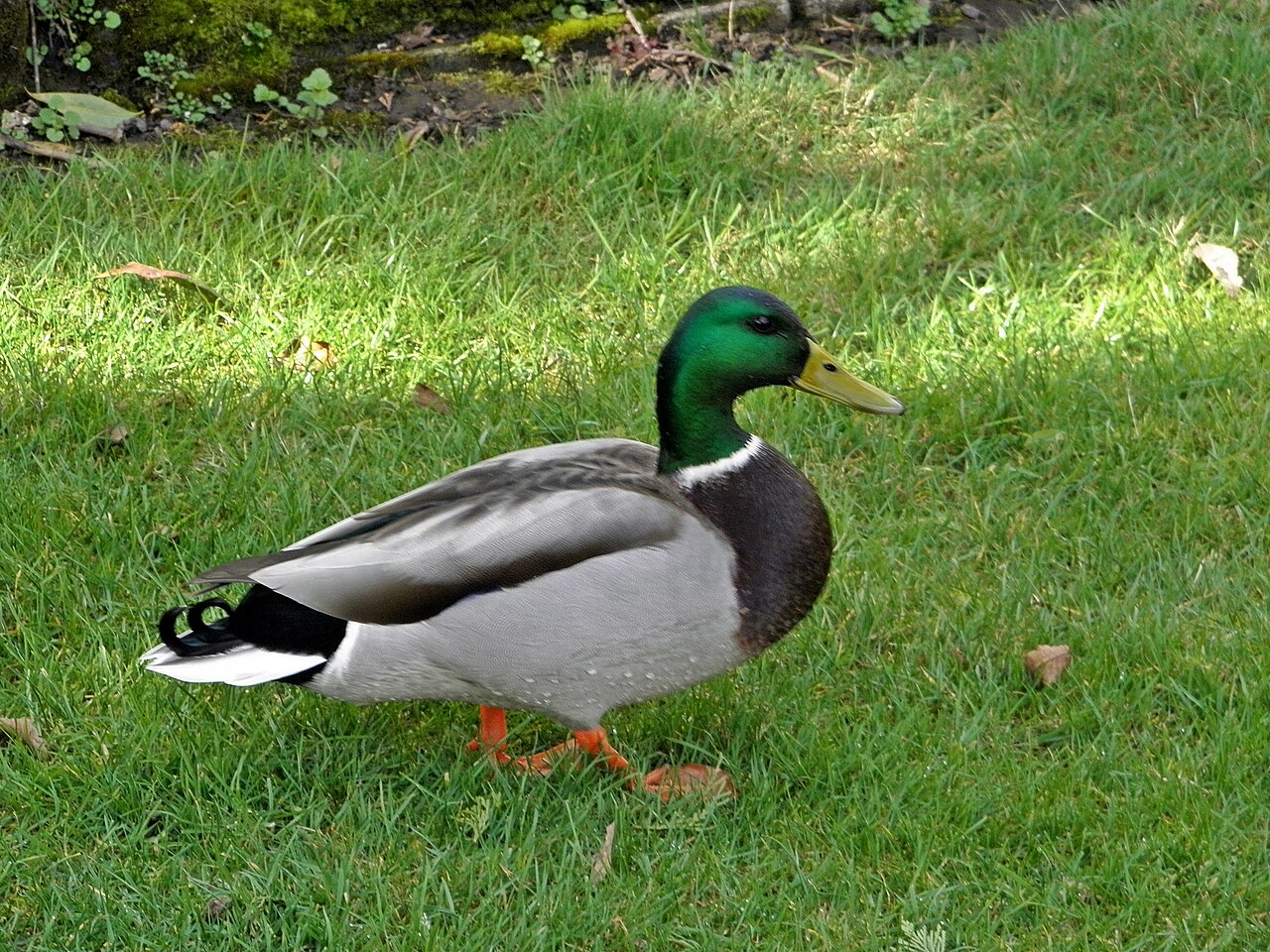
The mallard, Anas platyrhynchos, is a dabbling duck found on nearly every pond, park lake, marsh, and river across the Northern Hemisphere, and it is the ancestor of almost every domestic duck breed except the Muscovy. Drake mallards in breeding plumage are unmistakable: iridescent green head, thin white neck ring, chestnut breast, gray body, and a curled black feather at the tail called the drake feather or drake curl.
Every other duck species has drakes too. A male wood duck, a male pintail, a male canvasback, and a male bufflehead are all drakes. The mallard guide covers the species that dominates the popular image of a duck, and the types of ducks guide covers the wider group, including the diving ducks whose drakes are less familiar but equally distinctive.
How Do You Tell a Drake From a Hen?
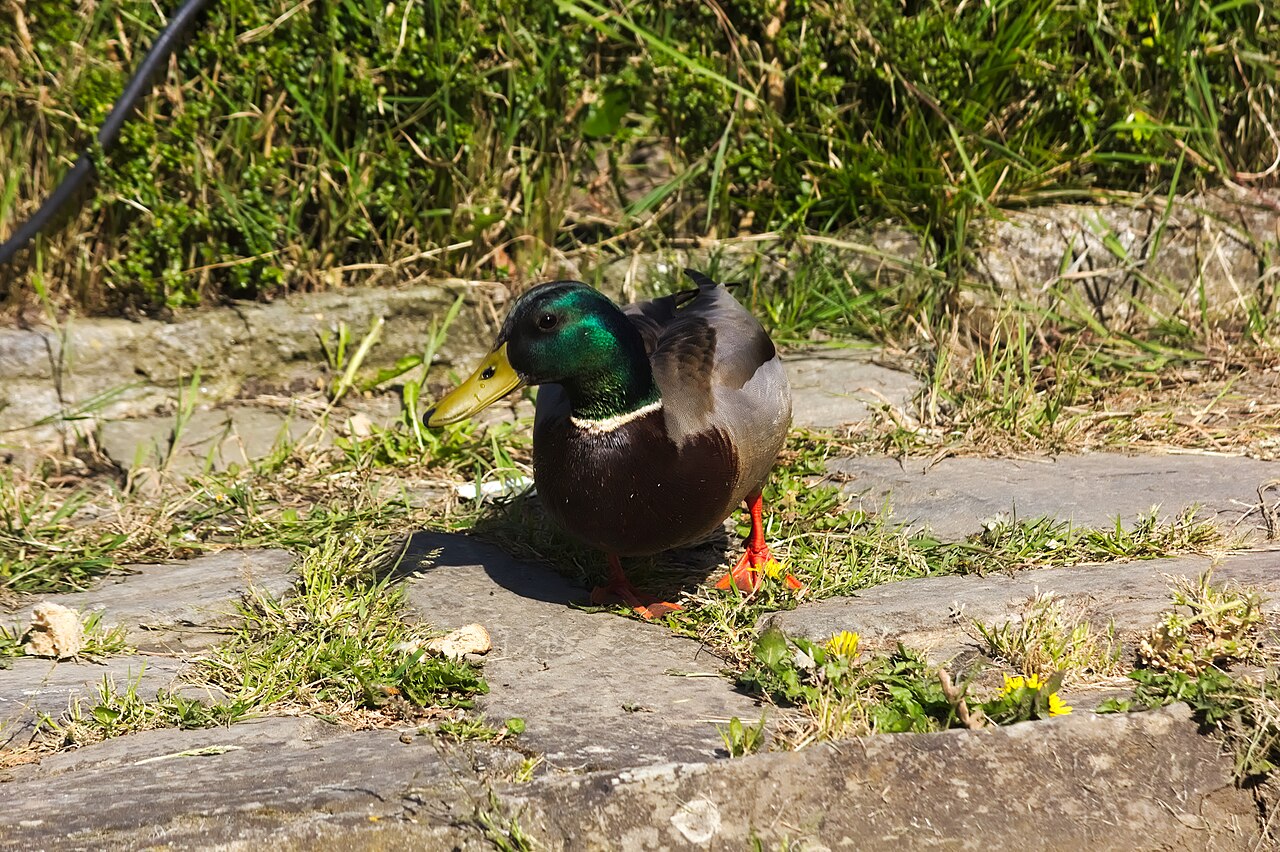
In breeding plumage, most drakes are obvious. From autumn through spring, males of nearly every North American dabbling and diving duck are brightly patterned while females are mottled brown, and the difference is visible at a distance. The male’s job is to attract a mate and the female’s is to sit on a nest without being seen, and the plumage follows directly from those two requirements.
Summer is the problem. After breeding, drakes molt into eclipse plumage, a dull, female-like appearance they hold for several weeks while replacing their flight feathers, during which they cannot fly and need camouflage as badly as the hens do. A pond full of what looks like all hens in July is usually a mix of hens and eclipse drakes, and this catches out a great many people.
Two features remain reliable year-round. Bill color: a drake mallard keeps a yellow to olive bill through eclipse while a hen’s is orange with dark blotches, and similar differences hold in other species. Voice: the loud quack everyone associates with ducks comes only from hens, while drake mallards produce a quiet, raspy, two-note rasp. If a duck quacks loudly, it is female. The female duck guide covers hen identification across species in detail.
What Do Drakes Do That Hens Do Not?
Drakes display and hens incubate, and that division covers nearly all the behavioral differences. Courtship display is a drake activity, and in mallards it involves an elaborate repertoire of head shakes, tail shakes, grunt-whistles, head-up-tail-up postures, and a movement called the down-up in which the bill is dipped and flicked, throwing water. Groups of drakes perform these displays around a hen in late winter.
Nesting is entirely the hen’s work in almost every duck species. She selects the site, builds the nest, lines it with down plucked from her own breast, incubates the eggs for 26 to 30 days, and raises the ducklings alone. The drake typically abandons the pair bond shortly after incubation begins and joins other males to molt. Shelducks and whistling ducks are exceptions where males help.
Drake mallards also have a reputation for aggressive forced mating that surprises people who know ducks only from park ponds, and groups of drakes pursuing a single hen can injure or drown her. This is normal mallard behavior rather than an aberration, and it is one reason backyard duck keepers are advised to maintain a ratio of at least three to five hens per drake. The guide to what ducks eat covers the feeding that draws both sexes to park ponds in the first place.
What Is a Baby Duck Called?
A baby duck is called a duckling, regardless of sex, and there is no separate term for a male or female duckling comparable to colt and filly in horses. A group of ducklings with their mother is called a brood, which is a working term used in waterfowl surveys rather than a fanciful collective noun. Mallard broods typically start at 8 to 13 ducklings.
Ducklings are precocial, hatching covered in down with their eyes open and able to walk, swim, and feed themselves within a day. The hen does not feed them; she leads them to food, broods them for warmth, and defends them. Duckling mortality is high, often 50 percent or more in the first two weeks, from predation by fish, snapping turtles, herons, gulls, crows, and mammals.
Sexing ducklings is difficult and generally requires vent examination by someone trained to do it. Male plumage only becomes apparent in the first autumn, and until then behavior and appearance offer little. In domestic breeds, voice is the earliest reliable clue: young females develop the loud quack while young males develop the raspy call, usually by eight to ten weeks. The baby duck guide covers the first weeks in detail.
Do Ducks Mate for Life?
No, most ducks do not mate for life, and this is one of the most persistent misconceptions about them, probably borrowed from geese and swans, which genuinely do form long-term bonds. Ducks are seasonally monogamous: a drake and a hen pair up on the wintering grounds or during spring migration, stay together through egg laying, and then separate. The drake plays no part in raising the young and typically takes a different mate the following year.
The pair bond forms early, often in autumn or midwinter, which is why drakes are in full bright plumage months before nesting begins. Once the hen begins incubating, the drake’s usefulness is over from an evolutionary standpoint, and he leaves to molt with other males. In some populations drakes remain nearby through early incubation, but abandonment before hatching is the norm.
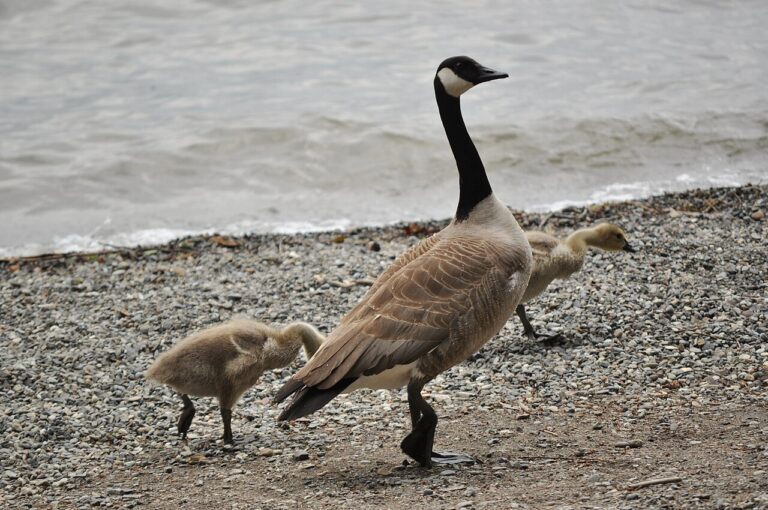
The exceptions are worth knowing. Whistling ducks form long-term bonds and both parents raise the young. Some shelducks and a few tropical species also pair persistently. Among waterfowl generally, the long-term bonds belong to the geese and swans: Canada geese and mute swans commonly stay together for many years or for life, and both parents raise the young together. The group of geese guide covers the family structure that produces those bonds.
Terminology for Other Poultry and Waterfowl
Waterfowl and poultry terminology follows no single pattern, which is why each set has to be learned separately. Geese give the male gander and leave the female as simply goose, with young called goslings. Swans give cob for the male and pen for the female, with young called cygnets, which is the most distinctive set in the group. Chickens give rooster and hen, with young called chicks.
Turkeys use tom or gobbler for the male and hen for the female, with young called poults, and first-year males are jakes while first-year females are jennies. Guinea fowl use cock and hen. Muscovy ducks, the one common domestic duck not descended from the mallard, still use drake and hen despite being a different genus entirely.
The collective terms are equally varied and follow their own logic. A group of ducks is a raft on water and a flock in flight, a group of geese is a gaggle on the ground and a skein in the air, and a group of chickens is simply a flock. The group of ducks guide covers the duck terms in full.
Frequently Asked Questions
What is a male duck called?
A male duck is called a drake. Females are called hens, or simply ducks, and babies of either sex are ducklings. There is no separate term for a young male comparable to colt in horses.
Is a male duck a drake or a mallard?
Drake is the term for a male duck of any species; mallard is a species. A male mallard is a drake mallard. The confusion arises because the mallard is the duck most people picture.
What is a female duck called?
A hen, or simply a duck. Because duck means both the species and the female, hen is preferred when clarity matters, and it is what waterfowl biologists and duck keepers use.
How do you tell a drake from a hen?
In breeding plumage the drake is brightly colored and the hen is mottled brown. In summer eclipse the drake looks female, so use bill color, yellow in drake mallards against orange with dark blotches in hens, and voice: only hens quack loudly.
What are baby ducks called?
Ducklings, regardless of sex. A hen with her ducklings is called a brood. Ducklings hatch able to walk, swim, and feed themselves within a day, and the hen leads them to food rather than feeding them.
Do ducks mate for life?
No. Most ducks are seasonally monogamous, pairing in winter and separating once the hen begins incubating. The drake plays no part in raising the young. Geese and swans are the waterfowl that genuinely form long-term bonds.
What is a group of ducks called?
A raft when the ducks are on water and a flock when they are in flight. Older terms include a paddling and a badling. Gaggle belongs to geese, not ducks.