Bald Eagle Spiritual Meaning: Symbolism and Traditions
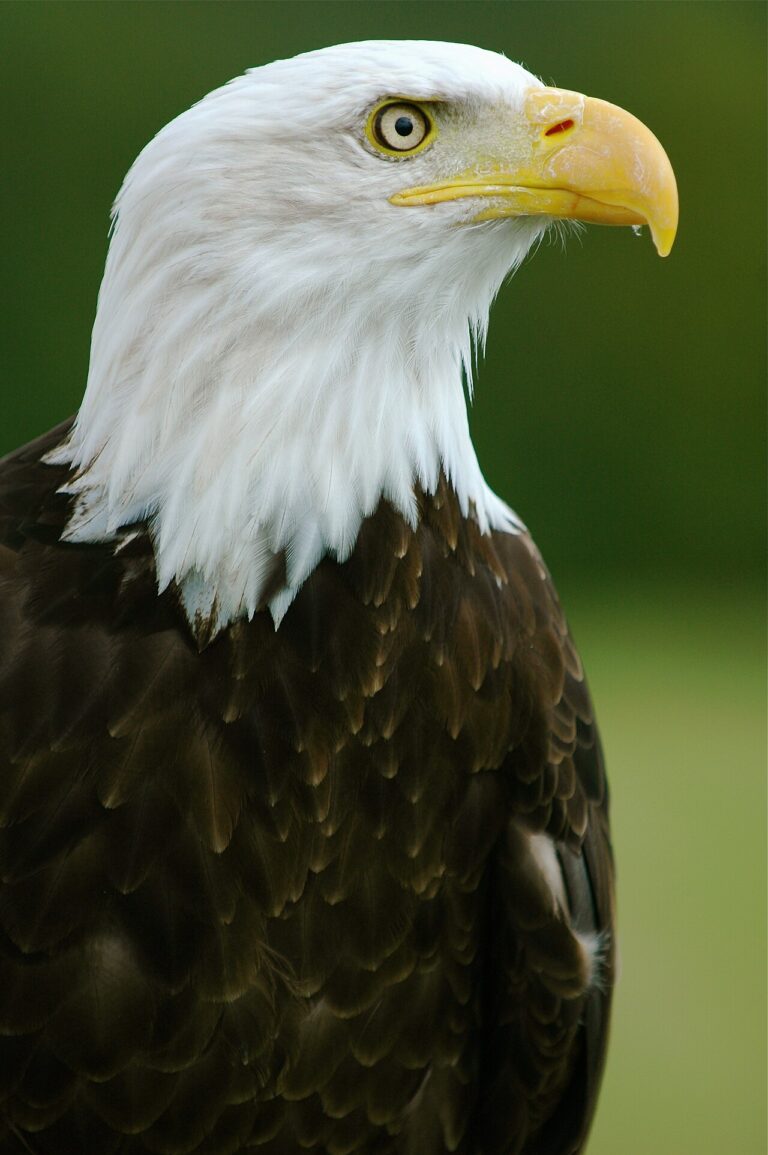
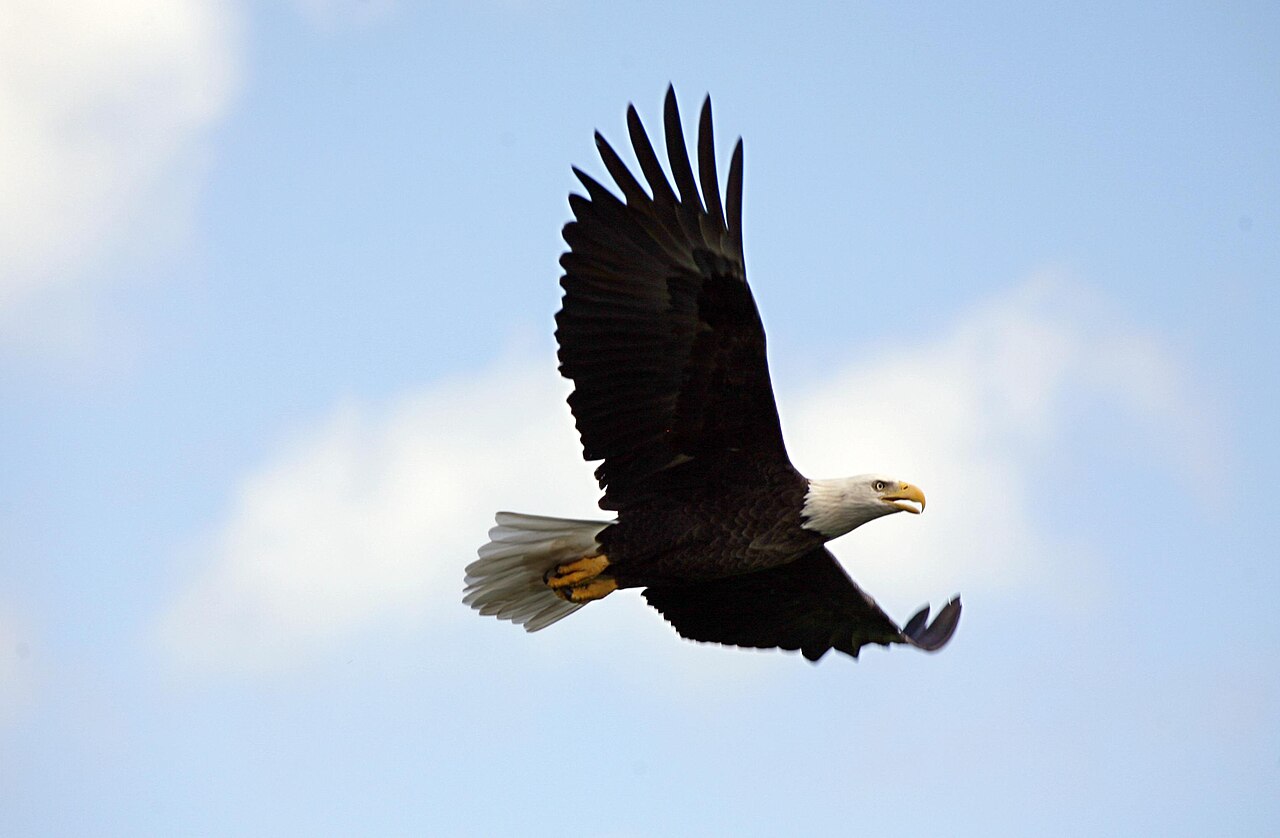
A bald eagle is read as a symbol of vision, strength, freedom, and connection to the divine, and across many Native American traditions it is regarded as a sacred messenger carrying prayers between people and the Creator. It is one of the few bird symbols where the spiritual reading, the national symbolism, and the biology all point in similar directions.
Seeing one carries weight partly because it nearly did not happen. Bald eagles fell to around 400 nesting pairs in the lower 48 states by the early 1960s and recovered to over 70,000 pairs, one of the largest conservation reversals on record. That history is worth knowing alongside the symbolism. This guide covers the readings, the Native American traditions, the Biblical references, and what a sighting actually indicates.
A bald eagle symbolises vision, strength, courage, freedom, and spiritual connection, and in many Native American traditions it is a sacred messenger carrying prayers to the Creator. Eagle feathers hold deep ceremonial significance and their possession is federally regulated. Seeing one is read as a positive sign, never as a warning.
| Context | Traditional Reading |
|---|---|
| Eagle seen overhead | Vision, perspective, rising above a problem |
| Eagle circling | A decision approaching; take the wider view |
| Eagle near your home | Protection and strength for the household |
| Native American traditions | Sacred messenger between people and Creator |
| Biblical reading | Renewal of strength; Isaiah 40:31 |
| Eagle feather | Ceremonially sacred; possession regulated by law |
| Pair of eagles | Partnership and long-term commitment |
What Does Seeing a Bald Eagle Mean?
Vision above everything. The reading rests on a real capability: eagle eyesight is roughly four to eight times sharper than a human’s, with a much higher density of photoreceptors and two foveae per eye, and an eagle can pick out a rabbit at a considerable distance while soaring. The symbolism about seeing clearly and taking the long view describes the animal accurately.
Strength, courage, and freedom follow from the flight. Bald eagles soar on thermals with minimal effort, reaching great height and covering long distances, and that combination of power and apparent ease is what the freedom reading draws on. The bird’s size adds to it: a wingspan of six to seven and a half feet makes an eagle overhead unmistakable.
Spiritual connection is the third layer and comes from the height. A bird that flies higher than others and disappears into cloud has been read across many cultures as moving between the earthly and the divine, which is the basis for the messenger role. The bald eagle guide covers the bird itself.
What Do Native American Traditions Say?
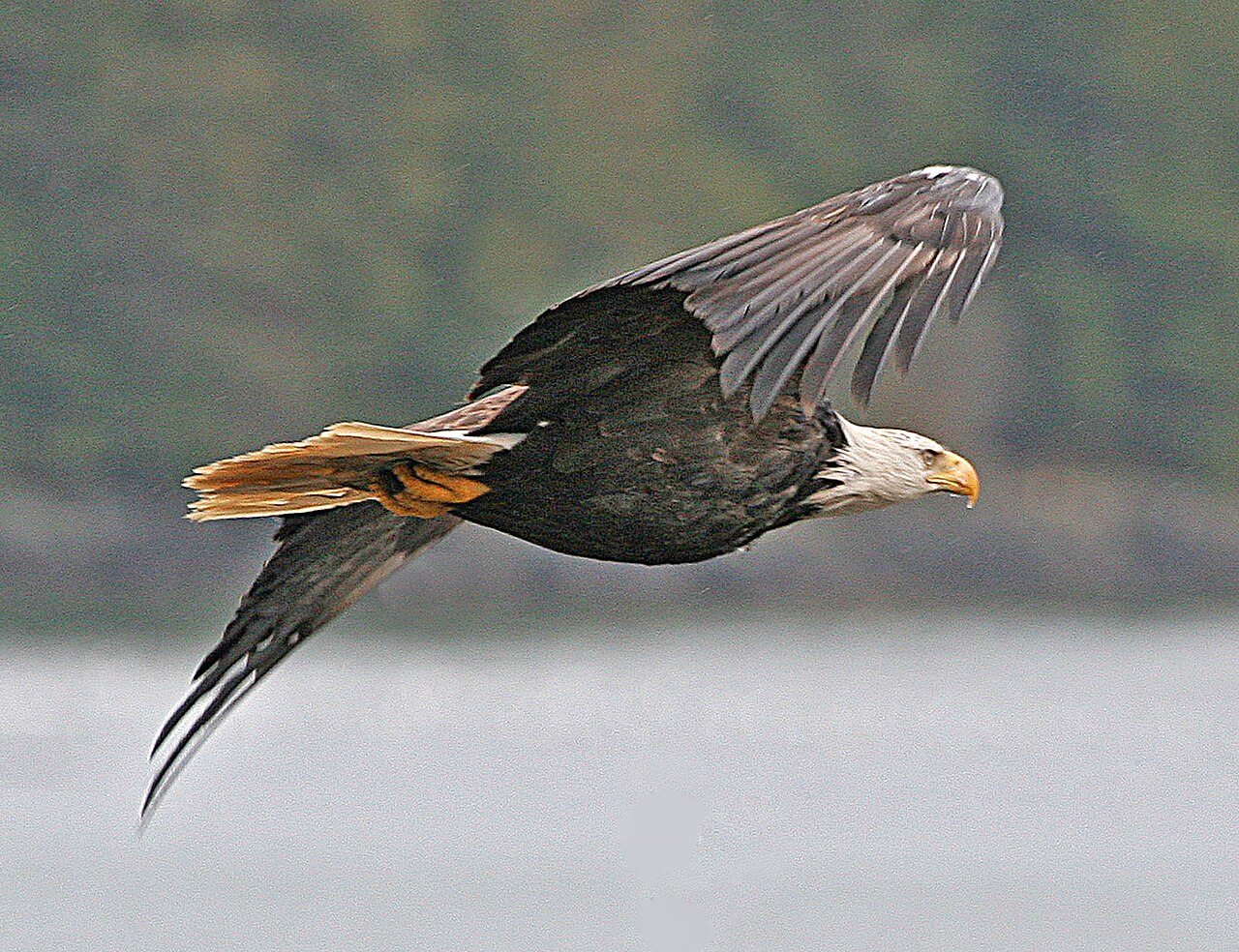
That the eagle is sacred, and specifically that it carries prayers to the Creator, flying higher than any other bird and therefore closest to the spirit world. This is the most widespread understanding across many nations, though specific beliefs vary considerably and should not be flattened into a single tradition.
Eagle feathers carry that significance materially. They are used in ceremony, in regalia, in healing practices, and as marks of honour presented for acts of bravery or achievement, and receiving one is among the highest honours in many communities. Feathers are treated with specific protocols rather than as decoration.
That significance is reflected in law. The Bald and Golden Eagle Protection Act prohibits possession of eagle parts and feathers, with an exemption administered through the National Eagle Repository, which distributes feathers and carcasses from naturally deceased birds to enrolled members of federally recognised tribes for religious use. Picking up an eagle feather found on the ground is illegal for anyone else. The U.S. Fish and Wildlife Service (fws.gov) administers the permit system.
What Does the Bible Say About Eagles?
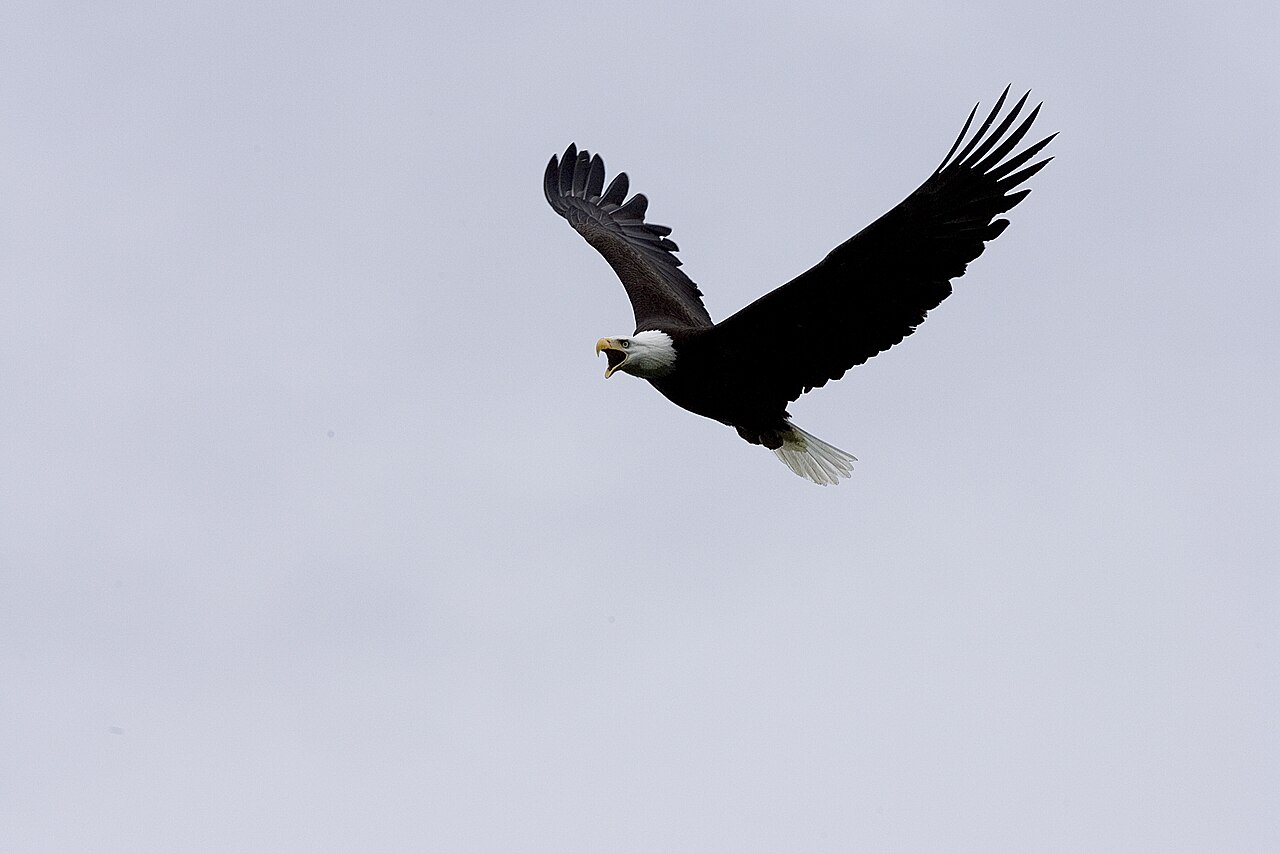
Eagles appear repeatedly, and the best-known passage is Isaiah 40:31, in which those who wait on the Lord renew their strength and mount up with wings as eagles. The reading is renewal and endurance rather than power alone, and it is the verse most often cited in the context of eagle symbolism.
Other references use the eagle for protection and for care. Deuteronomy 32:11 describes an eagle stirring its nest and bearing its young on its wings, used as an image of God’s care for a people, and Exodus 19:4 repeats it. Psalm 103:5 speaks of youth renewed like the eagle’s.
The birds referred to in the original texts were Old World species rather than bald eagles, which are exclusively North American, so the application to bald eagles specifically is a later transfer. That does not affect the reading but is worth knowing when the two are conflated. The eagle tattoo meaning guide covers how these readings are used deliberately.
Is Seeing a Bald Eagle Good Luck?
Yes, in essentially every tradition that addresses it, and there is no established reading in which a bald eagle is a bad omen. Sightings are interpreted as encouragement, confirmation, protection, or a call to take a wider perspective, and the most common contemporary reading is that a difficult period is being seen through.
Specific circumstances get specific readings. An eagle appearing during a decision is read as a prompt to take the long view rather than react to immediate pressure; one seen at a significant date as presence or blessing; a pair as partnership, drawing on the fact that bald eagles form long-term pair bonds and return to the same nest year after year.
The national symbolism reinforces rather than replaces this. The bald eagle has been on the Great Seal of the United States since 1782, and in 2024 it was formally designated the national bird by act of Congress, which it had never officially been despite two centuries of assumption. The bird symbolism guide covers how these layers accumulate.
How Rare Is It to See One?
Far less rare than it was, and this is the part of the story that gives a sighting its weight. Bald eagles were reduced to roughly 400 nesting pairs in the lower 48 states by 1963, through shooting, habitat loss, and above all DDT, which thinned eggshells so severely that eggs broke under the incubating parent.
The recovery followed the 1972 DDT ban and Endangered Species Act protection. Bald eagles were delisted in 2007, and a 2020 survey estimated more than 71,000 nesting pairs and around 316,000 individuals in the lower 48, a figure that surprised even the biologists who ran it.
They are now seen regularly across much of the country, particularly near large rivers, lakes, reservoirs, and coasts, and they concentrate in winter below dams and at open water where fish are accessible. In parts of Alaska, the Pacific Northwest, Florida, and the upper Mississippi they are genuinely common. The types of eagles guide covers the species you might be seeing instead.
What Does It Mean When an Eagle Visits Your Home?
Symbolically, protection and strength for the household, and in several readings a sign that a period of vulnerability is ending. An eagle perching on a property, particularly repeatedly, is treated as significant rather than incidental.
Practically, it means food and a good vantage point nearby. Bald eagles are drawn to open water with fish, to carrion including roadkill and winter-killed deer, and to waterfowl concentrations, and they perch in tall trees and on structures with a clear view. A property near a river, lake, or reservoir with mature trees will see them.
Repeated visits usually mean a nest or a regular perch within a couple of miles. Bald eagle nests are enormous, built up over years, and the same pair returns to the same nest annually, so an eagle seen daily is almost always a local resident rather than a wanderer.
Are Eagles Symbols of Power in Other Cultures?
Widely, and the pattern is consistent. Eagles were the emblem of Rome, carried at the head of every legion, and the imperial eagle passed from there into the heraldry of the Holy Roman Empire, Russia, Austria, Germany, and Poland. In Greek myth the eagle is the bird of Zeus and carries his thunderbolts.
In Mexico, the eagle on a cactus devouring a serpent is the founding image of Tenochtitlan and appears on the national flag, drawn from the Mexica migration account. Hindu tradition has Garuda, a divine eagle-like being who serves as Vishnu’s mount, and Norse myth places an eagle at the top of the world tree Yggdrasil.
The recurring elements are height, sight, and sovereignty, and they show up independently across cultures that had no contact with each other. That consistency suggests the symbolism follows from what the animal visibly does rather than from any shared origin.
What Should You Do If You See One?
Keep your distance and let it be. Bald eagles are sensitive to disturbance, particularly near nests, and federal guidelines recommend staying at least 330 feet from an active nest, further where there is no screening vegetation, since repeated disturbance can cause a pair to abandon eggs or young.
Do not attempt to feed one or draw it closer. Habituated eagles are at greater risk from vehicles, power lines, and conflict with people, and feeding is prohibited in many jurisdictions for that reason. Photographing with a long lens from a distance is the appropriate approach.
If you find an injured eagle, do not handle it. Contact a state wildlife agency or a licensed raptor rehabilitator; the talons are the danger rather than the beak, and an injured eagle can cause serious injury to someone trying to help. Lead poisoning from ammunition fragments in gut piles and carcasses remains a significant cause of eagle mortality, and it is often what a grounded bird is suffering from. The bald eagle sounds guide covers another common misunderstanding about the species.
Why Does the Eagle in Films Sound Wrong?
Because it is not an eagle. The piercing scream used in almost every film, advert, and television programme featuring a bald eagle is the call of a red-tailed hawk, dubbed over the footage because the eagle’s actual voice does not match the image.
A real bald eagle produces a high, thin, chattering series of whistles and chirps, weak and slightly comical for a bird of that size. Sound editors substituted the red-tailed hawk’s scream decades ago and the convention stuck, to the point that most people would not recognise a genuine bald eagle call.
It is a small thing but it illustrates something about the symbolism generally: a great deal of what attaches to the bald eagle is what people expect of a symbol rather than what the animal does. Bald eagles also steal fish from ospreys routinely, which is why Benjamin Franklin famously described the species as a bird of bad moral character.
Frequently Asked Questions
What is the spiritual meaning of seeing a bald eagle?
Vision, strength, courage, freedom, and connection to the divine. The reading rests on real traits: eyesight several times sharper than a human’s and effortless soaring at great height.
What do Native American traditions say about eagles?
That the eagle is sacred and carries prayers to the Creator, flying highest and therefore closest to the spirit world. Eagle feathers are used ceremonially and are among the highest honours given.
Is seeing a bald eagle good luck?
Yes. There is no tradition in which a bald eagle is a bad omen. Sightings are read as encouragement, protection, or a prompt to take the wider view rather than react to immediate pressure.
What does the Bible say about eagles?
Isaiah 40:31 is the best-known passage, describing renewed strength and mounting up with wings as eagles. Deuteronomy and Exodus use the eagle bearing its young as an image of care.
How rare is seeing a bald eagle?
Much less rare than it was. Numbers fell to about 400 nesting pairs by 1963 and passed 71,000 pairs by 2020, so eagles are now regular near large rivers, lakes, reservoirs, and coasts.
Can you keep an eagle feather you find?
No. Possession of bald or golden eagle feathers is a federal offence outside the tribal permit system, regardless of how the feather was obtained. Photograph it and leave it in place.
Is it good if an eagle comes to your house?
Symbolically it is read as protection and strength for the household. Practically it means water with fish, carrion, or waterfowl nearby, and repeated visits usually indicate a nest within a couple of miles.

Similar Posts
Golden Pheasant: Appearance, Diet & Care Guide
A complete guide to the golden pheasant’s striking appearance, native habitat, diet, behavior, and care as an aviary bird.
House Wren: Facts, Identification, and Nesting Guide
The house wren is a tiny, plain brown bird with a huge bubbly song and a fierce streak. Learn to identify it, understand its nesting, and attract one to a box.
Blue Jay Nest: Building, Eggs, and Lifecycle
What a blue jay nest looks like, where jays build, the color and number of eggs, the hatching timeline, and who raises the young.
Hawk vs Eagle: Identification Differences Explained
Hawks and eagles are both large soaring raptors, but size, beak, and prey preference set them clearly apart once you know what to look for.
Types of Owls in Florida: A Complete Guide
Florida is home to several types of owls, from the great horned owl to the burrowing owl. Learn the common owl species in Florida, how to ID them, and where to see them.
Backyard Birds of Maryland: 15 Common Species (2026 Identification Guide)
Identify 15 common backyard birds of Maryland — Baltimore Oriole (state bird), Cardinal, Carolina Chickadee, Carolina Wren. Photos and field marks.