Can Bearded Dragons Eat Watermelon? Portions and Risks
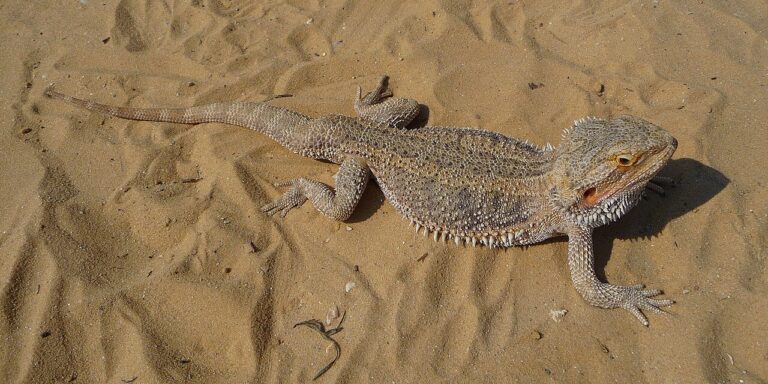
Bearded dragons can eat watermelon, but rarely and in small amounts: a piece roughly the size of the space between their eyes, once or twice a month at most. Watermelon is about 92 percent water and very low in the calcium a bearded dragon needs, and it has an inverted calcium to phosphorus ratio, which is the reason it stays an occasional treat rather than a regular food.
That calcium ratio is the single most important concept in bearded dragon feeding and the one most often missed. Metabolic bone disease, caused by insufficient calcium relative to phosphorus, is the most common preventable illness in captive beardies, and it is driven by exactly the kind of well-meant fruit feeding that watermelon represents. This guide covers portions, the rind and seeds, the ratio, and what to feed instead.
Bearded dragons can eat watermelon once or twice a month, in a piece no bigger than the space between their eyes. It is 92 percent water, nutritionally thin, and has an inverted calcium to phosphorus ratio. Remove seeds and rind. Fruit as a whole should be under 10 percent of an adult’s diet, with greens and insects making up the rest.
| Item | Guidance |
|---|---|
| Portion | Piece no larger than the space between the eyes |
| Frequency | Once or twice a month |
| Seeds | Remove; choking and impaction risk |
| Rind | Do not feed; tough and pesticide-prone |
| Ca:P ratio | Inverted, roughly 1:1.4 |
| Fruit total | Under 10 percent of an adult’s diet |
| Juveniles | Insects and greens; minimal fruit |
Is Watermelon Safe for Bearded Dragons?
Yes, it is non-toxic and contains nothing harmful. Bearded dragons generally take it enthusiastically, and it is a useful way to get fluid into a dragon that is mildly dehydrated or reluctant to drink, since many beardies do not recognise still water in a bowl.
The problems are nutritional rather than toxic. Watermelon is roughly 92 percent water and provides very little protein, fibre, calcium, or vitamin A, so a dragon that fills up on it eats less of what it actually needs. Too much causes loose stools and, over time, contributes to nutritional deficiency.
Sugar is a secondary concern. At around 6 percent it is lower than many fruits, but bearded dragons evolved in arid Australia on a diet of insects, hard-leaved plants, and occasional flowers, and their digestive systems handle sugar poorly. Regular sweet food is linked to obesity, fatty liver disease, and disrupted gut flora. The guide to bananas for bearded dragons covers a fruit with a worse ratio still.
How Much Can They Have?
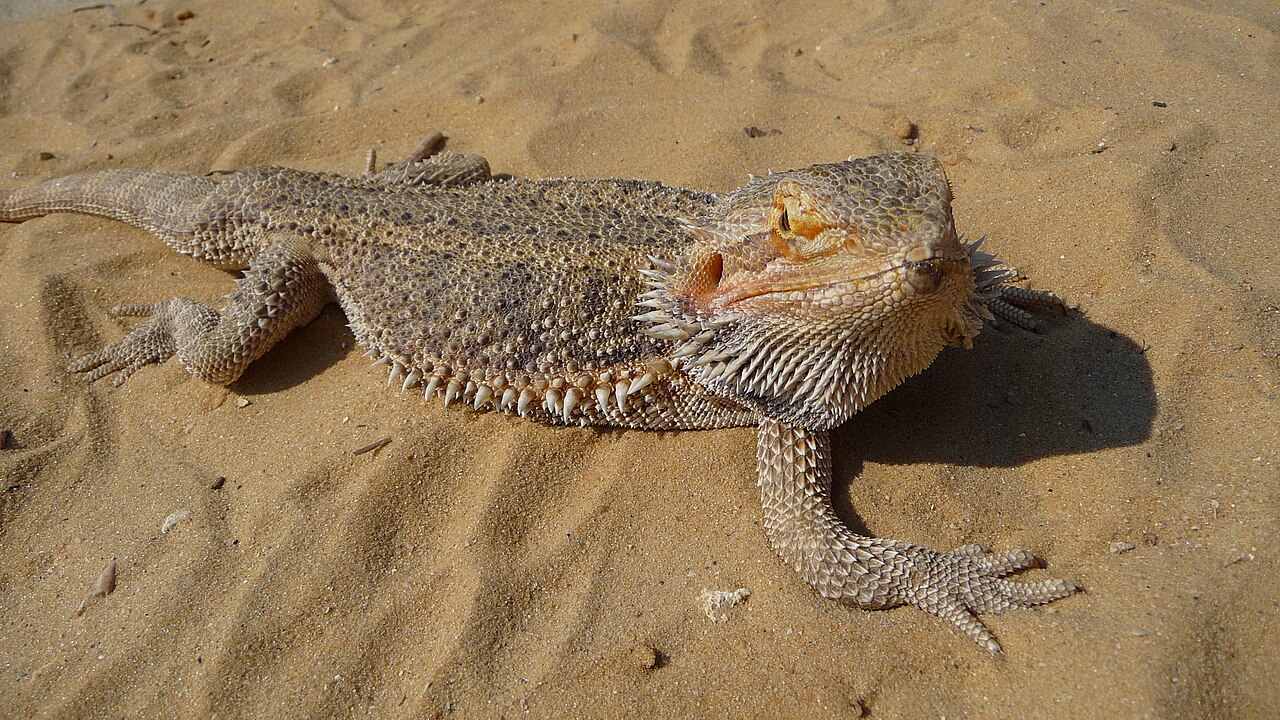
A piece no larger than the space between the dragon’s eyes, which is the standard portion rule for bearded dragons and applies to every food item. For an adult that is roughly a one-inch cube; for a juvenile considerably less.
Frequency is once or twice a month. Fruit as a whole should make up under 10 percent of an adult’s diet, and watermelon sits at the lower-value end of the fruit list, so it should be one of the less frequent choices rather than a weekly staple.
Juveniles under about twelve months should get almost none. Growing dragons need roughly 70 to 80 percent insects and the remainder greens, because they are building bone and muscle fast and have no spare dietary room for something that is mostly water. Fruit becomes marginally more appropriate as the ratio flips in adulthood.
Can They Eat the Seeds and Rind?
Neither. Watermelon seeds are a genuine risk: they are hard, roughly the diameter of a dragon’s spine at the narrowest point of the gut, and impaction is one of the more serious conditions bearded dragons develop. Seedless watermelon still contains soft white immature seeds, which are safer but worth removing anyway.
Rind should not be fed either. It is tough, difficult to digest, and the outer skin is where pesticide residue concentrates on a fruit that is not usually washed before cutting because people do not eat the outside.
Feed only the soft red flesh, cut small, at room temperature rather than straight from the fridge, since cold food can cause regurgitation in reptiles. Remove anything uneaten within a couple of hours, because watermelon spoils quickly under basking lamps and attracts flies. The guide to grapes for bearded dragons covers similar handling questions.
Why Does the Calcium Ratio Matter?
Because bearded dragons cannot compensate for getting it wrong. Phosphorus binds calcium in the gut and prevents its absorption, so a food with more phosphorus than calcium effectively removes calcium from the body rather than adding it, and the target ratio for a bearded dragon’s overall diet is around 2:1 calcium to phosphorus.
Watermelon runs at roughly 1:1.4 in the wrong direction. That is not disastrous in a small monthly portion, but it means watermelon can never be a calcium source and always represents a small debit against the calcium budget.
The consequence of getting the overall balance wrong is metabolic bone disease, in which the body pulls calcium from the skeleton. Signs include tremors, a soft or swollen lower jaw, bowed or bent limbs, difficulty lifting the body off the ground, and lethargy, and advanced cases cause permanent deformity. It is entirely preventable and is still the most common condition seen in pet beardies.
What Fruit Is Best for Bearded Dragons?
Papaya, figs, and prickly pear top most lists, because they are among the few fruits with a favourable or near-neutral calcium to phosphorus ratio. Figs are particularly good and are one of the rare fruits that supply meaningful calcium.
Berries are the next tier: blueberries, raspberries, blackberries, and strawberries in small quantities, all reasonable occasional treats. Mango, peeled apple, pear, melon, and watermelon sit lower down as filler rather than nutrition.
What matters more than ranking is the overall proportion. Even the best fruit should stay within that 10 percent ceiling for adults, and a dragon eating fruit several times a week is eating too much fruit regardless of which fruit it is. The guide to strawberries for guinea pigs covers the same portioning logic for a very different animal.
What Foods Are Dangerous?
Avocado is the clearest case and should never be given: it contains persin and is toxic to bearded dragons. Rhubarb is toxic through oxalic acid. Onion, garlic, chives, and leek should be avoided entirely.
Citrus is the common mistake. Oranges, lemons, limes, and grapefruit are too acidic for bearded dragons and can cause digestive upset and irritation, and they offer nothing worth the risk. Iceberg lettuce is not toxic but is nutritionally empty and causes loose stools.
Spinach, beet greens, and chard are high in oxalates that bind calcium, so they should be occasional rather than staple greens. Wild-caught insects are a genuine hazard because of pesticide exposure and parasites, and fireflies in particular are lethal to bearded dragons even in tiny quantities. Never feed a firefly or any glowing insect.
What Should a Bearded Dragon Actually Eat?
The ratio flips with age, and that is the core of it. Juveniles under about twelve months need roughly 70 to 80 percent insects and 20 to 30 percent plants, fed insects two or three times a day. Adults need the reverse: roughly 20 to 25 percent insects and 75 to 80 percent plants, with insects two or three times a week.
Staple greens should be collard greens, mustard greens, turnip greens, dandelion greens, endive, and escarole, offered fresh daily. Butternut squash, bell pepper, and green beans work as supporting vegetables. All of it chopped to appropriate size.
Staple insects are dubia roaches, crickets, and black soldier fly larvae, with superworms and hornworms as occasional variety and mealworms limited because of their hard shells. Everything should be gut-loaded and dusted with calcium powder several times a week, plus a vitamin D3 supplement, and the enclosure needs proper UVB lighting since without it dietary calcium cannot be used. University extension exotic animal programmes such as the University of Florida (ufl.edu) publish current feeding schedules. The lizard diet guide sits alongside it for other species.
Do Bearded Dragons Need to Drink?
Yes, and this is where watermelon has a genuine if narrow use. Bearded dragons come from arid Australia and get most of their water from food, and many do not recognise still water in a bowl at all, so a dragon can be mildly dehydrated in an enclosure with a full water dish.
Signs of dehydration are wrinkled or loose skin that stays tented when gently pinched, sunken eyes, sticky saliva, reduced appetite, and difficulty shedding. Retained shed on toes and the tail tip is one of the more common early indicators and can cut off circulation if it builds up.
The practical answers are misting greens before feeding, offering water in a shallow dish with a dripper or by dribbling it near the mouth so the movement is visible, and a shallow warm bath a couple of times a week for adults. A high-water treat such as watermelon or cucumber occasionally supports that, which is the strongest argument for feeding it at all.
How Do You Know If Something Went Wrong?
Stools are the first indicator. Healthy bearded dragon droppings are firm and brown with a distinct white urate portion, and persistent runny stools after a fruit feed mean the portion was too large or too frequent. Blood, foul-smelling diarrhoea, or undigested food warrant a vet.
Impaction is the risk specific to seeds and hard items. Signs include straining without producing, a lump visible along the abdomen, dragging or partial paralysis of the back legs, and loss of appetite, and it is a veterinary emergency rather than something to wait out.
Behaviour completes the picture. A dragon that stops eating, stops basking, sits with eyes closed away from the heat source, or shows tremors is unwell, and reptiles hide illness until it is advanced. Finding an exotics vet before you need one is worth doing, since general small-animal practices frequently cannot treat reptiles. The lizard poop guide covers reading droppings in more detail.
Frequently Asked Questions
Can bearded dragons eat watermelon?
Yes, once or twice a month in a piece no larger than the space between their eyes. It is safe but 92 percent water, nutritionally thin, and has an inverted calcium to phosphorus ratio.
Can bearded dragons eat watermelon seeds or rind?
No to both. Seeds are hard enough to cause impaction, and rind is tough, hard to digest, and where pesticide residue concentrates. Feed only small pieces of the soft red flesh.
Why does the calcium to phosphorus ratio matter?
Phosphorus binds calcium in the gut and blocks absorption. The overall diet should run about 2:1 calcium to phosphorus, and getting it wrong causes metabolic bone disease, the most common preventable beardie illness.
What fruit is best for bearded dragons?
Papaya, figs, and prickly pear, which have favourable calcium ratios, with berries next. Even the best fruit should stay under 10 percent of an adult’s diet.
What foods are poisonous to bearded dragons?
Avocado, rhubarb, onion, garlic, and chives. Citrus is too acidic and should be avoided. Fireflies and other glowing insects are lethal in tiny amounts and must never be fed.
What should bearded dragons eat most of?
Juveniles need 70 to 80 percent insects; adults need 75 to 80 percent plants. Staple greens are collard, mustard, turnip, and dandelion greens, with dubia roaches and crickets as staple insects.
How much watermelon is too much?
More than a bite-sized piece once or twice a month. Runny stools after fruit are the signal to cut back, and fruit several times a week is too much regardless of the type.

Similar Posts
Can Guinea Pigs Eat Blueberries?
Yes, one or two berries once or twice a week. Vitamin C and antioxidants, but sugar means portion control matters. How much is safe and what to watch for.
Can Rabbits Eat Tomatoes? Safe Parts and What to Avoid
Ripe flesh yes, in small amounts. Leaves, stems, and green fruit are toxic. What’s safe, how much, and what solanine poisoning looks like.
Texel Guinea Pig: Grooming, Cost, and Whether to Get One
A curly-coated long-haired breed that needs daily brushing and a permanently trimmed rear. What the coat actually demands, what one costs, and why it is not a first guinea pig.
Can Bearded Dragons Eat Bananas? Safe Amounts Explained
Bearded dragons can eat bananas once or twice a month. Here is why the calcium to phosphorus ratio matters and how to serve banana safely.
Can Rabbits Eat Grapes? Safe Amounts by Size
Grapes are safe for rabbits but sugary. How many per week by body size, why raisins are worse, what happens if you overdo it, and which fruits to avoid entirely.
Can Guinea Pigs Eat Apples? Vitamin C, Seeds, and Limits
Guinea pigs can eat apples once or twice a week, and the vitamin C genuinely matters because they cannot make their own. Here are the safe amounts.