Duroc Pig: Breed Profile, Pork Quality, and Costs
The Duroc is a large red pig developed in the United States in the nineteenth century, known for fast growth, good feed conversion, and pork with high intramuscular fat that gives it a strong reputation for eating quality. Adults reach 700 to 800 pounds for boars and 600 to 700 for sows, and the breed is used worldwide as the terminal sire in commercial crossbreeding.
That last point explains why Durocs are everywhere and yet rarely seen. Most commercial pork in the United States comes from crossbred pigs with a Duroc sire, which contributes growth rate and meat quality, while the maternal side supplies litter size and mothering. This guide covers the breed, the meat, temperament, comparisons with Berkshire, and whether it suits a smallholding.
The Duroc is a large red American pig breed, with boars at 700 to 800 pounds and sows at 600 to 700. It grows fast, converts feed efficiently, and produces pork with high intramuscular fat and a red colour prized for flavour. It is the most widely used terminal sire in commercial crossbreeding worldwide.
| Feature | Duroc Pig |
|---|---|
| Colour | Red, from light gold to deep mahogany |
| Ears | Partially drooping, forward over the eyes |
| Boar weight | 700 to 800 lb |
| Sow weight | 600 to 700 lb |
| Litter size | Around 8 to 10 piglets |
| Market weight | Roughly 5 to 6 months |
| Main role | Terminal sire in commercial crosses |
What Is a Duroc Pig?
An American breed developed in the north-eastern United States in the mid-1800s, from the Jersey Red of New Jersey and the Duroc of New York, which were combined into what was originally called the Duroc-Jersey. The name shortened over time, and the breed association was formed in the late nineteenth century.
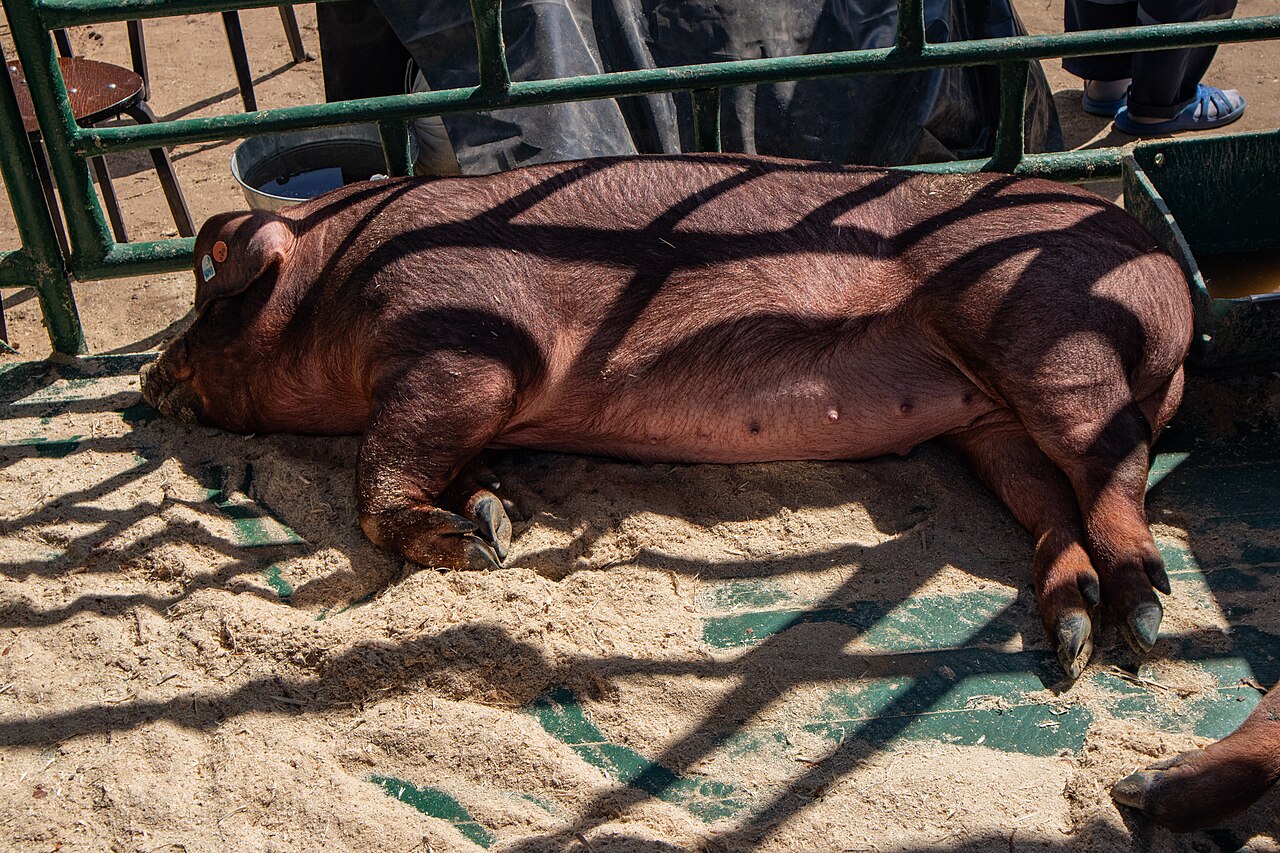
Physically it is unmistakable among common breeds: solid red with no markings, ranging from a light golden red to a deep mahogany, with a slightly dished face, a long body, and partially drooping ears that fall forward over the eyes rather than standing erect or hanging flat.
It is one of the three breeds that dominate commercial pig production alongside the Yorkshire and Landrace, and it is by a wide margin the most common terminal sire breed. The National Swine Registry, which handles Duroc registration in the United States, records it as the most registered breed in the country. The guide to groups of pigs covers the terminology.
What Is Special About Duroc Pork?
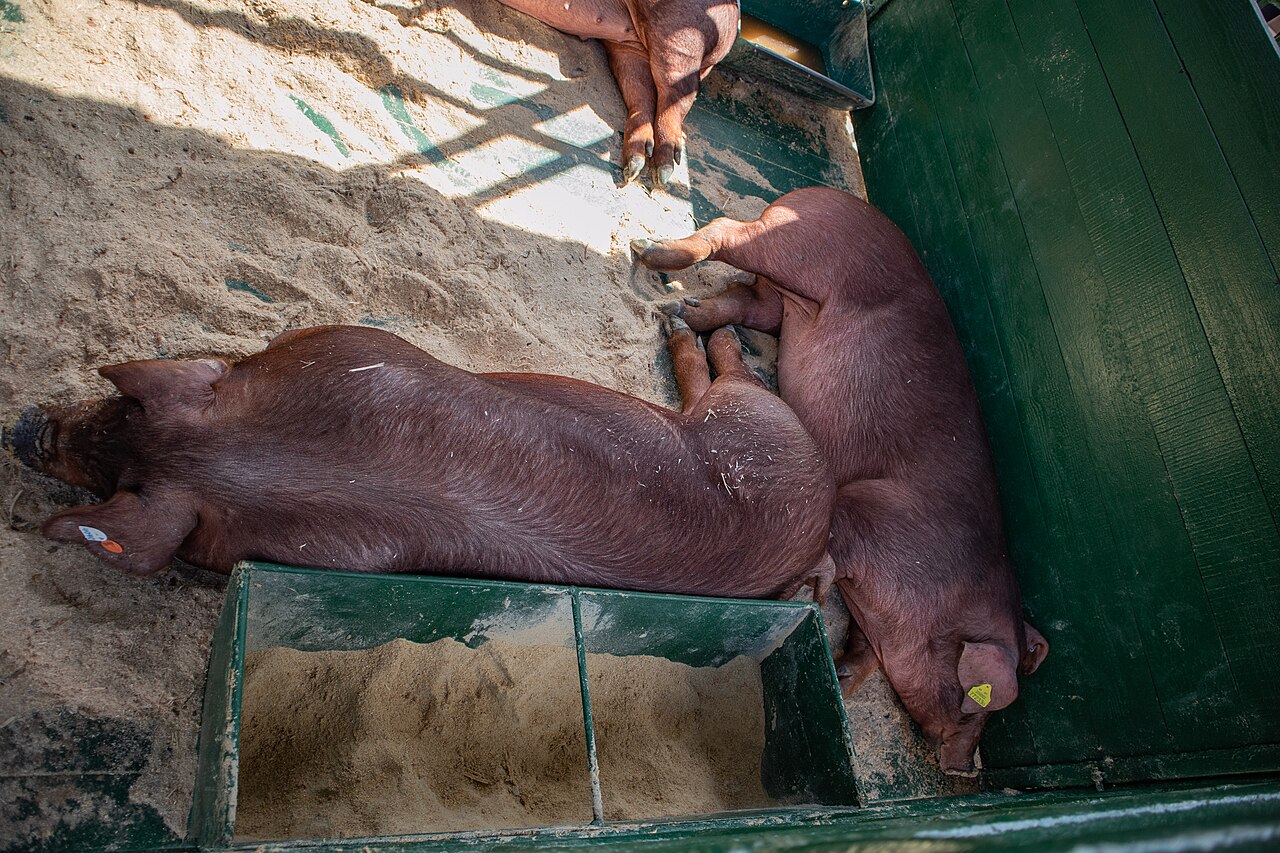
Intramuscular fat, and it is not marketing. Duroc pork consistently measures higher in marbling than most other breeds, and marbling is what carries flavour and keeps meat moist during cooking, which is why Duroc genetics are used specifically to raise eating quality in crossbred pigs.
The meat is also darker and redder than typical commercial pork, and it tends to score higher on tenderness in blind taste panels. Higher marbling and a more favourable pH also reduce the incidence of pale, soft, exudative meat, which is the watery pale pork that results from stress and poor genetics.
Growth performance sits alongside that. Durocs reach market weight in roughly five to six months, put on weight quickly, and convert feed efficiently, and combining growth with meat quality in one breed is precisely why they became the standard sire line. The trade-off is a fat covering that runs thicker than in the leanest breeds.
Duroc or Berkshire?
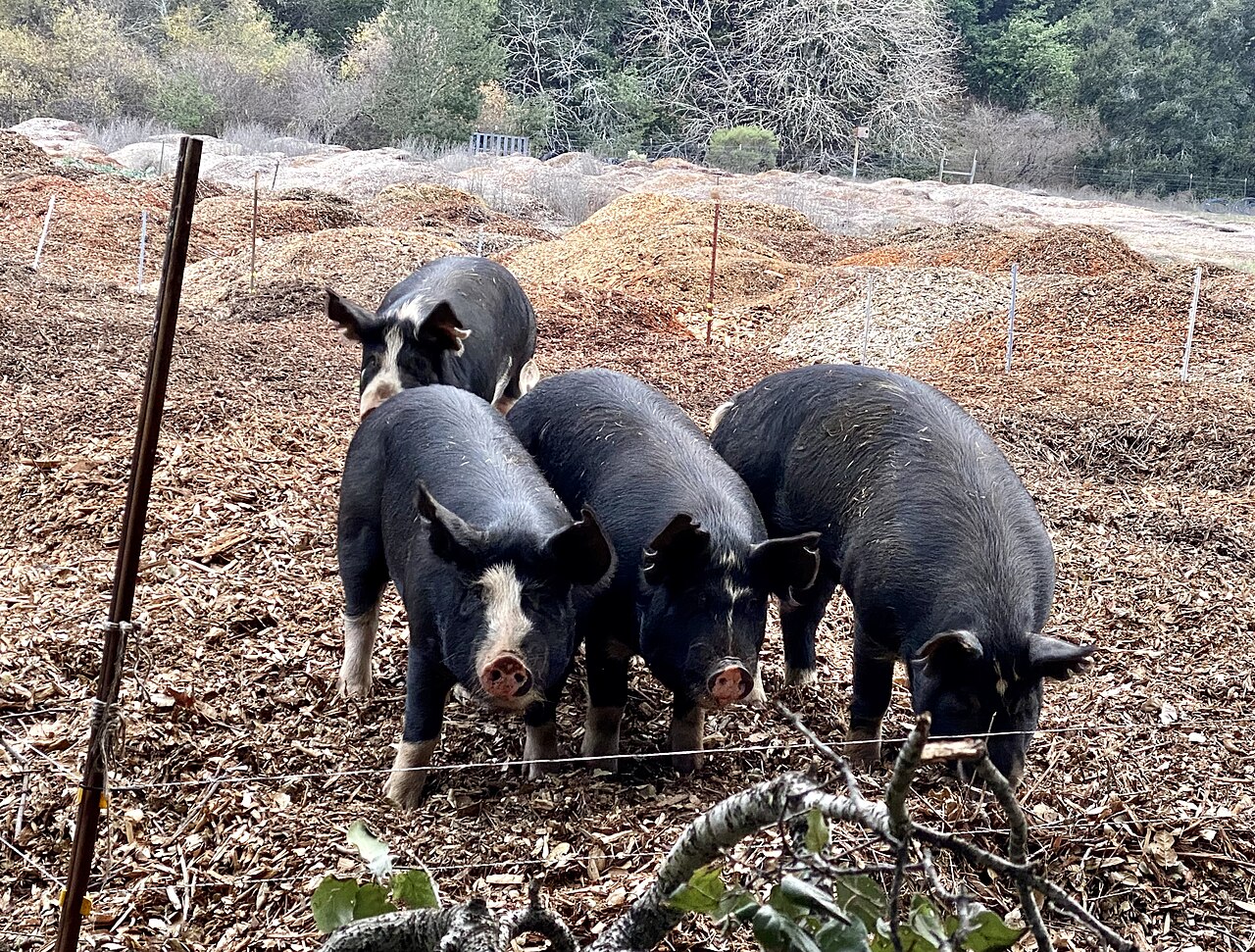
Both are quality breeds with different strengths, and the choice depends on what you want. Berkshire pork, sold in Japan as Kurobuta, is the premium name and is prized for very high marbling, dark red colour, and a fine texture, and it typically commands a higher price.
Duroc grows faster and converts feed better, so it produces more meat per unit of input, and it dominates commercial crossbreeding for that reason. Berkshires grow more slowly and reach a smaller mature size at around 600 pounds for boars, which makes them costlier per pound produced. For a closely related question, see our guide to icelandic sheep.
On eating quality the two are close enough that comparisons depend heavily on how the pigs were raised and finished. Feed, age at slaughter, exercise, and handling in the final hours all affect meat quality substantially, and a well-raised Duroc beats a poorly raised Berkshire comfortably. Many producers cross the two to combine growth with marbling.
Are Durocs Good Tempered?
Generally yes, with a caveat. Durocs are usually described as docile and easy to handle compared with several other breeds, and sows are noted as good mothers with strong milk production and reasonable protective instinct without excessive aggression.
The caveat is boars. Mature boars of any breed are large, powerful, and potentially dangerous, and a Duroc boar at 700 to 800 pounds with tusks is not an animal to be casual around. Boar handling is a specialist matter and most smallholders avoid keeping one, using artificial insemination or a neighbour’s boar instead.
Individual temperament varies more than breed reputation suggests. Handling from a young age, calm consistent routines, and adequate space all matter more than genetics for how a pig behaves, and a bored, crowded, or poorly handled pig of any breed becomes difficult. The baby hedgehog guide covers the same handling principle for a very different animal.
How Fast Do Durocs Grow?
Fast. Piglets are typically weaned at three to four weeks, and pigs reach a market weight of around 250 to 280 pounds at roughly five to six months, with daily gains among the highest of the common breeds under good feeding.
Feed conversion is the other half of the economics. Durocs convert feed to gain efficiently, and feed is the dominant cost in pig production, so a breed that grows fast on less feed produces cheaper meat. That combination is why Duroc genetics spread worldwide through commercial breeding companies.
Growth depends on nutrition rather than genetics alone. Pigs need a balanced ration with protein levels stepped down as they grow, from around 18 to 20 percent for weaners to 14 to 16 percent for finishers, plus constant clean water, and a pig drinks two to four gallons a day. Underfed pigs grow slowly regardless of breed.
Are Durocs Suitable for a Smallholding?
They can be, though they are not the obvious first choice. The strengths that make them a commercial sire, fast growth and efficient conversion, translate well to raising a few pigs for meat, and they are hardy, adaptable, and tolerate outdoor systems reasonably.
The reservations are size and lard. A finished Duroc is a large animal to handle, transport, and process, and the fat covering is thicker than in some heritage breeds, which matters if you are paying per pound for butchering. They also need substantial fencing, since pigs of any breed root, push, and test boundaries constantly.
Heritage breeds are often recommended instead for smallholdings: Berkshire, Tamworth, Gloucestershire Old Spot, and Large Black are all noted for foraging ability, hardiness on pasture, and manageable size, and several are conservation-priority breeds where keeping them contributes something beyond the meat. Durocs are the pragmatic production choice rather than the sentimental one.
What Do Durocs Need?
Space, shelter, water, and shade. Pigs cannot sweat, so they overheat easily and need shade and a wallow or mister in summer, and a red-skinned breed like the Duroc is prone to sunburn on pale-skinned individuals despite the coat colour.
Fencing has to be taken seriously. Pigs root under fences and push through weak sections, so hog panels, woven wire with a bottom strand of electric, or electric fencing that the pigs are trained to while young are all standard. A loose pig is a serious problem for neighbours and for road safety.
Beyond that, a dry draught-free shelter with bedding, a balanced commercial ration appropriate to growth stage, constant clean water, and routine health management including worming and, in some systems, vaccination. Feeding food waste to pigs is illegal in the United States and the United Kingdom because of disease risk, and that includes kitchen scraps that have been in contact with meat. USDA and state extension programmes publish current small-scale pig production guidance.
How Long Do Duroc Pigs Live?
Fifteen to twenty years is the biological lifespan for a pig, which surprises people because almost no commercial pig gets near it. Market pigs are slaughtered at five to six months, and breeding sows are typically culled after three to five years when litter size and conception rates decline.
Boars have a similar working life. A boar is usually productive from around eight months and is replaced after a few years, partly for fertility and partly because handling a very large mature boar becomes increasingly difficult and dangerous.
Pet and sanctuary pigs demonstrate the difference. Pigs kept without production pressure regularly reach their teens, and the limiting factors become joint problems and obesity rather than anything intrinsic. A Duroc at full mature weight carrying extra condition is hard on its own legs, which is why sanctuaries manage pig diets tightly. The baby groundhog guide covers a wild animal often confused with young pigs by name alone.
How Much Do Duroc Pigs Cost?
Weaner pigs for finishing typically run 75 to 200 dollars depending on region, season, and whether they are purebred or crossbred, with spring pigs usually costing more than autumn ones because demand peaks.
Registered breeding stock is a different market entirely. Registered Duroc gilts and boars from show or seedstock lines run into the high hundreds or thousands, and top show pigs sell far above that, because the value is in genetics and pedigree rather than in meat.
The pig is a small part of the total cost. Feeding a pig from weaner to market weight consumes roughly 600 to 800 pounds of feed, and feed cost, fencing, shelter, transport, and butchering fees together exceed the purchase price several times over. Anyone budgeting should price the feed first and the pig second. The bantam chicken guide covers the same economics at a much smaller scale, and the Brahma chicken guide covers another heritage production animal.
Frequently Asked Questions
What is a Duroc pig?
A large red American breed developed in the 1800s from the Jersey Red and New York Duroc, with drooping ears and a slightly dished face. Boars reach 700 to 800 pounds.
What is special about Duroc pork?
High intramuscular fat, which carries flavour and keeps meat moist, plus a darker red colour and good tenderness scores. Duroc genetics are used specifically to raise eating quality in crossbreds.
Is Duroc or Berkshire better?
Berkshire has higher marbling and commands a premium; Duroc grows faster and converts feed better. How the pig was raised and finished matters more than breed for eating quality.
Do Duroc pigs grow fast?
Yes, reaching market weight of 250 to 280 pounds at around five to six months with among the best feed conversion of the common breeds, which is why they dominate commercial sire lines.
Are Duroc pigs good tempered?
Generally docile and easy to handle, with sows noted as good mothers. Mature boars of any breed are dangerous and most smallholders avoid keeping one.
How much does a Duroc piglet cost?
Weaners for finishing usually run 75 to 200 dollars. Registered breeding stock runs into the high hundreds or thousands. Feed costs over the finishing period exceed the purchase price several times over.
Are Durocs good for a smallholding?
They work, being hardy and efficient, but they finish large with a thicker fat covering. Heritage breeds such as Tamworth or Gloucestershire Old Spot are often preferred for pasture systems.

Similar Posts
Baby Alpaca: Cria Facts, Growth, Care, and Wool Explained
A baby alpaca is called a cria. Here is what it weighs at birth, how fast it grows, what it eats, and what baby alpaca wool really means on a label.
Saanen Goat: Milk Yield, Size, and Keeping Them
Saanens are the largest dairy goats and give up to 3 gallons a day. Here is what keeping them involves, including sunburn and the polled gene problem.
What Is a Group of Cows Called? Herd, Drove, and Fold
A group of cows is called a herd, with drove and fold for specific cases. Why cattle and cows are not the same word, and why the flink claim is an internet invention.
What Is a Female Horse Called? Mare, Filly, and Broodmare
A female horse is called a mare from age four and a filly before that. The full vocabulary by age and role, the male terms, and what female ponies and donkeys are called.
What Is a Group of Pigs Called? Drift, Drove, and Sounder
A group of pigs is called a drift, drove or herd, and wild pigs form a sounder. What a sounder is, why it matters for feral hog control, and the full sow and boar vocabulary.
Baby Llama: Cria Development and the Daylight Birth Fact
A baby llama is called a cria and stands within an hour of birth. Why llamas give birth in daylight, the critical bonding window, feeding, and health basics.