House Finch vs Purple Finch: Identification Guide
The house finch vs purple finch puzzle is one of the most common identification challenges at North American feeders, and for good reason. Both are small, streaky finches, and the males of both wear red. The reliable difference is where that red sits and how the streaking is arranged. A male house finch shows red on the head and chest with clear brown streaks down the flanks, while a male purple finch is washed in raspberry color from head to back with almost no brown streaking on the sides. Learn those two patterns and you can separate them in seconds.
| Color of red male | House finch: red on head and chest, brown streaked sides. Purple finch: raspberry wash over whole head and back |
| Female face | House finch: plain blurry brown. Purple finch: bold white eyebrow and dark cheek |
| Body shape | House finch: slimmer, longer tail. Purple finch: chunkier, shorter notched tail |
| Habitat | House finch: towns, suburbs, feeders. Purple finch: woods and edges, mainly winter feeder visits |
| Range | House finch: nearly all of the US year round. Purple finch: northern and eastern US, more southern in winter |
| Song | House finch: long warble ending in a buzzy note. Purple finch: richer, faster musical warble |
Male House Finch vs Male Purple Finch: The Red Tells the Story
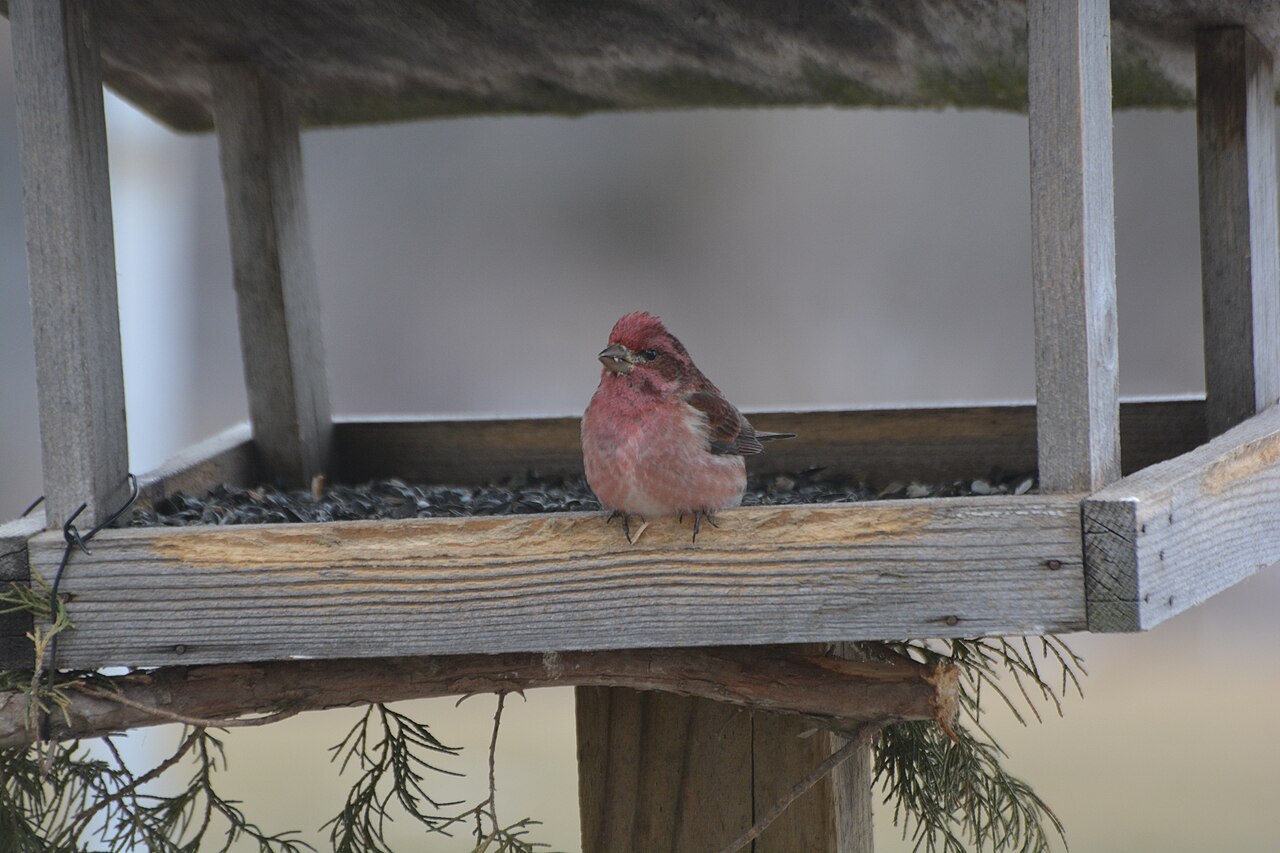
Start with an adult male, because the color contrast is strongest. On a male house finch the red is like a bib and a cap: it covers the forehead, the area above the eye, the throat, and the upper breast. Below that, the bird is clearly brown and white with distinct brown streaks running down the sides and belly. The red often has an orange cast, and diet can push it toward orange or even yellow in some birds.
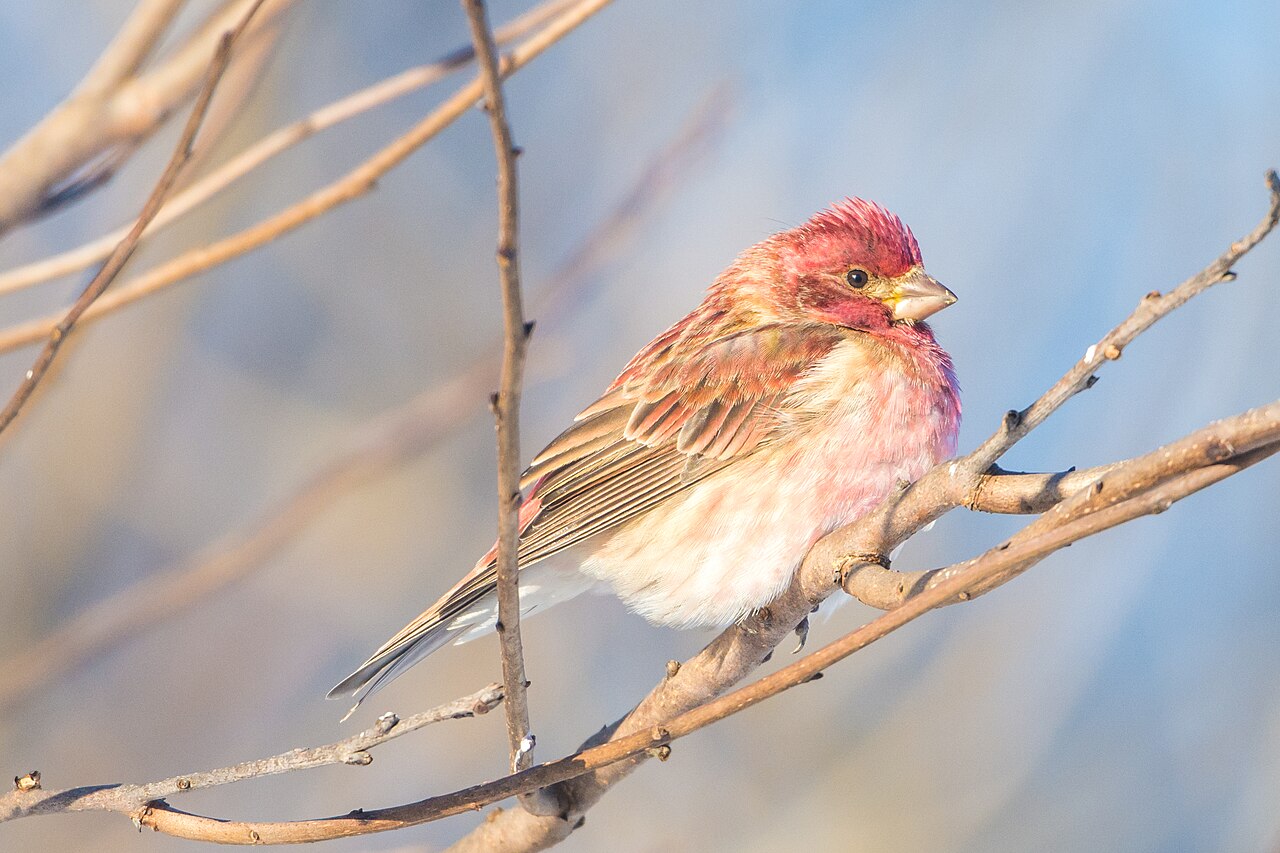
A male purple finch is a different creature. The raspberry or wine red is not limited to the head and chest. It washes across the crown, the face, the back, the rump, and even bleeds into the wings. The sides look pinkish rather than sharply streaked with brown. Birders often describe a male purple finch as a sparrow dipped in raspberry juice, and that image holds up in the field. According to the Cornell Lab of Ornithology, this saturated, top to bottom coloration is the single best mark separating the two males.
Female House Finch vs Female Purple Finch: Look at the Face
Females are trickier because neither has any red, but the face pattern makes them separable. A female purple finch has a strongly marked head: a broad white eyebrow stripe over the eye, a dark line through and behind the eye, and a dark cheek patch bordered by a pale jaw stripe. That crisp facial pattern gives the bird a stern, striped look. The chest is white with bold, clean brown streaks.
A female house finch is much plainer. The whole face is a soft, uniform grayish brown with no strong eyebrow and no dark cheek patch. The streaking on the underside is blurrier and grayer, and the overall impression is a washed out, featureless brown bird. When you see a streaky brown finch and cannot find a bold eyebrow, you are almost certainly looking at a house finch. For a deeper walkthrough of the plain brown female, see our female house finch guide.
Body Shape and Tail: A Structural Clue
Shape helps when color and lighting fight you. House finches are slimmer and longer bodied, with a longer tail and a flatter head. Purple finches are stockier and more compact, with a shorter, more deeply notched tail and a peaked, almost crested crown that gives the head a triangular look. The purple finch bill is also a touch heavier and more conical. Once you have seen a few of each, the chunkier build of the purple finch becomes an instant tell even before you check the color.
Habitat and Range: Where You See Them Matters
Location is a strong first filter. House finches thrive alongside people. They are birds of towns, parking lots, suburban yards, and feeders, and they are present across nearly the entire United States all year. If a red finch is nesting in your porch wreath, it is a house finch.
Purple finches are birds of coniferous and mixed forests and their edges. Across much of the country they appear mainly in fall and winter, sometimes in large numbers during irruption years when northern food crops fail. A purple finch at your feeder is more likely in a wooded neighborhood and more likely in the colder months. Both species mix into the broader finch family, which you can explore in our guide to the types of finches.
Song and Calls: A Subtle Difference
Both sing warbling songs, but with practice they separate by ear. The house finch delivers a long, jumbled warble that often trails off into a distinctive buzzy, rising note at the end. The purple finch song is richer, faster, and more musical, without the buzzy tail. In flight, purple finches give a sharp, dry tick note that house finches lack. Sound is not the first tool most people reach for, but it confirms a tricky bird.
Why the Confusion Persists (and How to Beat It)
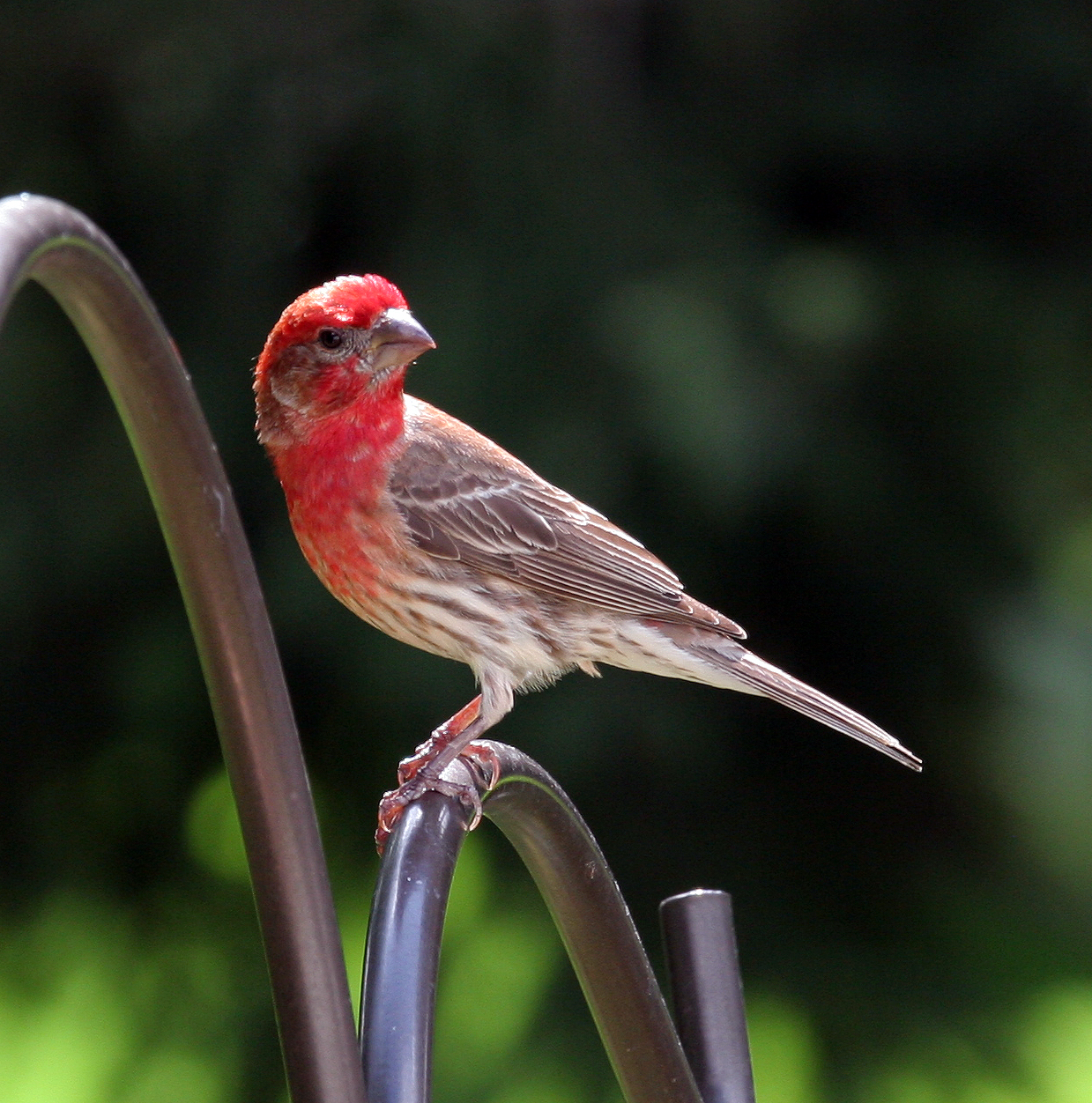
These two get mixed up so often because they overlap in size, in the family look, and in the fact that both males are red. The trap is trying to judge by color intensity alone, since lighting and diet both shift how red a house finch appears. The way to beat the confusion for good is to stop asking how red and start asking two structural questions: does the red include the back and rump, and are the sides streaked or clean. Answer those and the bird names itself. For the full picture of similar backyard species, our backyard bird identification guide lays out a step by step method.
Seasonal Changes: When Each Finch Appears
Timing can tip you off before you even lift binoculars. House finches are present all year in most yards and look much the same across the seasons, though a male’s red can fade slightly after the breeding season and brighten again before it. Purple finches, by contrast, are strongly seasonal across much of their range. In the northern and eastern United States they are most likely at feeders from late fall through early spring, and in irruption years, when the seed crop of northern forests fails, large numbers push south and appear at feeders where they are otherwise scarce. If you see a raspberry colored finch in December in a wooded suburb, the season itself makes purple finch more likely. Keeping a simple log of when your red finches arrive and depart quickly reveals which species is which. For a broader look at cold weather feeder visitors, our winter bird feeding guide covers who to expect and when.
Attracting Both Finches to Your Feeders
The good news for backyard birders is that both species love the same foods, so a single setup can host them side by side and give you the perfect chance to compare. Black oil sunflower seed is the top choice for both, offered in a tube or hopper feeder. Purple finches, being more tied to woodlands, also appreciate feeders placed near trees and shrubs rather than out in the open, and they take conifer seeds and buds in the wild. Nyjer, or thistle seed, in a finch feeder will draw both along with goldfinches. Provide a water source and some cover, and in the right season you may get a mixed finch flock that lets you study the color and face pattern differences up close. Our feeder guide explains which styles finches prefer.
Frequently Asked Questions
What is the easiest way to tell a house finch from a purple finch?
Look at where the red color sits. A male house finch has red concentrated on the head, throat, and upper chest, with brown streaks running down the flanks and belly. A male purple finch looks as though it was dipped in raspberry juice, with color washing over the head, back, and wings and no obvious brown streaking on the sides.
Are purple finches actually purple?
No. Despite the name, purple finches are a rosy raspberry or wine red, not purple. The naturalist who named them used purple in the older sense of a rich crimson dye. Females carry no red at all and are brown and white.
How do you tell female house finches and purple finches apart?
Female purple finches have a bold white eyebrow stripe and a dark cheek patch, giving the face a strong striped pattern. Female house finches have a plain, blurry brown face with no crisp eyebrow. The purple finch also shows cleaner, crisper streaks on a whiter chest.
Which finch is more common at backyard feeders?
In most of the United States the house finch is far more common and visits feeders year round. Purple finches are more of a winter visitor across much of their range and tend to appear in forested and edge habitats rather than dense suburbs.
Do house finches and purple finches flock together?
They can share a feeder, especially in winter, but they do not truly mix. When both are present you can compare them side by side, which is the fastest way to learn the difference in color saturation and face pattern.
What do purple finches and house finches eat?
Both are seed specialists that love black oil sunflower seed. Purple finches also take tree buds, berries, and seeds from conifers, which is one reason they favor wooded habitats over open suburbs.
Can a house finch look purple in certain light?
A very bright male house finch can look intensely red, but it will still show brown streaking down the sides and a squarer tail. Lighting changes the intensity of red, not the streak pattern or body shape, so use structure and streaking rather than color alone.