Eagle Symbolism: What Seeing an Eagle Means, Omens and the Bible
Spiritually, an eagle sighting is a call to climb above a problem and see it whole. Eagle symbolism draws on a bird that hunts from height with eyes built for distance, so the message is about perspective before action.
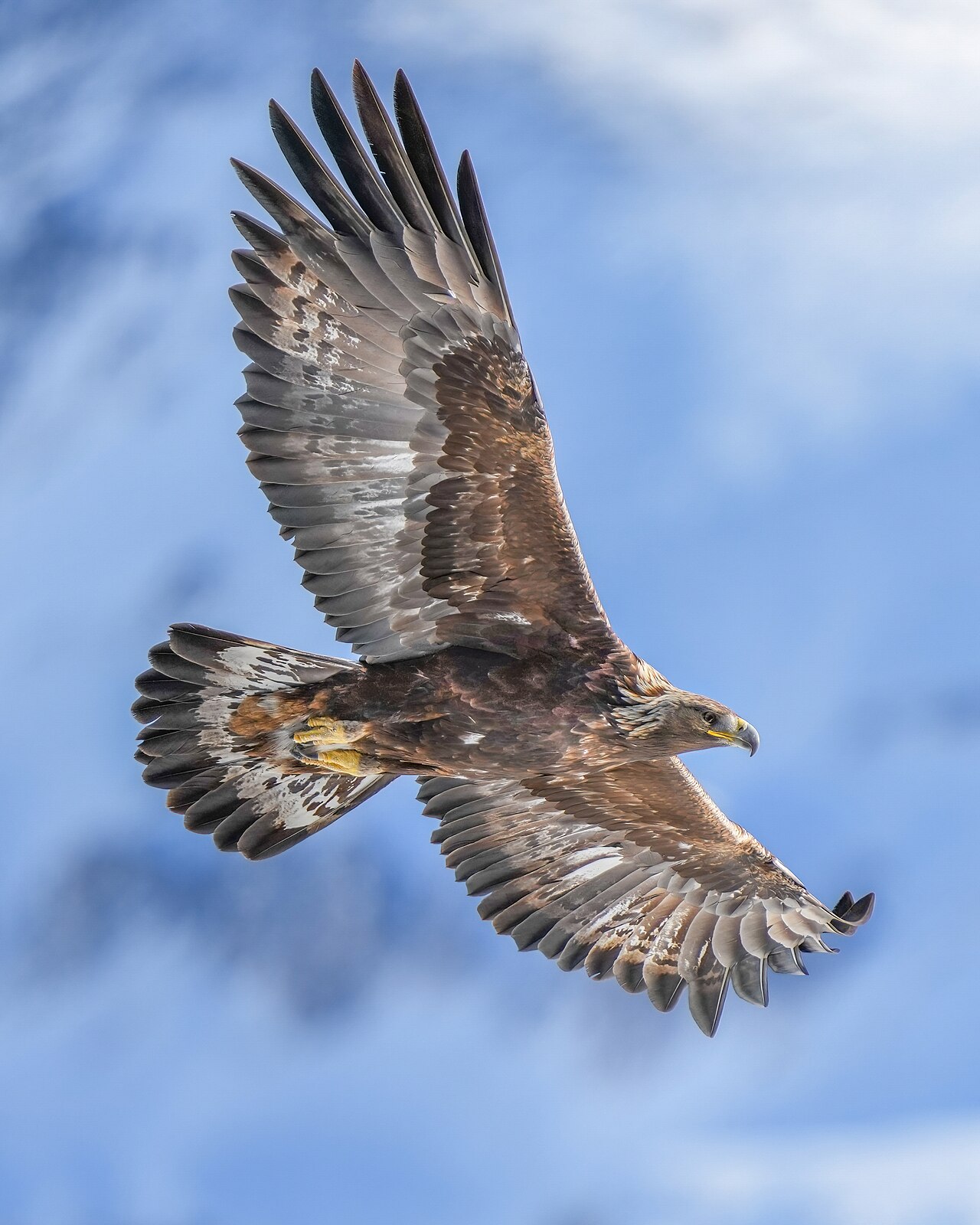
The meaning shifts with what the bird is doing. A rising eagle, a circling eagle and a perched eagle each point somewhere different. The bald eagle (Haliaeetus leucocephalus) and the golden eagle (Aquila chrysaetos) share the core meaning, and scripture adds a darker side about pride.
As a sign, an eagle points to strength, far sight and freedom. Seeing one is a good omen that asks you to rise above a problem and judge it from height. The Bible uses eagles’ wings for God’s care and renewed strength, and warns through Obadiah that pride flies high before it falls.
| What you see | What it points to | What to do next |
|---|---|---|
| Eagle rising on warm air | Gain, a plan that lifts | Start the thing you delayed |
| Eagle circling overhead | A wide view of a problem | Step back before you decide |
| Eagle perched and still | Patience | Wait for the right moment |
| Eagle crossing your path | A change of direction | Note what you were thinking about |
| Eagle carrying prey | Focus and follow-through | Finish one open task |
| Eagle feather on the ground | A gift of attention | Photograph it and leave it in place |
What does the eagle mean spiritually?
The eagle means strength, far sight and freedom. Strength comes from a hunter that takes prey with its feet. Far sight comes from eyes that pick out movement across a valley. Freedom comes from a bird that rides open air with barely a wingbeat.
A circling eagle points to a wide view of a problem. The bird can circle while riding rising warm air, gaining height with little flapping. Take the hint and look at the whole field before you pick a target. Hawks circle too, so check the bird before you read the sign.
Golden eagles hunt open mountain country, and their symbolism leans toward courage and solitude. The bald eagle leans toward water, fishing and national pride. Both keep the same core of strength and sight.
Ospreys are fish-eating raptors rather than eagles, with their own symbolism of focus and patience.
Is seeing an eagle a good omen or good luck?
Seeing an eagle is a good omen. A rising eagle points to gain, a plan that lifts once it catches the right current. A perched eagle points to patience, since the bird sits for long stretches before it drops on prey.
Bald eagles that cross your path add a reading about direction and timing. Watch what the bird does next. A bird that keeps flying ahead of you points to a path worth following.
An eagle sighting points to good luck through strength, perspective and timely action. Its darker meanings concern pride and force: Obadiah warns against arrogance, while imperial eagle emblems express political and military power.
What does the Bible say about the eagle?
The Bible uses the eagle as an image of God’s care and of renewed strength. In Exodus 19:4, God tells Israel, “I bare you on eagles’ wings.” Isaiah 40:31 promises that those who wait on the Lord “shall mount up with wings as eagles.”
Psalm 103:5 says “thy youth is renewed like the eagle’s,” and Revelation 4:7 describes a fourth living creature “like a flying eagle.” Leviticus 11:13 lists the eagle among birds Israel must not eat. The Hebrew word nesher may cover the griffon vulture as well, so the species stays open.
God commands ravens to feed Elijah in 1 Kings 17:4, and they bring him bread and meat in 1 Kings 17:6. Birds also carry signs in biblical narratives: Noah sends out the dove, whose return with an olive leaf in Genesis 8:11 tells him that the floodwaters have receded.
What does the eagle symbolize in Hinduism, Rome and heraldry?
In Hinduism, the eagle image belongs to Garuda, the bird who carries the god Vishnu. Garuda is part man and part bird of prey, and artists show him with an eagle or kite form. Indonesia and Thailand both use Garuda as a national emblem.

Rome gave the eagle to its legions. Each legion carried an aquila, a metal eagle on a pole, and the bird belonged to Jupiter. Heraldry carried the eagle from there into the arms of later empires. Eagle tattoos still borrow this heraldic eagle with spread wings.
Bald eagles stand at the center of the Great Seal of the United States. The bird holds peace in one talon and war in the other. It faces the olive branch, the side of peace.
What does the eagle mean in Lakota and Cherokee tradition?
In Lakota tradition, the eagle is wanbli, and its feathers represent honor and bravery. The Aktá Lakota Museum & Cultural Center describes eagle feathers given in honor and treated with dignity and respect.
In Cherokee tradition, eagle feathers mark friendship and peace in Cherokee leader Charles Hicks’s account of Cherokee customs. He describes feathers given as pledges of friendship in peacemaking and records the Eagle-tail Dance.
In the United States, enrolled members of federally recognized tribes can request eagle feathers for religious or cultural use through the National Eagle Repository. The U.S. Fish and Wildlife Service explains that federal enforcement policy also allows these members to possess and use feathers without a permit. Other possession generally requires a federal permit or a specific legal exemption.
Is there negative eagle symbolism?
Yes, the eagle has a negative side, and it is pride. Obadiah 1:4 warns Edom, “Though thou exalt thyself as the eagle… thence will I bring thee down.” Proverbs 23:5 says riches “fly away as an eagle toward heaven,” a picture of wealth that does not stay.
Rome and Napoleon’s France used eagle standards, while the Holy Roman Empire used the eagle as an imperial emblem. These imperial eagles express sovereignty and military power, with conquest and domination forming their darker side. The hunting eagle also supplies an image of predation and taking by force.
Bald eagles carry their own readings in the United States, tied to freedom and to the nation that put the bird on its seal. A bald eagle near water is a fishing bird at work. Read the bird first and the sign second.
Frequently Asked Questions
What is the luckiest bird to see?
There is no single answer independent of a particular tradition. In Roman augury, the eagle belongs to Jupiter, but the interpretation depends on the bird’s flight and the circumstances. That association does not establish a ranking of lucky birds.
When did the eagle join the Great Seal of the United States?
Congress adopted the Great Seal with its eagle on June 20, 1782, as documented by the National Archives. The design shows a bald eagle holding an olive branch and 13 arrows, with a shield on its chest and the motto E Pluribus Unum on a scroll in its beak.
Is the bald eagle the official US national bird?
Yes. Public Law 118-206, approved on December 23, 2024, designates the bald eagle as the national bird. The designation formalized the status of a bird already featured on the Great Seal.
Can you keep an eagle feather you find?
No, unless you have a federal permit or qualify for an exemption. Under federal enforcement policy, enrolled members of federally recognized tribes may collect naturally fallen feathers without disturbing birds or nests and possess them for religious or cultural use without a permit. They can also request feathers through the National Eagle Repository.
Why is the eagle the symbol of John the Evangelist?
Jerome’s preface to his Commentary on Matthew associates John with the eagle among the living creatures of Ezekiel and Revelation. John receives the eagle because his Gospel rises to the divine Word in its opening. This Christian interpretation connects the eagle with contemplation of divine things.
Sources
- CDC, Healthy Pets, Healthy People, Birds
- U.S. Fish and Wildlife Service, Bald and Golden Eagle Protection Act
- U.S. Fish and Wildlife Service, National Eagle Repository