Nightingale Sounds: 5 Calls, What They Mean and When You Hear Them
A nightingale sounds like a bird showing off: long piping whistles that build in volume, then a sudden burst of trills, gurgles and clicks, delivered at a volume that seems impossible from a plain brown bird the size of a sparrow. Nightingale sounds are famous because of that contrast and because the male sings in the middle of the night, when nothing else is competing with him. One bird can run through 180 to 260 different phrase types, which is why the song never settles into a loop.
The common nightingale (Luscinia megarhynchos) is a Eurasian and North African bird, so if you are reading this in the United States, the night singer outside your window is something else. This guide covers each nightingale sound, when in the day and year you hear it, and which birds get mistaken for it on both continents.
Nightingale sounds include a loud rising whistle written as “piu piu piu,” an explosive trill, deep gurgling notes, a short “hweet” contact call and a harsh “krrr” alarm rattle. Only unpaired males sing at night, mostly from late April to mid June, and the full song can carry over half a mile.
| Sound | What it sounds like | When you hear it | What it means |
|---|---|---|---|
| Full song | Whistles, trills, gurgles in long phrases | Night and dawn, late April to mid June | Unpaired male advertising a territory |
| Crescendo whistle | “piu piu piu,” rising and louder | Start of most song phrases | Signature opening, carries farthest |
| Trill | Fast rattling burst | End of a phrase | Shows stamina and lung power |
| Contact call | Short upslurred “hweet” | All day, all season | Keeping track of a mate or rival |
| Alarm call | Grating “krrr” plus hard “tacc tacc” | Near the nest, any time | Predator or human too close |
| Begging calls | Thin rasping “tseep” | Late May to July, by day | Nestlings or fledglings asking for food |
What Does a Nightingale Sound Like?
A nightingale sounds like several birds taking turns. The song is built from discrete phrases of 2 to 4 seconds separated by clear pauses, and each phrase is a different type, so you get a whistle sequence, then a croaking gurgle, then a dry rattle, then silence, then something new. That pause between phrases is the easiest field mark for the ear.
Volume is the second giveaway. A singing male reaches roughly 90 decibels at close range, loud enough that birders describe standing next to one as uncomfortable. The sound carries 0.5 to 1 mile on still nights across open country.
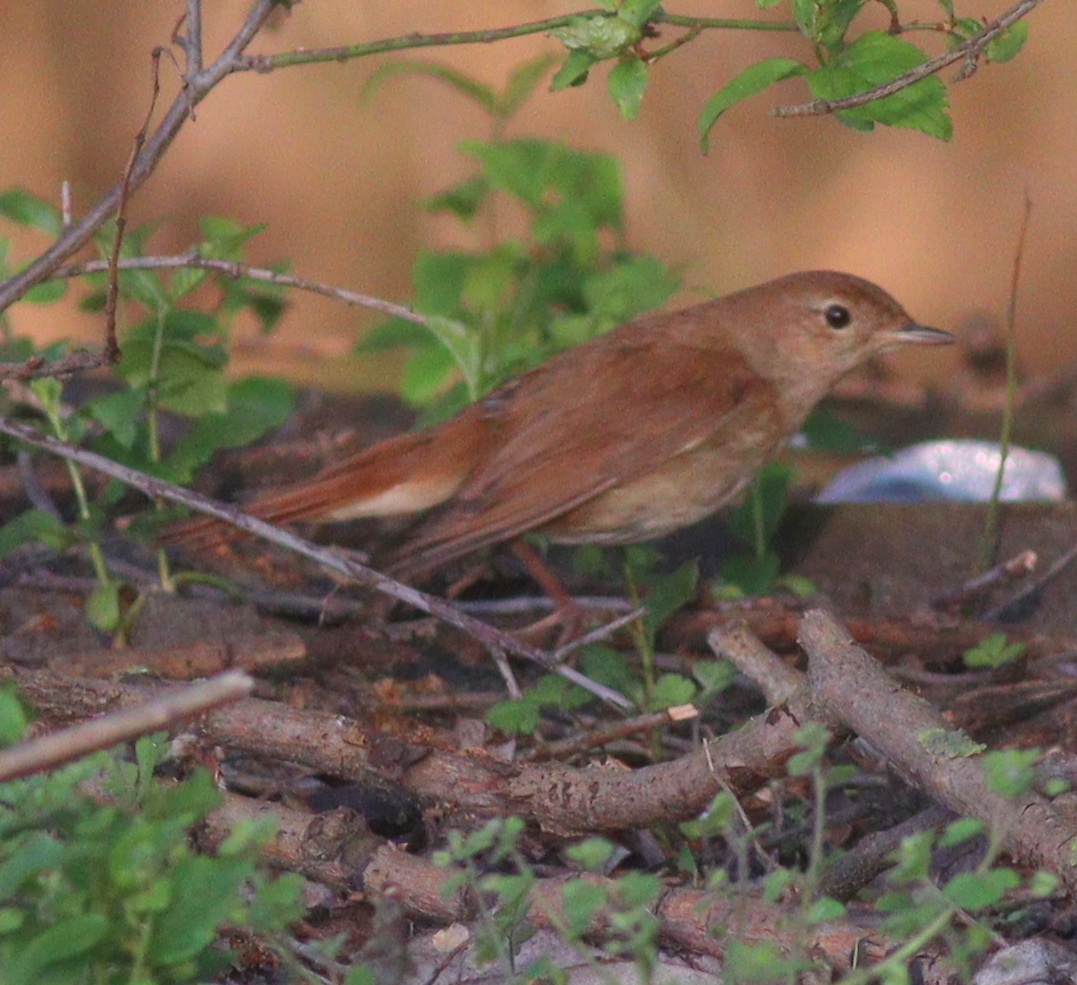
The bird itself gives you nothing. Nightingales are warm brown above with a rusty tail, they sing from inside dense scrub, and most people who have heard hundreds have seen very few.
The Full Song: 180 to 260 Phrase Types
The full song is a male’s entire repertoire cycled in no fixed order. Studies of European populations put the phrase count between 180 and 260 types per male, with older males holding larger repertoires, and a male will deliberately answer a neighbor by matching the phrase type that neighbor just used. The song is a conversation, not a broadcast.
Each phrase follows a loose internal pattern: a quiet introduction, a repeated whistle or note cluster, then a loud terminal flourish. Listen for three or four repeats of a single note before the phrase breaks open.
Nothing in North America is structured this way, which matters for identification. Thrushes sing flutelike and continuous, mockingbirds repeat each phrase three or more times in a row, and only the nightingale mixes harsh and musical notes inside one phrase.
The Crescendo Whistle and the Explosive Trill
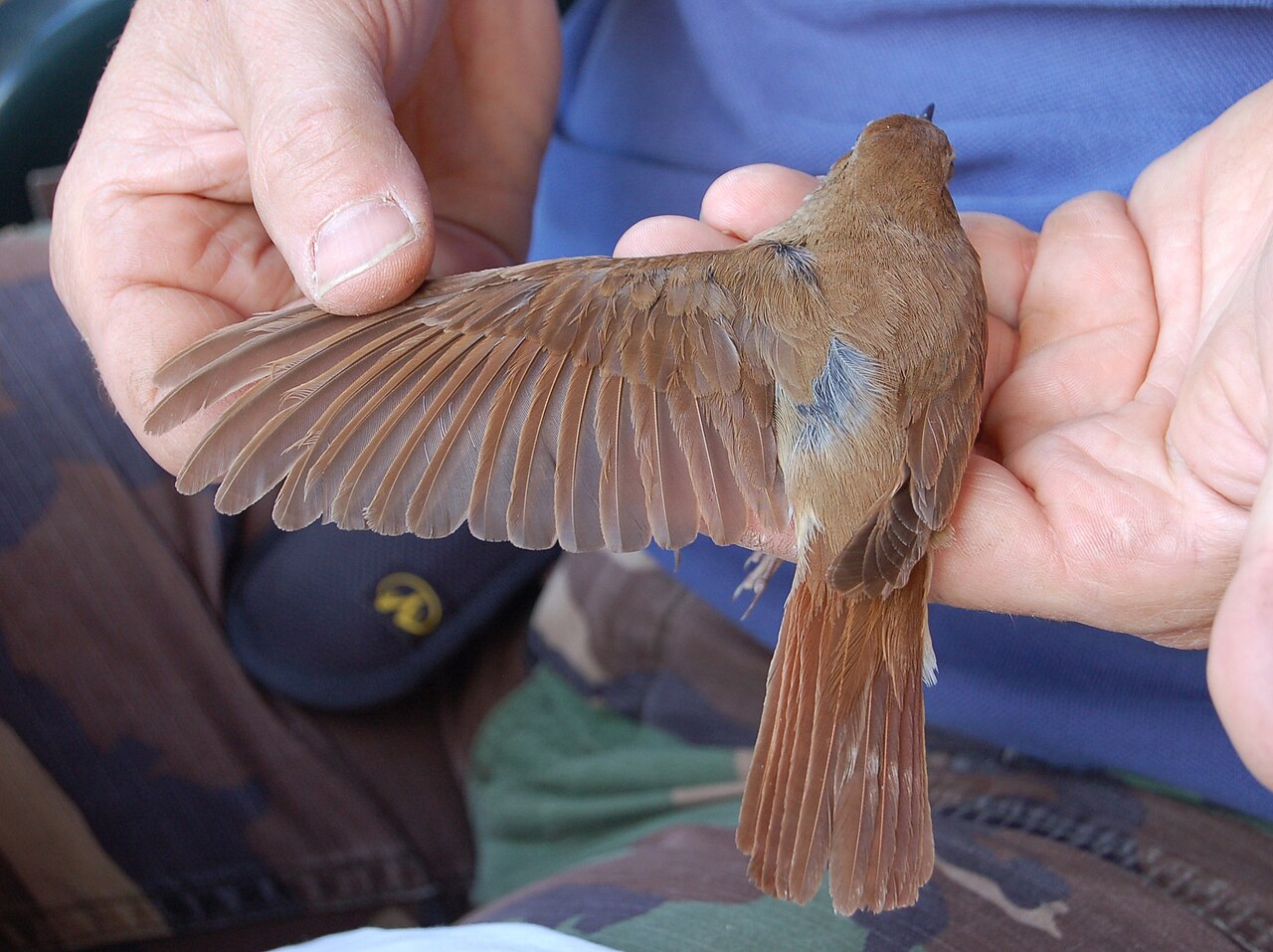
The crescendo whistle is the sound most people mean by nightingale song. It is a single piping note repeated 4 to 12 times, each repeat slightly louder, written in older European field guides as “piu piu piu piu” or “lu lu lu lu,” and it functions as the bird’s signature. If you hear a rising series of pure whistles at 2 am in a Spanish or German hedgerow, that is the one.
The trill follows. It is a fast, hard, mechanical rattle that can sound almost electronic, sometimes compared to the stuttering rattle of a woodpecker drum, and it ends the phrase abruptly rather than fading.
Mixed in are low gurgles and frog like croaks, which is the part first time listeners never expect. The nightingale is not a sweet bird. It is a loud bird with a wide range, and the ugly notes are deliberate.
The Contact Call: A Sharp “hweet”
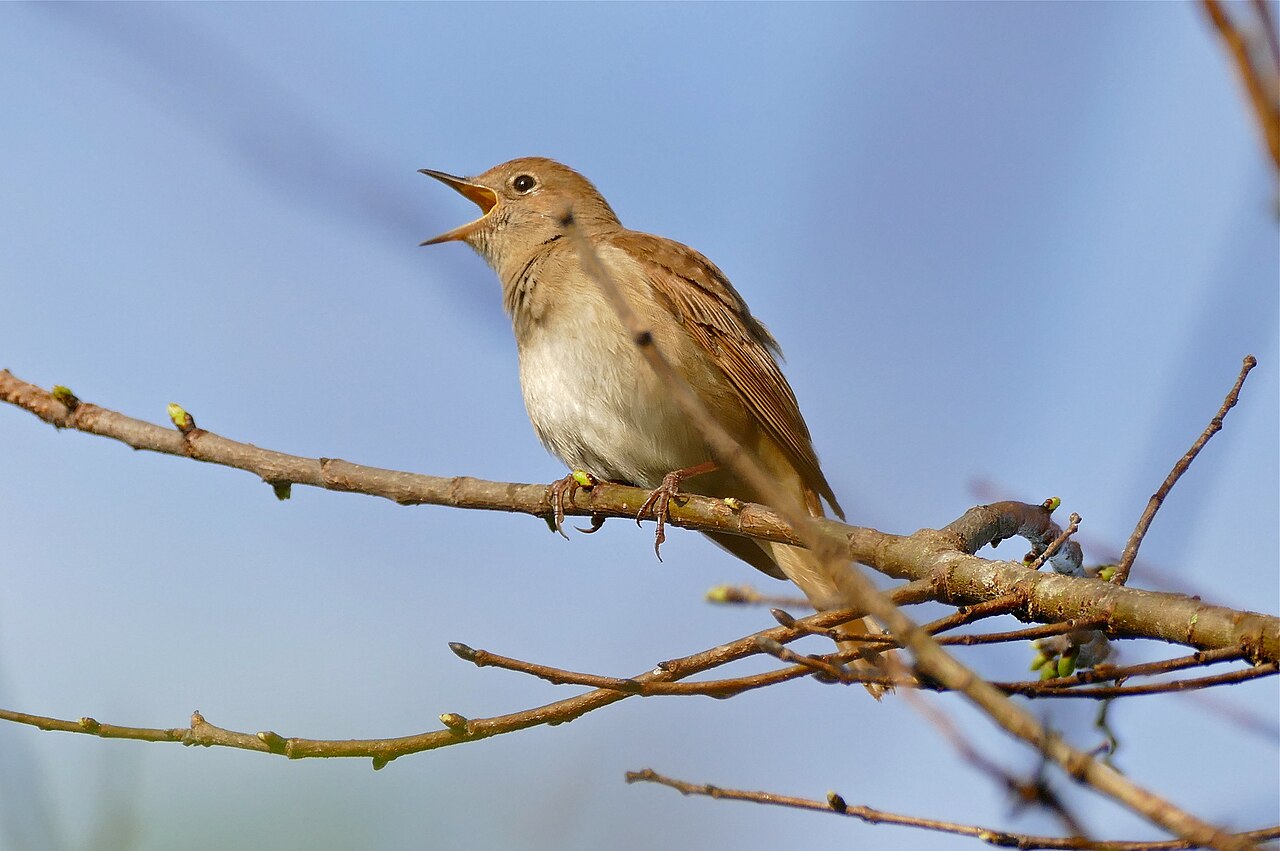
The contact call is a short upslurred whistle, “hweet,” given all day and all season. Both sexes use it to keep track of each other inside dense cover, and migrants use it at stopover sites long after the song season has ended. It is quiet, easily missed, and the main sound you get from nightingales in August.
Birders describe it as similar to a common chiffchaff or a robin, which is a real pitfall. The nightingale version is slightly fuller and usually comes from lower in the bush, within 3 ft of the ground.
If a nightingale is in a thicket and not singing, this call is the only evidence you will get. Nightingales do not call in flight the way finches do, and they almost never show themselves in the open.
The Alarm Call: A Grating “krrr” and Hard “tacc”
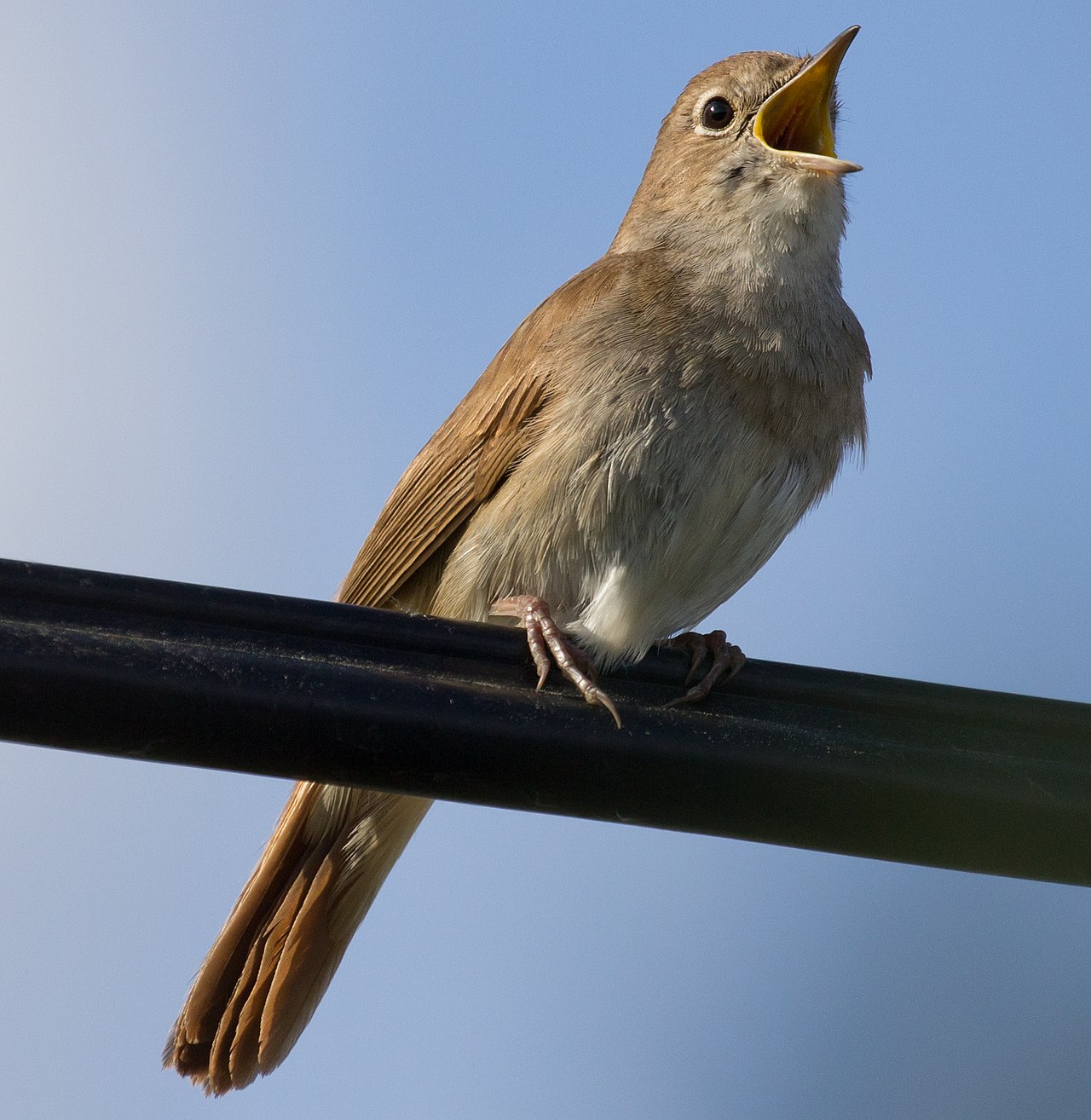
The alarm call is a dry grating rattle, “krrr,” often paired with a hard clicking “tacc tacc” like two pebbles knocked together. It means a predator, a cat or a person is close to the nest or to fledged young, and the intensity rises as you get closer. Hearing it repeatedly in one spot means you should back off.
The rattle is lower and coarser than the song trill and never has musical notes around it. Unlike the barn owl’s shriek, which is a long single scream, the nightingale alarm is a stuttered series.
Both parents give it, and they give it in daylight, so an alarming nightingale is one of the few chances to actually see the bird as it moves to the outer branches of the scrub.
Courtship and Pair Sounds
Courtship is where the night singing pays off. An unpaired male sings through the night until a female, migrating overhead, drops into his territory, which is why the nocturnal song stops within a day or two of pairing. The daytime song continues longer, now aimed at rival males rather than at females.
Paired birds exchange soft, low versions of the contact call near the nest site, almost inaudible from more than 15 ft away. Researchers call these quiet notes the real pair bond sounds, and they go unrecorded in most casual listening.
Males also sing a subdued, rambling warble early in the season, sometimes described as practice song. It has the same ingredients as the full song at a fraction of the volume.
Nestling and Fledgling Begging Calls
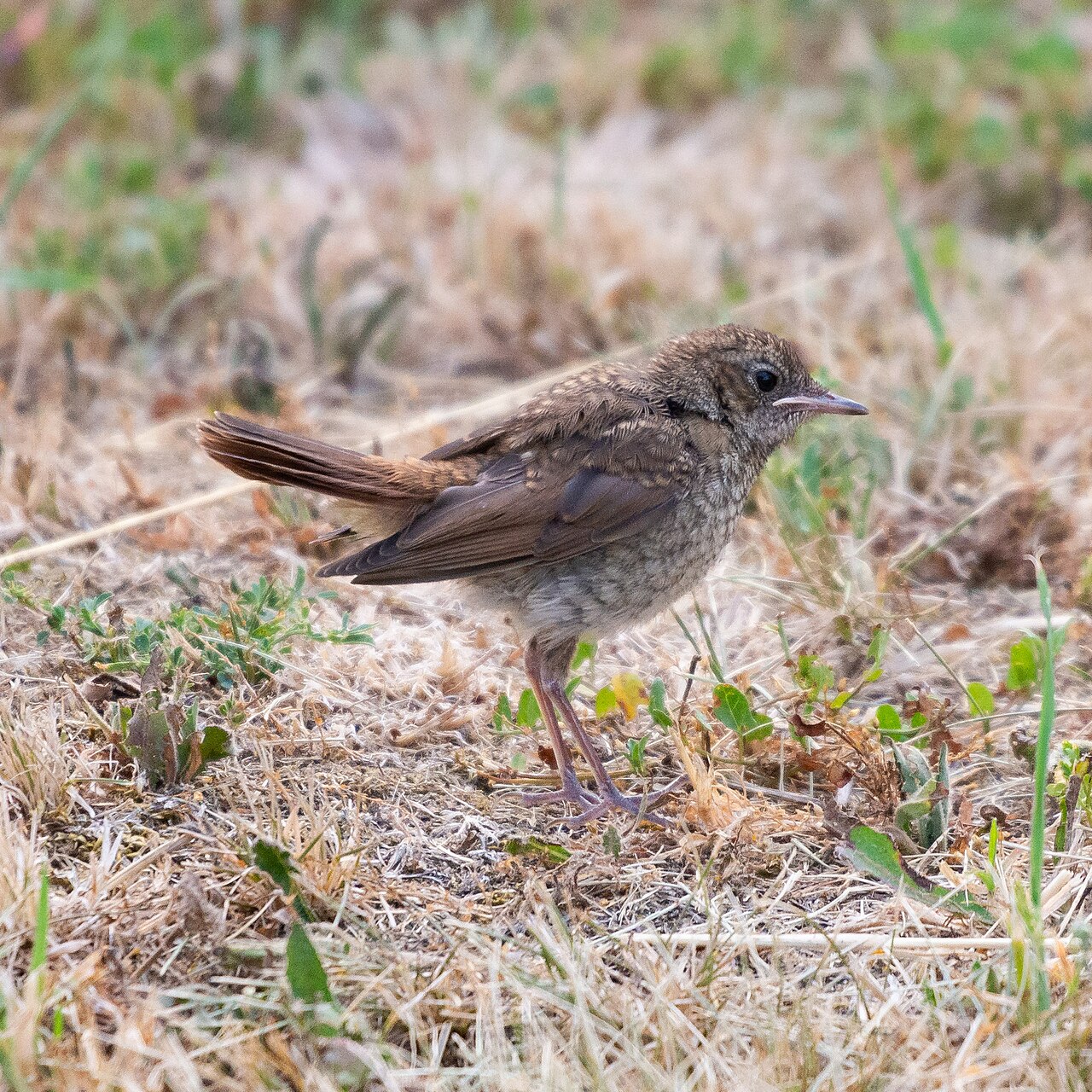
Begging calls are thin, rasping “tseep” notes repeated in bursts, and they are a daytime sound from late May into July. Nestlings call from inside the nest only when a parent arrives, so the sound comes in pulses every few minutes. Once the young fledge they call continuously from the undergrowth, which makes July nightingale broods easy to locate and easy to disturb.
The quality is scratchy rather than musical, closer to insect noise than bird song. People often mistake begging fledglings for grasshoppers or for a nest of mice.
If you hear this and the adults start rattling, you are standing next to a family. Nightingales nest on or near the ground, so stepping back matters more here than with canopy nesters.
Why Nightingales Sing at Night
Nightingales sing at night because night singing reaches migrating females. Only unpaired males do it, the song travels farther in cool still air with no daytime background noise, and females migrating overhead in darkness are the intended audience. It is advertising placed where the customers are.
Loud night singing has a second effect: it tells rival males the territory is held even in the dark. In noisy urban areas males have been measured singing up to 14 decibels louder, pushing against traffic noise the same way people raise their voices in a bar.
Nocturnal song peaks between 11 pm and 3 am, with a second surge just before dawn. A bird that sings at midnight and again at 4 am is one bird on a schedule, not two.
What Month Do Nightingales Sing?
Nightingales sing from mid April to mid June, with the best nights in the first two weeks of May. Males arrive on the breeding grounds roughly a week before females, sing hardest while unpaired, and taper off quickly once chicks hatch. By early July most territories are silent even though the birds are still there.
This is why nightingale tourism in England, Spain and Poland is scheduled so tightly. Arrive in late June and you have missed it; arrive in early May and a single hedgerow can hold three singing males.
Autumn migrants pass through from August to September and give only the “hweet” call. There is no autumn song period, unlike the year round calling of cedar waxwings in North America.
Are There Nightingales in the United States?
There are no nightingales in the United States. The common nightingale breeds in Europe, western Asia and North Africa and winters in sub Saharan Africa, and it has never established a wild population in North America. Any American recording labeled nightingale is either a European recording or a misidentified native bird.
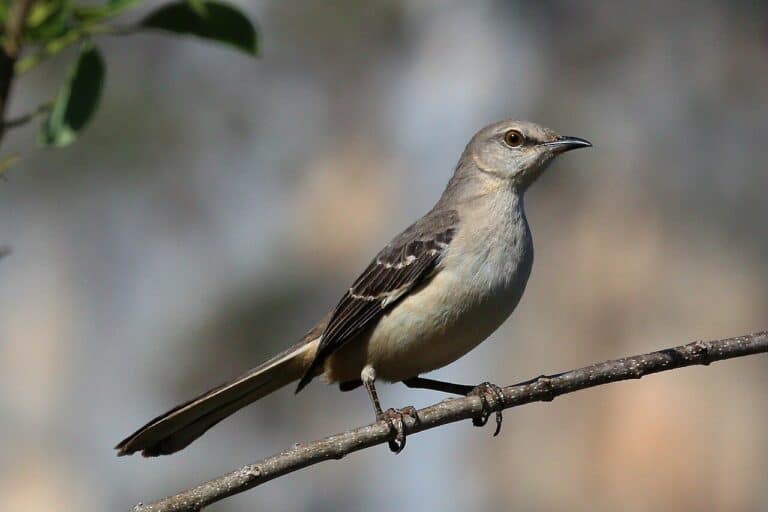
The bird that chirps at 3 am in an American neighborhood is almost always a northern mockingbird (Mimus polyglottos), specifically an unpaired male, doing exactly what a nightingale does for exactly the same reason. The All About Birds sound library for the northern mockingbird lets you confirm it in under a minute.
Other American night voices include the eastern whip-poor-will chanting its own name, the yellow breasted chat, the American robin starting before 4 am under streetlights, and the barred owl’s hooting. None of them repeat phrases the way a mockingbird does.
Birds Mistaken for a Nightingale
The nightingale’s closest confusion risk in Europe is the thrush nightingale (Luscinia luscinia), which replaces it from Poland eastward. Its song is slower, more hollow and heavier on the croaking notes, with less of the rising whistle. Where the ranges overlap, the crescendo whistle is the split.
Blackcaps, garden warblers and song thrushes also get called nightingales by people who hear a loud bird in a bush. The test is structure: thrushes repeat each phrase, warblers run on without clear pauses, and the nightingale alternates distinct phrase types with silence in between.
In American yards the mislabeling is usually a mockingbird or a catbird, and the complaint that follows is noise rather than identification. If that is where you are, the humane options in our guide to bird deterrent sound work better than anything aimed at the bird itself, and the same restraint applies as with bats in a wall: the animal is seasonal and will stop on its own.
Frequently Asked Questions
What does it mean to hear a nightingale?
Biologically it means an unpaired male is advertising a territory, usually in late April or May. In folklore and poetry the nightingale’s night song stands for longing, hidden grief and love that cannot be spoken, from Ovid’s Philomela to Keats. Hearing one at night is a sign of spring in Europe, nothing more ominous.
Are there nightingales in the United States?
No. The common nightingale is a Eurasian and North African species with no wild American population. If you hear nonstop night singing in the United States, the bird is almost certainly an unpaired northern mockingbird. Thrushes, whip-poor-wills and yellow breasted chats also sing after dark in parts of the country.
What month do nightingales sing?
Mid April through mid June, peaking in the first half of May. Males sing hardest while unpaired and stop night singing within days of pairing, and most territories go quiet by early July once chicks hatch. Autumn migrants in August and September give only a short “hweet” call.
What is the English name for the sound of the nightingale?
The sound is simply called the nightingale’s song or warble. English poetry renders it as “jug jug,” a convention going back to the Elizabethans and used by T. S. Eliot in “The Waste Land,” while the repeated piping opening is usually written “piu piu piu” in field guides.
What noise does a nightingale make?
Five main noises: a rising whistled crescendo, a hard explosive trill, low gurgling and croaking notes, a short upslurred “hweet” contact call, and a grating “krrr” alarm rattle with hard clicks. Nestlings add a thin rasping “tseep.” One male can deliver 180 to 260 distinct song phrase types.
What is the annoying bird that chirps at night at 3am?
In the United States it is nearly always an unpaired male northern mockingbird, which sings loudest between midnight and dawn in spring and early summer. Streetlights and traffic noise make it worse. The singing stops as soon as he pairs, usually within two to three weeks, so patience outperforms every deterrent.