Seeing a Blue Jay Meaning: 4 Messages, Luck and Love
In modern spiritual reading, seeing a blue jay carries four messages: communicate, stand your ground, prepare ahead and stay loyal. The messages are belief rather than fact, but each one copies something the bird does in plain view.
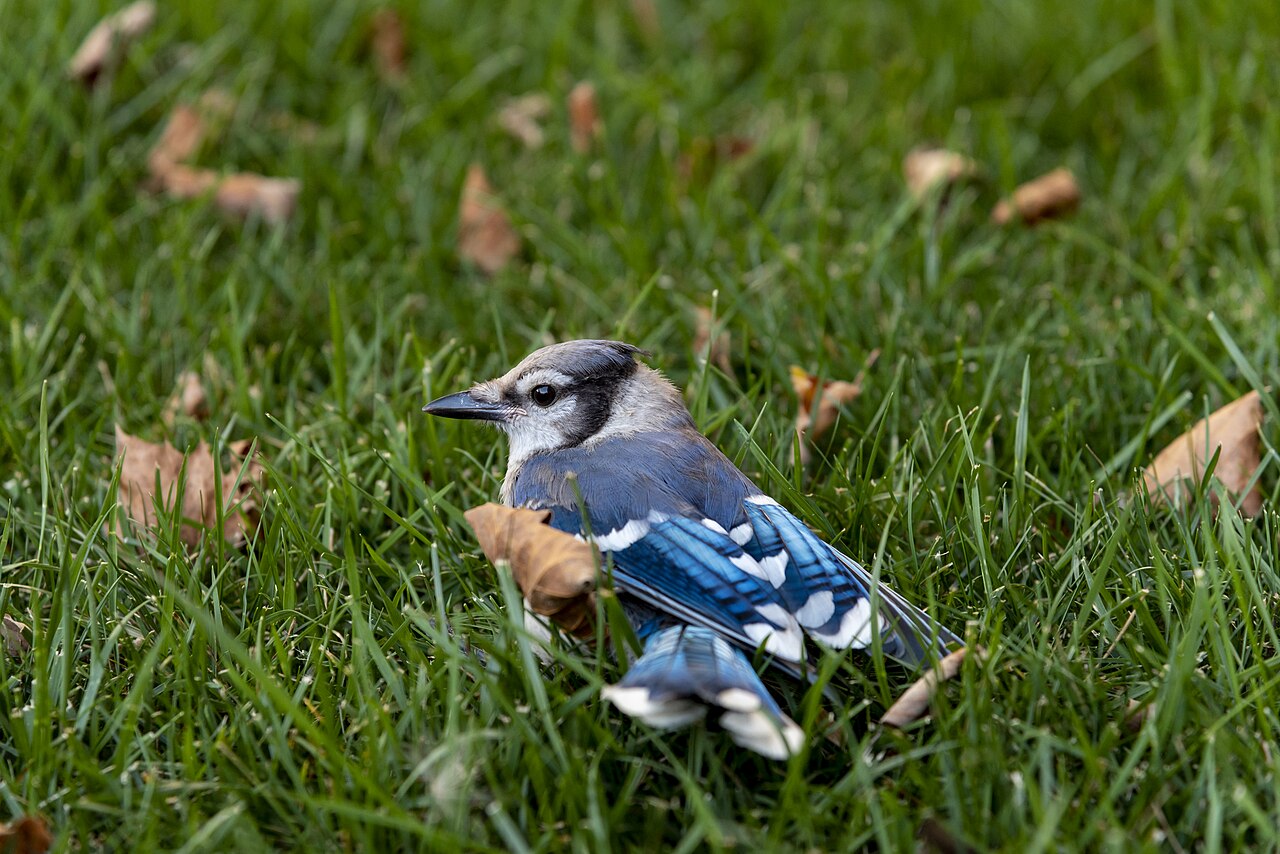
Blue jays (Cyanocitta cristata) are among the familiar backyard birds of eastern North America, so what a sighting means depends less on rarity than on when, where and how the bird shows up.
Seeing a blue jay is a call to four things: Communication, Courage, Foresight and Loyalty, because the bird is loud, quick to confront hawks, stores food for winter and keeps the same mate. Many people also take a close or repeated visit as a loved one who has died checking in.
What Does Seeing a Blue Jay Mean? The 4 Core Messages
A blue jay sighting carries four core messages, and each one comes from something the bird does where you can watch it. Which of the four fits depends on what the jay was doing when you saw it.
Communication. The jay’s alarm call warns every bird within earshot that a hawk is near. A jay that calls while you watch is a nudge to say what you have been holding back, a boundary, an apology or a plan nobody has heard yet.
Courage. Blue jays mob hawks and owls far larger than themselves, diving at the predator and screaming until it leaves. The sighting is a prompt to hold your position when the other side is bigger and louder.
Foresight. In fall a jay buries acorns and other nuts to dig up and eat in winter. A jay with an acorn in its bill stands for preparing now for a season you cannot see yet.
Loyalty. Pairs typically stay together and raise their young as a team. A jay that keeps to the same yard with the same mate stands for faithfulness to the people closest to you, and showing up again tomorrow.
No single sighting is good or bad on its own. Place, time of day, the number of birds and what the jay was doing decide which message applies. A silent jay on a fence post and a screaming jay chasing a crow are two different signs.
What It Means When a Blue Jay Crosses Your Path
A blue jay crossing your path marks a pause point. A decision is close, and the sign asks you to make it rather than put it off. The jay cuts across the trail or the driveway in a flash of blue and white, and the sign lands in the second it takes to register the bird.
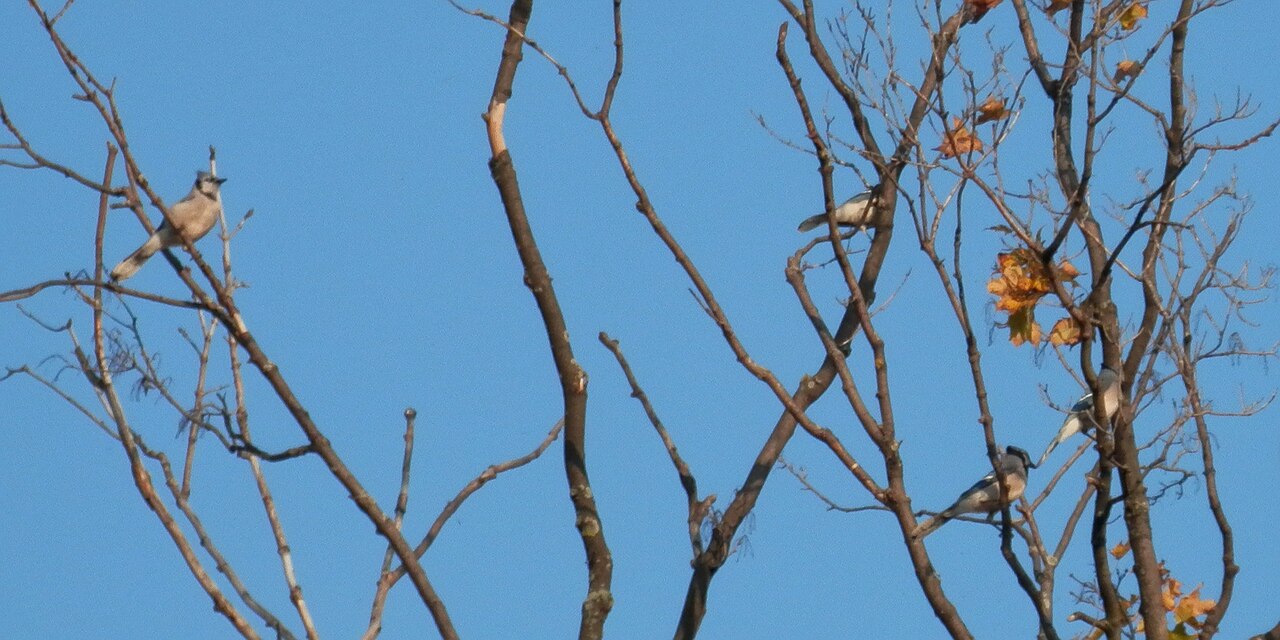
Some readers take left to right as go ahead and right to left as wait; the rule is modern and varies. A jay that lands and watches you is a stronger prompt than any flight direction.
The everyday picture is simpler. A jay crossing low in front of you is moving between cover and a food source, and in fall it carries an acorn or a peanut in its bill on the way to a hiding spot. The path you walk happens to run between its oak and its cache site.
A fox, a deer or a lizard crossing your path carries its own message, and the fox article explains them.
Blue Jay Spirit Animal, Totem and Power Animal
Spirit animal, totem and power animal are three names for one idea in modern spirituality: an animal whose traits you are meant to learn from. The blue jay spirit animal belongs to people who are learning to use their voice.
A blue jay totem is assertive and protective of family. It claims the feeder without waiting for permission and defends the nest with its whole body. The shadow side is just as visible at the feeder: a jay that chases every chickadee off the tray mirrors bossiness and gossip. Jays belong to the crow family, which is known for problem-solving.
A totem differs from a one-time sighting. The sighting is a momentary message tied to one morning and one decision, while the totem is a lasting trait you work with for months or years. The blue jay spiritual meaning page covers the totem in more depth.
In Chinook stories recorded by Franz Boas in the 1890s, Blue-Jay is a trickster who lives on the lower Columbia River with his sister Ioi, clever, boastful and quick with a scheme that comes apart in his own hands. The bird in those stories is Steller’s jay (Cyanocitta stelleri), the dark-crested jay of the Pacific coast, a close relative of the eastern blue jay with a similar crest, a similarly harsh voice and the same habit of talking back. How that figure connects to blue jay symbolism in art, sports and heraldry has its own page.
Are Blue Jays Good Luck or a Bad Omen?
Most modern readings treat the blue jay as lucky, a push to act rather than a promise of fortune. A jay at the window on the morning of an interview or a court date is encouragement to go in prepared.
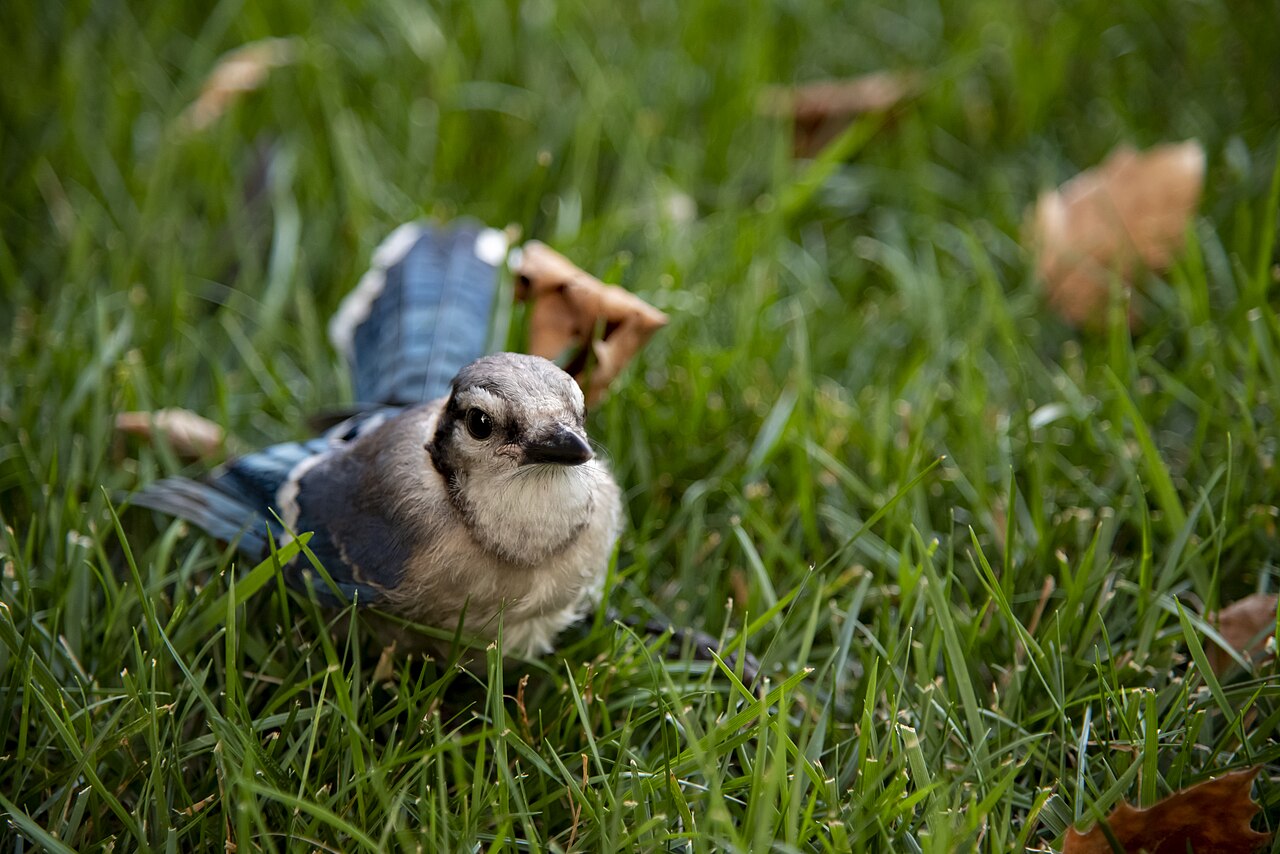
One old wives’ tale about blue jays runs the other way: a Southern folk saying holds that you never see a jaybird on a Friday, because that is the day it carries sticks or sand to the devil.
The omen idea comes from the alarm scream. In older belief a screaming bird near the house meant a death or a quarrel on the way, while the jay’s scream in fact warns other birds that a hawk or a cat is near.
What is the luckiest bird to see? Most lists name the cardinal first, then robin, hummingbird and blue jay, the cardinal for visits from the dead, the robin for spring and a fresh start, the hummingbird for joy.
Seeing a Blue Jay Meaning in Love and Relationships
Seeing a blue jay in a love context stands for loyalty, because the pair bond is the plainest thing about the bird’s family life. During courtship the male feeds the female, passing her food beak to beak while she begs like a fledgling, and both parents feed the young.
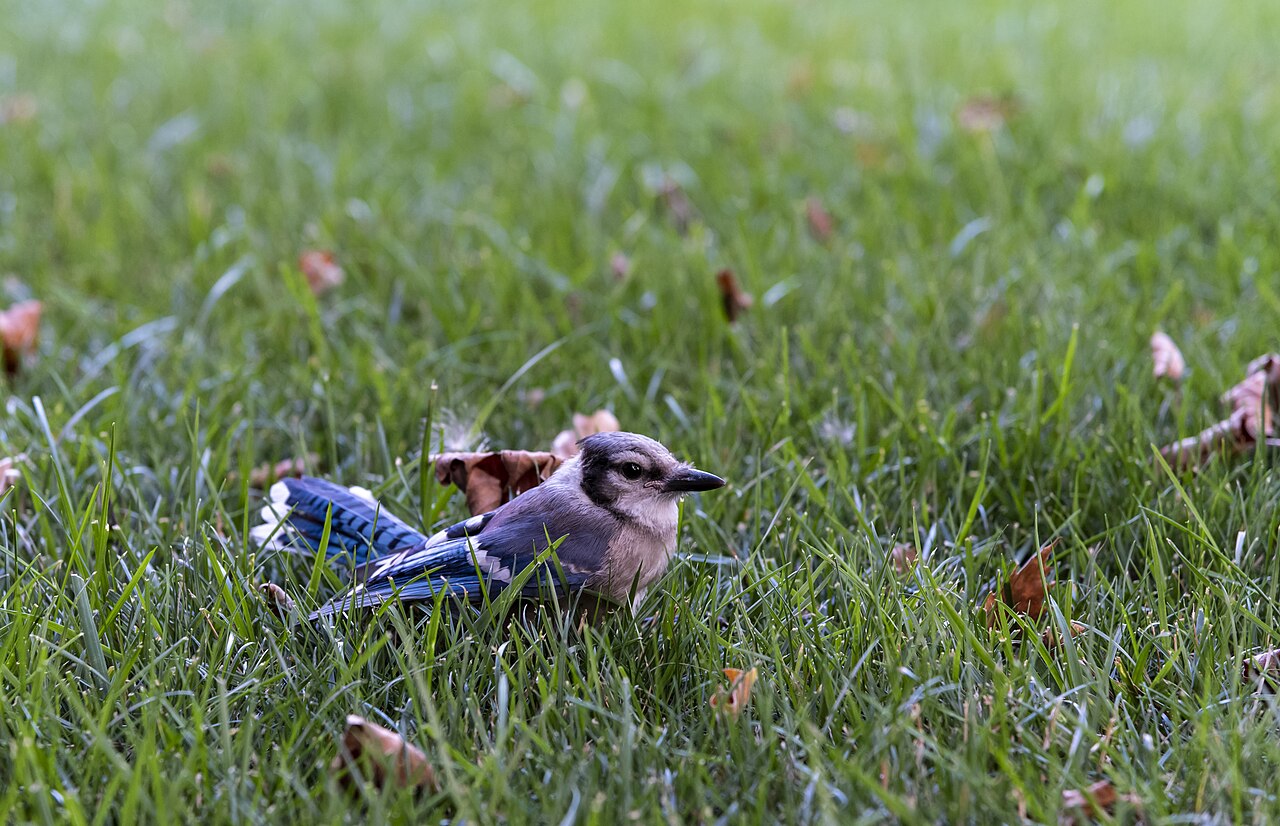
For couples, the sighting is a reminder to divide the work and stay in it for the long run rather than one partner carrying the load. For singles, it is a sign that the right person will be the one who keeps showing up, and that you should do the same.
Seeing two blue jays together sharpens that message. The spiritual meaning of seeing 2 blue jays is the pair bond made visible, a relationship in balance and a decision you share with someone rather than make alone.
Both sexes look alike, so a single jay cannot be sorted into male or female energy; see female blue jay for the few differences.
Is a Blue Jay a Sign from Heaven? Bible and Loved Ones
A blue jay that keeps coming back after a death is a sign from heaven for grieving people across the US, a loved one checking in, and the belief is a comfort rather than a doctrine. The jay suits the role because it is bold, returns to the same yard day after day and makes itself impossible to miss.
The Bible does not name the blue jay, and Christian readers who find meaning in the bird link it to the birds of scripture in general, such as “Look at the birds of the air” in Matthew 6:26, where the birds that neither sow nor reap stand for trust in God’s provision.
In Christian symbolism blue is the color of heaven and of Mary’s cloak, and the jay’s loud voice becomes boldness in faith. A believer who sees a jay takes it as a prompt to stand by what they believe in the open, even when it costs something.
A visit from a loved one is a reminder that the person is remembered; a sighting that seems to demand a decision is not part of that tradition.
Seeing Several Blue Jays or the Same One Again
Several blue jays together stand for community, family and strength in numbers. Seeing multiple blue jays in one tree is a sign to lean on the people around you and to show up for the group that has shown up for you.
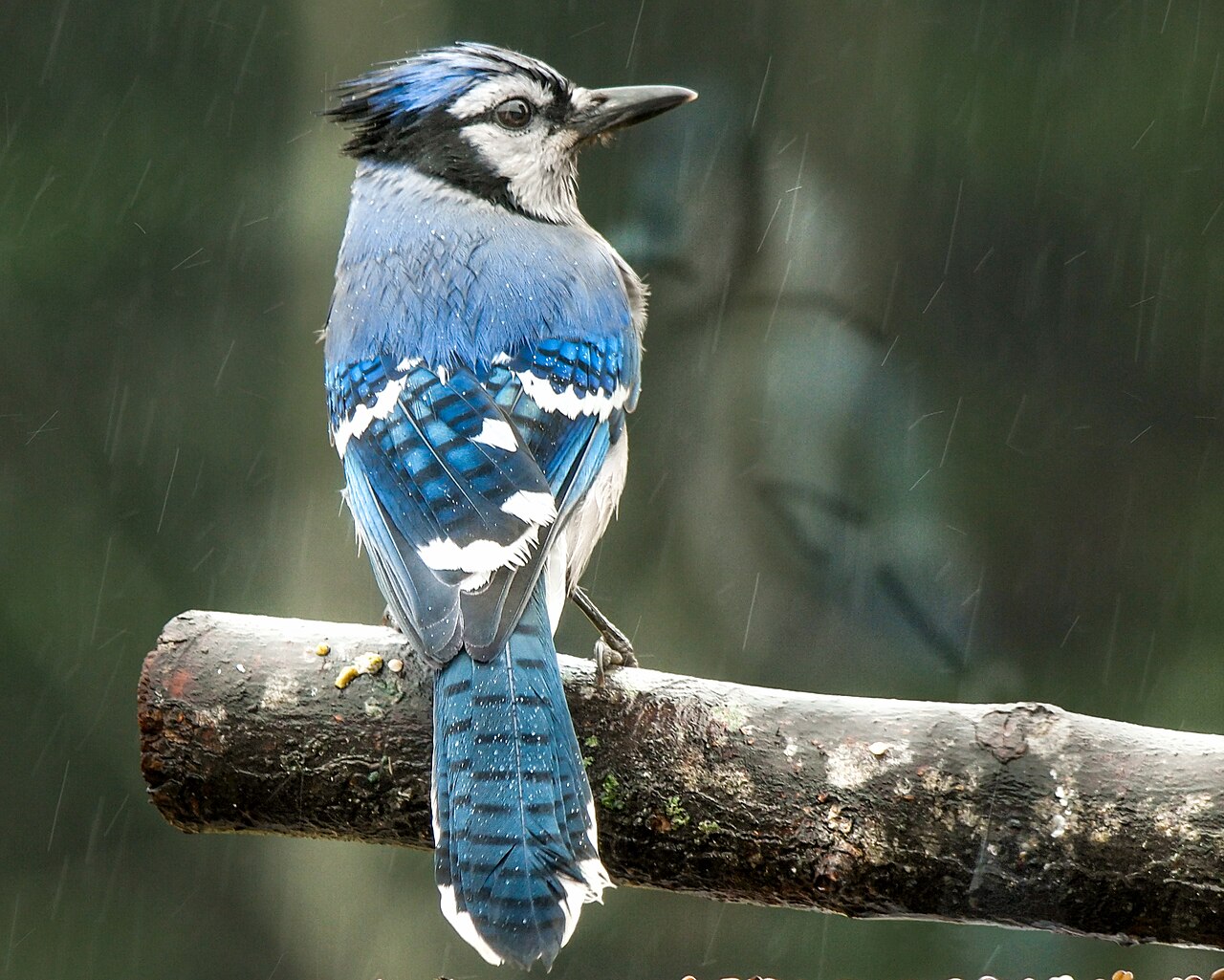
A repeated sighting of what seems like the same jay is a message you have not acted on yet. The bird keeps returning because the decision from the first sighting is still open, and the sign repeats until you close it.
The everyday side explains the repeats. Young jays stay near their parents for a while after fledging, so a loose family group can hang around one yard for weeks, and All About Birds notes that a mated pair often stays together and in the same area all year. Seeing jays every morning most likely means the same birds. A two-week log of date, time and what the jay was doing separates a real repeating moment from ordinary yard routine.
Blue Jay in Your Yard or at the Feeder
A blue jay in your yard or at the feeder stands for home and the protection of your space. Jays are bold feeder visitors that carry off whole peanuts, and a jay that claims your tray is a sign to guard what is yours and to feed the people under your roof first.
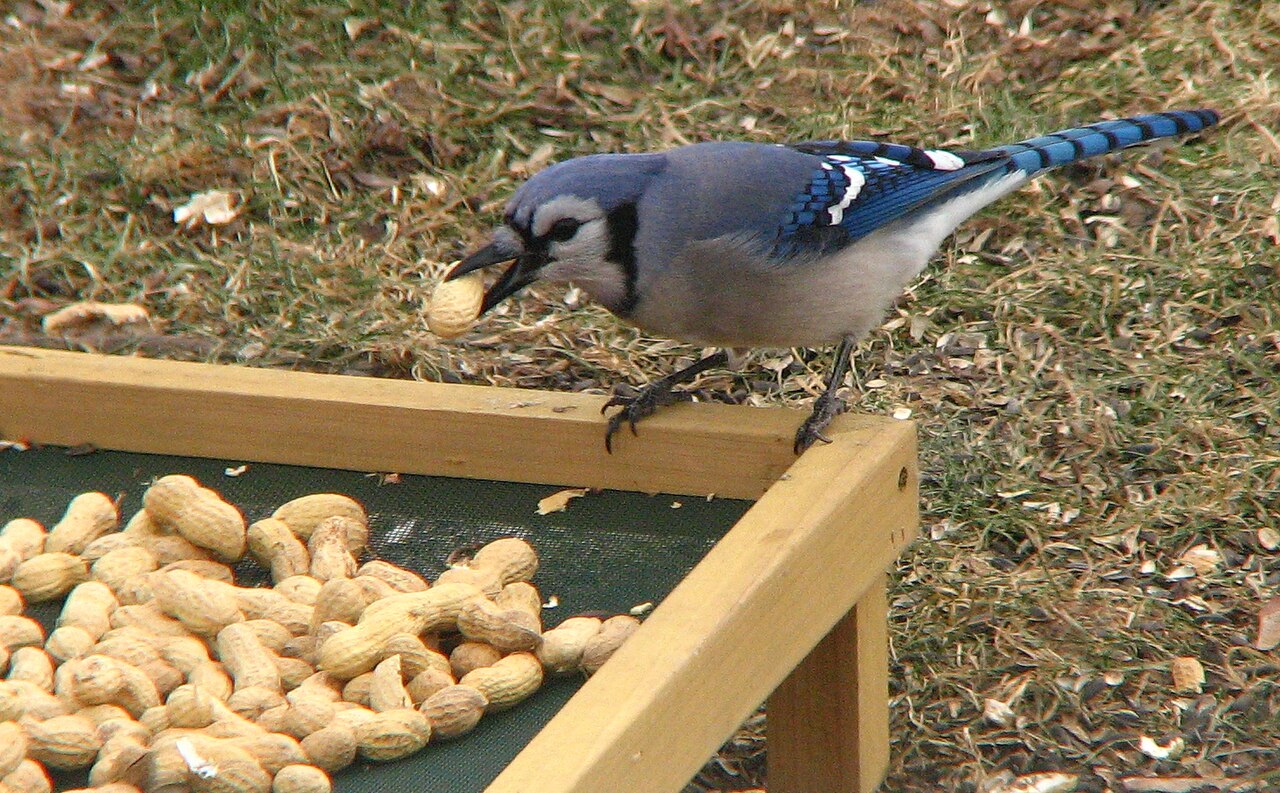
The bird’s own reason is plainer. A tray with peanuts, sunflower seed or suet is the richest food source in the neighborhood, and a jay that finds it comes back on a schedule and brings its family.
Blue Jay at Your Window
A blue jay at your window is a call to look inward. Folklore treats a bird that taps on the glass or flies into it as a message arriving, and older tradition as a death omen for the household.
The biology is territory or reflection. In spring a jay at the glass is fighting its own reflection, which it takes for a rival on its territory, and it can keep at it for days; a bird that hits the window once was startled or misread the reflection of sky. The bird attacking itself is the sign, and the rival you are fighting is on your side of the window.
Seeing a Blue Jay in the Morning
What does it mean when you see a blue jay in the morning? A fresh start, and a prompt to plan the day ahead rather than let it happen to you. Jays are at their busiest early, calling, feeding and carrying food off to hide, so the morning sighting comes with the bird’s full energy behind it.
Seeing a Blue Jay at Night
Blue jays are active by day and roost at night, so a night sighting is rare, and a jay-like call after dark is more likely a northern mockingbird, which copies jay calls, than a jay. A jay truly seen at night, caught in a porch light on its roost, stands for intuition and knowledge that arrives when the daytime noise stops.
Blue Jay in a Dream
A calling jay in a dream is a message to speak, and the words you could not find by day are waiting. A quarreling jay, one that chases other birds in the dream or screams without stopping, is a warning about gossip, yours or someone else’s.
A jay carrying food in a dream carries the same message as the acorn in daylight, a nudge to put something aside for later.
Blue Jay Sightings by Situation
The table sets the common reading of each situation next to what the bird is most likely doing.
| Situation | Common reading | Everyday explanation |
|---|---|---|
| Jay follows you along a trail | A guide, or a message that will not let go | The bird is escorting you out of its nest area or hoping for dropped food |
| Jay lands on your car or porch rail | News arriving at your door | Territory check, or a perch with a view of the feeder |
| Jay flies into the house | Big change coming to the household | An open door or window and a bird that lost its bearings |
| Jay taps or hits the window | Omen or message | Fights its reflection or was startled |
| Jay seen together with a cardinal | A loved one and a messenger at once | Both species use the same seed feeder and share the same yards |
| Jay with an acorn in its bill | Prepare for what is coming | Fall caching, the bird is carrying food to a hiding spot |
Finding a Dead Blue Jay: Meaning and What to Do
Finding a dead blue jay means the end of a phase and a transition, not an omen of a death in the family. The loud voice has gone quiet, so the sign is about something that has finished speaking, such as a job, a friendship or an argument that no longer needs winning.
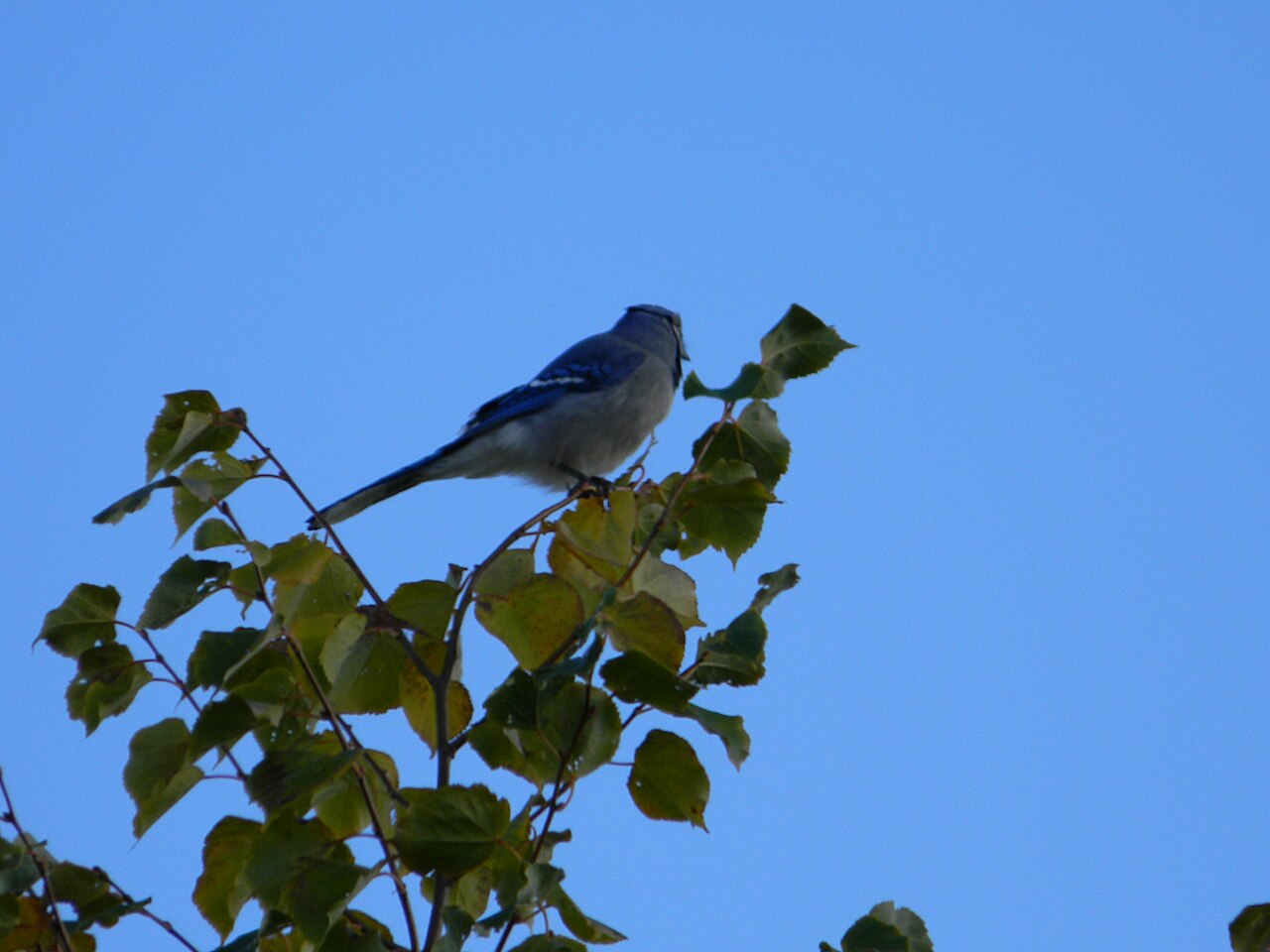
The real causes are ordinary. Window strikes and cats are the common ones, and a dead jay under a picture window or near a porch where a cat sits is explained before any reading is applied. A bird that died at the glass is a prompt to put decals on the window.
For disposal, the CDC advises using gloves or double plastic bags to place a dead bird in a garbage can.
What Blue Jays Are Known For
Blue jays are known for mimicry, a huge range of calls and acorn caching, and each of those traits feeds one of the meanings above. Beyond the scream, blue jays produce soft, bell-like notes, whisper songs and rattles; the full range is in blue jay sounds.
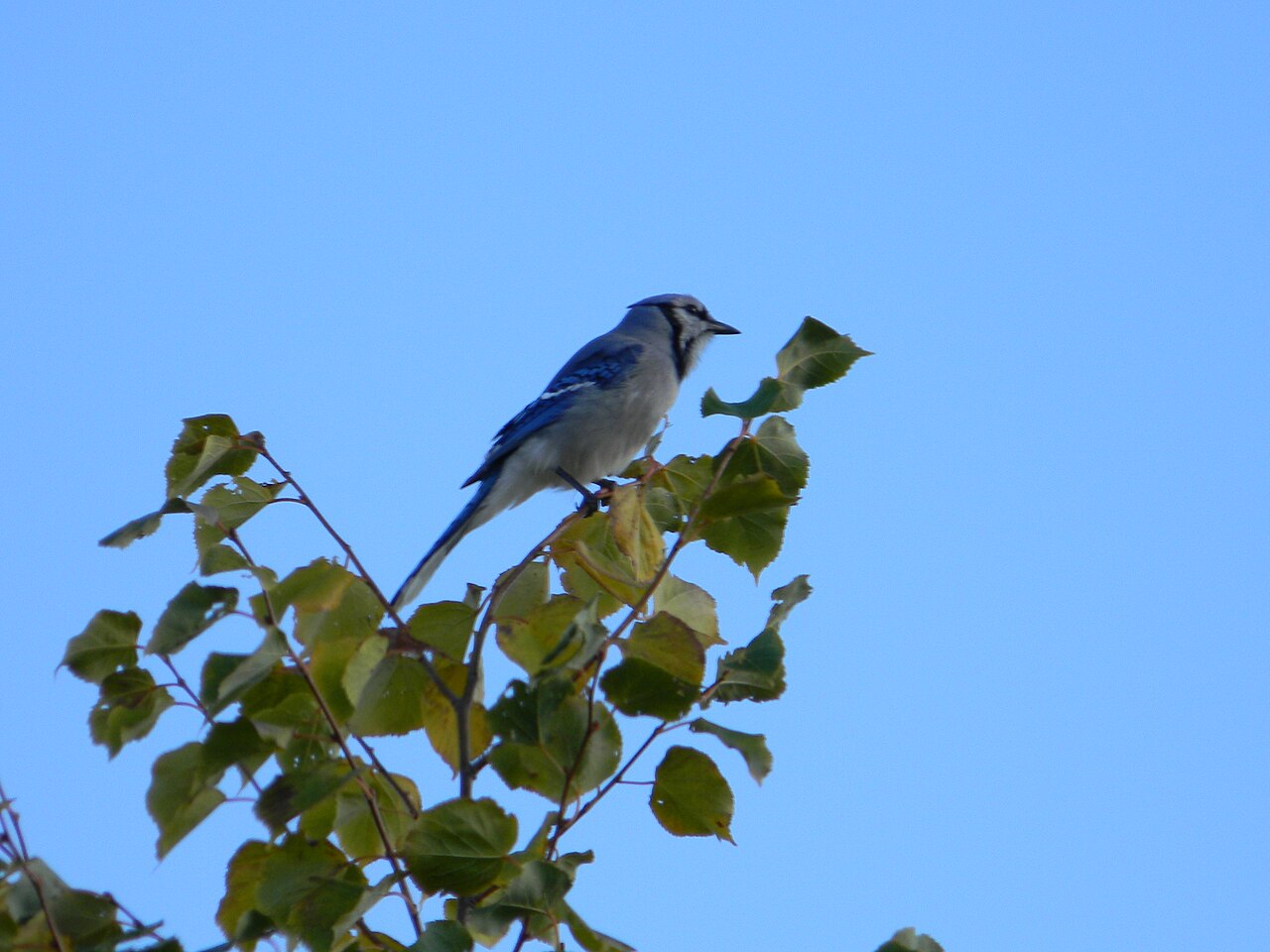
The acorn habit shapes the woods. According to All About Birds, jays carry acorns away from the parent tree and bury them, and the ones they never retrieve grow into oaks. That is the fact behind the Foresight message.
Blue Jay Feather Meaning
A blue jay feather stands for truth that shows itself in the right light, and the reading comes straight from how the feather is built. The blue is a structural color created by light scattering through the feather, and the only pigment present is dark melanin. Hold the feather up with light behind it, or crush the barbs, and it turns gray-brown.
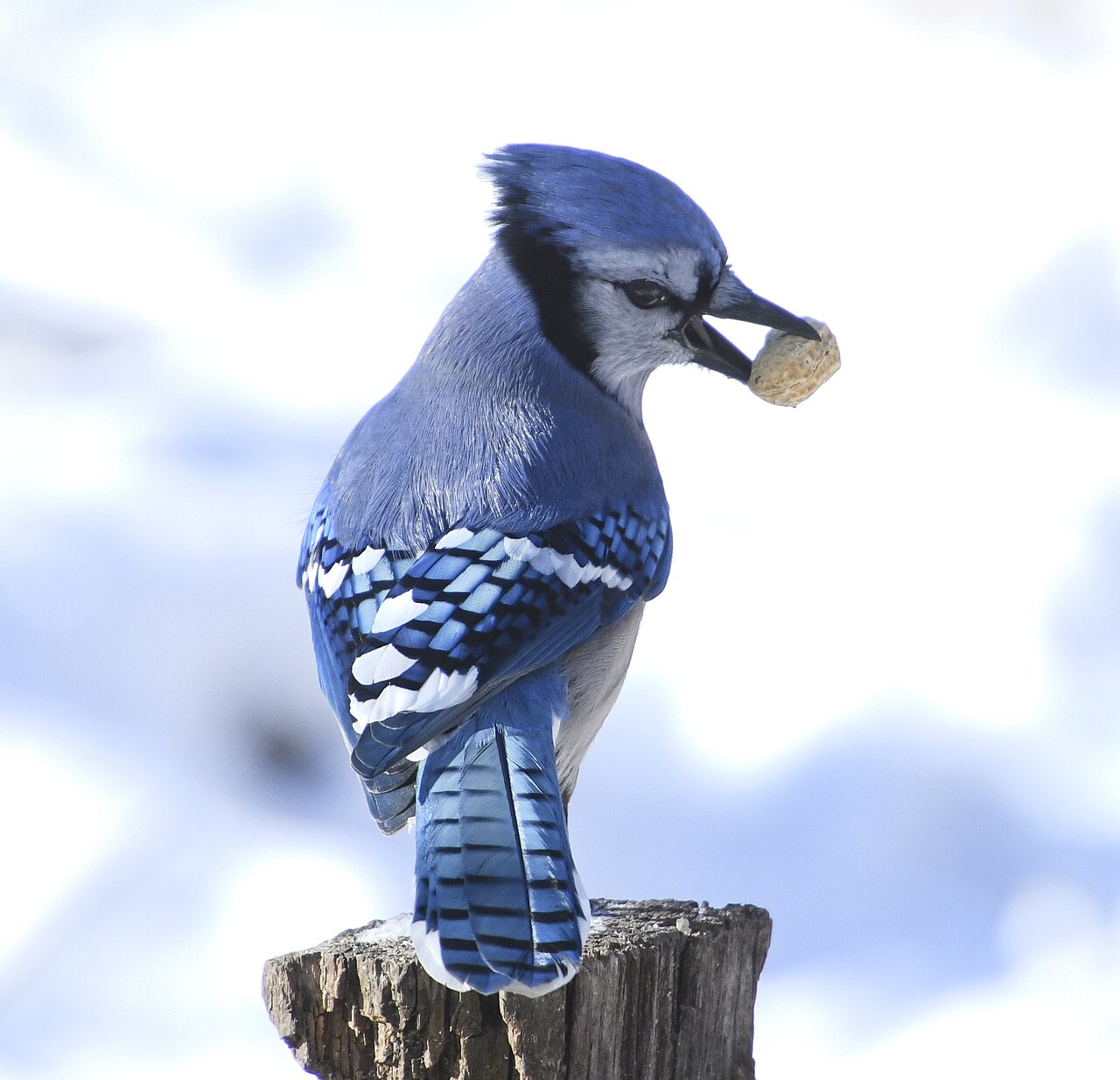
Finding a feather on the lawn carries whichever of the four messages fits the moment: a prompt to speak if you have been silent, a sign to stand firm if you are under pressure, a reminder to prepare, or a token of loyalty left behind by a bird that comes back every day.
The practical move is to leave the feather where it lies and take a photo with the light in front of it, which keeps the blue. In the US, picking up and keeping a blue jay feather is illegal under the Migratory Bird Treaty Act, so photograph it and leave it. See the blue jay page for range and lifespan.
Related reading: Seeing a Hummingbird Meaning.
Related reading: Seeing a Red Bird Meaning.
Frequently Asked Questions
Are blue jays good luck?
Yes, in most modern readings. The jay stands for encouragement and a push to act, and the one folk saying that runs the other way is the Southern belief that a jaybird is never seen on a Friday because it is running errands for the devil.
What is the old wives tale about blue jays?
The Friday tale. In African American folklore of the US South, the jaybird spends Friday carrying sticks or sand to the devil and returns on Saturday cheerful and loud because its errand is done, which is why, the saying goes, you never see one on a Friday.
How long do blue jays live?
Around 7 years for most wild blue jays. All About Birds records the oldest known wild, banded blue jay at over 26 years old.
Do blue jays mimic other birds?
Yes. A jay copies the calls of hawks, especially the red-shouldered hawk, possibly to make other birds believe a hawk is near, according to Texas Parks and Wildlife. That borrowed voice is the trickster of the Chinook stories in a backyard bird.
What bird gets mistaken for a blue jay?
Two: Steller’s jay in the West, with a black crest and head instead of the blue jay’s blue and white, and in the East the eastern bluebird and the indigo bunting, which are smaller, lack a crest and carry no black bars on the wings or tail.
How rare is it to see a blue jay bird?
Not rare at all. Blue jays are common across eastern and central North America and typically stay year-round in the bulk of that range, with part of the northern population moving south in fall along the Great Lakes and the Atlantic coast. The meaning of a sighting comes from the context, not the rarity.
Sources
- Cornell Lab of Ornithology, All About Birds, Blue Jay Overview
- Cornell Lab of Ornithology, All About Birds, Blue Jay Life History
- Texas Parks and Wildlife, Blue Jay
- US Fish and Wildlife Service, Feather Atlas, Feathers and the Law
- CDC, West Nile Virus Causes and How It Spreads
- Laura Erickson, Blue Jays in American Folklore
- Audubon Field Guide, Blue Jay