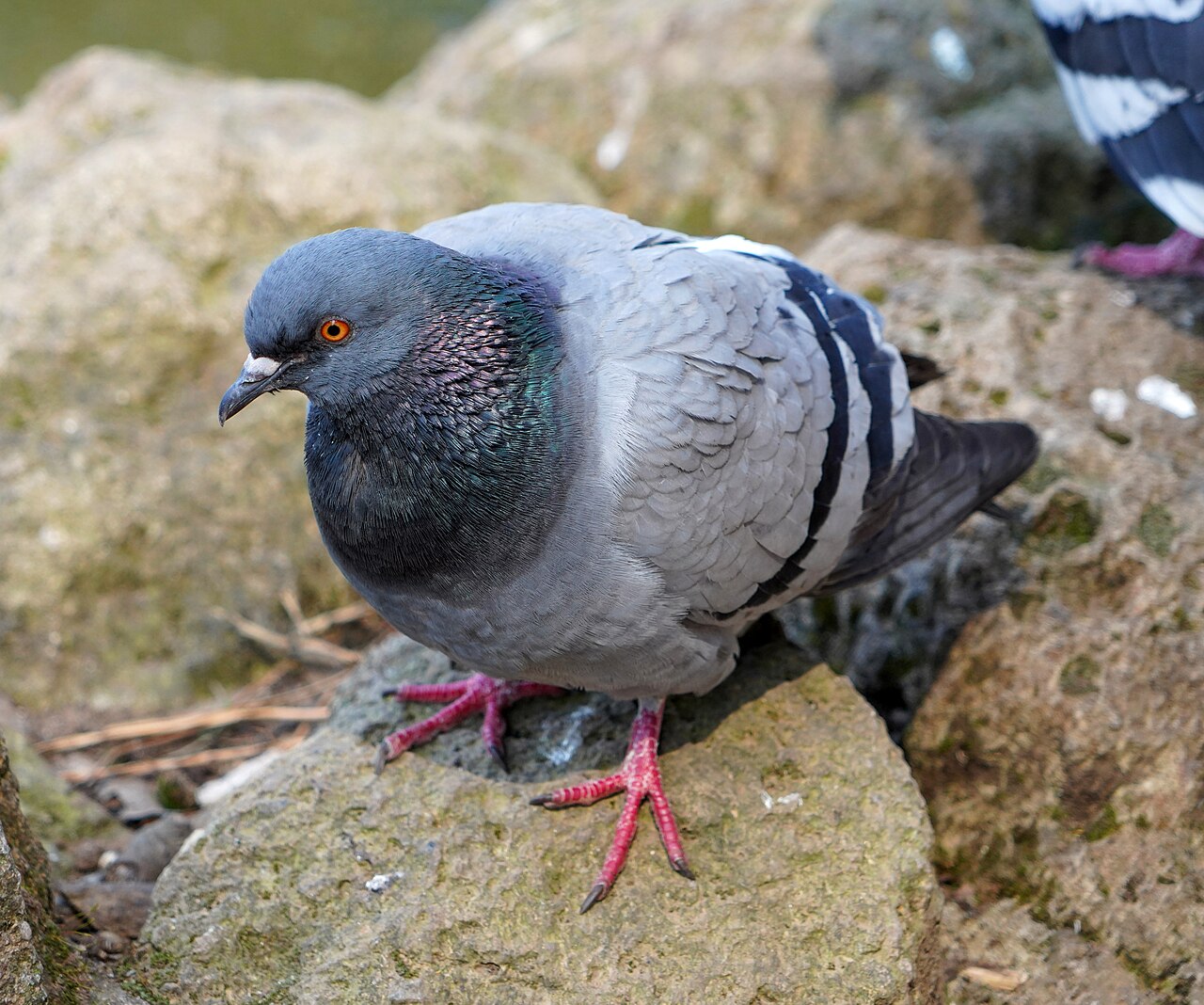
Pigeon Symbolism: Spiritual Meaning, Omens and What Seeing One Means
Seeing a pigeon is traditionally read as a sign of peace, safe return and messages arriving, because for most of human history the pigeon was the bird that carried news home. Across Christian, Mediterranean, Celtic and East Asian traditions, the same bird stands for fidelity, domestic love and the safe delivery of something you have been waiting for.
The pigeon and the dove are the same family, and in older texts they are often the same word. That matters for interpretation: most of the dove symbolism people know, including the biblical imagery of the Holy Spirit, attaches to birds a modern city dweller would simply call a pigeon. What follows separates the traditions, the colors and the specific situations people ask about, with each belief named as a belief rather than a fact.
Pigeons symbolize peace, love, fidelity, home and the arrival of a message. In Christian tradition the dove, the same family as the pigeon, represents the Holy Spirit and divine peace. In folk belief a pigeon visiting your home is usually read as good news coming or a departed relative checking in, rarely as a bad omen.
| Situation | Traditional reading | Tone |
|---|---|---|
| Pigeon on your window sill | A message or news on its way | Positive |
| Pigeon enters the house | A visit from a departed relative, or peace returning to the household | Mixed, mostly positive |
| Pair of pigeons together | Lasting partnership, fidelity, marriage | Positive |
| White pigeon | Purity, blessing, answered prayer | Positive |
| Black or dark pigeon | Grief carried away, or an ending that clears space | Mixed |
| Dead pigeon found | A message that did not arrive, a chapter closing | Negative |
| Pigeon seen repeatedly | A matter you keep postponing wants attention | Neutral |
What Do Pigeons Signify Spiritually?
Pigeons signify the safe passage of something between two places. The spiritual readings almost all grow out of one observable fact: a homing pigeon released hundreds of miles away will find its loft. Cultures that used that ability for messages built the rest of the symbolism on top of it, which is why the bird means both message and homecoming rather than one or the other.
The second thread is partnership. Rock pigeons (Columba livia) form long pair bonds, both parents feed the young with crop milk, and the pair is visibly inseparable on a ledge. Folk traditions across Europe and the Near East read that as a model of marriage, which is why pigeons appear at weddings and on gravestones of married couples.
The third is humility. Unlike the eagle or the hawk, the pigeon is common, urban and overlooked, and in several traditions this is precisely the point: the sacred arriving in the most ordinary form available. Readers who want the wider frame will find it in our overview of what different birds symbolize across traditions.
What Does It Mean if a Pigeon Visits You?
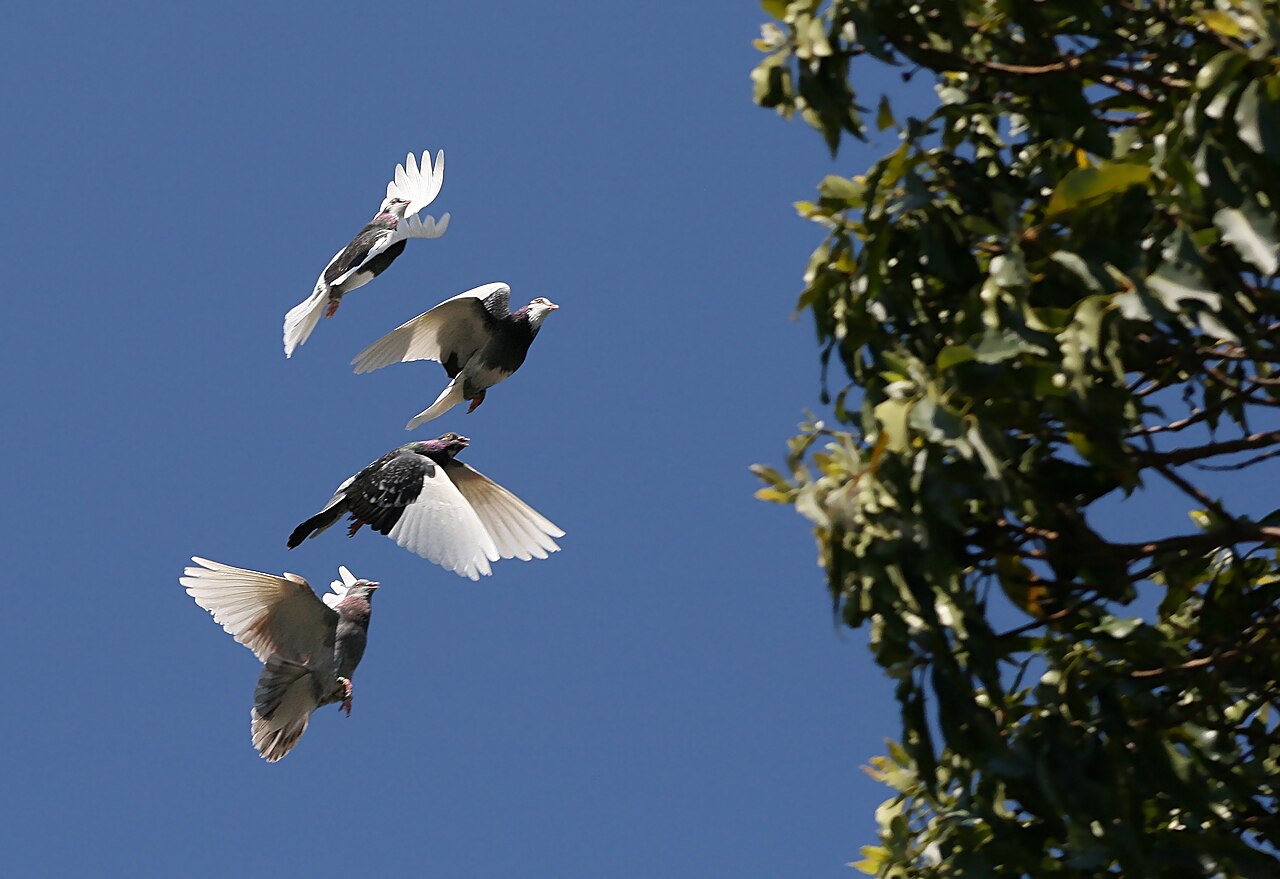
In most folk traditions a pigeon that visits you deliberately, landing near you, following you across a square, or returning to the same balcony, is read as news approaching. The emphasis is on arrival rather than warning. Where a crow is read as a messenger of hard truths, the pigeon is read as a messenger of ordinary, survivable news.
A second common reading, widespread in Italian, Greek, Caribbean and Latin American folk belief, is that the bird carries the attention of someone who has died. People describe a pigeon appearing in the weeks after a funeral and interpret it as the person letting the household know they are at peace. Whether that reading means anything is a question of faith, not of ornithology.
The practical reading is simpler. A pigeon approaching you closely has usually been fed by humans before. In a city square the bird is testing you for food, and the behavior tells you about the bird’s history rather than yours.
What Does God Say About Pigeons in the Bible?
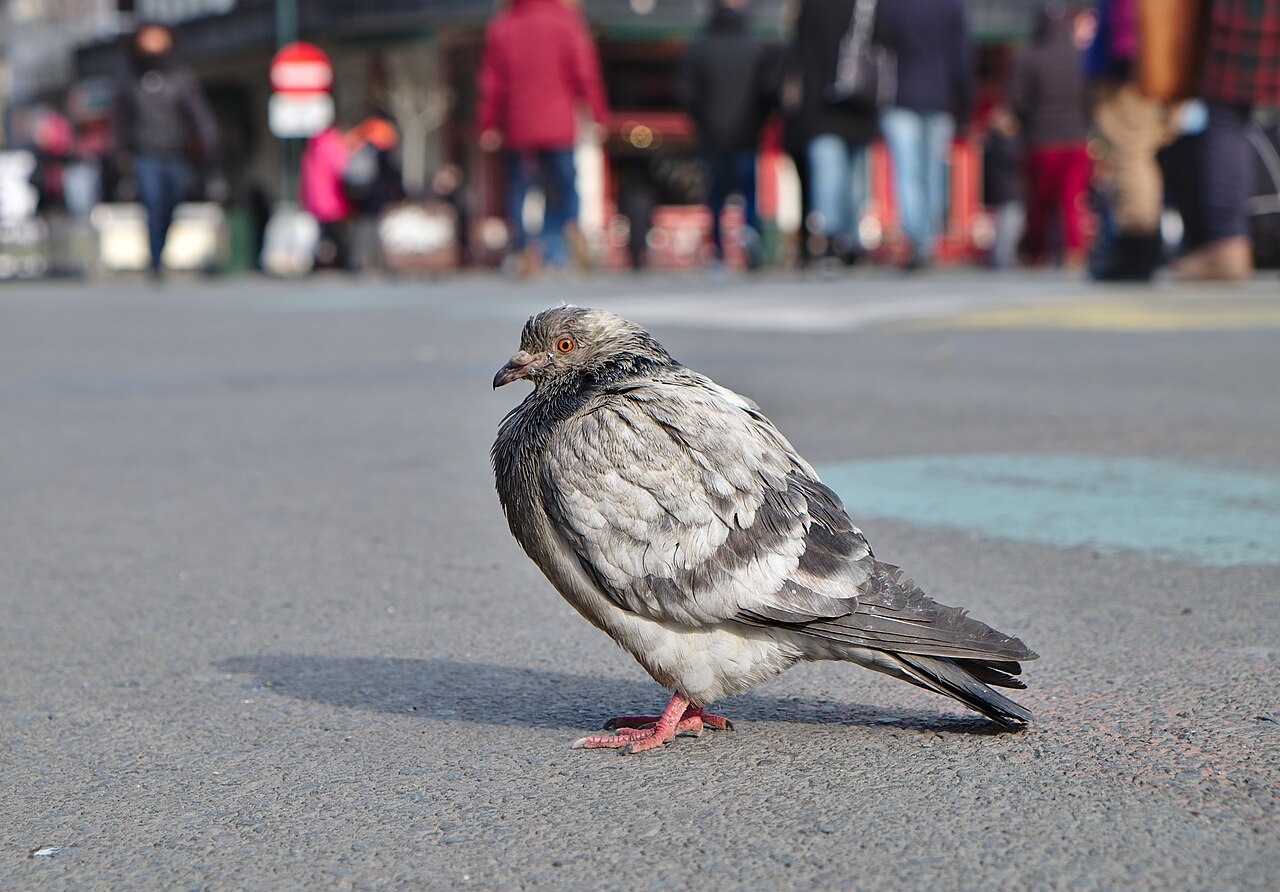
The Bible treats pigeons and doves together, and the references are specific. In Leviticus, two turtledoves or two young pigeons are the offering permitted to a worshipper who cannot afford a lamb, which makes the bird the sacrifice of the poor. Mary and Joseph bring exactly that offering in the Gospel of Luke.
In Genesis, the dove released from the ark returns with an olive leaf, and that image became the standard symbol of peace and of a world made habitable again. In the Gospels, the Spirit descends at the baptism of Jesus in the form of a dove. Christian tradition reads this as gentleness and divine presence rather than power.
There is also a warning note. The prophet Hosea compares Israel to a silly dove without sense, fluttering between Egypt and Assyria. In Christian reading the bird is therefore not uniformly flattering; it stands for innocence that can slide into aimlessness. Similar double readings attach to other birds, as our piece on blackbird symbolism and its light and dark meanings sets out.
Pigeon Meaning in Native American Traditions

Native American traditions are many and distinct, and generalizing across them is a mistake. The bird that carries weight in several of them is not the rock pigeon, which arrived with European settlers in the 1600s, but the passenger pigeon (Ectopistes migratorius), once present in flocks of millions.
In Seneca tradition, the passenger pigeon was understood as a gift that fed the people, and accounts describe ceremonial rules restricting hunting at the nesting colonies so that the young birds were not taken. In Ho-Chunk and Potawatomi accounts the arrival of the flocks marked a season rather than an omen for an individual.
Modern spirit animal literature that assigns the pigeon a fixed Native American meaning is usually a recent invention rather than a tradition. Where a specific nation’s teaching exists it belongs to that nation, and the honest summary is that the passenger pigeon is remembered as food, abundance and, after 1914, as the clearest case of a species lost to human appetite.
Celtic and European Folklore
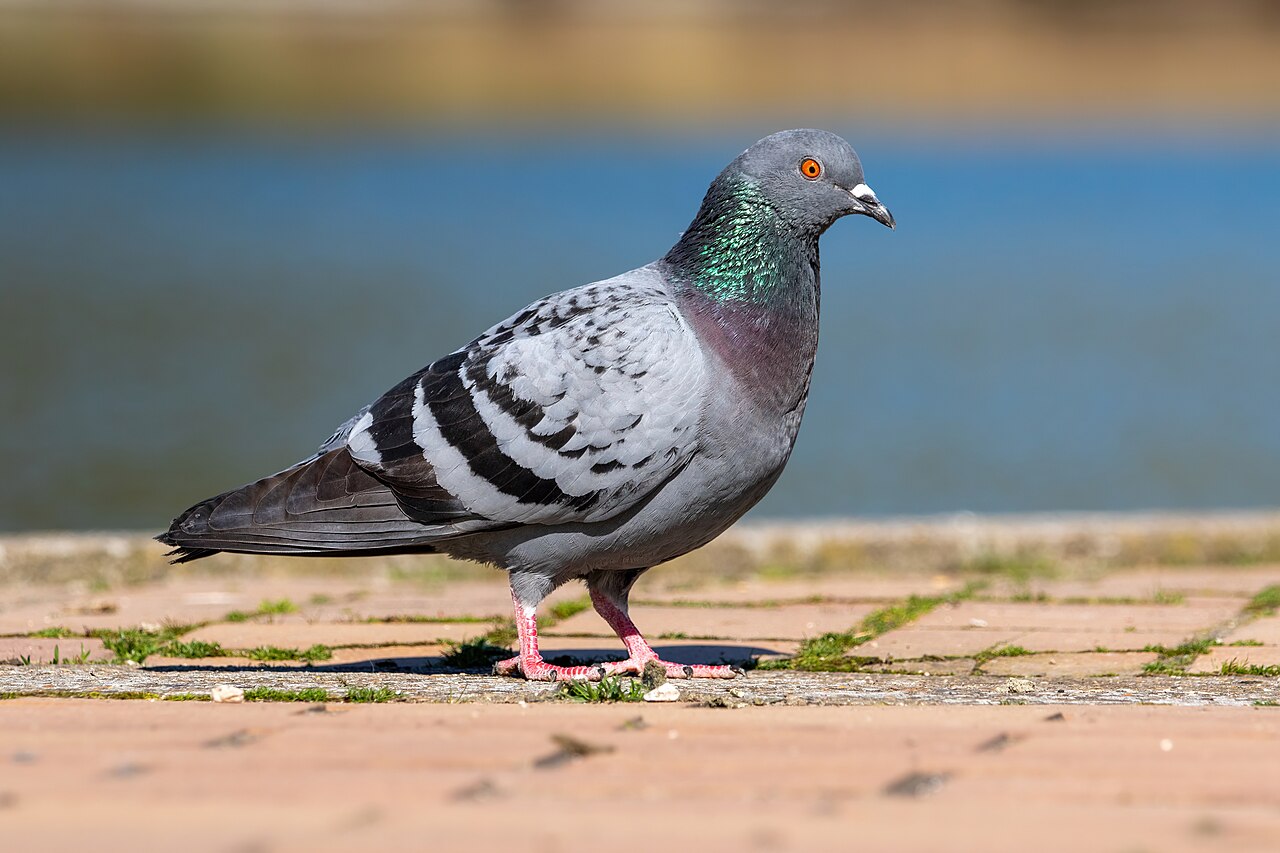
In Celtic folklore the dove is linked with healing wells and with the goddess Brigid, and in Irish and Scottish tradition the sight of a dove near a sickroom was read as a soul being carried gently rather than as a threat. Welsh folk belief held that a dove flying around a house signaled a death inside it, so the same bird carried both comfort and dread depending on the county.
English and German sailors’ lore is more uniformly positive. Pigeons following a ship were considered an assurance of landfall, and a pigeon landing on a vessel at sea was a sign of safe return for the crew. The association with homecoming is consistent across the whole region.
In Mediterranean folk belief, a pigeon in the house before a wedding meant a blessed marriage, and a pair nesting on a roof was read as protection on the household. Slavic traditions associated the dove with the soul leaving the body and sometimes released one at a burial.
Pigeon Symbolism in East Asian and South Asian Traditions
In Chinese tradition the pigeon is associated with longevity, fidelity and filial devotion. Dove-headed staffs were given to elders as marks of honor in the Han period, in the belief that the bird never chokes on its food and so represents easy old age. The paired birds on wedding decorations carry the fidelity reading.
In Japanese tradition the pigeon is the messenger of Hachiman, the deity associated with war and with the protection of the nation, and pigeon motifs appear at Hachiman shrines, including the famous pigeon-shaped characters on the Tsurugaoka Hachimangu sign in Kamakura. Here the bird means divine message and protection rather than peace.
In Hindu tradition the dove or pigeon is connected with Kamadeva, and in some regional beliefs a pigeon entering a home is read as an invitation to hospitality. In Islamic tradition pigeons are kept at mosque courtyards and remembered in the story of the bird that nested at the cave mouth during the Prophet’s flight to Medina, so the bird is widely treated with protective kindness.
What Is the Mythology of Pigeons?
The oldest written appearance is Mesopotamian. In the Epic of Gilgamesh, Utnapishtim releases a dove, a swallow and a raven to find land after the flood, a scene the biblical account later echoes. The dove returns, finding nowhere to rest, and the story establishes the bird as the first scout of a drowned world.
In Greek myth the bird belongs to Aphrodite, who is drawn by doves and whose temples kept them. The Roman Venus inherited the association, which is why pigeons remain a shorthand for romantic love in Western art. The oracle at Dodona was said to have been founded when a black dove spoke from an oak tree.
In Sumerian religion the dove was sacred to Inanna and later Ishtar, and figurines of doves appear in temple deposits from the third millennium BC. The line from Inanna to Aphrodite to the Christian dove is one of the longest continuous symbolic threads in the ancient world, which is part of why the imagery feels familiar even to people with no religious background.
Pigeon Spiritual Meaning by Color
Color readings are folk interpretations rather than fixed doctrine, and they vary by region. A white pigeon is the most consistently positive: purity, a prayer answered, a blessing on a marriage. Releasing white birds at weddings and funerals comes directly from this reading, though the birds used are usually white homing pigeons rather than doves.
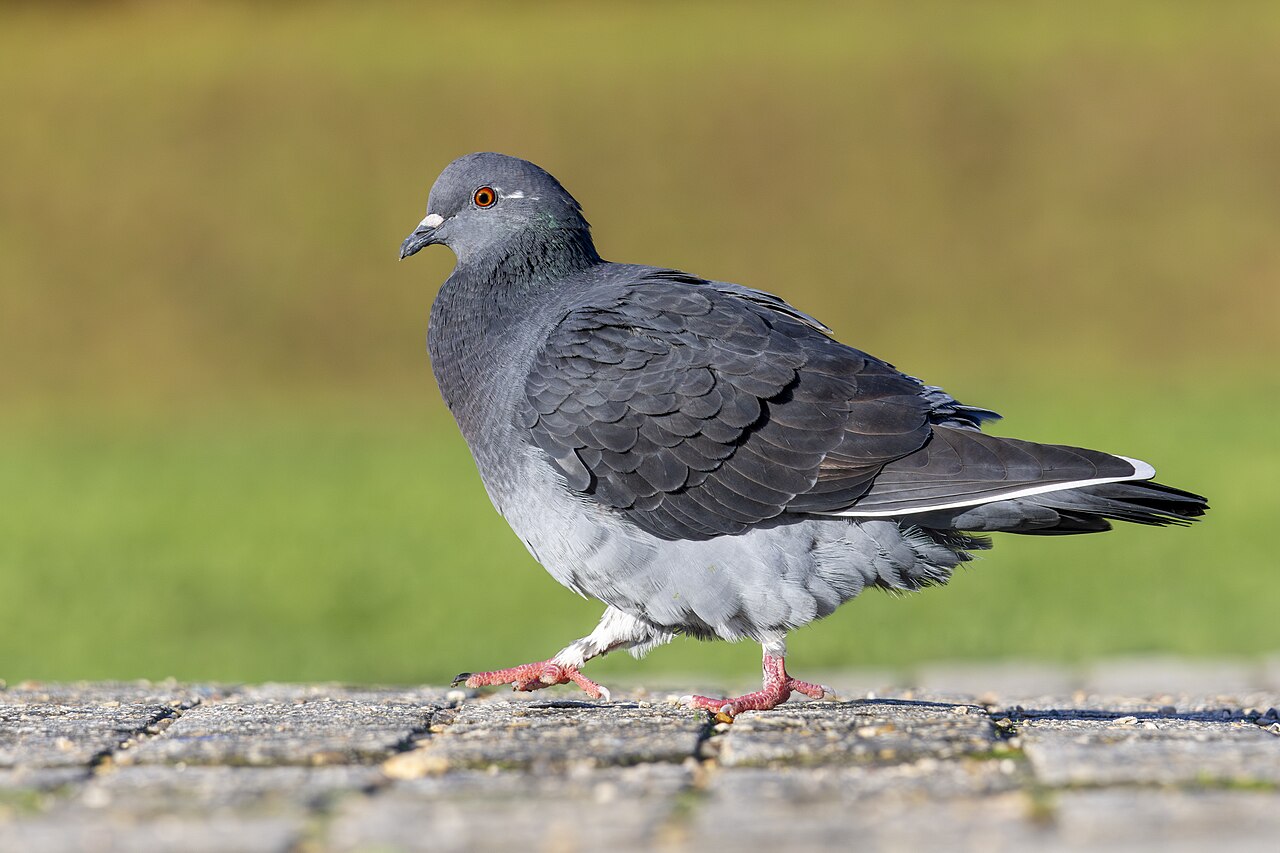
A grey pigeon, the ordinary city bird, is generally read as steady news and everyday protection rather than anything dramatic. A black or very dark pigeon is read in two opposite ways: in some traditions as grief being carried away from the house, in others as an ending that has to be accepted before anything new can start.
A brown or reddish pigeon is usually tied to grounding, home and practical matters such as money or a move. Color symbolism is one of the oldest layers in folk interpretation, running across species in much the same way, as our article on the meanings attached to black butterflies shows.
What Is the Spiritual Meaning of a Pigeon Sitting on Your Window Sill?
A pigeon on your window sill is traditionally read as a message waiting for you, with the window itself treated as the threshold between the household and the outside world. In European folk belief the bird at the sill is a visitor that has not yet decided to enter, and so the reading leans toward news rather than a decision already made.
In the version common in Mediterranean and Latin American households, the bird at the window is checking on the people inside on behalf of someone who has died. If it taps the glass, some tell it to deliver the message and leave, a small rite that belongs to folk practice rather than to any church.
The ornithological reading is worth holding alongside the symbolic one. Window sills are ledges, ledges are nest sites, and a pigeon at your window in March is overwhelmingly likely to be prospecting. Rock pigeons evolved on sea cliffs, and a building is a cliff as far as the bird is concerned, a point the Cornell Lab lays out in its Rock Pigeon species guide.
A Pigeon in the House, Garden or on the Balcony
A pigeon that comes inside is the situation people ask about most, and the readings diverge sharply by region. The dominant folk interpretation across Italy, Greece, the Philippines and much of Latin America is a visit from a departed family member, understood as reassurance rather than warning.
A smaller strand, strongest in parts of Britain and Ireland, treats any bird in the house as an ill omen and specifically as a death in the family. Where that belief is held, the remedy is to release the bird through the same window it entered and to speak a blessing after it.
A pigeon settling in a garden or on a balcony is read more gently: peace entering the home, or a long period of conflict ending. Two birds together intensify the reading toward partnership and reconciliation. In every version, driving the bird out violently is held to reverse the meaning, which is one of the few points the traditions agree on.
Seeing a Pigeon Repeatedly, at Night, or Finding a Dead One
Repeated sightings are read as a message that has not been received. The folk logic is simple: a messenger that keeps returning has not been answered. Interpreters usually point the person toward a decision being postponed rather than toward any external event.
Pigeons seen at night are unusual, because the birds roost after dusk. Where folk tradition addresses it, a pigeon active at night is read as urgency, something that cannot wait for morning. The practical explanation is street lighting, which keeps urban pigeons moving long after rural birds have settled.
A dead pigeon is the one clearly negative sign in the whole set. The traditional reading is a message that failed to arrive or a connection that has been broken, and in some traditions the proper response is to bury the bird rather than leave it. Grief readings attach to other species in similar ways, including the ones described in our article on cardinals as visits from the dead.
Is a Pigeon an Omen? Spirit Animal, Totem and Dreams
As an omen, the pigeon sits at the mild end of the scale. It is not treated as a harbinger in the way a raven or an owl is in European tradition. Where it functions as an omen at all, it points to news, travel and the state of the household rather than to danger.
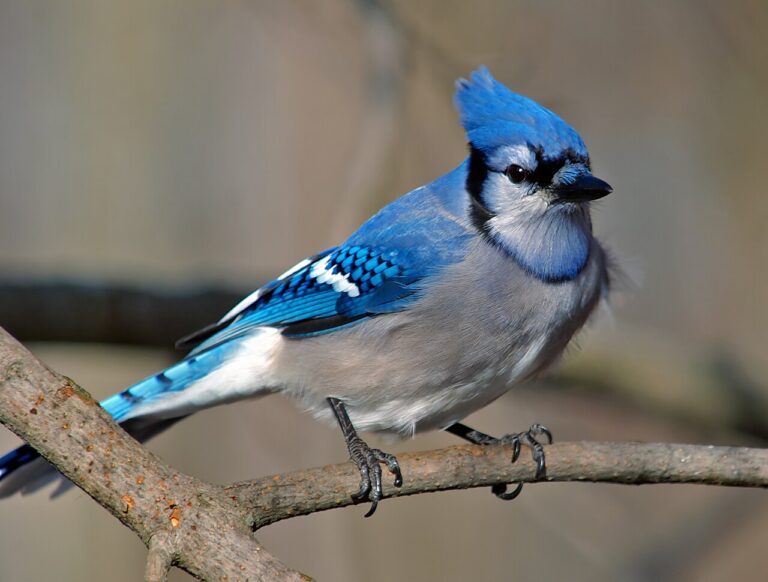
In modern spirit animal practice, which draws loosely on several traditions and is largely a twentieth century construction, the pigeon totem is assigned to people who value home, community and quiet persistence, and who return to their roots after wandering. It is contrasted with the solitary, high flying symbolism described in the spiritual readings of the bald eagle and the bolder messenger role covered in blue jay spiritual meaning.
In dreams, a flying pigeon is commonly read as news on the way, a caged pigeon as a message being suppressed, and a flock as community or as social pressure depending on whether the dreamer felt calm or crowded. Dream interpretation is personal, and the tradition itself holds that the dreamer’s feeling in the dream outranks any fixed key.
Frequently Asked Questions
Are pigeons good luck or bad luck?
Mostly good luck. Across European, Mediterranean and East Asian folk traditions the pigeon signals peace, safe return and news arriving. The main exceptions are a dead pigeon, read as a broken connection, and the British and Irish belief that any bird entering a house foretells a death. There is no widespread tradition treating a living pigeon as unlucky.
What is the spiritual meaning of a dove visiting you?
A dove visiting is read as peace offered and, in Christian interpretation, as the presence of the Holy Spirit or an answered prayer. Because the dove and the pigeon belong to the same family and share most of their symbolism, the readings overlap almost entirely, with the dove carrying the more explicitly religious weight.
Does God send signs through birds?
Christian tradition records birds as instruments of divine communication, most directly the dove at the baptism of Jesus and the raven that fed Elijah. Whether a particular bird at a particular moment is a sign is a matter of personal faith, and most churches advise discernment rather than treating individual sightings as messages.
What does it mean when a pigeon stares at you?
Folk interpretation reads sustained eye contact as the message being addressed to you specifically rather than to the household. In practice pigeons have laterally placed eyes and turn the head sideways to focus, so a bird that appears to be staring is simply bringing one eye to bear, usually to judge whether you have food.
Is seeing a pair of pigeons a sign about love?
Traditionally yes. A pair is read as fidelity, a stable partnership or an approaching marriage, and the reading has an observable basis, since rock pigeons form long pair bonds and raise young together. In Chinese wedding imagery and in Greek and Roman art tied to Aphrodite and Venus, the paired bird carries exactly this meaning.
What does a pigeon pooping on you mean?
In European and North American folk belief it is counted as good luck and sometimes as money coming, on the reasoning that an unlikely misfortune uses up bad luck in a harmless way. The belief is widespread in Britain, Italy and Russia, and lottery ticket purchases after the event are part of the folk practice rather than a separate superstition.