Chameleon Poop: What Healthy Droppings Look Like (Color Chart)
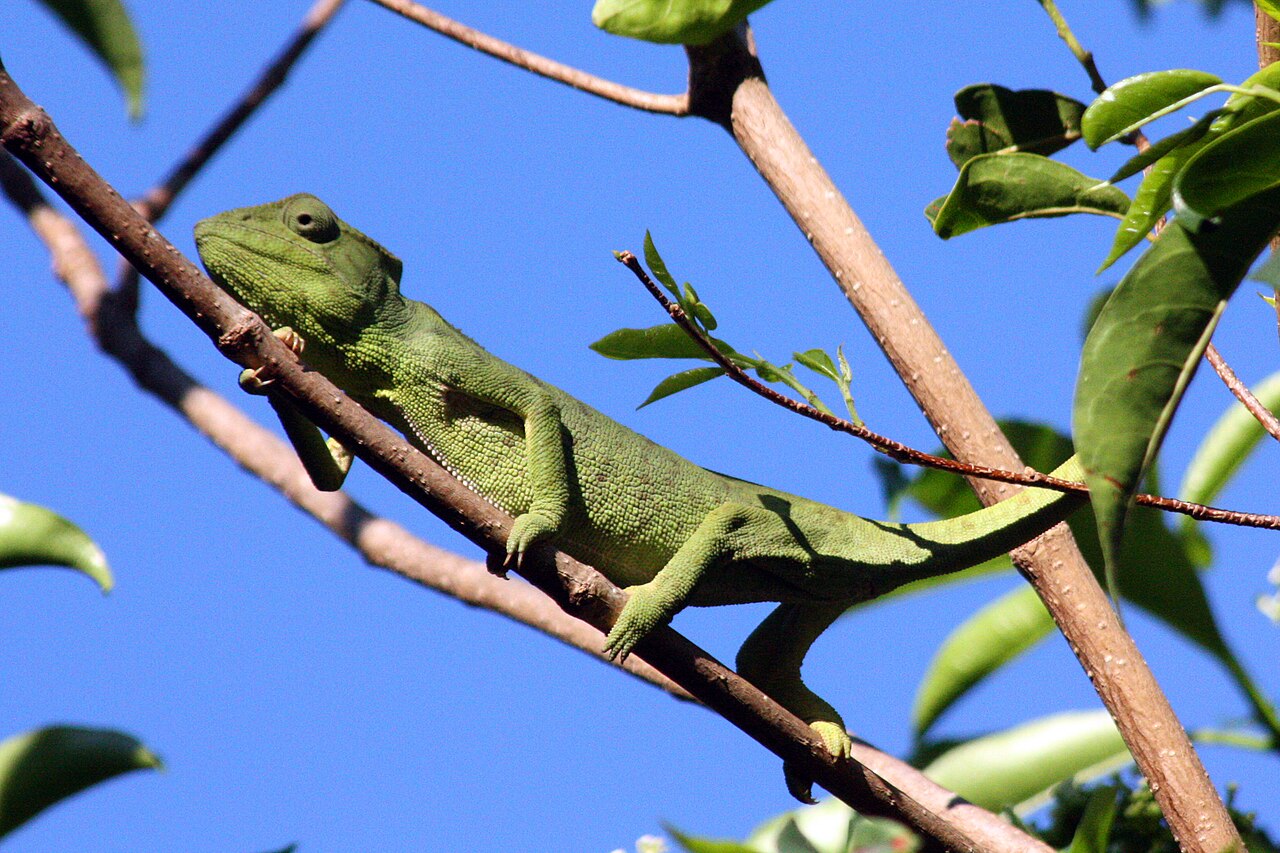
Chameleon poop is a two-part dropping: a firm, dark brown to black pellet about the size of a grain of rice or a small bean, capped by a chalky white or off-white urate. If you keep a veiled chameleon (Chamaeleo calyptratus) or a panther chameleon (Furcifer pardalis), that white tip is the part worth reading every single day, because it tells you about hydration before the animal shows any other symptom.
Wild chameleons drop their waste from branches, so finding it on the ground under a shrub is normal and tells you little. In a cage it lands on the floor, the drainage tray or a leaf, and there it becomes a daily health record. The guide below covers size, shape, color, what the white part means, the three droppings most often mistaken for it, and when a change in the stool is an emergency rather than a quirk.
Healthy chameleon poop is a dark brown or black cylinder roughly 0.4 to 0.8 in (1 to 2 cm) long, firm enough to hold its shape, paired with a soft white or cream urate. Orange, yellow or chalky-hard urates point to dehydration. Runny, green, bloody or foul-smelling stool needs a vet and a fecal test.
| Feature | Healthy chameleon dropping | Warning sign |
|---|---|---|
| Size | 0.4 to 0.8 in (1 to 2 cm), thicker on adults | Tiny pellets or nothing for days |
| Shape | Cylinder, tapered, holds form when lifted | Puddle, mucus strands, pencil-thin |
| Color | Dark brown to near black | Green, yellow, gray, red streaks |
| Urate (white cap) | White to cream, soft, moist | Orange, yellow, gritty, rock hard |
| Contents | Insect legs, wing cases, chitin flecks | Live worms, blood, undigested feeders |
| Smell | Faint, earthy | Sour, sharply fecal, rotten |
| Frequency | Daily in well fed adults, every 1 to 3 days otherwise | No stool for 4 or more days |
What Does Healthy Chameleon Poop Look Like?
A healthy dropping has two visibly separate parts that arrive together. The fecal portion is dark brown to black, firm, and shaped like a short sausage with slightly tapered ends. You should be able to lift it with a paper towel in one piece. Break it apart and you will see the gloss of insect exoskeleton: cricket legs, roach wing cases, the odd black soldier fly head capsule.
The second part is the urate, the solid form in which reptiles excrete nitrogen waste instead of liquid urine. On a well hydrated chameleon it is white to very pale cream, slightly damp, and soft enough to smear. Size matters less than color and texture here, although an unusually large urate after a long dry spell is common and not alarming by itself.
Adult size scales with the animal. A full grown female veiled chameleon produces a dropping noticeably thinner than a 2 ft male panther chameleon. What you are tracking is consistency across your own animal from week to week, not a match against a number from someone else’s cage. Keep a photo log on your phone for a month and the baseline becomes obvious.
What Does Unhealthy Chameleon Poop Look Like?
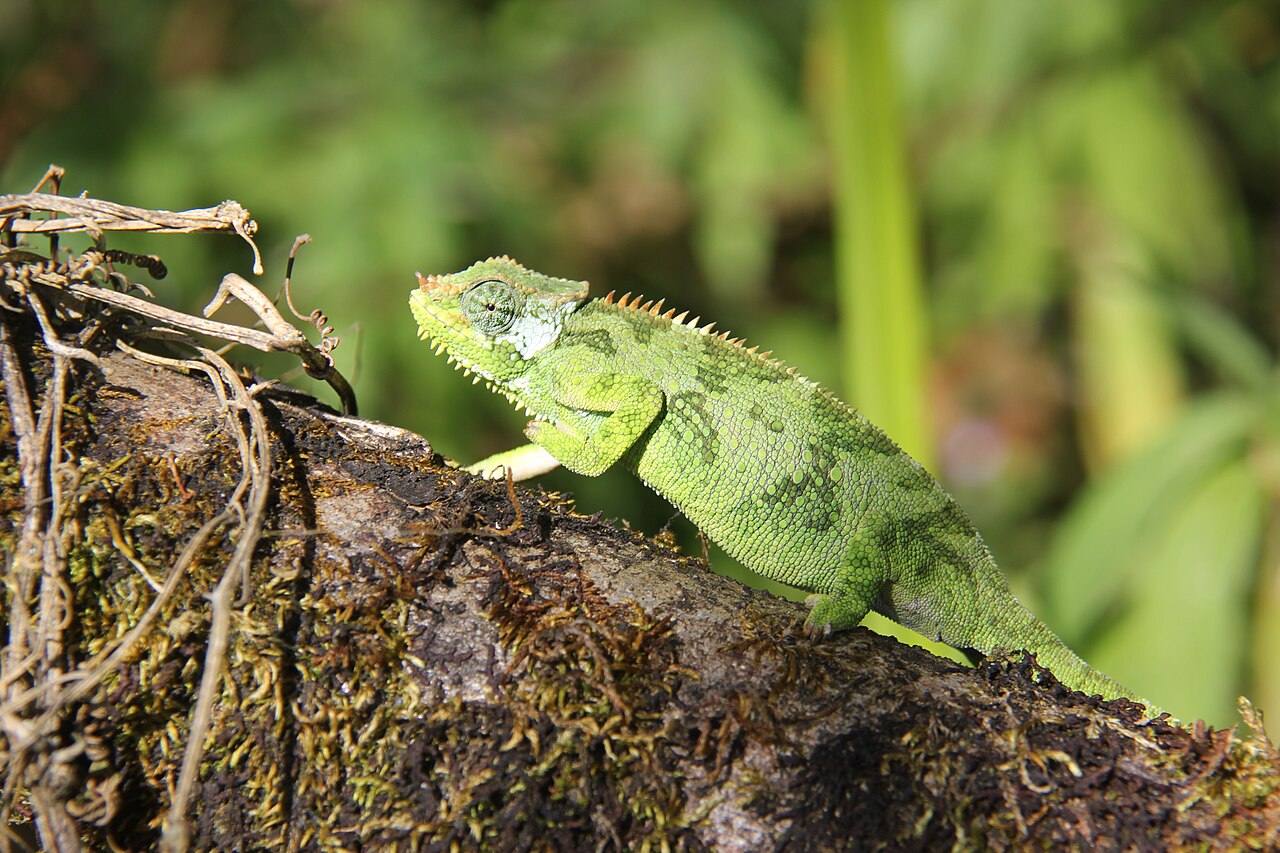
Unhealthy chameleon poop breaks the pattern in one of four ways: it loses form, it changes color, it starts to smell, or it stops arriving. Loose brown stool that spreads on contact usually follows a diet change, a gut-loading mistake or mild stress, and it often corrects within two days. Watery stool that repeats for more than two days is a parasite or bacterial suspicion and calls for a fecal float at the vet.
Color tells a second story. Bright green stool in a chameleon that has eaten only insects suggests bile moving too fast through the gut or heavy plant matter from the feeders. Yellow or mustard stool, gray stool and black tarry stool all belong in the vet-visit column. Mucus strands wrapped around the pellet point to gut irritation rather than diet.
Smell is the signal keepers underrate. Normal droppings are nearly odorless at arm’s length. A sour or sharply fecal smell from a fresh dropping is one of the earliest signs of a bacterial overgrowth, and it often shows up a week before the animal loses appetite. If you need a side by side comparison with other small reptile waste, the frog and lizard dropping comparison shows how the urate cap distinguishes reptile stool from amphibian stool.
The White Part Is Urate, Not Urine
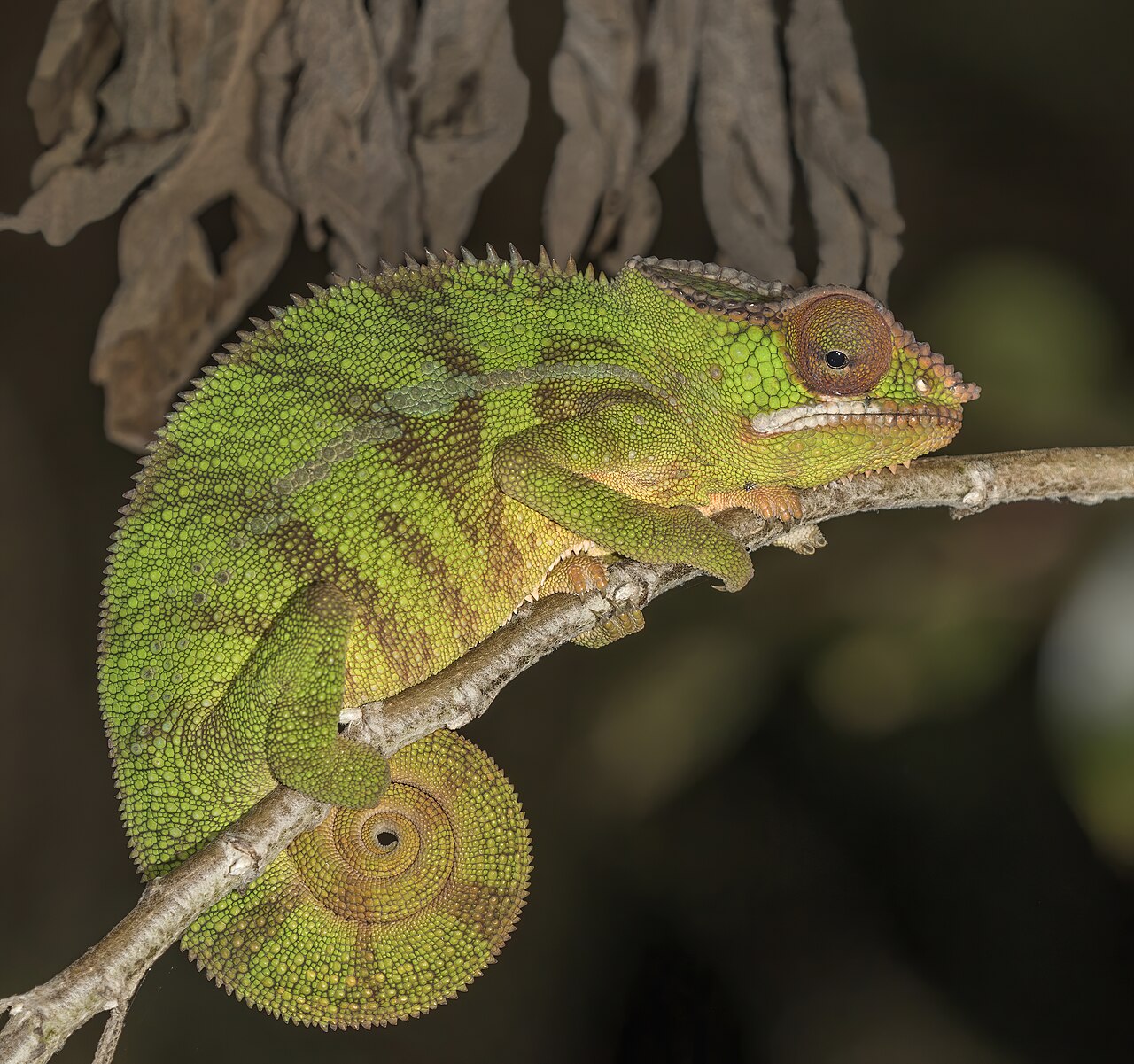
The chalky white cap is the single most useful hydration gauge you have. Chameleons convert nitrogen waste into uric acid and pass it as a semi-solid urate, which conserves water. When the animal drinks enough, that urate stays white and moist. As hydration drops, the urate concentrates and turns yellow, then peach, then orange, and finally hardens into a gritty lump.
An orange urate is not a disease, it is a reading. Treat it as an instruction to increase misting time, check that the dripper actually runs where the animal sits, and confirm the chameleon is drinking rather than just sitting in the spray. Repeated orange urates over weeks lead to gout and kidney damage, which is far harder to reverse than a misting schedule.
One caveat: the first urate after a long overnight is often slightly darker than the rest of the day, and a female carrying eggs may pass larger urates. Judge the pattern across several days instead of panicking over a single yellow cap.
Chameleon Poop vs Gecko Poop
Gecko droppings are the closest look-alike because both animals are insectivores that pass a urate cap. The difference is proportion and surface. Leopard gecko stool is typically shorter and blunter, often deposited in one corner of the enclosure because geckos latrine, and the urate is frequently a separate loose pellet rather than a cap fused to the stool.
Chameleons do not latrine. They poop from wherever they happen to be perched, so droppings land scattered across the floor, the plant leaves and the screen edge. Scatter plus a fused white cap plus insect chitin is chameleon. A tidy pile in one corner is almost always a gecko or another floor-dwelling lizard.
Chameleon Poop vs Anole Poop
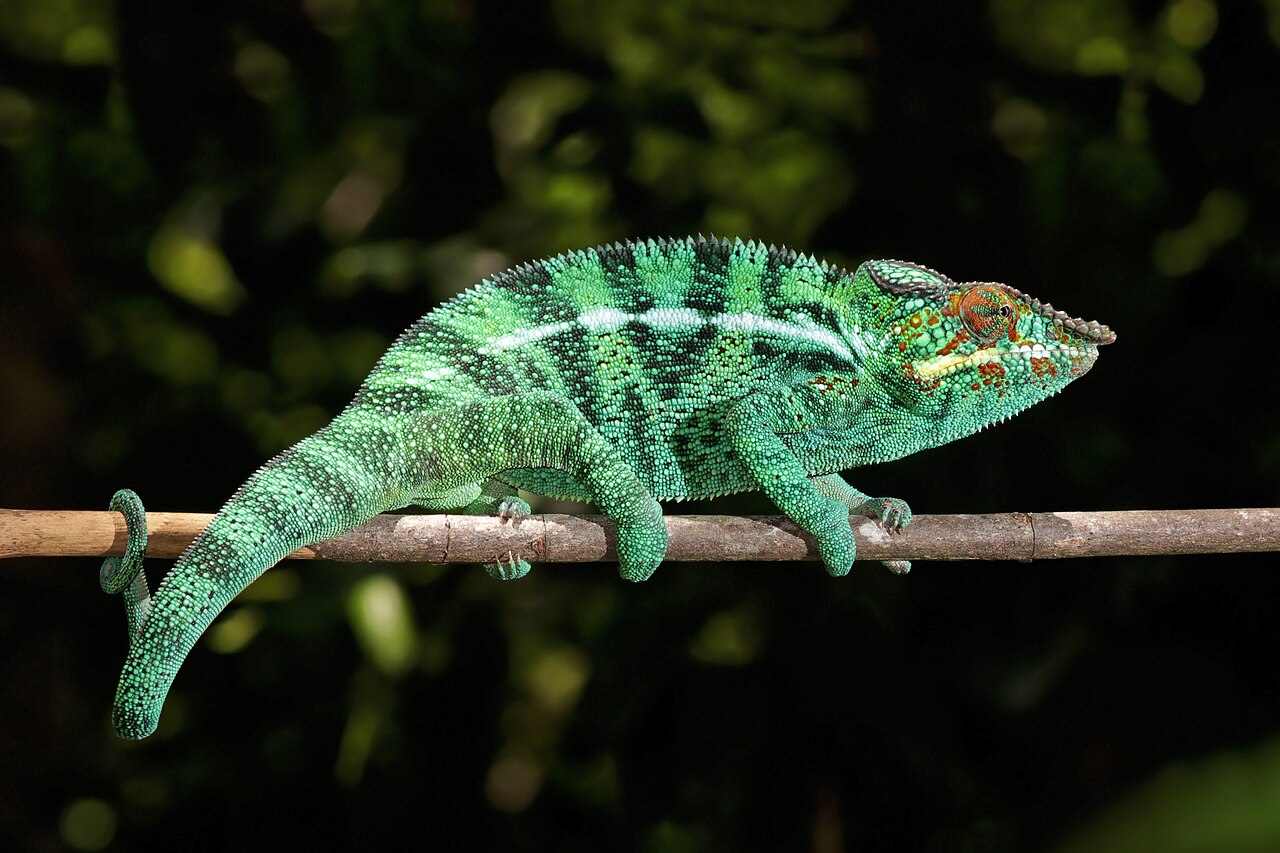
Green anoles (Anolis carolinensis) share the arboreal habit, and in a mixed reptile room their waste gets confused with chameleon waste constantly. Anole droppings are much smaller, roughly 0.1 to 0.2 in (3 to 5 mm), and they dry into a thin dark comma with a proportionally large white dot. A chameleon dropping is three to six times that length and has real bulk.
Both land on leaves rather than in a corner, so position will not settle it. Go by size first, then by how much chitin you can see when the dropping is broken open. For the broader problem of telling lizard waste from rodent waste on a patio or in a garage, the lizard and rat droppings guide is the faster answer.
Chameleon Poop vs Mouse Poop
This is the mix-up that matters outside the hobby, because mouse droppings carry different risks. Mouse poop is a smooth black grain about 0.1 to 0.25 in (3 to 6 mm) long, pointed at both ends, with no white cap at all and no visible insect parts. It also appears in trails of dozens along walls and inside drawers.
Chameleon droppings arrive one or two at a time, carry the urate, and sit under a perch rather than along a baseboard. If you find pointed black grains in a pantry, you have rodents, not an escaped lizard, and the lizard versus mouse dropping comparison walks through the full checklist.
How Often Do Chameleons Poop?
A well fed adult on daily feedings usually passes one dropping per day, often within a few hours of basking. Adults fed every other day drop every one to three days. Hatchlings and juveniles eat constantly and poop two or three times a day. Cool ambient temperatures slow digestion, so a cage running below the recommended basking range stretches the interval.
Four days without a dropping in an animal that is still eating is the threshold where impaction and constipation enter the picture. Four days without a dropping and without eating is a vet call, not a wait-and-see. Gravid females also slow down shortly before laying, which is normal and resolves after the clutch.
Why Is My Chameleon Pooping Blood?
Blood in a chameleon dropping is never a diet artifact. Fresh red streaking on the outside of the stool usually comes from the lower gut or the cloaca and can follow straining against an impaction or a prolapse. Dark, tarry, almost black stool suggests bleeding higher in the digestive tract. Both belong in front of a reptile veterinarian the same week.
Common causes include heavy parasite loads, particularly coccidia, bacterial enteritis, and injury from a substrate the animal swallowed. Bring a fresh sample in a sealed bag, kept cool, ideally less than 12 hours old. A fecal float and a direct smear answer the parasite question quickly and cheaply.
Parasites and Worms in Chameleon Droppings
Wild caught chameleons arrive with parasites as a rule rather than an exception, and captive bred animals pick up coccidia and pinworms from contaminated feeders or shared tools. Visible white threads moving in a fresh dropping are usually nematodes. Rice-like segments are less common in reptiles than in mammals but do occur.
Most parasite loads are invisible to the eye, which is why keepers who have kept animals for years still run a fecal test twice a year. The practical rule: quarantine every new animal for 60 days, test its stool before it shares a room, and never move feeders or misting tools between enclosures without washing them.
How to Help a Constipated Chameleon
Start with the two causes you control. Raise hydration first: longer misting cycles, a working dripper, and a session of gentle shower misting in a plant for 20 to 30 minutes. Then check the basking temperature against the species requirement, because a chameleon that cannot reach its preferred body temperature cannot digest at normal speed.
A lukewarm soak in 0.5 in (1 cm) of water for 15 minutes often moves a mild case within a day. What you should not do is feed mineral oil, squeeze the abdomen or offer more insects on top of a blocked gut. If the animal still has not passed a dropping after 48 hours of corrected husbandry, a vet needs to rule out an impaction, an egg-bound female and metabolic bone disease.
Is Chameleon Poop Dangerous to Humans?
Reptiles, including chameleons, can shed Salmonella in their feces without looking sick at all, which is the entire reason handwashing rules exist in the hobby. The CDC links reptile and amphibian contact to recurring human salmonellosis outbreaks, and children under five, pregnant people and anyone immunocompromised carry the highest risk.
Clean with disposable gloves, remove the dropping with a paper towel rather than rinsing it through a drain you also use for food prep, and disinfect the surface afterward. Wash hands with soap and warm water even if you wore gloves. Keep enclosures and cleaning tools out of kitchens. The same precautions apply to larger reptile waste, as covered in the alligator scat guide, and to aquatic amphibians in the axolotl waste guide. Tortoise keepers will find the equivalent breakdown in the tortoise dropping guide.
Frequently Asked Questions
What are the early signs of mbd in chameleons?
Early metabolic bone disease shows as a weak grip, trembling limbs, a soft or rubbery jaw, and reluctance to climb. Droppings may also slow because the gut muscles weaken. It is caused by too little calcium, no vitamin D3 or no UVB light, and early cases respond well to corrected supplementation and lighting.
What does unhealthy chameleon poop look like?
Unhealthy droppings are runny, green, yellow, gray or blood-streaked, smell sour, contain visible worms or mucus, or stop appearing for four or more days. An orange or rock-hard white urate signals dehydration. Any of these for more than two days warrants a fecal test rather than a husbandry guess.
Can a chameleon go 2 days without food?
A healthy adult chameleon can skip two days without harm, and many keepers feed adults every other day on purpose. Hatchlings and juveniles cannot. Two days of refusing food while also passing no droppings, or combined with closed eyes and dark coloration, is a reason to see a vet.
What are the most common causes of death in chameleons?
Dehydration and kidney failure, metabolic bone disease, untreated parasite loads, respiratory infections from poor ventilation, and egg-related complications in females. Most trace back to husbandry rather than bad luck, and most leave a trail in the droppings weeks earlier through orange urates or loose stool.
How to tell when a chameleon is dying?
Warning signs include sunken eyes, prolonged closed eyes during the day, dark or washed-out coloration, a loose grip, sitting on the cage floor, no droppings for several days, and open-mouth breathing. A chameleon at this stage needs a reptile veterinarian immediately, not a change in misting schedule.
Does chameleon poop smell?
Fresh healthy droppings have only a faint earthy smell. A noticeable sour or strongly fecal odor usually means bacterial overgrowth, retained waste or spoiled feeder insects in the gut. Persistent smell from a clean enclosure is worth a fecal test, as it often precedes appetite loss by a week.