Red Winged Blackbird Sound: 5 Calls and What They Mean
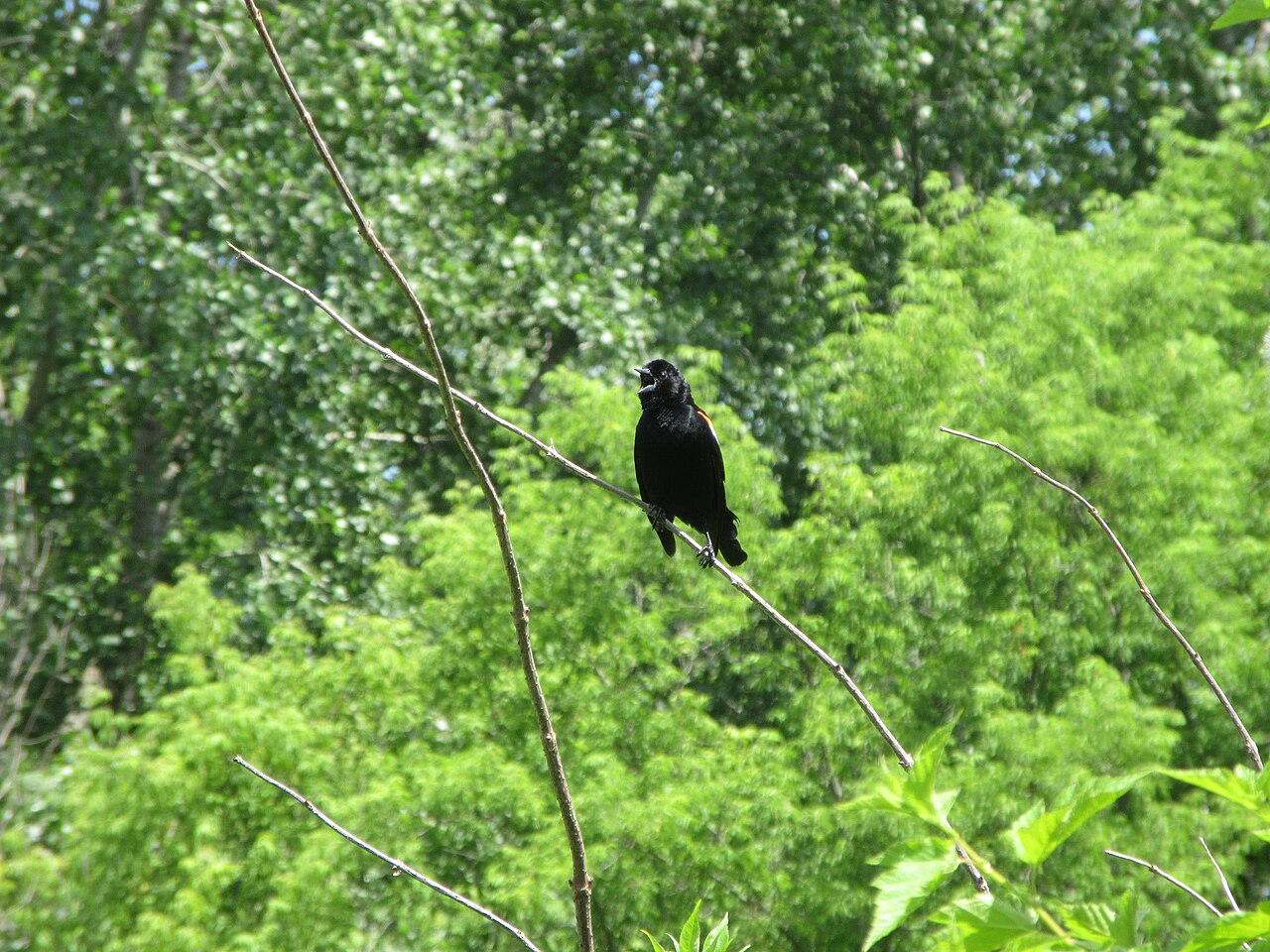
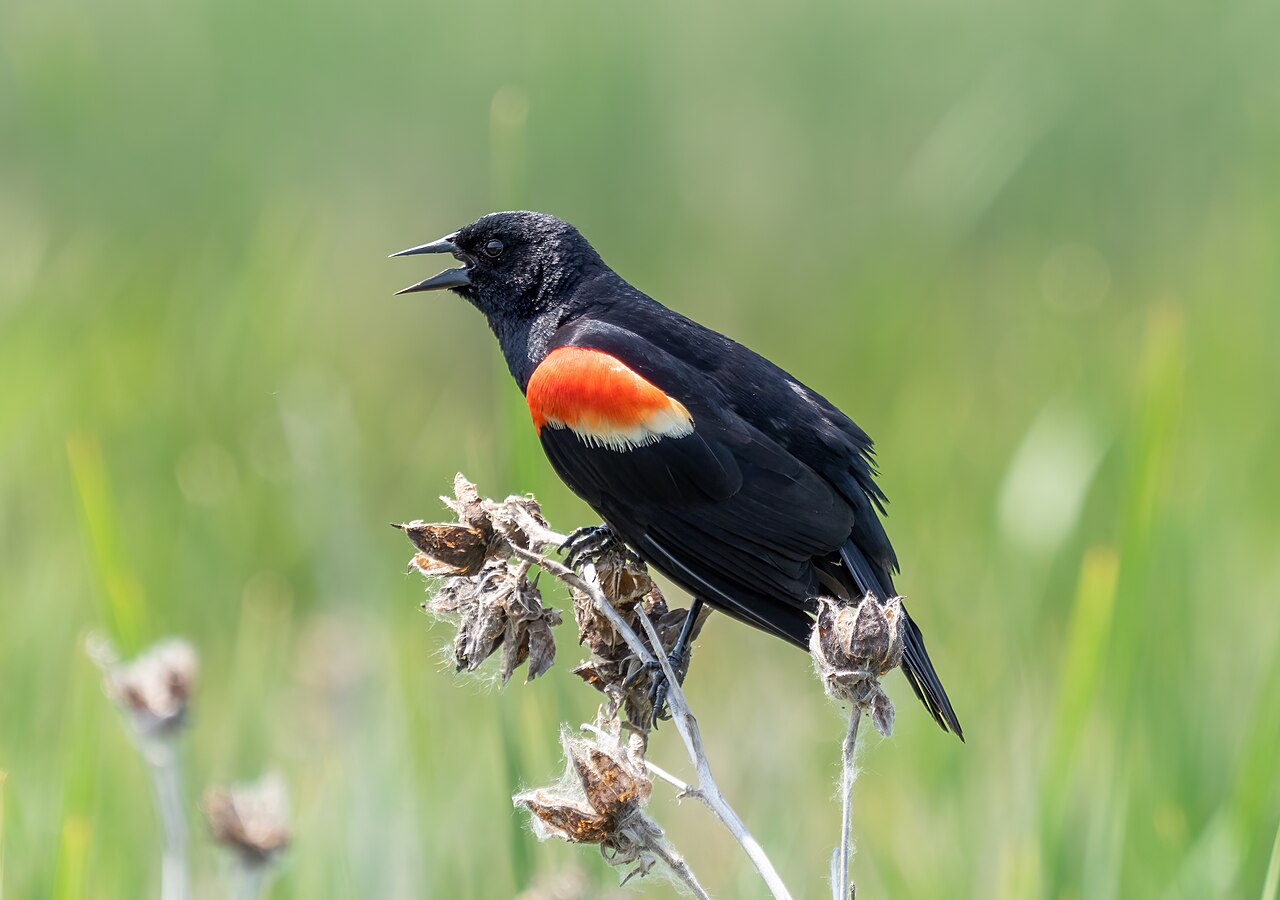
The red winged blackbird sound is one of the first signs of spring across most of North America: a loud, rasping conk-la-ree delivered from a cattail stem by a male with his scarlet shoulder patches flared. Once heard, it is almost impossible to mistake for anything else in a wetland.
But the song is only part of the repertoire. Males and females also produce sharp check notes, rattling alarm chatter and a distinctive wing sound during attack flights, and each of those carries different information to other birds in the marsh.
A Red-winged Blackbird (Agelaius phoeniceus) sounds like a harsh, buzzy conk-la-ree lasting about one second, ending in a trill that rasps rather than whistles. Males sing it from exposed perches to defend territory. Both sexes also give a sharp chek call, and females add a fast chattering rattle that males almost never use.
| Sound | Written as | Who makes it | What it means |
|---|---|---|---|
| Song | conk-la-ree or oak-a-lee | Males, rarely females | Territory claim, mate attraction |
| Check call | Sharp chek or chack | Both sexes | Contact, mild disturbance |
| Chatter | Fast rattling chit-chit-chit | Mainly females | Agitation, nest defense |
| Alarm whistle | Thin descending tseer | Both sexes | Hawk overhead |
| Wing rustle | Dry whirring flutter | Displaying or attacking males | Intimidation at close range |
What Does a Red-Winged Blackbird Sound Like?
A Red-winged Blackbird sounds harsh and metallic, not musical. The song begins with one or two low gurgling notes and then breaks into a buzzing trill that sounds like a rusty gate hinge being swung, lasting roughly a second from start to finish.
The quality is what separates it from every other marsh bird. Where a wren bubbles and a sparrow buzzes evenly, the blackbird starts thick and then tears. Sound recordists describe the ending as scraping, and birders write it as ree with a raspy edge.
Volume is the other clue. A single male can be heard from 500 yards (roughly 450 m) across open water, and in a large colony dozens of males sing at once, producing a wall of sound that carries far beyond the wetland edge.
Red-Winged Blackbird Song Lyrics: Conk-La-Ree Explained
The standard red-winged blackbird song lyrics used by birders are conk-la-ree, oak-a-lee and o-ka-leeee. All three try to capture the same three-part structure: a low start, a short middle syllable, then the long rasping finish.
Individual males carry a small repertoire of two to eight song types and repeat one version many times before switching. Neighbors often match each other, so two males on adjacent territories may trade nearly identical songs back and forth for several minutes.
Song delivery is always paired with display. The male leans forward, spreads his tail, and flares the red epaulets that are otherwise hidden under black feathers. A bird that sings without flaring is usually a subordinate male avoiding a fight.
Red-Winged Blackbird Call: Male vs Female
Male and female calls differ enough to identify by ear. The red-winged blackbird call female birds use most is a fast, dry chatter, a rattling chit-chit-chit-chit that runs several notes per second and rises slightly at the start.
Females also give a scolding series when a person or predator approaches the nest, and in some populations they produce a short, weak version of the male song. That female song is quiet, often lasts under half a second, and is easy to miss.
Males rarely use the chatter. Their non-song vocabulary is dominated by a flat chek and a thin descending whistle. If you can see a streaky brown bird making a rattling sound, you are almost certainly hearing a female, and the plumage differences confirm it fast.
What Kind of Noise Does a Blackbird Make Besides Singing?
Beyond the song, a blackbird makes three noises worth knowing. The chek note is the everyday contact call, given by foraging flocks and by birds moving between perches, and it sounds like two pebbles being knocked together.
The alarm is a thin, high, descending tseer lasting about half a second. It is deliberately hard to locate, which is typical of aerial predator warnings in songbirds, and it usually silences an entire marsh for several seconds.
Winter flocks produce a fourth sound that has no single name: a rolling mass of clicks and creaks from thousands of birds feeding in stubble fields. Mixed with grackles and starlings, it is the noisiest sound a blackbird flock makes all year.
Red Winged Blackbird Sound Meaning in the Marsh
The red winged blackbird sound meaning is almost always territorial. Males arrive at the breeding marsh two to four weeks before females, claim a patch of cattails, and then spend a large share of daylight hours singing from the highest available stem.
A territory can hold up to fifteen nesting females, so the stakes are high and the singing is relentless. Studies of the species show males spending more than a quarter of daylight in song and display during peak season.
Escalation follows a predictable order. Song first, then epaulet display, then a low flight along the boundary, then physical attack. By the time you hear wings, the negotiation has already failed.
Red Winged Blackbird Sound at Night
Red-winged Blackbirds are daytime singers, so a red winged blackbird sound at night is uncommon but not impossible. Males occasionally sing in bright moonlight or under artificial light near roads and parking lots, usually in short bursts rather than sustained bouts.
Disturbance at a night roost is the more likely explanation. Winter roosts can hold hundreds of thousands of blackbirds, and a raccoon or an owl moving through sets off a chorus of alarm chatter that sounds like the whole marsh is awake.
If the sound continues steadily all night from wet ground, consider other sources first. Frog choruses overlap heavily with blackbird habitat, and a bullfrog chorus is a far more common after dark wetland noise.
What Sound Do Bird Wings Make in a Blackbird Attack?
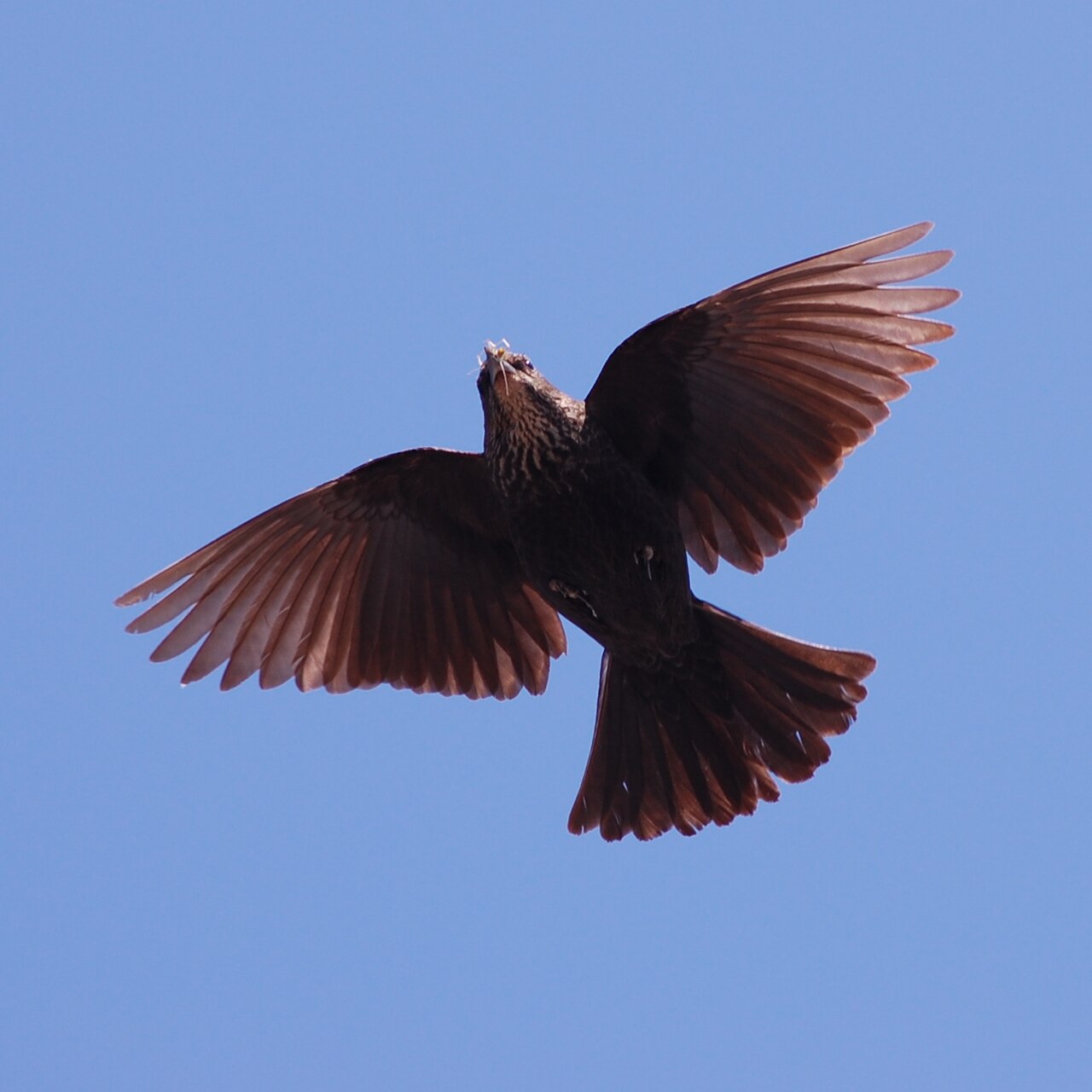
Red-winged Blackbird wings make a dry, rapid whirring rustle during attack flights, and the bird uses it deliberately. Males chasing crows, hawks or people out of a territory fly in low and fast, and the sound of the wingbeats arrives a fraction of a second before contact.
That rustle is a byproduct of stiff flight feathers beating at high frequency rather than a specialized structure. Some other species, including several doves and hummingbirds, produce true mechanical sounds with modified feathers, but the blackbird is simply flying hard.
Anyone walking a dike trail in June has heard it. The bird will strike a hat or the back of a head without hesitation, then return to a stem and sing, which is why larger raptors like a calling Red-tailed Hawk are so often mobbed at the marsh edge.
When and Where You Hear Them Through the Year
Singing begins in February in the southern United States and by late March across the northern tier, peaks from April through June, and drops off sharply once young have fledged in July. Late summer birds are mostly silent while molting.
Habitat is predictable: cattail and bulrush marshes first, then wet ditches, flooded fields, hayfields and roadside swales. During migration and winter the species abandons marshes for agricultural land and forms enormous mixed flocks with grackles and cowbirds.
A bird singing in a dry hayfield in May is worth a second look, because this species will hold territory well away from open water when vegetation is dense enough to hide a nest.
How to Separate the Song From Other Marsh Birds
The two birds most often confused with it are the Yellow-headed Blackbird and the Common Grackle. The Yellow-headed sound is even harsher, a strangled grinding note that has been compared to a rusty hinge with no musical start at all.
Grackles produce a short squeaky readle-eak that sounds like someone stepping on a wet sneaker. It is sharper and shorter than the blackbird song and lacks the long buzzing tail end.
Marsh Wrens, which share the same cattails, rattle and gurgle continuously from inside the vegetation rather than from an exposed perch. Perch position alone resolves most marsh identifications before you even weigh the sound.
What Does It Symbolize to See a Red-Winged Blackbird?
In North American folk symbolism a Red-winged Blackbird is usually read as a marker of change and of standing your ground, an association drawn directly from its behavior: it returns at the turn of the season and it defends its patch against animals many times its size.
Different traditions attach different meanings, and none of them are biological claims. Some readings treat the red shoulder as a sign of confidence or protection, others treat any black bird visiting a yard as a message about transition.
The observable facts are simpler and more useful. A blackbird in your yard in March means open water or wet ground is nearby, and a bird that keeps returning has found food, usually spilled seed under a feeder or insects in damp turf.
Where to Find Red-Winged Blackbird Sound MP3 Files
The most reliable free recordings come from the Cornell Lab’s All About Birds species account, which separates song, call and regional variation and streams each one without a download requirement. Audubon’s field guide carries a shorter set of the same sounds.
Downloadable mp3 files circulate widely, but many are mislabeled, and a surprising number of clips sold as this species are actually Yellow-headed Blackbirds or grackles. Check the source before you trust a file for learning.
Avoid playback in the field during breeding season. Broadcasting a territorial song pulls males off nests and into fights, and on most refuges it is discouraged or banned outright. Recordings meant to move birds along, like deterrent sound systems, work on entirely different principles and belong nowhere near an active marsh. For background on plumage, range and diet, our full Red-winged Blackbird profile covers what the sounds alone cannot.
Frequently Asked Questions
How rare is a Red-winged Blackbird?
Not rare at all. It is one of the most abundant native birds in North America, with a breeding population estimated in the tens of millions and a range covering nearly every state and province. Numbers have declined since the 1970s, but encounters remain easy in any cattail marsh.
What does the conk-la-ree song actually mean?
It is a territorial advertisement aimed at two audiences at once. Rival males hear a boundary claim backed by a visible red epaulet display, and females hear a signal of a male holding a nesting patch worth joining. Song rate rises sharply when a neighbor intrudes.
Do female Red-winged Blackbirds sing?
Occasionally. Females mainly chatter and scold, but in many populations they produce a short, quiet song, especially early in the season and near the nest. It is weaker and shorter than the male version and almost never carries beyond the immediate territory.
Why is a blackbird dive bombing me?
You are inside a nesting territory, usually between mid May and early July. The bird strikes at the highest point it can reach, so a raised hand or a hat draws the hit. Walking through without stopping ends the attack within 20 to 30 yards.
Is it rare to see a black bird in your yard?
No. Between Red-winged Blackbirds, Common Grackles, Brown-headed Cowbirds, European Starlings and American Crows, dark birds are among the most frequent yard visitors in the United States. Identifying which one you have is far more useful than treating the sighting as unusual.
What is the difference between a blackbird call and a cardinal song?
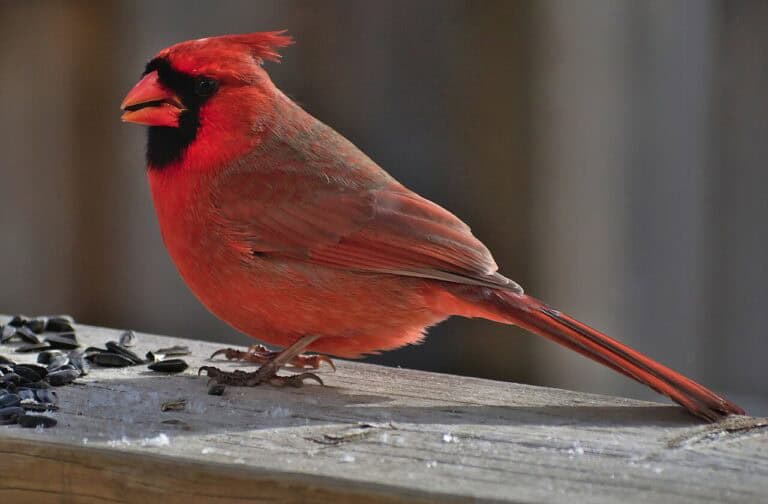
Tone. The blackbird rasps and buzzes, while a Northern Cardinal delivers clear slurred whistles that a person can imitate by whistling. If you can whistle the sound back accurately, it was not a Red-winged Blackbird.