Blue Jay Nest: Building, Eggs, and Lifecycle
A blue jay nest is an open cup of twigs, bark, moss, and rootlets, usually built 10 to 25 feet up in the fork of a tree. Both members of a pair help build it, the female lays four to five pale blue or greenish eggs speckled with brown, and the eggs hatch after about 17 to 18 days. Blue jays are secretive around their nests and often build in dense foliage where they are hard to spot. This guide covers what the nest looks like, where jays build, the eggs and timeline, and who does the work of raising the young.
| Feature | Detail | |
|---|---|---|
| Nest type | Open cup | |
| Materials | Twigs, bark, moss, rootlets, sometimes paper | |
| Height | Usually 10 to 25 ft up | |
| Eggs per clutch | 4 to 5 | |
| Egg color | Pale blue to greenish, brown speckles | |
| Incubation | About 17 to 18 days | |
| Time in nest | About 17 to 21 days |
What Does a Blue Jay Nest Look Like?
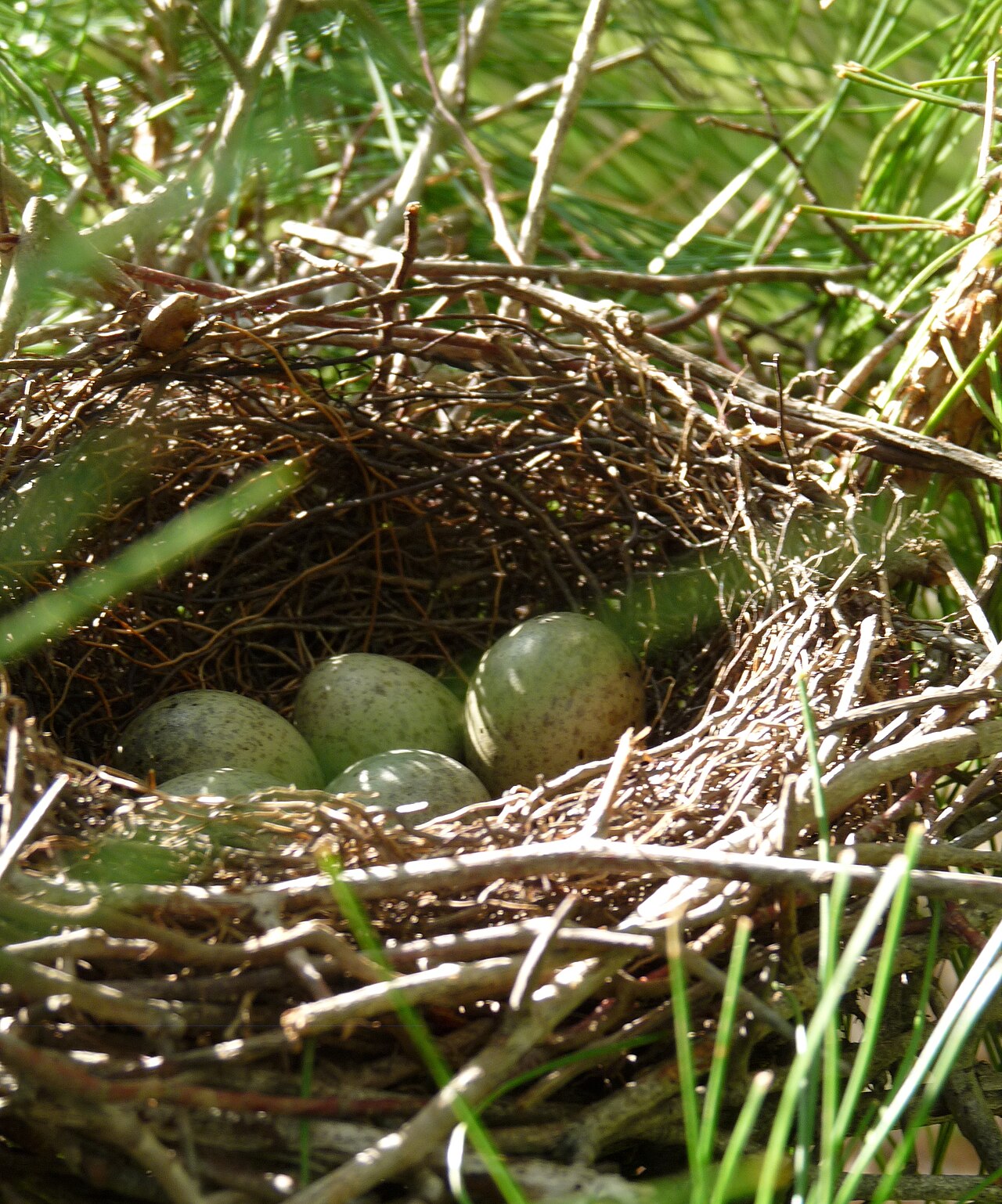
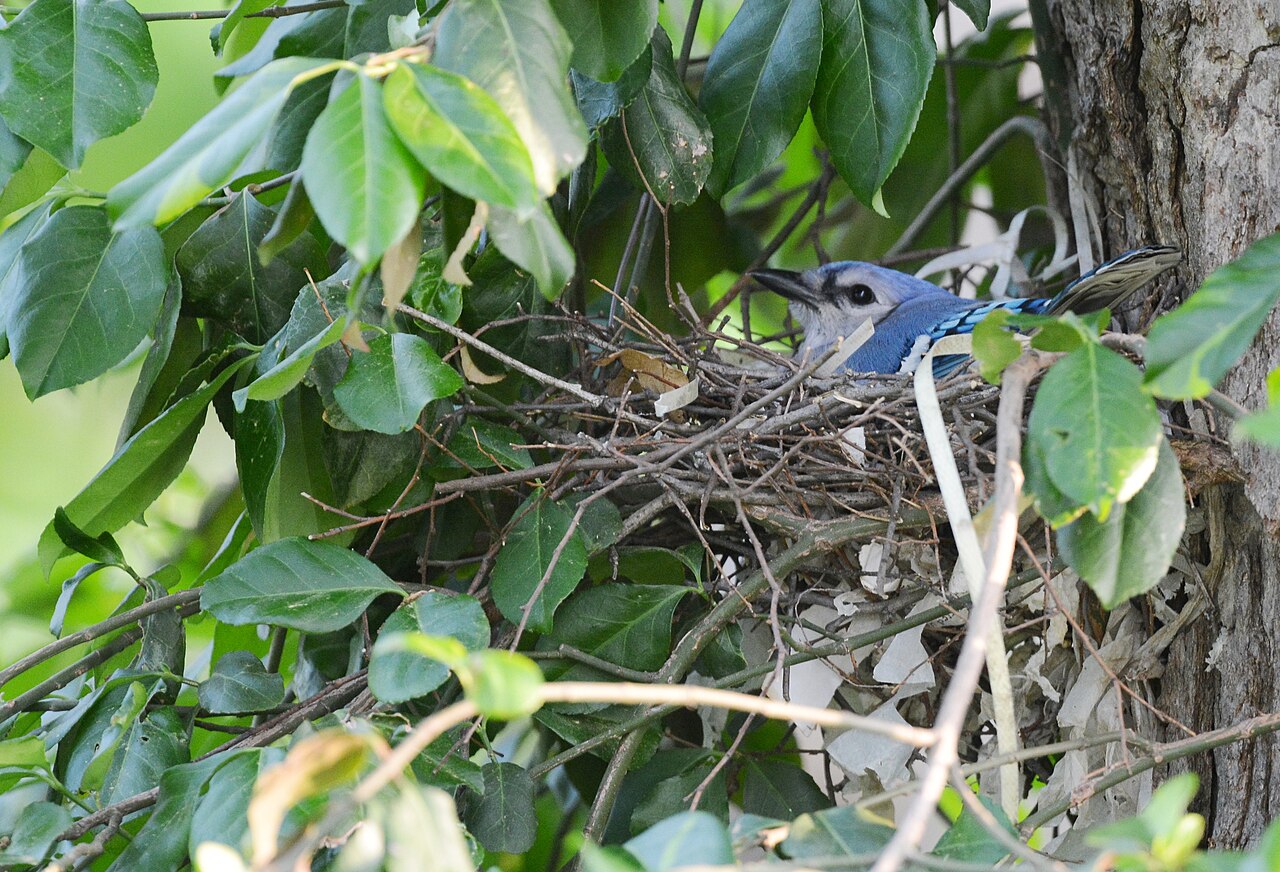
A blue jay nest is a sturdy open cup, roughly 7 to 8 inches across on the outside with a neat inner bowl. The outer shell is made of small twigs, and jays often use fresh green twigs they snap directly from trees. Inside, the cup is lined with finer material such as rootlets, bark strips, moss, grass, and sometimes soft trash like paper. The finished nest is tidy but not fancy, and it blends into the branches well. Because jays frequently place the nest in a crotch or fork among dense leaves, it can be surprisingly hard to find even when a pair is active nearby. If you are trying to identify a nest by its eggs, our guide to bird egg identification can help you compare.
Where Do Blue Jays Build Their Nests?
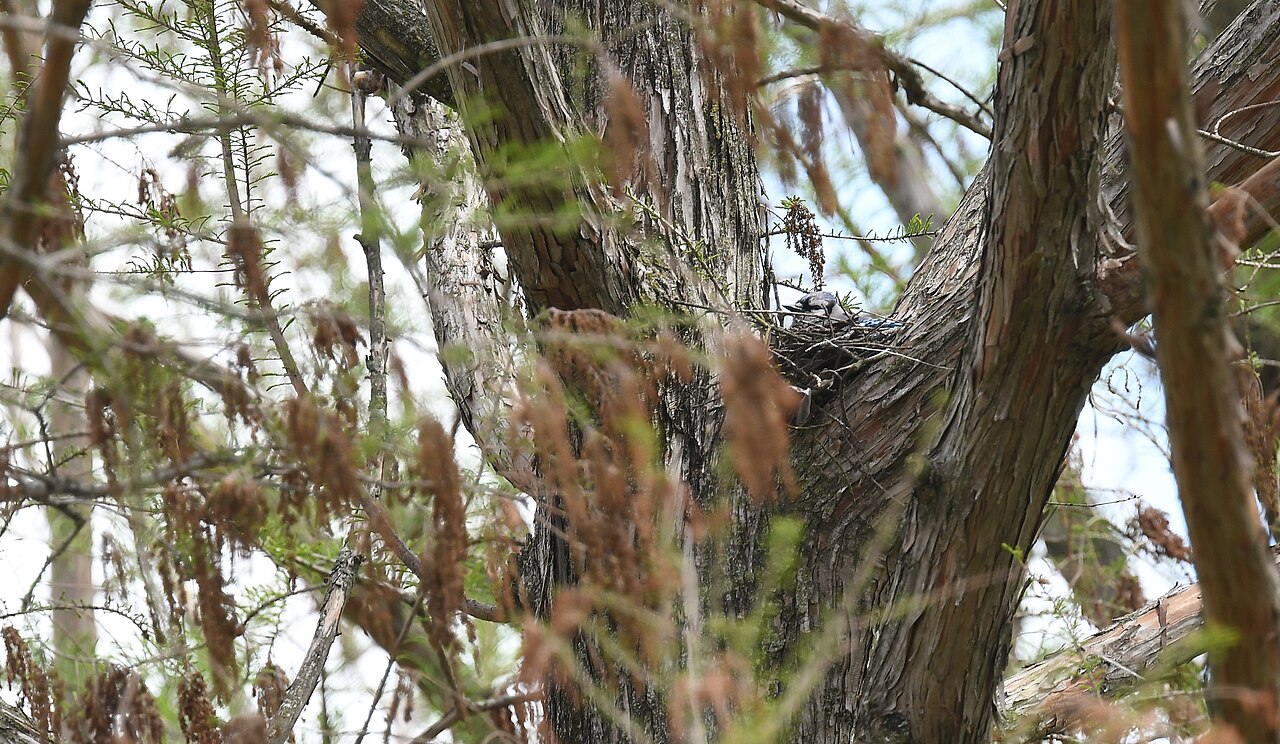
Blue jays usually build 10 to 25 feet above the ground, though nests can be lower or higher. They favor the fork of a trunk or a sturdy branch crotch, often in deciduous or evergreen trees, and they seem to like the cover that dense foliage or a thick evergreen provides. Jays adapt well to suburbs and will nest in yard trees, along wooded edges, and in parks. They tend to avoid deep unbroken forest in favor of edges and open woodland with scattered trees, which is exactly why they are such familiar backyard birds. Planting or keeping mature trees and shrubs makes a yard more attractive to nesting jays, much as the right plants draw other species, as covered in our guide to plants that attract birds.
Blue Jay Eggs: Color, Size, and Clutch
A blue jay clutch is usually four to five eggs, though it can range from three to six. The eggs are small, roughly an inch long, and colored pale blue to light greenish or buff with brown and gray speckling concentrated toward the larger end. They are easy to confuse with the eggs of some other backyard birds, so location and the parents present are useful clues. The American Robin, by contrast, lays plain, unspeckled blue eggs, a difference many people search for directly. For a side by side sense of how jay eggs compare with a robin’s, see our American Robin guide. The female does the incubating while the male brings her food during the roughly 17 to 18 day incubation period. According to the Cornell Lab of Ornithology, blue jay clutches average four to five eggs and the young leave the nest around 17 to 21 days after hatching, figures that hold across most of the species’ range.
Blue Jay Nesting Season and Timeline
Blue jays typically nest from March into July, with most activity in spring. The timeline runs in clear steps. After the pair builds the nest, the female lays one egg per day until the clutch is complete, then incubates for about 17 to 18 days. The chicks hatch helpless and are brooded and fed by both parents. Around 17 to 21 days after hatching, the young leave the nest as fledglings, still weak fliers, and the parents keep feeding them for several more weeks. Most pairs raise a single brood per year in the north, while pairs farther south may occasionally attempt a second. For what happens after the eggs hatch, our guide to the baby blue jay follows the chicks from hatchling to fledgling.
Who Builds the Nest and Raises the Young?
Both sexes take part in nest building, gathering twigs and shaping the cup, though observers note the male often does more of the material gathering while the female does more of the final construction. Once the eggs are laid, the female handles incubation almost entirely, and the male feeds her on the nest. After hatching, both parents feed the nestlings a protein-rich diet heavy in insects and caterpillars. This shared effort, and the female’s long stints on the eggs, are the most reliable way to tell the sexes apart, since male and female blue jays look identical. Our guide to the female blue jay explains those behavioral differences in detail.
Do Blue Jays Reuse Nests?
Blue jays generally build a fresh nest each year rather than reusing an old one, and they will often build in a different spot. They may reuse good materials or nest in the same general area if it was successful, but the old cup itself is typically abandoned. Because jays are adaptable, they sometimes take over or build near old nests of other birds, but a brand new nest each breeding season is the norm. Old, empty jay nests left in trees over winter are common and can be a good sign that a pair may return to the neighborhood the following spring.
How to Tell a Blue Jay Nest From Other Nests
Several backyard birds build open cup nests in trees, so a few clues help you narrow it down. A blue jay nest is medium-sized and built largely of twigs, often including fresh green twigs the birds snap off, with a lining of rootlets and bark. The American Robin, by comparison, builds a heavier cup reinforced with mud, which the jay does not use, and lays plain unspeckled blue eggs. The Mourning Dove builds a famously flimsy, thin platform of loose twigs that looks barely finished, quite different from the jay’s sturdier cup. Location and the parents present are your best evidence, since watching who comes and goes settles the question quickly. Our guides to the American Robin and the Mourning Dove describe their very different nests for comparison.
Should You Disturb or Move a Blue Jay Nest?
No. Active nests with eggs or chicks should be left completely alone, and in the United States the nests, eggs, and young of native birds like blue jays are protected under the Migratory Bird Treaty Act, so disturbing them is not only harmful but illegal. If a pair has nested somewhere inconvenient, the best approach is patience, since the whole cycle from egg-laying to the young leaving the nest takes only about five to six weeks. Avoid trimming the tree or shrub until the young have fledged, keep pets away from the area, and enjoy the rare chance to watch a family of jays up close. If you find a nest that has blown down with eggs still in it, contact a licensed wildlife rehabilitator rather than handling the eggs yourself. For what to expect once the eggs hatch, see our guide to the baby blue jay.
Frequently Asked Questions
What does a blue jay nest look like?
It is an open cup about 7 to 8 inches across, built from twigs on the outside and lined with rootlets, bark, moss, and sometimes paper. Jays often use fresh green twigs, and the nest blends well into dense foliage.
Where do blue jays build their nests?
Usually 10 to 25 feet up, in the fork of a trunk or a sturdy branch, often in a tree with dense cover. They readily nest in yards, wooded edges, and parks.
What color are blue jay eggs?
Pale blue to light greenish or buff, marked with brown and gray speckles toward the larger end. Unlike a robin’s plain blue eggs, jay eggs are speckled.
How many eggs do blue jays lay?
Usually four to five per clutch, sometimes ranging from three to six. The female lays one egg per day until the clutch is complete.
How long does it take blue jay eggs to hatch?
About 17 to 18 days of incubation, done almost entirely by the female while the male brings her food.
How long do baby blue jays stay in the nest?
About 17 to 21 days after hatching. They leave as fledglings before they can fly well, then are fed by their parents on the ground for several more weeks.
Do blue jays reuse the same nest?
Usually not. They typically build a fresh nest each year, often in a new spot, though they may return to a successful general area. Old nests are normally abandoned.