Axolotl Poop: What It Looks Like, Colors, and White Stringy Waste
Axolotl poop is a dark brown to near-black string or soft log, usually 0.3 to 1 in (1 to 2.5 cm) long, that sits on the tank bottom and holds its shape for a few minutes before it starts to break apart. Unlike reptiles, an axolotl (Ambystoma mexicanum) passes no white urate cap, so a healthy dropping is a single dark mass with no chalky portion at all.
That dropping is the most reliable health readout a keeper gets, because axolotls hide almost everything else. Appetite drops late, gill condition drifts slowly, and a stressed animal looks much like a resting one. The waste changes first. Below: what normal looks like, which colors mean trouble, how to tell poop from uneaten food, the three waste types it gets confused with, and how to remove it without stressing the animal.
Healthy axolotl poop is a firm, dark brown or black string roughly 0.3 to 1 in (1 to 2.5 cm) long with no white portion. White, stringy, mucus-wrapped or pale yellow waste signals illness, stress or an empty gut. Nothing at all for several days in a fed animal suggests impaction.
| Feature | Healthy | Warning sign |
|---|---|---|
| Size | 0.3 to 1 in (1 to 2.5 cm), scales with the animal | Nothing for 3 or more days after feeding |
| Shape | Firm string or soft log, holds briefly | Cloud, mucus casing, thin threads |
| Color | Dark brown to black | White, pale yellow, red, bright green |
| Contents | Worm segments, pellet residue | Gravel, sand, whole undigested food |
| Behavior in water | Sinks, stays intact a few minutes | Dissolves on contact into a haze |
| Frequency | Every 1 to 3 days in fed adults | Several times daily and runny |
What Does Axolotl Poo Look Like?
A normal dropping looks like a short, dark earthworm lying on the tank floor, which is exactly what you would expect from an animal whose staple food is earthworms. The color runs from chocolate brown to black. Texture is the part that matters: healthy waste is cohesive enough to siphon in one piece rather than exploding into a brown cloud when the tube reaches it.
Size scales with the animal and the meal. A juvenile of 4 in (10 cm) leaves strings barely thicker than thread, while a full grown 10 in (25 cm) adult fed a nightcrawler can leave something startlingly large. Keepers new to the species frequently mistake a first adult dropping for a dead worm.
There is no urate. Amphibians excrete nitrogen waste mainly as ammonia and urea straight into the water through gills and skin, not as the solid uric acid reptiles use. That single fact separates axolotl waste from nearly every reptile dropping, including the chameleon droppings that carry an obvious white cap.
Healthy vs Unhealthy Axolotl Poop Colors
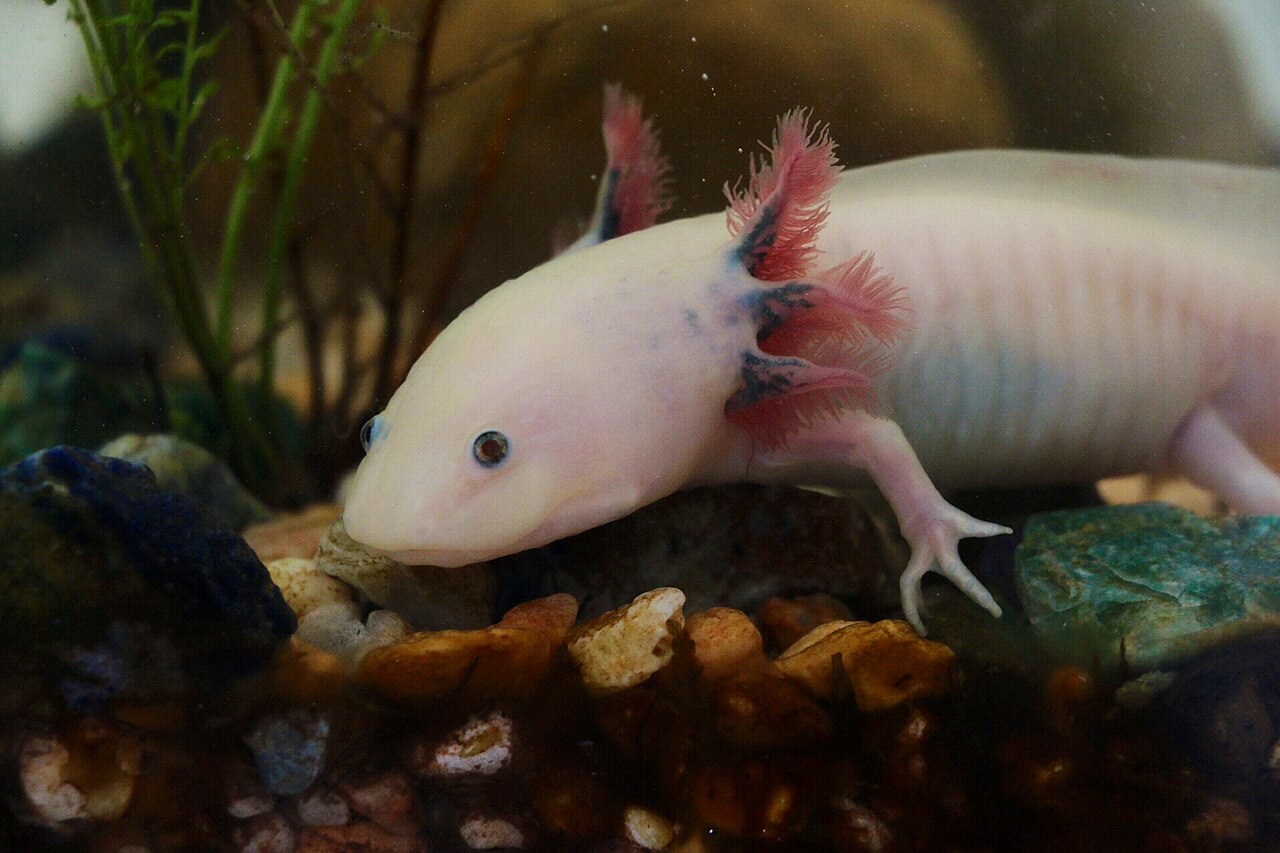
Dark brown and black are the healthy band. Pale yellow or tan waste usually means the gut has processed very little, which happens after fasting, during stress or when the animal is refusing food. White or clear waste is almost always mucus rather than feces and is a strong illness signal.
Red or rust-colored strings can be blood, though keepers who feed bloodworms should rule out the obvious first, because a bloodworm meal tints the waste reddish for a day. Bright green waste points to plant matter or algae passing through, which is harmless but suggests the animal is grazing out of hunger.
Gray or chalky waste in a tank with sand or fine gravel is a substrate warning: the animal is ingesting the bottom along with its food. Check the substrate choice before anything else, because that path leads to impaction.
How Often Do Axolotls Poop?
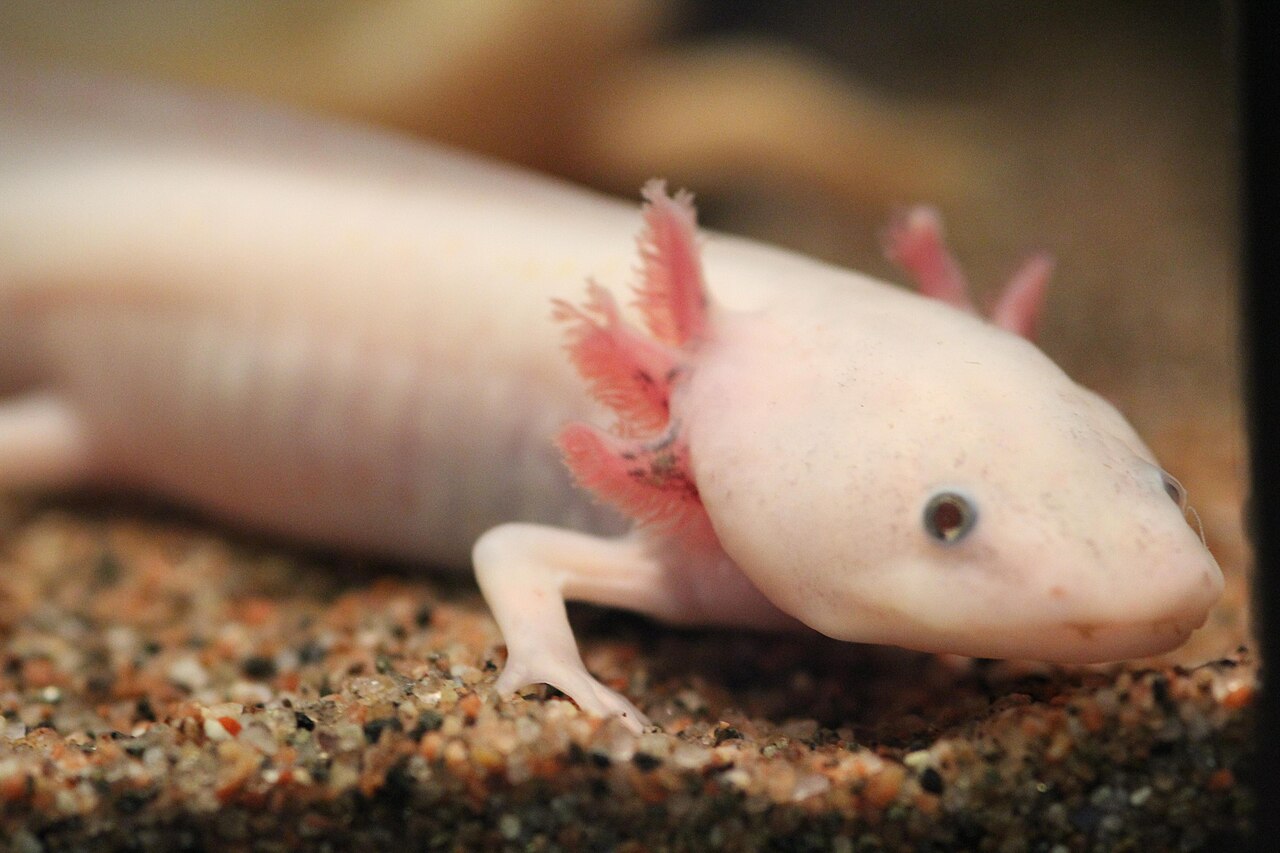
An adult fed every two to three days typically passes waste within 24 to 48 hours of a meal, so one dropping every one to three days is the normal rhythm. Juveniles fed daily poop daily. Cold water slows metabolism, and an axolotl kept at the low end of its preferred 60 to 64 F (16 to 18 C) range digests noticeably slower than one at the upper end.
Nothing for three days after a solid meal is worth watching. Nothing for five days, especially with a visibly swollen belly, a refusal to eat or floating, moves into impaction territory. Frequent runny waste in an animal that is eating well points the other way, usually to stress, warm water or a bacterial problem.
What Do Axolotls Eat, and How That Changes the Waste
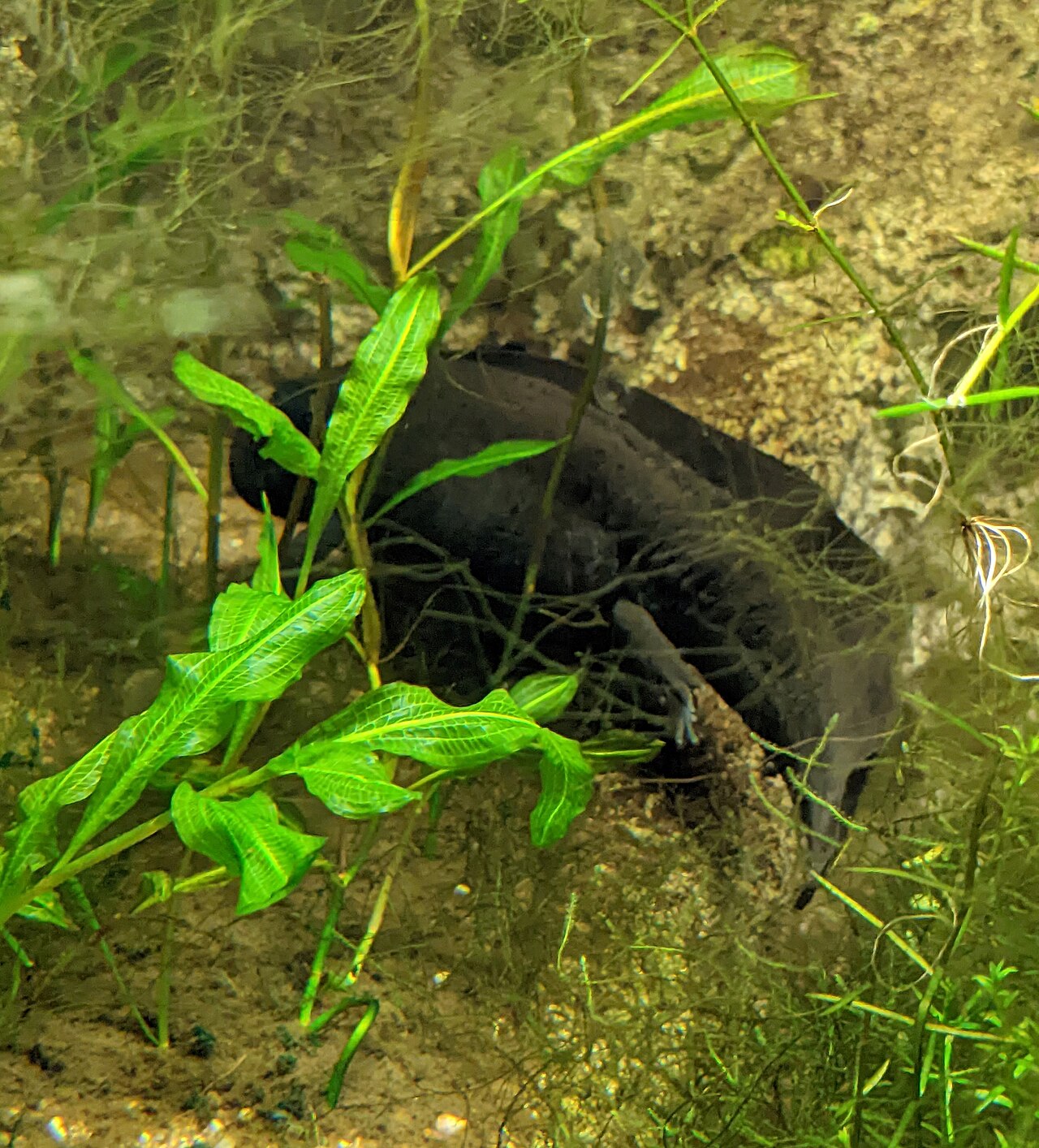
Earthworms are the staple that produces the cleanest, firmest waste. Sinking carnivore pellets come second and tend to produce softer, more crumbly droppings that break up quickly in the siphon. Bloodworms are a treat food, high in water and low in substance, and they produce small, loose, reddish waste.
Feeder fish are a poor choice because they bring parasites, and live blackworms can colonize the substrate. If you want the full feeding breakdown by life stage, the axolotl diet guide covers portions and schedules. For dropping identification, the practical point is simple: change the staple food and expect the waste to change for two or three days before it settles.
Axolotl Poop vs Uneaten Food
This is the most common mix-up inside the tank, and it matters because uneaten food fouls water faster than waste does. A dropped earthworm segment stays pale pink or reddish and stiff, while a dropping of the same size is uniformly dark and slightly glossy. Softened pellets swell into pale beige lumps that crumble at a touch; pellet-derived waste is darker and more cohesive.
Test it with the siphon rather than your eyes. Uneaten food that has sat for a day usually puffs apart into a cloudy halo; a fresh dropping lifts intact. Either way both come out at the same time, so the distinction mostly tells you whether you are overfeeding.
Axolotl Poop vs Fish Poop
In a tank that has held fish, or where a keeper suspects a hitchhiker, waste type settles the question. Fish waste is thinner, often trails behind the animal in a hanging string, and frequently takes the color of the flake food. Axolotl waste is bulkier relative to the animal, is deposited and left behind rather than trailed, and stays dark regardless of diet.
Snail waste, which often shows up in planted axolotl tanks, is different again: short, dark, slightly segmented crumbs scattered across glass and leaves rather than a single mass on the floor.
Axolotl Poop vs Frog and Tadpole Waste
Other amphibians share the no-urate rule, so shape and setting do the work. Tadpole waste is a fine, thread-like string, often greenish from an algae diet, and arrives almost continuously. Adult frog waste is proportionally larger, browner and more compact, and in a terrestrial setup it dries on land rather than sitting in water.
The frog versus lizard dropping comparison walks through the urate test that separates amphibian from reptile waste in one look. If the question is instead about droppings found near an outdoor pond, where rodents are the real possibility, start with the frog versus rat dropping guide.
White, Stringy or Mucus-Wrapped Waste
White or clear stringy waste is the single most urgent finding in this list. It is typically mucus shed from the gut lining, and it shows up with internal infection, parasite loads, prolonged stress and poor water quality. A gelatinous casing around otherwise normal waste means the same thing in a milder form.
Before reaching for medication, test the water. Ammonia above zero, nitrite above zero, nitrate over roughly 40 ppm, or a temperature creeping past 68 F (20 C) will each produce this picture on their own. Fix water parameters, fast the animal for a day or two, and if the mucus persists for more than three days, a vet with amphibian experience should see a fresh sample.
Constipation and Impaction
Impaction is usually a substrate problem. Axolotls feed by suction and swallow whatever sits around the food, so pea gravel and coarse sand end up inside the animal. The result is a swollen belly, no waste for days, loss of appetite and often floating. Bare bottom tanks or fine sand deeper than the animal can swallow comfortably are the standard prevention.
For a mild case, lower the temperature slightly toward 60 F (16 C), stop feeding for two to three days, and consider a tub with clean dechlorinated water so you can see exactly what passes. Do not feed oils, do not massage the abdomen, and do not keep offering food into a blocked gut. Gravel visible in the waste that follows confirms the cause.
How to Remove Axolotl Waste Safely
Spot clean daily with a turkey baster or a thin gravel vacuum, aiming the tube next to the dropping rather than directly on it so suction lifts it whole. In a bare bottom tank this takes under a minute. Replace what you remove with dechlorinated water matched to tank temperature.
Never net the animal out to clean around it if you can avoid it, and never chase it with the siphon. Axolotl skin is delicate and the gills tear easily, so the less contact the better. Tubbing is the exception: during illness or impaction, a shallow tub with daily full water changes is both easier to clean and easier to monitor.
Is Axolotl Waste Dangerous to Humans?
Amphibians, like reptiles, can carry Salmonella in their waste without any sign of illness, and the CDC includes amphibian contact and their tank water in its guidance on reptile-associated infections. The risk is not the animal, it is the water and the equipment: siphons, buckets and tubs.
Wear gloves or wash to the elbow after tank work, never pour tank water into a kitchen sink, keep buckets dedicated to the aquarium, and keep children under five away from the cleaning process. Those rules are identical for other large aquatic and semi-aquatic species, including the ones covered in the alligator scat guide, and for land reptiles as described in the tortoise dropping guide.
Frequently Asked Questions
Can an axolotl go 4 days without food?
Yes. A healthy adult axolotl handles four days without food easily, and a short fast is a standard first step when waste looks wrong or impaction is suspected. Juveniles should not be fasted that long. Refusing food for four days on its own, without a planned fast, warrants a water test.
Why can’t you touch axolotls?
Their skin is thin, permeable and coated in a protective slime layer, and their external gills are fragile cartilage and filament. Handling damages the slime coat and opens the door to infection, and a net can tear gill filaments. Move them only when necessary, using a soft container rather than a net.
Will it hurt if an axolotl bites you?
Barely. Axolotls have tiny vestigial teeth made for gripping, not tearing, and a bite during hand feeding feels like a firm pinch or sandpaper. It rarely breaks skin. Wash the area anyway, since tank water and amphibian waste can carry bacteria, and avoid hand feeding to prevent the habit.
Do axolotls need a friend?
No. Axolotls are solitary and do not require tankmates, and they do not get attached to their owners in any social sense. Two axolotls can share a large tank if they are similar in size and well fed, but mismatched sizes lead to bitten limbs and gills.
How big is a 1 year old axolotl?
Most one year old axolotls measure 7 to 9 in (18 to 23 cm), with well fed animals reaching closer to 10 in (25 cm). Growth slows after the first year, and adults top out around 9 to 12 in (23 to 30 cm). Waste volume scales with that size.
Why is it illegal to own axolotls?
Ownership is banned in a handful of US states, including California, Maine, New Jersey and Virginia, because of concerns about released animals hybridizing with or displacing native salamanders. They are legal elsewhere, and New Mexico restricts them. Check your state wildlife agency before buying, since rules change.