Vulture Symbolism: Spiritual Meaning, Omens and Sightings Explained
Vulture symbolism is almost always about transformation: the bird that feeds on endings is read, in most traditions, as a sign that something in your life has already finished and is ready to be cleared away. From Lakota and Hopi belief to ancient Egypt, from the Hebrew prophets to Tibetan sky burial, the vulture carries the same double load of purification and decay. That is why a sighting rarely feels neutral, even to people who do not consider themselves superstitious.
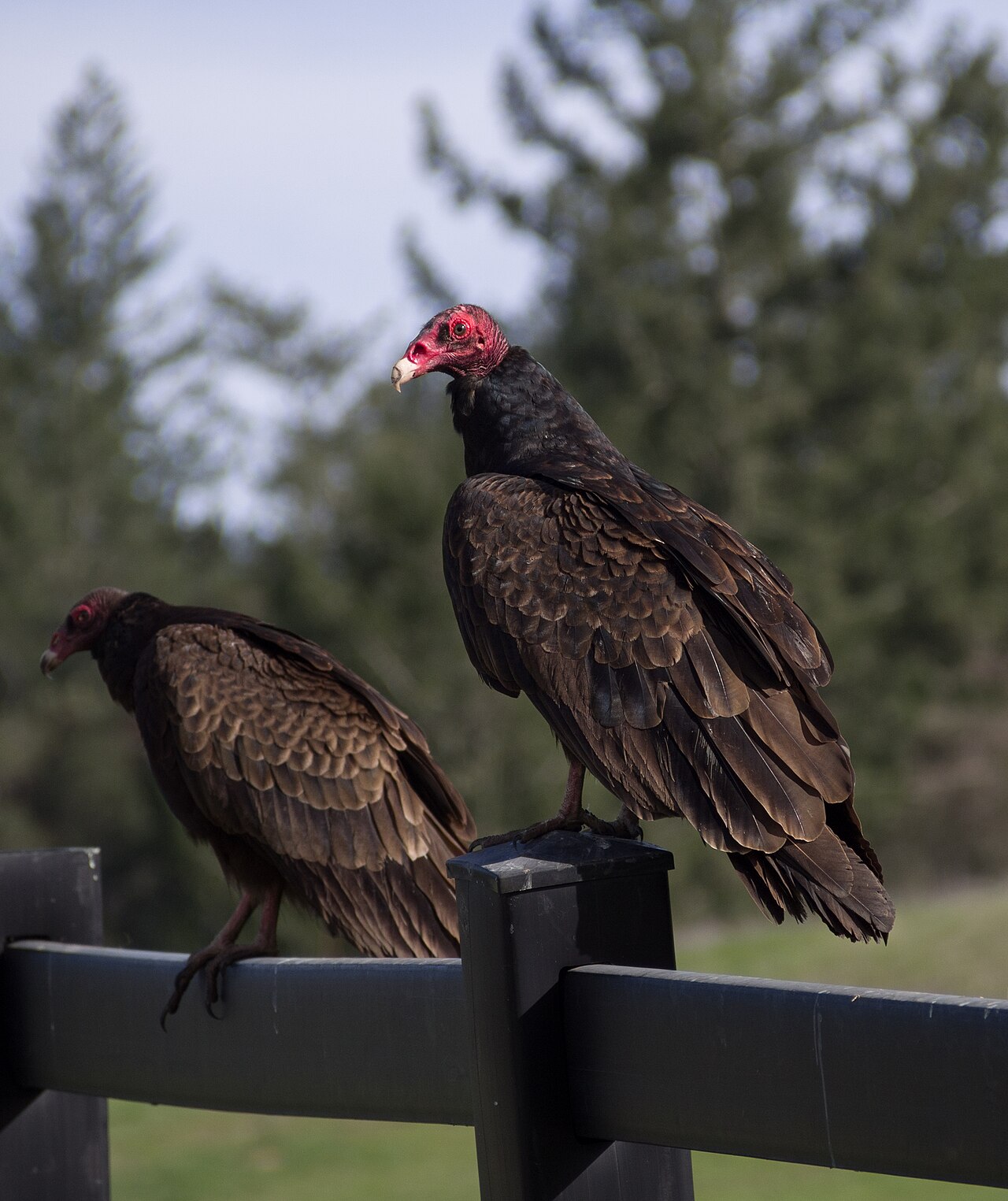
In the United States you are almost certainly looking at a turkey vulture (Cathartes aura) or a black vulture (Coragyps atratus), both common and both expanding northward. That ordinariness matters for interpretation. A vulture overhead is usually a thermal rider doing its job, and the meaning people attach to it comes from the circumstance, not from rarity. The sections below separate what each tradition actually teaches from what has been layered on top of it online.
Seeing a vulture is traditionally read as a sign of transformation, cleansing and the close of a cycle, not as a prediction of death. Native American and ancient Egyptian belief treat the bird as a purifier and protector; biblical texts use it as an image of desolation. Most interpreters read a single sighting as a call to release what is already over.
| Situation | Common traditional reading | Practical note |
|---|---|---|
| One vulture circling overhead | A cycle closing; patience before action | Usually a bird riding a thermal, not tracking you |
| Several vultures circling | Something nearby has already ended | Often a carcass or a shared updraft |
| Vulture perched on a roof or fence | A message about the household; release what is stagnant | Black vultures roost communally and return to the same perch |
| Vulture in the yard or garden | Cleansing of the home space | Check for carrion, pet food or a dead animal under a deck |
| Vulture seen at dusk or roosting at night | Endings processed in private; grief work | Vultures do not hunt at night, they roost in groups |
| Vulture in a dream | Fear of loss, or an instinct that something is finished | Note who else appears in the dream |
| Finding a dead vulture | The end of an ending; a cycle fully closed | Report it, lead or pesticide poisoning is a known cause |
What does the vulture symbolize?
The vulture symbolizes purification, patience and the rebuilding that follows loss. Unlike the eagle or the hawk, it does not take life, so traditions that rank birds by predation place the vulture in a separate category entirely: a cleaner rather than a killer. That distinction drives nearly every positive reading of the bird, because a creature that removes decay is a creature that protects the living.
The second layer of meaning is vision. Turkey vultures locate carrion largely by smell, one of the few birds with a well developed sense of smell, and they soar for hours without flapping. Symbolically this becomes the ability to sense what others cannot and to wait rather than strike. Interpreters who work with bird omens generally treat the vulture as the opposite of urgency.
The third layer is the one that unsettles people: association with corpses. In cultures where the dead were buried quickly and kept apart from the living, the scavenger that feeds openly became an image of disgrace. Both readings are genuine, and which one you meet depends entirely on which tradition you are standing in. For the wider framework of how birds are read as messengers, see our overview of bird symbolism across traditions.
Are vultures a good or bad omen?
Vultures are a good omen in most Indigenous American and ancient Egyptian frameworks and a bad omen in the Hebrew Bible and in much of medieval European folklore. There is no single answer, and anyone who gives you one is choosing a tradition without telling you. The split is consistent enough to be useful: cultures that practiced excarnation or revered the bird as a mother figure read it well, cultures that saw burial as a duty read it badly.
Modern popular interpretation leans positive. The dominant reading in contemporary spiritual writing treats the vulture as a sign of renewal, resourcefulness and the end of a difficult stretch. That shift tracks a broader change in how scavengers are understood ecologically: vultures are now recognized as a public health service, and symbolism tends to follow science within a generation or two.
Where the bird does read as a warning, the warning is rarely about death. It is about something being allowed to rot in place: an unresolved conflict, a job held too long, a relationship kept alive by habit. In that sense even the dark reading points at the same instruction as the bright one. Compare this with the shadow readings attached to bats, where the negative tradition is far more entrenched.
Vulture symbolism in Native American traditions

Native American vulture symbolism is specific to each nation and should not be generalized. In several Plains traditions, including Lakota accounts, the turkey vulture is associated with purification and with carrying the dead onward, and killing one is avoided. In Hopi and other Pueblo traditions the bird appears in ceremonial contexts tied to cleansing a space of bad influence, and vulture feathers are used in rites meant to drive away sickness.
Cherokee storytelling records a different angle. In one well known account the buzzard is the bird who shapes the mountains and valleys with its wingtips while flying over soft new earth, which makes it a maker rather than a scavenger. Southeastern traditions also credit the bird’s bald head to a mistake with fire, a motif shared across several nations.
What runs through these accounts is service rather than menace. The bird is doing necessary work that no one else will do, and it is treated with the respect given to anyone who handles the dead. Readers interested in how other Plains animals are interpreted can look at coyote symbolism, where the trickster role contrasts sharply with the vulture’s quiet one.
What does God say about vultures? Biblical and Christian meaning

In the Bible the vulture is an unclean bird and an image of judgment. Leviticus 11 and Deuteronomy 14 list it among the birds not to be eaten, and prophetic passages use gathering vultures as shorthand for a land laid waste. Proverbs 30:17 uses the vultures of the valley as the fate of the disrespectful child, which is about as harsh as bird imagery gets in scripture.
Translation complicates this. The Hebrew terms rendered as vulture, eagle or kite in different English Bibles do not map cleanly onto modern species, and the same word is sometimes translated as eagle in a verse about renewal and as vulture in a verse about desolation. Matthew 24:28, where the carcass draws the birds, is read by some commentators as a straightforward statement about consequence rather than a curse.
Christian folk interpretation softened over time. Because the bird removes corruption, some devotional writing treats it as an emblem of repentance: what is dead is taken away and the ground is left clean. That reading is not doctrine, but it is widespread enough that you will meet it. For a scriptural bird with the opposite reputation, see the bald eagle’s spiritual meaning.
Celtic and European vulture symbolism

Celtic tradition has little genuine vulture lore, because vultures are not native to Ireland, Britain or most of northern Europe. Claims about a Celtic vulture totem are usually a modern transfer of raven and crow symbolism onto a bird the tradition never knew. The honest answer is that the carrion role in Celtic belief belongs to the raven and to the goddess figures associated with battlefields.
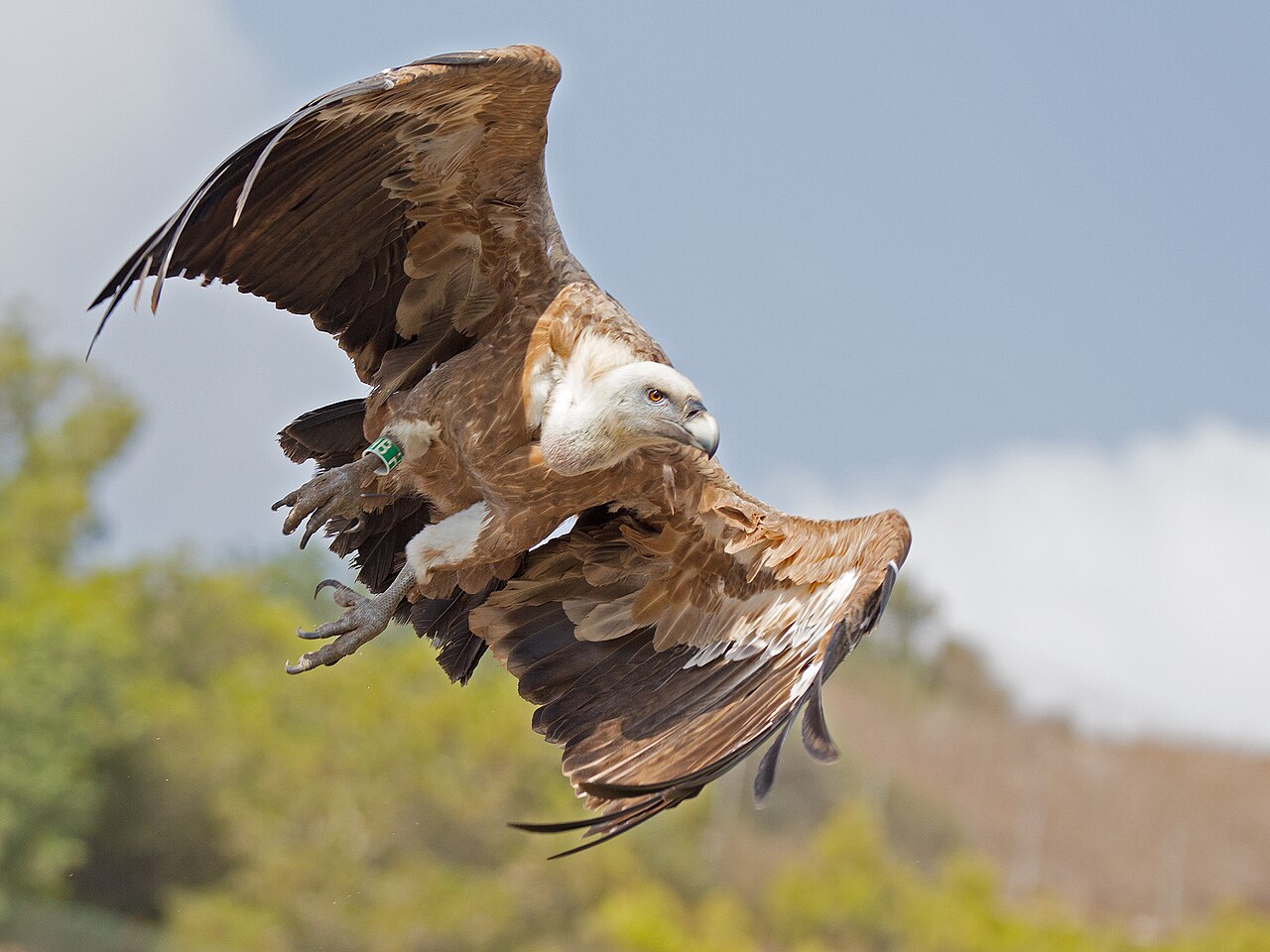
Southern Europe is different. Griffon vultures (Gyps fulvus) and bearded vultures (Gypaetus barbatus) live in the Pyrenees, the Alps and the Balkans, and local folklore there treats them with a mix of fear and gratitude. The bearded vulture’s habit of dropping bones to crack them produced the old name ossifrage, bone breaker, and a reputation for carrying off lambs that was not deserved.
Egyptian, East Asian and Tibetan readings
Ancient Egypt gave the vulture its highest status anywhere. The goddess Nekhbet, patron of Upper Egypt, appears as a white vulture, and the hieroglyph for mother is a vulture sign. Royal headdresses paired the vulture with the cobra to show rule over both halves of the country, so the bird stood for maternal protection and sovereignty at once.
Tibetan Buddhist practice gives the bird a working role rather than a symbolic one. In sky burial the body is offered to vultures, an act framed as a final act of generosity and as a plain lesson in impermanence. The birds are sometimes called dakinis in that context, which reverses the Western instinct entirely: being eaten is the dignified outcome.
In Chinese and Japanese tradition the vulture is a minor figure, overshadowed by the crane and the crow. Where it appears in Buddhist texts it is usually via Indian sources, including Vulture Peak near Rajgir, the setting for several sutras. The crane carries the longevity symbolism in East Asia; see crane symbolism for that side of the pairing.
What does vulture mean spiritually as a spirit animal?
As a spirit animal the vulture means you are being asked to stop forcing an outcome and let a finished thing finish. People who identify with the vulture are typically described as patient, unsentimental and good in a crisis, able to deal with what others will not look at. The uncomfortable half of the reading is a tendency to linger near situations that have already died.
If the bird keeps turning up during a loss, most interpreters treat it as companionship rather than warning: something is being processed, and the process has a natural end. A cardinal sighting in grief is usually read as a visit from the dead, while the vulture is read as help with the clearing that follows.
Vulture totem and power animal
A totem animal in the strict sense belongs to a clan or lineage, not to an individual, and vulture clans are documented in several Indigenous nations. Using the word for a personal emblem is a modern extension, and it is worth knowing the difference before describing yourself as having a vulture totem. Where the term is used loosely, it means the bird’s traits are considered permanent features of the person.
As a power animal the vulture is called on for endurance and for seeing clearly in unpleasant circumstances. Practitioners who work this way describe asking for the bird’s detachment rather than its appetite: the ability to assess damage without flinching and to act only when action will matter. The warning attached to the emblem is always the same, that a person running on vulture energy too long starts to prefer ruins to building sites.
What does it mean when vultures circle?
Vultures circling means a thermal is lifting them, and in symbolic terms it means something below has already ended and is being accounted for. The circling itself is read as patience rather than threat. Interpreters generally distinguish between a bird gaining altitude in wide lazy loops, which is movement, and birds holding a tight circle low over one spot, which is attention.
The folk belief that circling vultures mean a death nearby is partly correct and entirely mundane. Turkey vultures find carrion by smell from a considerable distance and will spiral over a dead deer or a roadkill line for an hour before committing. If several birds join, they are reading each other, not you.
Seeing a vulture in your yard
A vulture in your yard is traditionally read as cleansing reaching the home itself, and practically it usually means there is food. Black vultures in particular will investigate pet food, compost, afterbirth from livestock and dead animals under decks. Removing the attractant ends the visit, which is itself a useful symbolic parallel.
A vulture at your window or roosting at night
A vulture at a window is a rarer sighting and is read as a message that will not wait, the same framing applied to a blue jay at the window. Physically it is often a young bird reacting to its own reflection or a roosting bird moving along a ledge at first light.
Vultures at night are not hunting. They roost communally in dead trees, towers and sometimes on roofs, arriving at dusk and leaving after the air warms. Folklore reads a night roost as grief being handled privately, out of view, which fits the behavior more closely than most omen readings manage.
What do 2 or 3 vultures mean spiritually?
Two vultures are usually read as a pairing or a partnership under strain, and three as completion, the full arc of ending, clearing and renewal. Number readings of this kind are modern and interpretive rather than traditional, and they vary between writers, so treat any confident specific as one person’s system.
The Roman precedent is the exception worth knowing, because there the count mattered formally: twelve vultures for Romulus outranked six for Remus and settled who would found the city. That is a legitimate historical case of vulture numerology, and it is about authority rather than mysticism.
Dreaming about vultures
A vulture dream is generally read as an awareness of loss that the waking mind is still refusing. Dream interpreters treat the bird as attention rather than cause: it is circling something you already know about. The emotional tone of the dream usually matters more than the bird, and fear points at resistance while calm points at acceptance.
Being attacked by vultures in a dream is the most reported variant and the least likely in life, since vultures do not attack healthy animals. The standard reading is a fear of being picked apart socially or financially, which is why the dream clusters around job loss and divorce in self reports.
Finding a dead vulture
A dead vulture is read as the end of an ending: the cycle has closed completely and the clearing phase is over. Because the bird’s whole symbolic function is processing death, its own death strikes people as significant out of proportion, and most traditions have no specific teaching on it at all.
The practical reading deserves equal weight. Dead vultures often indicate lead poisoning from ammunition in carcasses, secondary poisoning from rodenticides, or vehicle strikes at roadkill. Several vultures dead in one place is worth reporting to your state wildlife agency, since vulture die offs are a recognized indicator of a poisoning event.
Federal law also applies. Turkey vultures and black vultures are protected under the Migratory Bird Treaty Act, so collecting feathers, bones or the body is illegal without a permit. Detailed species accounts and current status for both North American species are available from the Cornell Lab at All About Birds.
Related reading: Blackbird Symbolism.
Related reading: Falcon Symbolism.
Related reading: Magpie Symbolism.
Related reading: Turkey Vulture Spiritual Meaning.
Related reading: Osprey Spiritual Meaning.
Frequently Asked Questions
How rare is it to see a vulture?
Not rare at all in most of the United States. Turkey vultures occur in all 48 contiguous states and black vultures across the Southeast and lower Midwest, both with growing populations. In much of the country you can see one on any clear afternoon drive, which is why interpretation depends on the circumstance rather than the sighting itself.
What bird is mistaken for a vulture?
Most often the bald eagle, golden eagle or an immature hawk, all of which soar at similar heights. Turkey vultures hold their wings in a shallow V and rock side to side; eagles hold theirs flat and steady. From below, the pale trailing edge on a turkey vulture’s wing and the small featherless head are the quickest confirmations.
What animal will eat a vulture?
Very few. Adult vultures have almost no natural predators, though great horned owls, eagles and coyotes occasionally take birds at roosts, and raccoons, foxes and snakes raid nests for eggs and chicks. The bird’s main defense is vomiting a highly acidic, foul mixture, which is effective against most mammals that approach a nest.
What is the nickname for a vulture?
Buzzard, throughout most of the United States. The name is a holdover from English settlers who applied their word for a soaring hawk to the new bird, which is why a buzzard in Britain is a Buteo hawk and a buzzard in Kentucky is a turkey vulture. Carrion crow and John Crow are regional alternatives.
Do vultures carry diseases?
Vultures reduce disease rather than spread it. Their stomach acid and gut bacteria destroy anthrax, botulism toxin and cholera organisms, and bare heads limit what sticks to them while feeding. They can carry pathogens on their feet, so droppings and roost sites should be treated like any wildlife waste, but the bird is a sanitation asset.
Is seeing a vulture a sign of death?
No tradition treats a vulture sighting as predicting a human death, and the birds locate what has already died rather than anticipating anything. The consistent reading across Indigenous American, Egyptian and modern interpretation is transformation: something is already finished, and the message concerns releasing it rather than fearing what comes.