Gopher Poop: What It Looks Like and 3 Droppings It Gets Confused With
Gopher poop is a small hard pellet, roughly 0.25 to 0.5 in long (6 to 13 mm), oval with blunt ends, tan to dark brown, and packed with fine chewed plant fiber. You almost never see it on an open lawn. Pocket gophers (Thomomys and Geomys species) live underground and pack most of their droppings into side chambers of the tunnel, so pellets surface only when a mound is opened or a burrow caves in.
That habit is the fastest check you have. Pellets scattered loose across a patio, a shed floor, or a garage were left by something else.
Gopher poop is a hard oval pellet 0.25 to 0.5 in long (6 to 13 mm), tan to dark brown, with blunt rounded ends and visible plant fiber. It shows up inside burrows and in fresh mound soil rather than scattered on open ground, because pocket gophers rarely leave their tunnels.
| Feature | Gopher droppings |
|---|---|
| Length | 0.25 to 0.5 in (6 to 13 mm) |
| Shape | Oval to cylindrical, blunt ends, no taper |
| Color | Tan when dry, dark brown when fresh |
| Contents | Fine plant fiber, root and tuber pulp, no hair or bone |
| Where found | Tunnels, fresh mound soil, under boards, rarely in the open |
| Grouping | Packed clusters in a chamber, not trails or piles |
What Does Gopher Poop Look Like?
The giveaway is texture. Gopher poop is dense and fibrous, almost like compressed sawdust, because the diet is roots, tubers, and stems. Fresh pellets are dark and slightly soft and dry within a day or two to a dull tan that crumbles rather than smears. Both ends are blunt with no point, the sides are smooth, and you usually find dozens at once in a packed cluster or mixed into the loose soil of a new mound.
Mole Poop vs Gopher Poop
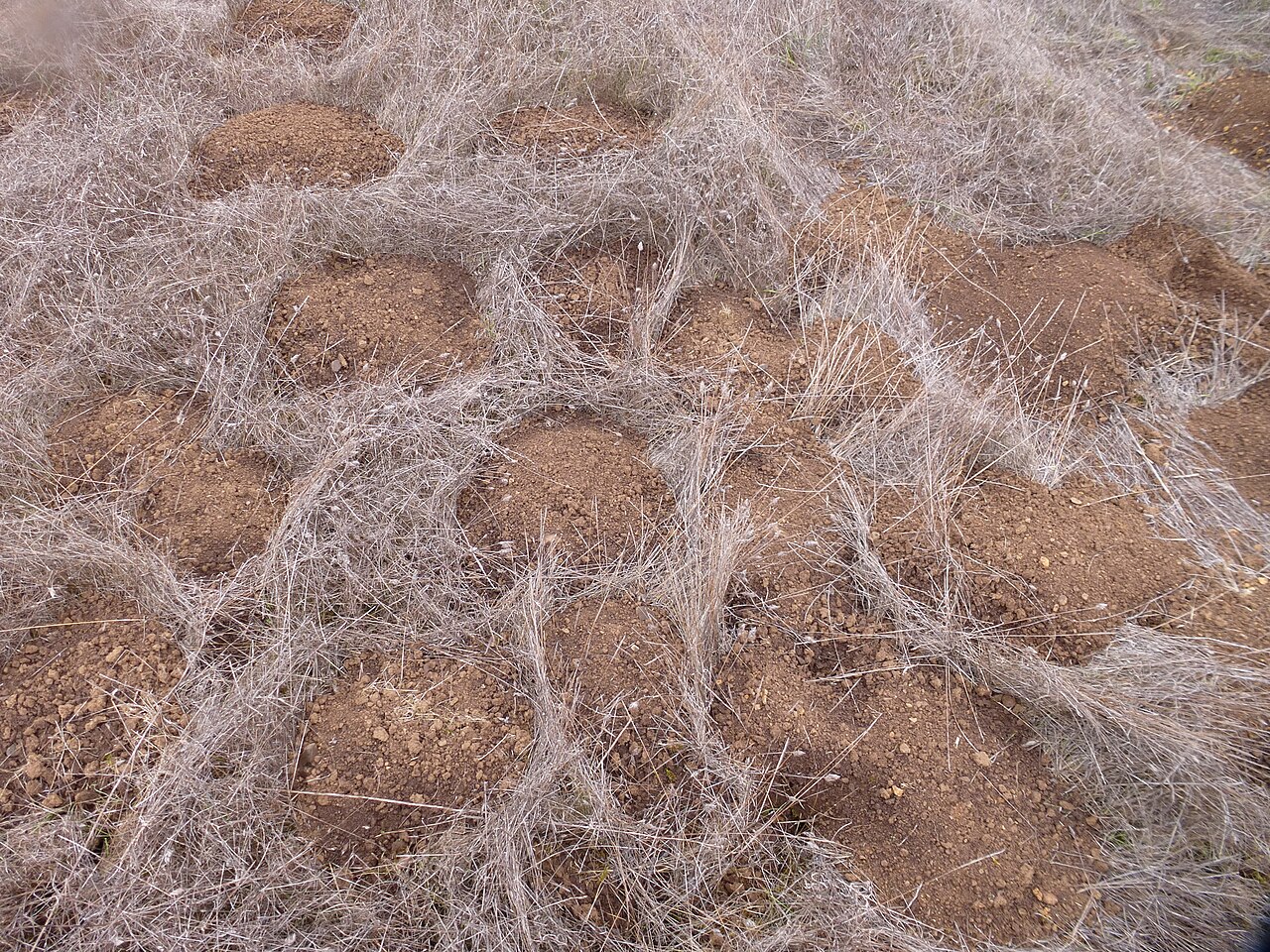
Mole droppings are almost never found at all, since moles eat earthworms and grubs and their soft dark waste breaks down in the soil within days. Firm fibrous pellets in a tunnel mean gopher. The mounds agree: gopher mounds are fan or crescent shaped with a plugged hole off to one side, while mole mounds are round volcano cones with the hole in the center.
Gopher Poop vs Vole Poop
Vole droppings are the closest match in shape, but smaller at 0.1 to 0.25 in (3 to 6 mm), greener when fresh because voles eat grass blades, and left out in the open along surface runways through the turf. Location decides it. Pellets in neat trails across the lawn next to clipped grass paths are vole sign, and the damage will be chewed stems at the soil line.
Gopher Poop vs Rat and Mouse Droppings
Rat droppings are longer at 0.5 to 0.75 in (13 to 19 mm), shiny when fresh, and tapered at one or both ends. Mouse droppings are rice grain sized with sharp points. Both often contain hair and both turn up indoors, which gopher pellets never do. Compare rat and mouse poop, squirrel and rat poop, squirrel and mouse droppings, deer and rabbit pellets, and bat guano next to mouse droppings to place the rest.
Is Gopher Poop Dangerous to Humans or Pets?
The risk is real but low. Rodent droppings and burrow soil can carry Leptospira bacteria, Salmonella, and tapeworm eggs, and in parts of the western United States gopher and ground squirrel burrows help keep plague bacteria circulating in flea populations. Dogs that dig out burrows are most exposed. Wear gloves, wet the material down instead of sweeping it dry, bag it, and wash your hands. Rodent illness guidance comes from the Centers for Disease Control and Prevention, and the University of California Statewide IPM Program covers pocket gopher control. If the animals are the real problem, see getting rid of gophers.
Frequently Asked Questions
How do you identify pest poop in general?
Work through four features in order: length, end shape, contents, and location. Pointed ends suggest mice, tapered and shiny suggests rats, blunt and fibrous suggests a plant eater like a gopher or vole. Indoor droppings narrow the list fast, since burrowing rodents stay outside.
What does gopher tortoise poop look like?
Nothing like pocket gopher droppings, despite the shared name. Gopher tortoise scat is a large coarse mass up to 2 in across (5 cm) full of unchewed grass and plant stems, left on the surface near the burrow apron in Florida and the Southeast. Size alone separates the two.
Why do gophers dig holes?
They feed underground. Pocket gophers tunnel to reach roots, bulbs, and tubers, then push the excavated soil out through short lateral holes that they plug behind themselves. One animal can move several tons of soil a year and maintain 200 to 2,000 ft of tunnel (60 to 600 m).
What do gophers look like?
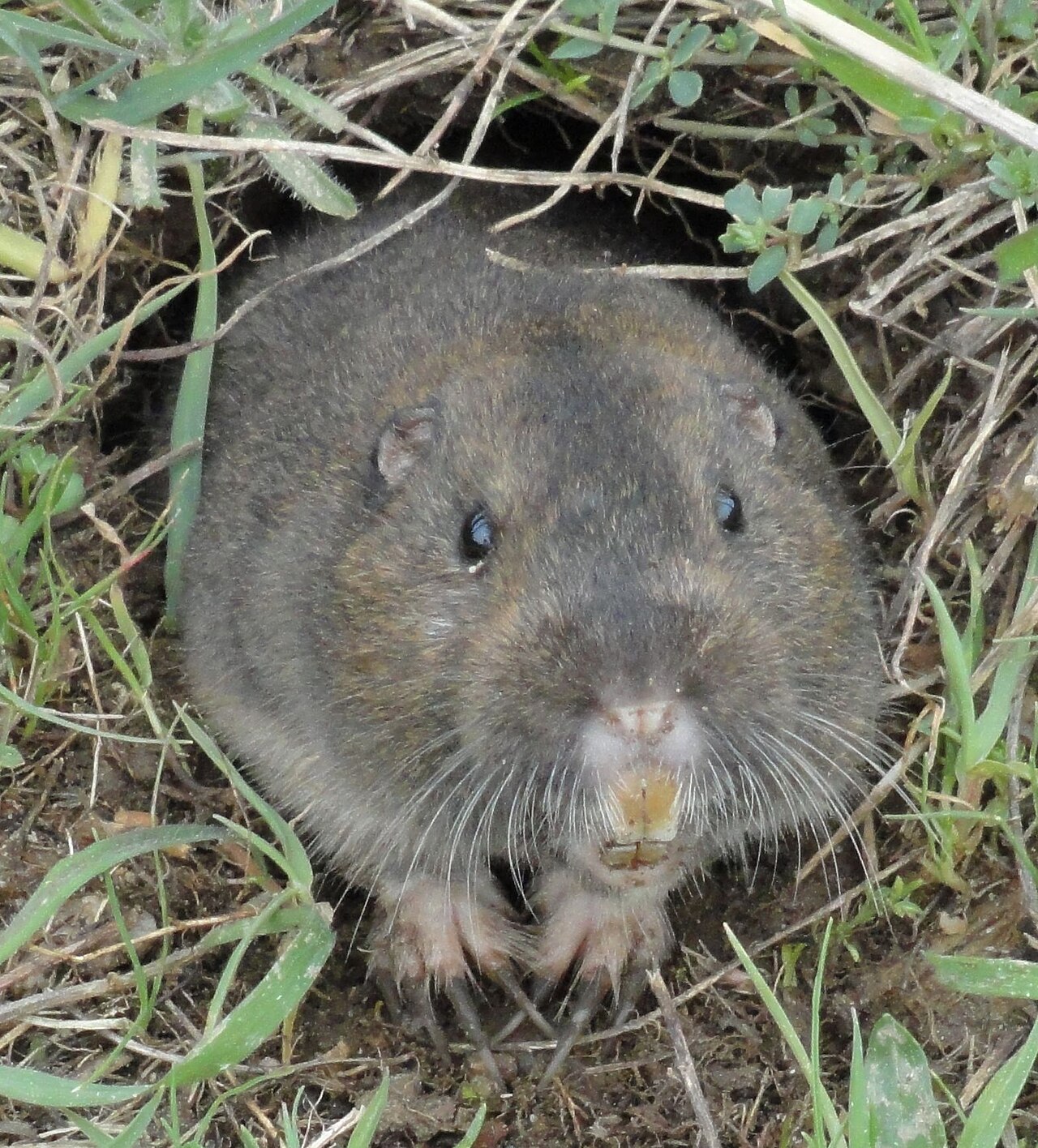
A pocket gopher is 5 to 14 in long (13 to 36 cm) including the tail, with brown fur, tiny eyes and ears, large yellow front teeth that show even with the mouth closed, and heavy clawed front feet. The fur lined cheek pouches that carry food give the animal its name.