Alpaca Poop: Size, Shape and 3 Look-Alikes
Alpaca poop is a heap of small, dry, oval pellets, each about 0.4 to 0.8 in (1 to 2 cm) long and dark brown to nearly black. The heap is the giveaway: alpacas (Vicugna pacos) share a few fixed latrine spots, so hundreds of pellets sit in one place and the rest of the pasture stays clean.
Gardeners know the same material as alpaca manure or “alpaca beans”. Below: the identification details, the three look-alikes, and the hygiene rules.
Alpaca droppings are oval to bean shaped pellets, 0.4 to 0.8 in (1 to 2 cm) long, dark brown or black, dry and firm, with a faint grassy smell. They come in dense communal piles on bare ground. Loose or clumped output usually signals parasites or a sudden feed change.
| Feature | Alpaca droppings |
|---|---|
| Size | 0.4 to 0.8 in (1 to 2 cm) per pellet |
| Shape | Oval to bean shaped, blunt ends |
| Color | Dark brown to black |
| Contents | Ground plant fiber, no hair or bone |
| Location | Communal piles on bare ground |
| Amount | 4 to 6 lb (1.8 to 2.7 kg) per day |
| Smell | Faint, grassy |
What Does Alpaca Poop Look Like?
Each pellet is a compact oval with blunt ends, firm enough to pick up by hand and dry enough to crumble. Alpacas digest fiber in a three compartment stomach, so the contents are uniformly ground plant matter with no visible seeds, hair or bone, which rules out every wild dropping of the same size. The pile matters as much as the pellet: herds reuse a handful of shared latrines, so the grass dies back and a flattened area several feet across fills with beans. Crias leave the same pellets at half the size, as our guide to alpaca crias covers.
Alpaca Poop vs Llama Poop
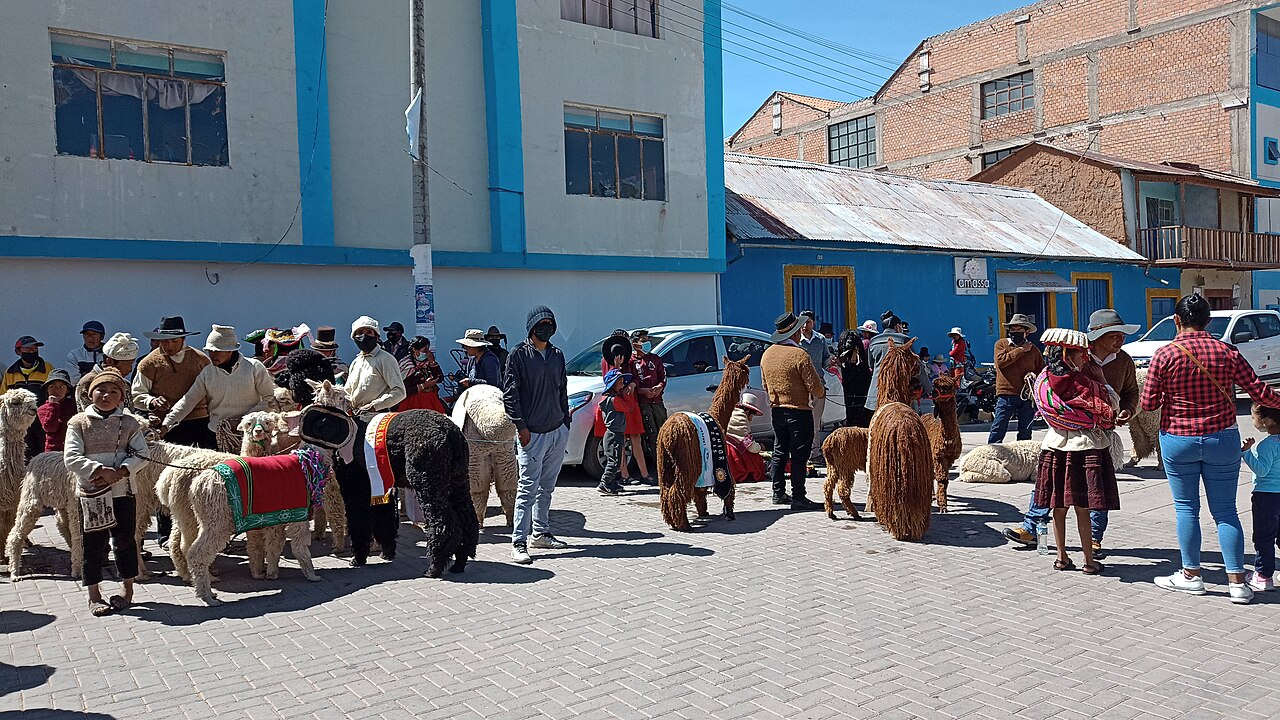
These two are genuinely hard to separate, and on a mixed farm you often cannot. Llama pellets run slightly larger, roughly 0.6 to 1 in (1.5 to 2.5 cm), and the pile is bigger because the animal is twice the weight. Both species use communal dung piles. With size as your only clue, call it camelid.
Alpaca Poop vs Deer Poop
Deer pellets are the look-alike you meet in the wild: more cylindrical, often with one pointed end and a dimple at the other, at about 0.5 to 0.75 in (1.3 to 1.9 cm). Placement decides it, because deer drop pellets while walking and leave loose groups of 20 to 100 along a trail instead of one heap used for months. Our comparison of deer and rabbit pellets covers the same size class.
Alpaca Poop vs Goat and Sheep Poop
Goat and sheep pellets overlap almost exactly in size, and color is no help. Two things separate them: goats and sheep scatter droppings wherever they stand, including on feed, and their pellets are rounder, where alpaca beans are elongated. Nose beats eyes here, because goat and sheep manure smells stronger. Anything much smaller than 0.4 in (1 cm) is a rodent, so start with squirrel and rat droppings.
Is Alpaca Poop Safe to Handle?
Mostly yes, but not bare handed. Camelid manure can carry Cryptosporidium, Giardia, E. coli and Salmonella, all of which reach people by hand to mouth contact rather than through the air, and young animals shed the most. The Centers for Disease Control and Prevention treats livestock contact as a routine source of these infections. Wear gloves, wash your hands with soap afterward anyway, and keep children under five and anyone immunocompromised away from fresh piles. The same holds with more force for rodent droppings and bat guano.
Why Gardeners Pay for Alpaca Beans
Alpaca manure is a cold manure, low enough in nitrogen that it will not burn roots, so it goes onto beds fresh instead of composting for six months. Published analyses scatter, with typical values near 1.5 percent nitrogen, 0.2 percent phosphorus and 1.1 percent potassium. Treat any single figure as one farm’s soil test, not a standard.
Frequently Asked Questions
Where can I buy alpaca poo?
Small alpaca farms sell it by the bag or truckload, and many give it away to anyone who hauls it. Check farm sale boards, fiber guilds and farmers markets first. Bagged composted versions online cost far more than the raw material is worth locally.
Which animal manure is the best fertilizer?
Poultry manure carries the most nitrogen but must be composted to avoid burning plants. Alpaca and llama manure are the most convenient, because they can be applied fresh. Horse and cow manure are bulkier and weaker per pound.
Is alpaca manure good for vegetable gardens?
Yes, and the low nitrogen makes it one of the safer choices around established vegetables. Normal food safety still applies: keep raw manure off edible leaves, work it into the soil, and wash produce before eating.
How do you know if an alpaca is happy?
A content alpaca hums softly, holds its ears forward, lies down with the herd and chews cud steadily. Pinned ears, a raised tail, an alarm call or spitting signal stress. Firm pellets in the usual dung pile belong to the same picture.