Seagull Poop: How to Identify It and 3 Common Lookalikes
Seagull poop is a loose, mostly liquid splash 2 to 4 in (5 to 10 cm) across, white at the edges with a darker green, brown or black center. It lands flat rather than holding a shape, because gulls release urine and feces together as one mass. Size is the first clue: gull droppings are noticeably larger and wetter than pigeon or starling droppings on the same roof.
Identifying the bird matters more than it sounds. Gull droppings strip paint, etch car finishes, and carry a different set of pathogens than mammal droppings do. This guide covers the size, color and contents you should expect, the three birds most often confused with gulls, and what the cleanup actually requires.
Seagull droppings are 2 to 4 in (5 to 10 cm) wide, semi liquid, and splash flat on impact. The white portion is uric acid from the kidneys, the dark center is digested food. Contents often include fish bones, crab shell fragments and human food waste, which distinguishes gull scat from the seed heavy droppings of pigeons.
| Feature | Seagull | Pigeon | Canada goose | Crow |
|---|---|---|---|---|
| Width or length | 2 to 4 in splash | 0.5 to 1 in blob | 2 to 3 in tube | 1 to 2 in splash |
| Consistency | Very liquid, flat | Pasty, holds a coil | Firm, keeps its shape | Semi liquid |
| Color | White with dark green or brown center | White with grey or green center | Green with white tip | White with black or purple center |
| Visible contents | Fish bone, shell, food waste | Seeds, grit | Grass fibers | Insect parts, berry skins |
| Typical location | Flat roofs, cars, docks, light poles | Ledges, beams, under roosts | Lawns, shorelines, parks | Driveways, under tall trees |
| Pattern | Scattered singles, heavy near nests | Heavy piles under a fixed roost | Dense trails across turf | Scattered singles |
What Does Seagull Poop Look Like?
A fresh gull dropping is a wet splash with an irregular outline, not a formed pellet. The white material spreads outward as a ring or spray, and the darker digested portion sits in the middle, usually green to olive brown. Within an hour in sun it dries to a chalky crust that stays firmly stuck to the surface.
Size separates gulls from almost every other common bird. Herring gulls (Larus argentatus) and great black-backed gulls (Larus marinus) are large birds, 2 to 4 lb, and the dropping scales accordingly. Ring-billed gulls (Larus delawarensis), the smaller species dominating inland parking lots and lakes, leave a splash closer to 1.5 to 2.5 in.
Shape is a weak clue on its own because the splash depends on drop height. The same dropping that forms a tight 2 in disc from a 6 ft fence post becomes a 5 in spray with satellite spots when it falls from a light pole 25 ft up.
Why Seagull Poop Is White
Birds do not produce liquid urine. Their kidneys excrete nitrogen as uric acid, a white paste that leaves the body through the cloaca mixed with feces, which is why every bird dropping has a white component and a dark one. The white is the urine equivalent, not undigested food.
This matters for identification, because the ratio tells you something. A dropping that is almost entirely white with only a small dark core came from a bird that had eaten little recently. A dropping with a large dark center came from a bird that has fed heavily, which in gulls often means an hour at a landfill or a fishing dock.
Uric acid is also why the stains are so hard on surfaces. The dried material is mildly acidic and hygroscopic, so it holds moisture against paint, marine gelcoat and car clear coat and etches them over days rather than hours.
What Is in Seagull Droppings
Gulls are opportunistic feeders, and the contents of their droppings read as a record of the local food supply. On a working coast you find fine fish bone, fish scale, fragments of crab and mussel shell, and the occasional barnacle plate. The dropping may smell strongly of fish, more so than any other common bird scat.
Inland and around towns the contents shift to human food waste: bread, french fry fragments, chip grease, and plastic flecks from wrappers. Gulls at landfills produce darker, looser droppings with a sour rather than a fishy smell, and these are the birds most likely to be carrying bacteria that matter to people.
A regurgitated pellet is not scat and is often found alongside it. Gulls cast pellets of indigestible material, typically 1 to 2 in, dry, and packed with shell, bone and plastic. Finding pellets near droppings confirms gulls rather than pigeons, which do not cast pellets.
Where You Find Seagull Droppings

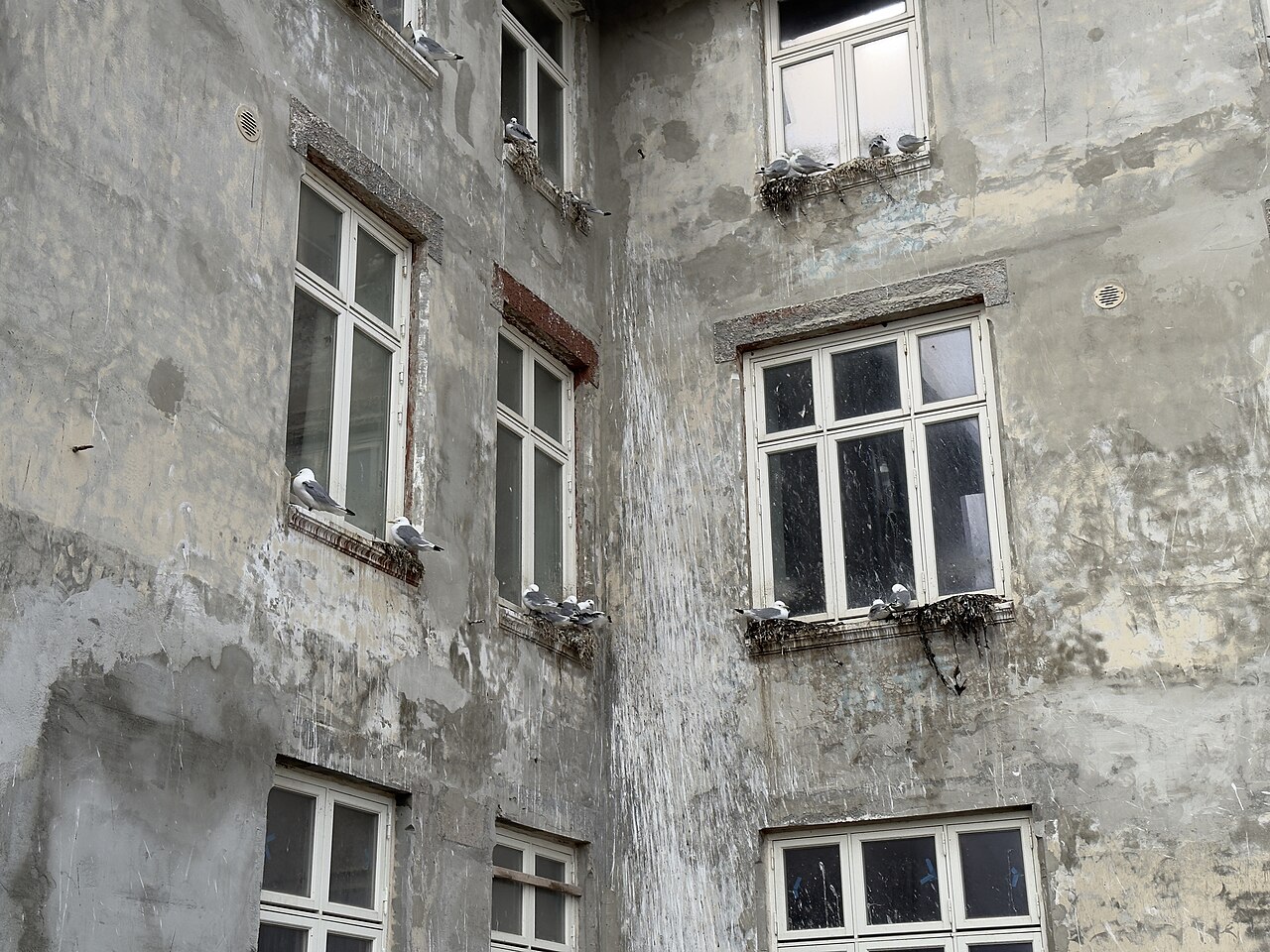
Flat roofs are the single most common site, because gulls nest on them. A commercial roof with gravel ballast is close enough to a shingle beach for a nesting pair, and once a colony establishes, droppings concentrate near the nests and the preferred lookout points: parapet corners, HVAC units and roof vents.
Vehicles parked under light poles, piers, boat canvas, dock cleats and deck rails make up most residential complaints. Gulls choose perches with a clear sightline, so the soiling is predictable: the highest fixed object in an open area takes the heaviest load.
Density tells you whether you have a passing bird or a resident colony. Scattered single droppings across a parking lot are transient gulls. Thirty or more droppings in a 10 ft radius around one roof corner, with feathers and pellets mixed in, is a nesting territory and will persist until the chicks fledge.
Seagull Poop vs Pigeon Poop
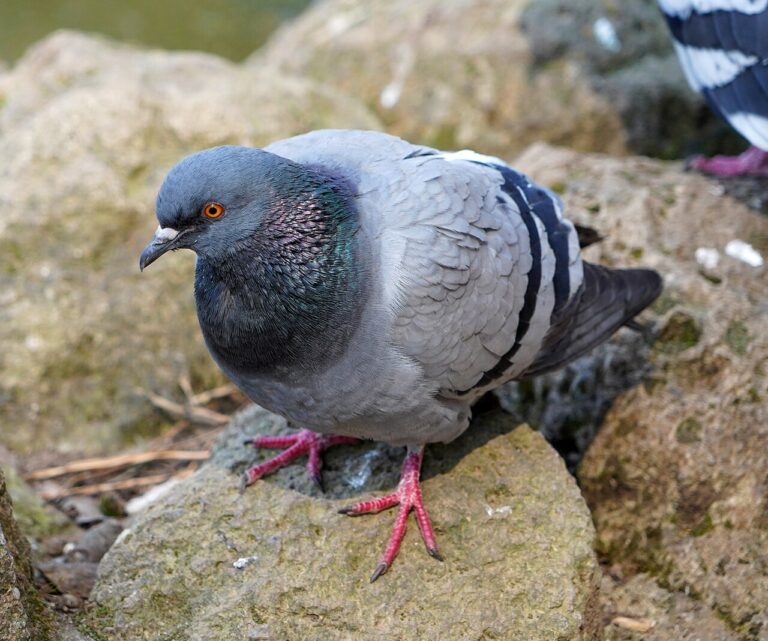
Pigeon droppings are smaller, firmer and far more concentrated. A pigeon dropping is 0.5 to 1 in, pasty enough to hold a coiled or lumpy shape, and typically white with a grey or greenish center. Gull droppings are two to four times larger and run flat.
The clearest difference is distribution. Pigeons use a fixed roost night after night and build a thick layered pile directly beneath it, often several inches deep in an attic or under a bridge beam. Gulls defecate on the wing and while loafing, so their droppings scatter widely with no deep accumulation except at a nest.
Contents settle any remaining doubt. Seeds and grit mean pigeon. Fish bone, shell and chip grease mean gull.
Seagull Poop vs Goose Poop
Canada goose droppings are unmistakable once you have seen them: firm green cylinders 2 to 3 in long with a white cap at one end, holding their shape on grass. They are solid because geese eat grass and process it quickly, passing a dropping every few minutes while grazing.
Gull droppings never form a tube. If you find intact cylinders on a lawn near water, you have geese, and the density will be far higher than anything gulls produce, since a single goose leaves one to two pounds of droppings a day.
The two overlap most often on waterfront parks and golf courses. Check the turf: geese crop grass short and leave trails of droppings as they move in a line, while gulls leave isolated splashes concentrated around whatever they were standing on.
Seagull Poop vs Bat Guano
This confusion happens in attics and under eaves, where people assume any dark pellet near a roofline came from a bird. Bat guano is dry, segmented, 0.25 to 0.5 in long, and crumbles to a glittering dust of insect wing fragments when pressed. Gull droppings are wet, white edged and never pellet shaped.
Location decides it. Gulls do not enter attics, crawl spaces or wall voids, so droppings found inside a structure are from bats, mice or rats, never from a gull. Our comparison of bat guano and mouse droppings covers the indoor identification in detail.
Smell differs as well. Accumulated guano has a sharp ammonia odor; gull droppings smell of fish or sour food waste, and only strongly when fresh or wet.
Are Seagull Droppings a Health Hazard?
Yes, in a limited and manageable way. Gulls feeding at landfills and sewage outfalls carry Salmonella, Campylobacter and E. coli, and studies along both US coasts have found antibiotic resistant strains in gull feces. Transmission to people happens by hand to mouth contact after touching contaminated surfaces, not through the air.
Dropping contamination of reservoirs and swimming beaches is the better documented public health issue. Beach closures after high bacterial counts are frequently traced to gull roosts rather than to sewage. Water districts use bird deterrents on open reservoirs for exactly this reason.
Histoplasmosis, the lung infection associated with bird droppings, is tied to large accumulations of pigeon and starling droppings in enclosed spaces with soil, not to scattered gull droppings on a roof or car. General guidance on handling bird and animal waste is published by the CDC.
How to Clean Seagull Poop Safely
Wear disposable gloves and an N95 mask if you are scraping dried material, and wet the dropping before you touch it. Dry scraping sends particles into the air, which is the one step that turns a trivial job into a risk. A spray bottle of water with a little dish soap, five minutes of soak time, then a plastic scraper handles most of it.
On car paint, act fast. Gull droppings can etch clear coat within 48 hours in sun. Soak a microfiber cloth in warm soapy water, lay it on the spot for a minute, then lift rather than rub, since dried grit in the dropping scratches. Never use a dry towel on a dried dropping.
On decks, boats and roofs, finish with a dilute bleach solution of 1 part bleach to 9 parts water, left 10 minutes, then rinsed, for disinfection. Bag the waste and the gloves, and wash hands even though you wore them. For a nesting colony on a commercial roof, remember that gulls are protected under the Migratory Bird Treaty Act, so nests and eggs cannot be removed without a permit.
How to Identify Poop in Your Yard When You Are Not Sure
Work through three questions in order. First, is it formed or splashed? Splashed means bird. Formed pellets, tubes or scat with a tapered end mean mammal or reptile. Second, is there a white component? A white cap or ring is almost always bird or reptile, since both excrete uric acid.
Third, what is the size, and where did you find it? Small dark pellets along a wall or behind a shed usually come from rodents, and the distinctions in rat and mouse droppings and squirrel and rat droppings separate the three most common cases. Scattered round pellets on open lawn point to the comparison in deer and rabbit droppings.
White tipped droppings small enough to be confused with rodent pellets are generally reptile rather than bird, and lizard and mouse droppings covers that pair. For the gulls themselves, the Cornell Lab’s Herring Gull species account is the quickest way to confirm which species you are hosting.
Frequently Asked Questions
How often does a seagull poop?
A gull defecates roughly every 15 to 20 minutes while active, more often after feeding heavily. A single bird loafing on a roof for an afternoon can leave 15 to 20 droppings. That rate explains why a roosting group of 30 gulls can coat a flat roof or a parking area within a few days.
What does normal conure poop look like?
A healthy conure dropping has three visible parts: a firm green or brown feces portion, white solid urates, and a small amount of clear liquid urine. Diameter is about 0.25 in. Entirely liquid droppings, bright yellow or red urates, or undigested seed all warrant a call to an avian vet.
Is there an app that identifies poop?
Several general wildlife identification apps include a scat feature, and iNaturalist users regularly identify droppings from photographs with help from the community. None are reliable enough for a health decision. Photograph the sample next to a coin for scale, then compare against a species guide rather than trusting a single automated answer.
Does seagull poop mean good luck?
Being hit by a bird dropping is treated as a sign of coming money or good fortune in British, Italian and Russian folk belief, and the superstition is applied to gulls as readily as to pigeons. It has no basis beyond the folk logic that an unlikely small misfortune spends your bad luck harmlessly.
Why is seagull poop sometimes green or red?
Green reflects bile in the digested portion and is normal, especially in a bird that has not eaten for a while. Reddish or pink droppings usually come from diet, such as berries or crustaceans rich in pigment. Consistently bloody droppings across many birds at one site suggest disease and are worth reporting to a state wildlife agency.
How do I keep seagulls from pooping on my boat or deck?
Remove the perch rather than the bird. Bird spikes on rails and masthead, a taut line 4 in above a flat rail, and covers over canvas handle most of it. Reflective tape and plastic owls fail within a week. Never feed gulls near a mooring, since a fed bird returns daily and brings others.