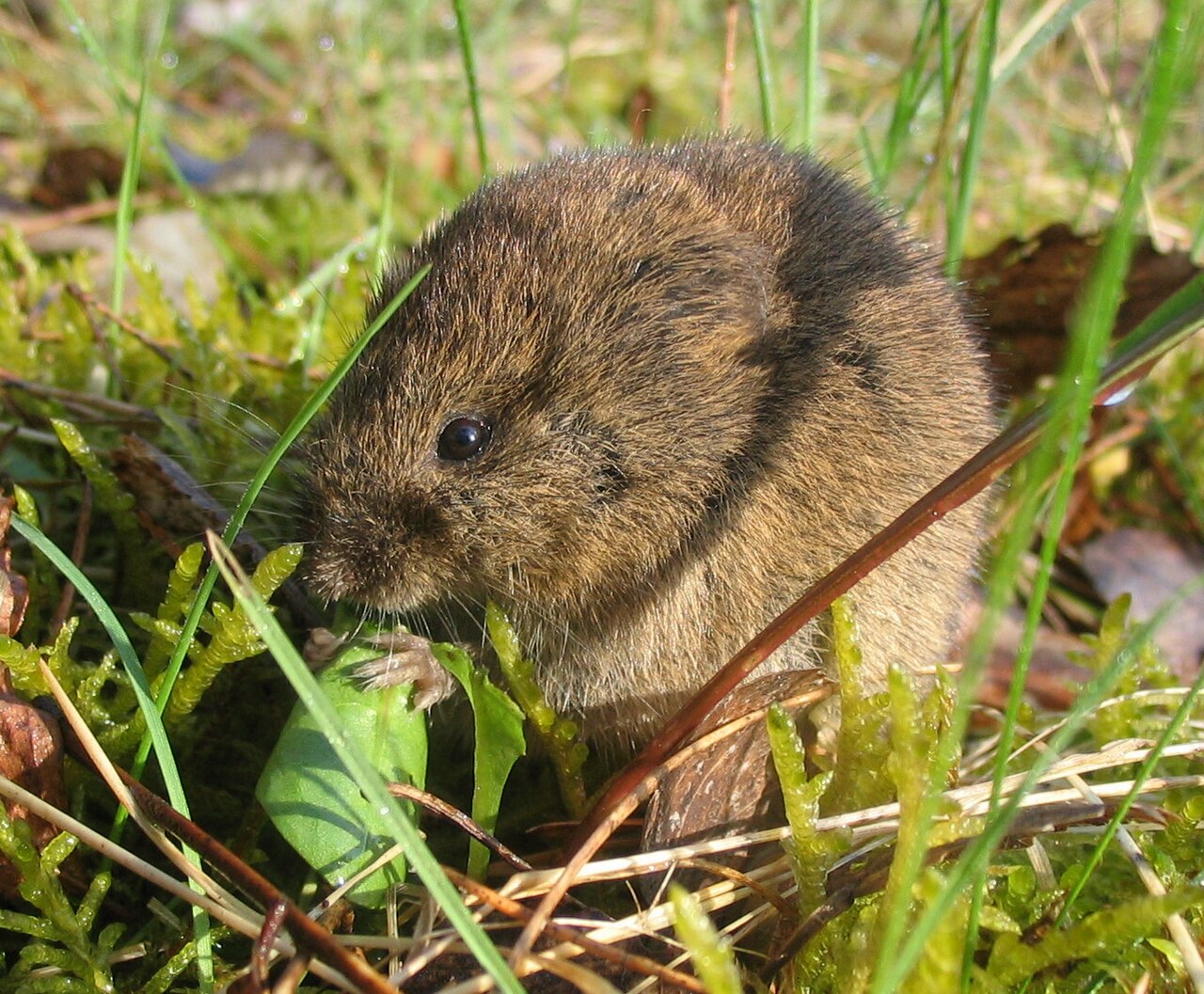
Vole Droppings vs Mouse Droppings: 4 Clues to Tell Them Apart
Vole droppings are usually shorter and blunter than mouse droppings, about 1/8 to 1/4 inch (3 to 6 mm) long with rounded ends, while mouse droppings run 1/4 to 3/8 inch (6 to 10 mm) with pointed ends. The second clue is location. Voles leave droppings outdoors in grass runways, and mice leave them indoors along walls and in cupboards.
If you are comparing vole droppings vs mouse droppings to decide whether you have an indoor problem or a lawn problem, size, ends, color and place together give a reliable answer. Any single one can mislead you.
Vole droppings are small, blunt-ended and often greenish, found in outdoor runways and burrow entrances. Mouse droppings are slightly longer, dark and pointed at the ends, found indoors in pantries, wall voids and attics. Voles rarely enter homes, so droppings inside point to mice.
| Feature | Vole | Mouse |
|---|---|---|
| Length | 1/8 to 1/4 in (3 to 6 mm) | 1/4 to 3/8 in (6 to 10 mm) |
| Ends | Blunt, rounded | Pointed |
| Color | Dark brown to greenish | Black to dark brown |
| Main location | Lawns, mulch, garden beds | Kitchens, attics, garages |
| Pattern | Piles in runways | Scattered, 50 to 75 a day |
| Other signs | Surface runways, girdled bark | Gnawed packages, nests |
How Do I Know if I Have Mice or Voles?
You have voles if the damage is outside and you see runways in the grass, and you have mice if you find droppings, gnaw marks or nests inside the house. Voles are stocky, short-tailed rodents with small ears, such as the meadow vole (Microtus pennsylvanicus). Mice have a longer tail, larger ears and a more slender body.
Voles eat grass, roots, bulbs and tree bark, so their signs are lawn tunnels about 1 to 2 inches (2.5 to 5 cm) wide and chewed bark at the base of young trees. Mice eat almost anything and head for food stored in buildings.
Vole Droppings vs Mouse Droppings by Size and Shape
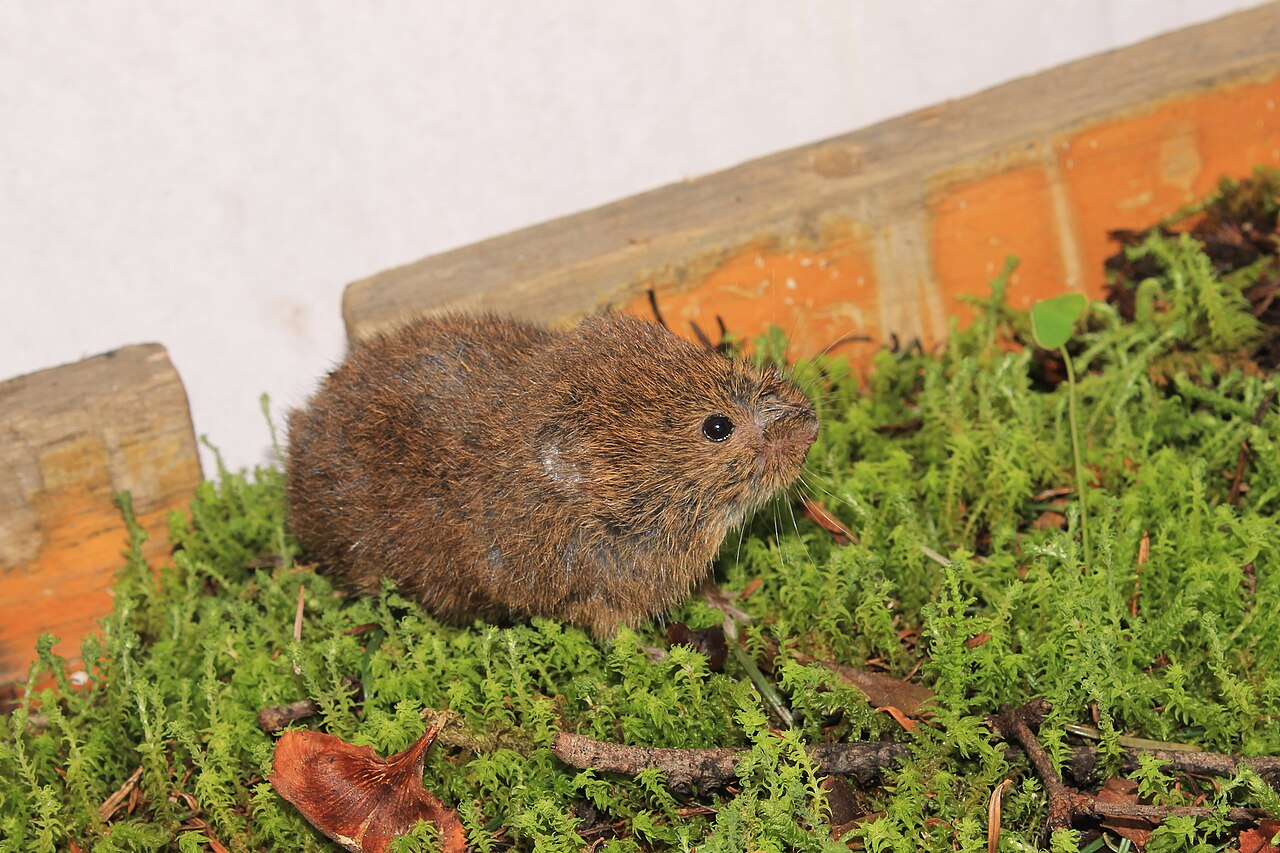
Vole droppings are rounder and often look like short capsules, while mouse droppings look like grains of dark rice with a pointed tip. Both are small enough that the difference is easy to miss without a ruler, so lay a coin or tape measure next to the pile before you photograph it.
Moisture changes how they look. Fresh droppings of either animal are soft and shiny, and old ones are dry and gray. Because voles eat green plants, their fresh droppings often have a greenish tint that mouse droppings lack. House mice (Mus musculus) eat grain and processed food, which gives darker, harder pellets.
Where Voles and Mice Leave Their Droppings
Voles drop pellets inside shallow surface runways, at burrow openings and under snow cover, and the piles are usually small and scattered along the trail. Mice drop theirs along walls, behind appliances, in drawers and near food. A pile on a pantry shelf is a mouse, and a pile at the mouth of a lawn tunnel is a vole.
What Is Commonly Mistaken for Mouse Poop?
Vole, shrew, bat and cockroach droppings are the most common look-alikes, along with lizard and gecko droppings. Bat droppings crumble into a powder when pressed, and mouse droppings stay firm. Cockroach droppings are ridged and cylindrical. Lizard and gecko droppings have a white uric acid tip.
Our guides on bat poop vs mouse poop, roach poop vs mouse poop, gecko poop vs mouse poop and lizard poop vs mouse poop cover each of these. Shrew droppings are tiny and often contain insect parts, and squirrel droppings are larger, as shown in squirrel poop vs mouse poop.
Do Mouse Droppings Mean an Infestation?
A few droppings can mean one visiting mouse, but fresh droppings in several rooms, or more than a handful in one spot, usually mean an active infestation. A single mouse leaves 50 to 75 droppings a day, so a real infestation is obvious within a week.
Check for fresh signs: soft, shiny droppings, new gnaw marks, a musty ammonia smell and shredded nesting material. Dry, gray droppings with no other signs are probably old. If you want to compare them with larger rodents, see rat poop vs mouse poop.
Can You Get Hantavirus From Droppings?
Yes, but mainly from the droppings, urine and nests of deer mice and a few other rodents, and not usually from voles. Hantavirus spreads when contaminated dust is stirred up and breathed in. The first symptoms are usually fatigue, fever and muscle aches, especially in the thighs, hips and back.
The virus does not survive long in sunlight, but it can persist longer in cool, dark, enclosed spaces. The CDC recommends airing out a closed space for 30 minutes, wearing gloves, and soaking droppings with a disinfectant (1 part bleach to 9 parts water) before wiping them up with paper towels. Never sweep or vacuum dry droppings.
Frequently Asked Questions
How do you get rid of voles?
Remove dense ground cover, keep grass short and pull mulch 3 inches (8 cm) back from tree trunks. Wrap young trunks in hardware cloth buried 6 inches (15 cm) deep. Snap traps set in runways, baited with apple or peanut butter, reduce small populations quickly.
How long do mouse droppings remain toxic?
There is no fixed time. Virus in droppings weakens in sunlight within hours to days, but indoors in dark spaces it may last longer. Treat every dropping as potentially infectious, and wet it with disinfectant before cleaning, whatever its age.
Can you get hantavirus from mouse droppings that are years old?
Very old, dry droppings are unlikely to be infectious, but it cannot be ruled out in sealed, dark spaces such as old sheds. Use the same precautions as for fresh droppings: ventilate, wear gloves, soak with disinfectant and never dry sweep.
What is usually the first symptom of hantavirus?
Fatigue, fever and muscle aches come first, one to eight weeks after exposure. Headache, dizziness, chills and stomach problems may follow. Later symptoms include coughing and shortness of breath, which need emergency care.
Explore more: Animal Poop Identification: A Field Guide by Species