Hare Tracks in Snow, Mud and Sand: How to Identify Them
Hare tracks are the widest small mammal prints in the winter woods. A snowshoe hare (Lepus americanus) spreads its hind toes across fresh snow until the track measures 4 to 6 in long and up to 4 in wide, with almost no visible toe pads, since dense fur covers the sole. Two big blurry prints side by side with two smaller ones behind them means a hare.
Snow is where hare tracks are easiest to read, so this guide starts there, then covers mud and sand, the measurements and gait that confirm the call, and the animals most often mistaken for a hare.
Hare tracks show four toes front and back, claw marks often visible, and a heavily furred sole that blurs the pads. Hind prints are 4 to 6 in long in snow, front prints about 2 in. The pattern is a bound: two large hind prints landing ahead of two smaller front prints set one behind the other.
| Feature | Measurement | Notes |
|---|---|---|
| Hind track length | 4 to 6 in (10 to 15 cm) | Shorter in firm snow |
| Hind track width | 2 to 4 in (5 to 10 cm) | Widest of any US rabbit or hare |
| Front track | About 2 in long, 1.5 in wide | Rounder, often stacked |
| Toes | 4 front, 4 hind | Claws register, no pads |
| Gait | Bound, occasional slow hop | Never a walking line |
| Stride | 10 to 40 in (25 to 100 cm) | Up to 10 ft (3 m) fleeing |
| Trail width | 4 to 7 in (10 to 18 cm) | Hind prints paired |
Hare Tracks in Snow: What to Look For
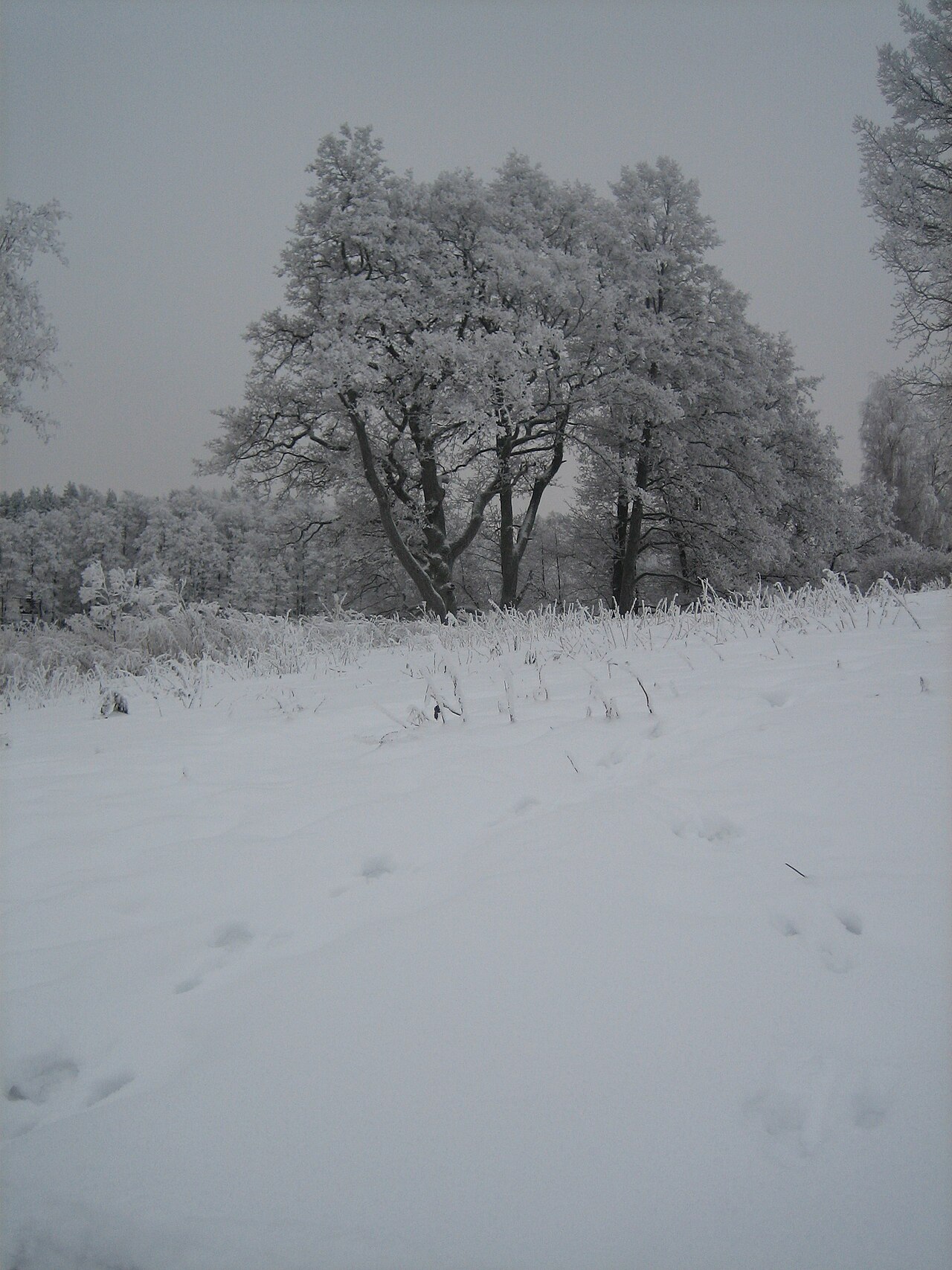
In snow, the first thing to notice is how little the animal sank. A snowshoe hare weighs 3 to 4 lb and spreads that load over four furred feet, so it crosses powder that a fox breaks through. Shallow prints beside a deeply punched trail are themselves a clue.
The prints look soft rather than crisp. Stiff hairs cover the sole, so instead of four clean pads you get an oval depression with faint toe ridges and, in firmer snow, four claw slits at the front edge. Deep powder adds drag marks that can stretch a 5 in track into something that looks 8 in long.
Hare Tracks in Mud and Sand
Mud and wet sand give the opposite problem: the foot does not splay, so the track shrinks. On firm mud a hind print often registers at only 3 to 4 in long, with the toes held together and claws marking as four fine points. The fur still blurs any pad outline, which separates hare prints from the sharp pads of dogs and cats.
Dry sand holds almost no detail, so look for the pattern rather than the print: paired depressions in a bounding sequence, a consistent trail width, and sand thrown backward behind the hind feet. Streambank mud near willow and alder thickets is the best non winter surface, since hares feed on those shrubs and the same wet margins often hold beaver tracks. For comparison, bird tracks nearby show three forward toes and one back.
Hare Track Measurements and Gait
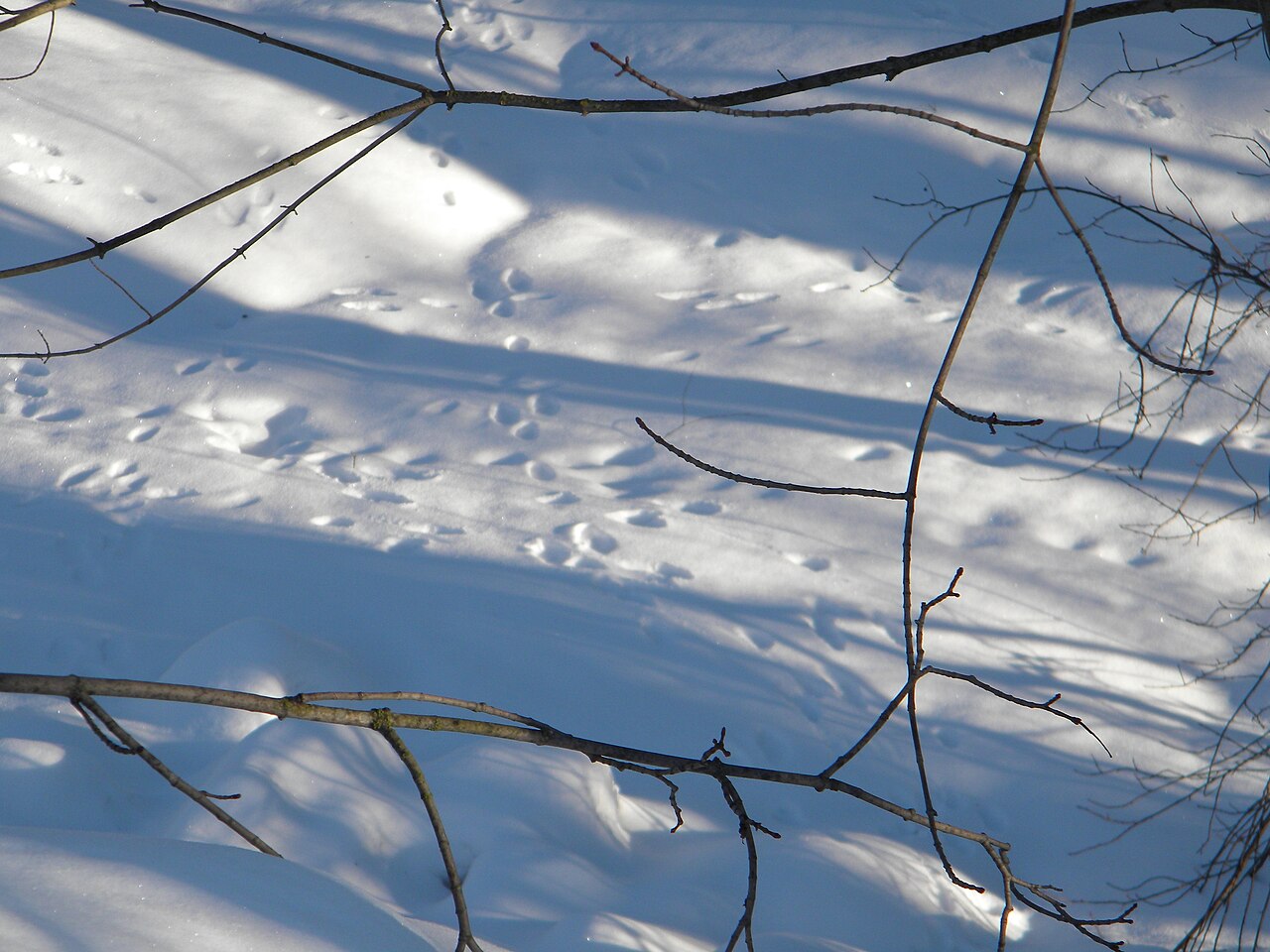
Gait is the fastest confirmation. Hares bound: the hind feet swing past and land ahead of the front feet, so the group of four prints reads hind, hind, front, front in the direction of travel. The front prints usually fall one behind the other rather than side by side, which tilts the group into a Y or a lopsided triangle.
Stride length tells you what the animal was doing. A hare browsing willow twigs leaves groups 10 to 20 in apart with scattered pellets and stems clipped at a 45 degree angle. A fleeing hare leaves gaps of 5 to 10 ft, and the trail cuts straight across open snow toward cover, often alongside coyote tracks or bobcat tracks.
Hare vs Rabbit Tracks: Telling Them Apart
Size and splay do most of the work. An eastern cottontail (Sylvilagus floridanus) hind track runs 3 to 4 in long and stays narrow, giving a trail width of about 3 to 4 in, and the animal sinks noticeably in soft snow. A snowshoe hare hind track is broader than it is tidy, the trail width reaches 7 in, and the whole trail sits higher on the surface.
Habitat helps too. Cottontails stay near brush piles, field edges, and suburban yards, while snowshoe hares hold to dense conifer forest, young regrowth, and spruce swamps. Where the two overlap, measure the widest hind print in undisturbed snow: over about 4 in wide is a hare, under 3 in is a cottontail.
Tracks People Confuse With Hare Tracks
Squirrel tracks cause the most errors. A gray squirrel also bounds in groups of four, but its front prints land side by side rather than stacked, the toes are long and clearly separated, and the trail starts or ends at a tree trunk. A hare trail runs thicket to thicket and never climbs.
Canids and cats are the other mix up, usually once melting has blurred everything. A fox or coyote walks in a near straight line of single prints with four toes and visible pads, the distinction worked through in coyote vs fox tracks, while a badger leaves long claw marks ahead of a wide pad. Paired large prints with no pads are not a predator. Species notes from northern forests are published by the U.S. Fish and Wildlife Service.
Frequently Asked Questions
What do rabbit tracks look like in snow?
Like a smaller, narrower version of hare tracks. A cottontail bounds in groups of four, hind feet 3 to 4 in long landing ahead of two smaller stacked front prints, trail width near 3 to 4 in. The soles are furred, so toe pads do not register, and the animal sinks deeper than a hare.
Does a snowshoe hare turn white in the winter?
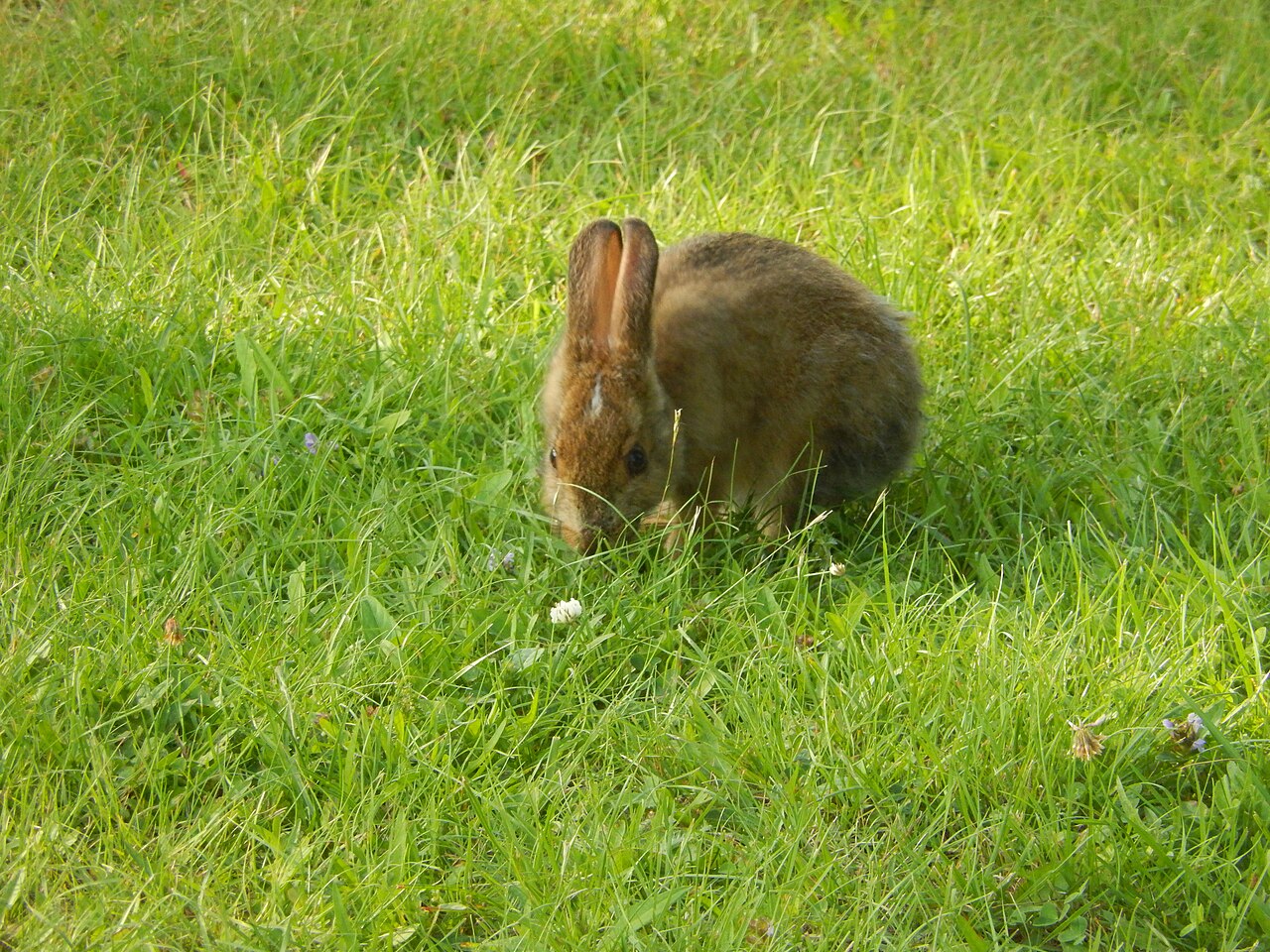
Yes. Shortening daylight triggers a molt from rusty brown to white that takes about 10 weeks, finishing in late autumn, and reverses in spring. The ear tips stay black year round. Where snow now arrives later than the molt, white hares sit exposed on brown ground for weeks, a documented problem at the southern edge of the range.
Do coyotes eat snowshoe hares?
Regularly, and so do Canada lynx (Lynx canadensis), bobcats, red foxes, fishers, martens, goshawks, and great horned owls. Lynx are the famous case, since their numbers rise and fall on a roughly 10 year cycle that follows hare abundance. Across the northern forest the snowshoe hare is the key prey animal for mid sized predators.
What states have snowshoe hares?
Alaska and all of New England, plus New York, Pennsylvania, Michigan, Wisconsin, Minnesota, down the Appalachians into West Virginia at elevation, and through the Rockies and Pacific Northwest in Montana, Idaho, Wyoming, Colorado, Utah, Washington, and Oregon. They need dense conifer cover and reliable snow, so the range is patchy at the southern margins.