Female Goldfinch: Identification Guide
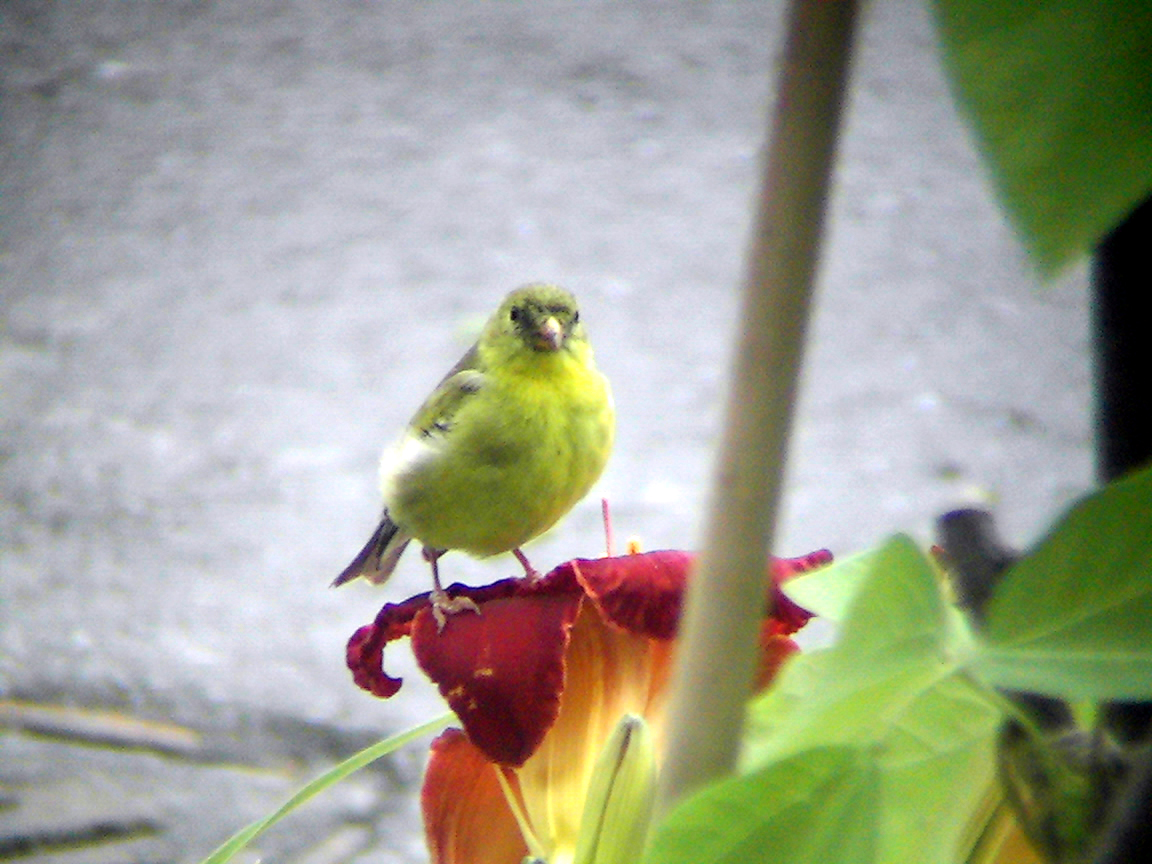
The female goldfinch is a duller olive-yellow to grayish bird with blackish wings and pale wingbars, lacking the breeding male’s brilliant yellow body and black cap. Her subtler coloring, which changes with the seasons, can make her trickier to recognize. This guide covers what a female goldfinch looks like, how she differs from the male, how to identify her, her behavior and nesting, and where and when to see her.
| Feature | Female Goldfinch |
|---|---|
| Color | Olive-yellow to grayish |
| Wings | Blackish with pale wingbars |
| Cap | No black cap |
| Bill | Small, conical, pinkish |
| Tail | Notched |
A female American Goldfinch is olive-yellow to grayish with blackish wings, pale wingbars and no black cap. She stays duller than the breeding male year round, and in winter both sexes fade to a similar buff-brown, which is when the two are hardest to tell apart.
What Does a Female Goldfinch Look Like?
A female American goldfinch is a softer, more muted bird than the dazzling breeding male. In summer she is a warm olive-yellow, brightest on the underparts and duller olive-brown above, without the male’s brilliant lemon-yellow body or black forehead cap. Her wings are blackish with pale or buffy wingbars, and she has a small, conical, often pinkish bill typical of seed-eating finches, along with a notched tail. In winter, both females and males become drabber, turning grayish-brown or dull olive with buffy wingbars, so seasonal timing affects how she looks. Overall the female goldfinch presents a gentle, understated version of the goldfinch pattern, with just enough yellow to hint at her identity. This combination of muted yellow or grayish coloring, dark wings with wingbars, and a conical bill is the key to recognizing her, as covered in our guide to the American goldfinch.
Female vs Male Goldfinch
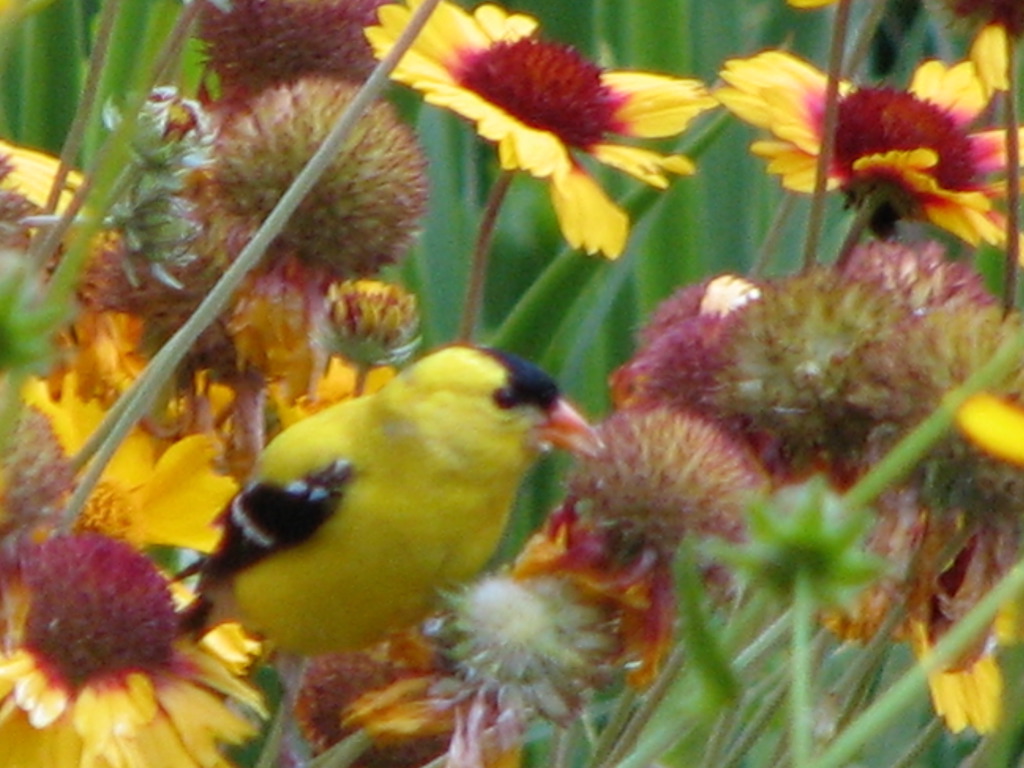
The difference between female and male goldfinches is dramatic in the breeding season but subtler in winter. In spring and summer, the male American goldfinch is unmistakable, a brilliant lemon-yellow bird with a black cap on the forehead and black wings, one of the most striking backyard birds. The female, by contrast, is a much duller olive-yellow with no black cap, showing blackish wings with pale wingbars. This makes them easy to tell apart in summer. In winter, however, the difference nearly disappears, as breeding males molt out of their bright plumage and both sexes become drab grayish-brown, so winter goldfinches of both sexes look similar and muted. Recognizing that the female is always the plainer of the two, lacking the black cap, and that both become dull in winter, is the key to sorting them out through the year.
How to Identify a Female Goldfinch
Identifying a female goldfinch means recognizing her muted coloring and finch features while ruling out similar birds. Look for the olive-yellow to grayish plumage, the blackish wings with pale wingbars, the small conical bill, and the notched tail, and note the absence of a black cap. Her overall soft yellow or drab appearance, combined with the wingbars, points to a female goldfinch. Be aware of a few possible mix-ups: the female lesser goldfinch of the West is smaller with a greener or darker back, winter goldfinches of both sexes look drab and similar, and some yellowish warblers can cause momentary confusion, though warblers have thin, pointed bills rather than the goldfinch’s stubby cone. Behavior helps too, since goldfinches are acrobatic seed-eaters often seen clinging to feeders and seed heads. Focusing on the wingbars, conical bill, and lack of a black cap makes identification reliable, a rewarding skill for feeder watchers, as covered in our guide to attracting goldfinches.
Female Goldfinch Behavior and Nesting
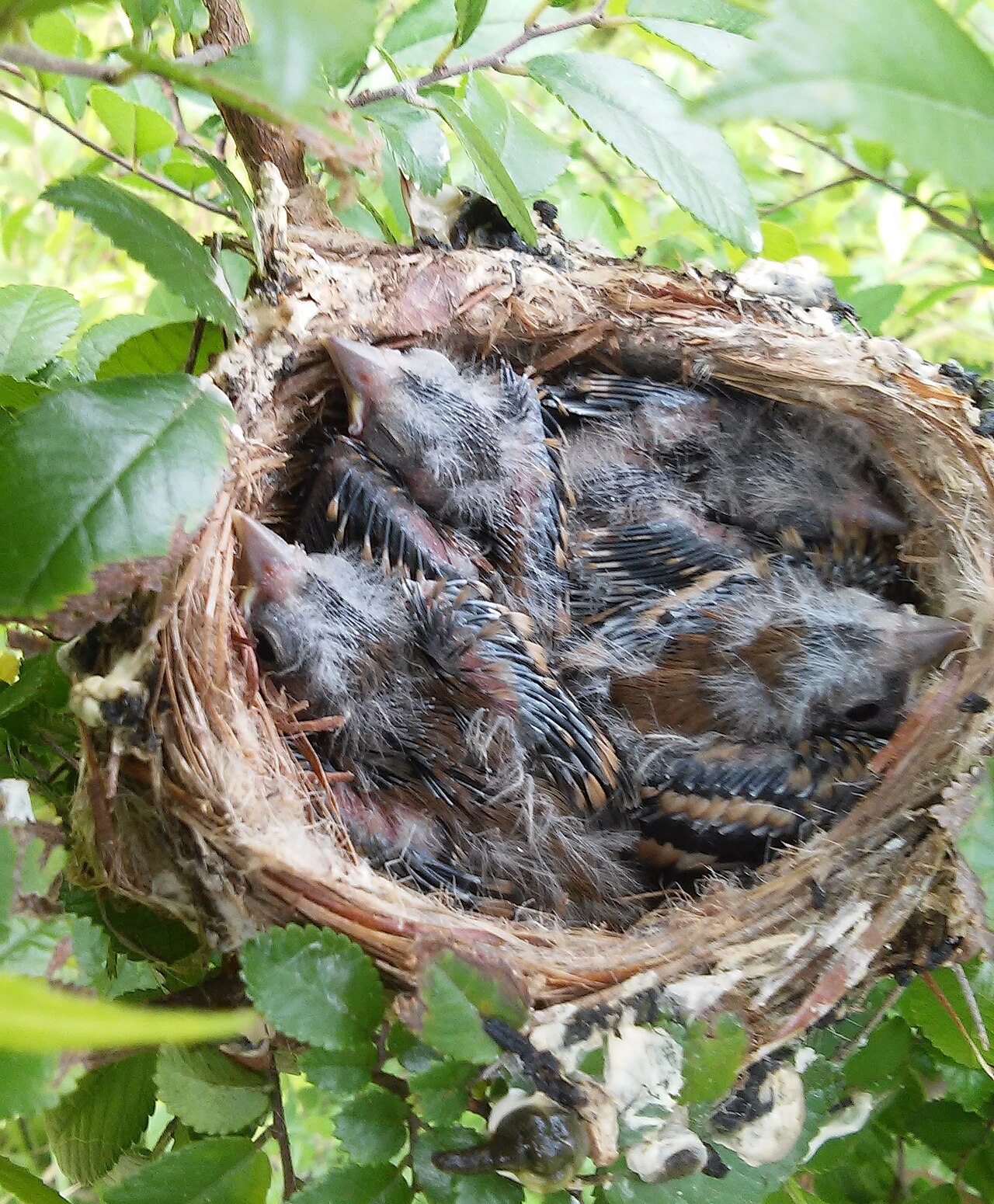
The female goldfinch has a distinctive approach to nesting that sets goldfinches apart from most songbirds. American goldfinches are among the latest nesters in North America, often waiting until mid to late summer to breed, timing their nesting to coincide with the abundance of seeds and the availability of soft plant down. The female builds a remarkably neat, compact cup nest, frequently bound together with spider silk and lined with the fluffy down of plants such as thistle, and the nest is so tightly woven that it can even hold water. She lays her eggs there and does the incubating, while the male brings her food, and both parents feed the young a diet based largely on regurgitated seeds, unusual among songbirds. Goldfinches are social and acrobatic, often feeding in flocks on seed heads and feeders. This late, seed-timed nesting and skillful nest-building make the female goldfinch a fascinating bird, as explored in our guide to goldfinch symbolism.
Where and When to See Female Goldfinches
Female goldfinches are common and widespread, found alongside males across much of North America. Look for them in weedy fields, meadows, gardens, roadsides, and backyards, especially where seed-bearing plants like thistles, sunflowers, and coneflowers grow, and at feeders offering nyjer or sunflower seed. Goldfinches are present year round in much of their range, though they may move around seasonally, and they often gather in flocks outside the breeding season. Because both sexes are drab in winter, the muted female is easiest to distinguish in the breeding season, when the male’s bright plumage makes a pair obvious. Late summer is a great time to observe females, since that is when goldfinches nest. Their fondness for feeders and seed-bearing plants makes goldfinches, including the softer-hued females, one of the most enjoyable and accessible birds to attract and watch, as detailed in our guide to attracting goldfinches.
Female Goldfinch Plumage Explained
The muted coloring of a female goldfinch is well documented by ornithologists. According to the Cornell Lab of Ornithology, female American goldfinches are duller olive-yellow and lack the breeding male’s bright yellow body and black cap, and goldfinches are among the latest-nesting birds in North America. Her subtler plumage provides camouflage during nesting, while the male’s brilliant yellow serves for display in the breeding season. Both sexes molt to a drabber grayish-brown in winter, so the female is easiest to distinguish in summer, when the male is vivid. The goldfinch’s very late nesting, often in mid to late summer, is tied to the availability of seeds and soft plant down for the nest. Understanding these differences makes the female easier to identify and reveals the biology behind the goldfinch’s changing appearance, a pattern of muted females shared with other finches in our guide to types of finches.
The Female Goldfinch’s Vegetarian Diet
Goldfinches are notable for their strongly seed-based, largely vegetarian diet, which shapes the female’s nesting behavior. Unlike most songbirds, which feed their young a protein-rich diet of insects, goldfinches feed their nestlings mainly regurgitated seeds, making them one of the most strictly vegetarian of songbirds. This seed-focused diet is one reason goldfinches nest so late in the year, waiting for seeds such as thistle to become abundant. The female, therefore, relies heavily on seed-bearing plants both to feed herself and to provision her young, and she is a frequent and acrobatic visitor to feeders offering nyjer and sunflower seed. This dietary specialization ties goldfinches closely to weedy fields and gardens full of seed-producing plants. Providing the right seeds and plantings is a wonderful way to support female goldfinches and enjoy watching them, as detailed in our guide to the female house finch and other feeder birds.
Female Goldfinch in Winter
Seeing a female goldfinch in winter can be confusing, since the whole species looks different in the colder months. In winter, both female and male American goldfinches molt into a drab, grayish-brown or dull olive plumage, losing the bright colors of summer, so a winter goldfinch of either sex appears muted and buffy with blackish wings and pale wingbars. This means that in winter, telling females from non-breeding males is difficult, as both look plain. However, winter goldfinches remain recognizable as goldfinches by their small size, conical bills, notched tails, and characteristic wingbars, and they continue to visit feeders in flocks, especially for nyjer seed. Recognizing that goldfinches are drab in winter, and that the bright yellow returns in spring, helps make sense of these seasonal changes when identifying female goldfinches throughout the year.
Related reading: what do goldfinches eat.
What Bird Is Mistaken for a Female Goldfinch?
The Pine Siskin is the leading confusion, because siskins flock with goldfinches at the same nyjer feeders through winter. A siskin is the same size and shape but crisply streaked brown all over with a thin sharply pointed bill and yellow flashes in the wing and tail. A female goldfinch is unstreaked and has a stubby conical bill.
In the west, the female Lesser Goldfinch is a genuine near-twin, smaller and greener with a dark cap on the male and, critically, undertail coverts that are yellow rather than white. The white undertail is the reliable mark on an American Goldfinch of either sex and at any season.
Two others catch people in spring. Female House Finches are streaked below with a plain face and are noticeably larger and browner. Female or first-year Yellow Warblers are uniformly yellow-green with a thin insect-eating bill and no wingbars, and they move restlessly through foliage instead of sitting at a feeder. Winter is the hardest season of all, since males lose their black cap and bright yellow and look much like females until spring. Audubon’s American Goldfinch account covers the seasonal plumage change behind that.
Frequently Asked Questions
What does a female goldfinch look like?
A female goldfinch is a duller olive-yellow to grayish bird with blackish wings, pale wingbars, and a small conical bill, lacking the male’s bright yellow body and black cap.
How can you tell a female goldfinch from a male?
In summer, the male is brilliant yellow with a black cap, while the female is duller olive-yellow with no cap. In winter both sexes become drab and look similar.
Do female goldfinches turn yellow?
Female goldfinches are a muted olive-yellow, brightest in summer, but never as vivid as the breeding male. In winter they become grayish-brown like winter males.
Why are goldfinches dull in winter?
Goldfinches molt out of bright breeding plumage in fall, so both males and females become drab grayish-brown in winter, making the sexes hard to tell apart then.
Do female goldfinches build the nest?
Yes, the female builds a neat cup nest, often bound with spider silk and lined with plant down, and incubates the eggs. Goldfinches nest unusually late, in summer.
How do you tell a female goldfinch from a warbler?
A female goldfinch has a stubby conical bill, wingbars, and a notched tail, while yellowish warblers have thin, pointed bills, helping tell the two apart.
Where do female goldfinches live?
Female goldfinches live in weedy fields, meadows, gardens, and backyards across much of North America, often at feeders with nyjer or sunflower seed.