Water Birds in Florida: A Complete Guide
Water birds in Florida include the great blue heron, great egret, white ibis, roseate spoonbill, wood stork, anhinga, and brown pelican. Florida’s abundant wetlands, coasts, and waterways make it one of the best places in the country to see a spectacular variety of wading birds and other water birds. This guide covers the common water birds in Florida, how to identify them, where to see them, and the best times to watch them.
| Water Bird | Key Features |
|---|---|
| Great Blue Heron | Very large, blue-gray, tall |
| Great Egret | Large, all white, yellow bill |
| White Ibis | White, curved red bill |
| Roseate Spoonbill | Pink, spoon-shaped bill |
| Wood Stork | Large, white, bald dark head |
| Anhinga | Dark, spears fish, dries wings |
| Brown Pelican | Large, pouched bill, dives |
| Sandhill Crane | Tall, gray, red crown |
Common Water Birds in Florida
Florida is a paradise for water birds, hosting a remarkable variety of wading birds, waterfowl, and coastal species thanks to its extensive wetlands, marshes, lakes, rivers, and coastlines. Among the most common and spectacular are the wading birds, including the tall great blue heron, the elegant great egret and snowy egret, the white ibis with its curved red bill, and the unmistakable pink roseate spoonbill. The large wood stork, with its bald dark head, and the tall sandhill crane are also notable. Other water birds include the anhinga, which spears fish and dries its wings spread wide, the brown pelican that plunges for fish along the coast, the double-crested cormorant, and the unusual limpkin. Florida also hosts numerous ducks, gallinules, and shorebirds. This incredible diversity makes Florida one of the best states for water birds. Many of these are wading birds, related to those in our guide to types of herons.
Identifying Florida Water Birds
Identifying Florida’s water birds is easier once you know their key features. The great blue heron is the largest, a tall blue-gray wading bird, while the great egret is a large all-white heron with a yellow bill and the snowy egret is smaller with a black bill and yellow feet. The white ibis is a white wading bird with a curved red bill, and the roseate spoonbill is unmistakable, a pink bird with a distinctive spoon-shaped bill. The wood stork is a large white bird with a bald, dark head, and the sandhill crane is a tall gray bird with a red crown. The anhinga is a dark, slender bird that swims with only its neck showing and perches with wings spread to dry, and the brown pelican is a large coastal bird with a pouched bill that dives for fish. Many white water birds can be told apart by bill and leg details, as explored in our guide to types of white birds.
How to Tell Florida Water Birds Apart
Telling Florida’s water birds apart is easier when you use size, color, and bill shape. Start with color, since the great blue heron is blue-gray, the egrets and ibis are white, the roseate spoonbill is pink, and the anhinga and cormorant are dark. Look at bill shape, a key clue, as the spoonbill has a spoon-shaped bill, the ibis has a long curved bill, herons and egrets have straight pointed bills, the pelican has a huge pouched bill, and the anhinga has a sharp spear-like bill. Note size and shape, from the towering great blue heron to the smaller egrets and the chunky pelican. Behavior is very helpful, since the anhinga swims low and dries its wings, the brown pelican dives for fish, the spoonbill sweeps its bill side to side, and herons stand or stalk patiently. Habitat and leg and foot details add further clues. By combining color, bill shape, size, and behavior, you can identify Florida’s water birds, as explored in our guide to types of herons.
Where to See Water Birds in Florida
Water birds can be found throughout Florida wherever there is water, and the state offers world-class opportunities to see them. Freshwater marshes, lakes, ponds, and rivers host herons, egrets, ibises, anhingas, gallinules, and limpkins, while the famous Everglades and other large wetlands are especially rich in wading birds. Coastal areas, including beaches, mangroves, estuaries, and mudflats, are home to brown pelicans, spoonbills, shorebirds, and many wading birds. Wildlife refuges, state parks, boardwalks, and nature preserves across Florida provide excellent, accessible water bird viewing, often at close range, and many spots allow visitors to walk among concentrations of feeding birds. The roseate spoonbill and wood stork are most numerous in southern Florida, while herons, egrets, and ibises are widespread statewide. Even suburban ponds and golf courses often host herons and ibises. Because water birds are abundant, large, and often approachable in Florida, they are among the most rewarding birds to watch, as detailed in our guide to types of white birds.
Best Times to See Florida Water Birds
Water birds can be seen year-round in Florida, but some times are especially rewarding. Winter, roughly from late fall through early spring, is often the best season, since Florida’s mild climate draws large numbers of wading birds and waterfowl, and the dry season concentrates fish and other prey in shrinking pools, gathering birds in impressive numbers at good feeding spots. This dry-season concentration in places like the Everglades can produce spectacular gatherings of herons, egrets, ibises, storks, and spoonbills. The breeding season brings nesting colonies, where many wading birds gather to raise young, often in trees over water, and birds may show enhanced plumage and colors. Early morning and late afternoon are generally the best times of day, when birds are most actively feeding and the light is beautiful. Low tide can concentrate birds in coastal areas. By visiting good wetlands in the dry season and timing outings for early or late in the day, you can enjoy Florida’s water birds at their best, as reflected in our guide to bird symbolism.
The Roseate Spoonbill, Florida’s Pink Icon
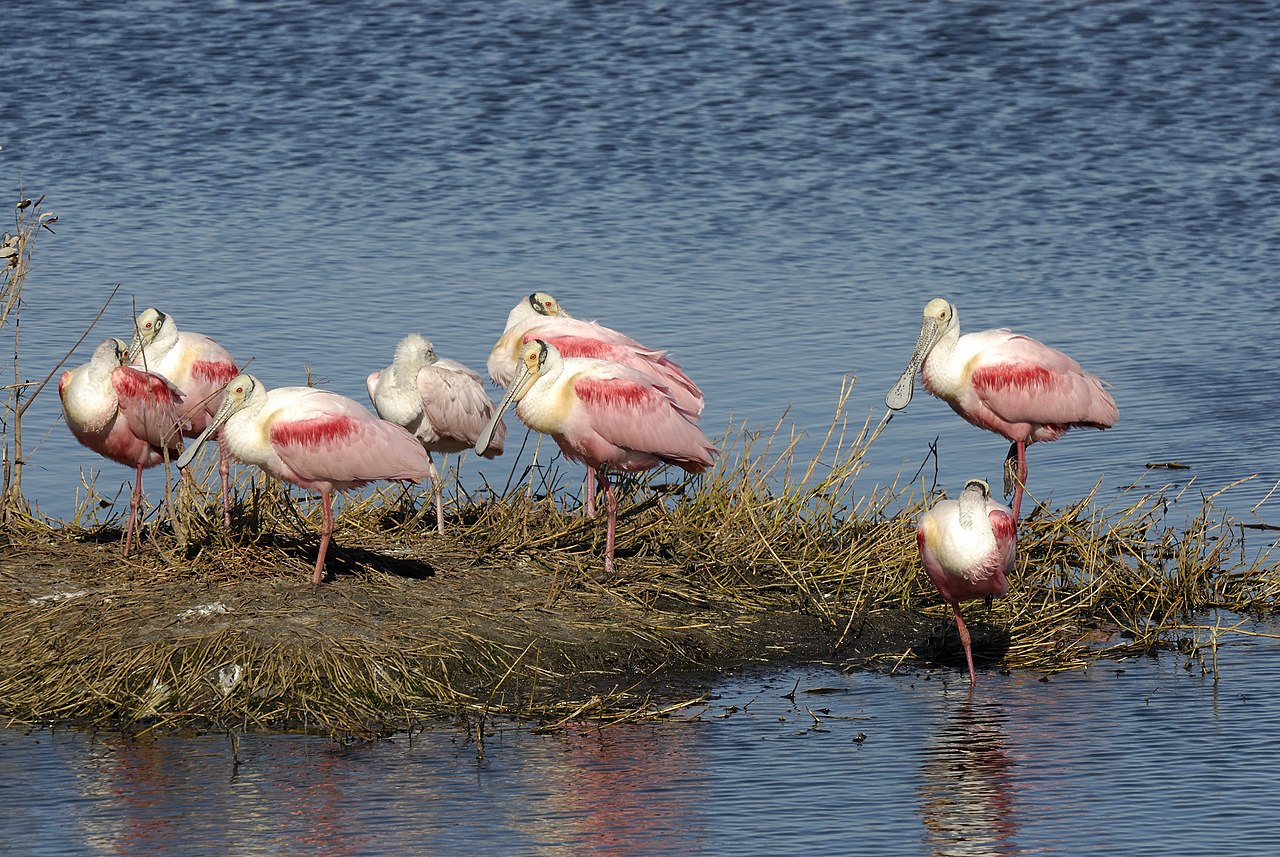
Among Florida’s water birds, the roseate spoonbill deserves special attention as a spectacular icon. According to the Cornell Lab of Ornithology, the roseate spoonbill is a striking pink wading bird that feeds by sweeping its distinctive spoon-shaped bill side to side through shallow water. In Florida, this unmistakable bird, with its bright pink plumage and unique bill, is a highlight for birdwatchers, especially in the coastal wetlands and mangroves of central and southern Florida. The spoonbill’s pink color, like that of flamingos, comes from pigments in the crustaceans and other small creatures it eats, so its diet gives it its remarkable hue. It feeds by wading through shallow water and swinging its partly open bill from side to side, snapping it shut when it touches prey, a feeding method well suited to murky water. Once devastated by plume hunting, spoonbills have recovered in Florida. The roseate spoonbill’s brilliant color and unique feeding make it a beloved Florida water bird, as explored in our guide to types of white birds.
The Everglades and Florida’s Water Birds
No discussion of Florida’s water birds is complete without mentioning the Everglades, one of the most important wetland ecosystems for water birds in North America. This vast subtropical wetland, often called a river of grass, supports enormous numbers of wading birds, including herons, egrets, ibises, wood storks, and roseate spoonbills, which gather to feed and nest. During the dry season, as water levels drop, fish and other prey become concentrated in shrinking pools, drawing spectacular gatherings of hungry wading birds and creating some of the best wildlife viewing anywhere. The Everglades and other Florida wetlands are also crucial for the survival of species like the wood stork, which times its nesting to the drying cycle. Protecting these wetlands is vital for Florida’s water birds, since so many depend on them. Visiting the Everglades and similar areas offers an unforgettable chance to experience the abundance of Florida’s water birds firsthand.
Related reading: types of grebes.
Frequently Asked Questions
What are the common water birds in Florida?
Common Florida water birds include the great blue heron, great egret, snowy egret, white ibis, roseate spoonbill, wood stork, anhinga, brown pelican, and sandhill crane.
What is the pink water bird in Florida?
The roseate spoonbill is the pink water bird in Florida, unmistakable with its bright pink plumage and distinctive spoon-shaped bill, seen feeding in shallow coastal wetlands.
What is the large white bird in Florida wetlands?
The great egret is a large, all-white heron common in Florida wetlands, with a yellow bill and black legs. The white ibis and wood stork are other white water birds.
What dark bird dries its wings in Florida?
The anhinga is a dark, slender water bird in Florida that swims with only its neck showing and perches with its wings spread wide to dry after diving for fish.
Where can you see water birds in Florida?
Water birds are seen in marshes, lakes, rivers, the Everglades, coasts, mangroves, and even suburban ponds across Florida. Refuges and boardwalks offer close viewing.
When is the best time to see water birds in Florida?
Winter and the dry season are often best, since prey concentrates in shrinking pools, gathering birds in large numbers. Early morning and late afternoon are ideal times of day.
How do you tell Florida water birds apart?
Use color, bill shape, size, and behavior. The spoonbill has a spoon-shaped bill, the ibis a curved bill, herons straight bills, and the anhinga dries its wings.