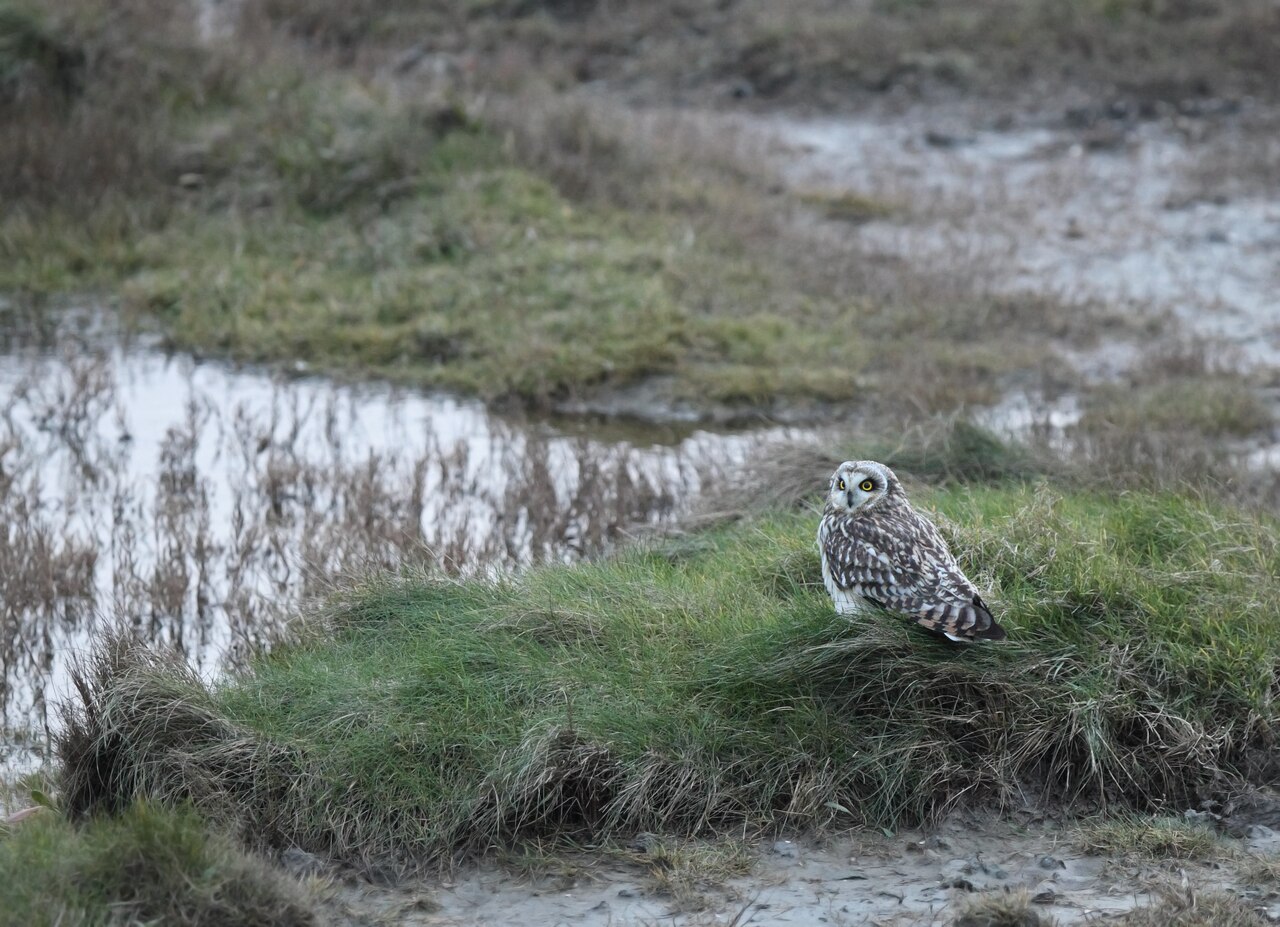
Short-eared Owl: Identification, Facts, and Habits
The Short-eared Owl is a medium-sized owl of open country, best known for hunting in daylight with a distinctive buoyant, moth-like flight as it quarters low over grasslands and marshes. Tawny and streaked, with a pale face, staring yellow eyes ringed in black, and the tiny ear tufts that give it its name (usually invisible), it is one of the most widely distributed owls in the world, found on every continent except Antarctica and Australia. Because it flies and hunts by day, it is one of the easiest owls to observe in the wild. This guide covers how to identify a Short-eared Owl, where and when to find one, its diet, unusual ground nesting, and conservation.
| Feature | Detail |
|---|---|
| Scientific name | Asio flammeus |
| Length | 13 to 17 in (34 to 43 cm) |
| Wingspan | 33 to 40 in (85 to 103 cm) |
| Weight | 7 to 17 oz (206 to 475 g) |
| Habitat | Grasslands, marshes, tundra, open fields |
| Diet | Voles and other small mammals |
| Conservation | Declining in many regions |
How to identify a Short-eared Owl
The Short-eared Owl is a medium-sized, pale-faced owl with mottled tawny-brown and buff plumage streaked below, best identified by its behavior and flight as much as its markings. Its yellow eyes are set in dark patches that give it a fierce, mascara-smudged expression, and the short ear tufts that inspire its name are usually held flat and rarely visible. In flight it shows long, broad wings with a bold buffy patch near the wingtip and a dark “wrist” mark.
The clincher is the flight itself: low, wavering, and buoyant, with deep, floppy wingbeats that look almost moth-like as the owl quarters back and forth over open ground. This distinctive style, combined with daytime activity over fields and marshes, separates it from the similar Long-eared Owl, which has long ear tufts, an orange face, and hunts by night from cover. See how it fits among relatives in our owl types guide.
Range and habitat
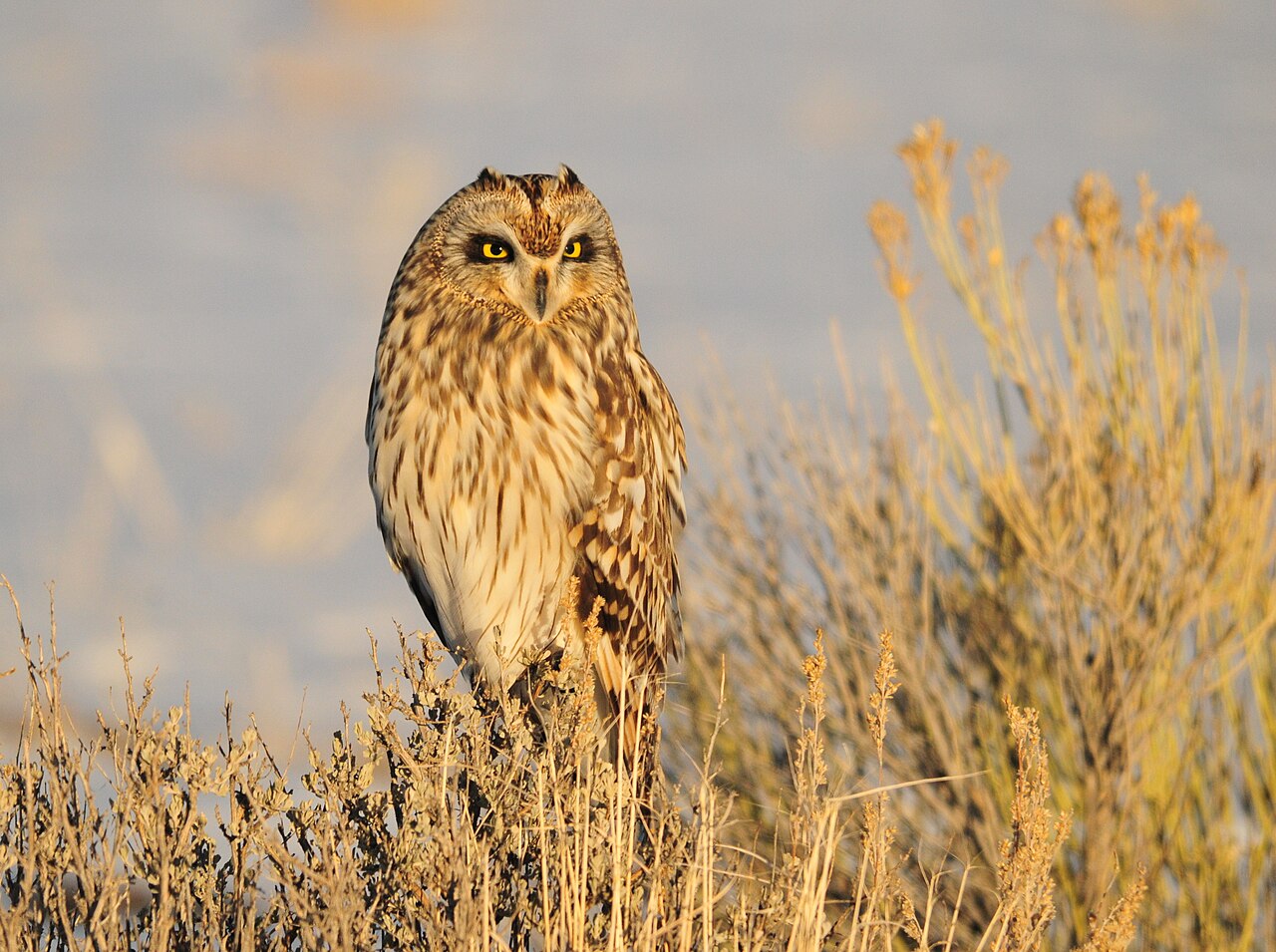
The Short-eared Owl is one of the most cosmopolitan owls on the planet, breeding across northern North America, Eurasia, and South America and reaching remote oceanic islands. In North America it nests across Canada, Alaska, and the northern United States, and it winters widely across the lower 48 states wherever suitable open habitat exists. It is a bird of treeless, open country: grasslands, prairies, marshes, tundra, dunes, and agricultural fields.
Short-eared Owls are somewhat nomadic, following peaks in vole populations rather than returning faithfully to the same site. In winter they may gather where prey is abundant, and several may hunt the same field at dusk, occasionally roosting communally on the ground. Open grassland with a healthy rodent supply is the key, which is exactly the habitat that has become scarce across much of the continent.
What Short-eared Owls eat
The Short-eared Owl is primarily a vole hunter, and voles and other small mammals form the overwhelming bulk of its diet. It also takes other rodents, shrews, and, near coasts and colonies, small birds. Its fortunes rise and fall with vole numbers, so in years and places where voles are abundant, more owls gather and more young are raised, while vole crashes send the owls searching elsewhere.
It hunts on the wing, coursing low over open ground and dropping onto prey it detects by sight and sound, often in the last hours of daylight and at dawn. This diurnal and crepuscular hunting, unusual among owls, is a big reason the Short-eared Owl is so watchable. Its reliance on voles echoes the specialist diets of some other open-country owls in our guide to what owls eat.
Behavior and flight
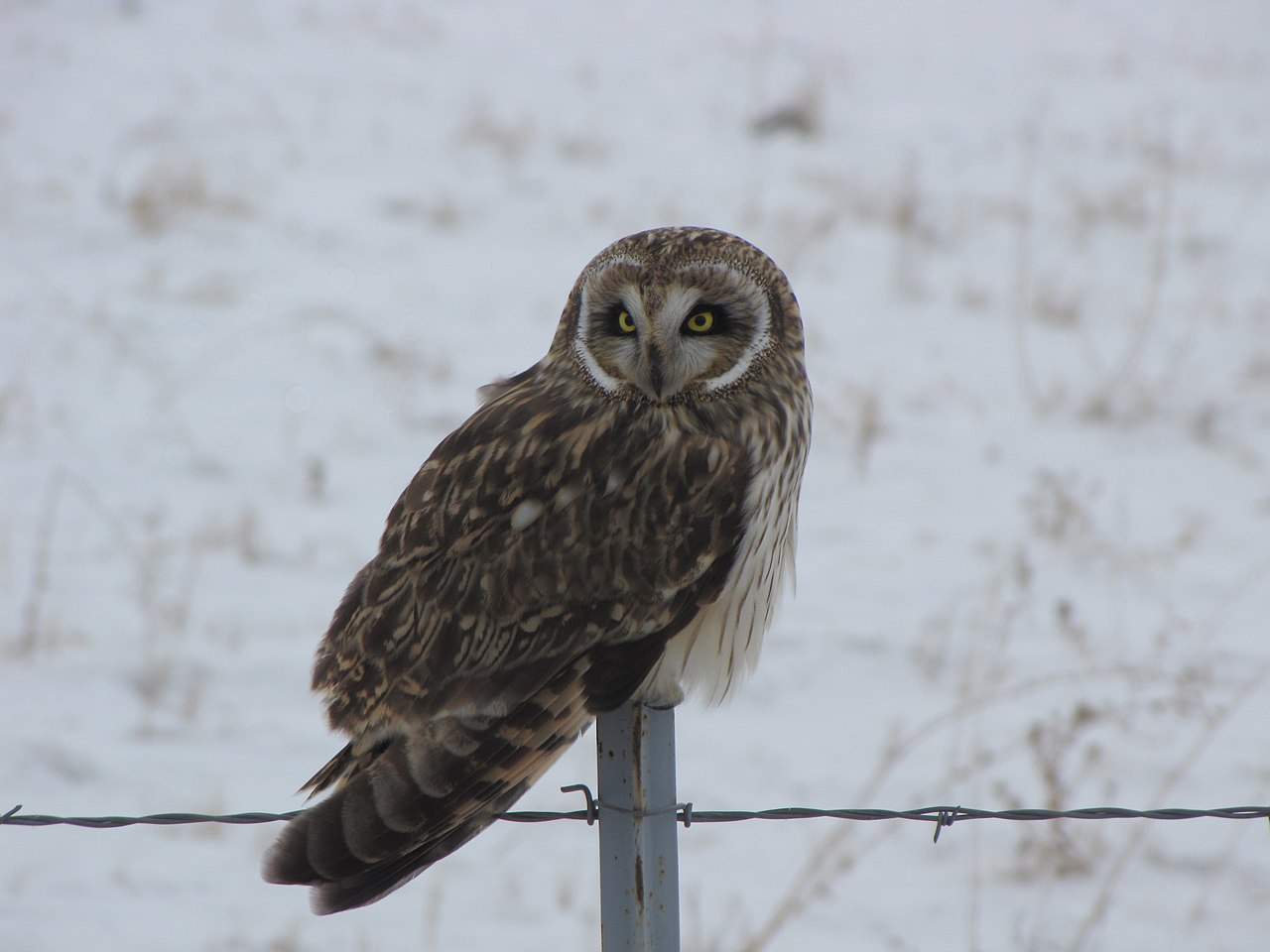
The Short-eared Owl’s flight is its signature. It floats and bounds low over fields on long wings with an irregular, moth-like rhythm, tipping and turning as it searches, quite unlike the direct, silent glide of many woodland owls. When it spots prey it hovers briefly, then drops. During courtship the male performs a spectacular sky dance, climbing high and then plunging while clapping his wings together beneath his body, an audible display over the breeding grounds.
Away from courtship the Short-eared Owl is fairly quiet, giving barking calls and raspy notes mostly near the nest. Its willingness to hunt in daylight, its open habitat, and its dramatic flight make it a favorite of birdwatchers, and a winter field full of coursing short-ears is a memorable sight. Unusually for an owl, it is quite tolerant of others of its kind, sometimes hunting in loose groups.
Nesting and conservation
Unlike most owls, the Short-eared Owl nests on the ground, one of very few North American owls to do so. The female scrapes a shallow bowl among grasses or low vegetation and lines it sparsely, then lays a clutch that tracks food supply, often four to seven eggs but sometimes many more in vole-rich years. She incubates while the male provisions the family, and the young scatter from the nest into surrounding cover before they can fly.
Ground nesting in open country makes the Short-eared Owl vulnerable, and it is declining across much of its range as grasslands and marshes are lost to agriculture and development. It is listed as a species of conservation concern in many states and provinces, and the Cornell Lab of Ornithology notes that Short-eared Owl numbers have fallen sharply across much of North America. Protecting large tracts of open grassland is the key to its future. Beyond biology, owls of every kind carry rich symbolism and inspire the beliefs behind seeing an owl. Regional guides such as types of owls in Texas reveal which owls occur where you live.
Best places and times to see Short-eared Owls
The Short-eared Owl is one of the most watchable owls precisely because it hunts in the open and in daylight. The prime time to look is the last hour or two before sunset on winter afternoons, when the owls lift off to quarter low over the ground. The best places are large tracts of open habitat: grasslands, prairies, coastal marshes, reclaimed fields, airports, and wildlife refuges with healthy vole populations.
Scan across open fields for that unmistakable low, floppy, moth-like flight rather than searching perches, since a hunting short-ear spends much of its time on the wing. Where the habitat is good and voles are abundant, several owls may hunt the same field, occasionally squabbling in mid-air. Wintering birds can be somewhat reliable at traditional sites from year to year, so local birding reports are worth checking before a visit.
Short-eared Owl versus Northern Harrier
The bird most often confused with a hunting Short-eared Owl is not another owl but a hawk: the Northern Harrier. Both course low over the same open fields at dusk with a buoyant, tilting flight, and both show a pale underside, so a distant bird can be genuinely puzzling. The key differences are shape and face. The owl has a big, rounded head, broad wings, and a stubby tail, and it flaps with deep, moth-like beats, while the harrier has a small head, slimmer wings, a long tail, and a white rump patch, and it glides with wings held in a shallow V.
Face-on, the owl’s large-headed, blunt profile is very different from the harrier’s slim, hawk-like silhouette. Both are wonderful grassland hunters, and seeing them share a field at dusk is a treat, but learning to separate them adds to the enjoyment. Owls and hawks alike are covered across our guides, including types of hawks and the broader owl types guide.
Frequently Asked Questions
Why is it called a Short-eared Owl?
For the small tufts of feathers on its head, which are usually held flat and rarely visible. They are much shorter than the prominent tufts of the Long-eared Owl, hence the name.
Do Short-eared Owls hunt during the day?
Yes. Short-eared Owls are among the most diurnal owls, often hunting in the last hours of daylight and at dawn with a distinctive low, floppy, moth-like flight over open fields.
How do you identify a Short-eared Owl in flight?
Look for a medium owl coursing low over open ground with buoyant, moth-like wingbeats, long wings showing a buffy patch near the tip, and a dark mark at the wrist. The flight style is diagnostic.
What do Short-eared Owls eat?
Mainly voles and other small mammals, with some small birds near coasts and colonies. Their numbers closely follow vole abundance, so they are somewhat nomadic.
Where do Short-eared Owls live?
In open, treeless country worldwide, including grasslands, prairies, marshes, tundra, and farm fields. In North America they breed in the north and winter widely across the lower 48 states.
Where do Short-eared Owls nest?
On the ground, which is unusual for owls. The female scrapes a shallow bowl among grasses and lays a clutch that varies with vole abundance, sometimes four to seven eggs or more.
How do you tell a Short-eared Owl from a Long-eared Owl?
The Short-eared Owl has tiny, usually invisible ear tufts, a pale face, and hunts by day over open ground. The Long-eared Owl has long ear tufts, an orange face, and hunts by night from cover.
Are Short-eared Owls endangered?
They are declining in many regions and are a species of conservation concern in numerous states and provinces, mainly because of the loss of the open grassland and marsh habitat they need.