Sharp-Shinned Hawk: Identification Guide
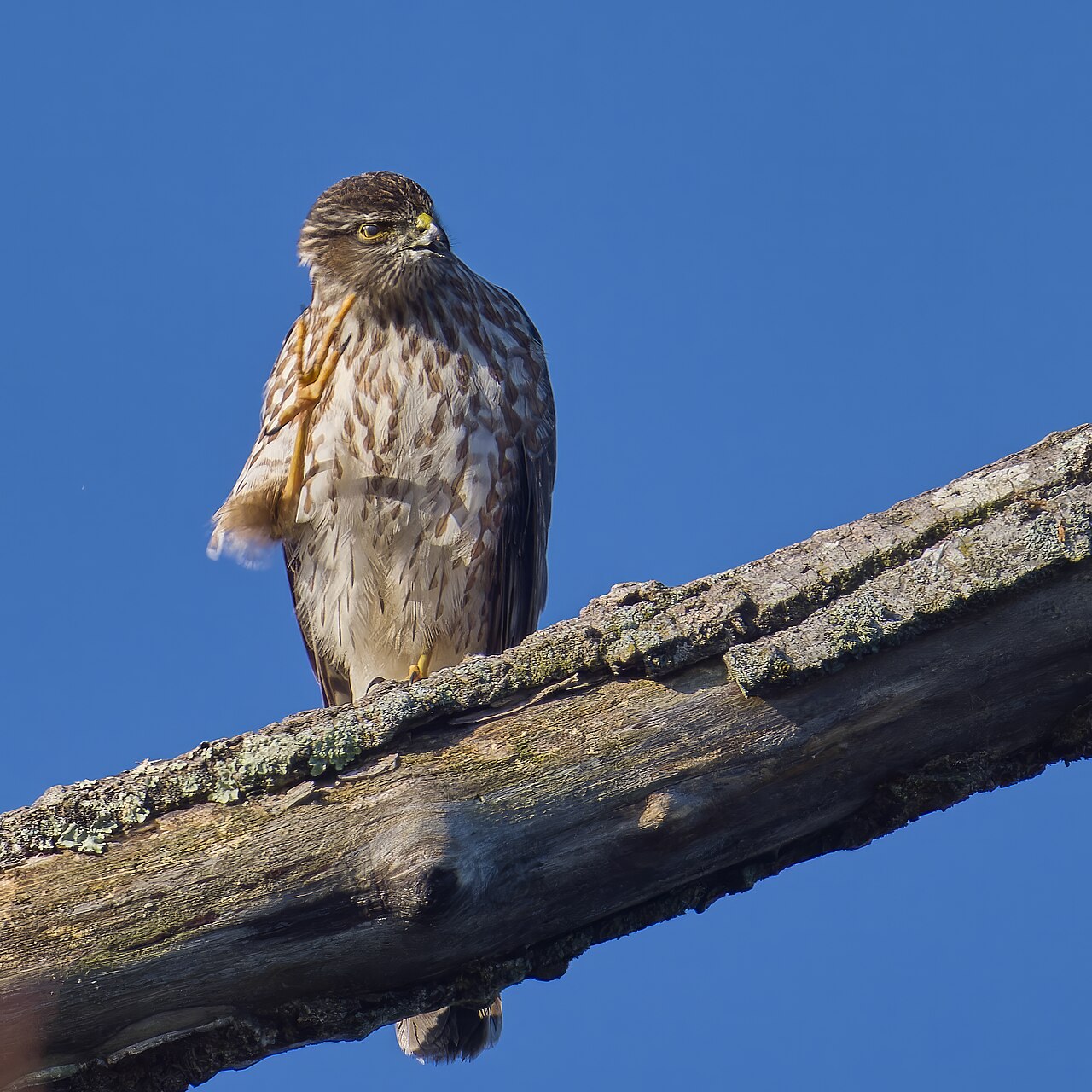
A Sharp-Shinned Hawk is North America’s smallest accipiter, identified by its small, rounded head, short neck, blue-gray back, rust-barred underparts in adults, and a squared-off or only slightly notched tail tip, built for quick, agile chases through dense cover. It is the species most often mistaken for the larger Cooper’s Hawk, and separating the two is one of the most common identification challenges backyard birders run into.
| Fact | Detail |
| Length | 9 to 13 inches |
| Wingspan | 17 to 22 inches |
| Weight | 3 to 8 ounces, females much larger |
| Tail shape | Short, squared off, sometimes slightly notched |
| Head shape | Small, rounded, barely projects past wings |
| Diet | Small songbirds, especially at feeders |
| Legs | Thin, pencil-like, giving the species its name |
How to Identify a Sharp-Shinned Hawk
Adults show a slate blue-gray back and crown with rust-orange horizontal barring across the chest, closely resembling a Cooper’s Hawk in color at a glance. The proportions are the real story: a Sharp-Shinned Hawk has a small, rounded head that barely projects in front of the wings in flight, a short neck, and notably thin legs, which is the source of the “sharp-shinned” name. Juveniles are brown above with coarse vertical streaking below, similar to a juvenile Cooper’s Hawk but again distinguished mainly by proportions rather than color.
Sharp-Shinned Hawk vs Cooper’s Hawk
Size overlaps enough between the two species that it is an unreliable field mark on its own, since a large female Sharp-Shinned Hawk can approach the size of a small male Cooper’s Hawk. Head and tail shape are far more consistent. A Sharp-Shinned Hawk’s head looks small and rounded and barely pokes out past the leading edge of the wings in flight, while a Cooper’s Hawk’s head is larger, blockier, and clearly projects forward. The tail tells a similar story: a Sharp-Shinned Hawk’s tail looks squared off, sometimes with a shallow notch, while a Cooper’s Hawk’s tail looks distinctly rounded at the corners.
Hunting Style and Diet
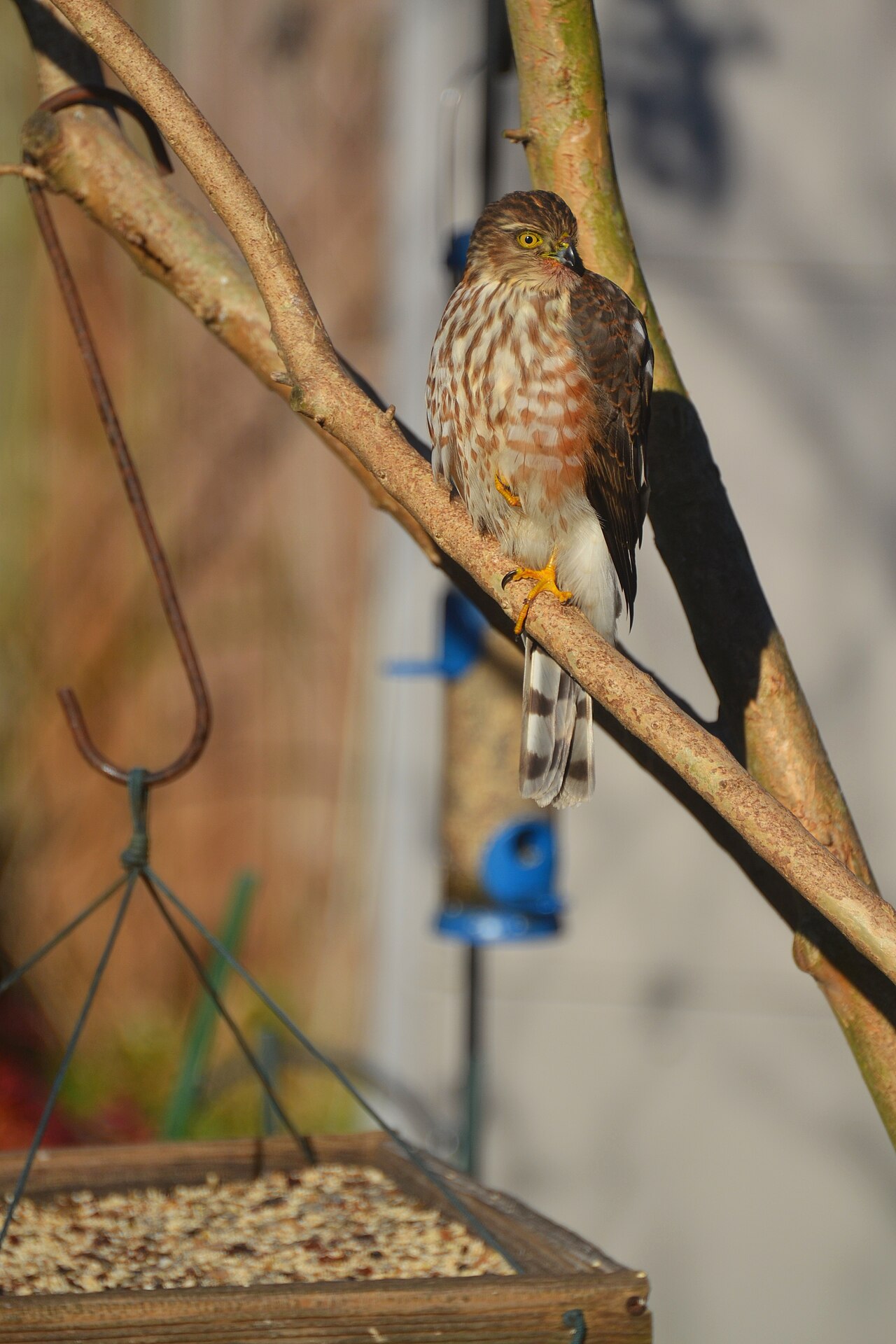
Small songbirds, from sparrows and warblers up to birds the size of a robin, make up almost the entire diet of a Sharp-Shinned Hawk, hunted with sudden, explosive bursts of speed through dense brush and low tree cover. This specialization on small birds is exactly why the species is a frequent, if unwelcome, visitor to backyard feeders during migration and winter, when concentrations of small songbirds make an easy and predictable target. Unlike the broad-winged buteos that soar in open sky searching for prey, a Sharp-Shinned Hawk relies almost entirely on cover and surprise.
Migration
Sharp-Shinned Hawks are among the most numerous migrants counted at hawk-watch sites each fall, moving in loose streams along ridgelines and coastlines rather than the tight, thermal-riding kettles typical of buteos like the Broad-Winged Hawk. Northern and Canadian breeding populations move well into Mexico and Central America for winter, while some southern populations remain resident year round. Because the species migrates mostly by flapping flight low along ridgelines rather than gliding on rising thermal air, individual sightings at a hawk watch tend to move past quickly and are often picked out more by shape and flight style than by any close look at plumage.
Range and Habitat
According to the Cornell Lab of Ornithology, Sharp-Shinned Hawks breed primarily in dense coniferous and mixed forest across Canada and the northern United States, and are found more widely across the country during migration and winter, when they regularly show up in suburban yards and woodland edges well outside their breeding range. Because they are so secretive and fast-moving through dense cover, they are detected far less often than their actual numbers would suggest.
Should You Take Down a Feeder Because of a Sharp-Shinned Hawk?
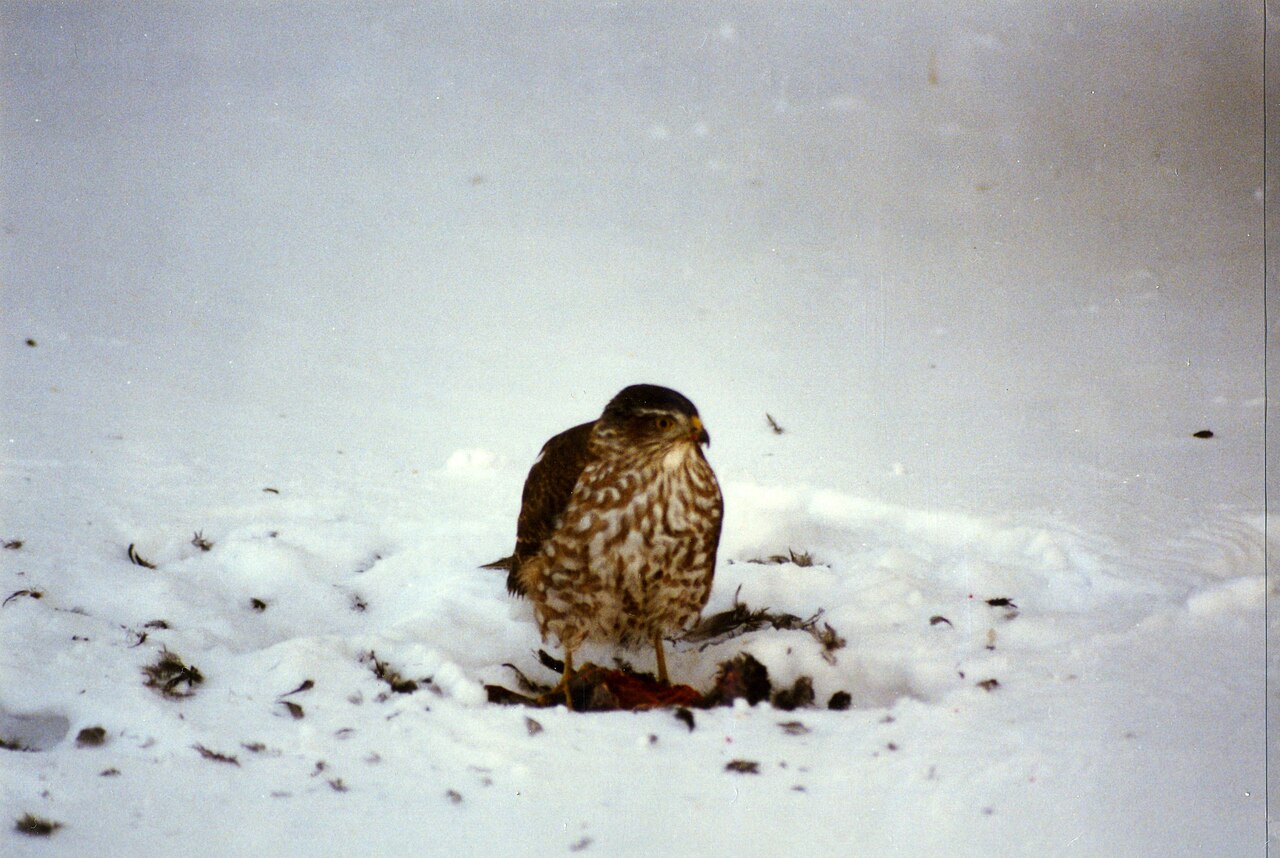
Most wildlife agencies and ornithologists, including researchers affiliated with the Cornell Lab of Ornithology, advise against permanently removing feeders over an occasional Sharp-Shinned Hawk visit, since predation at a feeder is a natural process rather than a sign of a damaged ecosystem. Anyone concerned about repeated losses can temporarily take feeders down for a week or two to encourage a hunting hawk to move along, add dense shrubbery near feeders for songbirds to escape into, or simply accept the hawk as part of a healthy backyard food web that includes both prey and predator species.
Sharp-Shinned Hawk vs Larger Hawks
Compared with soaring buteos such as the Red-Tailed Hawk and Red-Shouldered Hawk, a Sharp-Shinned Hawk is dramatically smaller and built for speed through cover rather than for soaring on thermals. Its flight silhouette alone, short rounded wings and a proportionally long tail rather than broad, rounded wings and a short fanned tail, is usually enough to rule out any confusion with the larger species once you know what shape to look for.
Why Sharp-Shinned Hawks Are Hard to Study
Because they are small, fast, and spend most of their time moving through dense cover rather than perched in the open, Sharp-Shinned Hawks are consistently under-detected by standard birding methods compared to more conspicuous species like the Cooper’s Hawk. Much of what is known about their population trends comes instead from organized fall hawk-watch counts along major migration corridors, where large numbers pass a fixed observation point over a period of weeks, giving researchers a reliable index of relative abundance even though individual birds are rarely seen well enough for detailed study on their breeding grounds.
A Widespread but Often Overlooked Hunter
Despite being one of the most numerous raptors in North America, the Sharp-Shinned Hawk is frequently overlooked by casual observers precisely because of how it hunts: brief, explosive attacks launched from concealment rather than the conspicuous soaring displays of a Red-Tailed Hawk. Many backyard sightings amount to little more than a blur of gray and rust vanishing into a hedge with a songbird, over almost before it registers, which is part of why the species has a reputation among birders as a hawk you hear about far more often than you get a clean, satisfying look at.
What to Do If a Sharp-Shinned Hawk Is Hunting Your Feeder
Most bird feeding guides, including guidance from the Cornell Lab of Ornithology, suggest treating an occasional Sharp-Shinned Hawk visit as a normal part of a functioning backyard ecosystem rather than a problem requiring intervention. Providing dense shrubs or brush piles near feeders gives songbirds an escape route to duck into during an attack, which both protects the prey species somewhat and lets the natural predator-prey relationship continue to play out without needing to remove feeders entirely or otherwise interfere with a wild hawk simply doing what it evolved to do.
Population Recovery Since the Pesticide Era
Like several other North American raptors, Sharp-Shinned Hawks suffered population declines in the mid-twentieth century tied to organochlorine pesticides that thinned eggshells and reduced breeding success across the food chain. Populations have generally recovered since those chemicals were banned, and the species is now considered stable to increasing across most of its range, a recovery pattern it shares with the Cooper’s Hawk and several other bird-eating raptors that were hit particularly hard during that era due to how concentrated the toxins became as they moved up through the bodies of the smaller birds these hawks depend on for food.
Frequently Asked Questions
How do you identify a Sharp-Shinned Hawk?
Look for a small hawk with a blue-gray back, rust-barred chest, a small rounded head that barely projects past the wings in flight, and a short, squared-off tail, often seen making sudden, fast attacks near feeders or brushy cover.
How big is a Sharp-Shinned Hawk?
Sharp-Shinned Hawks measure 9 to 13 inches long with a wingspan of 17 to 22 inches, making them the smallest hawk in the accipiter family found in North America.
How do you tell a Sharp-Shinned Hawk from a Cooper’s Hawk?
Check the head and tail shape rather than overall size. A Sharp-Shinned Hawk has a small head that barely pokes past the wings and a squared-off tail, while a Cooper’s Hawk has a larger, blockier head that clearly projects forward and a rounded tail tip.
What does a Sharp-Shinned Hawk eat?
Almost entirely small songbirds, ranging from sparrows and warblers up to birds about the size of a robin, caught with sudden bursts of speed through dense cover.
Why is a Sharp-Shinned Hawk at my bird feeder?
Feeders concentrate small songbirds in a predictable spot, making them an efficient hunting ground for a species that specializes almost entirely on small birds as prey.
Do Sharp-Shinned Hawks migrate?
Yes, in large numbers. Northern and Canadian breeding populations migrate well into Mexico and Central America for winter, making the species one of the most commonly counted migrants at fall hawk watches.
Where do Sharp-Shinned Hawks nest?
They nest primarily in dense coniferous and mixed forest across Canada and the northern United States, building a stick nest well hidden within thick tree cover.