Swainson’s Hawk: Long-Distance Migrant
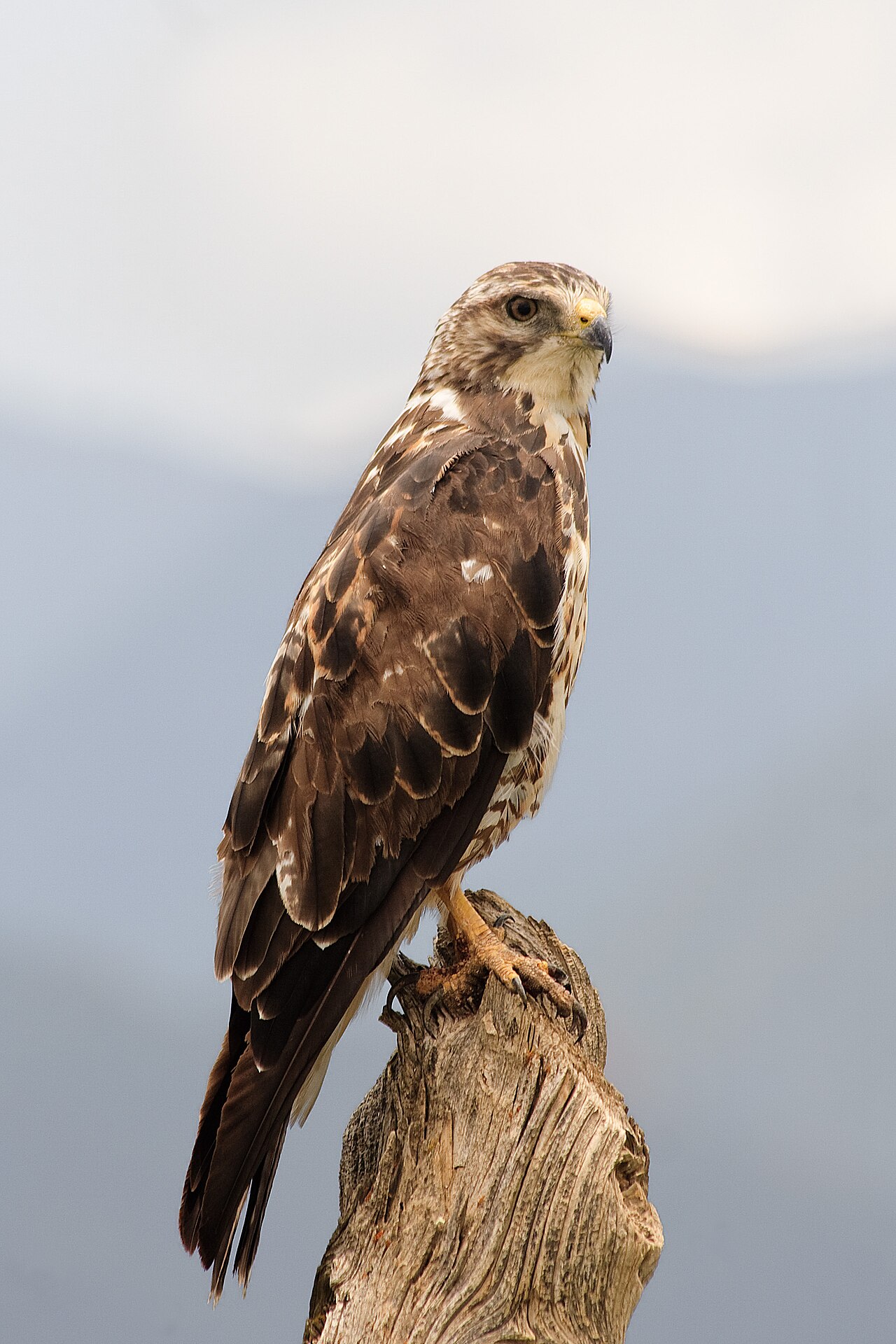
A Swainson’s Hawk is a slim, long-winged buteo of the open prairie, identified by a contrasting dark chest band, or “bib,” against a paler belly in the most common color morph, long pointed wings that look narrower than most buteos in flight, and a habit of soaring on wings held in a shallow V. It is best known for one of the longest migrations of any raptor in the world, traveling from breeding grounds in the western United States and Canada to wintering grounds on the pampas of Argentina.
| Fact | Detail |
| Length | 18.9 to 22 inches |
| Wingspan | 45.3 to 49.2 inches |
| Weight | 1.5 to 3.2 pounds |
| Key field mark | Dark chest bib against a pale belly |
| Habitat | Open prairie, grassland, agricultural fields |
| Migration | Up to 12,000 miles round trip, to Argentina |
| Diet | Insects (especially in winter), rodents in summer |
How to Identify a Swainson’s Hawk
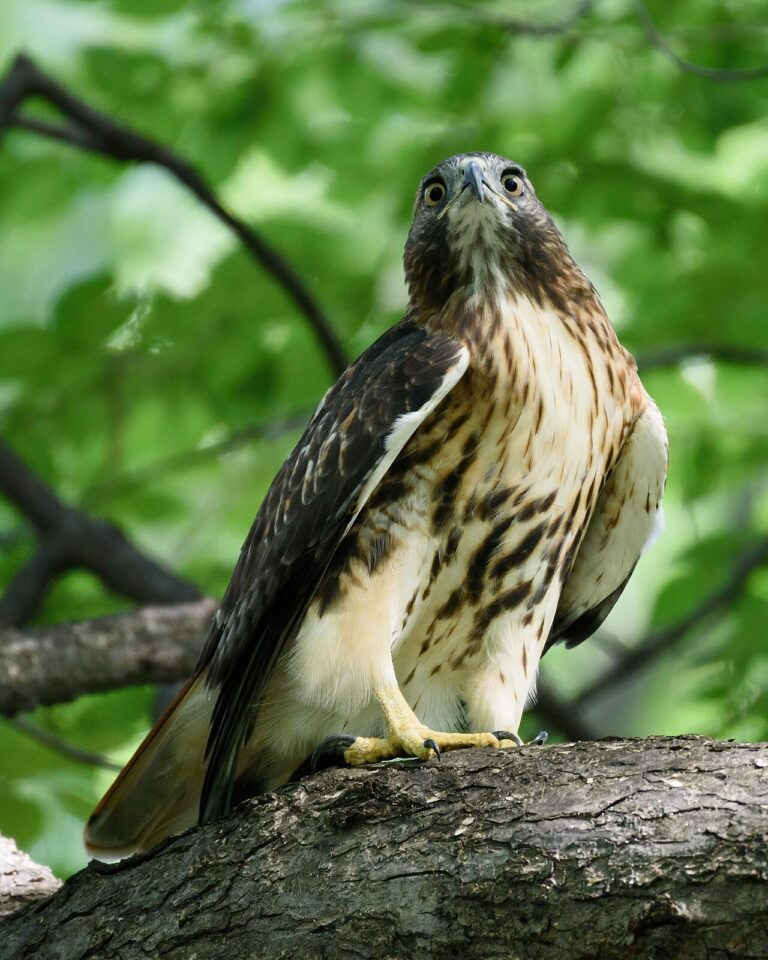
The classic light-morph adult shows a dark brown chest band or “bib” that contrasts sharply against a pale, unmarked belly, along with a brown back and a pale head, giving the bird a distinctive banded look unlike the belly-band pattern of a Red-Tailed Hawk. The wings are longer and narrower than most buteos, often held in a shallow V while soaring, and the flight feathers appear noticeably darker than the paler wing linings underneath, creating a strong two-toned pattern visible from below. Dark morph birds also occur, appearing almost entirely dark brown with only limited paler areas.
One of the World’s Longest Raptor Migrations
Swainson’s Hawks undertake an extraordinary migration, traveling from breeding grounds across the western Great Plains and Great Basin all the way to wintering grounds on the grasslands of Argentina, a round trip that can cover roughly 12,000 miles each year, a distance that dwarfs even the long fall movements of the Broad-Winged Hawk. Unlike many raptors that migrate alone or in small groups, Swainson’s Hawks often travel in large flocks numbering in the hundreds or even thousands, riding thermals and using efficient soaring flight to conserve energy over such an immense distance.
A Diet That Changes With the Season
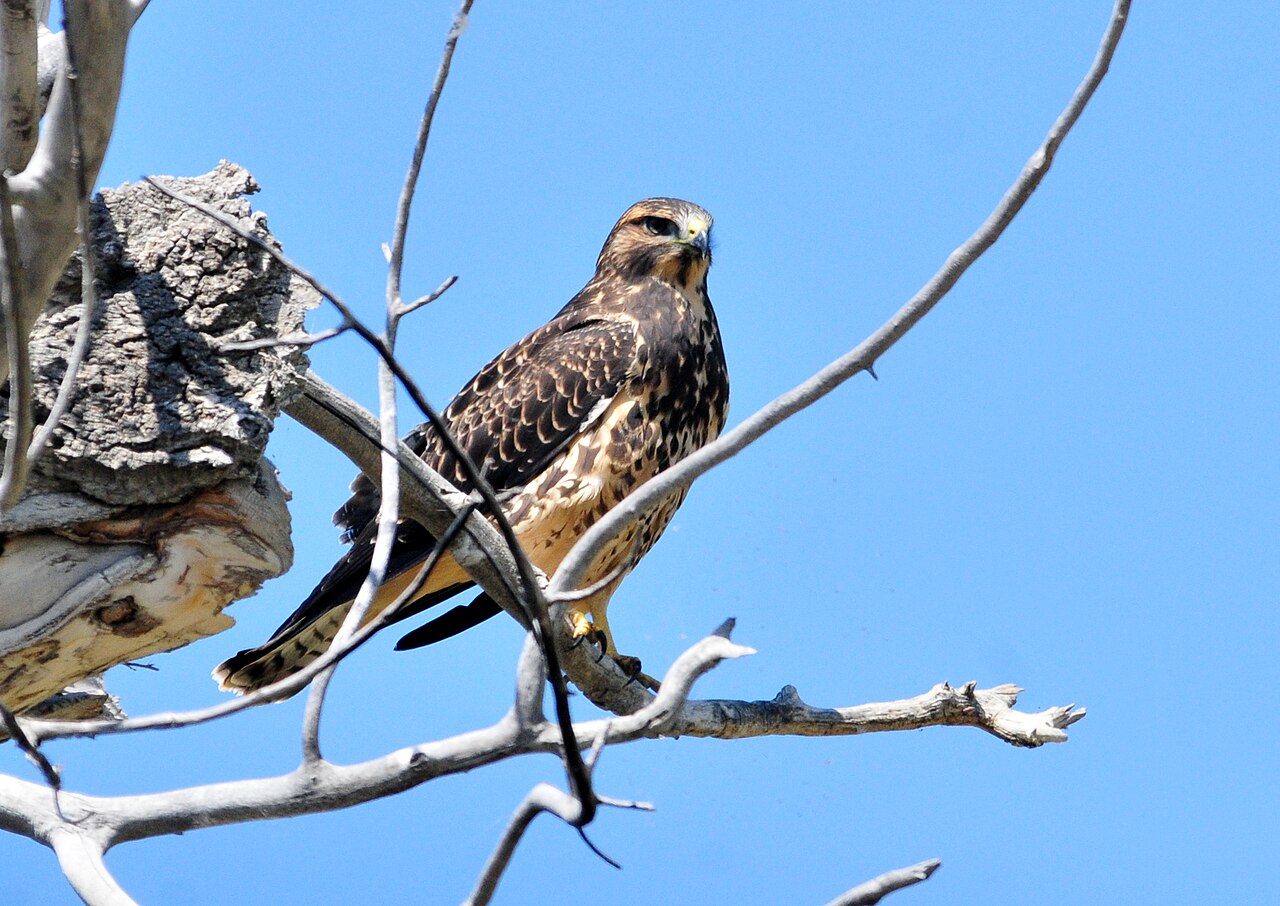
During the breeding season in North America, Swainson’s Hawks hunt ground squirrels, mice, and other small mammals over open grassland and agricultural fields, much like a Ferruginous Hawk sharing the same prairie habitat. On its South American wintering grounds, however, the species shifts almost entirely to a diet of large insects, particularly grasshoppers and dragonflies, often hunting in large, loose flocks over recently plowed or burned fields where insects are especially concentrated and easy to catch.
Nesting on the Open Prairie
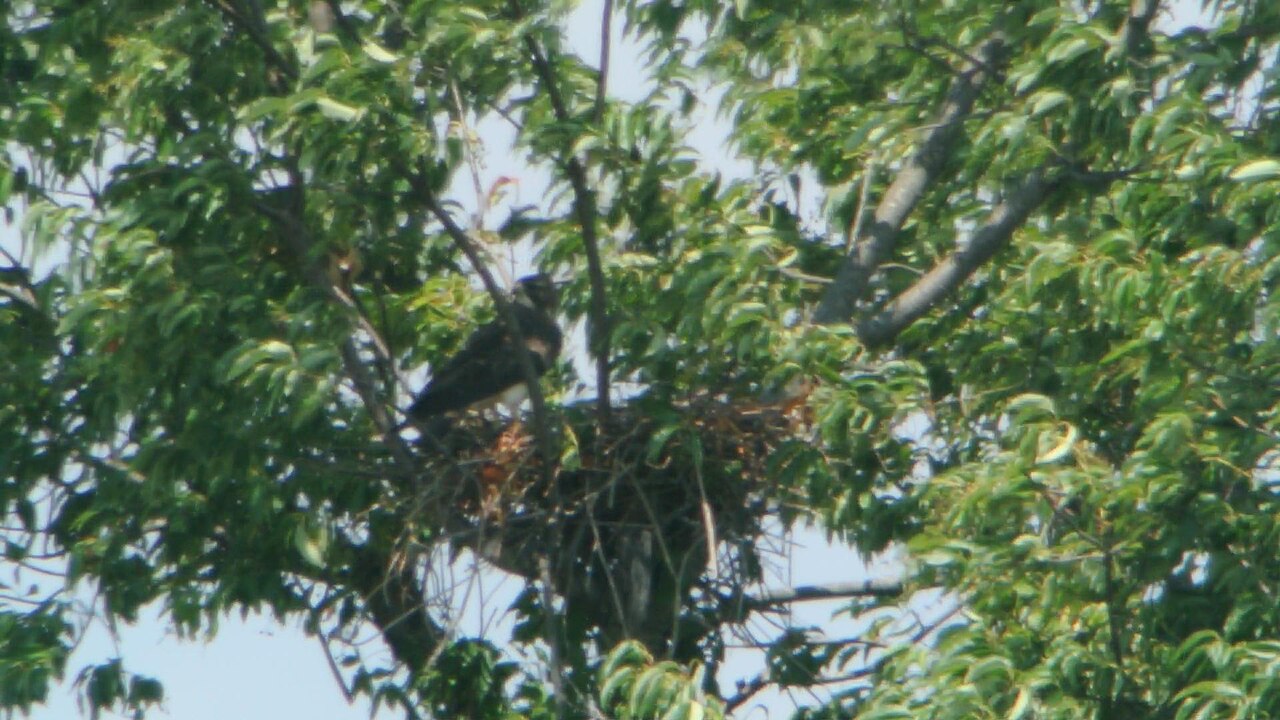
Swainson’s Hawks build stick nests in isolated trees, shelterbelts, or utility structures across otherwise open grassland and farmland, since suitable nest trees can be scarce in true prairie habitat. According to the Cornell Lab of Ornithology, the species has adapted reasonably well to agricultural landscapes across much of its range, though it remains sensitive to pesticide use on its wintering grounds, where large foraging flocks feeding on treated fields have historically suffered mass poisoning events.
Range and Habitat
Swainson’s Hawks breed across the open grasslands and agricultural areas of the western United States and southern Canadian prairies, a range that overlaps in part with the Northern Harrier and Rough-Legged Hawk during migration and winter further east. Almost the entire population migrates to South America for winter, making the species essentially absent from North America for several months of the year, a nearly complete migration pattern shared by relatively few other North American raptors.
Conservation Status
Swainson’s Hawk populations declined sharply in parts of Argentina in the 1990s due to pesticide poisoning on the wintering grounds, prompting international conservation efforts and changes in agricultural chemical use that have since helped populations stabilize and recover in many areas. The episode remains a widely cited example of how a species can face serious threats thousands of miles from its breeding range, underscoring the importance of conservation measures across an entire migratory route rather than only on the breeding grounds.
Color Morphs
Beyond the classic light-morph bib pattern, Swainson’s Hawks also occur in intermediate (rufous) and dark morphs, ranging from a reddish-brown wash across the chest to an almost entirely dark chocolate-brown body, all sharing the same long, narrow wing shape and shallow-V soaring posture. This variability can make individual birds tricky to sort out at a glance, but the combination of narrow wings, a small head, and the species’ habit of soaring in large, loose groups over open prairie usually narrows down the identification even when plumage alone is ambiguous.
Swainson’s Hawk vs Other Grassland Buteos
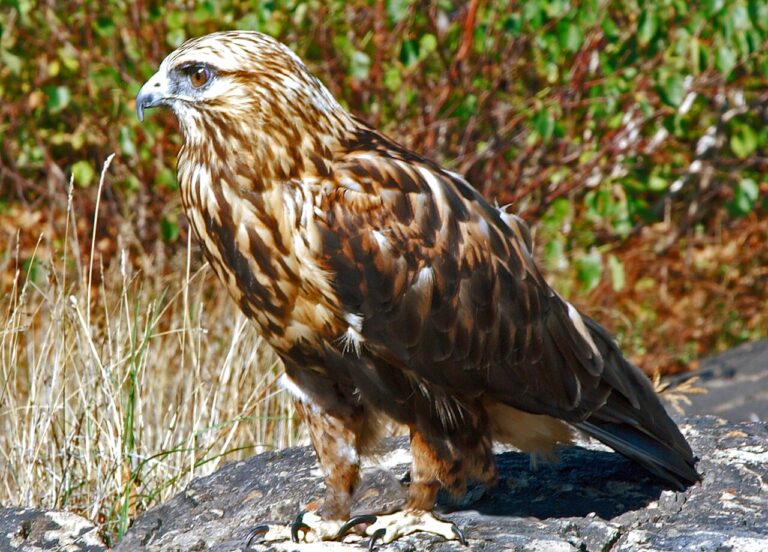
Across the open grasslands of the western United States, a Swainson’s Hawk shares habitat with both the Ferruginous Hawk and the wintering Rough-Legged Hawk, but its slimmer build, longer and narrower wings, and contrasting dark flight feathers against paler wing linings set it apart from both. Behavior offers another clue: Swainson’s Hawks are far more likely to be seen soaring in large, loose flocks, particularly during migration, a social pattern the more solitary Ferruginous and Rough-Legged Hawks rarely show.
Fields, Farming, and a Changing Landscape
Swainson’s Hawks have adapted reasonably well to agricultural conversion of native prairie, often hunting over cultivated fields and pastureland alongside remaining natural grassland, though the intensity and type of farming practiced matters considerably to how much habitat value a given field retains. Crop types that support healthy rodent and insect populations, and farming practices that leave field margins and fallow ground intact, tend to support far higher hawk densities than intensively managed monoculture fields offering little cover or prey for the species to exploit. Freshly irrigated alfalfa fields in particular are known to draw large numbers of hunting Swainson’s Hawks during the breeding season, since irrigation reliably boosts the local rodent population that the birds depend on to feed growing chicks.
Following the Insect Boom South
The dietary shift a Swainson’s Hawk makes between summer and winter, from rodents in North America to insects in South America, tracks a broader pattern seen in several other long-distance migratory raptors that essentially chase seasonal abundance across two entire continents rather than trying to survive a single region’s lean season. Large foraging flocks following plowing or controlled burns on the Argentine pampas can number in the hundreds of birds at once, a striking sight that stands in sharp contrast to the more solitary, perch-hunting behavior typical of the same species back on its North American breeding grounds.
A Model Species for Studying Long-Distance Migration
Because Swainson’s Hawks migrate almost entirely as a population rather than in a partial or mixed pattern, and because they travel along relatively predictable, well-documented routes through Central America, researchers have used the species extensively as a case study for understanding how raptors navigate, conserve energy, and respond to changing land use across an entire hemisphere. Satellite tracking studies on Swainson’s Hawks have contributed significantly to broader scientific understanding of raptor migration physiology, informing conservation strategy for other long-distance migrants that are harder to track in comparable detail, and helping identify the specific stopover sites along the route that matter most to protect for the species’ long-term survival across its entire annual cycle, from the northern prairie to the Argentine pampas and all the way back again each and every single year without fail or exception.
Frequently Asked Questions
How do you identify a Swainson’s Hawk?
Look for a slim buteo with a dark chest band contrasting against a pale belly, long, narrow wings often held in a shallow V while soaring, and a habit of migrating in large flocks over open prairie, sometimes numbering in the hundreds or thousands during peak migration weeks.
Where does the Swainson’s Hawk live?
It breeds across open grassland and agricultural areas in the western United States and southern Canadian prairies, migrating almost entirely to South America for the winter.
How far does a Swainson’s Hawk migrate?
Its round-trip migration can cover roughly 12,000 miles, from breeding grounds in western North America to wintering grounds on the pampas of Argentina, one of the longest migrations of any raptor.
What does a Swainson’s Hawk eat?
During the breeding season it hunts small mammals such as ground squirrels and mice, while on its South American wintering grounds it shifts to large insects, especially grasshoppers.
Why was the Swainson’s Hawk endangered in the past?
Widespread pesticide use on its Argentine wintering grounds in the 1990s caused mass poisoning events, prompting international conservation efforts that have since helped populations recover.
Do Swainson’s Hawks migrate in flocks?
Yes, often in large numbers. Unlike many solitary raptors, Swainson’s Hawks commonly migrate in flocks of hundreds or even thousands, using thermals to conserve energy over their long journey.
How big is a Swainson’s Hawk?
Swainson’s Hawks measure roughly 19 to 22 inches long with a wingspan of 45 to 49 inches, making them a mid-sized buteo slightly smaller and more slender than a Red-Tailed Hawk.