Northern Goshawk: Fierce Forest Hawk
The northern goshawk is a powerful, secretive forest raptor and the largest accipiter in North America, a fierce and agile hunter capable of chasing prey at high speed through dense woodland. Adults are gray above with finely barred pale gray underparts and a bold white eyebrow stripe over a fierce red eye, a striking combination that, together with its impressive size and reputation for aggressive nest defense, has made the goshawk one of the most respected raptors among birders and falconers alike.
| Fact | Detail |
|---|---|
| Wingspan | 3.3 to 3.8 ft |
| Weight | 1.4 to 3 lbs (females larger) |
| Group | Largest accipiter in North America |
| Diet | Medium birds and mammals: grouse, rabbits, squirrels |
| Habitat | Large, mature forests, mainly northern and mountainous |
| Behavior note | Fiercely defends nest, will dive at intruders |
Size and Appearance
The northern goshawk is the largest of the North American accipiters, the group of forest hawks that also includes the Cooper’s hawk and sharp-shinned hawk, and it is noticeably bigger and bulkier than either of those smaller relatives. Adults are slate gray above with pale, finely barred gray underparts, and the most striking feature is a bold white eyebrow stripe, called a supercilium, arching over a piercing red-orange eye, giving the bird an intense, fierce expression. Females are substantially larger than males, a size difference typical of accipiters and other raptors, with the largest females approaching the bulk of a small buteo hawk, while males remain noticeably more compact and agile. This pronounced difference in size between the sexes allows a breeding pair to target a wider range of prey between them, with the larger female able to tackle bigger quarry than the smaller, nimbler male. Juveniles look quite different, showing brown, heavily streaked plumage rather than the clean gray of adults, and take more than a year to acquire full adult coloring.
Northern Goshawk vs. Cooper’s Hawk
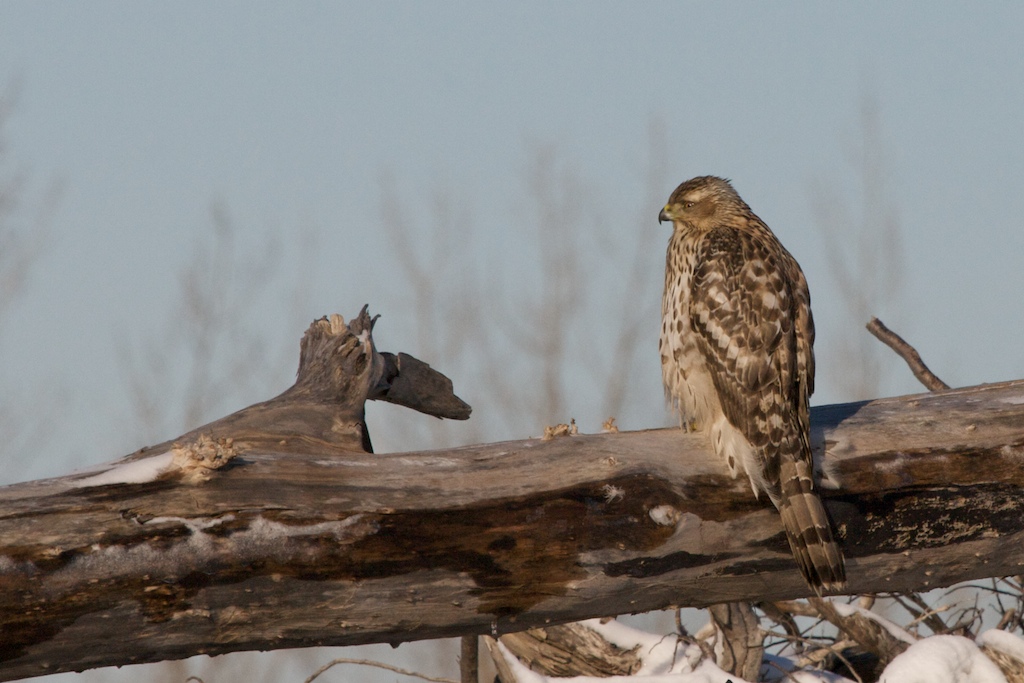
The most common identification challenge with a northern goshawk is separating it from a Cooper’s hawk, since both are gray-backed forest accipiters with barred underparts and similar overall shape. Size is the first clue, as a goshawk is substantially larger and bulkier, though lone birds can be hard to judge without a direct comparison. The bold white eyebrow stripe is the single most reliable field mark, since it is prominent and obvious on an adult goshawk but faint or absent on a Cooper’s hawk. Adult goshawks also show much finer, grayer barring on the underparts, giving them a paler, more uniform appearance from a distance compared to the warmer, more coarsely barred underparts of a Cooper’s hawk. Structurally, a goshawk has broader, more powerful wings and a heavier chest, giving it a more robust silhouette than the slimmer Cooper’s hawk. For a fuller comparison of the smaller forest hawks, see our guide to the sharp-shinned hawk.
Diet and Hunting
Northern goshawks are powerful, versatile hunters that take a wide range of medium-sized birds and mammals, including grouse, pigeons, crows, squirrels, and rabbits, using explosive bursts of speed and remarkable agility to pursue prey through dense forest. Rather than soaring in the open like a buteo, a goshawk typically hunts from a concealed perch or by weaving rapidly through trees and undergrowth, relying on surprise and maneuverability to close on prey before it can escape. Their long tail and relatively short, broad wings are perfectly adapted for this kind of fast, twisting pursuit through cluttered woodland, where a longer-winged raptor would struggle to maneuver, allowing the goshawk to follow every dodge and turn of fleeing prey between tree trunks and through thick undergrowth. Once it closes on quarry, the goshawk uses powerful feet and long talons to seize and hold prey that can be surprisingly large relative to the hawk’s own body, occasionally taking animals close to its own weight. This combination of power and agility has made the goshawk a prized falconry bird for centuries, valued for its ability to take substantial prey in difficult, wooded terrain.
Range, Habitat, and Nest Defense
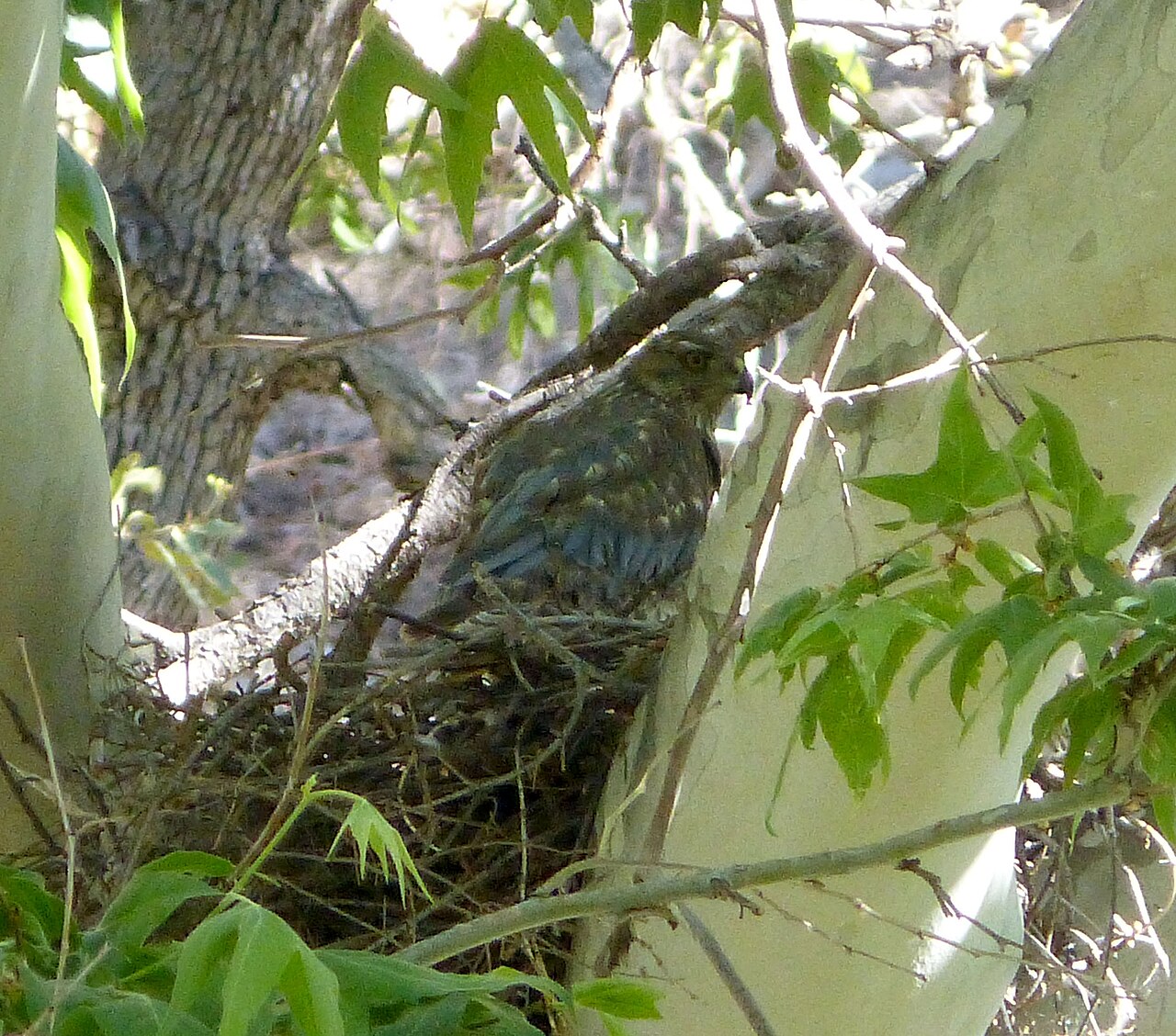
Northern goshawks inhabit large tracts of mature forest across the northern United States, Canada, mountainous regions of the West, and much of northern Eurasia, generally favoring extensive, undisturbed woodland over fragmented or heavily developed land. They are secretive and often difficult to see, spending much of their time within the forest canopy rather than soaring conspicuously overhead, which makes them a sought-after and sometimes elusive species for birders. Goshawks are famous for their ferocious nest defense, readily diving at and striking humans, dogs, or other animals that venture too close to an active nest, a behavior far more intense than most raptors display and one that has left many an unsuspecting hiker with a startling story and occasionally a scratched scalp. According to the Cornell Lab of Ornithology, this aggressive defense reflects the species’ strong drive to protect its young, and the goshawk’s reliance on large, mature forest has also made it an important indicator species for forest health in conservation planning. In recent years, taxonomists have split the American population into a distinct American goshawk, separate from the northern goshawk of Eurasia, reflecting long-recognized differences between the two. For related forest and open-country raptors, see our guide to hawk species and birds of prey.
The Goshawk in Falconry and Culture
The northern goshawk has one of the longest and richest histories in falconry of any bird of prey, valued for centuries as a reliable, powerful hunter capable of taking substantial quarry like rabbits and pheasants in wooded country where other hawks struggle. In the traditional European hierarchy of falconry birds, the goshawk was often associated with the yeoman or common man, a practical working bird for putting food on the table rather than the aristocratic longwing falcons reserved for nobility. This reputation as a determined, no-nonsense hunter, combined with its fierce temperament, has given the goshawk an outsized presence in folklore, heraldry, and literature across the Northern Hemisphere. Even today, the goshawk retains a near-mythic status among falconers and birders, admired both for its hunting prowess and for the difficulty of even glimpsing one in the wild, since the species is so secretive and tied to deep, mature forest, quite unlike the readily seen red-tailed hawk of open roadsides.
Nesting and Life Cycle
Northern goshawks build large stick nests high in mature trees, typically within extensive tracts of older forest, and a breeding pair will often maintain several alternate nest sites within its territory, rotating between them across different years. The female does most of the incubation of the two to four eggs over a period of roughly a month, while the male supplies food to her and later to the growing chicks, a division of labor common among accipiters. Young goshawks fledge at around six weeks but remain dependent on their parents for additional weeks while developing the strength and skill needed to hunt substantial prey through dense woodland on their own. Established pairs are strongly territorial and may occupy the same general nesting area for many years, provided the surrounding forest remains intact and prey stays sufficiently abundant, which is one reason the species is so closely tied to the health of large, unfragmented woodland across its range.
Related reading: White-Tailed Kite.
Frequently Asked Questions
How big is a northern goshawk?
A northern goshawk has a wingspan of roughly 3.3 to 3.8 feet and weighs between 1.4 and 3 pounds, with females noticeably larger than males, making it the largest accipiter in North America.
What is the difference between a northern goshawk and a Cooper’s hawk?
A goshawk is substantially larger and bulkier, with a bold white eyebrow stripe and finer gray barring, while a Cooper’s hawk is smaller, slimmer, lacks the strong brow, and has warmer, coarser barring.
What do northern goshawks eat?
They eat medium-sized birds and mammals, including grouse, pigeons, crows, squirrels, and rabbits, pursued with fast, agile flight through dense forest.
Where do northern goshawks live?
They inhabit large, mature forests across the northern US, Canada, western mountains, and northern Eurasia, favoring extensive, undisturbed woodland.
Are northern goshawks aggressive?
Yes, goshawks are famous for fierce nest defense and will readily dive at and strike humans, dogs, or other animals that come too close to an active nest.
Is the American goshawk the same as the northern goshawk?
Taxonomists have recently split the American population into a distinct American goshawk, separate from the northern goshawk of Eurasia, though the two are very closely related and long treated as one species.
Why is the goshawk called a forest hawk?
The goshawk’s short, broad wings and long tail are adapted for fast, agile flight through dense woodland, and it hunts and nests within large forests rather than open country.