Ruby-Throated Hummingbird: Identification, Range, and Migration Guide
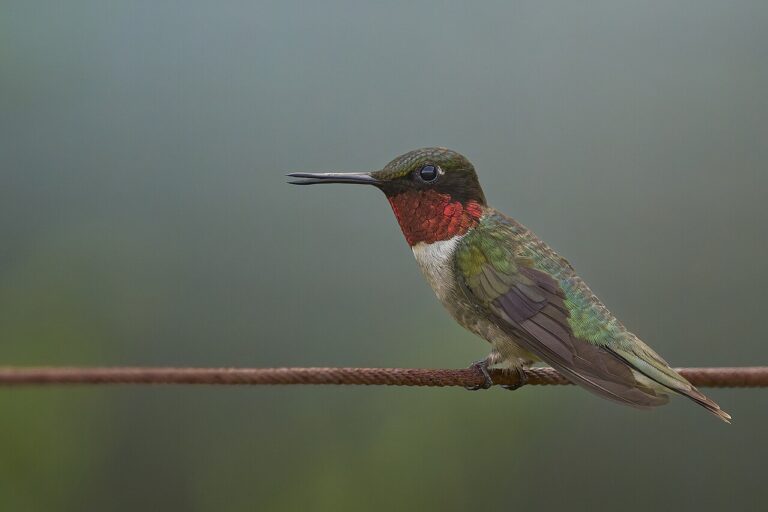
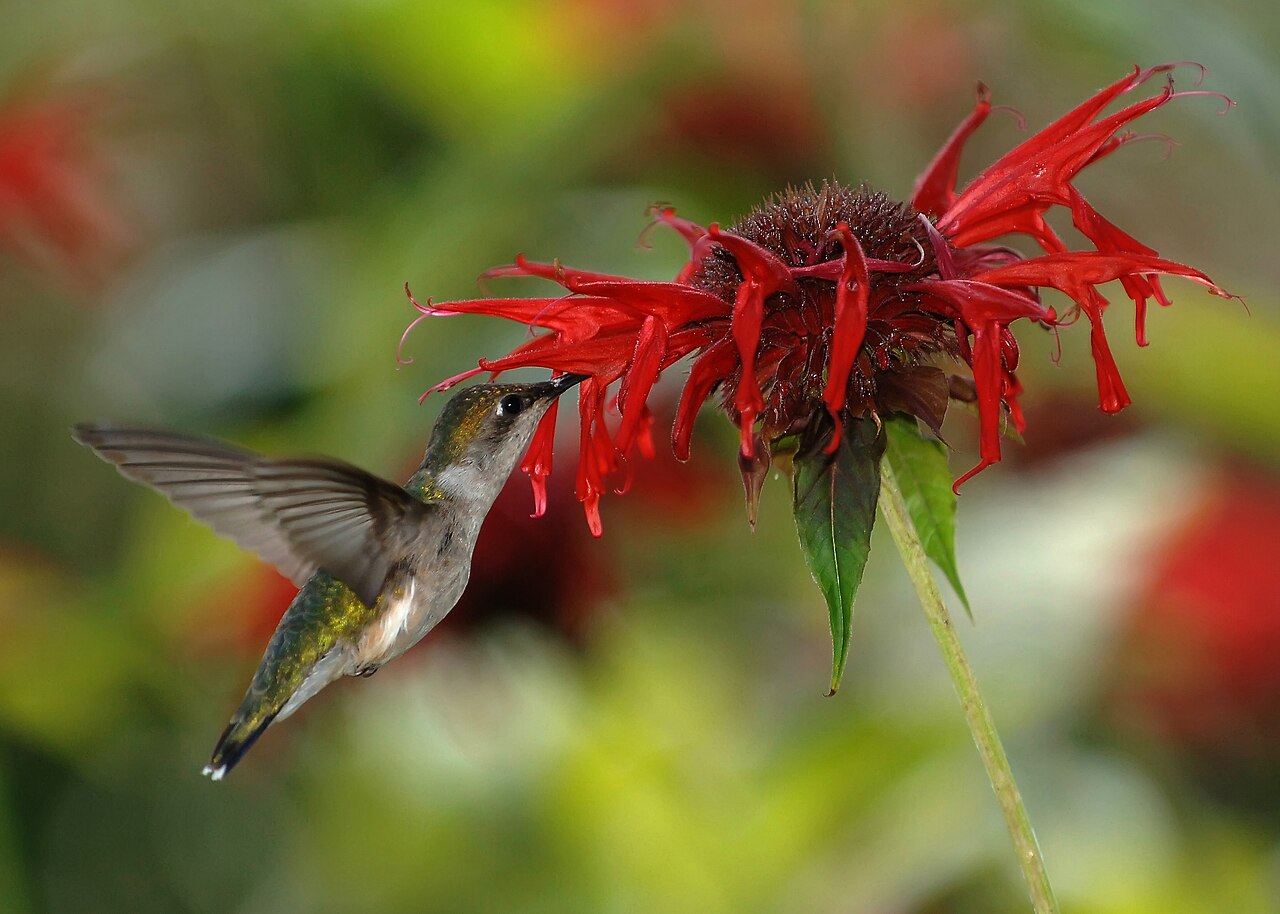
The ruby throated hummingbird is the default hummingbird across nearly the entire eastern United States, the only species that breeds reliably east of the Great Plains and a familiar visitor to feeders from Florida to southern Canada. Males carry an iridescent, fire engine red throat patch called a gorget that can look black in poor light and flash brilliant ruby only when the sun hits it directly, while females and juveniles show a plain white throat and a slightly larger, more rounded tail. Despite weighing barely more than a penny, this tiny bird completes one of the most remarkable migrations of any North American songbird sized species each spring and fall.
| Trait | Detail |
|---|---|
| Scientific name | Archilochus colubris |
| Length | 3 to 3.5 in |
| Weight | 2 to 6 g |
| Range | Eastern US and Canada in summer, Mexico to Costa Rica in winter |
| Habitat | Gardens, woodland edges, meadows, backyards |
| Gorget color | Iridescent ruby red, males only |
How to Identify a Ruby-Throated Hummingbird
Adult males show emerald green upperparts, a whitish gray belly, and that signature ruby red throat, which appears dull black or dark gray whenever the bird is angled away from direct light, a common source of confusion for new birders expecting a constantly glowing red patch. Females lack any red on the throat entirely, showing clean white underparts instead, and their outer tail feathers are tipped in white, visible when the tail is fanned during a hover.
Juveniles resemble adult females closely, though young males often show a few scattered iridescent throat feathers as they begin to molt into adult plumage during their first fall. Body shape overall is compact and short necked, with a straight, needle-like bill proportioned for reaching deep into tubular flowers, and wings that appear as a blur during normal hovering flight, beating an estimated 50 times per second in typical flight and even faster during territorial chases.
Because this is the only breeding hummingbird across most of its eastern range, identification confusion mainly arises during migration, when a rare western species such as a rufous hummingbird occasionally strays east and prompts a careful side by side comparison at a backyard feeder. In that situation, the ruby throated hummingbird’s clean green back, lacking any rufous or orange tones, is usually the most reliable distinguishing feature.
Range and Seasonal Timing
Ruby throated hummingbirds breed across the eastern two thirds of the United States and southern Canada, arriving on their breeding grounds anywhere from early March in the Gulf Coast states to mid or late May in the northernmost parts of their range. Males typically arrive several days to a couple of weeks ahead of females, establishing feeding territories before the females show up to begin courtship and nesting.
Departure south begins as early as late July for some adult males and continues through September and into October for the last juveniles and females, with the entire population wintering from central Mexico south through Central America, with a smaller number remaining along the immediate Gulf Coast and in southern Florida through the winter months.
Timing varies noticeably by latitude even within the eastern range, with Gulf Coast residents sometimes seeing ruby throated hummingbirds nearly year round, while birders in the upper Midwest or New England typically have a much more compressed window of roughly late April through September to expect regular sightings at their feeders.
The Gulf of Mexico Migration
Perhaps the single most famous fact about this species is its nonstop crossing of the Gulf of Mexico, a flight of roughly 500 miles that some individuals complete in a single 18 to 22 hour push without landing on open water. Before attempting this crossing, birds roughly double their body weight by feeding heavily on nectar and small insects, building up fat reserves that serve as the only fuel available for the entire flight.
Not every bird takes this route. Many individuals instead follow the Gulf Coast around through Texas and Mexico, a longer but less physically demanding path that avoids the risk of open water entirely. According to the Cornell Lab of Ornithology, both strategies appear successfully within the same population, and which route an individual bird takes may depend on wind conditions, body condition, and age at the time of migration.
Weather plays a significant role in survival odds for birds attempting the overwater route, since an unexpected headwind or storm system partway across the Gulf can be fatal for a bird operating with virtually no fuel reserve to spare, which is part of why fall migration counts at coastal stopover sites like High Island, Texas can vary so dramatically from year to year.
Diet and Feeding Behavior
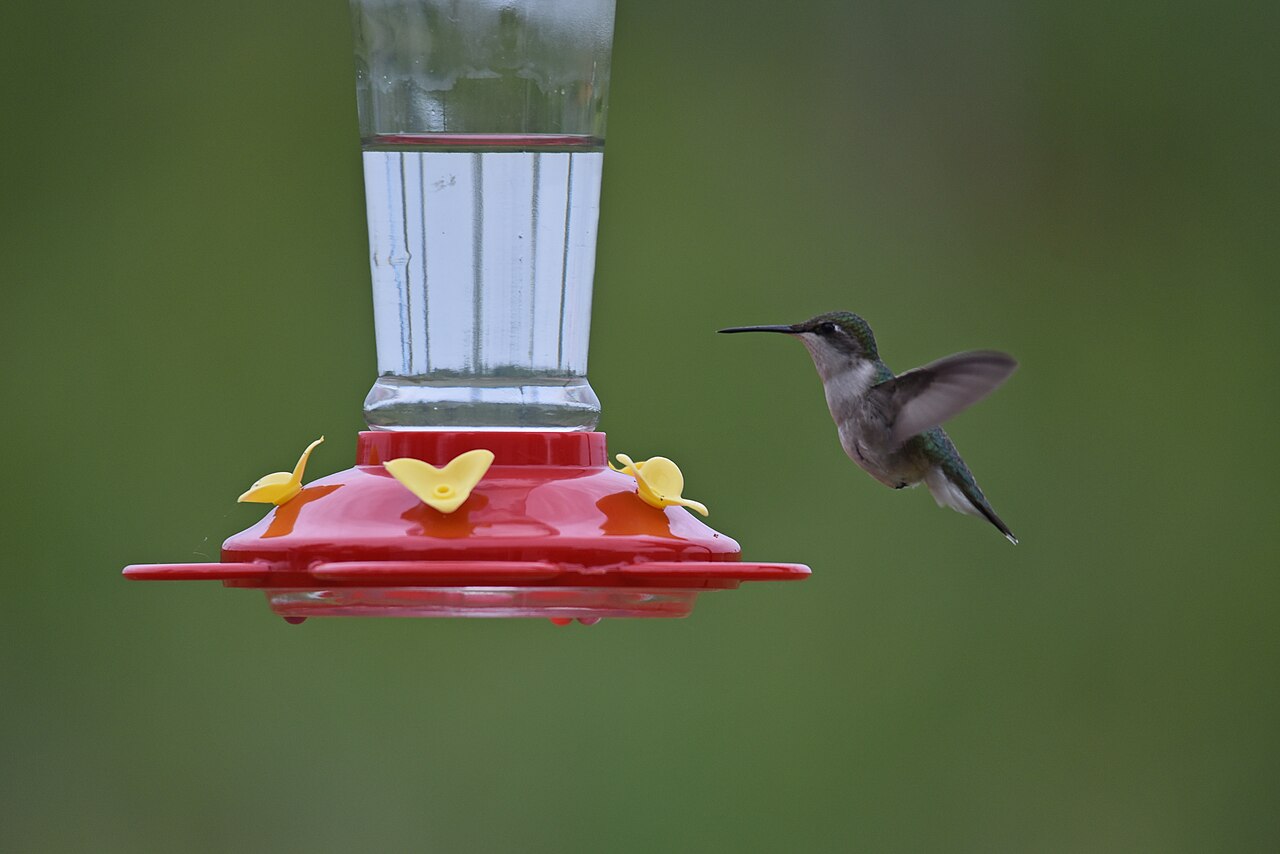
Nectar from tubular, often red or orange flowers makes up the bulk of the diet, supplemented heavily by small insects and spiders that provide essential protein, particularly important for females raising chicks. A ruby throated hummingbird visits hundreds of flowers each day, and its long, extendable tongue can lap up nectar at a rapid rate to meet the extraordinarily high metabolic demands of hovering flight.
At backyard feeders, a simple sugar water mixture at a 1 part sugar to 4 parts water ratio closely mimics natural flower nectar and is readily accepted, making feeders one of the most reliable ways to attract and support this species through the breeding season and migration.
Insects are caught in several ways beyond simple gleaning from leaves, including brief aerial sallies to snatch small flying insects directly out of the air and picking spiders straight out of their webs, a behavior that also conveniently supplies the bird with usable spider silk for nest construction.
Nesting Behavior

Females build a remarkably small, camouflaged nest, often no larger than a half dollar coin, using plant down bound together with spider silk and decorated on the outside with lichen flakes that help it blend seamlessly into the bark of the supporting branch. The elastic spider silk construction allows the nest to stretch as the chicks grow larger through the nesting period.
Clutches typically contain 2 eggs, incubated solely by the female for about 12 to 14 days, with chicks fledging roughly 18 to 22 days after hatching. Males play no role in nest building, incubation, or chick rearing, a pattern typical of hummingbirds generally.
A single female may raise two broods in a single season across much of the range, rebuilding or reusing a nest site in quick succession once the first brood has fledged, provided nectar and insect resources remain abundant enough to support the additional energy demands.
Attracting Ruby-Throated Hummingbirds to Your Yard
Red and orange tubular flowers such as trumpet vine, bee balm, and cardinal flower are highly effective at drawing this species into a garden, alongside standard nectar feeders placed in partial shade to slow evaporation and fermentation. Multiple feeders spaced well apart can reduce aggressive territorial disputes, since ruby throated hummingbirds, despite their small size, are notably possessive of a favored feeding station, a trait shared with western relatives like the black chinned hummingbird and the notoriously feisty rufous hummingbird.
Regular feeder maintenance matters as much as placement. Nectar should be replaced every 3 to 4 days in mild weather, or every 1 to 2 days during hot summer stretches, since fermented or moldy sugar water can sicken or kill visiting birds. For the full mixing instructions, see our guide to the correct hummingbird sugar water ratio.
Planting a mix of native flowering species that bloom in succession from spring through fall provides a more continuous natural nectar source than any single plant alone, and it also supports the small insects that make up a critical part of the diet, particularly during the breeding season when protein demands are highest. For a broader overview of the family, see our full hummingbird guide.
Frequently Asked Questions
How far do ruby throated hummingbirds migrate?
Many individuals travel over 500 miles nonstop across the Gulf of Mexico, part of a round trip migration that can total more than 3,000 miles between breeding grounds and wintering areas.
What does a ruby throated hummingbird eat?
It feeds primarily on flower nectar and sugar water, supplemented by small insects and spiders that provide protein essential for breeding and chick rearing.
How can you tell a male from a female ruby throated hummingbird?
Males show an iridescent red throat patch, while females have a plain white throat and slightly larger, white-tipped outer tail feathers.
When do ruby throated hummingbirds arrive and leave?
Arrival ranges from early March in the Gulf Coast states to mid or late May farther north, with most birds departing south between late July and October.
Where do ruby throated hummingbirds spend the winter?
Most winter from central Mexico south through Central America, with smaller numbers remaining along the immediate Gulf Coast and in southern Florida.
How big is a ruby throated hummingbird?
Adults measure only 3 to 3.5 inches long and typically weigh between 2 and 6 grams, roughly the weight of a penny.
What is the best sugar water ratio for ruby throated hummingbirds?
A ratio of 1 part white granulated sugar to 4 parts water, without any red dye, closely matches natural flower nectar and is the ratio recommended by most wildlife experts.