Blue Bird Meaning: Symbolism, Omens, and Visits
Seeing a blue bird traditionally means happiness, hope, and good news arriving, and it is one of the few bird omens that is positive in essentially every tradition that uses it. The bluebird of happiness is not a vague phrase but a specific literary and folk image with traceable roots, and the colour blue does most of the symbolic work on its own.
Which bird people actually see varies enormously. In North America a blue bird in a yard is usually an eastern or western bluebird, a blue jay, an indigo bunting, or a barn swallow, and the readings differ a little between them. This guide covers the general symbolism, where the bluebird of happiness comes from, what a repeated visit is taken to mean, the colour symbolism, and the practical rarity question underneath it.
A blue bird traditionally means happiness, hope, renewal, and good news on the way, and no major tradition treats it as a bad omen. The bluebird of happiness image comes from European folk tales and Maurice Maeterlinck’s 1908 play The Blue Bird. A repeated visit is read as encouragement during a difficult period rather than a warning.
| Sighting | Traditional Reading |
|---|---|
| Blue bird appears | Happiness and good news coming |
| At a window | News arriving, or a message |
| Nesting on your property | Blessing on the household |
| Repeated visits | Encouragement through a hard stretch |
| Blue jay | Boldness, protection, speaking up |
| Indigo bunting | Clarity, finding a direction |
| In a dream | Hope, a wish within reach |
What Does Seeing a Blue Bird Mean?
A blue bird is read as a sign of happiness arriving, of a difficult period ending, and of hope that has substance rather than wishfulness. The consistency of that reading across sources is unusual, because most bird omens split by culture, with the same species meaning good fortune in one tradition and death in another.
Two things drive it. The colour blue carries associations with sky, calm, truth, and the divine in a great many cultures, and it is rare in nature, so a blue animal registers as unusual and therefore significant. Blue birds are also, in North America, mostly small, cheerful, conspicuous species that live near people.
The specific readings depend on setting. A blue bird at a window is read as news on the way, one nesting on a property as a blessing on the household, and one appearing during a hard stretch as encouragement rather than instruction. The bird symbolism guide covers how these interpretations are constructed across species.
Where Does the Bluebird of Happiness Come From?
The phrase traces to European folk tradition and became fixed in popular culture through Maurice Maeterlinck’s 1908 play L’Oiseau Bleu, translated as The Blue Bird, in which two children search the world for a blue bird that will bring happiness and finally find it at home. Maeterlinck won the Nobel Prize in Literature the following year, and the image spread widely.
The play drew on older material. Madame d’Aulnoy published a French fairy tale called The Blue Bird in 1697, and blue birds appear as symbols of fortune in Chinese tradition, where a blue or azure bird served as a messenger of the Queen Mother of the West. The idea was in circulation long before it was named.
Twentieth-century songs cemented it in English. Bluebird imagery runs through popular music from the 1930s onward, most famously in the line about bluebirds over the white cliffs of Dover, and the phrase bluebird of happiness became a fixed expression divorced from any particular species. That is why the symbolism attaches to blue birds generally rather than to Sialia specifically.
What Does It Mean When a Bluebird Visits You?
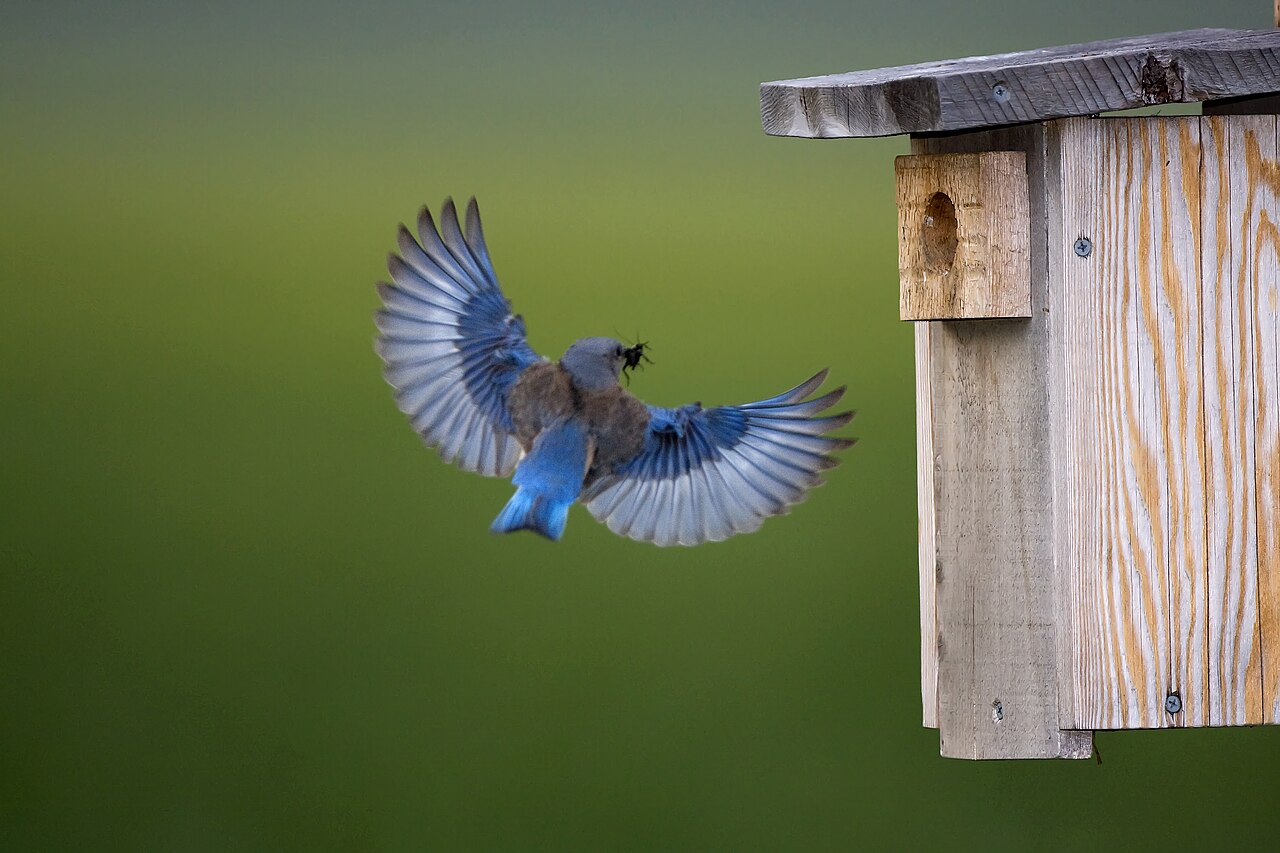
A bluebird visit is read as reassurance: that a decision was right, that a difficult stretch is ending, or that something hoped for is closer than it looks. Unlike some bird omens, it is not read as an instruction to act, and it carries no urgency.
Repeated visits get a stronger reading. A bluebird that returns to the same window, fence post, or feeder day after day is often taken as a message from someone who has died, in the same way cardinals are read in much of North America, though the bluebird version is less codified and more regional.
The practical explanation is worth holding alongside it. Bluebirds are territorial, and a male working the same perches daily is patrolling a territory or watching a nest box. A bird repeatedly attacking a window is fighting its own reflection, which is common in spring and stops when the reflection is broken up with soap, screening, or exterior film. The eastern bluebird symbolism guide covers the species-specific readings.
Which Bird Are You Actually Seeing?
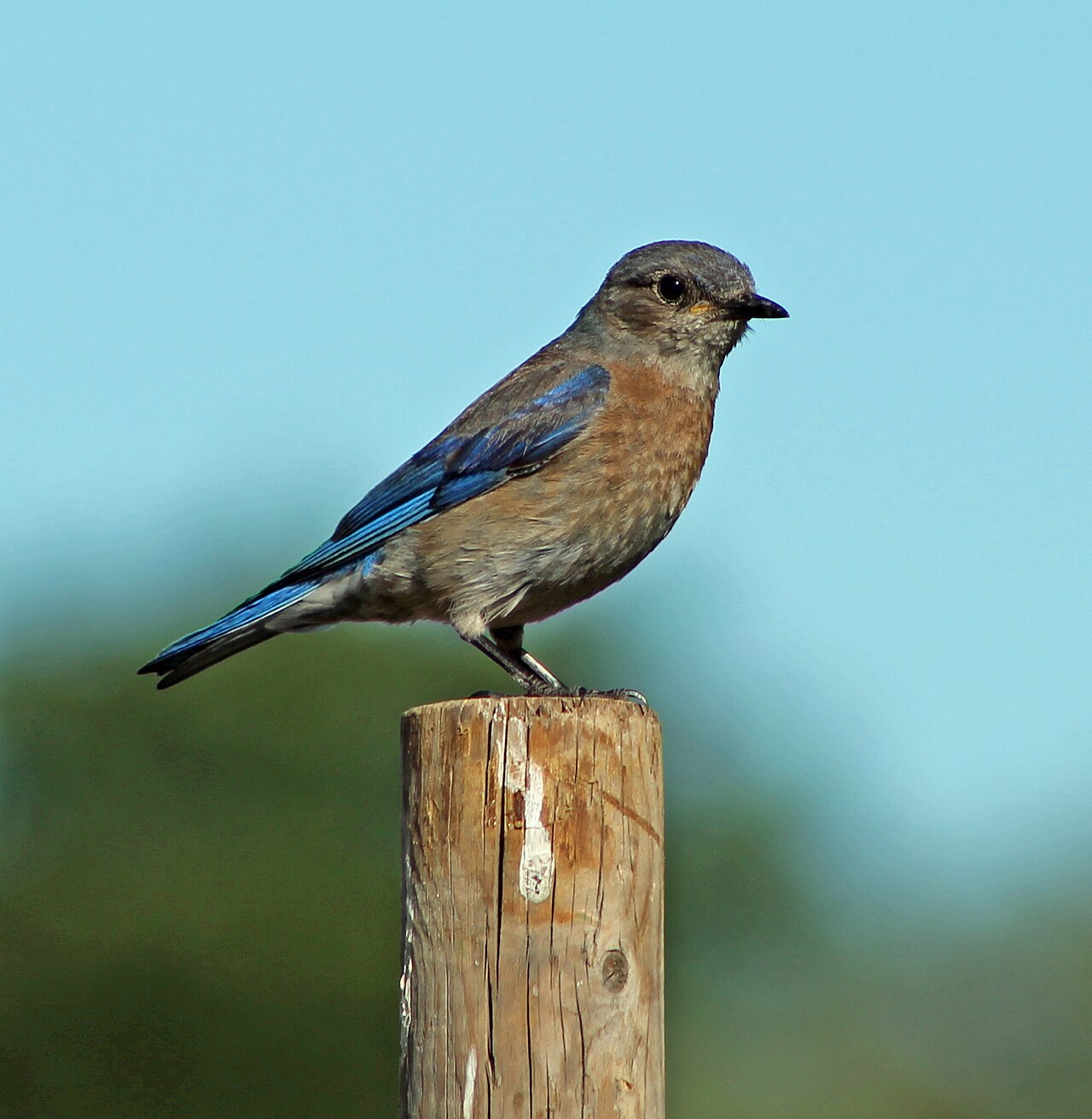
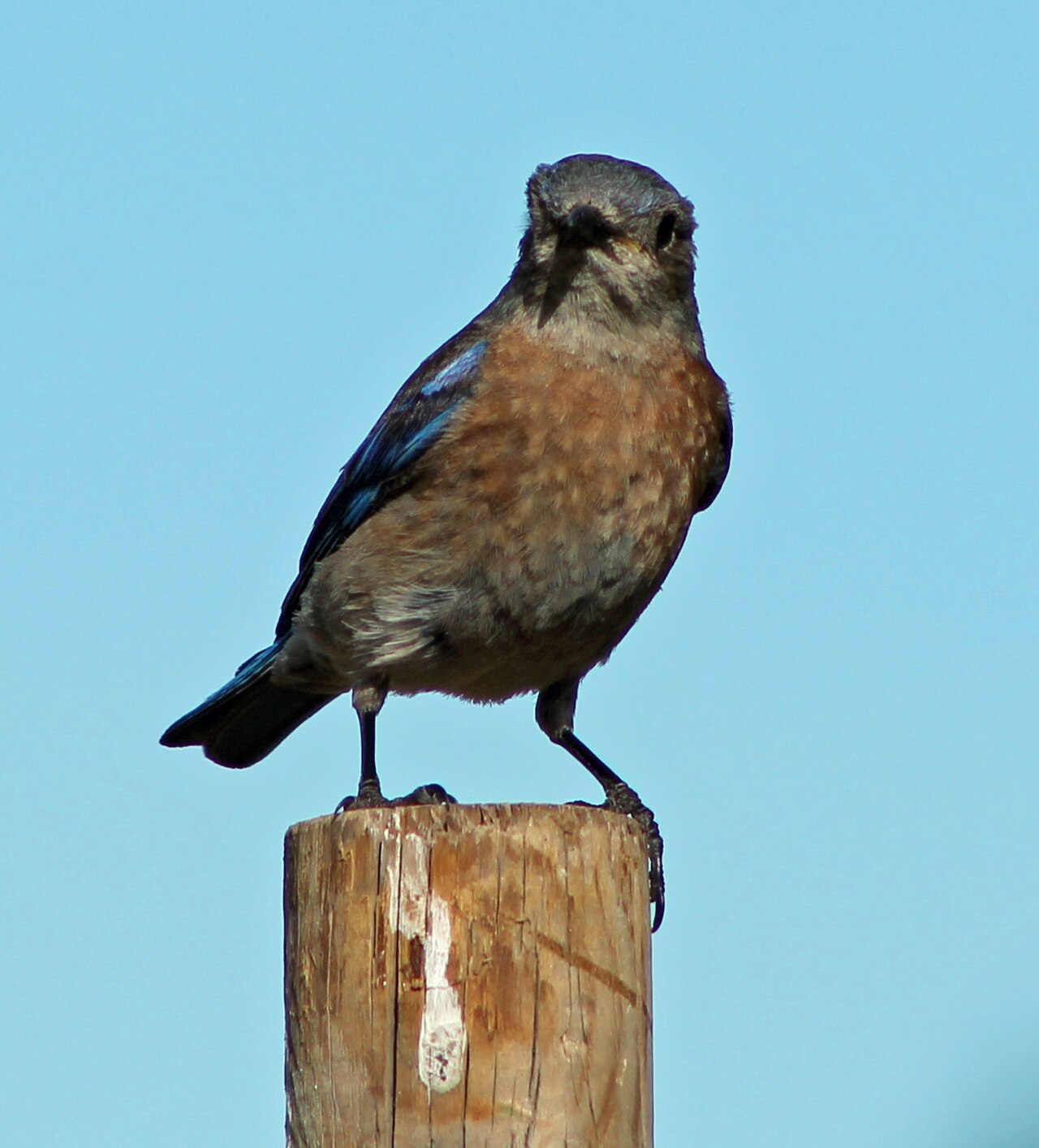
In eastern North America, a small thrush-shaped bird with a bright blue back and a rusty orange breast is an eastern bluebird, and the western and mountain bluebirds fill the same role further west, with the mountain bluebird being blue all over with no orange at all.
A large, loud, crested blue and white bird is a blue jay, and it carries a different set of readings entirely: boldness, protection, speaking up, and being watchful, drawn from its noise, its mobbing behaviour, and its intelligence. Nobody has ever mistaken a blue jay for a symbol of quiet contentment.
A tiny, entirely deep blue bird singing from a wire in summer is an indigo bunting, read as clarity and finding direction, and a fast blue and orange bird hunting insects over a field is a barn swallow, read as homecoming and good luck on a house. Blue grosbeaks, scrub jays, and Steller’s jays fill out the list regionally. The blue birds guide covers identification across the group.
What Does the Colour Blue Mean in Birds?
Symbolically, blue is associated with the sky and therefore with the divine, with calm and stability, with truth and honesty, and with communication. Those associations transfer to blue birds fairly directly and account for readings about clear speech, honest dealing, and peace of mind.
Biologically, blue is the interesting case. Almost no bird produces blue pigment. Blue plumage is structural colour, created by microscopic air pockets in the feather barbs that scatter light and reflect blue wavelengths, which is why a blue feather looks brown when backlit or crushed while a red one stays red.
That rarity is part of why blue birds feel significant. Red, brown, black, yellow, and white are common in birds because pigments produce them easily; blue requires a structural solution that has evolved comparatively few times. A blue animal is genuinely unusual, and human symbolism has always attached weight to the unusual.
What Do Other Bird Colours Mean?
Red birds, cardinals above all, are the most heavily loaded in North American folk belief, read as visits from the dead and as signs of vitality and love. That reading is strong enough that cardinals appear on memorial cards and grave decorations across the eastern United States.
White birds are associated with peace, spirits, and messages from beyond, and doves carry the strongest version of that. Black birds split sharply by culture, read as omens of death in some European traditions and as intelligence, transformation, and protection in others, with crows and ravens carrying both readings simultaneously.
Iridescent and multicoloured birds sit outside the simple colour scheme and are read on their own terms. Hummingbirds are associated with joy, lightness, and the ability to move in any direction, peacocks with pride, renewal, and the all-seeing eye, and starlings with community and adaptability drawn from their flocking. None of these follow from colour alone.
Yellow birds are read as joy, optimism, and communication, and goldfinches in particular are associated with renewal and with the return of good weather. Blue sits at the calm and hopeful end of the range and is the reading least likely to carry any warning attached. The cardinal visits meaning guide covers the most commonly reported of these encounters.
How Rare Is It to See a Blue Bird?
Less rare than it used to be, and the recovery is one of the better conservation stories in North America. Eastern bluebird populations fell sharply through the early twentieth century, with losses driven by the removal of dead trees and old fence posts, pesticide use, and competition for cavities from introduced house sparrows and European starlings.
The response was a nest box campaign that worked. Volunteer-maintained bluebird trails, thousands of boxes on posts along field edges and roadsides, reversed the decline, and eastern bluebird numbers have increased substantially since the 1960s. The North American Bluebird Society (nabluebirdsociety.org) and state groups continue to coordinate the effort.
Seeing one still requires the right setting. Bluebirds want open country with scattered perches, so pastures, orchards, cemeteries, golf courses, and large lawns with fence lines hold them while dense suburbs and closed woodland do not. In a suitable yard with a box they can be daily; two streets away they may be absent entirely. The guide to what bluebirds eat covers how to hold them once they arrive.
What Does a Blue Bird Mean in a Dream?
Dream readings follow the waking symbolism closely: a blue bird in a dream is generally interpreted as hope, an approaching improvement, or a wish that is closer to reach than it feels. It is one of the more consistently positive dream images in popular dream interpretation.
Variations get specific readings that are worth treating as conventions rather than findings. A blue bird flying away is commonly read as a missed opportunity or a hesitation, one held in the hand as happiness within grasp, one singing as good news, and one that is injured or caged as feeling constrained by a situation.
None of this has any research basis, and dream interpretation is a cultural practice rather than a science. What the image reliably indicates is that blue birds carry a positive weight in the dreamer’s own cultural vocabulary, which is itself the reason the symbol keeps appearing. The blue jay spiritual meaning guide covers the readings for the blue bird most people actually encounter.
Frequently Asked Questions
What does seeing a blue bird mean?
Happiness, hope, renewal, and good news arriving. It is one of the few bird omens with no negative reading in any major tradition, helped by the sky associations of the colour blue and its rarity in nature.
Where does the bluebird of happiness come from?
From European folk tradition, fixed in popular culture by Maurice Maeterlinck’s 1908 play The Blue Bird. A 1697 French fairy tale used the same image, and blue birds served as messengers in Chinese tradition.
What happens when a bluebird visits you?
It is read as reassurance rather than instruction: a hard stretch ending or a decision confirmed. Repeated visits are often taken as a message from someone who has died.
What does it mean when a bluebird keeps coming to your window?
Symbolically, news arriving. Practically, a bird attacking a window in spring is fighting its own reflection, which stops when the reflection is broken up with soap, screening, or exterior film.
How rare is it to see a blue bird?
Not rare in the right habitat. Eastern bluebirds declined sharply in the early twentieth century and recovered substantially through volunteer nest box trails, but they need open country with scattered perches.
Why are blue birds blue?
Structure, not pigment. Microscopic air pockets in the feather barbs scatter light and reflect blue wavelengths, which is why a blue feather looks brown when backlit while a red feather stays red.
What does a blue bird mean in a dream?
Hope, an improvement approaching, or a wish within reach. Flying away is read as a missed opportunity, held in the hand as happiness in grasp. These are cultural conventions rather than findings.