Birds That Eat Stink Bugs: Which Species Actually Help
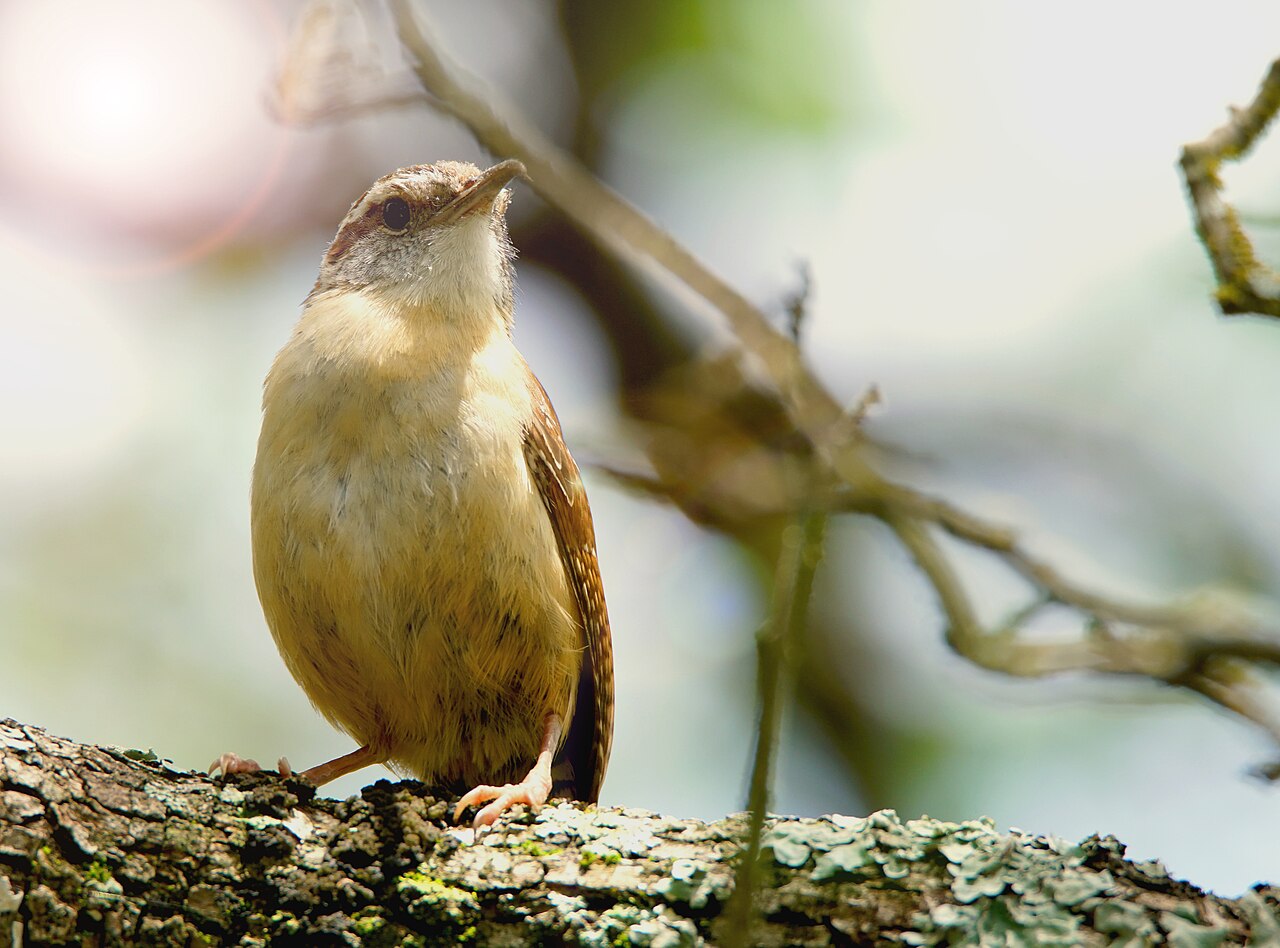
The birds that eat stink bugs include Carolina wrens, house wrens, bluebirds, cardinals, catbirds, mockingbirds, blue jays, chickadees, titmice, woodpeckers, and chickens, though most take them reluctantly and few take them in numbers. The defensive chemicals stink bugs release make them unpalatable to the majority of songbirds, and predation pressure on the introduced brown marmorated stink bug is notably weaker than on native insects.
That mismatch is the reason the species spread so successfully. The brown marmorated stink bug arrived in Pennsylvania in the 1990s from East Asia, and North American predators had no evolutionary history with it, so a bird that avoids a foul-tasting insect on the first attempt never learns to strip it. This guide covers which birds do eat them, why most do not, what else preys on them, and what actually works in a garden.
Carolina wrens, house wrens, bluebirds, cardinals, catbirds, mockingbirds, blue jays, chickadees, and chickens all eat stink bugs, though most take them reluctantly because of the defensive chemicals. Predation on the introduced brown marmorated stink bug is weaker than on native species. Parasitoid wasps are more effective controls than birds.
| Predator | Effectiveness |
|---|---|
| Carolina and house wrens | Best songbird predators; take nymphs readily |
| Bluebirds | Take them from low vegetation and ground |
| Cardinals, catbirds, mockingbirds | Take adults opportunistically |
| Chickens and guinea fowl | Eat them; taint eggs if eaten in quantity |
| Samurai wasp | Most effective control; attacks eggs |
| Spiders and assassin bugs | Steady predation on nymphs |
| Praying mantis | Takes adults, eats head first |
What Birds Eat Stink Bugs?
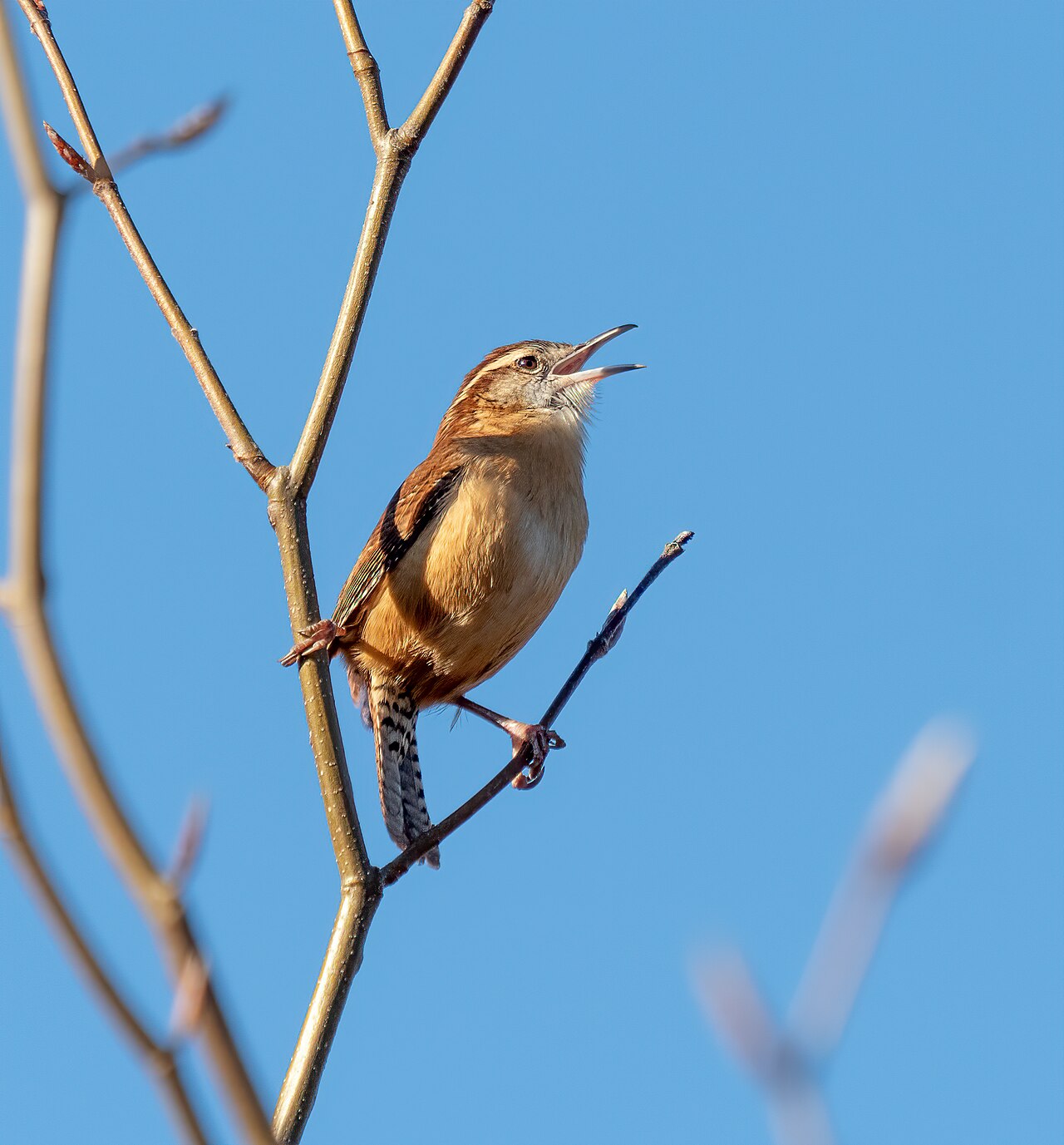
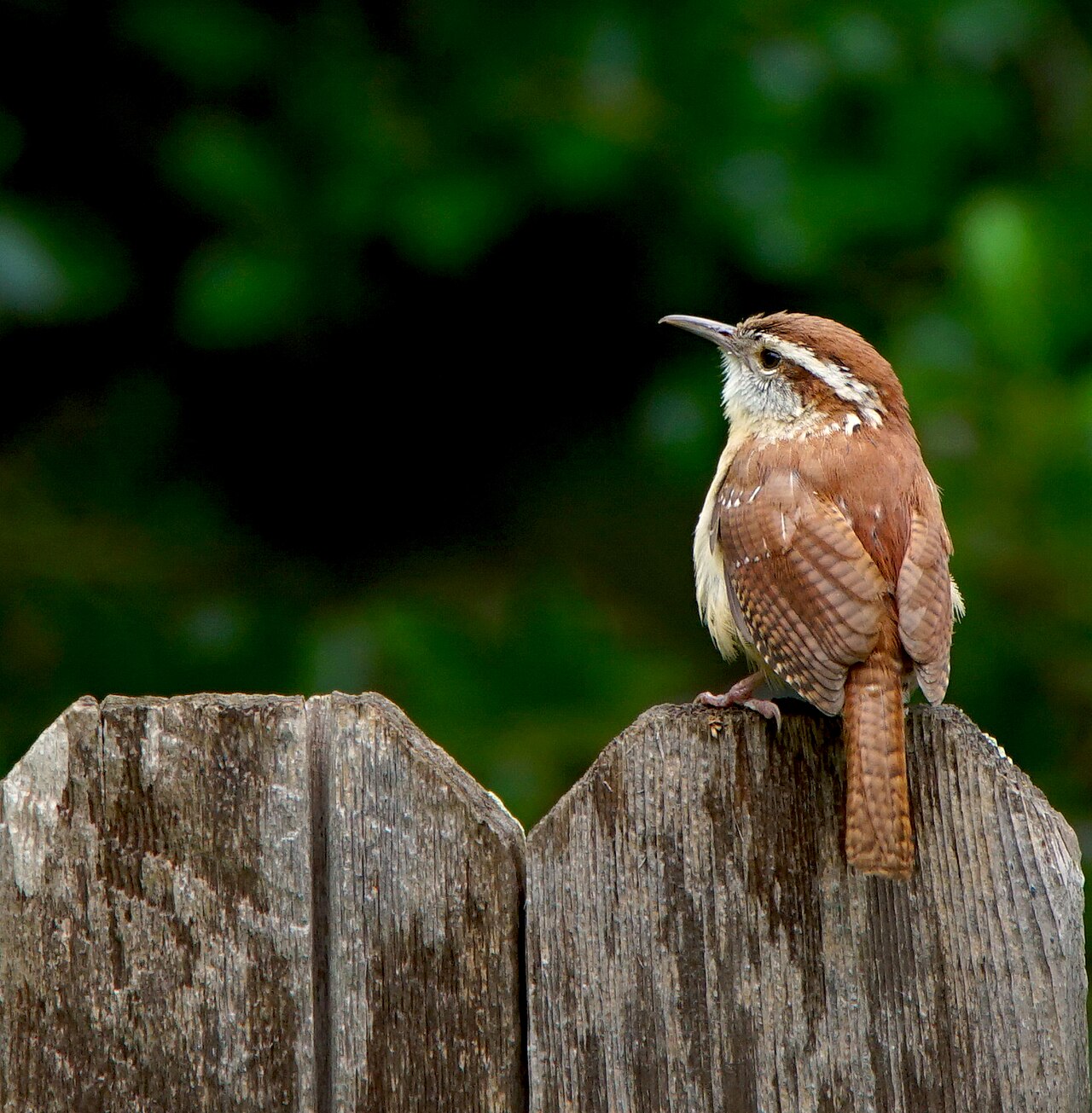
Wrens are the most reliable. Carolina wrens and house wrens both hunt methodically through bark crevices, brush piles, woodpiles, and vegetation where stink bug nymphs congregate, and they take small nymphs readily because those have not yet developed full chemical defences.
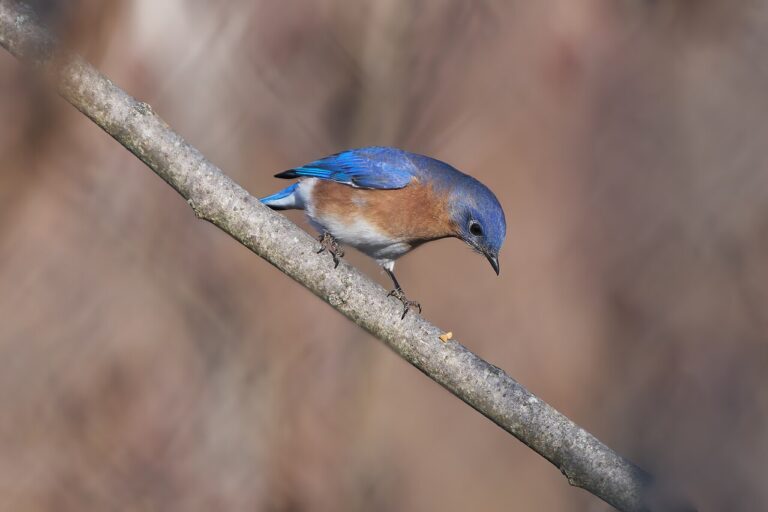
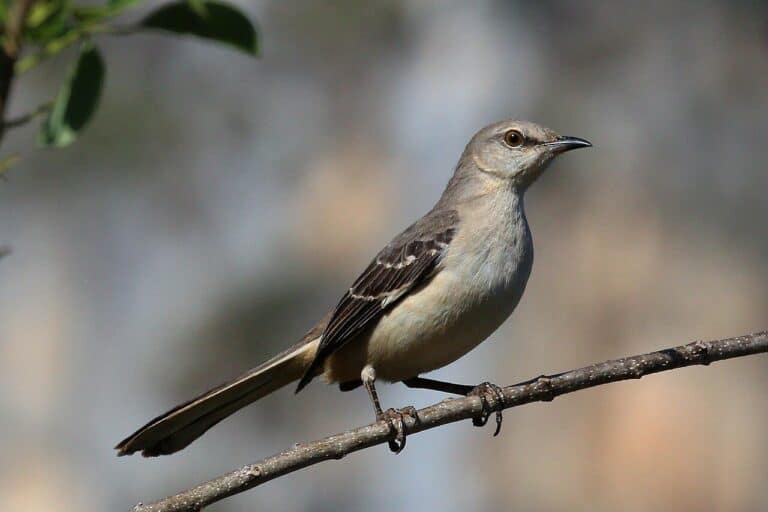
Bluebirds work low vegetation and open ground and take stink bugs among general insect prey, and cardinals, catbirds, mockingbirds, blue jays, chickadees, titmice, and several woodpeckers all take them opportunistically. None of these species specialises on them or takes them in the volumes that would control a population.
Domestic poultry are the exception in terms of appetite. Chickens, ducks, and especially guinea fowl eat stink bugs in quantity when they encounter them, which is why free-ranging birds around a house reduce numbers noticeably. The trade-off is real: hens that eat large numbers of stink bugs can produce eggs with an off flavour. The guide to birds that eat spiders covers the same insect-hunting community.
Why Do Most Birds Avoid Them?
Because of the smell, which is a chemical defence rather than a nuisance. Stink bugs release aldehydes and related compounds from glands on the thorax when threatened, producing a sharp, persistent odour often compared to coriander, and the taste is correspondingly foul. A bird that takes one usually drops it and does not try again.
The bugs also have a hard shield-shaped body that small birds process poorly, they drop and fly readily when disturbed, and their brown mottled colouring is genuinely good camouflage against bark and leaf litter. Together those defences are enough to make them a low-priority prey item.
The introduced species compounds the problem. Native North American stink bugs are attacked by a predator community that evolved alongside them; the brown marmorated stink bug arrived without one, and studies of its egg masses in the United States found predation and parasitism rates well below what native stink bugs experience. The stink bug eggs guide covers the stage where that difference matters most.
What Are the Common Predators of Stink Bugs?
Invertebrates do most of the work. Spiders, assassin bugs, damsel bugs, ground beetles, earwigs, lacewing larvae, and predatory stink bugs all take eggs and nymphs, and praying mantises take adults, gripping behind the head so the defensive glands are less use.
Parasitoid wasps matter more than anything else. Several tiny Trissolcus and Telenomus species lay eggs inside stink bug eggs, and the samurai wasp, Trissolcus japonicus, is the specialist that controls brown marmorated stink bug in its native range. It turned up in the United States on its own in 2014 and has been spreading since, which is currently the most promising long-term control.
Among vertebrates, besides birds, bats take adults in flight, and toads, lizards, and some small mammals take them on the ground. A tachinid fly and several fungal pathogens also attack them. None of these individually suppresses a population, but together they are why native stink bugs never reach the densities the introduced species can.
Why Should You Never Squish a Stink Bug?
Because crushing one releases the full contents of the defence glands, and the odour is strong, persistent, and difficult to remove from fabric, carpet, and hands. The compounds are oily and cling, and a squashed bug on a windowsill can be noticeable for a day.
There is a second reason that matters more indoors. The released compounds include aggregation cues, and while the evidence that a crushed bug directly attracts more is weaker than commonly claimed, stink bugs do use pheromones to gather in overwintering sites, and adding chemical signal to a wall void is not helpful.
Vacuuming works but taints the vacuum, so a dedicated shop vac or a nylon stocking rigged inside the hose as a removable trap is the usual solution. The simplest indoor method is a jar of soapy water held beneath the insect, since stink bugs drop when disturbed and fall straight in. Insecticides indoors are ineffective, since the bugs are in wall voids rather than in the open.
How Do You Attract Stink Bug Eating Birds?
Focus on the insectivores, which means water and cover rather than seed. Wrens are the priority since they are the best predators, and they respond to brush piles, dense shrubs, log piles, and untidy corners more than to any feeder. A brush pile in a back corner is the single most effective wren attractant there is.
Nest boxes bring in wrens and bluebirds, both of which feed nestlings almost entirely on insects. House wren boxes need a small entrance, around an inch and an eighth, and can be sited in or near shrubbery, unlike bluebird boxes which need open ground in front.
Water brings in the species that never touch feeders. A shallow birdbath with moving water from a dripper draws catbirds, warblers, and wrens daily. Avoiding insecticides matters too, since a yard sprayed for mosquitoes has fewer birds and fewer of everything else the birds would otherwise eat. The guide to birds that eat Japanese beetles covers the same habitat work for a different pest.
Can Birds Control a Stink Bug Problem?
No, and it is worth being clear about it. Brown marmorated stink bugs produce large numbers, disperse widely, and aggregate on buildings in autumn in the hundreds, and bird predation removes a small fraction. A yard full of wrens still gets stink bugs on the siding in October.
What birds do contribute is steady background pressure through the growing season, particularly on nymphs, which reduces the population that reaches adulthood locally. That is worth having and costs nothing, but it is not a control programme.
The interventions that actually reduce indoor numbers are physical. Sealing gaps around windows, doors, siding, vents, and utility penetrations before autumn is the only reliable method, since the bugs enter through openings as small as a fifth of an inch. Screening attic and soffit vents and repairing damaged screens does most of the work.
Where Do Stink Bugs Go in Winter?
Into shelter, which for the brown marmorated stink bug frequently means houses. Adults seek overwintering sites in autumn as temperatures drop, aggregating on warm sunlit south and west walls before working their way into wall voids, attics, crawl spaces, and behind trim and shutters.
They do not feed, breed, or damage anything indoors, and they cannot bite or sting. What they do is emerge on warm days through the winter, appearing at windows and lights, which is when most people notice them. In spring they leave to feed and breed on fruit trees, ornamentals, and crops.
Numbers on a single house can be extraordinary during a heavy autumn. Aggregations of several thousand on a sunlit wall have been recorded in the mid-Atlantic, and the bugs orient toward vertical silhouettes and warm surfaces, which is why isolated houses on ridges and at field edges take the worst of it while the same house among dense trees takes far less.
Native stink bug species overwinter under bark, in leaf litter, and in ground cover rather than in buildings, which is one practical way to tell them apart. A stink bug in a house in January is almost certainly the introduced species. The guide to what stink bugs eat covers the feeding damage that matters in spring and summer.
Are Stink Bugs Harmful?
Not to people. They do not bite, sting, transmit disease, or damage buildings, and the only real complaints indoors are the smell and the numbers. Handling one can leave the odour on skin, and a few people report mild skin irritation from the secretion, but there is no health risk.
Agriculturally the picture is serious. Brown marmorated stink bugs feed on more than 100 plant species, piercing fruit and vegetables to drink sap and leaving corky depressions and distorted growth. Apple, peach, pepper, tomato, sweetcorn, and soybean crops have all taken heavy losses, and the mid-Atlantic apple industry recorded tens of millions of dollars of damage in a single bad year.
For gardeners the damage is usually cosmetic and tolerable. Hand-picking into soapy water, row covers on vulnerable crops, and removing weedy hosts around the garden edge handle most of it. Extension programmes such as Penn State (psu.edu), which has run the longest-standing research on the species, publish current management guidance. The guide to animals that eat wasps covers the predator community from the other direction.
Frequently Asked Questions
What birds eat stink bugs?
Carolina and house wrens are the most reliable, plus bluebirds, cardinals, catbirds, mockingbirds, blue jays, chickadees, titmice, and woodpeckers. Chickens and guinea fowl eat them in quantity.
Why do most birds avoid stink bugs?
The defensive aldehydes make them taste foul, and the hard shield-shaped body is awkward to process. The introduced brown marmorated species is avoided more than natives because local predators lack experience with it.
What are the common predators of stink bugs?
Spiders, assassin bugs, ground beetles, lacewing larvae, mantises, and above all parasitoid wasps. The samurai wasp, which attacks the eggs, is the most effective control for the introduced species.
Why should you never squish a stink bug?
Crushing releases the full contents of the defence glands, producing an oily persistent odour that clings to hands and fabric. A jar of soapy water held underneath works better, since the bugs drop when disturbed.
Can birds control a stink bug problem?
No. Birds provide steady pressure on nymphs through the season but remove only a small fraction. Sealing gaps around windows, siding, and vents before autumn is the only reliable way to keep them out.
Will chickens eat stink bugs?
Yes, and guinea fowl are even more enthusiastic. The caveat is that hens eating large numbers can produce eggs with an off flavour, so the benefit comes with a cost.
Are stink bugs harmful?
Not to people. They do not bite, sting, or damage buildings. Agriculturally they are a serious pest of apples, peaches, peppers, tomatoes, sweetcorn, and soybeans across the mid-Atlantic and beyond.