Koi Fish Meaning: Symbolism, Colours, and the Legend
Koi fish symbolise perseverance, strength through adversity, and transformation, drawn from a Chinese legend in which a carp that swims up the Yellow River and leaps the waterfall at Dragon Gate is turned into a dragon. That story is the source of almost every koi meaning in use today, and it is why the fish stands for effort that pays off rather than for luck that arrives.
Colour changes the reading considerably. A gold koi means wealth, a black koi means overcoming a hardship already survived, a red koi means love and strength, and the direction a koi swims in art carries its own meaning. This guide covers the legend, colour by colour symbolism, the meaning in Japanese and Chinese culture, what koi in pairs represent, and where the tattoo conventions come from.
Koi fish symbolise perseverance, courage, and transformation, from the legend of a carp that swam up the Yellow River and became a dragon at Dragon Gate. Gold koi mean wealth, red mean love and strength, black mean overcoming hardship, and blue mean calm and masculinity. The fish represents earned success rather than luck.
| Colour or Form | Traditional Meaning |
|---|---|
| Gold or yellow (Yamabuki) | Wealth and prosperity |
| Red or orange (Kohaku) | Love, strength, the mother figure |
| Black (Karasu, Magoi) | Hardship overcome, the father figure |
| Blue (Asagi) | Calm, tranquillity, masculinity |
| White with red (Kohaku) | Career success and advancement |
| Koi swimming upstream | Struggle still in progress |
| Koi swimming downstream | Obstacle already overcome |
What Does a Koi Fish Symbolize?
Perseverance above all. The core symbolism is not about being lucky but about continuing when the current is against you, and it comes from a specific story rather than from a general association with fish. Koi represent effort sustained over a long period, and the reward that follows it.
Strength and courage follow directly from that. Carp swim against currents, survive in poor water, tolerate cold, and live for decades, and those observed traits made the fish a natural emblem for endurance long before the symbolism was formalised. A koi that keeps swimming is doing something the animal genuinely does.
Transformation is the third layer and the one that gives the symbol its ceiling. In the legend the carp does not merely survive the climb, it becomes a dragon, which means the reading is about being changed by the struggle rather than about returning to where you started. The koi fish tattoo meaning guide covers how that idea is used in body art.
Where Does the Legend Come From?
From China, and it is old. The story of the Dragon Gate, Longmen, describes carp swimming up the Yellow River against the current until they reach a waterfall, where most turn back. A carp that leaps the falls is transformed into a dragon by the gods, and the phrase for passing through Dragon Gate became a standard Chinese metaphor for succeeding at the imperial civil service examinations.
That academic connection matters for understanding the symbol. For centuries the exams were the route from an ordinary background to imperial office, taken by enormous numbers of candidates with a tiny pass rate, and the carp climbing the falls was the exact image of that ordeal. Koi symbolism is rooted in exams and career advancement, not in decoration.
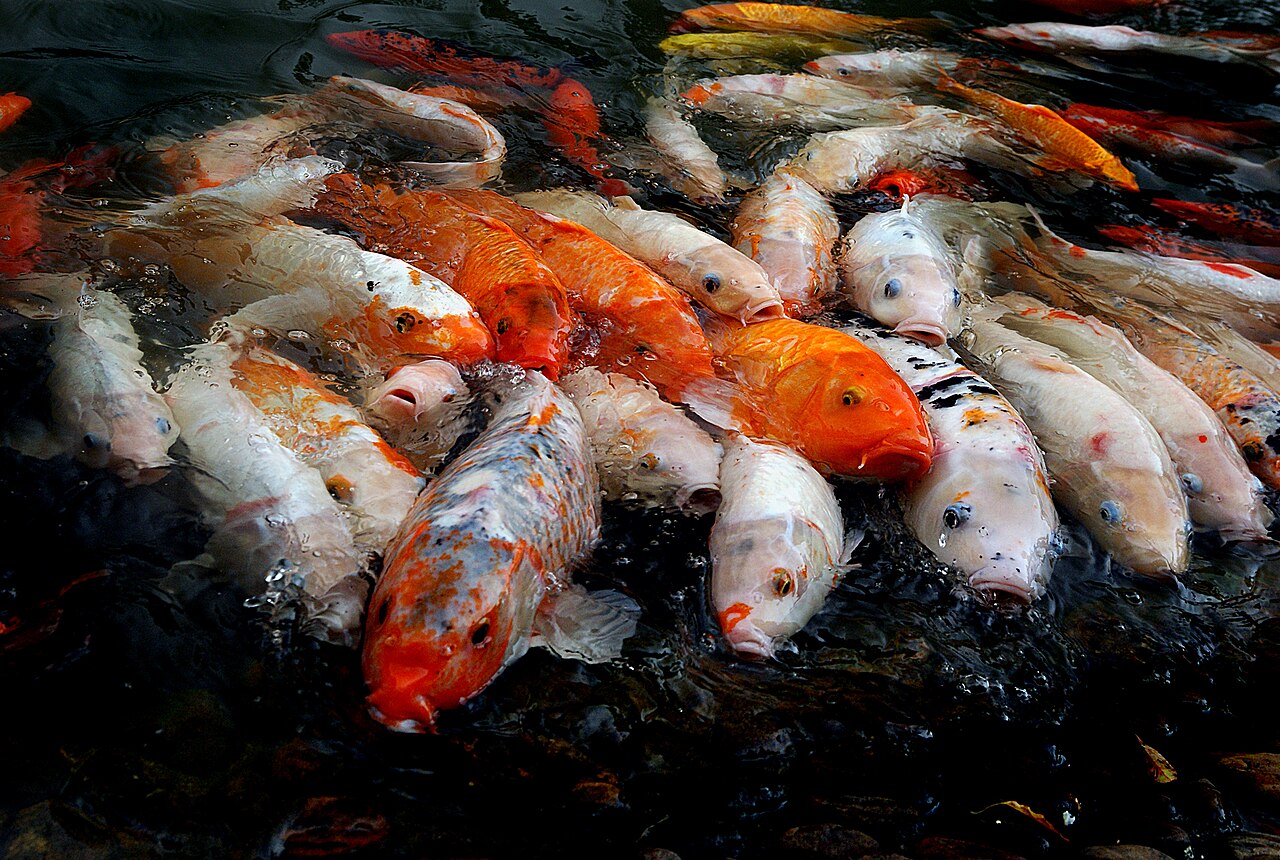
Japan absorbed the legend along with much of Chinese classical culture and developed it further. Ornamental koi breeding began in Niigata Prefecture in the nineteenth century, where rice farmers noticed colour mutations in the food carp kept in their irrigation ponds and began selecting for them, producing the varieties recognised today as nishikigoi, meaning brocaded carp.
What Does Each Koi Colour Mean?
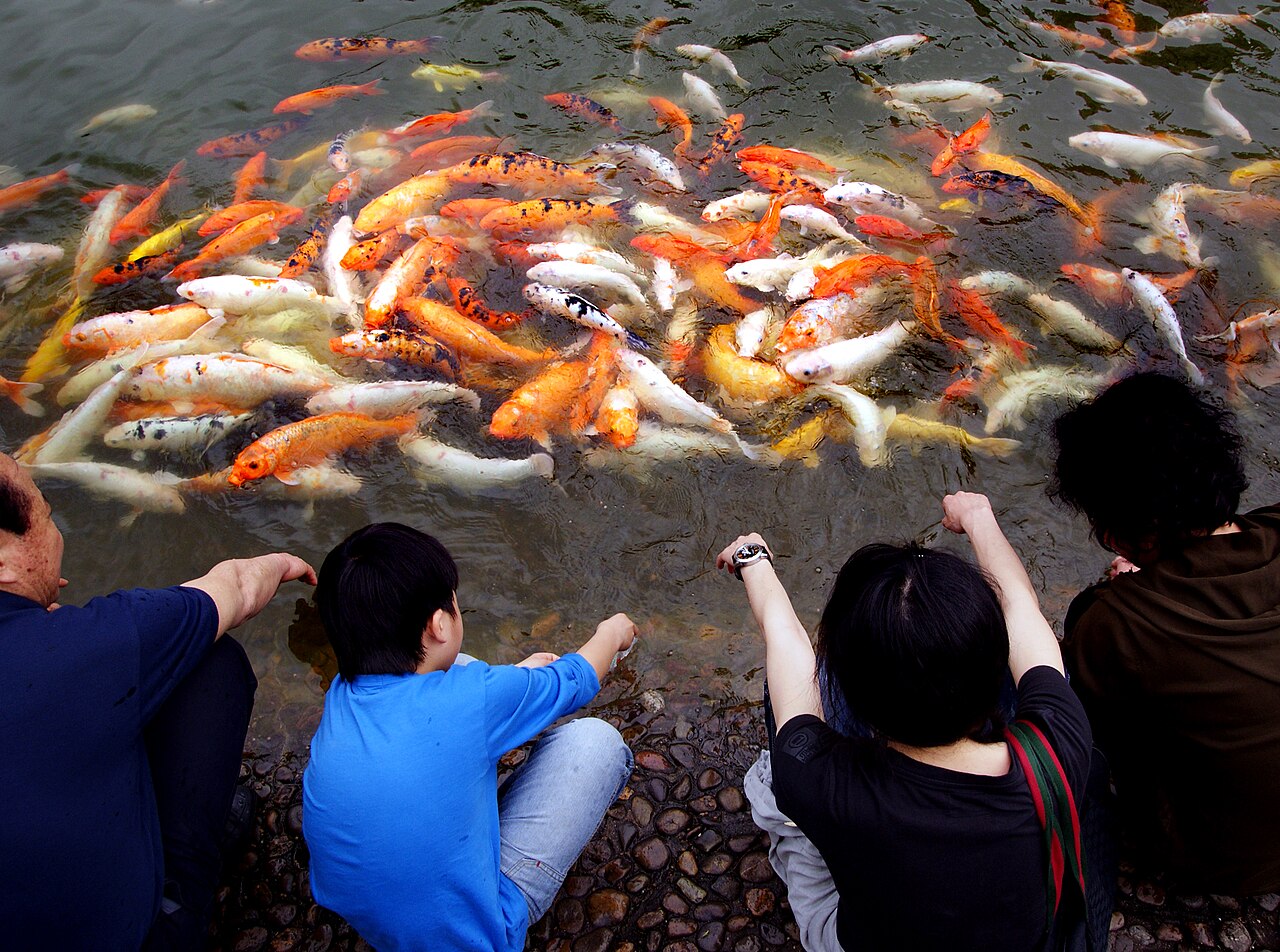
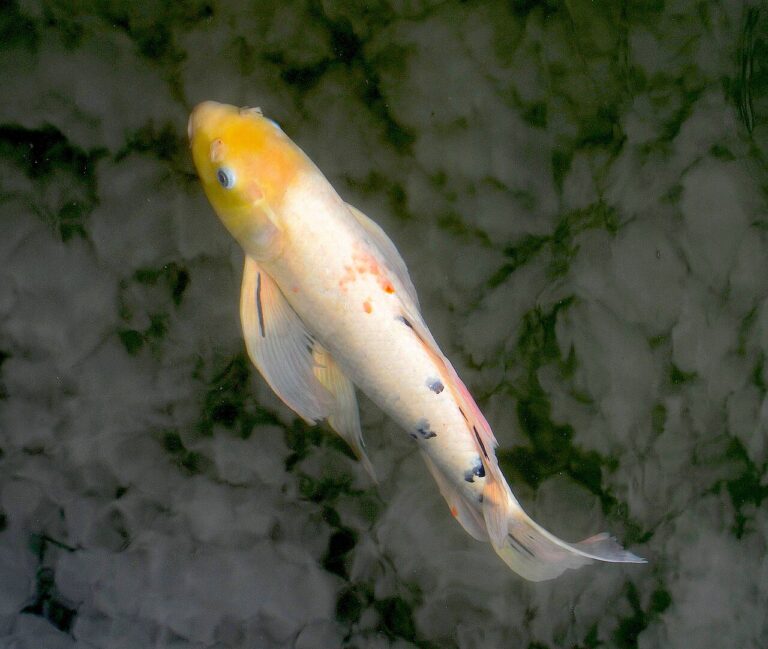
Gold and yellow koi, the Yamabuki variety, mean wealth, prosperity, and good fortune in material terms, and they are the most directly commercial reading in the set. Red and orange koi are associated with love, strength, and in Japanese family symbolism with the mother.
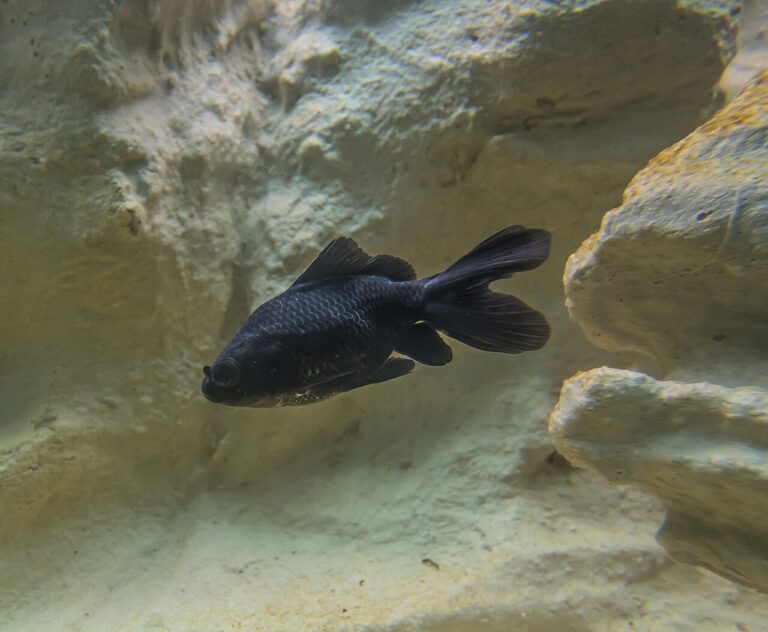
Black koi carry the heaviest reading. A black koi, whether Karasu or the original wild-type Magoi, represents adversity that has already been faced and survived, and it is traditionally given or chosen to mark a hardship come through rather than one in progress. In family symbolism it represents the father.
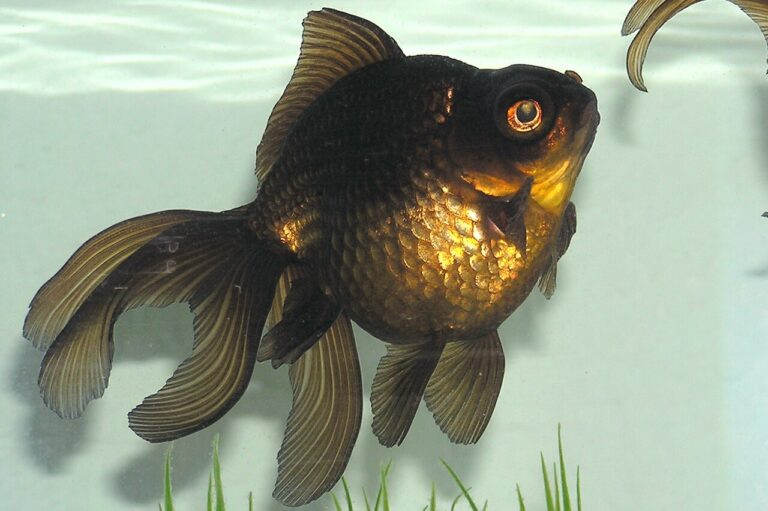
Blue koi, the Asagi variety, mean calm, peace, and masculinity, and are often associated with sons. White with red markings, the Kohaku variety, is the most prized in Japanese koi keeping and is read as career success and advancement. Metallic and platinum koi mean wealth and achievement, and the oranda goldfish guide covers a related ornamental fish bred on similar principles. The butterfly koi guide covers the long-finned variety that is popular in the United States.
What Does a Pair of Koi Mean?
Two koi together represent balance, partnership, and harmony, drawing on yin and yang, and the arrangement of two fish circling each other is one of the oldest visual expressions of that idea in Chinese art. A pair is commonly used to symbolise a marriage or a lasting partnership.
Colour combinations add specificity. A black and white pair reads most directly as yin and yang; a red and black pair as love and endurance together; two gold koi as shared prosperity. In some readings a pair swimming in the same direction means a partnership moving together, while facing each other means balance between opposites.
The number matters beyond two. Nine koi is the most auspicious number in Chinese tradition, since nine is associated with completeness and long-lasting fortune, and the classic auspicious grouping is eight red or gold koi with one black, where the black fish absorbs misfortune on behalf of the others.
What Does the Swimming Direction Mean?
Upstream means the struggle is still in progress. A koi depicted swimming upward or against a current represents someone in the middle of a difficult period, working toward a goal not yet reached, and it is the more common choice in art and tattoo work for that reason.
Downstream means the obstacle has been passed. A koi swimming downward or with the current represents a hardship already survived, a goal already met, or a phase completed, and it is chosen deliberately by people marking something they have come through rather than something ahead.
The distinction is genuinely observed in Japanese art and in tattoo tradition, and it is one of the few koi conventions specific enough to be worth getting right. A koi paired with a dragon, or partly transformed into one, represents the completion of the legend itself.
Why Is the Koi Fish Special in Japan?
Because it combines the imported legend with a domestic breeding tradition and a set of national associations built up over two centuries. Koi are kept in temple ponds, garden ponds, and public water features throughout Japan, and high-grade nishikigoi are judged, traded, and valued in a way comparable to horse breeding elsewhere.
Koinobori are the most visible expression. On Children’s Day in May, families fly carp-shaped windsocks from poles, one for each family member, with a black koi for the father, a red one for the mother, and smaller ones for the children. The fish swim in the wind exactly as they would against a current, and the custom is explicitly about wishing strength on children.
The samurai association reinforces it. Koi were admired as a warrior emblem because a carp taken from water was said to lie still and accept the knife without struggling, which was read as courage in the face of death. That reading sits alongside the perseverance one rather than replacing it.
What Colour of Koi Is Lucky?
Gold is the most direct luck symbol, tied to wealth and prosperity, and gold or metallic koi are the usual choice where fortune is the intended meaning. Red is a close second, since red is broadly auspicious in Chinese tradition and carries strength alongside love.
In koi keeping the value hierarchy is different from the symbolic one. Kohaku, white with red markings, is the most prized variety in Japanese judging, followed by Taisho Sanshoku and Showa Sanshoku, and the phrase used among keepers is that koi keeping begins and ends with Kohaku. Value there rests on the crispness of the pattern rather than on symbolism.
Rarity and value do not track colour simply. High-grade individual koi have sold for extraordinary sums, with one Kohaku reportedly reaching around 1.8 million dollars at auction in 2018, and the price reflects bloodline, body shape, and pattern quality rather than a rare colour as such.
How Long Do Koi Live?
Typically 25 to 35 years in a well-maintained pond, and the longevity is part of why the symbolism carries weight. A koi bought as a young fish is a decades-long commitment, and koi ponds are frequently passed between generations along with the fish in them.
The extreme claims deserve context. A scarlet koi named Hanako was reported to have lived 226 years, with the age determined from growth rings in a scale, and the story is widely repeated in koi literature. It has never been independently verified and is best treated as tradition rather than record.
Practically, longevity depends on water volume, filtration, and temperature. Koi grow to two or three feet and need large ponds, typically at least a thousand gallons for a small group, with strong filtration and depth for overwintering. Undersized ponds are the main reason pet koi fall far short of their potential lifespan, and university extension programmes such as Mississippi State (msstate.edu) publish stocking and water quality guidance for ornamental ponds. The baby goldfish guide covers the related fish most people actually keep.
Are Koi and Goldfish the Same Thing?
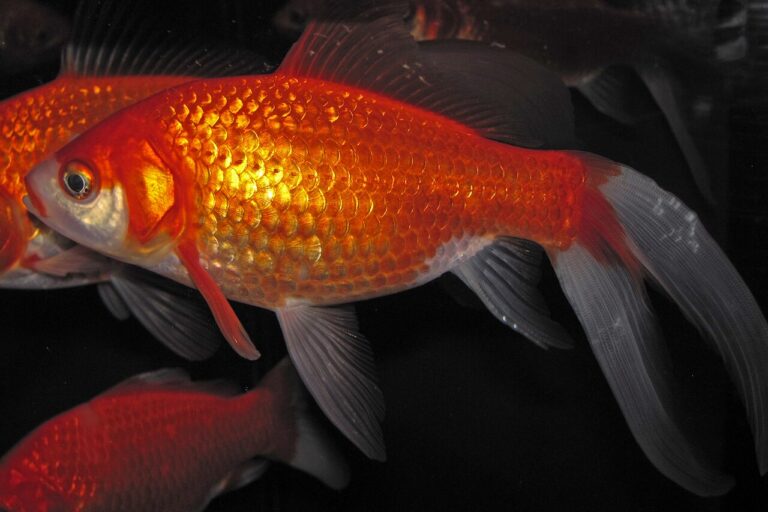
No, and the difference matters for anyone considering a pond. Koi are ornamental forms of the Amur carp, growing to two or three feet, while goldfish are a separate domesticated species derived from the Prussian carp and typically reaching six to twelve inches.
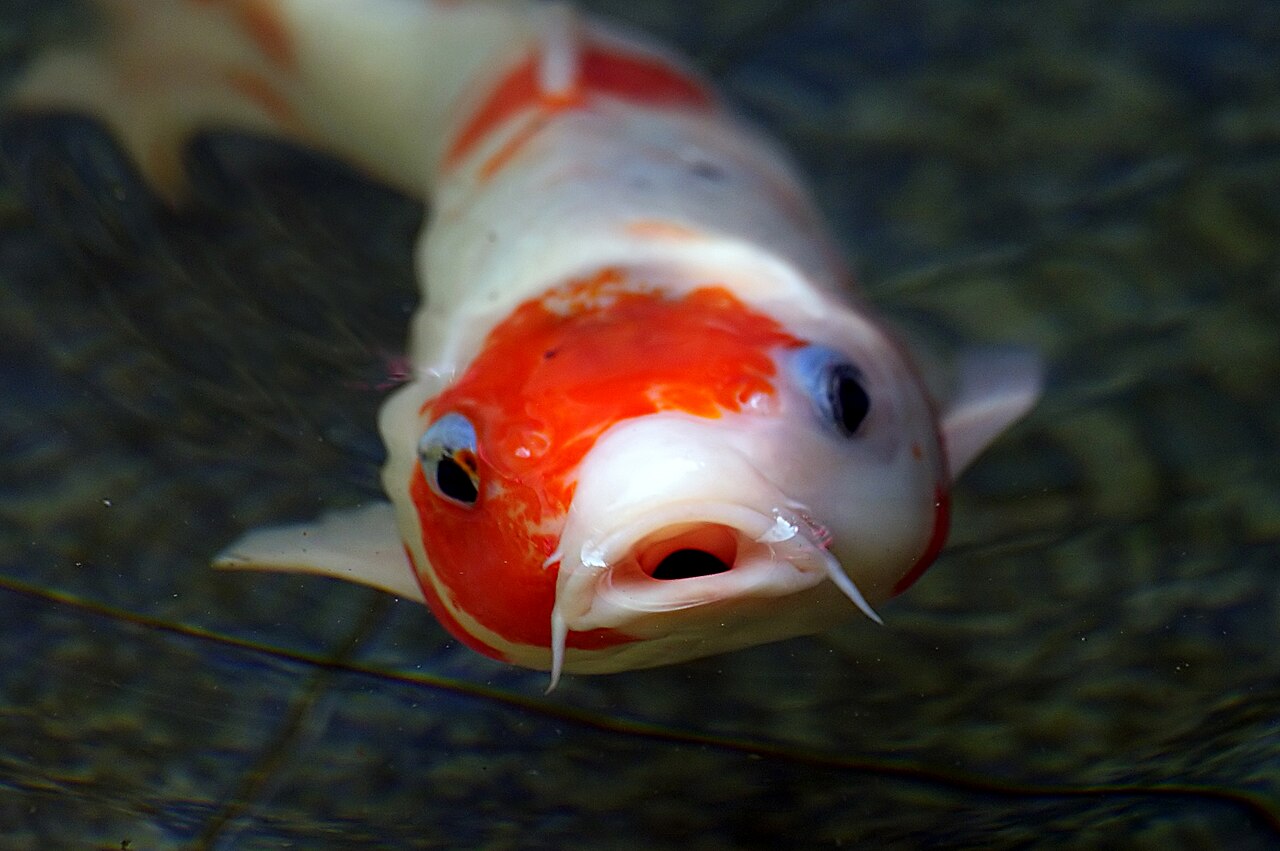
Barbels are the visual test. Koi have a pair of whisker-like barbels at each corner of the mouth; goldfish have none at any age. Body shape differs too, with koi longer and more torpedo-shaped and most goldfish varieties rounder.
They can interbreed, producing sterile hybrids sometimes sold misleadingly, and they can be kept together in a pond large enough for koi. The practical caution is that a pond sized for goldfish is far too small for koi, and mixing them usually means the goldfish are outcompeted at feeding. The shubunkin goldfish guide covers the pond goldfish varieties most often confused with young koi.
Frequently Asked Questions
What does a koi fish symbolize?
Perseverance, courage, strength through adversity, and transformation, from the legend of a carp that swims up the Yellow River and becomes a dragon after leaping the Dragon Gate waterfall.
What does each koi colour mean?
Gold means wealth, red means love and strength, black means hardship overcome, blue means calm and masculinity, and white with red markings means career success and advancement.
What does a two koi fish design mean?
Balance, partnership, and harmony, drawing on yin and yang. A black and white pair reads most directly as that balance; two gold koi as shared prosperity; a pair often marks a marriage.
What does swimming direction mean?
Upstream means a struggle still in progress; downstream means an obstacle already overcome. It is the element worth deciding first, since it changes what the image says about your own situation.
What colour of koi is lucky?
Gold for wealth and red for strength and fortune. In koi keeping itself, Kohaku, white with red markings, is the most prized variety, though that reflects pattern quality rather than symbolism.
Why is the koi fish special in Japan?
Ornamental koi breeding began in Niigata in the nineteenth century, and koi appear in temple ponds, in koinobori flown on Children’s Day, and as a samurai emblem of courage in the face of death.
How long do koi live?
Typically 25 to 35 years in a good pond, and koi ponds are often passed between generations. The famous claim of a 226-year-old koi named Hanako has never been independently verified.