Tree Frog Sounds: Which Species Is Calling
Tree frog sounds are mostly short, birdlike trills, peeps, clacks, and barks delivered after dark, and each species has its own call. The high shrill peep repeated over and over in early spring is a spring peeper; a short musical bird-like trill in bursts is a grey tree frog; a nasal repeated waaank is a green tree frog; and a sharp barking note from high in a tree is a barking tree frog.
Because tree frogs are small, green or grey, and sit motionless in vegetation all day, almost everyone meets them by ear rather than by eye. The calls are also loud out of all proportion to the animal, which is why a single frog on a window can be heard through a closed house. This guide covers each call, why they sing at night, what they mean, and whether to want them around.
Tree frog sounds are short trills, peeps, clacks, and barks made by males after dark, amplified by an inflatable vocal sac. Spring peepers give a high shrill peep, grey tree frogs a short birdlike trill, and green tree frogs a nasal honk. Calling peaks on warm humid nights in the breeding season and stops after a cold snap.
| Sound | Species |
|---|---|
| High shrill repeated peep | Spring peeper |
| Short musical birdlike trill | Grey tree frog |
| Nasal repeated honk or waaank | Green tree frog |
| Sharp bark from high in a tree | Barking tree frog |
| Fast clacking or rattling | Cricket frog or chorus frog |
| Sudden loud scream | Distress call; frog seized by a predator |
| Peak calling | Warm humid nights, first hours after dark |
What Do Tree Frogs Sound Like?
Short and repetitive rather than continuous. Spring peepers produce a single piercing peep repeated roughly once a second, and a chorus of them in March is loud enough to be painful at close range and is often mistaken for birds or even for sleigh bells at a distance.
Grey tree frogs give a short flute-like trill lasting about half a second to a second, delivered in bursts with pauses, and it sounds enough like a bird that people search the canopy for a warbler. Cope’s grey tree frog gives the same call at a faster, buzzier rate, and the two species are otherwise almost identical.
Green tree frogs produce a nasal, slightly metallic honk often written as waaank, repeated steadily, and a large chorus around a pond in the southeast is one of the loudest amphibian sounds in North America. Barking tree frogs give a hollow bark from high in trees, and cricket frogs a fast clicking like two pebbles struck together. The frog sounds guide covers the wider chorus.
Why Do Tree Frogs Call at Night?
Humidity and predators. Tree frogs lose water through the skin rapidly, and night air is cooler and more humid, so calling after dark costs far less water than calling in daylight would. Calling is also energetically expensive, and doing it in the heat would compound the problem.
Darkness reduces risk. Most of the birds and snakes that hunt frogs are visual daytime predators, and a calling male is advertising his exact position, so doing it at night removes a substantial share of that danger. The frogs that remain, mainly owls and some snakes, hunt differently.
The calling itself is male advertisement: it announces species, location, and quality to females and warns other males off a calling site. Females do not advertise, though some species give a quiet reciprocal note, and males give a release call when grabbed by another male in a breeding scrum.
How Do They Get So Loud?
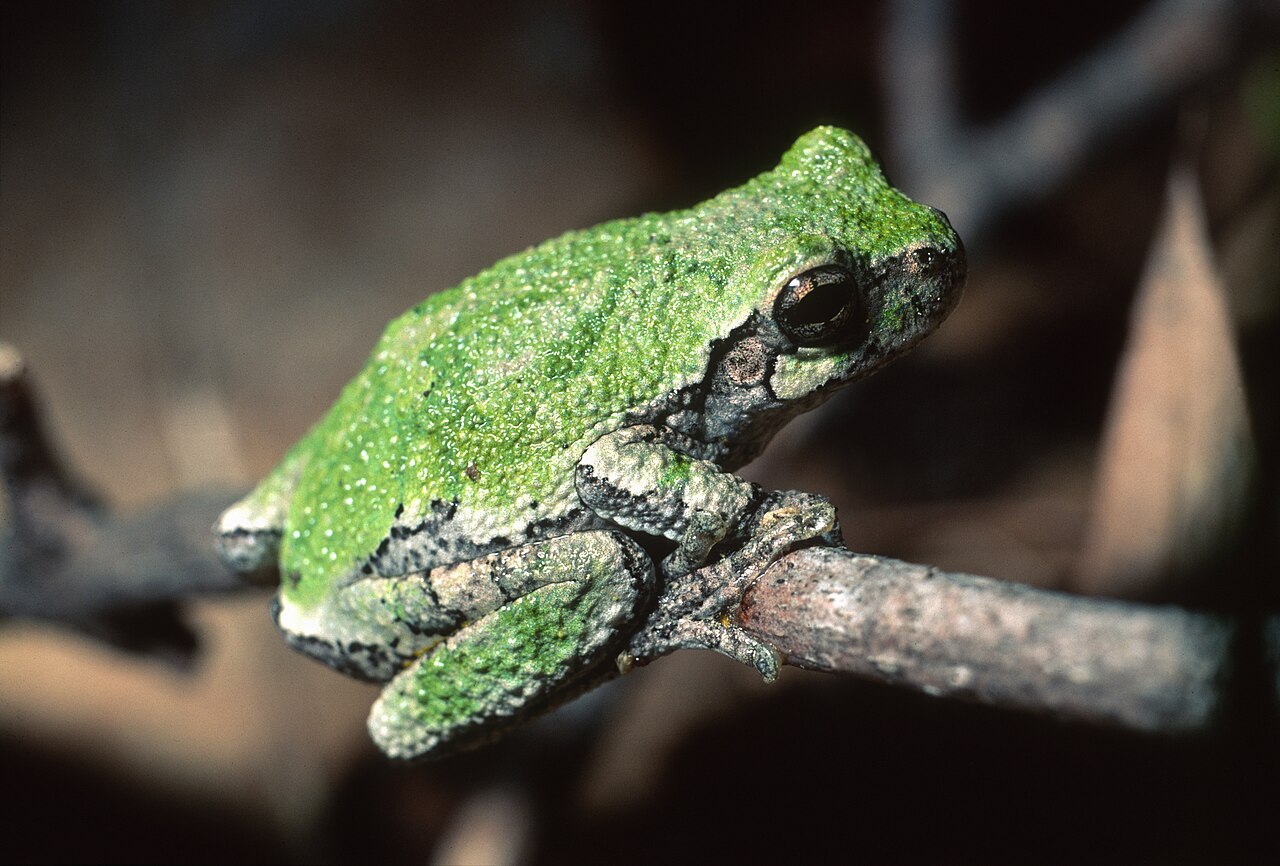
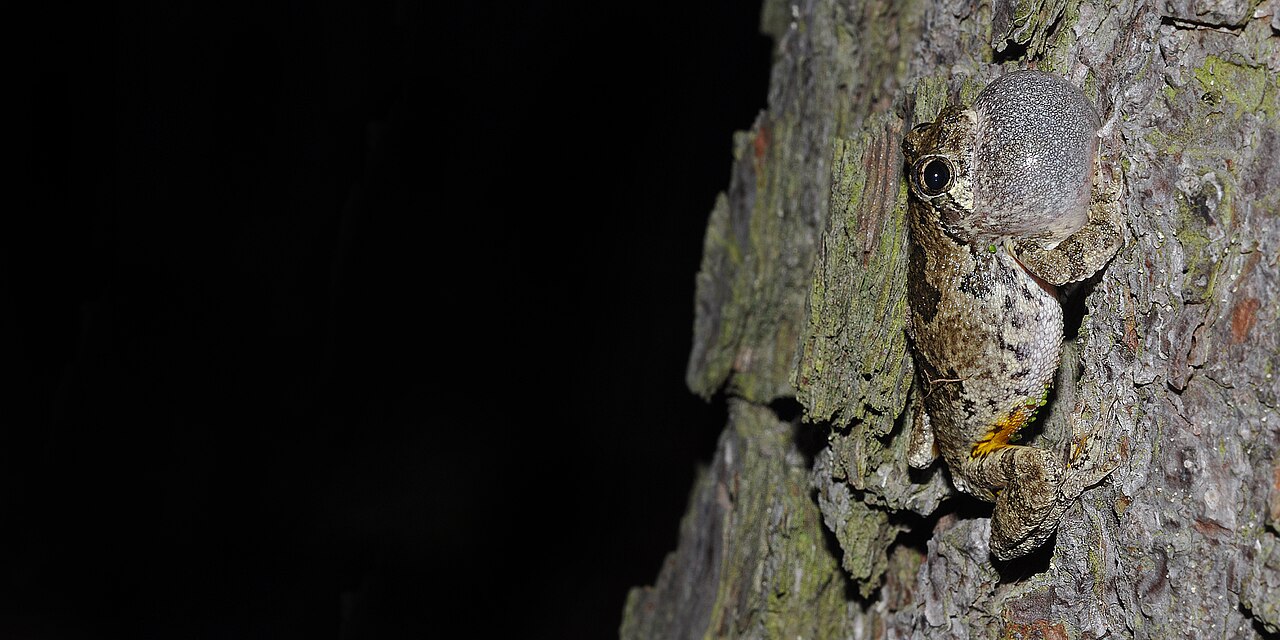
With a vocal sac. Air is pushed from the lungs across the vocal cords and into an elastic pouch of skin under the chin, which inflates like a balloon and acts as a resonator, radiating the sound outward far more efficiently than the frog’s mouth could. In a spring peeper the sac inflates to nearly the size of the frog’s head.
Most of the air is recycled rather than expelled, shuttling between lungs and sac, which lets a frog call continuously with mouth and nostrils shut and even while partly submerged. That efficiency is why a one-inch frog can produce over 90 decibels at close range.
Chorusing multiplies it. Males call in loose synchrony or alternation, because a call buried under another male’s is wasted, and the collective sound carries much further than any individual could manage while also making it harder for a predator to pinpoint any one frog. The katydid sounds guide covers the insects that share the same night soundscape.
When Do Tree Frogs Call?
Spring peepers and chorus frogs start earliest, often in late February or March in the eastern United States on the first warm rainy night, sometimes with ice still around the edges of the pond. That first chorus is one of the clearest markers that winter is ending.
Grey tree frogs follow in late April and May and call into July, and green and barking tree frogs in the southeast run from April well into summer. In warm regions some species call in most months, and after heavy summer rain almost any species may start up outside its main season.
Within a night, calling peaks in the first few hours after dark and thins after midnight, and it drops sharply on cold, windy, or very dry nights. A warm humid night after rain produces the strongest chorus of the year, which is why the volume seems to arrive suddenly rather than building steadily. The white tree frog guide covers a species commonly kept in captivity.
Do Tree Frogs Scream?
Yes, and it is startling. Many frogs give a distress call when seized by a predator, a sudden loud open-mouthed scream that in some species sounds unnervingly like a small animal or a child. It is produced with the mouth open, unlike normal calls, and both sexes make it.
The function appears to be startling the predator into loosening its grip, and possibly attracting something larger that interrupts the attack. It works often enough to persist, since a snake or bird that hesitates for half a second may lose the frog.
People usually hear it when a cat or a snake catches a frog at night, and it is one of the most common reasons for calls to wildlife agencies about a screaming animal in the garden. A frog that screams when picked up is frightened rather than injured, and the display stops as soon as it is put down.
What Does It Mean If You Hear Tree Frogs?
Practically, it means warm humid weather and standing water within a few hundred yards, since tree frogs breed in ponds, ditches, swamps, and even large puddles and gather there to call. A chorus starting suddenly usually means rain has just fallen or is about to.
That last association is old. Tree frogs calling has been read as a sign of coming rain across many cultures, and the belief has genuine basis: calling increases with humidity and falling air pressure, and a chorus starting on a still evening often does precede rain within a day.
Symbolically, frogs are read across most traditions as fertility, renewal, transformation, cleansing, and good luck, drawn from the metamorphosis from tadpole to frog and from the association with water and rain. In several traditions a frog entering a house is a positive omen, in the same register as the readings covered in the bird symbolism guide. There is essentially no negative reading attached to frogs.
Is It Good to Have Tree Frogs in Your Yard?
Yes, on every practical count. Tree frogs eat large numbers of insects including mosquitoes, flies, moths, ants, and beetles, they cause no damage to plants or structures, they do not bite, and they are harmless to pets and people.
They are also a genuine indicator of environmental quality. Amphibians absorb water and gases directly through the skin, which makes them acutely sensitive to pesticides, fertiliser runoff, and pollution, so a yard with a healthy frog chorus is a yard with relatively clean water and low chemical input.
The only real complaint is noise, and it is temporary, peaking during the breeding season and dropping away afterward. Set against that, amphibians are declining globally, with the chytrid fungus Batrachochytrium dendrobatidis having caused catastrophic losses in many regions alongside habitat loss and road mortality. The U.S. Geological Survey (usgs.gov) runs the North American Amphibian Monitoring Program, which tracks chorus data collected largely by volunteers.
How Do You Attract Them?
Water they can breed in, without fish. A small pond, a half barrel, or even a shallow container with native aquatic or marginal plants will draw tree frogs within a season or two, and fish must be absent because they eat the eggs and tadpoles. Shallow sloping edges matter so froglets can climb out.
Cover is the second requirement. Dense shrubs, tall grasses, log piles, leaf litter, and rough bark give frogs daytime shelter and a route between water and hunting ground, and a garden of mown lawn and hard surfaces gives them nowhere to spend the day.
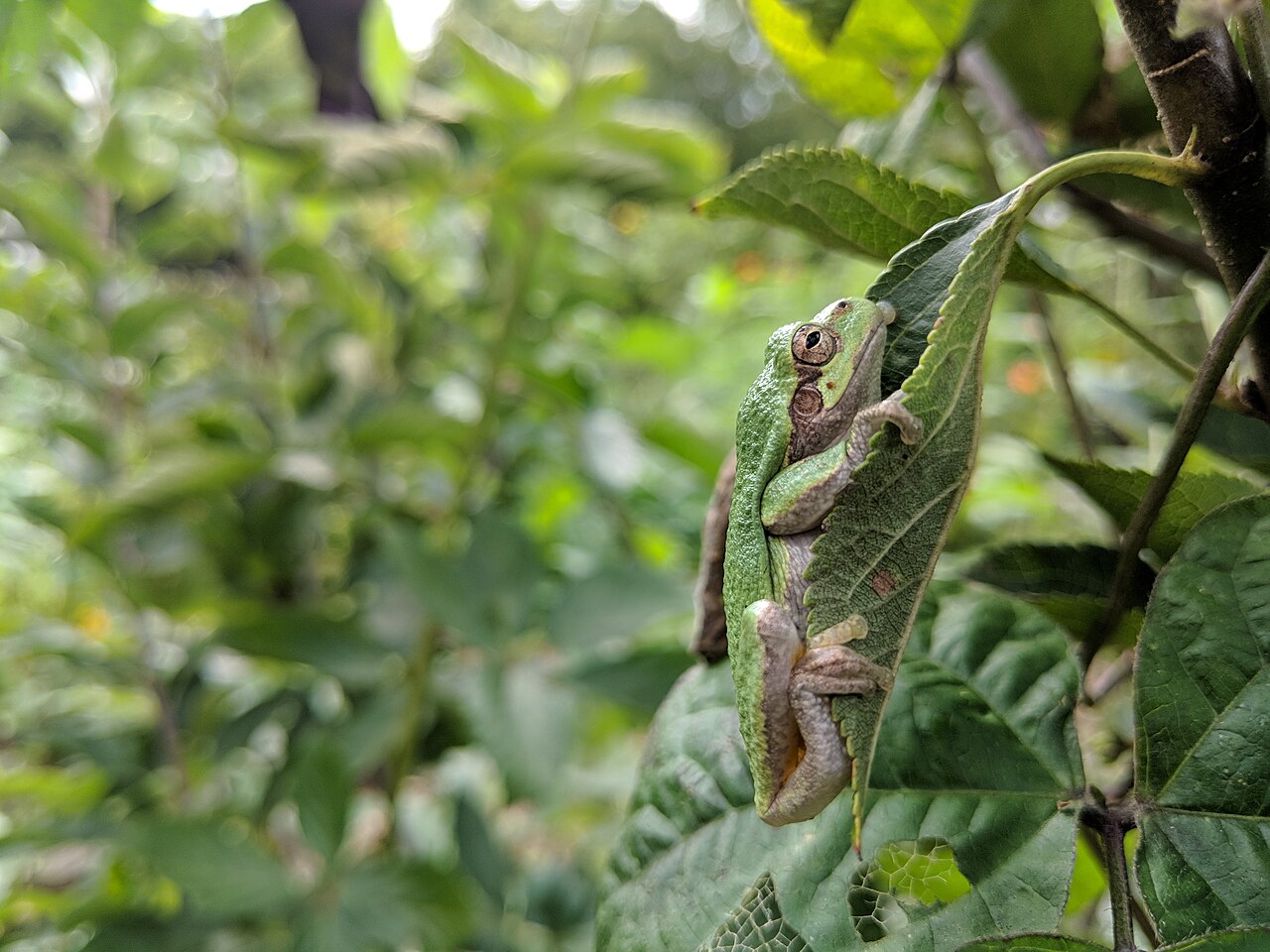
Vertical structure matters more than for most amphibians, since these are climbing frogs. Tree frogs have expanded adhesive toe pads that let them cling to smooth surfaces, which is why they turn up on windows, siding, and patio doors, and they spend the day well off the ground in shrubs, tree bark, and leaf axils rather than under logs. A garden with trees and shrubs holds them; one with lawn and fencing does not.
Skip pesticides entirely. Amphibian skin absorbs whatever it touches, and both insecticides and herbicides affect frogs directly as well as removing their food supply. Reducing outdoor lighting helps too, since bright lights disrupt calling and attract the insects away from where frogs are hunting. The baby frog guide covers what happens once they breed, and the frog poop guide covers the other sign of a resident population.
Frequently Asked Questions
What do tree frogs sound like?
Short repeated calls rather than continuous drones: a high shrill peep from spring peepers, a short birdlike trill from grey tree frogs, a nasal honk from green tree frogs, and a bark from barking tree frogs.
Why do tree frogs call at night?
Night air is cooler and more humid, so calling costs less water, and darkness removes most visual predators. Only males call, advertising species, location, and quality to females.
How do such small frogs get so loud?
An inflatable vocal sac under the chin acts as a resonator, and most of the air is recycled between lungs and sac. A one-inch frog can exceed 90 decibels at close range.
What time do frogs stop calling?
Calling peaks in the first hours after dark and thins after midnight, though some species continue until dawn. Cold, wind, and dry air suppress it, and a cold snap stops a chorus completely.
Do tree frogs scream?
Yes. A frog seized by a predator gives a sudden loud open-mouthed distress scream that can sound like a small animal or child. It stops as soon as the frog is released.
Is it good to have tree frogs in your yard?
Yes. They eat mosquitoes, flies, moths, and beetles, damage nothing, and their presence indicates clean water and low pesticide use. The only drawback is seasonal noise.
What smells do tree frogs hate?
None that work as a deterrent. Repellents, sprays, and ultrasonic devices do nothing to frogs, and many chemicals marketed for the purpose are absorbed through amphibian skin and harm them.

Similar Posts
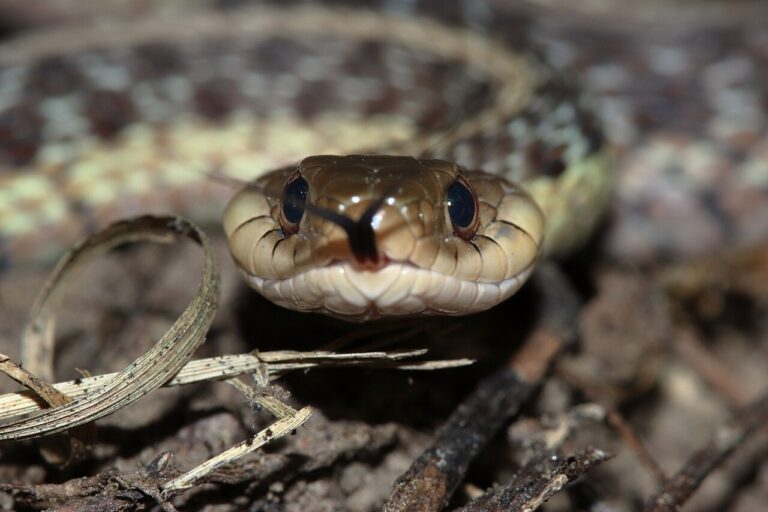
Garter Snake Bite: What It Feels Like and What to Do
A scratch that stings briefly and bleeds a little. Why garter snakes are not dangerous despite mildly toxic saliva, what to do if one holds on, and why they help a garden.
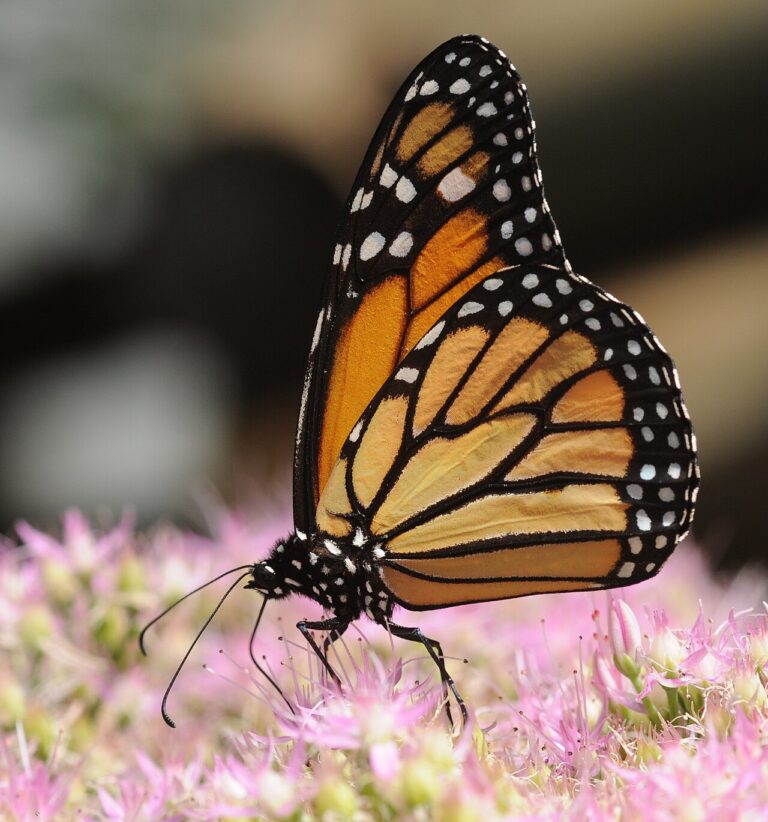
Orange and Black Butterfly: Monarch, Viceroy, and Lookalikes
An orange and black butterfly is usually the monarch, but the viceroy mimics it closely. Identify both plus the queen and Gulf fritillary, and why the mimicry exists.
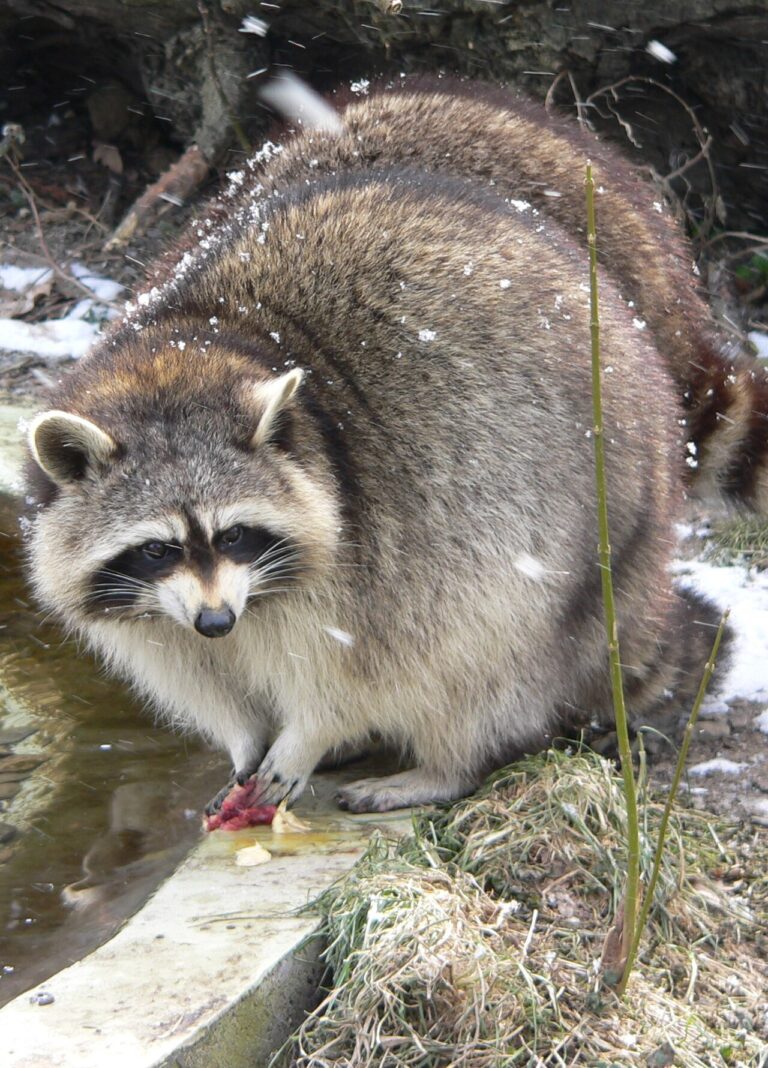
Raccoon Sounds: Chittering, Screams, and Attic Noises Decoded
Raccoon sounds decoded: chittering kits, growls, the 2 am brawl screeches, the baby-cry from the chimney, and the attic diagnosis that names your night tenant.
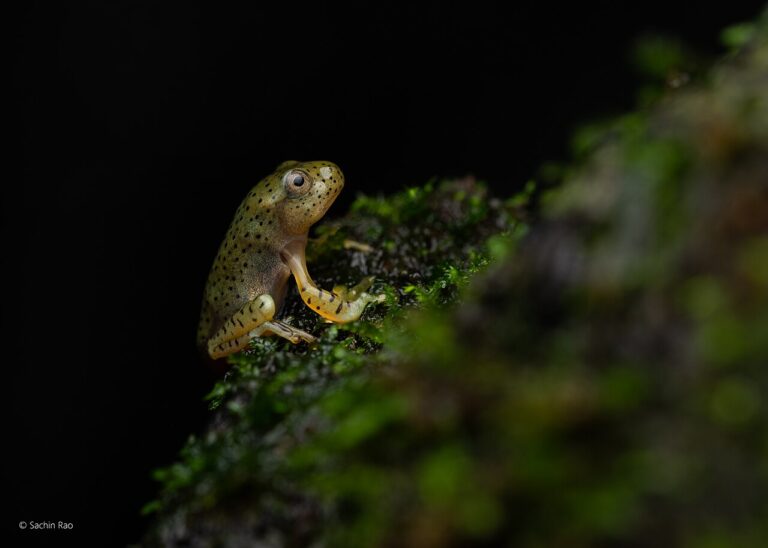
Baby Frog: Froglets, Metamorphosis, and Why They Stop Eating
A baby frog is a froglet, and it cannot eat while absorbing its tail. Here is what happens during metamorphosis and how to raise tadpoles through it.
Baby Centipede: Legs, Development, and What They Mean
Baby centipedes hatch with four pairs of legs and add more with each molt. Here is what they look like, what they eat, and what finding them means.
Animals That Eat Wasps: Nature’s Wasp Control
Badgers, skunks, bears, bats, frogs, dragonflies, robber flies and mantises all eat wasps. How each gets around the sting, and why a torn-up ground nest needs no treatment.