Miami Blue Butterfly: Down to a Few Islands
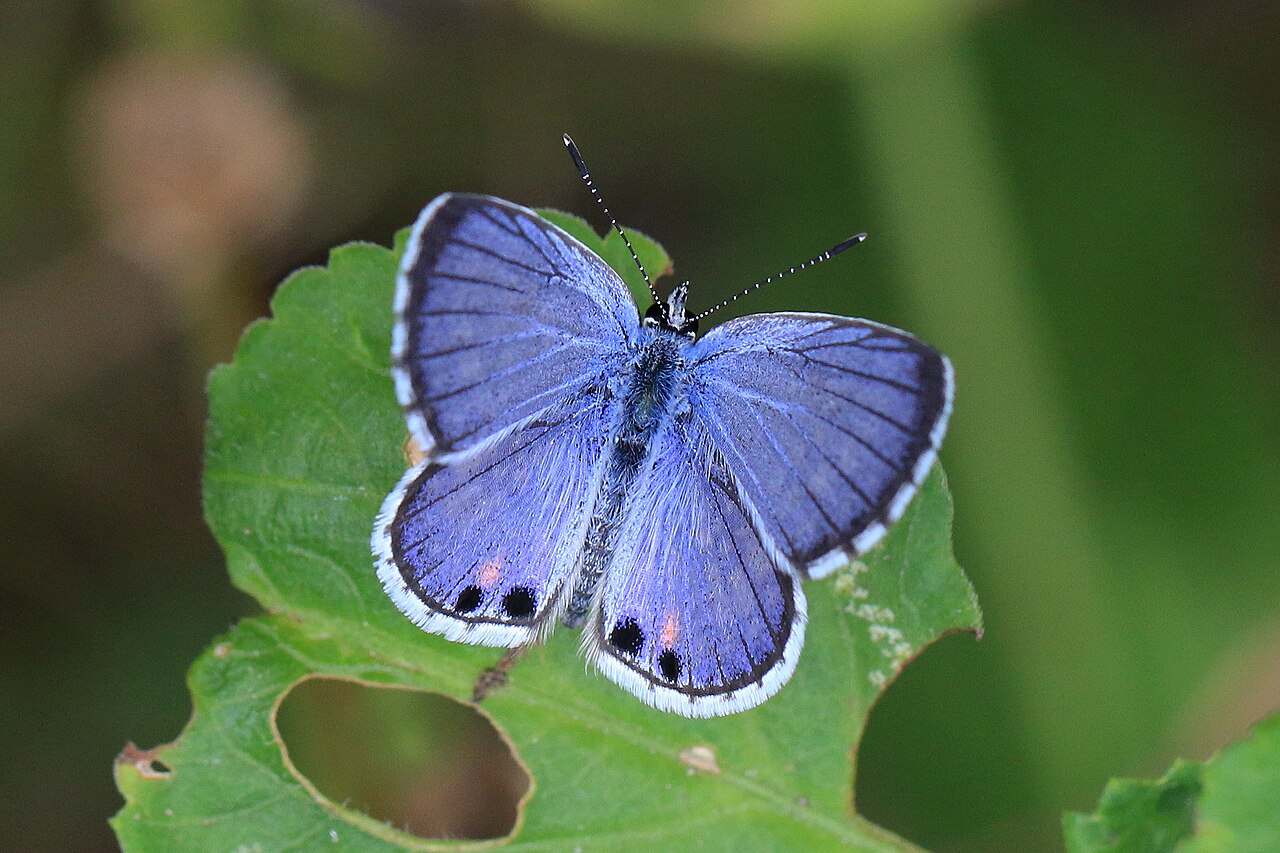
The Miami blue is a tiny endangered butterfly of coastal south Florida, about an inch across, with brilliant blue males, grey-brown females edged in blue and orange, and an underside marked with a black spot and orange crescents. It was once common along the whole southern Florida coast and now survives on a handful of islands in Key West National Wildlife Refuge.
Its decline was fast and driven by several things at once: coastal development removing host plants, mosquito spraying, hurricanes hitting an already tiny range, and the arrival of imported fire ants that attack the caterpillars. It was thought extinct after Hurricane Andrew in 1992 and rediscovered a decade later. This guide covers identification, host plants, the decline, and the recovery work.
The Miami blue is a federally endangered butterfly about an inch across, found only on a few islands in the Florida Keys. Males are brilliant blue, females grey-brown with blue and orange edging. Caterpillars feed on nickerbean, balloon vine, and blackbead. Habitat loss, mosquito spraying, hurricanes, and fire ants drove the decline.
| Feature | Miami Blue |
|---|---|
| Scientific name | Cyclargus thomasi bethunebakeri |
| Wingspan | About 0.8 to 1.1 in |
| Male | Brilliant blue above, thin dark border |
| Female | Grey-brown with blue base and orange marks |
| Underside | Grey with black spot and orange crescents |
| Host plants | Nickerbean, balloon vine, blackbead |
| Status | Federally endangered since 2012 |
What Does a Miami Blue Look Like?
Small and bright. Males are a brilliant iridescent blue above with a narrow dark border and white fringe, spanning less than an inch and a quarter. Females are grey-brown with blue scaling at the wing bases and a row of orange and black markings along the hindwing margin.
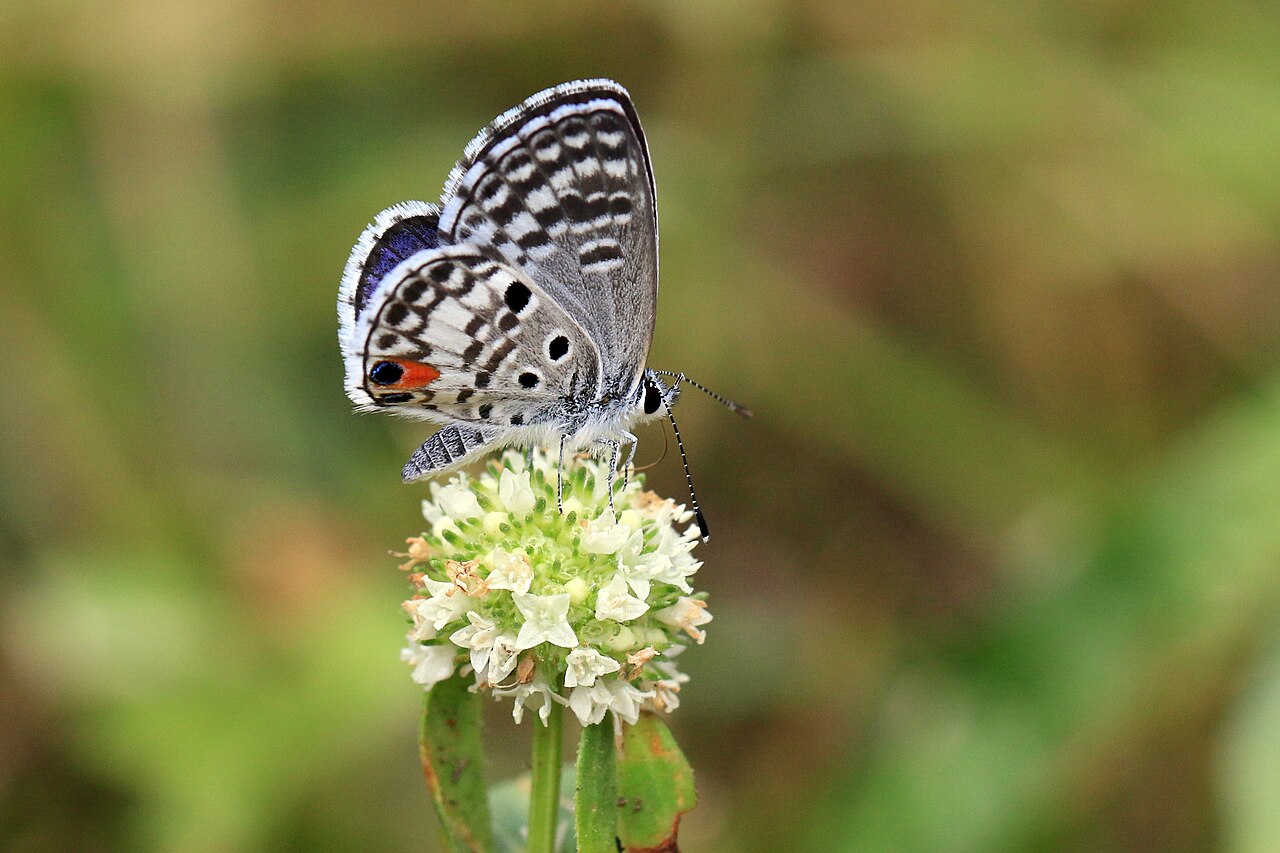
The underside is the identifying surface and is the same in both sexes: pale grey with a scatter of small black spots, a distinct black spot near the leading edge of the hindwing, and a band of orange crescents along the hindwing edge, each with a black centre and metallic blue-green scaling.
Several other small blues occur in south Florida and cause genuine confusion. Cassius blues and ceraunus blues are both common, similar in size, and overlap in habitat, and separating them takes a close look at the underside spot pattern. The blue butterfly guide covers the group more broadly.
Why Is the Miami Blue Endangered?
Several pressures acting on a species that was already restricted to a narrow coastal strip. Development of the south Florida coastline through the twentieth century removed the tropical hardwood hammock and beachside scrub where its host plants grow, which is the underlying cause.
Mosquito control compounded it. Aerial and truck-mounted insecticide spraying across the Keys and coastal mainland kills non-target insects including butterfly eggs and larvae, and the Miami blue’s remaining populations sat exactly where spraying was heaviest. Adjusting spray programmes around known colonies became a central part of the recovery effort.
Hurricanes are the third factor and the most abrupt. A species confined to a few small coastal sites has no buffer against a single storm, and Hurricane Andrew in 1992 destroyed what were then the last known mainland populations. The butterfly was presumed extinct for most of a decade. The Karner blue guide covers a species facing a comparable set of pressures inland.
What Are Its Host Plants?
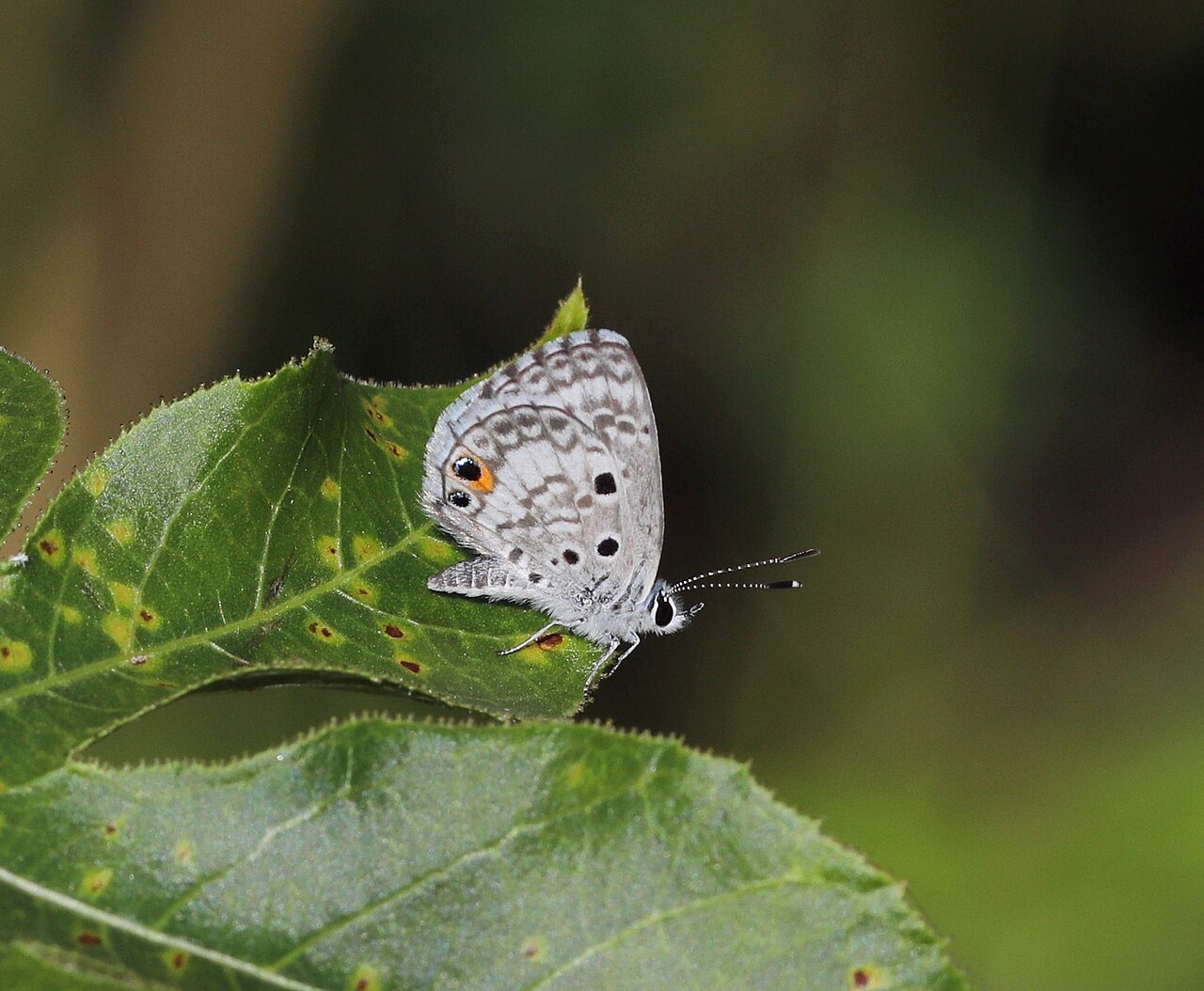
Legumes and a vine. Caterpillars feed on gray nickerbean, a sprawling thorny coastal shrub, along with blackbead and balloon vine, and nickerbean is the plant that supports the surviving Keys populations almost entirely.
Females lay eggs singly on flower buds and new growth rather than on mature leaves, and the caterpillars feed on buds, flowers, and developing seed pods. That preference ties the butterfly’s breeding to the plant’s flowering cycle, which makes populations vulnerable to anything that disrupts flowering, including drought and storm damage.
The caterpillars are tended by ants, which feed on a sugary secretion and in return deter parasitoid wasps and predators. That relationship makes the arrival of imported red fire ants particularly damaging, since they displace the native ants and attack the caterpillars rather than protecting them.
How Rare Is It?
Critically. The Miami blue was listed as federally endangered in 2012 after an emergency listing in 2011, and the known population is confined to a small number of islands within Key West National Wildlife Refuge, principally in the Marquesas Keys and on Boca Grande Key.
Historically it ranged along the entire south Florida coast from around the Tampa Bay area and Daytona south through the Keys, and it was described in older accounts as common. The contraction from that range to a few uninhabited islands happened within living memory.
Population estimates are small and vary sharply with season and storms, and surveys in some years have found very low numbers. Because the remaining sites are on refuge islands accessible only by boat, monitoring is difficult and expensive, which limits how quickly problems are detected. The U.S. Fish and Wildlife Service (fws.gov) maintains the listing and recovery documentation.
What Is Being Done to Recover It?
Captive breeding is the centrepiece. The University of Florida’s McGuire Center for Lepidoptera and Biodiversity has maintained a captive colony started from a small number of wild females and has produced tens of thousands of individuals for release, which is the only reason the species has any redundancy at all.
Reintroduction has been attempted at several protected sites including Bahia Honda State Park, Long Key, and Elliott Key, with mixed results. Some releases have established temporary populations that later failed; others have not taken. Establishing a butterfly with such specific host plant and ant requirements is genuinely difficult.
Habitat work runs alongside it: planting nickerbean and blackbead in coastal parks and refuges, adjusting mosquito spraying around known and potential sites, and controlling fire ants where feasible. Three similar-looking blues are also federally protected under a similarity-of-appearance provision, which allows enforcement without requiring identification in the field.
Where Can You See One?
Realistically, nowhere accessible. The surviving wild populations are on uninhabited refuge islands that are closed or difficult to reach, and public access is restricted precisely because disturbance and collection are risks a population this small cannot absorb.
Reintroduction sites in state parks offer the only theoretical chance, and even there sightings are rare and unpredictable. Anyone in south Florida seeing a small blue butterfly is almost certainly looking at a cassius or ceraunus blue, both of which are common in gardens, verges, and scrub throughout the region.
Collection is prohibited and matters more than it sounds. Butterfly collecting has contributed to declines in several rare North American species, and for a population measured in hundreds, removing a handful of females is significant. Photographing and reporting is the appropriate response to any suspected sighting.
What Other Florida Butterflies Are at Risk?
Several, and south Florida has more federally listed butterflies than anywhere else in the continental United States. The Schaus swallowtail, a large dark swallowtail of tropical hardwood hammock in the Keys, has been listed since 1976 and has come close to extinction more than once.
Two skippers are gone. The Zestos skipper and Rockland grass skipper were both last recorded in the early 2000s and are considered extinct, lost to habitat destruction, mosquito spraying, and hurricanes, the same combination that reduced the Miami blue.
Florida leafwing and Bartram’s scrub-hairstreak are both listed and both depend on pine rockland, a habitat that has been reduced to a small fraction of its original extent, mostly in fragments around Miami and in Everglades National Park. The pattern across all of them is the same: narrow habitat, narrow host plant range, and a coastal position under development pressure. The Xerces blue guide covers what happens when that pattern runs to completion.
What Is Its Life Cycle?
Fast and continuous, which is one of the few things working in the species’ favour. In the frost-free Keys the Miami blue breeds year-round rather than pausing for winter, and the whole cycle from egg to adult takes roughly a month in warm conditions.
Eggs are pale green discs laid singly on flower buds and hatch within a few days. The caterpillar is short, flattened, and slug-shaped, green with faint markings, and it feeds on buds, flowers, and developing pods while being tended by ants. Pupation happens in leaf litter or in a crevice at the base of the plant rather than on the foliage.
Adults live only a week or two, which means population turnover is rapid and a single bad month can remove most of a generation. That short adult lifespan combined with a tiny range is exactly why storms and spray events do so much damage: there is no reservoir of long-lived adults to restart from.
Can You Help From a Garden?
Only within the range, and even there indirectly. Planting nickerbean, blackbead, and other native coastal legumes in south Florida supports a range of insects and would support Miami blues if the butterfly ever recolonises, which is a genuine if remote possibility.
Avoiding mosquito fogging matters more than planting for most households. Truck and backpack fogging kills butterflies, bees, and the predators that control mosquito larvae, and source reduction, meaning removing standing water in gutters, containers, and bromeliads, works better and does not have the same collateral effect.
Elsewhere the useful contribution is supporting the institutions doing the work: the McGuire Center’s captive programme, the refuges managing the island sites, and the state parks running reintroductions. Butterfly conservation at this stage of decline is a matter of funded programmes rather than garden planting. The eastern tailed blue guide covers a common relative worth planting for anywhere, and the black and blue butterfly guide covers the wider group.
Frequently Asked Questions
Why is the Miami blue butterfly endangered?
Coastal development removed its habitat, mosquito spraying killed eggs and larvae, hurricanes wiped out sites in a range too small to buffer them, and imported fire ants attack the caterpillars.
What are the host plants for the Miami blue?
Gray nickerbean above all, plus blackbead and balloon vine. Females lay on flower buds and new growth, so populations depend on the plants flowering rather than just being present.
Where is the Miami blue found?
On a small number of islands in Key West National Wildlife Refuge, principally the Marquesas Keys and Boca Grande Key. It historically ranged along the whole south Florida coast.
What is being done to save it?
Captive breeding at the University of Florida’s McGuire Center has produced tens of thousands of individuals for release, alongside reintroduction attempts, host plant planting, and adjusted mosquito spraying.
What are the Florida blue butterflies?
Cassius blue and ceraunus blue are the common ones and are what most small blue butterflies in south Florida turn out to be. Both are federally protected by similarity of appearance to the Miami blue.
Is it rare to see a blue butterfly?
Small blues are common across most of North America; the Miami blue specifically is not, and realistic sightings are limited to restricted refuge islands and a few reintroduction sites.
Can you help the Miami blue from a garden?
Within south Florida, by planting native coastal legumes and avoiding mosquito fogging in favour of removing standing water. Elsewhere, by supporting the captive breeding and refuge programmes.

Similar Posts
Ladybug Larvae: ID, What They Eat, and Why Not to Kill Them
Ladybug larvae look like tiny alligators and eat hundreds of aphids each. Here is how to identify them and tell them from potato beetle larvae.
Red Admiral Butterfly: ID, Nettles, and Why It Lands on You
The red admiral is black with bright orange-red bands and unusually bold with people. Host plants, why numbers swing so much between years, and how to attract them.
How to Get Rid of Fruit Flies for Good, Not Just Today
Traps alone never work. Here is the vinegar trap that actually catches them, how to find the breeding site, and why drains are usually the culprit.
Baby Black Snake: Identifying Rat Snake and Racer Hatchlings
Baby black snakes are gray and blotchy, not black, and belong to two species: rat snakes and racers. ID both, tell them apart, and end the copperhead confusion.
Should I Kill a Black Widow Spider?
Depends on location: remove it from active spaces, leave it in undisturbed corners. What the real bite risk is and how to handle an encounter safely.
Coyote Sounds: Howls, Yips & Barks Explained
What coyote howls, yips, barks, and whines actually mean, and why a few coyotes can sound like an entire pack.